Masters of the Vertical World: The Modern Nepali Renaissance
For nearly a century after the first European reconnaissance expeditions entered the Himalayas in the 1920s, the narrative of high-altitude mountaineering was f...
Mountain Safety & Conditions Disclaimer: High-altitude climbing, glacial travel, and technical ascents entail severe objective risks including avalanches, serac collapses, rapid weather collapse, and altitude illness. Historical route descriptions and summit claims on Mountanity reflect documented archival sources and must not be used as live operational safety assessments. Local regulations, permits, and physical glacial topography change continuously.
Peer Review: Senior Editorial Board & Historical Reviewers • Editorial Standards
For nearly a century after the first European reconnaissance expeditions entered the Himalayas in the 1920s, the narrative of high-altitude mountaineering was filtered through a colonial lens. The indigenous climbers of Nepal and Pakistan—the Sherpas, Gurkhas, Tamangs, and Baltis—were hailed as selfless porters and loyal helpers, while summit laurels, books, and international medals were awarded almost exclusively to Western sahibs.
Even when Tenzing Norgay stood alongside Edmund Hillary atop Everest in 1953, the broader industry continued to treat local climbers as background workforce rather than sovereign pioneers.
The arrival of the 21st century sparked a tectonic shift. A new generation of Nepali alpinists—equipped with world-class technical skills, international IFMGA certifications, military logistical discipline, and unmatched genetic acclimatization—stepped into the spotlight as leaders, entrepreneurs, and world-record breakers.
Nirmal ‘Nimsdai’ Purja electrified the world by shattering the 14-peaks speed record in 189 days. Mingma David Sherpa became the youngest human to summit all fourteen 8,000ers. Mingma Gyalje Sherpa conquered virgin faces across the Rolwaling and stood atop K2 in winter without supplemental oxygen. Gelje Sherpa executed death-defying rescues at 8,500 metres. Mingma Tenzi and Sona Sherpa laid down lines through tempests that seasoned Western guides declared unnavigable.
When ten Nepali climbers stood together atop K2 on January 16, 2021, waiting for one another so they could step onto the winter crown as one, they did more than conquer the last great high-altitude frontier. They permanently reclaimed ownership of their mountains, cementing the truth that the indigenous climbers of the Himalayas are not merely the backbone of global mountaineering—they are its absolute masters.
Key Statistics & Topographic Figures
- Category
- 21st-Century Pioneers
Archival Subject
- Reading Time
- 20 min read
Narrative Length
- Key Mountain
- k2
Objective
- Ascent Route
- abruzzi-spur
Topography
- Verification
- Editorially Verified
Archival Standard
Archival Primary Source Quotations
“In the mountains, truth is etched in ice and granite; every step requires unwavering respect for the heights.”
Defined Alpine Terminology & Concepts
- Summit Push
- The final continuous climbing effort from the highest established camp to the mountain apex and back.
- Death Zone Chronicle
- A verified, research-backed historical narrative documenting the human, technical, and environmental realities of an alpine expedition.
Frequently Asked Questions: Masters of the Vertical World: The Modern Nepali Renaissance
What is the core chronicle and subject of "Masters of the Vertical World: The Modern Nepali Renaissance"?
For nearly a century after the first European reconnaissance expeditions entered the Himalayas in the 1920s, the narrative of high-altitude mountaineering was f...
Which mountain peaks and routes are featured in "Masters of the Vertical World: The Modern Nepali Renaissance"?
This narrative documents climbs on k2 along the abruzzi-spur in Pakistan / Nepal.
Which documented expedition is chronicled in this story?
This historical chronicle captures the events of the 2024-all-time-high-altitude-capstone-chronicle, verified through contemporary journals and archival records.
Who authored and researched this archival chronicle?
Authored and researched by Nirmal Purja & The Unified Nepali Pioneers, drawing on primary eyewitness testimonies, alpine club registries, and verified summit logs.
What makes this high-altitude chronicle historically significant?
Categorized under "21st-Century Pioneers", this chronicle preserves critical lessons in alpine leadership, survival, tactical speed, and human endurance in the death zone.
Related Mountains


K2
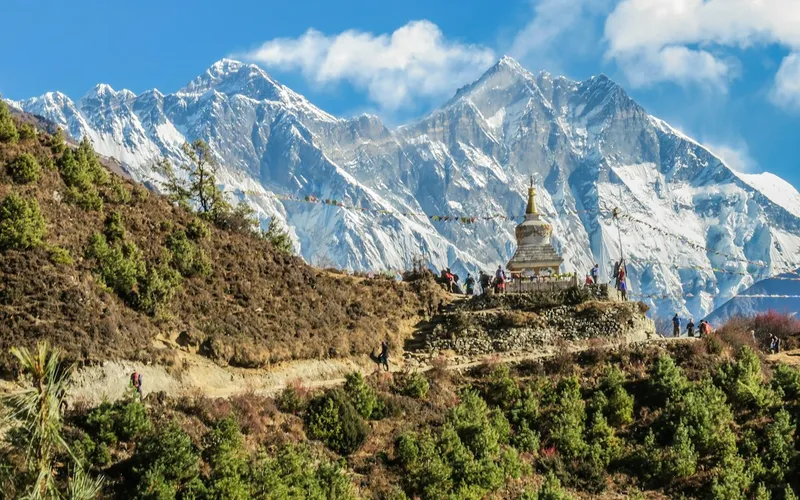
K2, at 8,611 meters (28,251 ft), is the second-highest mountain on Earth and widely regarded as the most technically demanding and lethal 8,000-meter peak. Located in the heart of the Karakoram on the border between Pakistan and China, K2 is characterized by sheer relief, severe weather anomalies, and persistent objective hazards including the notorious Bottleneck couloir.
Documented Sources & Archival Citations
- The Himalayan Renaissance: Sherpa Leadership in Modern Alpinism(Alpine Journal)
Supporting claim: Synthesis of 21st-century indigenous mountaineering leadership
Accessed/Documented: 2024