1925 Japanese Alpine Club Historic First Ascent of Mount Alberta
On July 21, 1925, an elite Japanese Alpine Club expedition led by Aritsune Maki, alongside Swiss guides Heinrich Fuhrer and Hans Kohler, conquered the forbidding, sheer limestone fortress of Mount Alberta (3,619 m) in the Canadian Rockies, famously leaving an inscribed silver ice axe on the summit.
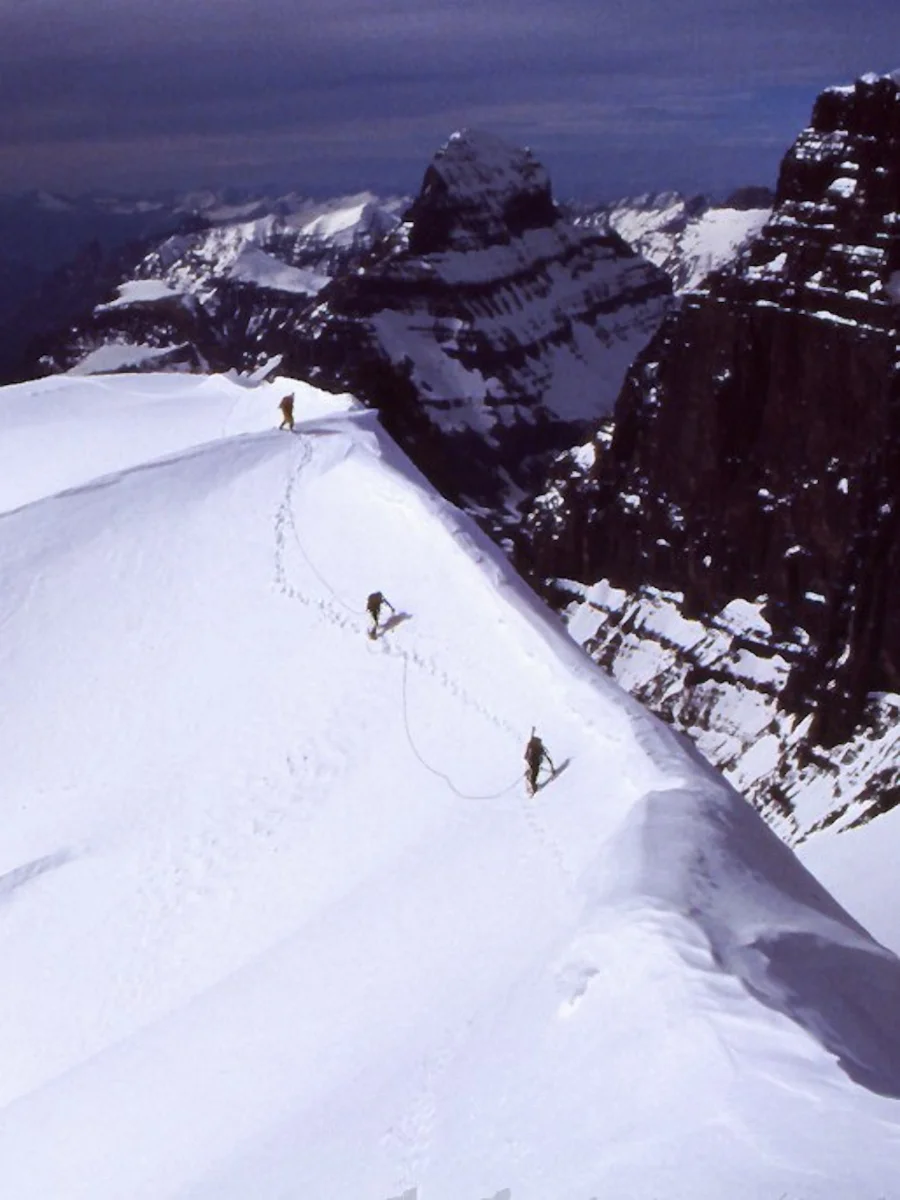
Mountain Safety & Conditions Disclaimer: High-altitude climbing, glacial travel, and technical ascents entail severe objective risks including avalanches, serac collapses, rapid weather collapse, and altitude illness. Historical route descriptions and summit claims on Mountanity reflect documented archival sources and must not be used as live operational safety assessments. Local regulations, permits, and physical glacial topography change continuously.
Peer Review: Senior Editorial Board & Historical Reviewers • Editorial Standards
Official Expedition Narrative & Archival Record
Mount Alberta (3,619 m), rising like an impregnable black fortress above the Athabasca River headwaters in Jasper National Park, was widely regarded by North American and European mountaineers as the most terrifying and inaccessible unclimbed peak in the Canadian Rockies. Its vertical limestone ramparts, constant rockfall, and shattered overhangs had defeated every reconnaissance party. In the summer of 1925, Aritsune Maki organized an official expedition under the auspices of the Japanese Alpine Club. Maki recruited a brilliant cohort of Keio and Tokyo climbers—including Seishi Hashimoto, Hatano, and Yukio Mita—and hired veteran Swiss guides Heinrich Fuhrer and Hans Kohler. Pack-training deep into the wilderness along Hamber Provincial Park and Sunwapta Pass, the team established a forward camp in the Woolley Creek cirque. On July 21, 1925, after sixteen gruelling hours of sustained, highly technical rock climbing across rotten, friable limestone bands and ice-glazed chimneys, Maki and his team breached the ferocious summit overhangs. Standing atop the narrow summit ridge, they claimed the first ascent of Canada's most notorious peak. In a romantic gesture that became world alpine folklore, the Japanese climbers hammered a specially forged silver ice axe (presented by Prince Chichibu) into the summit rock, where it remained as an enigmatic legend for twenty-three years until American climbers retrieved it in 1948.
Documented Team Composition
- Aritsune Maki (Expedition Leader, Japan)
- Heinrich Fuhrer (Lead Swiss Guide, Switzerland)
- Hans Kohler (Swiss Guide, Switzerland)
- Seishi Hashimoto (Keio University Alpinist, Japan)
- Yukio Mita (Alpinist, Japan)
- Tetsuo Hatano (Alpinist, Japan)
Key Statistics & Topographic Figures
- Summit Elevation
- 3,619 metres (11,873 ft)
- Summit Date
- July 21, 1925
- Expedition Leader
- Aritsune Maki (Japan)
- Climb Duration
- 16 continuous hours on vertical rock
- Historic Relic
- Imperial Silver Ice Axe (Retrieved 1948)
Archival Primary Source Quotations
“We drove the silver axe deep into the summit stone, leaving the imperial emblem to watch over the great icefields of the Continental Divide.”
Defined Alpine Terminology & Concepts
- Down-Sloping Strata
- Sedimentary rock layers that tilt downward toward the valley, providing slippery, negative handholds and unstable footholds.
- Verglas
- A thin, transparent coating of ice on rock formed by freezing rain or condensed mountain fog, creating treacherous climbing conditions.
Frequently Asked Questions: 1925 Japanese Alpine Club Historic First Ascent of Mount Alberta
Who made the first ascent of Mount Alberta in 1925?
An elite Japanese Alpine Club party led by Aritsune Maki alongside Swiss guides Heinrich Fuhrer and Hans Kohler summited Mount Alberta on July 21, 1925.
What is the legend of the silver ice axe on Mount Alberta?
Maki's party planted a custom imperial silver ice axe on the summit, where it stood in rock fractures for 23 years until retrieved in 1948.
Why was Mount Alberta considered so formidable in the Canadian Rockies?
Its sheer limestone walls, crumbly down-sloping rock strata, severe verglas ice, and frequent avalanches made it North America's fiercest unclimbed rock tower.
Featured Expedition Climber
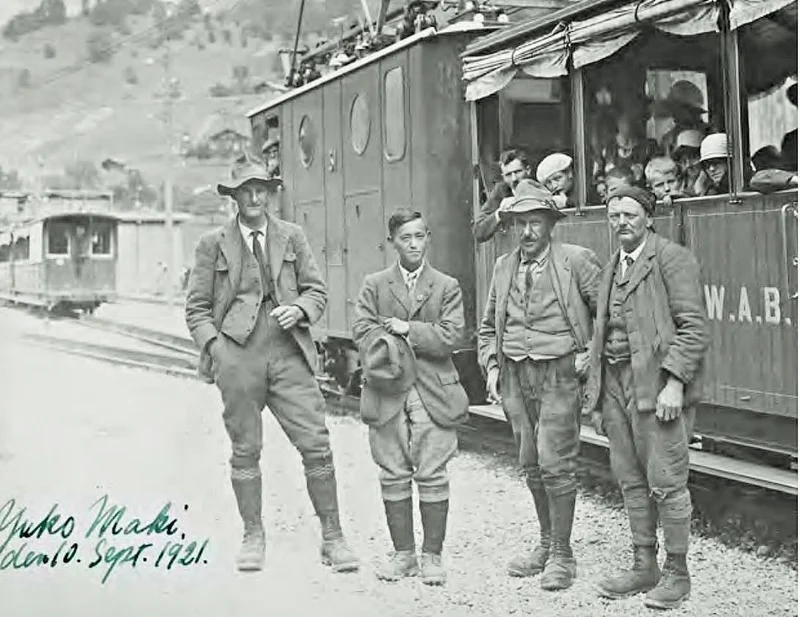
Aritsune Maki
Aritsune Maki (known widely as Maki Yūkō) was born on February 5, 1894, in Sendai, Miyagi Prefecture, Japan. Educated at Keio University, Maki developed into a brilliant technical rock climber in the Japanese Alps before traveling to Europe in 1919 to pursue advanced alpine mountaineering in Switzerland and Great Britain. In the Bernese Oberland, Maki turned his attention to the formidable and unclimbed Mittellegi Ridge of the Eiger—a razor-sharp, heavily corniced limestone crest that had repelled alpine climbers for decades. On September 10, 1921, Maki alongside Swiss guides Fritz Steuri, Samuel Brawand, and Fritz Amatter completed the historic first ascent of the Mittellegi Ridge. In gratitude, Maki donated 10,000 Swiss francs to build the Mittellegi Hut, providing vital refuge for subsequent mountaineers. In 1925, Maki led a groundbreaking expedition of the Japanese Alpine Club to the Canadian Rockies, achieving the first ascent of Mount Alberta (3,619 m), one of North America's most challenging peaks, where the team famously left a silver ice axe on the summit. In 1956, at age 62, Maki served as the visionary general leader of the triumphant Japanese expedition to Manaslu (8,163 m), which achieved Japan's first 8,000-metre summit conquest. Maki served as President of the Japanese Alpine Club from 1944 to 1946 and again from 1957 to 1963. He passed away on May 2, 1989, honored as the greatest international mountaineer in modern Japanese history.
Associated Historical Chronicles & Stories
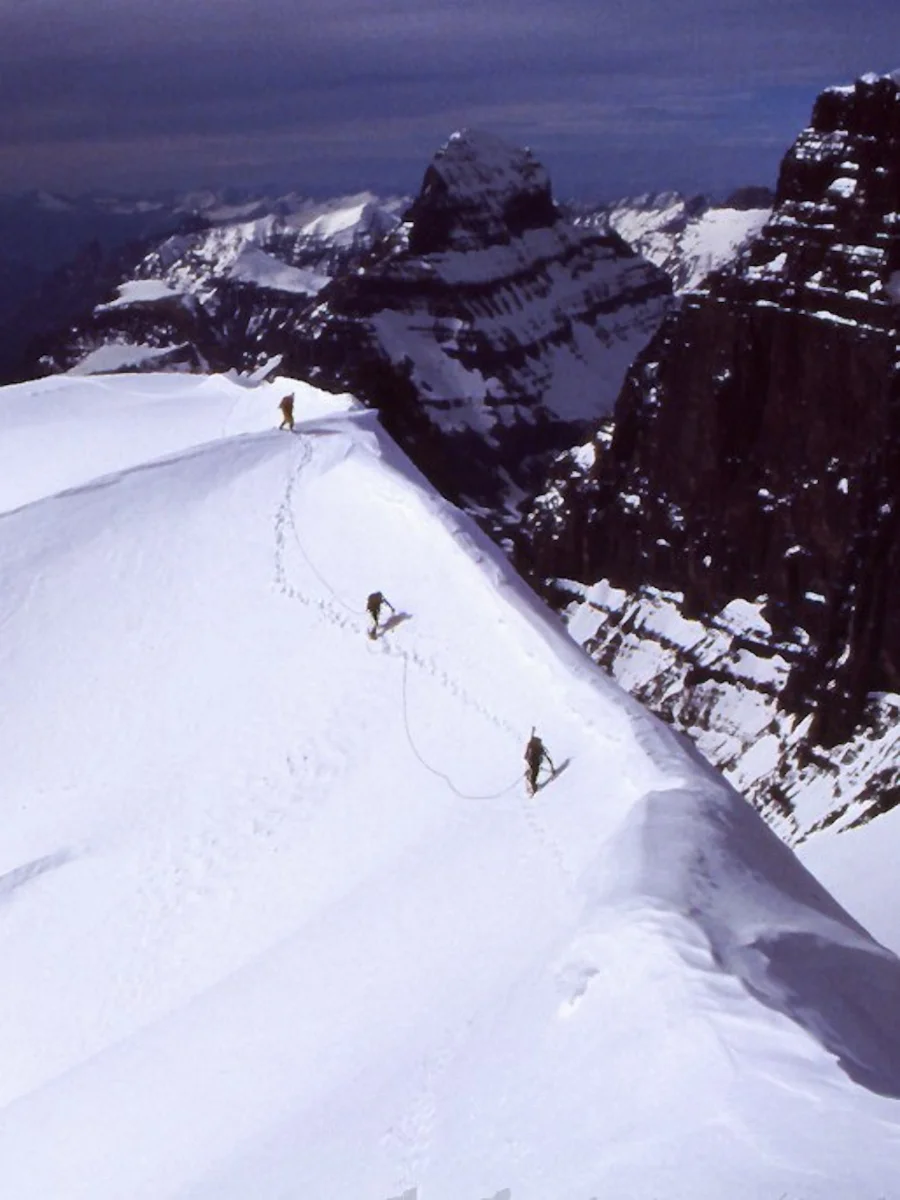
The Silver Ice Axe: Aritsune Maki and the 1925 First Ascent of Mount Alberta
Aritsune Maki leads an elite Japanese Alpine Club party to the Canadian Rockies in 1925 to conquer the sheer limestone citadel of Mount Alberta.
Documented Sources & Archival Citations
- The Ascent of Mount Alberta(Canadian Alpine Journal / Aritsune Maki)
Supporting claim: Primary official expedition report of the first ascent of Mount Alberta
Accessed/Documented: 1926