1975 Polish Gasherbrum III First Ascent Expedition
In August 1975, a Polish expedition organized by Wanda Rutkiewicz achieved the historic first ascent of Gasherbrum III (7,952m), the highest unclimbed peak on Earth, when Krzysztof Zurek, Wanda Rutkiewicz, Alison Chadwick-Onyszkiewicz, and Janusz Onyszkiewicz summited via the East Ridge.
Mountain Safety & Conditions Disclaimer: High-altitude climbing, glacial travel, and technical ascents entail severe objective risks including avalanches, serac collapses, rapid weather collapse, and altitude illness. Historical route descriptions and summit claims on Mountanity reflect documented archival sources and must not be used as live operational safety assessments. Local regulations, permits, and physical glacial topography change continuously.
Peer Review: Senior Editorial Board & Historical Reviewers • Editorial Standards
Official Expedition Narrative & Archival Record
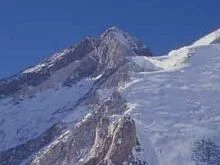
Gasherbrum III (7,952m) in the Karakoram stood in 1975 as the highest unclimbed mountain on Earth. Organised and led by visionary Polish alpinist Wanda Rutkiewicz, the 1975 Polish expedition was groundbreaking: a joint women's and men's national team determined to conquer the formidable summit. Operating in severe Karakoram weather without heavy commercial infrastructure, the team established high camps along the eastern slopes and breached the col between Gasherbrum II and Gasherbrum III. On August 11, 1975, Krzysztof Zurek, Wanda Rutkiewicz, Alison Chadwick-Onyszkiewicz, and Janusz Onyszkiewicz launched their summit push along the exposed East Ridge. Battling deep powder, sub-zero gales, and knife-edge cornices, all four reached the 7,952-metre summit, securing the first ascent of Earth's highest remaining unclimbed peak and establishing Wanda Rutkiewicz as the highest-climbing woman in mountaineering history at that date.
Documented Team Composition
- Wanda Rutkiewicz (Expedition Leader / Poland)
- Krzysztof Zurek (Poland)
- Alison Chadwick-Onyszkiewicz (United Kingdom / Poland)
- Janusz Onyszkiewicz (Poland)
Key Statistics & Topographic Figures
- Official Outcome
- Historic First Ascent of Gasherbrum III (7,952m), the Highest Unclimbed Peak in the World at the Time
Expedition Status
- Summit Date
- 1975-08-11
Ascent Timestamp
- Target Objective
- gasherbrum-3
Mountain Peak
- Ascent Route
- gasherbrum-3-east-ridge
Climbing Path
- Team Size
- 4 Climbers
High-Altitude Team
- Region / Country
- Pakistan (Gilgit-Baltistan / Karakoram)
Geography
Archival Primary Source Quotations
“Gasherbrum III (7,952m) in the Karakoram stood in 1975 as the highest unclimbed mountain on Earth. Organised and led by visionary Polish alpinist Wanda Rutkiewicz, the 1975 Polish...”
Defined Alpine Terminology & Concepts
- Alpine Expedition
- A planned, self-contained high-altitude mountaineering undertaking operating in remote mountain terrain subject to extreme objective hazards.
- Death Zone
- The high-altitude region above 8,000 meters where atmospheric oxygen pressure is inadequate for sustained human survival.
Frequently Asked Questions: 1975 Polish Gasherbrum III First Ascent Expedition
What was the primary outcome and achievement of the 1975 Polish Gasherbrum III First Ascent Expedition?
Historic First Ascent of Gasherbrum III (7,952m), the Highest Unclimbed Peak in the World at the Time. In August 1975, a Polish expedition organized by Wanda Rutkiewicz achieved the historic first ascent of Gasherbrum III (7,952m), the highest unclimbed peak on Earth, when Krzysztof Zurek, Wanda Rutkiewicz, Alison Chadwick-Onyszkiewicz, and Janusz Onyszkiewicz summited via the East Ridge.
When did the 1975 Polish Gasherbrum III First Ascent Expedition reach the summit?
The expedition officially reached the summit on 1975-08-11, operating between 1975-06-15 and 1975-08-20.
Who were the documented climbing team members on the 1975 Polish Gasherbrum III First Ascent Expedition?
The documented climbing roster included: Wanda Rutkiewicz (Expedition Leader / Poland), Krzysztof Zurek (Poland), Alison Chadwick-Onyszkiewicz (United Kingdom / Poland), Janusz Onyszkiewicz (Poland).
What climbing route and mountain objective were tackled during the 1975 Polish Gasherbrum III First Ascent Expedition?
The expedition tackled gasherbrum-3 via the gasherbrum-3-east-ridge in Pakistan (Gilgit-Baltistan / Karakoram).
How are the records and summit claims of the 1975 Polish Gasherbrum III First Ascent Expedition verified?
Summit claims, route topography, and timeline logs for the 1975 Polish Gasherbrum III First Ascent Expedition are cross-referenced with official alpine registries, national mountaineering federations, and primary expedition journals.
Ascent Route & Topography
East Ridge (1975 First Ascent Route)
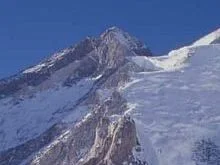
The East Ridge of Gasherbrum III is the historic pioneer line that unlocked the highest unclimbed mountain in the world on August 11, 1975. Ascending from the high col between Gasherbrum II and Gasherbrum III, the route traverses treacherous crevassed icefields, knife-edge cornices, and crumbly limestone rock bands to reach the 7,952-metre summit pyramid.
Target Objective Peak


Gasherbrum III
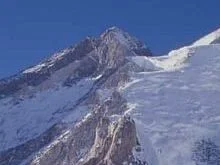
Gasherbrum III is a colossal 7,952-meter (26,089 ft) mountain nestled between Gasherbrum II and Gasherbrum IV in the Baltoro Muztagh of the Karakoram range. Ranking as the fifteenth-highest peak on Earth, it holds a legendary place in mountaineering history as the highest unclimbed mountain in the world until August 11, 1975. On that historic day, a trailblazing Polish expedition led by Wanda Rutkiewicz achieved the first ascent via the East Ridge, with summiters Wanda Rutkiewicz, Alison Chadwick-Onyszkiewicz, Janusz Onyszkiewicz, and Krzysztof Żurek.
Featured Expedition Climbers
Krzysztof Żurek
Krzysztof Żurek was born in 1944 in Poland. An engineer by trade and an exceptionally gifted technical rock and ice climber, Żurek came of age during the post-war golden era of Polish alpinism centered around the fiercely demanding north faces of the High Tatras. Known for his flawless crampon footwork, stamina, and understated resolve, Żurek quickly established himself as one of Poland's most dependable lead climbers for expeditions to the world's highest mountain ranges. Żurek's career reached international historical significance in the summer of 1975 as a lead member of the combined Polish Women's and Men's Gasherbrum Expedition organized by Wanda Rutkiewicz. At the time, Gasherbrum III (7,952m)—the towering sentinel situated between Gasherbrum II and Gasherbrum IV in Pakistan's Karakoram—was officially recognized as the highest unclimbed mountain on the planet. Operating on complex glaciated terrain and fighting high-altitude storms, Żurek partnered with Rutkiewicz, Janusz Onyszkiewicz, and British-Polish climber Alison Chadwick-Onyszkiewicz. On August 11, 1975, the four climbers successfully reached the 7,952-metre summit via the East Ridge, marking one of the greatest triumphs in Polish mountaineering history and one of the highest first ascents ever led by women. In addition to his Himalayan feats, Żurek played a foundational role in the development of Polish winter climbing. He completed severe first winter ascents on the imposing walls of Kazalnica Menguszowiecka and Kocioł Kazalnicy in the Tatras, and established new direct lines in the Western Alps and the Hindu Kush. His calm leadership, dedication to team camaraderie, and technical mastery paved the way for the later legendary achievements of Poland's Ice Warriors across the world's 8,000-metre giants.
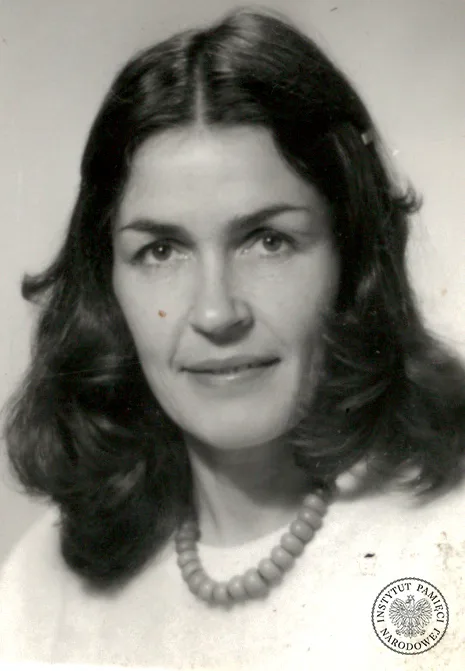
Wanda Rutkiewicz
Wanda Rutkiewicz was born on February 4, 1943, in Plungė, Lithuania (then under German occupation), to Polish parents. After World War II, her family was repatriated to Wrocław, Poland. A gifted athlete and competitive volleyball player in Poland's national first division, Rutkiewicz earned a degree in electrical engineering from the Wrocław University of Science and Technology. In 1961, an engine breakdown on her motorcycle near the Falcon Mountains (Góry Sokole) introduced her to a group of local rock climbers. She took up climbing instantly, quickly displaying exceptional technical grace, balance, and an iron will. Rutkiewicz rapidly shattered gender barriers across European mountaineering. In 1968, she completed the iconic East Face of the Aiguille du Grépon in the Mont Blanc massif. In August 1973, she led an all-female team in making the first female ascent of the fearsome North Face of the Eiger (Heckmair Route) under harsh icy conditions. Moving to the Karakoram in 1975, Rutkiewicz organized and led the historic Polish Women's Expedition to Gasherbrum III (7,952m)—at the time the highest unclimbed peak in the world—successfully making its first ascent alongside Alison Chadwick-Onyszkiewicz, Janusz Onyszkiewicz, and Krzysztof Zdzitowiecki. On October 16, 1978, Rutkiewicz achieved global fame by reaching the summit of Mount Everest (8,848m) via the South Col as part of a German-Austrian expedition led by Karl Herrligkoffer. She became the first Polish citizen, the first European woman, and only the third woman in world history to stand on top of Everest. By an extraordinary historical coincidence, on the very day she reached the summit, fellow Pole Karol Wojtyła was elected Pope John Paul II in Rome. When they met the following year, the Pope famously told her: 'Good Lord willed that we both went so high on the same day.' Rutkiewicz's most celebrated achievement occurred on June 23, 1986, on K2 (8,611m), the 'Savage Mountain'. Climbing without supplemental oxygen as part of a small team with French alpinists Liliane and Maurice Barrard, Rutkiewicz endured grueling physical suffering to become the first woman in history to stand on the summit of K2. Her triumph, however, was quickly overshadowed by tragedy when both Barrards perished during the descent in worsening weather, leaving Rutkiewicz to fight her way down the Abruzzi Spur alone to safety. Determined to climb all fourteen 8,000-meter peaks, Rutkiewicz launched her ambitious 'Caravan of Dreams' project in the late 1980s. Despite severe financial constraints, lack of sponsorship, and severe injuries from an accident in the Caucasus, she summited eight 8,000-meter giants, including Nanga Parbat (1985, first all-female ascent), Gasherbrum II, Gasherbrum I, Cho Oyu, and Annapurna (1991, solo via the South Face). In May 1992, at age 49, Rutkiewicz attempted Kangchenjunga (8,586m) alongside Mexican climber Carlos Carsolio. Suffering from extreme exhaustion, she bivouacked at 8,300 meters on the northwest face. Carsolio, descending from the summit on May 12, encountered her huddled in a snow cave and urged her to turn back with him. Rutkiewicz refused, stating she would rest and make her summit bid the next morning. She was never seen again. Her body was never recovered. Wanda Rutkiewicz remains a towering global symbol of female independence, uncompromising courage, and high-altitude mastery.
Associated Historical Chronicles & Stories
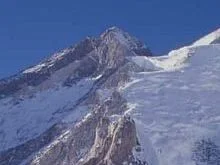
The Unconquered Citadel: The 1975 Polish First Ascent of Gasherbrum III
In August 1975, a Polish team led by Wanda Rutkiewicz conquered Gasherbrum III (7,952m), the highest unclimbed peak on Earth, via the treacherous East Ridge.
Documented Sources & Archival Citations
- American Alpine Journal: Gasherbrum II and III, Polish Expedition(Janusz Onyszkiewicz / American Alpine Club)
Supporting claim: Official expedition report detailing the historic first ascent of Gasherbrum III on August 11, 1975
Accessed/Documented: 1976 - A Caravan of Dreams(Wanda Rutkiewicz & Ewa Matuszewska / Marion Boyars)
Supporting claim: Rutkiewicz's personal narrative of organizing the 1975 expedition and reaching the summit
Accessed/Documented: 1992