1980 Polish Mount Everest Winter Expedition
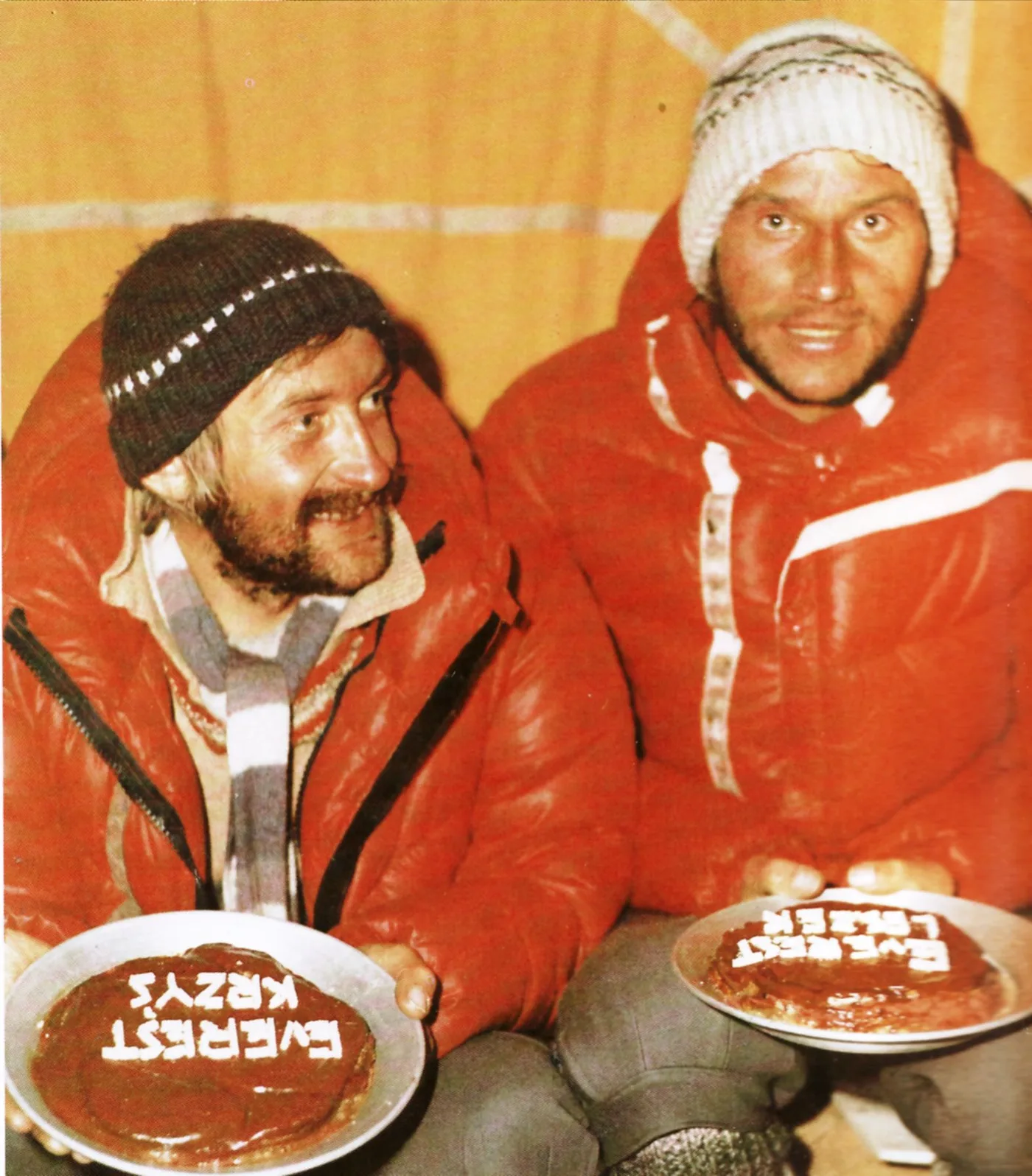
The monumental 1979–1980 Polish winter expedition organized by Andrzej Zawada in which Krzysztof Wielicki and Leszek Cichy stood on the summit of Mount Everest on February 17, 1980, achieving the first winter ascent of an 8,000-meter peak in human history at temperatures below -40°C.
Mountain Safety & Conditions Disclaimer: High-altitude climbing, glacial travel, and technical ascents entail severe objective risks including avalanches, serac collapses, rapid weather collapse, and altitude illness. Historical route descriptions and summit claims on Mountanity reflect documented archival sources and must not be used as live operational safety assessments. Local regulations, permits, and physical glacial topography change continuously.
Peer Review: Senior Editorial Board & Historical Reviewers • Editorial Standards
Official Expedition Narrative & Archival Record
In late 1979, the Polish Mountaineering Association under visionary leader Andrzej Zawada obtained a historic winter climbing permit from the Nepalese government for Mount Everest (8,848m). Arriving at Base Camp in December, the team confronted a frozen hell of hurricane-force jet stream winds that ripped tents from their moorings and drove temperatures down to -45°C. For two months, the 'Ice Warriors' waged an attritional war up the Khumbu Icefall and Lhotse Face. On February 15, as their official permit was expiring, thirty-year-old Krzysztof Wielicki and Leszek Cichy established a high bivouac at Camp IV on the South Col (7,980m). Battling fierce gales that rattled their oxygen regulators and frostbitten fingers, the duo set off at 6:50 AM on February 17, 1980. Enduring bone-chilling cold that froze their water bottles inside their down suits, they pushed past the Hillary Step and stepped onto the roof of the world at 2:25 PM. On the summit, they deposited a thermometer, a wooden rosary left by Pope John Paul II, and a note from late American climber Ray Genet. Their radio message to Base Camp sparked national ecstasy: 'If this wasn't Everest, we wouldn't have gone.' Their ascent inaugurated the legendary era of winter high-altitude climbing.
Documented Team Composition
- Andrzej Zawada (Expedition Leader)
- Krzysztof Wielicki (Summit Climber)
- Leszek Cichy (Summit Climber)
- Andrzej Heinrich
- Bogdan Jankowski
- Maciej Pawlikowski
- Ryszard Szafirski
Key Statistics & Topographic Figures
- Summit Date
- February 17, 1980 (2:25 PM)
First Winter 8,000m Summit
- Summit Temperature
- -40°C (-40°F)
Extreme Winter Wind Chill
- Summit Climbers
- Krzysztof Wielicki & Leszek Cichy
Polish Ice Warriors
- Expedition Leader
- Andrzej Zawada
Polish Mountaineering Association
Archival Primary Source Quotations
“If this wasn’t Everest, we wouldn’t have gone.”
Defined Alpine Terminology & Concepts
- Ice Warriors (Lodowi Wojownicy)
- The legendary generation of Polish high-altitude climbers who pioneered winter ascents of the world’s fourteen 8,000-meter peaks throughout the 1980s.
- Winter Jet Stream
- The high-altitude river of wind that descends directly over the Himalayas between December and February, creating sustained winds over 100 mph.
Frequently Asked Questions: 1980 Polish Mount Everest Winter Expedition
Who made the first winter ascent of Mount Everest?
Krzysztof Wielicki and Leszek Cichy made the historic first winter ascent of Mount Everest (8,848m) on February 17, 1980, as part of a Polish expedition led by Andrzej Zawada.
What temperature was it when Wielicki and Cichy summited Everest in winter?
The summit temperature on February 17, 1980, was estimated at -40°C (-40°F), with hurricane-force winds exceeding 50 mph driving the wind chill below -60°C.
Was Everest the first 8,000-meter peak climbed in winter?
Yes. Mount Everest was the very first 8,000-meter peak in human history ever summited during the winter season, proving that humans could survive the Death Zone in deep winter.
What did the Polish climbers leave on the summit of Everest in 1980?
Wielicki and Cichy left a maximum-minimum thermometer, a wooden rosary sent by Pope John Paul II, and retrieved a note left the previous spring by late American climber Ray Genet.
What was the famous message Cichy radioed to Base Camp from the summit?
Cichy radioed expedition leader Andrzej Zawada saying: "If this wasn't Everest, we wouldn't have gone," capturing the unbearable physical suffering of the climb.
Who were the Polish Ice Warriors (Lodowi Wojownicy)?
The Ice Warriors was the moniker given to Poland's elite generation of high-altitude mountaineers who pioneered winter ascents of eight 8,000-meter peaks between 1980 and 1988.
Did Wielicki and Cichy use supplemental oxygen on Everest in winter?
Yes. Because of extreme cold and low barometric pressure in winter, Wielicki and Cichy used supplemental oxygen, though their masks repeatedly froze solid in the -40°C gale.
What route was used for the first winter ascent of Everest?
The 1980 Polish team climbed via the standard Southeast Ridge / South Col route from the Khumbu Glacier in Nepal.
Ascent Route & Topography
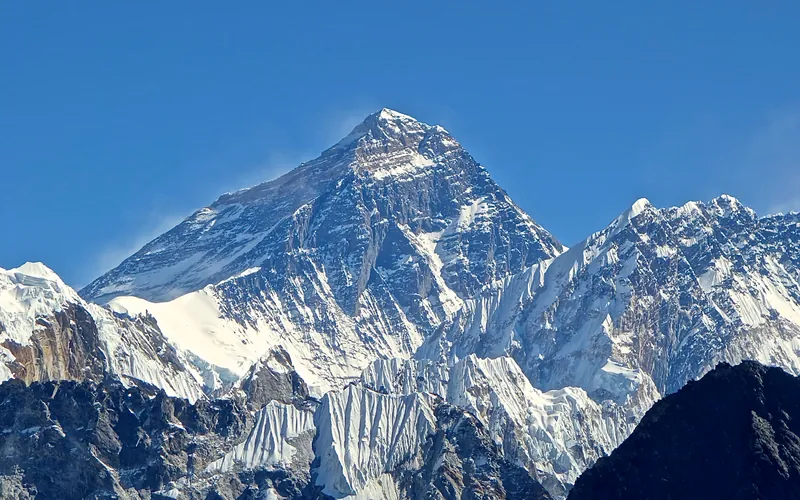
South Col & Southeast Ridge (Normal Route)
The South Col Route along the Southeast Ridge is the historic path of the 1953 first ascent and the most popular route on Mount Everest. Starting from Base Camp on the Khumbu Glacier in Nepal, climbers navigate the shifting seracs of the Khumbu Icefall into the Western Cwm. The route then scales the icy 45-degree slope of the Lhotse Face to the South Col at 7,925 meters, launching the final summit bid through the Balcony, South Summit, and Hillary Step to the summit of Earth at 8,848.86 meters.
Target Objective Peak
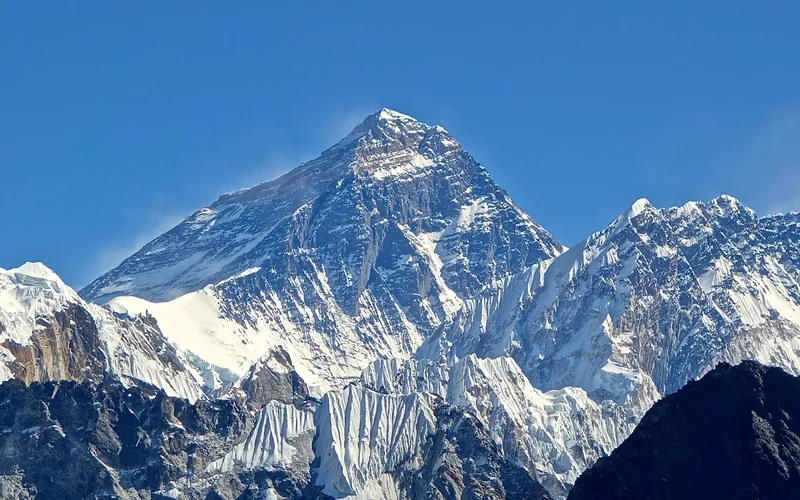


Mount Everest
Mount Everest is the highest mountain above sea level on Earth, standing at an official elevation of 8,848.86 meters (29,031.7 ft). Straddling the international frontier between Nepal and China, it is known locally as Sagarmatha in Nepali ('Goddess of the Sky') and Chomolungma in Tibetan ('Mother Goddess of the World'). The peak rises into the extreme upper troposphere, where oxygen levels drop to barely one-third of sea-level pressure. Climbers face hurricane-force jet stream winds, severe frostbite conditions, shifting ice crevasses in the Khumbu Icefall, and the dangerous Death Zone above 8,000 meters.
Featured Expedition Climbers
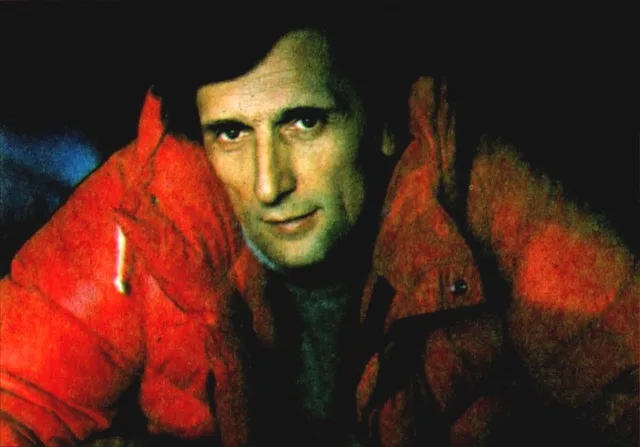
Andrzej Zawada
Maria Andrzej Zawada was born on July 16, 1928, in Olsztyn, Poland. After surviving the Second World War, he studied geophysics and physics at Wrocław University and Warsaw University of Technology, working as a research scientist at the Polish Academy of Sciences. An intellectual with immense charisma, strategic organizational brilliance, and an unshakeable will, Zawada fell in love with mountaineering in the High Tatras in 1950, rapidly becoming the guiding philosopher of Polish postwar exploration. In the 1970s, after foreign nations had already completed the first ascents of all fourteen 8,000-meter peaks during summer seasons, Zawada asked a radical question: 'Tell me what you did in winter on an eight-thousander, and I will tell you what kind of climber you are.' He realized that winter Himalayan climbing was the true final frontier of mountaineering. In 1973, he led the first winter ascent of Noshaq (7,492m) in the Hindu Kush, proving human survival was possible above 7,000 meters in astronomical winter. Zawada's finest masterpiece unfolded in the winter of 1979–1980. Overcoming bureaucratic obstacles from Nepalese authorities to secure the world's first winter Everest permit, Zawada organized the massive Polish national expedition to the South Col. On February 17, 1980, under his leadership, Leszek Cichy and Krzysztof Wielicki stood on the summit of Mount Everest (8,848m), creating the era of the 'Ice Warriors' (*Lodowi Wojownicy*). Zawada went on to lead the first winter ascent of Cho Oyu (8,188m) in 1985 and the first winter expedition to K2 in 1987–1988. Andrzej Zawada passed away from cancer in Warsaw on August 21, 2000, revered internationally as the father of modern winter high-altitude exploration.
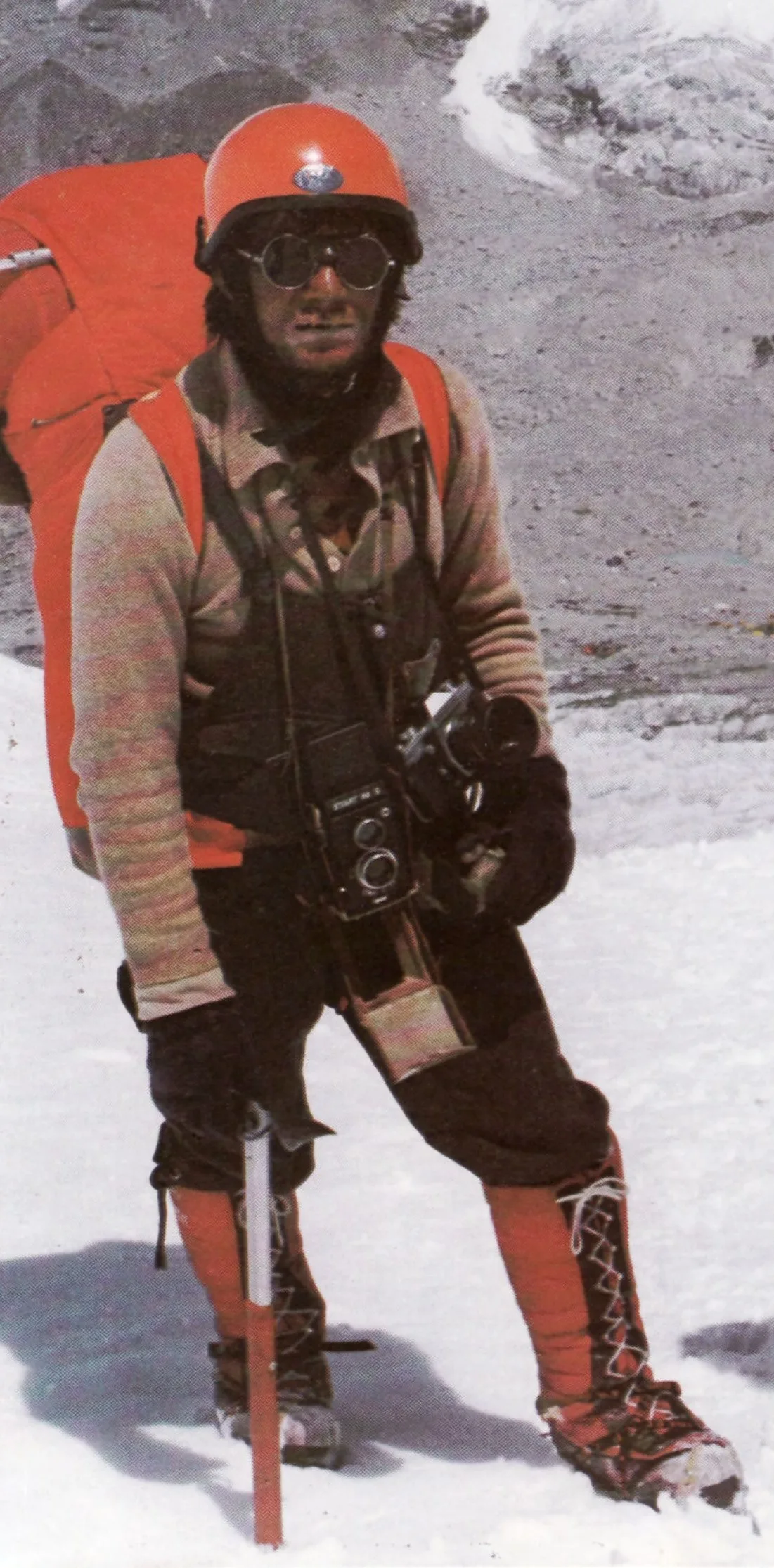
Jerzy Kukuczka
Jerzy Kukuczka was born on March 24, 1948, in Katowice, in the industrial heartland of Silesia, Poland. Working as an electrical technician in local coal mines, he found liberation and transcendence in the granite crags of the High Tatras during the 1960s. Despite severe material shortages under Communist rule, Kukuczka and his peers in the Katowice Mountaineering Club fabricated their own pitons, tents, and down parkas from discarded scraps. His immense physical stamina, quiet psychological resilience, and preternatural ability to withstand extreme cold soon set him apart from his contemporaries. Kukuczka burst onto the global mountaineering stage in 1979 with an ascent of Lhotse (8,516m) without supplemental oxygen. In the spring of 1980, he joined the Polish national expedition to Mount Everest led by Andrzej Zawada. Paired with Andrzej Czok, Kukuczka pioneered a daring new route up the South Pillar, summiting on May 19, 1980—his only 8,000-meter ascent using supplemental oxygen. The following year, in autumn 1981, he pulled off a stunning solo first ascent of Makalu (8,485m) via the Northwest Ridge, surviving multiple exposed bivouacs on the knife-edge crest in pure lightweight style. What distinguished Kukuczka from all other climbers was his refusal to repeat established normal routes. Between 1979 and 1987, he summited all fourteen 8,000-meter peaks in just under eight years—half the time it took Reinhold Messner. Remarkably, eleven of his fourteen ascents were accomplished by new routes, four were completed in the brutal depths of Himalayan winter, and one was executed completely solo. In winter 1985, he pulled off the near-impossible: after summiting Dhaulagiri I (8,167m) in winter on January 21, he raced across Nepal to join another team and made the first winter ascent of Cho Oyu (8,188m) on February 15—two winter 8,000m summits within 25 days. In July 1986, Kukuczka teamed up with Tadeusz Piotrowski to tackle the formidable South Face of K2 (8,611m). Over five grueling days in pure alpine style, they forced a direct route through catastrophic hanging seracs and vertical rock bands, establishing the 'Polish Line'. Reinhold Messner later famously termed the line 'suicidal'. Though they reached the summit on July 8, their descent down the Abruzzi Spur turned to tragedy when Piotrowski lost both crampons and plunged to his death, leaving Kukuczka to crawl into Base Camp alone and near death. The Polish Line has never been repeated. On September 18, 1987, Kukuczka summited Shishapangma (8,027m) via a new route on the Western Ridge, becoming the second person in history to climb all fourteen eight-thousanders. Reinhold Messner sent him a legendary congratulatory telegram: 'You are not the second; you are great.' At the 1988 Calgary Winter Olympics, Kukuczka was awarded the Silver Olympic Order for his mountaineering achievements. Driven by an unquenchable desire to test human limits, Kukuczka returned to Nepal in autumn 1989 to attempt the unclimbed 3,300-meter South Face of Lhotse—the 'Last Great Problem' of the Himalayas. On October 24, 1989, climbing at 8,200 meters near the summit headwall, a secondhand 7mm rope purchased in a Kathmandu bazaar snapped over a sharp rock rib. Kukuczka fell 2,000 meters into the abyss. His body remains entombed in the ice of Lhotse's South Face. He remains the undisputed benchmark for high-altitude suffering, boldness, and alpine creativity.
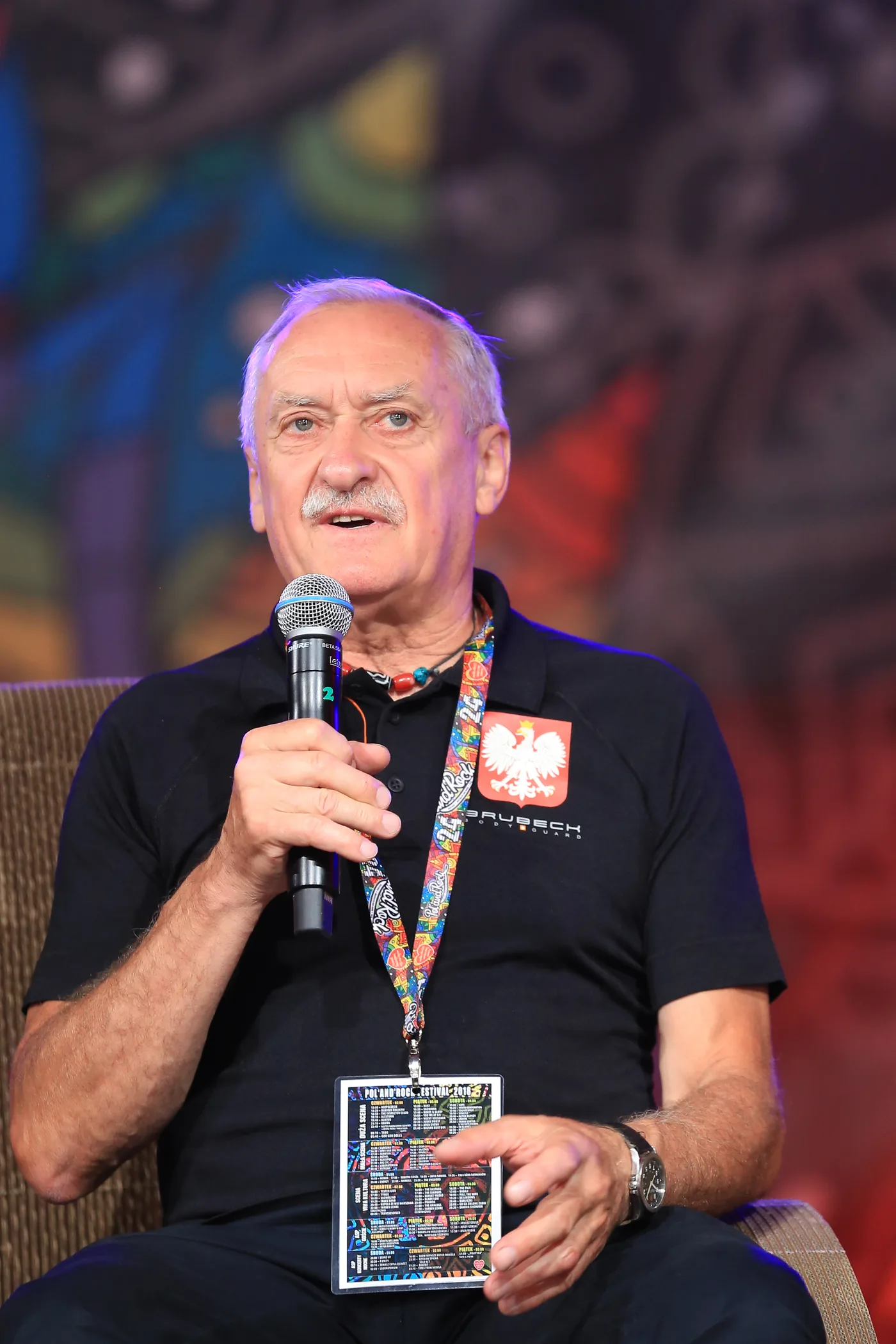
Krzysztof Wielicki
Krzysztof Wielicki was born on January 5, 1950, in Szklarka Przygodzicka, Greater Poland. Graduating with a degree in electronics engineering from the Wrocław University of Science and Technology, Wielicki discovered mountaineering in the Sudeten mountains and the High Tatras during the late 1960s. He became a key figure in the Wrocław Mountaineering Club, building a formidable reputation for superhuman leg speed, physical toughness, and the ability to operate in sub-zero tempests. In late 1979, veteran expedition organizer Andrzej Zawada secured a revolutionary winter climbing permit from the Nepalese government for Mount Everest (8,848m). Arriving at Base Camp in December, the Polish team was battered by hurricane-force winter jet stream winds and temperatures plunging below -40°C. As the team's permit neared its expiration on February 17, 1980, the 30-year-old Wielicki and teammate Leszek Cichy launched a desperate last-chance summit bid from Camp IV on the South Col. Battling frostbite and fierce winds, they reached the summit of Mount Everest at 2:25 PM on February 17, 1980—making the first winter ascent of Mount Everest and the first winter ascent of any 8,000-meter mountain in human history. At the summit, they left a thermometer and a wooden rosary, radioing down the immortal phrase: 'If this wasn't Everest, we wouldn't have gone.' Wielicki soon pioneered high-altitude speed soloing. In July 1984, he stunned the mountaineering world on Broad Peak (8,051m) in the Karakoram: leaving Base Camp alone at midnight, he reached the summit and returned to Base Camp in an astonishing 21 hours and 30 minutes—the first single-day ascent of an 8,000-meter peak in history. In 1990, he repeated this feat on Dhaulagiri I (8,167m), establishing a new route on the East Face solo in just 16 hours. Wielicki continued his conquest of the 8,000ers in winter. On January 11, 1986, he and Jerzy Kukuczka completed the first winter ascent of Kangchenjunga (8,586m). Two years later, on December 31, 1988, Wielicki achieved what is considered one of the most superhuman individual feats in climbing history: suffering from severe spinal damage that required him to wear a rigid orthopedic corset and collar, he launched a solo push up Lhotse (8,516m) in the dead of winter, reaching the summit alone on New Year's Eve. Between 1980 and 1996, Wielicki summited all fourteen 8,000-meter peaks, becoming only the fifth person in history to complete the Crown of the Himalaya. In his later years, Wielicki assumed the mantle of elder statesman and leader of Polish Himalayan mountaineering, directing major winter expeditions to K2 and Nanga Parbat. In 2018, he was awarded Spain's prestigious Princess of Asturias Award for Sports alongside Reinhold Messner, and in 2019, he received the Lifetime Achievement Piolet d'Or (Piolet d'Or Carrière). Wielicki remains the quintessential embodiment of Poland's legendary 'Ice Warriors' (Lodowi Wojownicy).
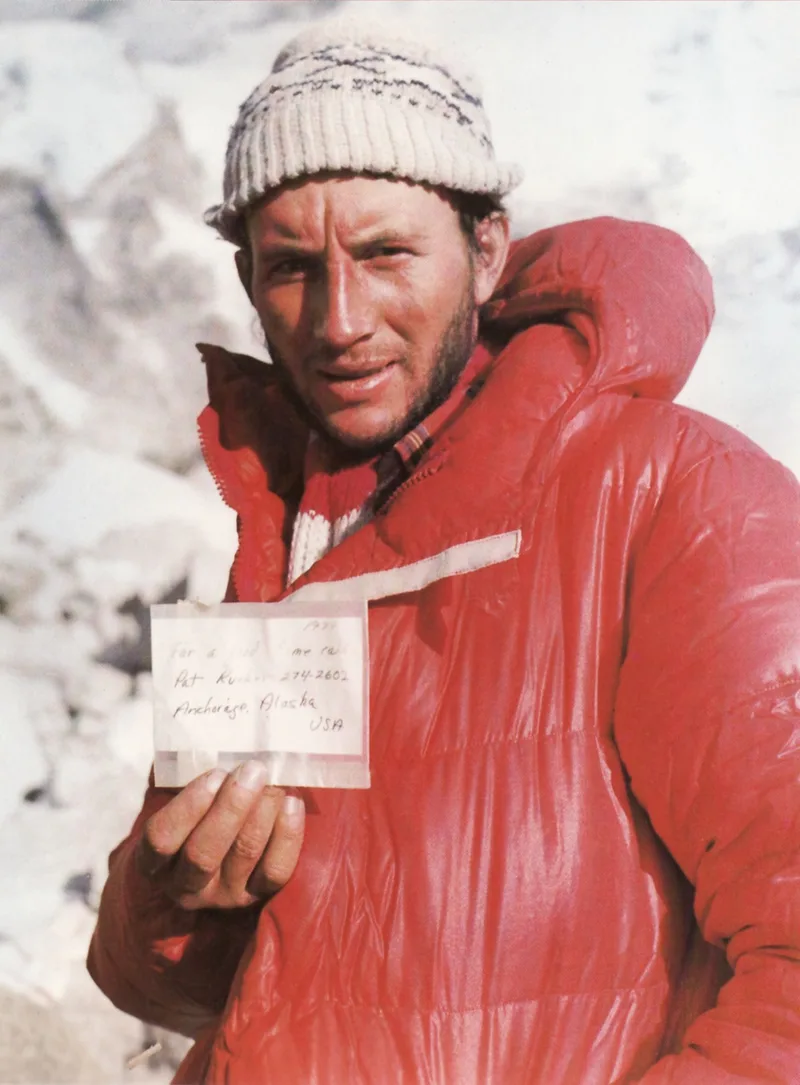
Leszek Cichy
Leszek Cichy was born on November 14, 1951, in Pruszków, Poland. A brilliant student with an analytical mind, Cichy studied geodesy and spatial cartography at the Warsaw University of Technology before working as a university lecturer and later as an international investment banker. He began climbing in the Polish High Tatras in 1969, quickly developing a reputation for meticulous planning, exceptional psychological endurance in extreme cold, and mastery of mixed terrain. In 1974, Cichy made his high-altitude breakthrough on Shispare Peak (7,611m) in the Karakoram. In 1975, he reached the summit of Gasherbrum II (8,035m) via a new route with Janusz Onyszkiewicz and Krzysztof Zdzitowiecki. In 1976, he was a key climber on the historic Polish expedition to K2, climbing the formidable Northeast Ridge to 8,230 meters. His reputation as one of Poland's most dependable and cold-resilient climbers made him an indispensable choice for Andrzej Zawada's historic winter assault on Mount Everest in 1979–1980. On February 17, 1980, enduring temperatures below -42°C and hurricane winds on the South Col, Leszek Cichy and Krzysztof Wielicki launched their final summit push. At 2:25 PM, Cichy and Wielicki stood on the 8,848-meter summit of Mount Everest, becoming the first human beings ever to summit an eight-thousander in astronomical winter. Cichy famously left a wooden rosary and a thermometer on the summit, retrieving a handwritten note left the previous autumn by American climber Ray Genet. Between 1980 and 1999, Cichy continued his global climbing career, becoming the first Pole in history to complete the Seven Summits, while serving as president of the Polish Mountaineering Association.
Associated Historical Chronicles & Stories
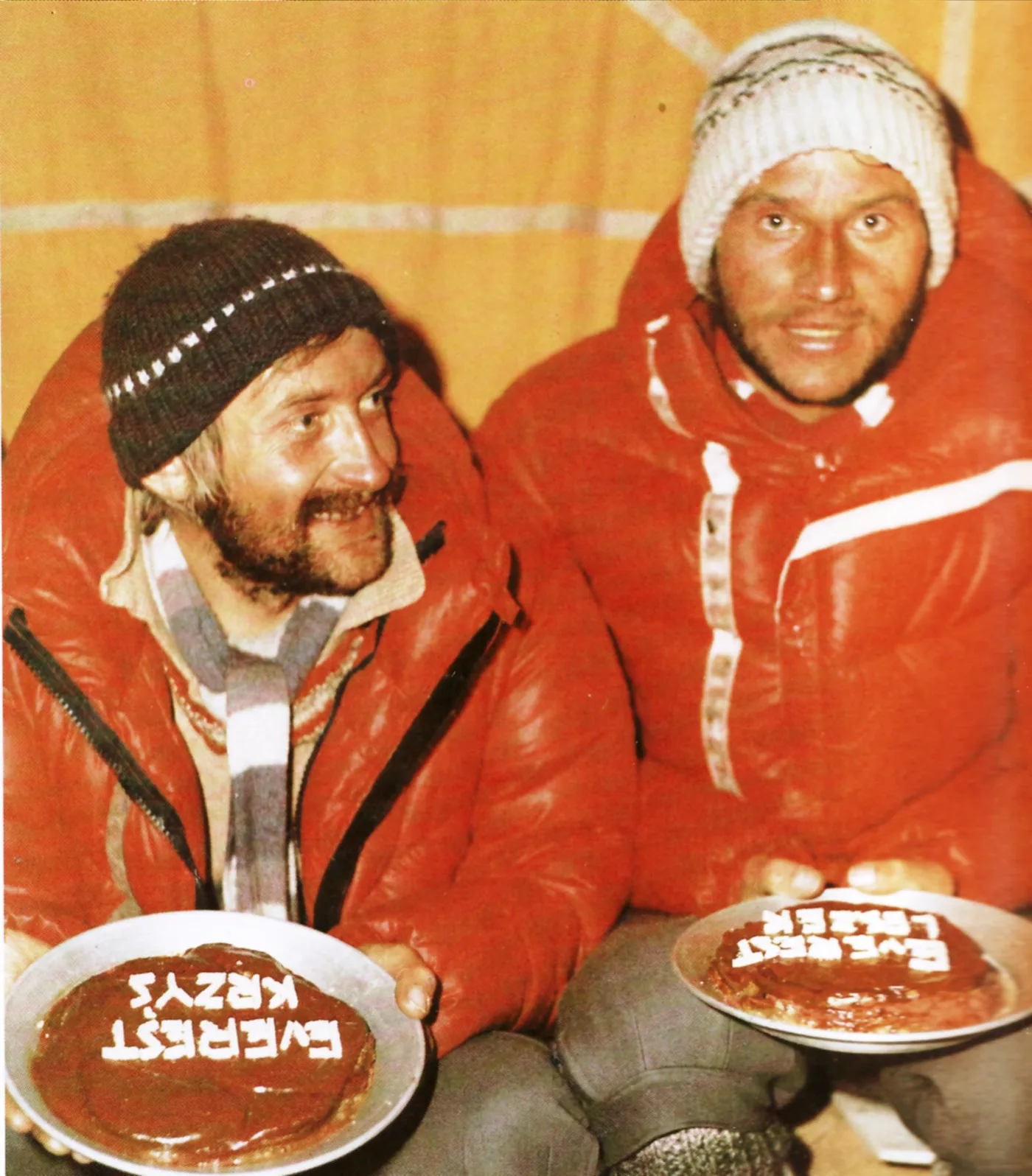
Everest Winter 1980: The Polish Ice Warriors Conquer the Coldest Peak
On February 17, 1980, Krzysztof Wielicki and Leszek Cichy made the historic first winter ascent of Mount Everest at -40°C, proving humans could summit an 8,000-meter giant in the dead of winter.
Documented Sources & Archival Citations
- Winter 8000: Climbing the World's Highest Mountains in the Coldest Season(Bernadette McDonald / Mountaineers Books)
Supporting claim: Detailed chronicle of the 1980 winter Everest climb and Polish Ice Warriors
Accessed/Documented: 2020 - The Himalayan Journal: Mount Everest Winter Expedition 1980(The Himalayan Club)
Supporting claim: Official expedition record authored by expedition leader Andrzej Zawada
Accessed/Documented: 1981