1986 Swiss Mount Everest North Face (Hornbein Couloir) Speed Expedition
The revolutionary August 1986 expedition in which Swiss speed alpinists Erhard Loretan and Jean Troillet scaled Mount Everest's North Face via the Hornbein Couloir in a continuous 31-hour push without supplemental oxygen, tents, or fixed ropes, returning to base in 43 hours.
Mountain Safety & Conditions Disclaimer: High-altitude climbing, glacial travel, and technical ascents entail severe objective risks including avalanches, serac collapses, rapid weather collapse, and altitude illness. Historical route descriptions and summit claims on Mountanity reflect documented archival sources and must not be used as live operational safety assessments. Local regulations, permits, and physical glacial topography change continuously.
Peer Review: Senior Editorial Board & Historical Reviewers • Editorial Standards
Official Expedition Narrative & Archival Record
In late August 1986, Swiss alpinists Erhard Loretan and Jean Troillet executed the most radical speed ascent in Himalayan history on the direct North Face of Mount Everest (8,848m). Bypassing traditional siege tactics, porters, and supplemental oxygen, they carried only minimal gear in tiny daypacks: warm mittens, a thermos, headlamps, and a handful of chocolate bars. Entering the 3,000-meter wall on the evening of August 28, they climbed through the night to minimize exposure to stonefall and daytime avalanches. Slicing through the 60-degree Japanese Couloir and the sheer constriction of the Hornbein Couloir, they took a brief 90-minute rest at 8,400 meters in a snow trench before conquering the Yellow Band. At 1:30 PM on August 30, after thirty-one hours of non-stop climbing, Loretan and Troillet stood atop Mount Everest. After brief contemplation on the summit, they began an audacious descent: sitting on their windproof anoraks and rucksacks, using their ice axes as rudders, they glissaded down the 3,000-meter, 60-degree face, covering the descent in just three and a half hours and returning to Advanced Base Camp forty-three hours after departure.
Documented Team Composition
- Erhard Loretan (Lead Speed Alpinist, Switzerland)
- Jean Troillet (Lead Speed Alpinist, Switzerland)
- Pierre-Alain Steiner (Support)
Key Statistics & Topographic Figures
- Round-Trip Time
- 43 Hours Total
Base to Summit & Return
- Ascent Time
- 31 Hours Non-Stop
3,000m Vertical Gain
- Descent Glissade
- 3.5 Hours
Sliding on Rucksacks
- Summit Date
- August 30, 1986 (1:30 PM)
No Oxygen / No Tents
Archival Primary Source Quotations
“Speed is safety on big faces. The less time you spend beneath hanging seracs, the higher your odds of survival.”
Defined Alpine Terminology & Concepts
- Hornbein Couloir
- A steep, narrow 60-degree snow-and-ice cleft cutting directly through the upper North Face of Mount Everest, first climbed by Tom Hornbein and Willi Unsoeld in 1963.
- Glissade
- A controlled high-speed slide down a steep snow slope on one’s boots, buttocks, or pack, using an ice axe pick as a friction rudder.
Frequently Asked Questions: 1986 Swiss Mount Everest North Face (Hornbein Couloir) Speed Expedition
Who climbed Everest’s Hornbein Couloir in 43 hours?
Swiss speed climbers Erhard Loretan and Jean Troillet completed the historic 43-hour round-trip ascent of Mount Everest via the Hornbein Couloir in late August 1986.
Did Loretan and Troillet use supplemental oxygen or tents on Everest?
No. They climbed in pure alpine style without supplemental oxygen, without ropes, without tents, and without sleeping bags, carrying only small 20-liter daypacks.
Why did Loretan and Troillet climb Everest at night?
They climbed at night because sub-zero freezing stabilized the snow and prevented lethal stonefall and avalanches from sweeping the narrow Hornbein Couloir.
How fast did Loretan and Troillet descend Mount Everest?
They descended the 3,000-meter North Face in an astonishing 3.5 hours by sitting on their windproof anoraks and rucksacks, glissading down the 60-degree snow slopes.
How long did the climb take from Base Camp to the summit of Everest?
The ascent took exactly 31 hours of continuous movement from Advanced Base Camp (5,850m) to the 8,848m summit, followed by a 3.5-hour descent and brief rests.
What route did Loretan and Troillet climb on Everest?
They climbed the North Face via the Japanese Couloir transitioning directly into the Hornbein Couloir (often termed the Supercouloir) in Tibet.
What gear did Loretan and Troillet carry in their daypacks?
They carried minimal food (chocolate, dried fruit), warm gloves, headlamps, spare batteries, and a single thermos of warm tea, wearing down climbing suits.
Why is the 1986 Loretan-Troillet climb considered revolutionary?
It proved that Mount Everest could be scaled without massive sieges or oxygen, demonstrating that speed and minimalism offered maximum safety against mountain hazards.
Ascent Route & Topography
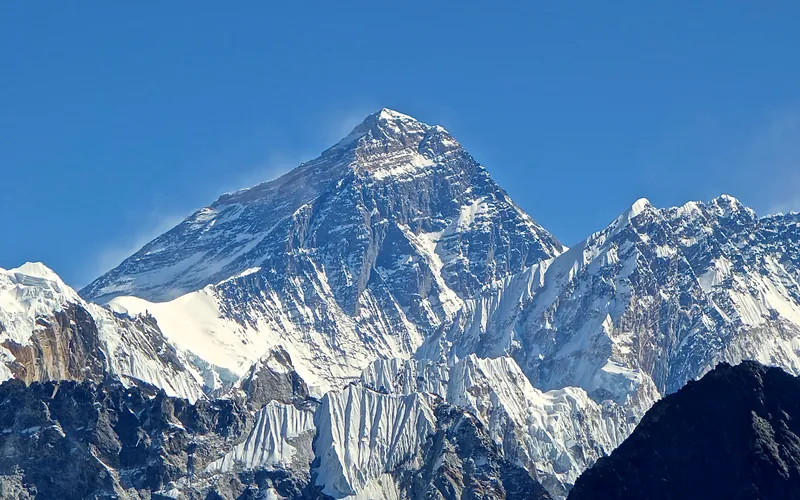
Mount Everest North Face (Hornbein Couloir Direct)
The North Face of Mount Everest via the Japanese Couloir and the sheer Hornbein Couloir is one of the most direct and formidable ice lines in the Himalayas. Rising 3,000 vertical meters from the Rongbuk Glacier to the summit, it funnels through a narrow 60-degree snow-and-ice cleft slicing straight through the Yellow Band and upper limestone cliffs of the North Face. In August 1986, Swiss alpinists Erhard Loretan and Jean Troillet executed one of the most audacious speed climbs in mountain history: climbing the entire face in a single 31-hour push at night without supplemental oxygen, tents, or fixed ropes. After summiting on August 30, they glissaded down the 3,000-meter face on their backs and buttocks in just 3.5 hours, completing the entire round trip in an astonishing 43 hours.
Target Objective Peak
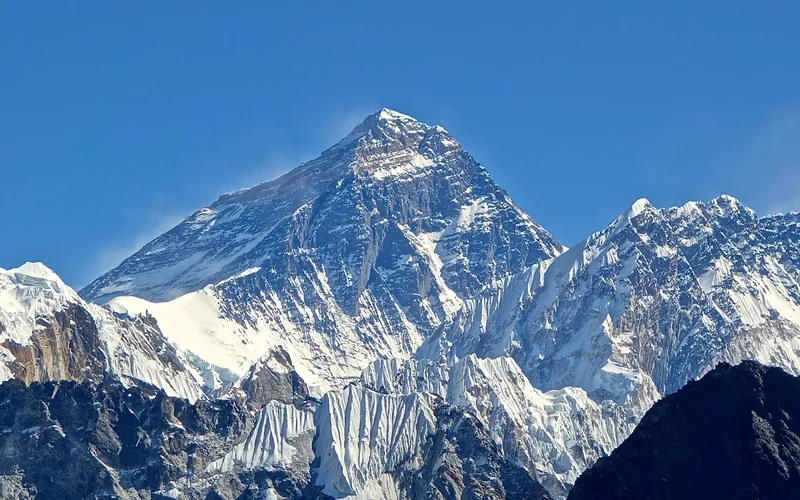


Mount Everest
Mount Everest is the highest mountain above sea level on Earth, standing at an official elevation of 8,848.86 meters (29,031.7 ft). Straddling the international frontier between Nepal and China, it is known locally as Sagarmatha in Nepali ('Goddess of the Sky') and Chomolungma in Tibetan ('Mother Goddess of the World'). The peak rises into the extreme upper troposphere, where oxygen levels drop to barely one-third of sea-level pressure. Climbers face hurricane-force jet stream winds, severe frostbite conditions, shifting ice crevasses in the Khumbu Icefall, and the dangerous Death Zone above 8,000 meters.
Featured Expedition Climber
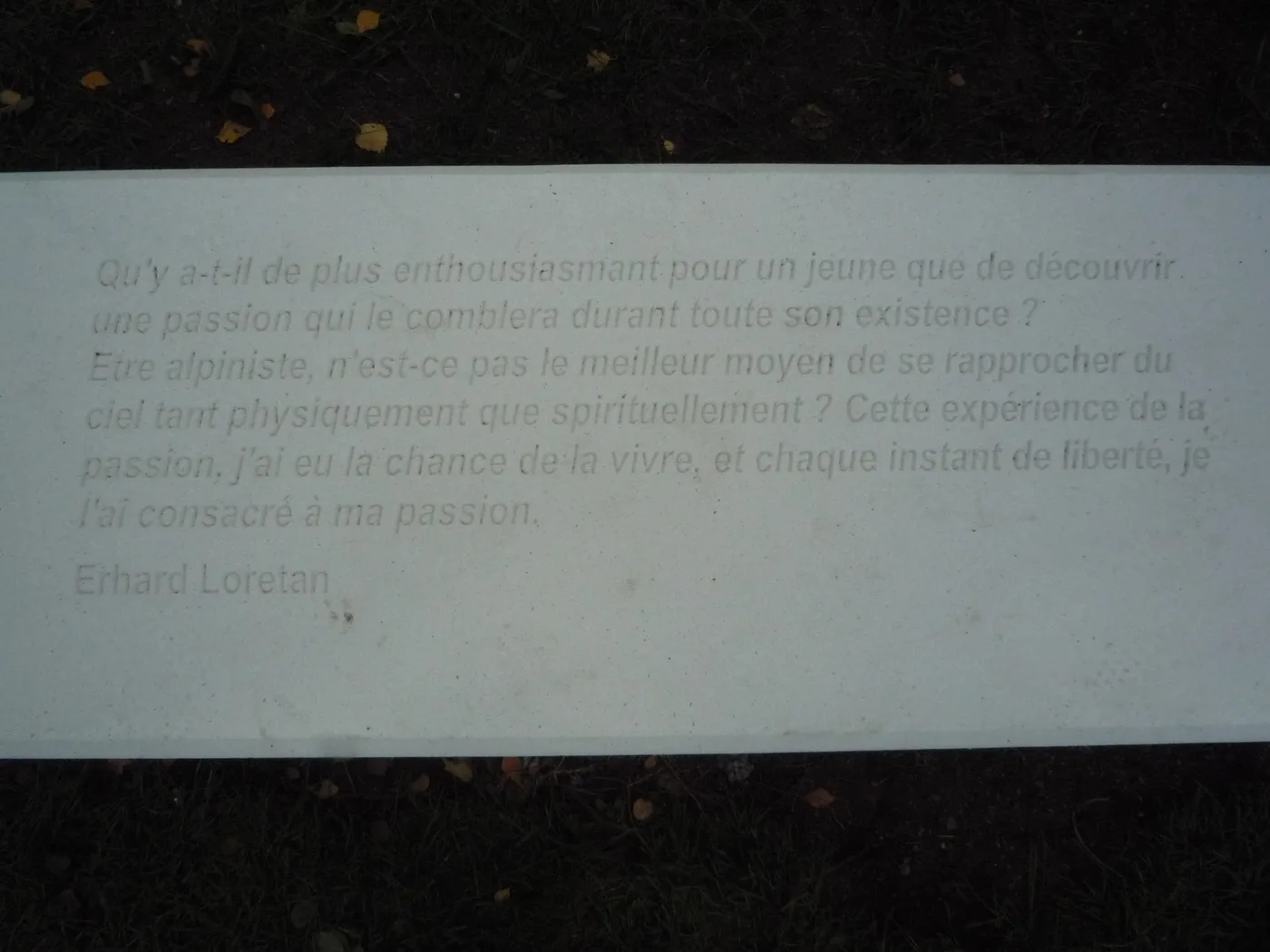
Erhard Loretan
Erhard Loretan was born on April 28, 1959, in Bulle in the Canton of Fribourg, Switzerland. Raised in the shadow of the Pre-Alps, he began climbing local limestone spires at age eleven. Endowed with exceptional lung capacity, a lean, muscular frame, and an innate sense of mountain agility, Loretan trained as a cabinetmaker before qualifying as a UIAGM mountain guide at age twenty-two. Rejecting conventional siege climbing methods, heavy gear, and fixed ropes, Loretan championed high-velocity alpine style: climbing light, moving fast, and striking when weather windows opened. In 1982, at age twenty-three, Loretan made his Himalayan debut by summiting Nanga Parbat (8,126m) via the Diamir Face. The following year, in the summer of 1983, he stunned international mountaineering by climbing three Karakoram 8,000-meter peaks within seventeen days alongside Marcel Rüedi: Gasherbrum II on June 16, Gasherbrum I on June 23, and Broad Peak on June 30. All were completed in lightweight alpine style without supplemental oxygen. In 1984, Loretan and Norbert Joos made the historic first alpine-style ascent of the direct South Face of Annapurna I (8,091m), traversing the mountain by descending the North Face. In December 1985, he completed the first winter ascent of the direct East Face of Dhaulagiri I (8,167m) alongside Pierre-Alain Steiner. Loretan's crowning masterpiece occurred in late August 1986 on Mount Everest (8,848m). Climbing alongside Swiss partner Jean Troillet, the pair launched a radical speed assault on the direct North Face via the Japanese Couloir and Hornbein Couloir. Moving in absolute alpine style without oxygen, ropes, or tents, they climbed through the night to avoid rockfall, reaching the summit of Everest at 1:30 PM on August 30 after 31 hours of continuous movement. After resting on top, they made an extraordinary descent: sitting on their windproof anoraks and rucksacks, they glissaded down the 3,000-meter 60-degree snow face, reaching Advanced Base Camp in just 3.5 hours. Their total round-trip time of 43 hours remains one of the greatest feats in high-altitude history. In 1988, Loretan teamed with Wojciech Kurtyka to conquer the vertical 1,000-meter East Face of Trango Nameless Tower (6,239m). In 1989, he set a solo winter record in Switzerland, climbing thirteen north faces in the Bernese Alps in thirteen days. On October 5, 1995, by summiting Kangchenjunga (8,586m), Loretan completed the ascent of all fourteen 8,000-meter peaks, becoming only the third human to achieve the feat after Reinhold Messner and Jerzy Kukuczka, climbing every single peak without supplemental oxygen. Tragically, on April 28, 2011—his fifty-second birthday—Loretan was killed while guiding a client on the Grünhorn in the Bernese Alps when the client slipped on an icy ridge and pulled both climbers down an 800-meter face. Erhard Loretan is universally honored as a purist pioneer who redefined the limits of speed, commitment, and lightweight style in the death zone.
Associated Historical Chronicles & Stories
Everest 1986: Erhard Loretan and Jean Troillet's 43-Hour Alpine Blitz
In August 1986, Swiss speed alpinists Erhard Loretan and Jean Troillet climbed Mount Everest's North Face in a 31-hour night push without oxygen or tents, glissading down in 3.5 hours for a 43-hour round trip.
Documented Sources & Archival Citations
- Les 8000 rugissants (The Roaring 8000s)(Erhard Loretan & Jean Ammann / Éditions de la Sarine)
Supporting claim: Firsthand narrative of the 43-hour round-trip climb and the glissade descent
Accessed/Documented: 1996 - American Alpine Journal: Mount Everest Hornbein Couloir in Alpine Style(American Alpine Club)
Supporting claim: Official expedition record and technical analysis of the speed ascent
Accessed/Documented: 1987