1987 Ang Rita Mount Everest Winter Oxygenless Expedition
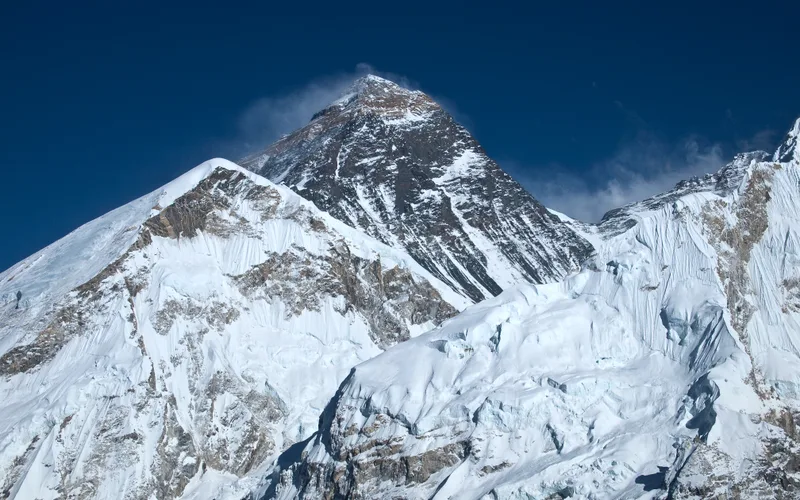
On December 22, 1987, Nepali mountaineer Ang Rita Sherpa completed the first and only winter ascent of Mount Everest (8,848m) without supplemental bottled oxygen in human history, certified by Guinness World Records.
Mountain Safety & Conditions Disclaimer: High-altitude climbing, glacial travel, and technical ascents entail severe objective risks including avalanches, serac collapses, rapid weather collapse, and altitude illness. Historical route descriptions and summit claims on Mountanity reflect documented archival sources and must not be used as live operational safety assessments. Local regulations, permits, and physical glacial topography change continuously.
Peer Review: Senior Editorial Board & Historical Reviewers • Editorial Standards
Official Expedition Narrative & Archival Record
In the winter of 1987, a South Korean expedition led by Lee Sang-bae arrived at Everest Base Camp targeting the summit during the coldest period of the astronomical winter calendar. Serving as Sirdar and lead climbing engine was 39-year-old Ang Rita Sherpa, already known across Nepal as 'The Snow Leopard' for his extraordinary cold endurance and natural adaptation to thin air. Pushing through hurricane-force jet stream winds that battered the Khumbu Icefall and stripped the Lhotse Face into brittle blue ice, the team established Camp IV on the South Col (7,920m) in sub-zero tempests exceeding -40°C. On the morning of December 22, 1987, Ang Rita set off toward the summit alongside Korean climber Heo Young-ho. While Heo utilized supplemental bottled oxygen, Ang Rita climbed entirely with natural respiration, carrying no gas apparatus. Overcoming extreme windchill below -60°C that threatened instant frostbite, Ang Rita broke trail through the hard-packed sastrugi past the South Summit and Hillary Step. At 2:20 PM on December 22, 1987, Ang Rita Sherpa stood on the 8,848-meter summit of Mount Everest. His triumph established an immortal Guinness World Record as the only winter summit of Mount Everest achieved without supplemental bottled oxygen.
Documented Team Composition
- Ang Rita Sherpa (Sirdar & Summit Climber Without Oxygen, Nepal)
- Heo Young-ho (Summit Climber, South Korea)
- Lee Sang-bae (Expedition Leader, South Korea)
Key Statistics & Topographic Figures
- Winter Summit Date
- December 22, 1987 (2:20 PM)
First & Only Winter Ascent No O2
- Oxygen Apparatus
- 0 Liters (Natural Respiration)
Pure Alpine Endurance
- Total Everest Summits
- 10 Summits (All Without O2)
Guinness World Record
- Summit Temperature
- < -40°C (-40°F)
Extreme Astronomical Winter
- National Decoration
- Order of Gorkha Dakshina Bahu
Conferred by King of Nepal
Archival Primary Source Quotations
“The mountain is my temple. When the winter wind screams, you do not fight it; you breathe with it and keep moving.”
“Ang Rita was not a normal man at 8,000 meters; he was a natural creature of the high snows.”
Defined Alpine Terminology & Concepts
- Astronomical Winter Climbing
- Mountaineering ascents completed strictly after the winter solstice (December 21), characterized by peak jet stream wind speeds and lethal cold.
- Hypoxia Resistance
- The physiological capacity of certain high-altitude natives to metabolize oxygen efficiently in barometric pressures under 350 hPa without brain damage.
- Sastrugi
- Sharp, irregular ridges formed on a snow surface by wind erosion and deposition, creating treacherous footing on winter mountain ridges.
Frequently Asked Questions: 1987 Ang Rita Mount Everest Winter Oxygenless Expedition
Who made the only winter ascent of Mount Everest without supplemental oxygen?
Nepali mountaineer Ang Rita Sherpa ("The Snow Leopard") completed the only winter ascent of Mount Everest without supplemental oxygen in human history on December 22, 1987.
Why was Ang Rita Sherpa called "The Snow Leopard"?
He was nicknamed "The Snow Leopard" (Himchituwa) because of his extraordinary cold tolerance and unmatched ability to scale 8,000-meter peaks without supplemental bottled oxygen.
How cold was it during Ang Rita’s 1987 winter summit of Everest?
Ambient temperatures dropped below -40°C, with hurricane-force winds creating windchill values exceeding -65°C on the summit ridge.
How many times did Ang Rita Sherpa summit Mount Everest without oxygen?
Ang Rita Sherpa summited Mount Everest ten times between 1983 and 1996, completing every single climb entirely without supplemental bottled oxygen.
Who was Ang Rita Sherpa’s summit companion on the 1987 winter climb?
South Korean climber Heo Young-ho reached the summit alongside Ang Rita on December 22, 1987, utilizing supplemental bottled oxygen.
Is Ang Rita’s 1987 winter climb recognized by Guinness World Records?
Yes. Guinness World Records officially recognizes Ang Rita Sherpa as the only human being to have climbed Mount Everest in winter without bottled oxygen.
What route was climbed during the 1987 winter ascent?
They climbed via the South Col and Southeast Ridge route through Nepal, departing Camp IV at 7,920 meters in astronomical winter.
When did Ang Rita Sherpa pass away?
Ang Rita Sherpa passed away in Kathmandu on September 21, 2020, at the age of 72, mourned as one of Nepal’s greatest national heroes.
Ascent Route & Topography
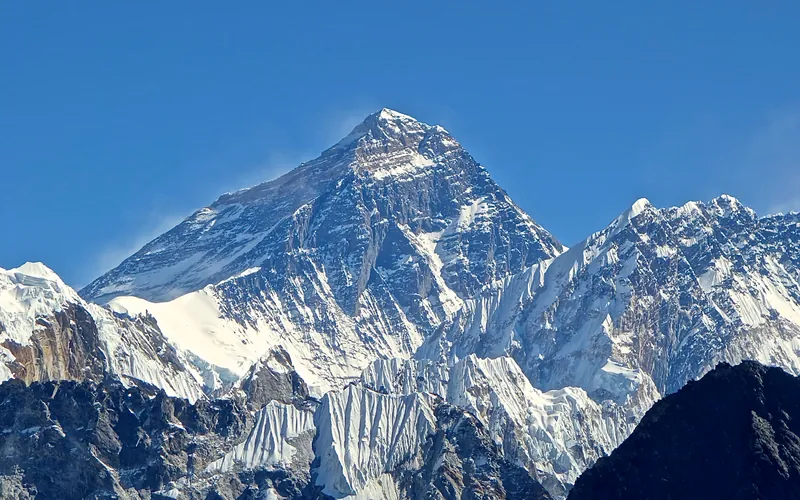
South Col & Southeast Ridge (Normal Route)
The South Col Route along the Southeast Ridge is the historic path of the 1953 first ascent and the most popular route on Mount Everest. Starting from Base Camp on the Khumbu Glacier in Nepal, climbers navigate the shifting seracs of the Khumbu Icefall into the Western Cwm. The route then scales the icy 45-degree slope of the Lhotse Face to the South Col at 7,925 meters, launching the final summit bid through the Balcony, South Summit, and Hillary Step to the summit of Earth at 8,848.86 meters.
Target Objective Peak



Mount Everest
Mount Everest is the highest mountain above sea level on Earth, standing at an official elevation of 8,848.86 meters (29,031.7 ft). Straddling the international frontier between Nepal and China, it is known locally as Sagarmatha in Nepali ('Goddess of the Sky') and Chomolungma in Tibetan ('Mother Goddess of the World'). The peak rises into the extreme upper troposphere, where oxygen levels drop to barely one-third of sea-level pressure. Climbers face hurricane-force jet stream winds, severe frostbite conditions, shifting ice crevasses in the Khumbu Icefall, and the dangerous Death Zone above 8,000 meters.
Featured Expedition Climber

Ang Rita Sherpa
Ang Rita Sherpa was born in 1948 in the high alpine village of Yillajung in the Solukhumbu region of eastern Nepal. Like generations of Sherpa boys in the shadow of Mount Everest, Ang Rita had no formal schooling, spending his early youth herding yaks across rugged glaciated passes. At age fifteen, he began working as a low-altitude porter for trekking expeditions, quickly catching the attention of European mountaineers for his effortless balance, quiet calm in dangerous terrain, and astounding natural physiological adaptation to hypoxia. In 1979, Ang Rita made his high-altitude breakthrough by summiting Dhaulagiri I (8,167m) without supplemental oxygen. In 1983, he made his first summit of Mount Everest (8,848m) alongside an American expedition, climbing without bottled oxygen via the South Col. Over the next thirteen years, Ang Rita achieved a feat unprecedented in the annals of world alpinism: he scaled Mount Everest ten separate times (1983, 1984, 1985, 1987, 1988, 1990, 1992, 1993, 1995, and 1996), never once turning a valve on an oxygen bottle. His supernatural lung capacity and resistance to extreme cold earned him the revered nickname 'The Snow Leopard' (*Himchituwa*). Ang Rita's crowning achievement took place on December 22, 1987, alongside Korean climber Heo Young-ho. Enduring astronomical winter conditions with temperatures plummeting beneath -40°C and hurricane winds stripping the Southeast Ridge down to bare rock, Ang Rita reached the summit of Mount Everest without supplemental oxygen. To this day, it remains the only winter ascent of Mount Everest without supplemental oxygen in human history, certified by Guinness World Records. Beyond Everest, Ang Rita conquered Dhaulagiri four times, Cho Oyu four times, Kangchenjunga, and Makalu—every single ascent completed without bottled gas. For his historic contributions to the nation, the King of Nepal decorated him with the Order of Gorkha Dakshina Bahu (First Class) and the Order of Tri Shakti Patta. Ang Rita Sherpa passed away in Kathmandu on September 21, 2020, at age 72, recognized worldwide as one of the purest, most formidable physiological titans ever to walk the Earth.
Associated Historical Chronicles & Stories
The Snow Leopard's Coldest Hour: Ang Rita Sherpa's Historic 1987 Winter Ascent of Everest Without Oxygen
On December 22, 1987, legendary Nepali mountaineer Ang Rita Sherpa completed the only winter ascent of Mount Everest without supplemental oxygen in human history, facing temperatures below -45°C.
Documented Sources & Archival Citations
- The Himalayan Database: Winter 1987 Everest Ascents(Elizabeth Hawley / The Himalayan Database)
Supporting claim: Official certification of the December 22, 1987 summit without oxygen by Ang Rita
Accessed/Documented: 1988 - Guinness World Records: First Winter Everest Ascent Without Oxygen(Guinness World Records)
Supporting claim: World record verification for Ang Rita Sherpa's winter oxygenless climb
Accessed/Documented: 2021