1989 Trango Tower Eternal Flame Expedition
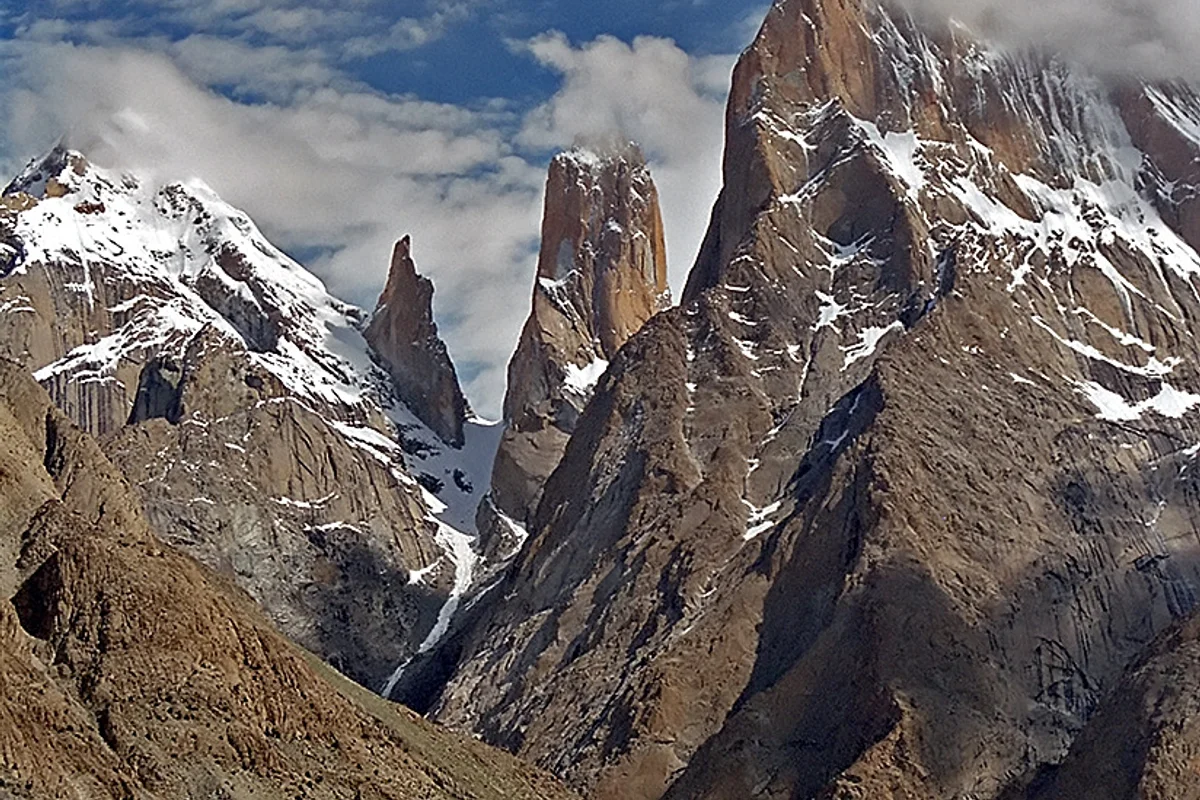
In September 1989, German climbing visionaries Kurt Albert, Wolfgang Güllich, Christof Stiegler, and Milan Sykora established Eternal Flame on Trango Tower, ushering in the modern era of extreme big-wall free climbing at 6,000 metres.
Mountain Safety & Conditions Disclaimer: High-altitude climbing, glacial travel, and technical ascents entail severe objective risks including avalanches, serac collapses, rapid weather collapse, and altitude illness. Historical route descriptions and summit claims on Mountanity reflect documented archival sources and must not be used as live operational safety assessments. Local regulations, permits, and physical glacial topography change continuously.
Peer Review: Senior Editorial Board & Historical Reviewers • Editorial Standards
Official Expedition Narrative & Archival Record
In the late summer of 1989, German rock climbing luminaries Kurt Albert, the pioneer of the redpoint (Rotpunkt) concept, and Wolfgang Güllich, the world's preeminent sport climber, arrived at the Baltoro Glacier with Christof Stiegler and Milan Sykora. Their objective was audaciously futuristic: apply pure free-climbing ethics to a sheer vertical 1,000-metre granite wall at over 6,000 metres altitude on Nameless Tower (6,286m). Hauling heavy gear to the Trango Glacier, the team established a portaledge camp on a tiny granite ledge high on the South Face. Over several weeks of intense physical effort in freezing temperatures, Albert and Güllich led 24 pitches of world-class granite cracks, stemming corners, and delicate headwall face moves, overcoming technical difficulties up to European grade IX- (French 7b+ / 5.12c). They named the route Eternal Flame in honor of the contemporary hit song by The Bangles, symbolizing an unquenchable passion for alpine beauty and purity. Reaching the summit on September 9, 1989, their ascent proved that the hardest grades of rock climbing could be achieved in the world's highest and most remote mountain ranges.
Documented Team Composition
- Kurt Albert (Climber, Germany)
- Wolfgang Güllich (Climber, Germany)
- Christof Stiegler (Climber, Germany)
- Milan Sykora (Climber, Germany / Czechoslovakia)
Key Statistics & Topographic Figures
- Summit Elevation
- 6,286 metres
- Technical Wall Height
- 650m wall / 1,000m line
- Number of Pitches
- 24 pitches
- Summit Date
- September 9, 1989
- Free Difficulty
- Grade IX- / 7b+ / 5.12c
Archival Primary Source Quotations
“On Eternal Flame, we brought the spirit of Franconian redpointing to the sky above the Baltoro Glacier.”
Defined Alpine Terminology & Concepts
- Free Climbing
- Climbing rock walls using hands and feet exclusively on the natural rock holds, with ropes and gear used strictly for fall protection.
- Jamming
- Inserting hands, fingers, or feet into a rock crack and twisting them to create mechanical friction for upward movement.
Frequently Asked Questions: 1989 Trango Tower Eternal Flame Expedition
What was the revolutionary achievement of the 1989 Eternal Flame expedition?
It established the first high-altitude big-wall free climb at extreme 6,000-metre altitude on Nameless Tower.
Who comprised the 1989 German expedition on Trango Tower?
Kurt Albert, Wolfgang Güllich, Christof Stiegler, and Milan Sykora.
What was the difficulty of the free climbing on Eternal Flame?
Up to grade IX- (French 7b+ / American 5.12c) over 24 technical pitches.
Where did the climbers sleep during the ascent?
On suspended portaledges anchored directly into the vertical granite face.
How did the route get the name Eternal Flame?
From the 1989 hit song by The Bangles, symbolizing an unquenchable passion for alpine climbing.
When did the team reach the summit of Nameless Tower?
On September 9, 1989, standing atop the 6,286-metre granite spire.
What climbing philosophy did Kurt Albert bring to the Karakoram?
The redpoint concept, which emphasized climbing completely free without hanging on artificial protection.
Why is Eternal Flame considered one of the finest rock routes on Earth?
Because of its continuous golden granite cracks, extreme vertical exposure, and pristine Karakoram setting.
Ascent Route & Topography
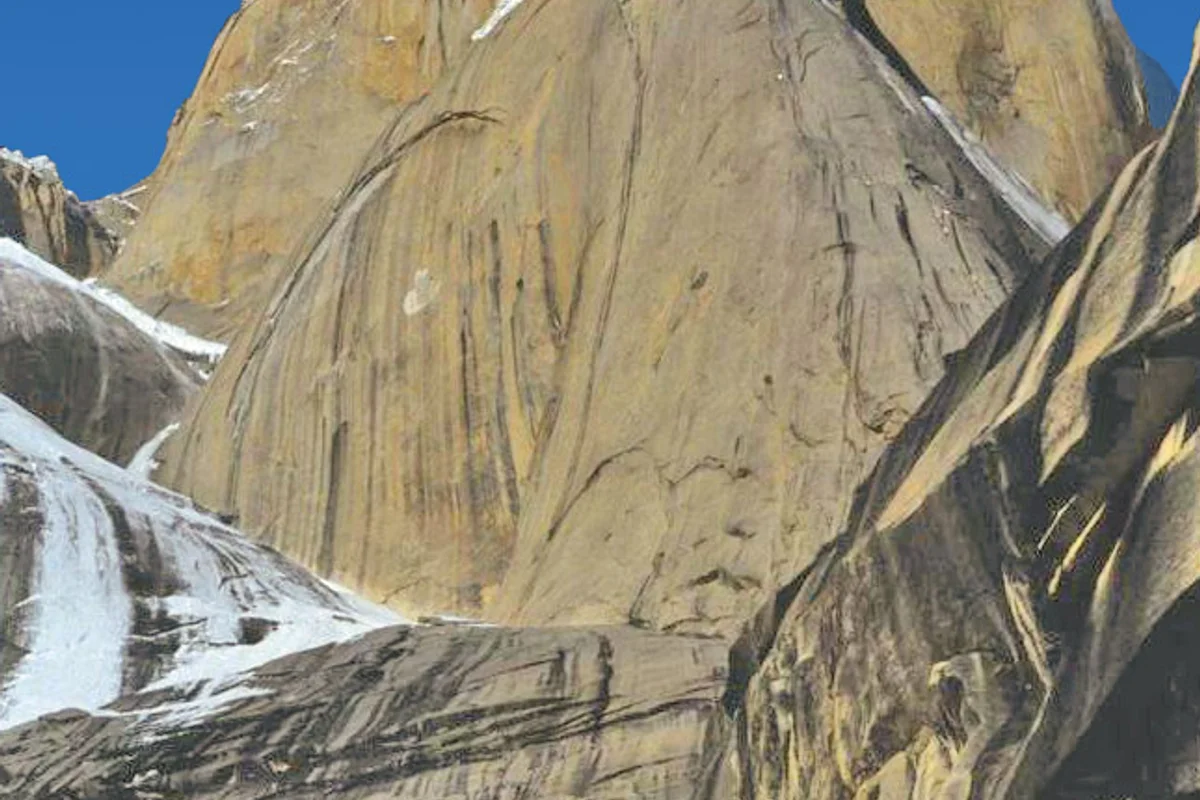
Eternal Flame (Nameless Tower)
Eternal Flame on Trango Tower (Nameless Tower, 6,286m) is hailed as the crowning jewel of high-altitude rock climbing. Ascending the sheer South Face over 24 pitches of immaculate, golden Karakoram granite, the route established an entirely new benchmark for high-altitude difficulty and commitment above 6,000 metres.
Target Objective Peak
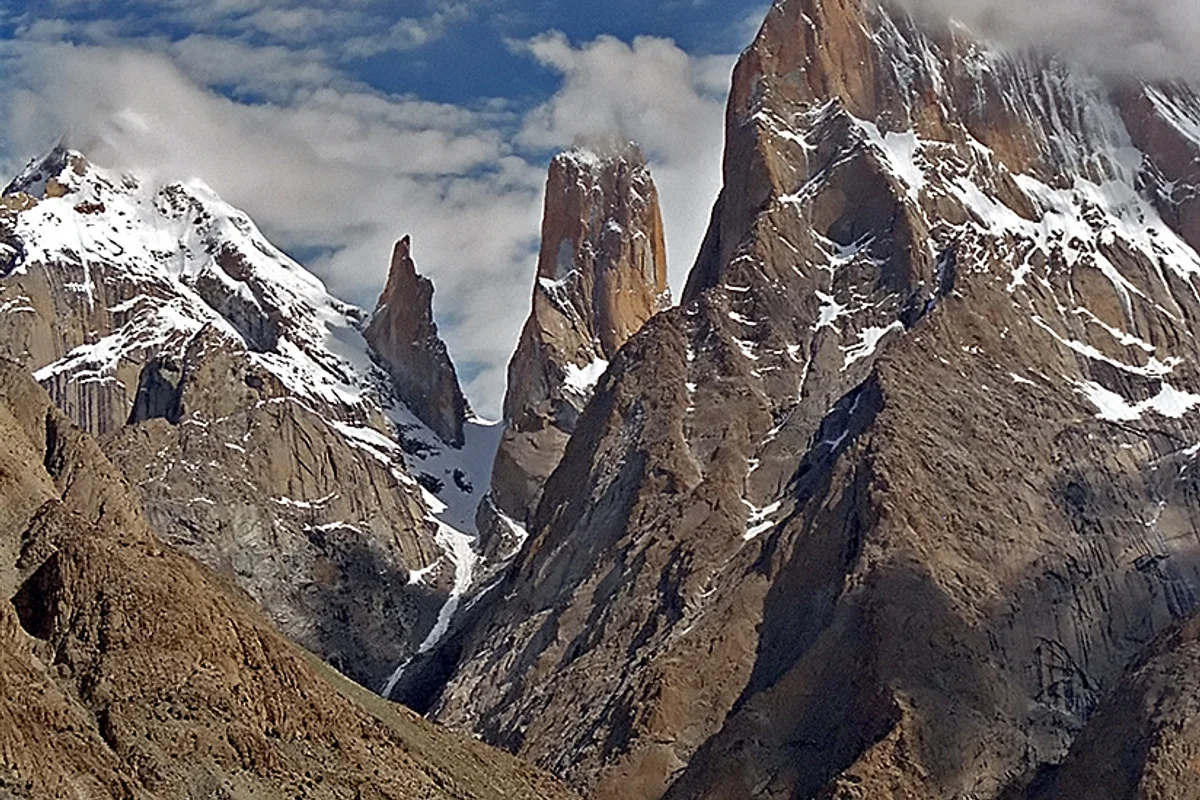

Trango Tower (Nameless Tower)
Trango Tower, universally renowned as Nameless Tower, is a stupendous 6,286-metre granite monolith rising vertically from the Baltoro Glacier basin in Gilgit-Baltistan, Pakistan. With sheer vertical rock walls exceeding 1,000 metres of vertical relief at extreme altitude, it represents the gold standard of worldwide big-wall alpine rock climbing.
Associated Historical Chronicles & Stories
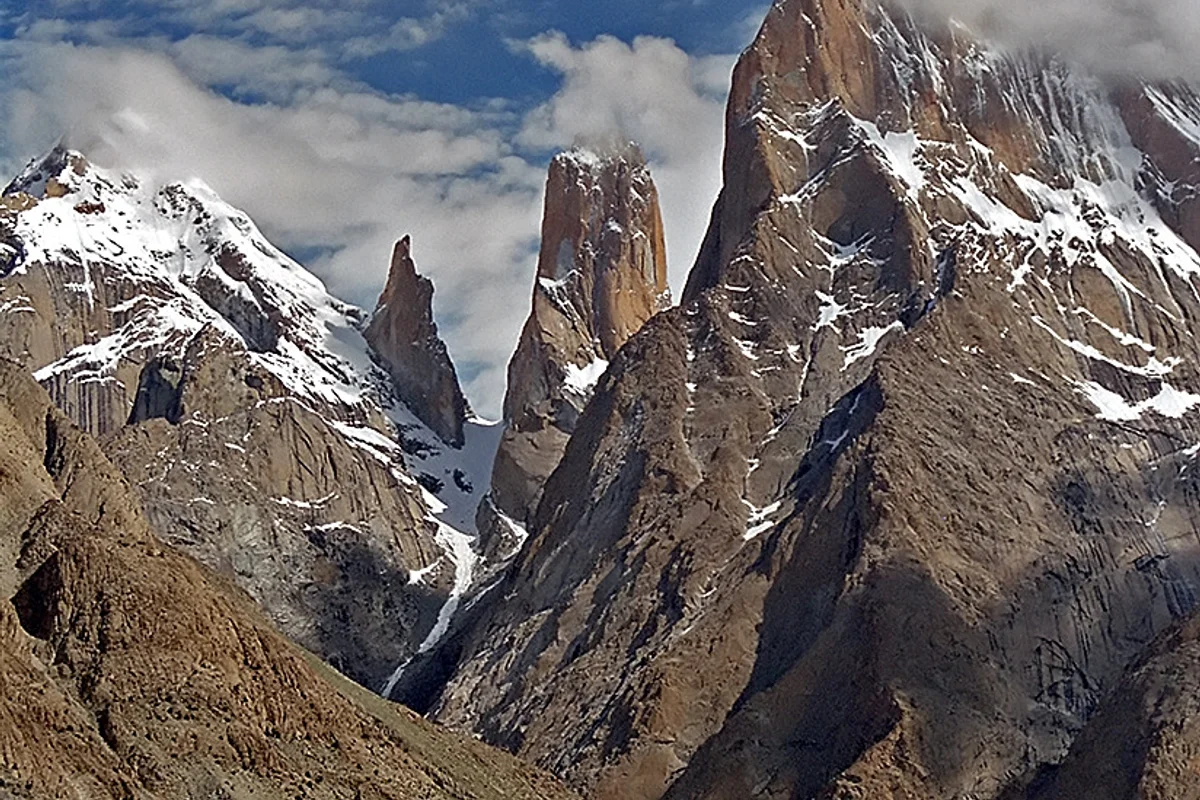
The Golden Obelisk: How Eternal Flame Redefined Big-Wall Free Climbing on Trango Tower
In September 1989, German climbing legends Kurt Albert and Wolfgang Güllich opened Eternal Flame on Trango Tower (6,286m), bringing extreme big-wall free climbing to the high Karakoram.
Documented Sources & Archival Citations
- American Alpine Journal: Eternal Flame, Nameless Tower, Trango Group(American Alpine Club)
Supporting claim: Official expedition record by Kurt Albert detailing the 1989 first ascent
Accessed/Documented: 2026 - Rotpunkt: Kurt Albert and the Birth of Redpoint Climbing(Patagonia Books)
Supporting claim: Historical context and ethics of the 1989 Trango Tower expedition
Accessed/Documented: 2026