1995 Alison Hargreaves Mount Everest Solo Expedition
The groundbreaking spring 1995 solo expedition in which British mountaineer Alison Hargreaves became the first woman in history to summit Mount Everest alone, unsupported, and without supplemental oxygen or Sherpa assistance via the North Col and Northeast Ridge.
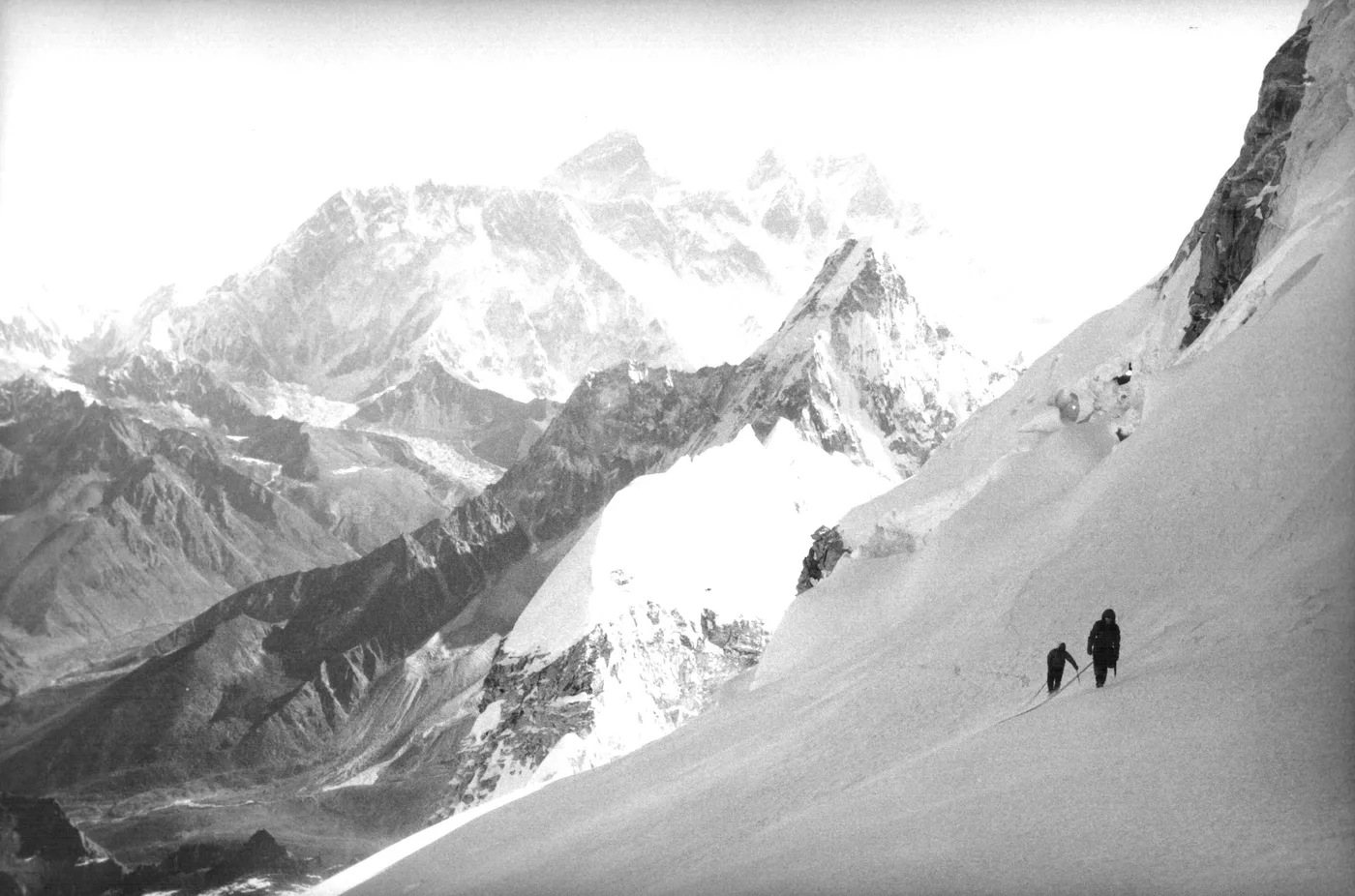
Mountain Safety & Conditions Disclaimer: High-altitude climbing, glacial travel, and technical ascents entail severe objective risks including avalanches, serac collapses, rapid weather collapse, and altitude illness. Historical route descriptions and summit claims on Mountanity reflect documented archival sources and must not be used as live operational safety assessments. Local regulations, permits, and physical glacial topography change continuously.
Peer Review: Senior Editorial Board & Historical Reviewers • Editorial Standards
Official Expedition Narrative & Archival Record
In spring 1995, 33-year-old British climber Alison Hargreaves arrived at Everest Base Camp on the Rongbuk Glacier in Tibet with a bold vision: to climb Mount Everest (8,848m) completely alone, without supplemental oxygen, without high-altitude Sherpa assistance, and carrying all her own gear, tents, and food. Refusing to join commercial guided teams or use fixed ropes prepared by others, Hargreaves established her camps through personal load-hauling up to the North Col (7,020m) and the high ridge at 8,300 meters. On May 12, battling bitter wind chill, she launched her final summit push from her solitary bivouac tent. Navigating the treacherous Second Step ladder and the exposed knife-edge snow arête of the summit pyramid in sub-zero solitude, Hargreaves stepped onto the summit of Mount Everest at 12:08 PM on May 13, 1995. Standing alone atop the world, she radioed down a deeply emotional message to her husband and two young children in Scotland: 'I am on top of Everest, and I love you all very much.' She became the first woman, and only the second person after Reinhold Messner, to climb Everest completely solo, unsupported, and without bottled oxygen.
Documented Team Composition
- Alison Hargreaves (Solo Alpinist, United Kingdom)
Key Statistics & Topographic Figures
- Summit Date
- May 13, 1995 (12:08 PM)
First Solo Unsupported Woman
- Oxygen Equipment
- 0 Liters / No Bottled Oxygen
Pure Natural Respiration
- Sherpa Support
- Zero High-Altitude Assistance
All Gear Carried Solo
- Climbing Route
- North Ridge / Northeast Ridge
Tibet (Rongbuk Glacier)
Archival Primary Source Quotations
“To Tom and Kate, my children, I am on the biggest mountain in the world, and I love you very much.”
Defined Alpine Terminology & Concepts
- Unsupported Solo
- A strict mountaineering standard where a climber operates completely alone without porters, supplemental oxygen, or shared resources above base camp.
- Second Step (Everest)
- A vertical 30-foot limestone cliff at 8,600 meters on Everest’s Northeast Ridge, overcome using an aluminum ladder over an immense precipice.
Frequently Asked Questions: 1995 Alison Hargreaves Mount Everest Solo Expedition
Who was Alison Hargreaves and what was her Everest achievement?
Alison Hargreaves was a British mountaineer who on May 13, 1995, became the first woman to summit Mount Everest solo, unsupported, and without supplemental oxygen.
What route did Alison Hargreaves take to summit Everest?
Hargreaves climbed via the North Ridge / Northeast Ridge route from Tibet, ascending from the Central Rongbuk Glacier and the North Col.
Did Alison Hargreaves have Sherpa support on Everest?
No. Hargreaves carried all her own equipment, tents, and food above Base Camp without high-altitude Sherpa porters and without using fixed ropes placed by other teams.
What famous message did Alison Hargreaves radio from the summit?
She radioed down to Base Camp: "To Tom and Kate, my children, I am on the biggest mountain in the world, and I love you very much."
Who else has climbed Everest solo without oxygen?
Reinhold Messner was the first to accomplish an unsupported solo ascent without oxygen in 1980; Alison Hargreaves was the second person—and the first woman—to do so in 1995.
What other major mountaineering feat did Hargreaves achieve in 1993?
In summer 1993, Hargreaves became the first person to solo all six Great North Faces of the Alps in a single season (Eiger, Matterhorn, Jorasses, Dru, Badile, Lavaredo).
What happened to Alison Hargreaves after her Everest summit?
Three months later, on August 13, 1995, Hargreaves summited K2 without oxygen, but was killed alongside six teammates when an unpredicted hurricane struck during descent.
Was Alison Hargreaves pregnant when she climbed the Eiger North Face?
Yes. In 1988, Hargreaves climbed the 1,800m North Face of the Eiger while nearly six months pregnant with her son, future extreme alpinist Tom Ballard.
Ascent Route & Topography
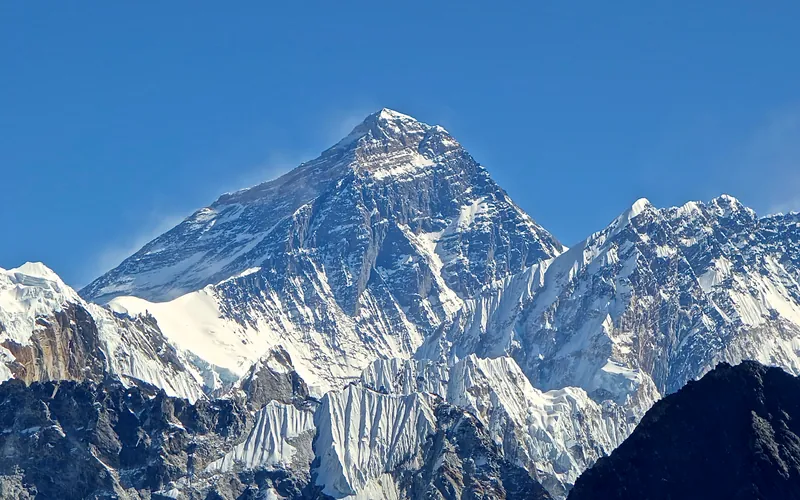
North Col & Northeast Ridge Route
The historic northern route on Mount Everest (8,848.86m), ascending from the Rongbuk and East Rongbuk glaciers to breach the icy wall of the North Col (7,020m). From the col, the route traverses the wind-blasted Northwest Ridge onto the North Face before joining the razor-like Northeast Ridge, navigating the notorious First, Second, and Third Steps in the Death Zone. This was the stage of George Mallory and Andrew Irvine's fateful 1924 climb and was first definitively surmounted on May 25, 1960, by Chinese climbers Wang Fuzhou, Qu Yinhua, and Gongbu.
Target Objective Peak
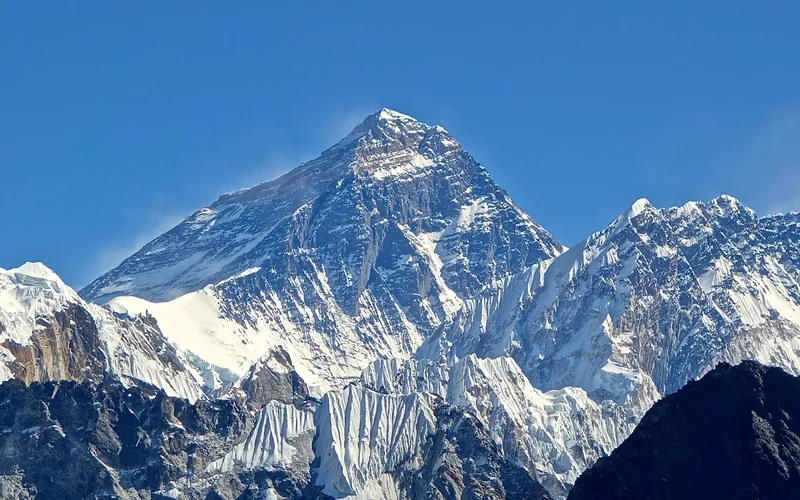


Mount Everest
Mount Everest is the highest mountain above sea level on Earth, standing at an official elevation of 8,848.86 meters (29,031.7 ft). Straddling the international frontier between Nepal and China, it is known locally as Sagarmatha in Nepali ('Goddess of the Sky') and Chomolungma in Tibetan ('Mother Goddess of the World'). The peak rises into the extreme upper troposphere, where oxygen levels drop to barely one-third of sea-level pressure. Climbers face hurricane-force jet stream winds, severe frostbite conditions, shifting ice crevasses in the Khumbu Icefall, and the dangerous Death Zone above 8,000 meters.
Featured Expedition Climber
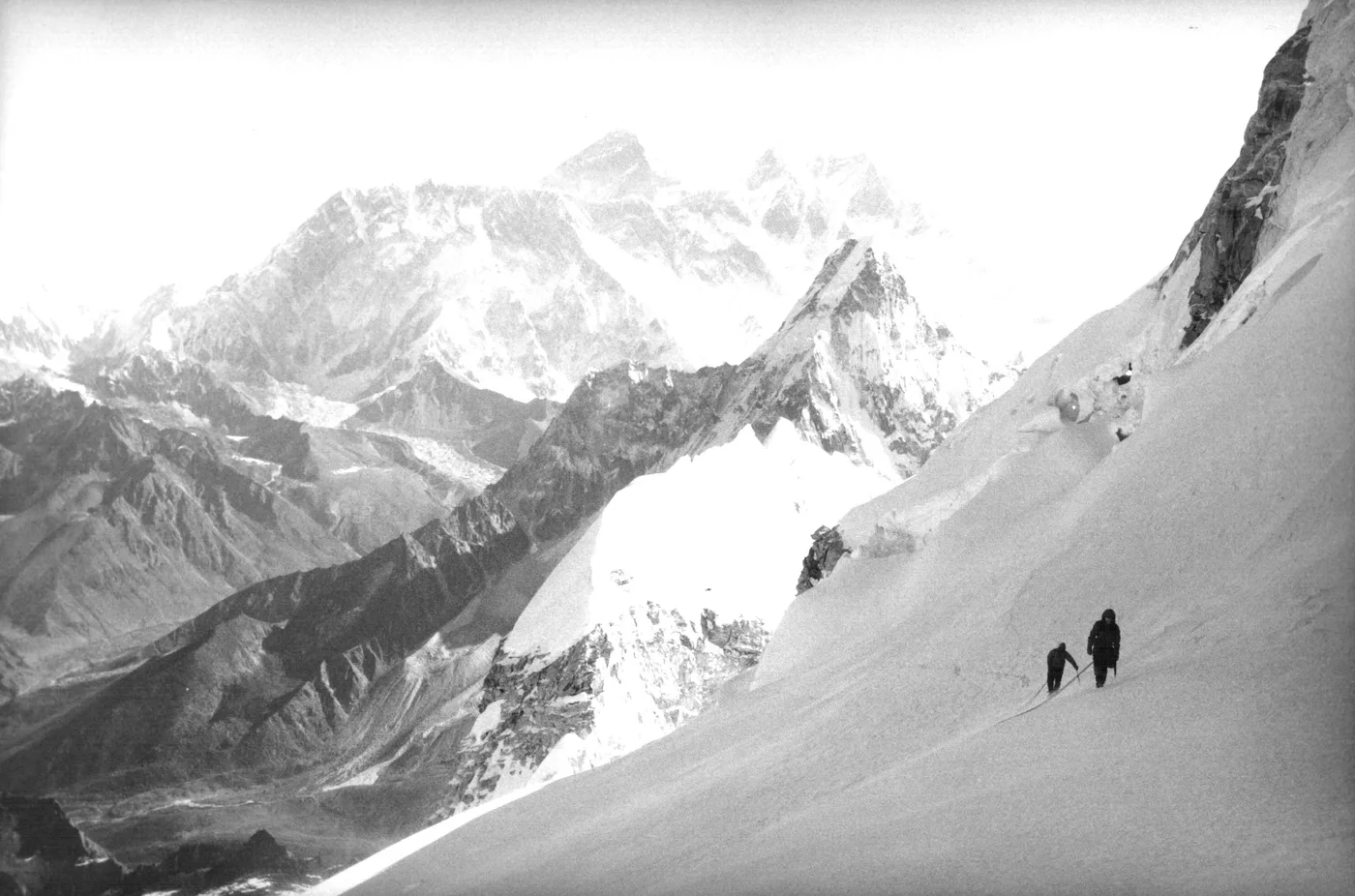
Alison Hargreaves
Alison Jane Hargreaves was born on February 17, 1962, in Mickleover, Derby, England, and raised in Belper, Derbyshire. Drawn to the outdoors from early childhood, she began scrambling on the gritstone edges of the Peak District at age thirteen. By eighteen, she was tackling severe rock routes in Wales and Scotland, displaying exceptional technical balance, mental composure, and fierce self-reliance. She married outdoor equipment retailer Jim Ballard, settling in the Scottish Highlands to raise their two children, Tom and Kate. In 1986, Hargreaves made her Himalayan breakthrough alongside American alpinists Tom Frost, Jeff Lowe, and Mark Twight, climbing the technically severe South Face of Kangtega (6,782m) in Nepal. In 1988, she garnered international headlines when she successfully scaled the dreaded 1,800-meter North Face of the Eiger (Heckmair Route) while nearly six months pregnant with her son Tom (who would himself grow up to become a renowned extreme solo alpinist). In the summer of 1993, Hargreaves executed an unprecedented solo masterpiece in the European Alps. In a single season, climbing alone without a rope or partner, she completed the six classic Great North Faces of the Alps: the Eiger, the Matterhorn, the Walker Spur on the Grandes Jorasses, the Petit Dru, the Piz Badile, and the Cima Grande di Lavaredo. Her accomplishment, documented in her poignant book 'A Hard Day's Summer', established her as one of the preeminent solo alpinists in the world. Hargreaves then set her sights on the world's highest mountains, conceiving an ambitious quest to climb the world's three highest peaks—Everest, K2, and Kangchenjunga—without supplemental oxygen or high-altitude support. Arriving in Tibet in spring 1995, she climbed from the North Col via the Northeast Ridge entirely on her own. Operating without bottled oxygen, carrying all her own gear, and refusing high-altitude Sherpa assistance, she reached the summit of Mount Everest (8,848.86m) at 12:08 PM on May 13, 1995. She became the first woman, and only the second person after Reinhold Messner, to climb Everest solo, completely unsupported, and without supplemental oxygen. Just weeks later, in June 1995, Hargreaves traveled directly to Pakistan to attempt K2 (8,611m), the world's most dangerous mountain. Teaming with a small international group including Spanish climber Javier Olivar and New Zealander Peter Hillary, she pushed up the Abruzzi Spur. On August 13, 1995, Hargreaves and six teammates reached the summit of K2 in clear weather. During their descent past the Bottleneck, however, a catastrophic, unpredicted storm of hurricane intensity struck the upper mountain. Trapped in 140 mph winds and sub-zero squalls, Hargreaves and six other climbers were blown off the mountain to their deaths. Her body was never recovered. Alison Hargreaves remains an enduring symbol of pure solo mastery, self-determination, and unparalleled female athletic excellence in the high mountains.
Associated Historical Chronicles & Stories
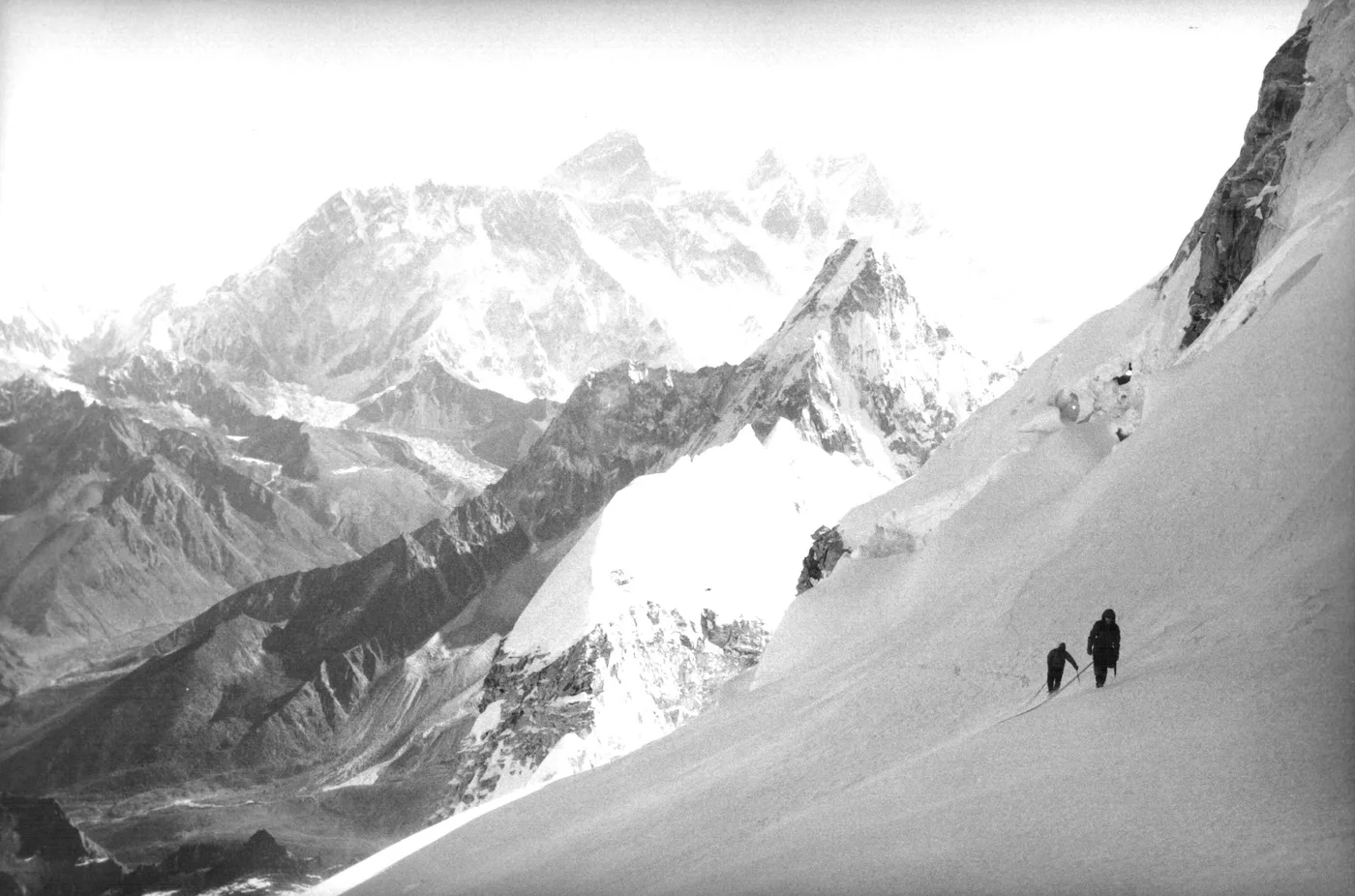
Everest 1995: Alison Hargreaves' Pure Solo Ascent Without Oxygen
On May 13, 1995, British mountaineer Alison Hargreaves made history as the first woman to summit Mount Everest solo, unsupported, and without supplemental oxygen via the North Ridge.
Documented Sources & Archival Citations
- Regions of the Heart: The Triumph and Tragedy of Alison Hargreaves(David Rose & Ed Douglas / Penguin Books)
Supporting claim: Comprehensive historical investigation into the 1995 solo Everest climb and radio transcripts
Accessed/Documented: 1999 - American Alpine Journal: Everest Solo Without Oxygen(American Alpine Club)
Supporting claim: Official expedition record and summit verification for Alison Hargreaves
Accessed/Documented: 1996