1996 Göran Kropp Self-Propelled Everest Bicycle & Solo Ascent Expedition
In 1996, Swedish adventurer Göran Kropp completed the ultimate human-powered expedition by bicycling 13,000 kilometres from Stockholm to Mount Everest Base Camp, climbing Everest solo without supplemental oxygen or Sherpas on May 23, and bicycling 13,000 kilometres back home.
Mountain Safety & Conditions Disclaimer: High-altitude climbing, glacial travel, and technical ascents entail severe objective risks including avalanches, serac collapses, rapid weather collapse, and altitude illness. Historical route descriptions and summit claims on Mountanity reflect documented archival sources and must not be used as live operational safety assessments. Local regulations, permits, and physical glacial topography change continuously.
Peer Review: Senior Editorial Board & Historical Reviewers • Editorial Standards
Official Expedition Narrative & Archival Record
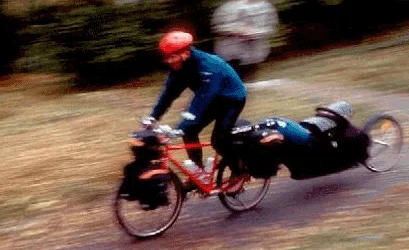
On October 16, 1995, Swedish climber Göran Kropp set out from Stockholm on a custom bicycle towing a trailer carrying 108 kilograms of gear and supplies. His goal was unprecedented: to travel from sea level in Scandinavia to the top of the world and back entirely under his own muscle power, without motor assistance, high-altitude Sherpa support, or supplemental oxygen. Pedaling through snowstorms in Eastern Europe, deserts in Iran, and congested roads in Pakistan and India, Kropp reached Everest Base Camp in early April 1996 after covering 13,000 kilometres. He ferried all his own gear through the Khumbu Icefall and established his own solitary camps. On May 3, during his initial summit bid, Kropp encountered chest-deep powder snow at 8,750 metres, just below the South Summit. Recognizing that continuing would prevent a safe daylight return, he made the disciplined decision to turn back. After resting during the tragedy of May 10–11 and aiding with communications, Kropp launched a second solo assault. On May 23, 1996, climbing through sheer willpower, Kropp stood atop the 8,848-metre summit of Mount Everest without oxygen bottles. Following his descent, he loaded his gear back onto his bicycle and pedaled all the way back to Sweden, completing one of the most astonishing purist athletic achievements in human history.
Documented Team Composition
- Göran Kropp (Sweden, Solo Cyclist & Summit Climber)
Key Statistics & Topographic Figures
- Official Outcome
- Successful 13,000km Unassisted Bicycle Journey from Sweden, Solo Oxygenless Everest Summit, and Bicycle Return
Expedition Status
- Summit Date
- 1996-05-23
Ascent Timestamp
- Target Objective
- mount-everest
Mountain Peak
- Ascent Route
- south-col-route
Climbing Path
- Team Size
- 1 Climbers
High-Altitude Team
- Region / Country
- Nepal (Khumbu / Solukhumbu)
Geography
Archival Primary Source Quotations
“On October 16, 1995, Swedish climber Göran Kropp set out from Stockholm on a custom bicycle towing a trailer carrying 108 kilograms of gear and supplies. His goal was unprecedented...”
Defined Alpine Terminology & Concepts
- Alpine Expedition
- A planned, self-contained high-altitude mountaineering undertaking operating in remote mountain terrain subject to extreme objective hazards.
- Death Zone
- The high-altitude region above 8,000 meters where atmospheric oxygen pressure is inadequate for sustained human survival.
Frequently Asked Questions: 1996 Göran Kropp Self-Propelled Everest Bicycle & Solo Ascent Expedition
What was the primary outcome and achievement of the 1996 Göran Kropp Self-Propelled Everest Bicycle & Solo Ascent Expedition?
Successful 13,000km Unassisted Bicycle Journey from Sweden, Solo Oxygenless Everest Summit, and Bicycle Return. In 1996, Swedish adventurer Göran Kropp completed the ultimate human-powered expedition by bicycling 13,000 kilometres from Stockholm to Mount Everest Base Camp, climbing Everest solo without supplemental oxygen or Sherpas on May 23, and bicycling 13,000 kilometres back home.
When did the 1996 Göran Kropp Self-Propelled Everest Bicycle & Solo Ascent Expedition reach the summit?
The expedition officially reached the summit on 1996-05-23, operating between 1995-10-16 and 1996-10-16.
Who were the documented climbing team members on the 1996 Göran Kropp Self-Propelled Everest Bicycle & Solo Ascent Expedition?
The documented climbing roster included: Göran Kropp (Sweden, Solo Cyclist & Summit Climber).
What climbing route and mountain objective were tackled during the 1996 Göran Kropp Self-Propelled Everest Bicycle & Solo Ascent Expedition?
The expedition tackled mount-everest via the south-col-route in Nepal (Khumbu / Solukhumbu).
How are the records and summit claims of the 1996 Göran Kropp Self-Propelled Everest Bicycle & Solo Ascent Expedition verified?
Summit claims, route topography, and timeline logs for the 1996 Göran Kropp Self-Propelled Everest Bicycle & Solo Ascent Expedition are cross-referenced with official alpine registries, national mountaineering federations, and primary expedition journals.
Ascent Route & Topography
South Col & Southeast Ridge (Normal Route)
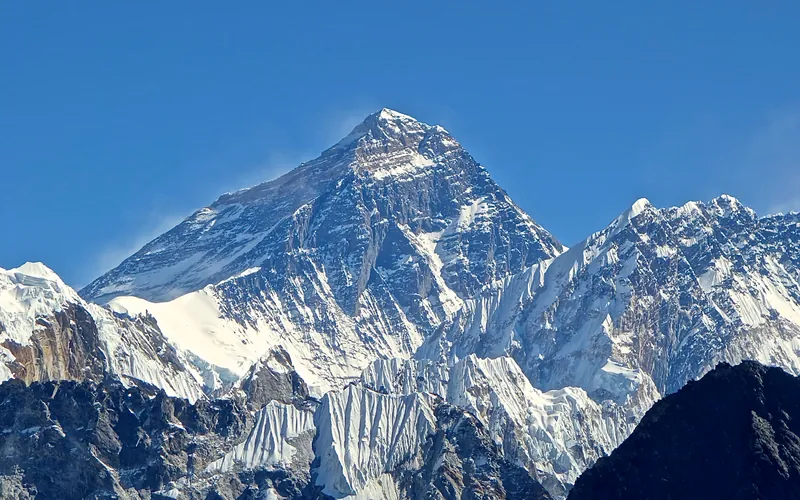
The South Col Route along the Southeast Ridge is the historic path of the 1953 first ascent and the most popular route on Mount Everest. Starting from Base Camp on the Khumbu Glacier in Nepal, climbers navigate the shifting seracs of the Khumbu Icefall into the Western Cwm. The route then scales the icy 45-degree slope of the Lhotse Face to the South Col at 7,925 meters, launching the final summit bid through the Balcony, South Summit, and Hillary Step to the summit of Earth at 8,848.86 meters.
Target Objective Peak


Mount Everest
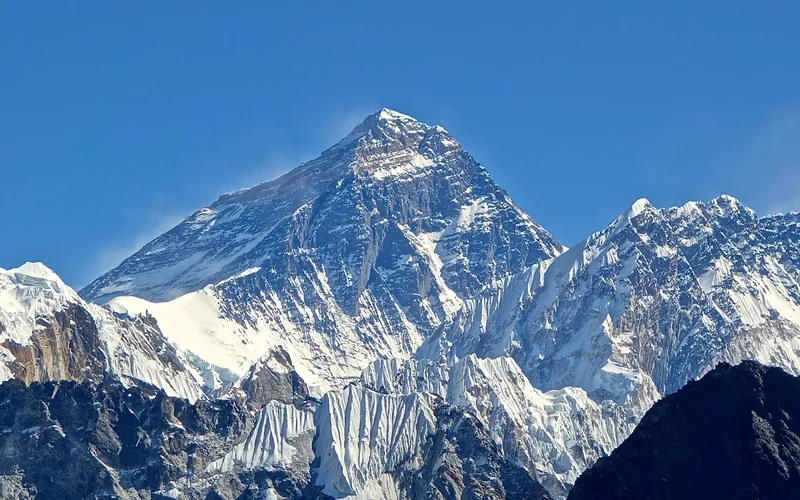
Mount Everest is the highest mountain above sea level on Earth, standing at an official elevation of 8,848.86 meters (29,031.7 ft). Straddling the international frontier between Nepal and China, it is known locally as Sagarmatha in Nepali ('Goddess of the Sky') and Chomolungma in Tibetan ('Mother Goddess of the World'). The peak rises into the extreme upper troposphere, where oxygen levels drop to barely one-third of sea-level pressure. Climbers face hurricane-force jet stream winds, severe frostbite conditions, shifting ice crevasses in the Khumbu Icefall, and the dangerous Death Zone above 8,000 meters.
Featured Expedition Climber
Göran Kropp
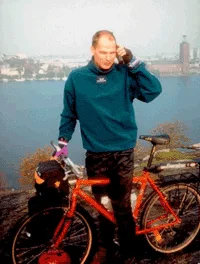
Göran Kropp was born on December 11, 1966, in Eskilstuna, Sweden. Serving as a paratrooper in the Swedish Army, Kropp cultivated ferocious physical conditioning, an eccentric sense of humor, and an absolute commitment to self-reliance. In 1992, he completed the first Swedish ascent of Cho Oyu (8,188m), followed in 1993 by becoming the first Scandinavian to summit K2 (8,611m) without supplemental bottled oxygen. In October 1995, Kropp embarked on what remains one of the most audacious, purest human-powered expeditions in the history of world adventure: the Ultimate Expedition. Departing his home in Stockholm on a custom Crescent bicycle pulling a heavy trailer laden with 108 kilograms of climbing equipment, food, and supplies, Kropp pedaled completely unassisted across Europe, the Middle East, Pakistan, and India. Over five months and 13,000 kilometres through deserts, snowstorms, and political upheaval, Kropp arrived at Mount Everest Base Camp in April 1996. Rejecting fixed ropes, high-altitude Sherpa support, and supplemental oxygen, Kropp carried all of his own tents and provisions up the mountain alone. On his first summit push on May 3, wading through chest-deep snow alone at 8,750 metres—just 100 vertical metres below the South Summit—Kropp made the disciplined decision to turn back because it was too late in the day. He rested at Base Camp during the infamous May 10–11 Everest disaster, helping coordinate rescue logistics. On May 23, Kropp launched a second solo push, successfully summiting Mount Everest (8,848m) without supplemental oxygen. True to his word, he packed his gear back onto his bicycle and pedaled 13,000 kilometres back to Sweden. Kropp returned to Everest in 1999 with his partner Renata Chlumska to summit again and clear trash from the mountain, bringing down twenty-five discarded oxygen cylinders. Tragically, on September 30, 2002, while rock climbing near Vantage, Washington, in the United States, Kropp died in a fall after his protection gear unzipped from a crack at the age of thirty-five. His legacy endures as a beacon of uncompromised adventure and self-powered determination.
Associated Historical Chronicles & Stories
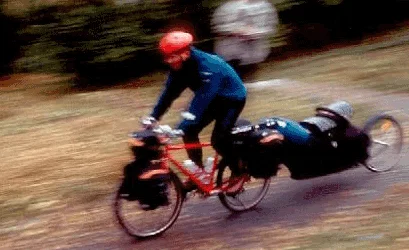
The Ultimate Odyssey: Göran Kropp's 13,000-Kilometre Bicycle Trek and Solo Everest Ascent
In 1996, Swedish adventurer Göran Kropp bicycled 13,000 kilometres from Sweden to Mount Everest, summitted solo without supplemental oxygen or Sherpa support, and rode back home.
Documented Sources & Archival Citations
- Ultimate High: My Everest Odyssey(Göran Kropp and David Lagercrantz / TV Books)
Supporting claim: Detailed autobiography documenting the 13,000 km bicycle trek, turnaround decision, and summit conquest
Accessed/Documented: 1997 - The Himalayan Database: Ascent Record 1996 Spring(Elizabeth Hawley / Himalayan Database)
Supporting claim: Official verification of Göran Kropp's solo summit without supplemental oxygen on May 23, 1996
Accessed/Documented: 1996