1999 Babu Chiri Sherpa Everest 21-Hour Summit Bivouac Expedition
On May 6 to 7, 1999, legendary Nepalese mountaineer Babu Chiri Sherpa achieved an astonishing physiological feat by pitching a tent and surviving for twenty-one continuous hours on the 8,848-meter summit of Mount Everest without supplemental oxygen.
Mountain Safety & Conditions Disclaimer: High-altitude climbing, glacial travel, and technical ascents entail severe objective risks including avalanches, serac collapses, rapid weather collapse, and altitude illness. Historical route descriptions and summit claims on Mountanity reflect documented archival sources and must not be used as live operational safety assessments. Local regulations, permits, and physical glacial topography change continuously.
Peer Review: Senior Editorial Board & Historical Reviewers • Editorial Standards
Official Expedition Narrative & Archival Record
In the spring of 1999, Babu Chiri Sherpa arrived at Mount Everest with an unprecedented vision: to test the absolute boundaries of human survival by living on the apex of the planet. While most climbers spend barely fifteen to thirty minutes on the summit before fleeing the extreme hypoxia and frostbite dangers of the Death Zone, Babu Chiri carried a lightweight two-man nylon tent and survival gear to the South Col. On the morning of May 6, 1999, ascending via the Southeast Ridge without bottled oxygen, he arrived at the summit at 10:00 AM. In howling winds and subzero temperatures, he securely pitched his tent directly on the summit crest. Over the subsequent twenty-one hours, Babu Chiri remained on the summit, drinking warm fluids, observing the celestial rotation of stars over the Tibetan Plateau, and unfurling the Nepalese national flag at sunrise. Descending safely to Camp II on May 7 without experiencing frostbite or cerebral impairment, Babu Chiri proved that indigenous Sherpa physiology possessed extraordinary biological adaptations to extreme high-altitude environments.
Documented Team Composition
- Babu Chiri Sherpa (Solo Summit Bivouac Alpinist & Expedition Leader)
- Dawa Sherpa (Base Camp Logistics Coordinator)
Key Statistics & Topographic Figures
- Official Outcome
- World Record 21 Continuous Hours on the Summit of Everest Without Supplemental Oxygen
Expedition Status
- Summit Date
- 1999-05-06
Ascent Timestamp
- Target Objective
- mount-everest
Mountain Peak
- Ascent Route
- south-col-route
Climbing Path
- Team Size
- 2 Climbers
High-Altitude Team
- Region / Country
- Nepal (Khumbu / Solukhumbu)
Geography
Archival Primary Source Quotations
“In the spring of 1999, Babu Chiri Sherpa arrived at Mount Everest with an unprecedented vision: to test the absolute boundaries of human survival by living on the apex of the plane...”
Defined Alpine Terminology & Concepts
- Alpine Expedition
- A planned, self-contained high-altitude mountaineering undertaking operating in remote mountain terrain subject to extreme objective hazards.
- Death Zone
- The high-altitude region above 8,000 meters where atmospheric oxygen pressure is inadequate for sustained human survival.
Frequently Asked Questions: 1999 Babu Chiri Sherpa Everest 21-Hour Summit Bivouac Expedition
What was the primary outcome and achievement of the 1999 Babu Chiri Sherpa Everest 21-Hour Summit Bivouac Expedition?
World Record 21 Continuous Hours on the Summit of Everest Without Supplemental Oxygen. On May 6 to 7, 1999, legendary Nepalese mountaineer Babu Chiri Sherpa achieved an astonishing physiological feat by pitching a tent and surviving for twenty-one continuous hours on the 8,848-meter summit of Mount Everest without supplemental oxygen.
When did the 1999 Babu Chiri Sherpa Everest 21-Hour Summit Bivouac Expedition reach the summit?
The expedition officially reached the summit on 1999-05-06, operating between 1999-04-10 and 1999-05-15.
Who were the documented climbing team members on the 1999 Babu Chiri Sherpa Everest 21-Hour Summit Bivouac Expedition?
The documented climbing roster included: Babu Chiri Sherpa (Solo Summit Bivouac Alpinist & Expedition Leader), Dawa Sherpa (Base Camp Logistics Coordinator).
What climbing route and mountain objective were tackled during the 1999 Babu Chiri Sherpa Everest 21-Hour Summit Bivouac Expedition?
The expedition tackled mount-everest via the south-col-route in Nepal (Khumbu / Solukhumbu).
How are the records and summit claims of the 1999 Babu Chiri Sherpa Everest 21-Hour Summit Bivouac Expedition verified?
Summit claims, route topography, and timeline logs for the 1999 Babu Chiri Sherpa Everest 21-Hour Summit Bivouac Expedition are cross-referenced with official alpine registries, national mountaineering federations, and primary expedition journals.
Ascent Route & Topography
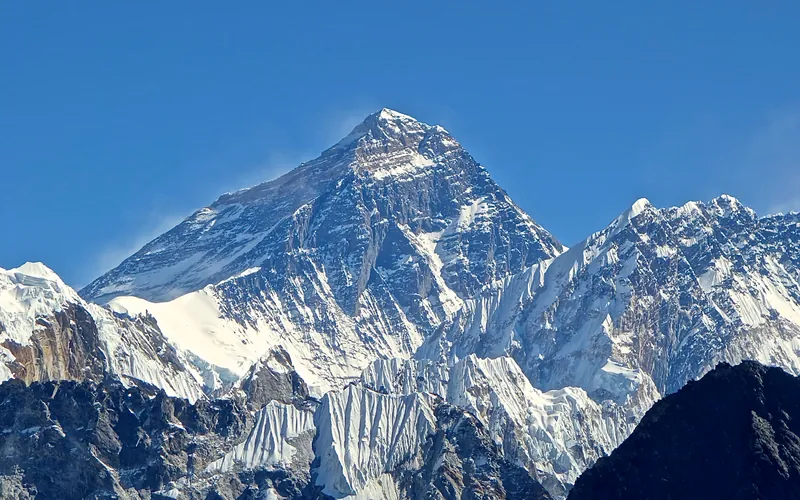
South Col & Southeast Ridge (Normal Route)
The South Col Route along the Southeast Ridge is the historic path of the 1953 first ascent and the most popular route on Mount Everest. Starting from Base Camp on the Khumbu Glacier in Nepal, climbers navigate the shifting seracs of the Khumbu Icefall into the Western Cwm. The route then scales the icy 45-degree slope of the Lhotse Face to the South Col at 7,925 meters, launching the final summit bid through the Balcony, South Summit, and Hillary Step to the summit of Earth at 8,848.86 meters.
Target Objective Peak
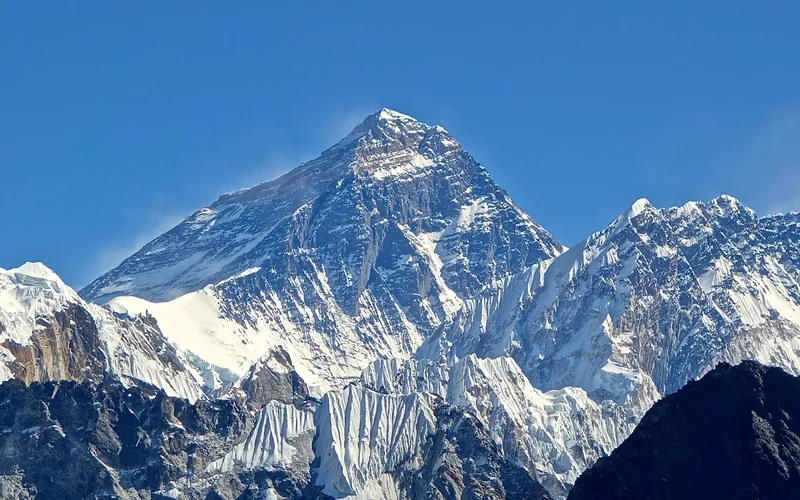


Mount Everest
Mount Everest is the highest mountain above sea level on Earth, standing at an official elevation of 8,848.86 meters (29,031.7 ft). Straddling the international frontier between Nepal and China, it is known locally as Sagarmatha in Nepali ('Goddess of the Sky') and Chomolungma in Tibetan ('Mother Goddess of the World'). The peak rises into the extreme upper troposphere, where oxygen levels drop to barely one-third of sea-level pressure. Climbers face hurricane-force jet stream winds, severe frostbite conditions, shifting ice crevasses in the Khumbu Icefall, and the dangerous Death Zone above 8,000 meters.
Featured Expedition Climber
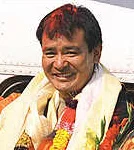
Babu Chiri Sherpa
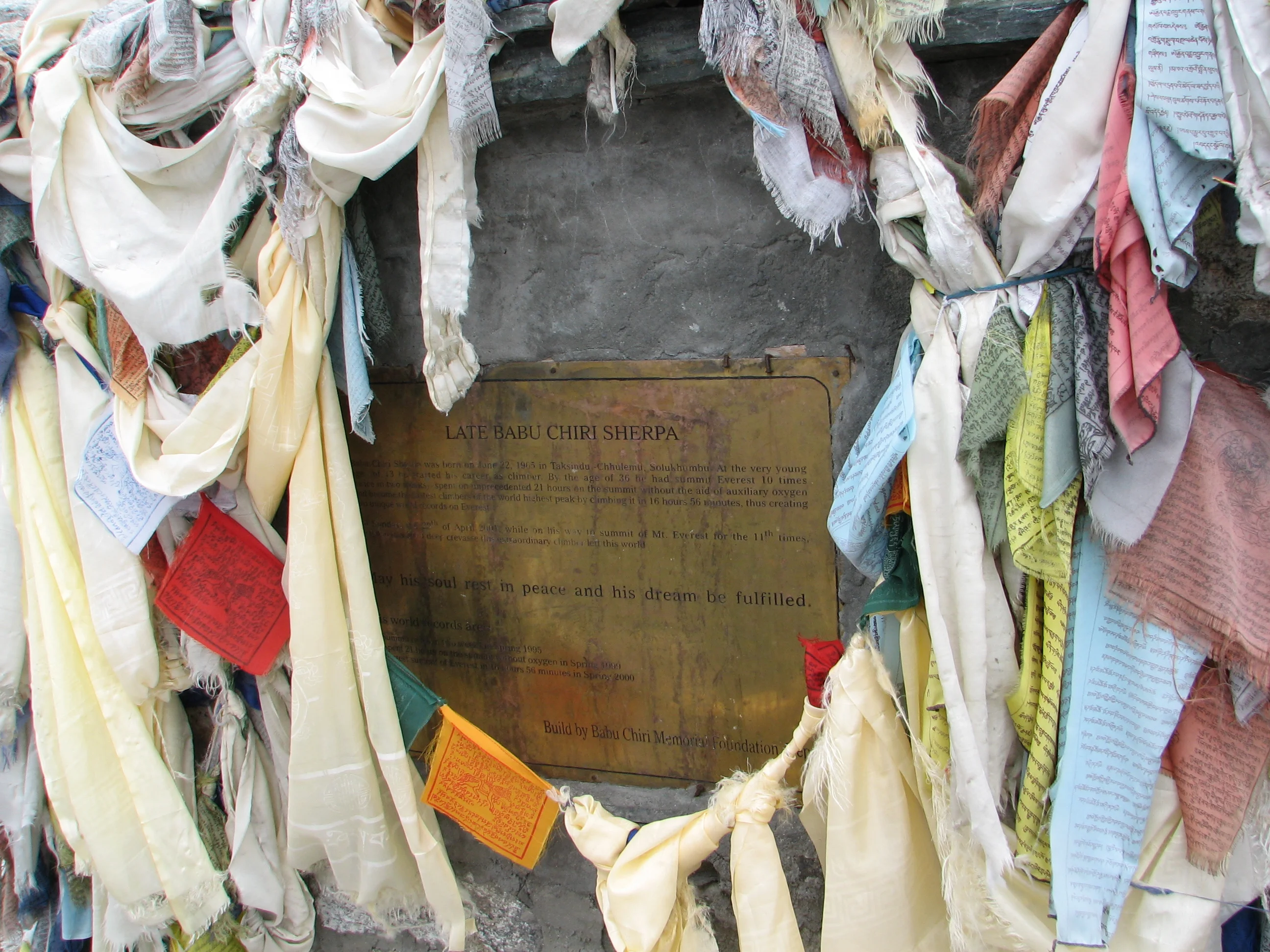
Babu Chiri Sherpa was born on June 22, 1965, in Taksindu, a remote mountain village in the Solukhumbu District of Nepal. Denied formal schooling due to extreme poverty, Babu possessed a fiercely curious intellect, teaching himself to speak fluent English, Nepali, Hindi, and Tibetan. At age thirteen, he began working as an expedition porter, rapidly distinguishing himself through astonishing stamina and natural resistance to hypoxia. By his early twenties, he had transitioned into high-altitude guiding on the world's most daunting summits. Babu Chiri went on to summit Mount Everest ten times between 1990 and 2000, establishing an immortal reputation for superhuman physiological resilience. On May 6, 1999, during his seventh ascent of Everest, Babu pitched a small nylon tent directly on the 8,848-meter summit ridge. In subzero gale-force winds in the extreme upper troposphere, he remained on the summit for twenty-one continuous hours without using supplemental oxygen—singing the Nepalese national anthem and observing sunrise and sunset across Tibet and Nepal in an endurance feat that stunned medical researchers worldwide. Exactly one year later, on May 21, 2000, Babu Chiri astonished the mountaineering world once again by setting the fastest ascent of Mount Everest via the South Col route from Nepal, sprinting from Base Camp to the summit in just sixteen hours and fifty-six minutes. Tragically, on April 29, 2001, while preparing for his eleventh summit push near Camp II at 6,400 meters in the Western Cwm, Babu stepped out of his tent to take photographs and fell into a hidden glacial crevasse, perishing at the age of thirty-five. A national hero of Nepal, Babu Chiri used his climbing earnings to construct the first public school in his native village of Taksindu, cementing a humanitarian legacy that endures long after his tragic death.
Associated Historical Chronicles & Stories
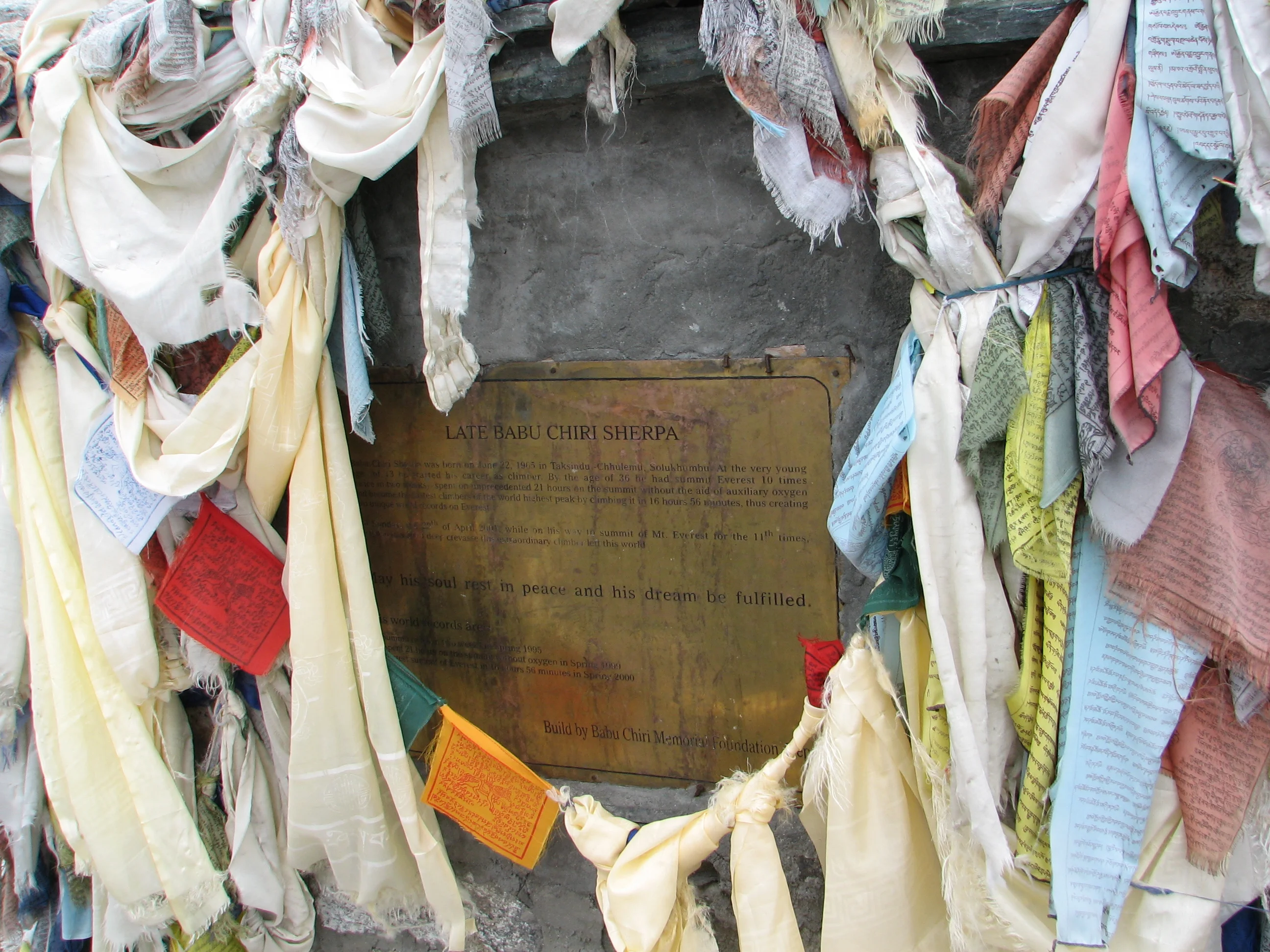
Above the Troposphere: Babu Chiri Sherpa's 21 Hours on the Summit of Everest
On May 6, 1999, Babu Chiri Sherpa accomplished one of the greatest physiological feats in history, spending twenty-one continuous hours on Everest's summit without supplemental oxygen.
Documented Sources & Archival Citations
- Himalayan Database: 1999 Babu Chiri Summit Chronology(Elizabeth Hawley / Himalayan Database)
Supporting claim: Official verification of 21-hour summit stay on Mount Everest without bottled oxygen
Accessed/Documented: 2024 - American Alpine Journal: Babu Chiri Sherpa Summit Record(American Alpine Club)
Supporting claim: Physiological and technical documentation of the 1999 Everest summit bivouac
Accessed/Documented: 2000