2005 Ed Viesturs Annapurna I Endeavour 8000 Expedition
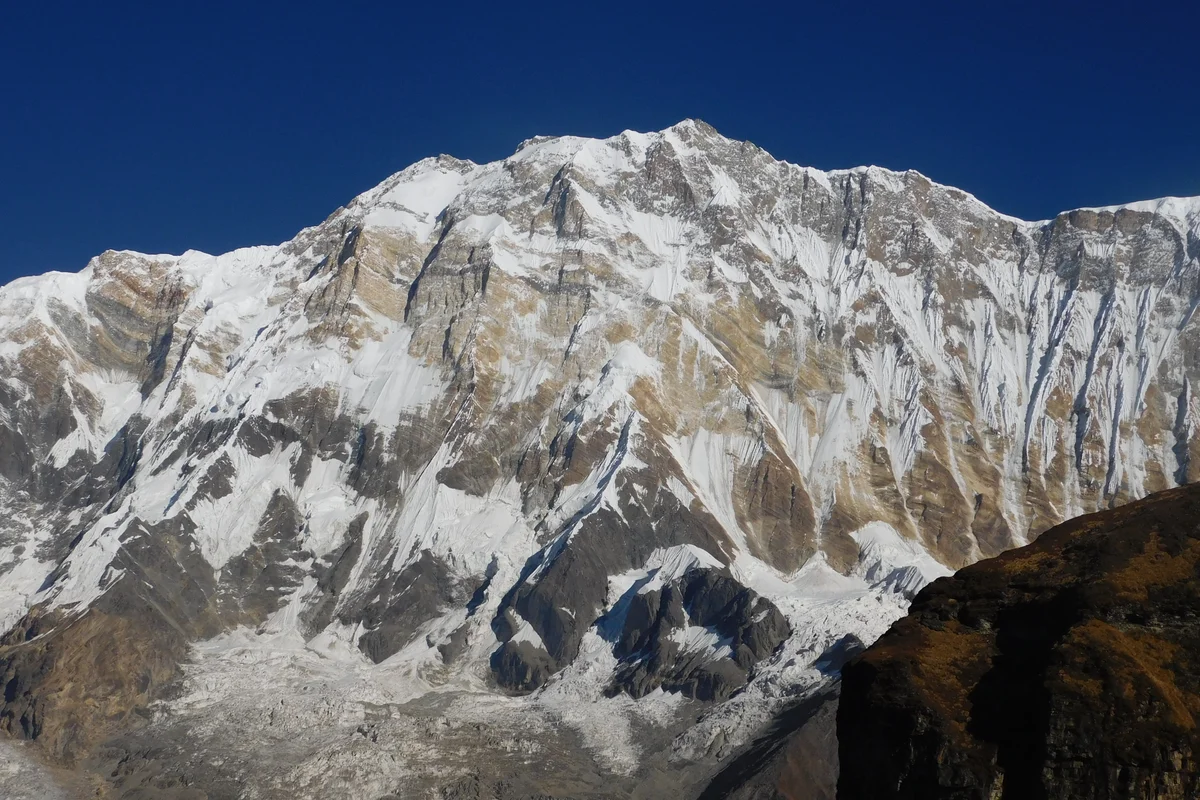
On May 12, 2005, American mountaineer Ed Viesturs and Finnish partner Veikka Gustafsson reached the summit of Annapurna I (8,091m) via the North Face French route without supplemental oxygen, completing Viesturs's sixteen-year Project Endeavour 8000 to summit all fourteen 8,000-meter peaks.
Mountain Safety & Conditions Disclaimer: High-altitude climbing, glacial travel, and technical ascents entail severe objective risks including avalanches, serac collapses, rapid weather collapse, and altitude illness. Historical route descriptions and summit claims on Mountanity reflect documented archival sources and must not be used as live operational safety assessments. Local regulations, permits, and physical glacial topography change continuously.
Peer Review: Senior Editorial Board & Historical Reviewers • Editorial Standards
Official Expedition Narrative & Archival Record
In spring 2005, Ed Viesturs embarked on his third attempt on Annapurna I (8,091m), the final mountain standing between him and becoming the first American to climb all fourteen 8,000-meter peaks without supplemental bottled oxygen. Having previously retreated from Annapurna in 2000 and 2002 due to lethal avalanche conditions, Viesturs returned alongside his trusted Finnish climbing partner Veikka Gustafsson. Operating in lightweight style along the classic 1950 French Route on the avalanche-prone North Face, Viesturs and Gustafsson patiently monitored weather patterns, refusing to rush into unstable snow slopes. On May 11, they moved to a high assault camp at 7,400 meters under clear, cold skies. On May 12, 2005, after an arduous eleven-hour push through deep snow and technical couloirs, Viesturs and Gustafsson reached the summit of Annapurna I. Standing atop his fourteenth eight-thousander, Viesturs fulfilled his sixteen-year quest, proving that the world's highest mountains could be climbed with unyielding safety margins and absolute fair means.
Documented Team Composition
- Ed Viesturs (USA, Summit Climber)
- Veikka Gustafsson (Finland, Summit Climber)
- Jimmy Chin (USA, Photographer)
Key Statistics & Topographic Figures
- Summit Date
- May 12, 2005 (8,091m)
Annapurna I North Face, Nepal
- Historic Milestone
- 1st American on All 14 8000ers
12th Person in History Without Supplemental Oxygen
- Summit Team
- Ed Viesturs & Veikka Gustafsson
Both Ascending Without Supplemental Bottled Oxygen
- Project Duration
- 16 Years (1989–2005)
Project Endeavour 8000
- Turnaround Record
- 2 Strategic Turnarounds
Aborted in 2000 and 2002 Due to Avalanche Hazards
Archival Primary Source Quotations
“Annapurna had tested my patience for years, but on that afternoon, standing on top with Veikka, every conservative decision was vindicated.”
Defined Alpine Terminology & Concepts
- The Sickle Serac
- A massive, curved hanging ice cliff on Annapurna’s North Face that periodically calves catastrophic avalanches across the lower climbing route.
- Endeavour 8000 Project
- Ed Viesturs’s sixteen-year ethical mountaineering campaign to climb all fourteen 8,000-metre peaks strictly without supplemental oxygen.
Frequently Asked Questions: 2005 Ed Viesturs Annapurna I Endeavour 8000 Expedition
What historic milestone was achieved on the 2005 Annapurna expedition?
Ed Viesturs completed his sixteen-year quest to summit all fourteen 8,000-metre peaks without supplemental bottled oxygen.
When did Ed Viesturs and Veikka Gustafsson summit Annapurna I?
They reached the 8,091-metre summit of Annapurna I on May 12, 2005, via the classic 1950 French North Face route.
Which citizen of the United States was the first to summit all 14 eight-thousanders?
Ed Viesturs became the first American citizen in history to climb all fourteen 8,000-metre peaks without supplemental oxygen.
How many previous attempts had Ed Viesturs made on Annapurna I?
He made two previous attempts in 2000 and 2002, retreating both times due to severe avalanche hazards before succeeding in 2005.
Who was Ed Viesturs’s primary climbing partner on the 2005 Annapurna expedition?
Finnish high-altitude alpinist Veikka Gustafsson partnered with Viesturs, climbing without supplemental bottled oxygen.
What route did Viesturs and Gustafsson follow up Annapurna I?
They followed the original 1950 French Route on the North Face, navigating the hazardous Sickle serac corridor.
What style of climbing was utilized on the 2005 Annapurna summit push?
They climbed in rapid, lightweight alpine style, minimizing time exposed beneath falling ice without high-altitude porters.
What famous mountaineering rule did Ed Viesturs demonstrate on this expedition?
He demonstrated his core philosophy: "Getting to the top is optional. Getting down is mandatory."
Ascent Route & Topography
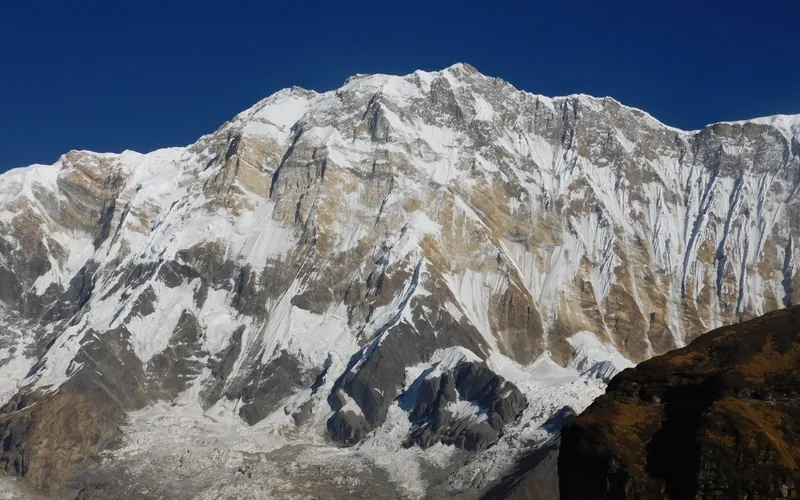
Annapurna I North Face (Herzog-Lachenal Route)
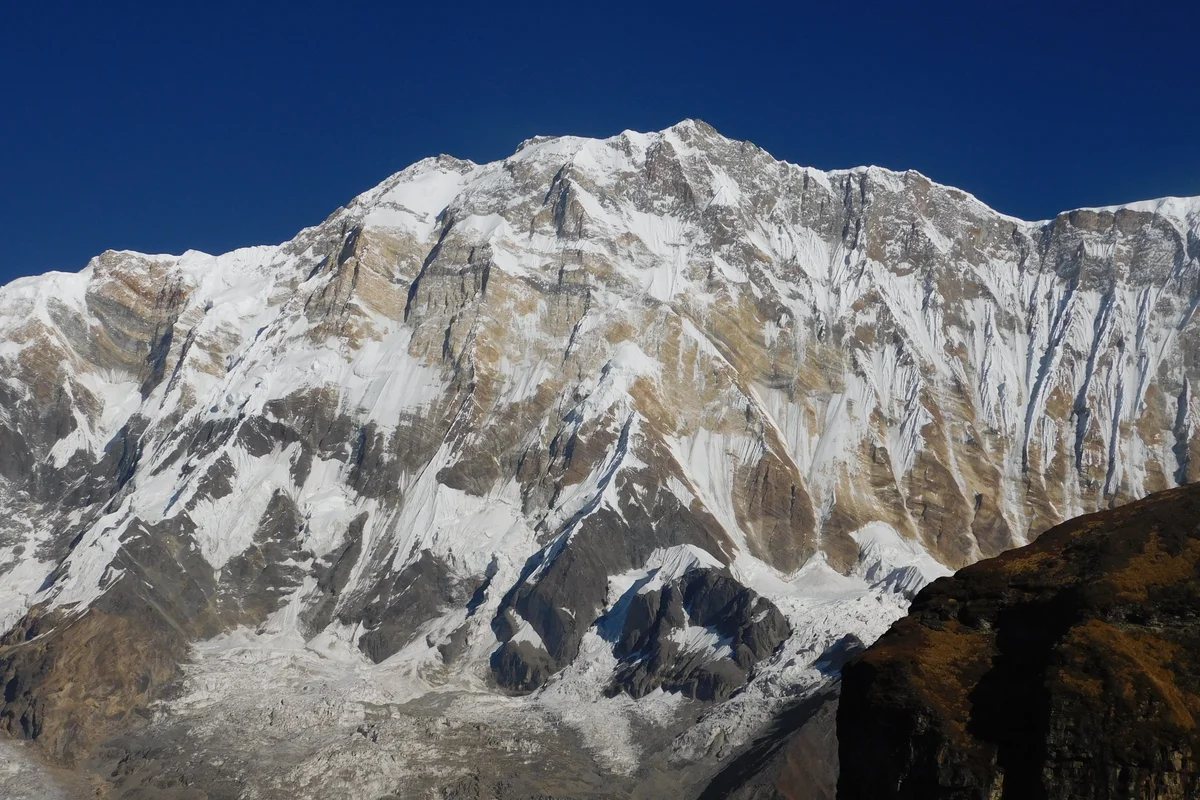
The North Face of Annapurna I is the historic first route ever climbed on an 8,000-meter peak, pioneered by French climbers Maurice Herzog and Louis Lachenal on June 3, 1950. Approached via the remote Miristi Khola valley, the route ascends the shattered North Annapurna Glacier, negotiates the terrifying avalanche-swept Sickle Glacier serac wall, and ascends steep snow gullies along the French Rib to gain the 8,091m summit.
Target Objective Peak
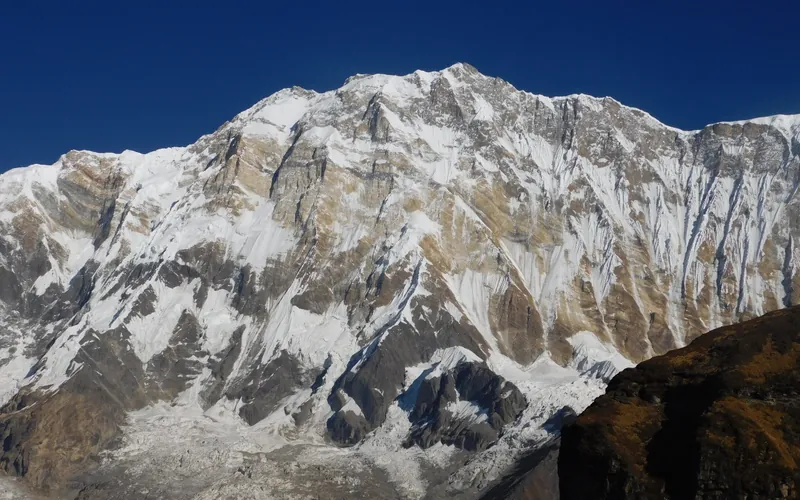

Annapurna I
Annapurna I, at 8,091 meters (26,545 ft), is the tenth-highest mountain in the world and historically the first 8,000-meter peak ever summited (June 3, 1950 by Maurice Herzog and Louis Lachenal). Rising above the Annapurna Sanctuary, its north and south walls present extreme avalanche and serac fall hazards.
Featured Expedition Climbers
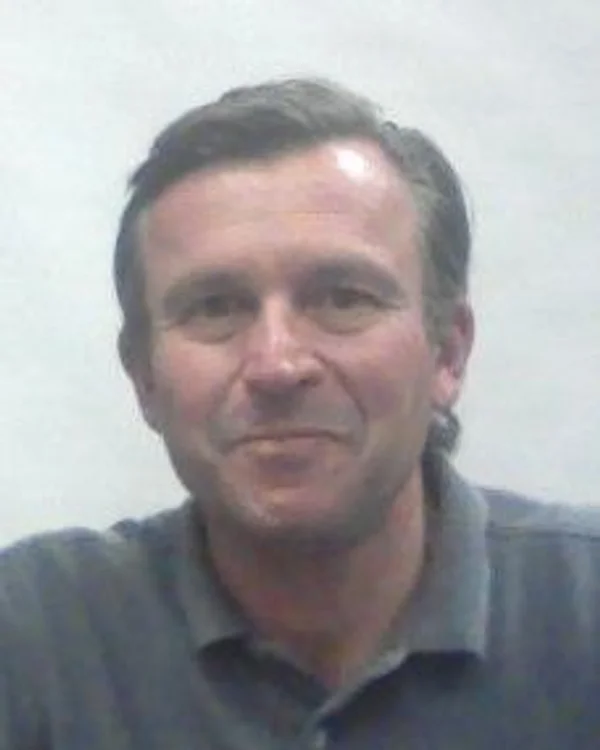
Ed Viesturs
Ed Viesturs was born on June 22, 1959, in Fort Wayne, Indiana, and grew up in Rockford, Illinois. Inspired as a youth by Maurice Herzog's account of Annapurna, he relocated to Seattle to attend the University of Washington, later earning a Doctor of Veterinary Medicine degree from Washington State University. Balancing his work as a veterinarian with seasonal guiding on Mount Rainier, where he led more than two hundred ascents, Viesturs developed phenomenal cardiovascular endurance and a deep understanding of snow mechanics and altitude physiology. In 1989, Viesturs climbed his first eight-thousander, Kangchenjunga (8,586m), establishing his signature ethical standard: climbing strictly without supplemental bottled oxygen. Over the next sixteen years, under his self-styled 'Project Endeavour 8000', Viesturs methodically climbed all fourteen 8,000-meter peaks. In 1992, he completed a landmark oxygen-free ascent of K2 alongside Scott Fischer. In 1996, while filming the landmark Everest IMAX documentary, Viesturs and his team suspended their filming to haul vital oxygen cylinders and provide medical assistance to survivors of the May 1996 Everest blizzard, before Viesturs reached the summit weeks later. On May 12, 2005, on his third attempt, Viesturs summited the lethal North Face of Annapurna I (8,091m) alongside Finnish partner Veikka Gustafsson, completing his sixteen-year quest to climb all fourteen eight-thousanders without bottled oxygen. His famous mantra—'Getting to the top is optional, getting down is mandatory'—became the philosophical gold standard for high-altitude survival. Viesturs was named Adventurer of the Year by National Geographic and received the David A. Sowles Memorial Award from the American Alpine Club.
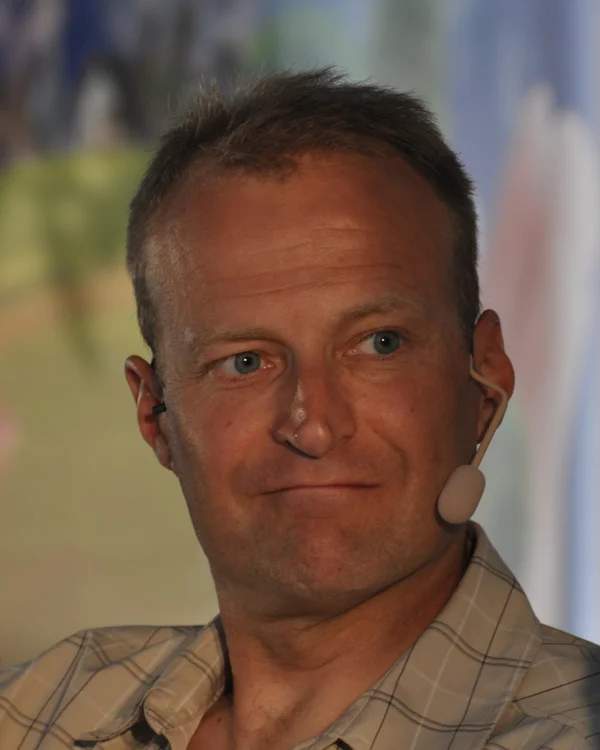
Veikka Gustafsson
Eero Veikka Juhani Gustafsson was born on January 14, 1968, in Espoo, Finland. Developing exceptional cold-weather endurance and cross-country ski mountaineering skills in the harsh Nordic wilderness, he turned his sights toward the greater ranges in the early 1990s. In spring 1993, at age twenty-five, Gustafsson made history by summiting Mount Everest (8,848m) via the South Col route, becoming the first citizen of Finland to reach the rooftop of the world. He returned in 1997 to conquer Everest without supplemental bottled oxygen. During his early Himalayan career, Gustafsson forged an enduring climbing partnership with American alpinist Ed Viesturs. Sharing an identical ethical philosophy—refusing supplemental oxygen and prioritizing conservative turnaround times—the two men became one of the most successful high-altitude duos in history. Together, they climbed Dhaulagiri (1993), Cho Oyu (1995 and 2001), Shishapangma (2001), Manaslu (2003), and the treacherous North Face of Annapurna I (2005), all without bottled oxygen. Gustafsson's calm demeanor and relentless physical pacing earned him the deep respect of international Himalayan climbers. Following Viesturs's completion of the fourteen peaks on Annapurna in 2005, Gustafsson pressed forward to complete his own quest. Climbing in lightweight alpine style across the Karakoram, he summited Broad Peak and Gasherbrum II in July 2008. On July 26, 2009, Gustafsson stood on the summit of Gasherbrum I (8,080m) in northern Pakistan, successfully completing all fourteen 8,000-meter peaks without supplemental bottled oxygen. He became the seventeenth climber in history to achieve the feat and remains the undisputed benchmark for Nordic high-altitude mountaineering.
Associated Historical Chronicles & Stories
Mandatory Return: Ed Viesturs Completes Endeavour 8000 on Annapurna
On May 12, 2005, Ed Viesturs and Veikka Gustafsson conquered the lethal North Face of Annapurna I without bottled oxygen, fulfilling Viesturs's 16-year quest to climb all 14 eight-thousanders.
Documented Sources & Archival Citations
- American Alpine Journal: Annapurna and Endeavour 8000 by Ed Viesturs(American Alpine Club)
Supporting claim: Official expedition record and climb report verifying the May 12, 2005 Annapurna summit
Accessed/Documented: 2006 - No Shortcuts to the Top: Climbing the World's 14 Highest Peaks(Ed Viesturs and David Roberts / Broadway Books)
Supporting claim: Detailed narrative of the Annapurna summit push, risk management, and the completion of Endeavour 8000
Accessed/Documented: 2006