Polish Glacier
Also known as: Glaciar de los Polacos · Aconcagua East Ice Face
Glaciological Setting & Morphology
Draping the eastern flank of Mount Aconcagua between 5,800 and 6,700 metres, the Polish Glacier was famously pioneered in 1934 by a Polish expedition. It represents one of the highest true hanging ice glaciers in the Western Hemisphere.
Documented Environmental & Terminus Trends
Substantial retreat and thinning of the lower traverse tongue, resulting in exposed scree bands on historical direct ascent routes.
Scientific Observations & Flow Dynamics
High-altitude sublimation and arid Andean radiation regimes drive mass loss on the Polish Glacier, with severe snow penitentes (nieves penitentes) forming across its lower fields during summer ablation windows.
Surrounding Mountain Summits (1)
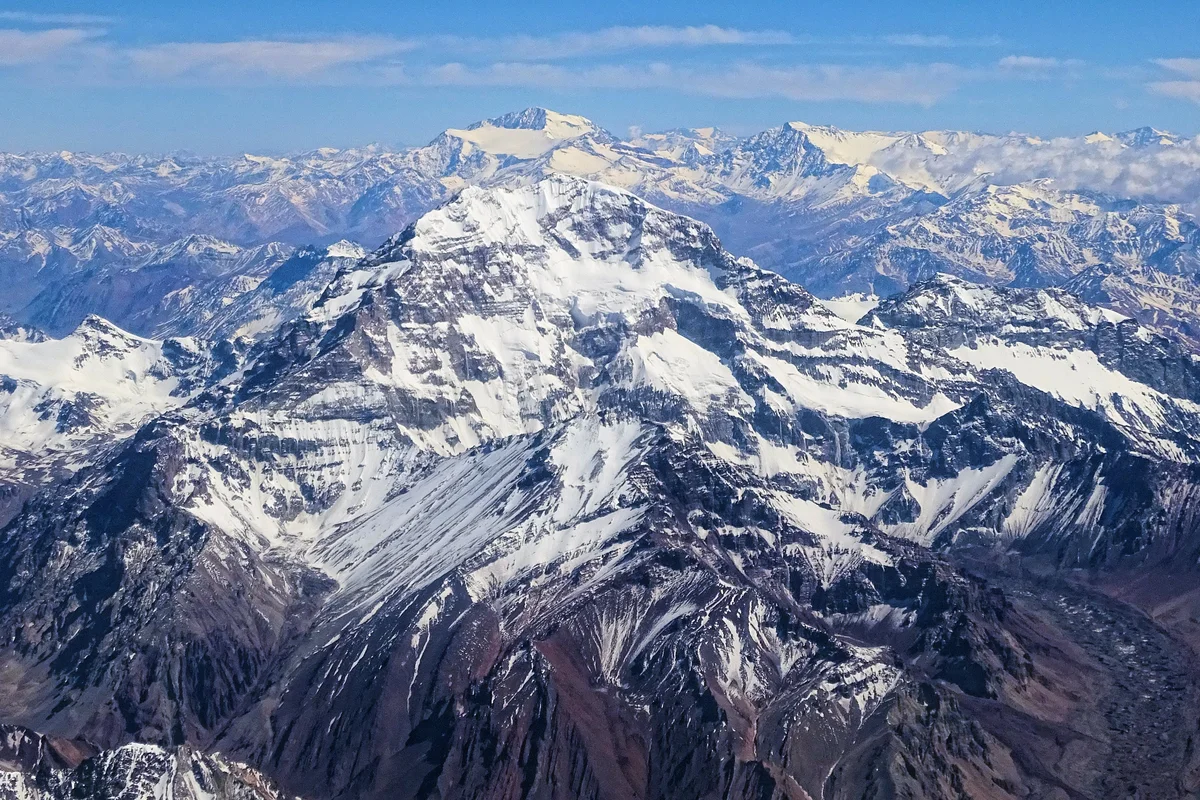
Aconcagua
Aconcagua is the highest mountain in the Americas and the highest peak outside Asia, rising to 6,961 metres in Argentina's Andes. Celebrated as the second most topographically prominent mountain on Earth, it features colossal glaciated faces, intense high-altitude gales, and historic routes including the Polish Glacier.
Glacier Approach & Climbing Routes (1)
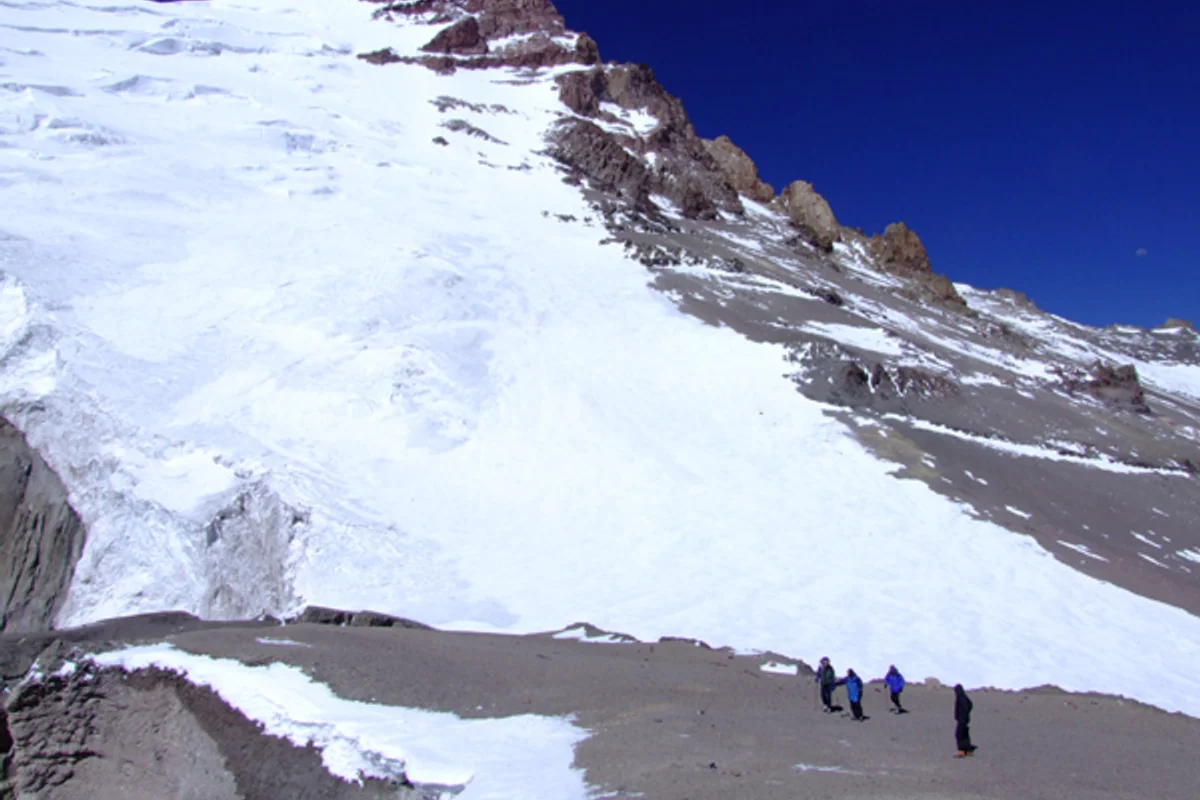
Polish Glacier (Aconcagua)
The Polish Glacier is the premier technical mountaineering route on Mount Aconcagua, ascending the steep eastern glaciated face over 1,000 vertical metres. Graded French D with sustained 50° to 65° slopes of hard alpine ice, it provides a dramatic, highly aesthetic alternative to the standard trekking route.
Documented Sources & Archival Citations
- Glaciological study of the northeast face of Cerro Aconcagua(Andean Geology)
Supporting claim: Sublimation rates and retreat of the Polish Glacier tongue
Accessed/Documented: 2026