Aconcagua vs Denali: High Altitude & Extreme Cold
Aconcagua (6,961 m) in the Argentine Andes and Denali (6,190 m) in the Alaska Range represent the two highest peaks in the Western and Northern Hemispheres respectively, standing as the crowning summits of the Americas on the Seven Summits circuit. While Aconcagua is nearly 800 meters higher in absolute elevation, mountaineers and expedition doctors universally agree that Denali presents a far harsher, more physically grueling, and technically complex expeditionary challenge.
Compare Any Two Mountains Side by Side
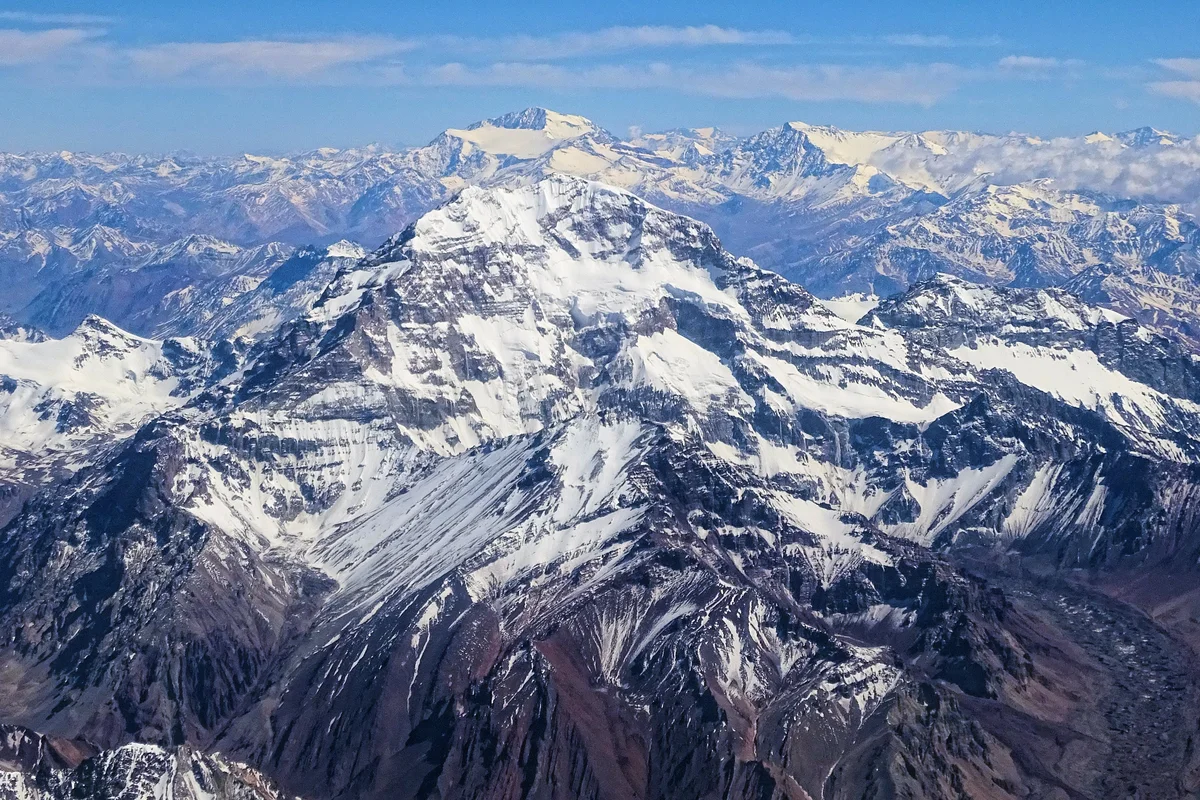
Aconcagua
Aconcagua is the highest mountain in the Americas and the highest peak outside Asia, rising to 6,961 metres in Argentina's Andes. Celebrated as the second most topographically prominent mountain on Earth, it features colossal glaciated faces, intense high-altitude gales, and historic routes including the Polish Glacier.
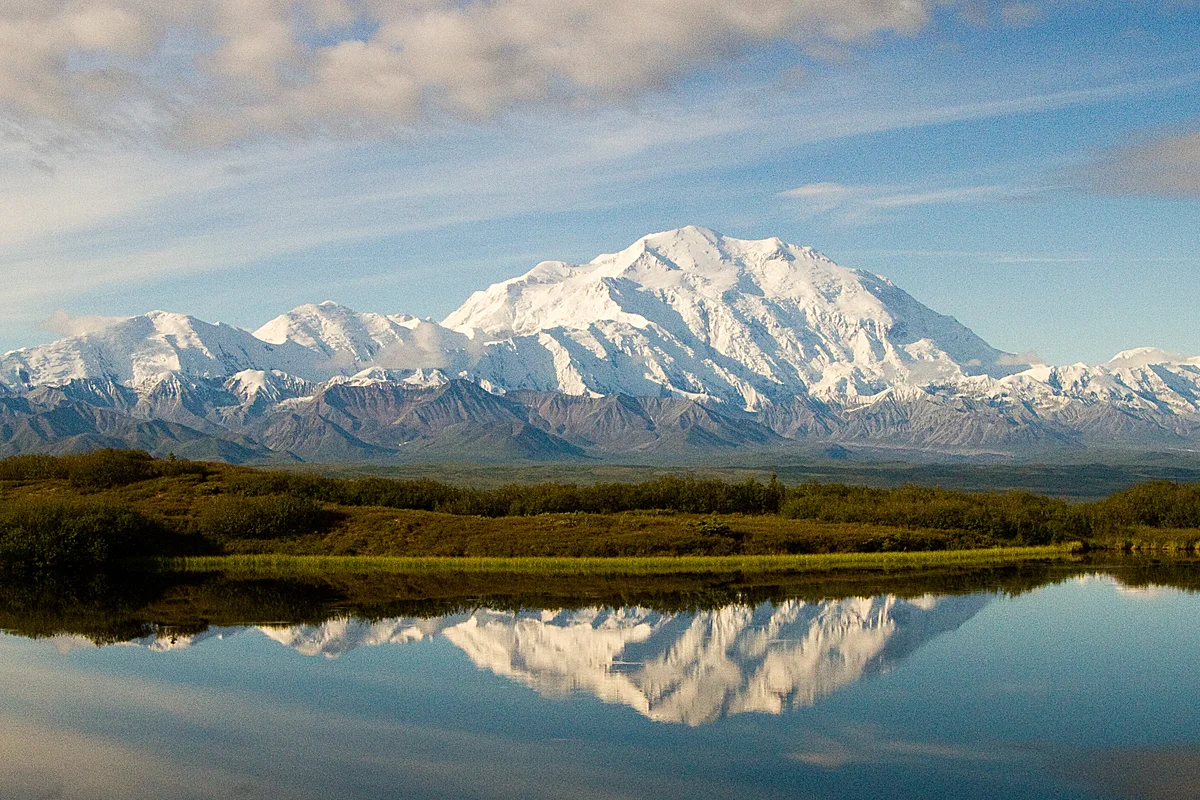
Denali (Mount McKinley)
Denali (Mount McKinley) is a majestic 6,000-meter peak rising to 6190 meters in the Alaska Range (Alaska, United States). Documented in international mountaineering archives following its historic first ascent in 1913 by Hudson Stuck, Harry Karstens, Walter Harper, Robert Tatum (United States), the peak presents technical ridgelines and high-altitude alpine terrain.
Visual Elevation Comparison & Atmosphere Scale
📊A. Mountain Identity and Physical Statistics
Dimensions & Geodesy| Metric | Aconcagua | Denali (Mount McKinley) |
|---|---|---|
| Surveyed Elevation | 6,961 m (22,838 ft) | 6,190 m (20,308 ft) |
| Global Elevation Ranking | Documented in peak dossier | Documented in peak dossier |
| Topographic Prominence | 6,961 m (22,838 ft) | 6,155 m (20,194 ft) |
| Country & Sovereignty | AR | US |
| Geographic Coordinates | 32°39′12″ S, 70°00′39″ W | 63°04′09″ N, 151°00′25″ W |
| Massif Classification | High-Altitude Glaciated Massif and Ultra-Prominent Peak | Glaciated Alpine Massif |
| Alternative / Native Names | Cerro Aconcagua, Colossus of America, Stone Sentinel | Standard international name |
🗺️B. Geography, Mountain Range & Terrain Characteristics
Topography & Relief| Primary Mountain Range | andes | alaska-range |
| Geographical Context | Situated entirely within Mendoza Province near the Chilean border, Aconcagua rises above the Horcones and Vacas river valleys. While its northern flank offers non-technical scree ascents, its eastern aspect is draped by the sweeping Polish Glacier, and its dramatic South Face plunges 2,700 vertical metres in sheer rock and hanging ice. | Regional watershed and subrange documented in Mountainity archives. |
| Glacial Basin & Watershed | Mendoza Province, Principal Cordillera, Aconcagua Provincial Park | Alaska |
| Geographical Separation | The summits are separated by approximately 12,779 kilometers (7,941 miles) of planetary terrain. | |
🧗C. Standard Climbing Routes & Technical Lines
Route Topography| Standard / Normal Route | Normal Route (via Plaza de Mulas) | Standard expedition ascent line |
| First Ascent Route | Normal Route (Northwest Face) | Pioneered during first successful expedition |
| Documented Route Guides | 1 technical route profiles in Mountainity directory | 2 technical route profiles in Mountainity directory |
⚠️D. Climbing Difficulty, Objective Hazards & Physiological Demands
Objective Safety| Physiological Altitude Zone | Extreme Alpine (6,000m–6,999m)Severe cold and reduced pressure (~45%–50% O2). Requires multiple acclimatization cycles prior to summit pushes. | Extreme Alpine (6,000m–6,999m)Severe cold and reduced pressure (~45%–50% O2). Requires multiple acclimatization cycles prior to summit pushes. |
| Oxygen Availability (Sea Level = 100%) | ~44% barometric oxygen partial pressure | ~48% barometric oxygen partial pressure |
| Primary Objective Hazards | Crevasse fields, severe cold, acute mountain sickness (HAPE/HACE), high-angle mixed terrain, and serac collapse. | Crevasse fields, severe cold, acute mountain sickness (HAPE/HACE), high-angle mixed terrain, and serac collapse. |
📜E. Mountaineering History & Pioneer First Ascents
Historical Annals| First Ascent Date | January 14, 1897 | 1913 |
| First Ascent Team | Matthias Zurbriggen (solo final push) | Hudson Stuck, Harry Karstens, Walter Harper, and Robert Tatum |
| Historical Expedition | 1897 FitzGerald Expedition to the Andes | Historical expedition annals |
| First Winter Ascent | September 15, 1953 (E. Huerta, H. Vasalla, F. Godoy) | Documented in winter archives or seasonal ascents |
🌤️F. Summit Meteorology, Atmospheric Conditions & Seasons
Live Forecasts & Climate| Typical Climbing Season | December to February (Southern Hemisphere Summer) or May–September (Cordillera Blanca) | May to July (Alaska Range) or June–September (Cascades) |
| Live Summit Meteorology | View Aconcagua Live Summit Forecast → | View Denali (Mount McKinley) Live Summit Forecast → |
🎒G. Expedition Planning, Logistics & Alpine Tools
2027 Planning SuitesAconcagua Expedition Tools2027 Active
Access dedicated financial modeling and gateway flight intelligence calibrated for this summit.
Denali (Mount McKinley) Expedition Tools2027 Active
Access dedicated financial modeling and gateway flight intelligence calibrated for this summit.
H. Synthesis & Comparative Verdict
Aconcagua (6,961 m) and Denali (Mount McKinley) (6,190 m) represent distinct high-altitude mountaineering challenges. Aconcagua commands higher absolute altitude by 771 m (2,530 ft). When evaluating overall commitment, technical crux ratings, exposure, objective hazards such as avalanches or serac collapse, and regional weather stability prove as decisive as sheer summit altitude. Neither peak represents a universal winner; each demands dedicated conditioning, technical competence, and meticulous logistical preparation.
Alpine Monograph: Aconcagua vs Denali (Mount McKinley)
Aconcagua (6,961 m) in the Argentine Andes and Denali (6,190 m) in the Alaska Range represent the two highest peaks in the Western and Northern Hemispheres respectively, standing as the crowning summits of the Americas on the Seven Summits circuit. While Aconcagua is nearly 800 meters higher in absolute elevation, mountaineers and expedition doctors universally agree that Denali presents a far harsher, more physically grueling, and technically complex expeditionary challenge.
Denali's proximity to the Arctic Circle (63° N) produces two distinct physiological factors: first, extreme sub-polar barometric pressure makes its effective physiological altitude comparable to a 6,700-meter peak in the Himalayas; second, ambient temperatures on the upper mountain regularly plunge below -40°C (-40°F) with ferocious Arctic blizzards. Furthermore, Denali expeditions are completely unsupported: teams must haul heavy sleds (30–40 kg) and heavy packs up massive crevassed glaciers without porters or pack mules.
Aconcagua, by contrast, benefits from commercial mule transport to its Plaza de Mulas base camp (4,300 m). Its standard Normal Route from Horcones is a non-technical trekking route on scree and snow, making high-altitude sickness (AMS), extreme dry winds (el Viento Blanco), and sheer dehydration the primary hazards rather than technical crevasse danger.
Key Contrasting Differences
- Aconcagua is 771 meters (2,530 feet) higher than Denali in surveyed altitude, making it the highest mountain on Earth outside of Asia.
- Denali sits at 63° North latitude, where the Earth's thinner atmosphere reduces barometric pressure, making Denali feel physiologically 500–800 meters higher than its actual elevation.
- Denali is an expedition on vast, actively crevassed Arctic glaciers requiring glacier rescue gear and sled-hauling, whereas Aconcagua's Normal Route is a high-altitude scree trek.
- Temperatures on Denali are among the coldest recorded on any mountain, often dropping to -40°C to -50°C, compared to -20°C on Aconcagua.
- Aconcagua expeditions utilize pack mules to carry expedition gear directly to base camp at 4,300 meters, while Denali climbers must haul their own sleds from the Kahiltna Glacier airstrip.
- Denali was first summited via the South Peak on June 7, 1913 by Hudson Stuck, Harry Karstens, Walter Harper, and Robert Tatum; Aconcagua was first summited on January 14, 1897 by Swiss guide Matthias Zurbriggen.
Category-by-Category Analysis
📊Elevation & Identity Analysis
Aconcagua rises to 6,961 m with 6,961 m of prominence as the highest point in South America. Denali rises to 6,190 m with 6,138 m of prominence as the highest point in North America.
🗺️Geographical & Tectonic Contrast
Aconcagua is situated in the Principal Cordillera of the Andes in Mendoza Province, Argentina. Denali anchors the Alaska Range inside Denali National Park and Preserve in south-central Alaska.
🧗Route Topography & Crux Difficulty
Aconcagua's standard line is the Normal Route (Northwest Face) from Plaza de Mulas. Denali's normal line is the West Buttress route up the Kahiltna Glacier from the southeast fork.
⚠️Objective Hazards & Death Zone Exposure
Denali is far more physically and technically demanding, requiring winter camping skills, crevasse rescue protocols, and sled hauling. Aconcagua demands physiological acclimatization and endurance against extreme scree and howling wind.
📜Pioneer History & Expedition Milestones
Zurbriggen's 1897 solo first ascent of Aconcagua proved human capability near 7,000 meters. The 1913 Stuck-Karstens expedition on Denali established early American high-altitude exploration.
🌤️Meteorological Windows & Jet Stream Influence
Aconcagua is plagued by the furious Viento Blanco storm blowing from the Pacific across the Andes. Denali experiences Arctic cold fronts, massive maritime snowfalls, and localized venturi wind storms on the high ridge.
🎒Expedition Staging, Approach Treks & Gateway Logistics
Aconcagua is accessed via Mendoza with serviced camps and medical check stations. Denali requires flying by ski-plane onto the Kahiltna Glacier from Talkeetna, Alaska, with total wilderness self-sufficiency.
Connected Mountain Dossiers & Exploration Tools
Aconcagua Intelligence Resources
Explore dedicated profiles, routes, live meteorology, and historical records.
Denali (Mount McKinley) Intelligence Resources
Explore dedicated profiles, routes, live meteorology, and historical records.
Frequently Asked Questions: Aconcagua vs Denali (Mount McKinley)
Which is harder to climb, Aconcagua or Denali?
Denali is widely regarded as significantly more difficult than Aconcagua. Despite Aconcagua being 771 meters higher, Denali requires complete self-sufficiency (hauling 50kg of food and gear on sleds and backpacks), navigating heavily crevassed glaciers, and surviving extreme sub-polar temperatures (-40°C).
Why is Denali's effective altitude higher than its physical height?
Because the Earth's troposphere is thinner at high latitudes near the poles than at the equator, barometric pressure on Denali (63° N) is lower than at equivalent altitudes in the Himalayas or Andes. Breathing at 6,190m on Denali physiologically feels comparable to 6,700m in the tropics.
Do you need crampons and ice axes for Aconcagua and Denali?
On Denali, crampons, ice axes, helmets, harnesses, and rope teams are mandatory from the Kahiltna airstrip to the summit. On Aconcagua's Normal Route, crampons and ice axes are only required if snow or ice covers the upper Canaleta scree slope.
What are the success rates on Aconcagua compared to Denali?
Average summit success rates on both mountains typically hover between 40% and 55%. On Aconcagua, failure is usually caused by acute altitude sickness and rapid ascents; on Denali, failure is typically caused by severe Arctic blizzards and frostbite.
Related Mountain Comparisons
Annapurna vs Nanga Parbat: Routes & History
Compare Annapurna I (8,091m) and Nanga Parbat (8,126m): Rupal Face, avalanche hazard, technical cruxes, and mountaineering death rates in 2027.
Eiger vs Matterhorn: Classic Alpine Icons
Compare the Eiger (3,967m) and Matterhorn (4,478m): the legendary Nordwand, Hörnli Ridge, technical rock cruxes, and pioneering Swiss ascents.
Elbrus vs Mont Blanc: European High Points
Compare Mount Elbrus (5,642m) and Mont Blanc (4,808m): Seven Summits status, Caucasus vs Alps geography, normal routes, and altitude hazards.
Compare Any Other Summits Across Earth
Use our interactive Mountain Comparison Engine to contrast any two peaks across elevation, topography, climbing routes, and summit meteorology.
Share Exploration
Global Mountain Intelligence
✓ Link copied to clipboard!