Mount Everest vs Denali (Mount McKinley): Elevation & Routes
Mount Everest (8,849 m) and Denali (Mount McKinley) (6,190 m) represent one of the most compelling comparative studies in high-altitude mountaineering. Highlighting the planetary altitude champion versus the mountain with the greatest base-to-peak vertical rise on land, these two summits attract international attention for their contrasting topography, climatic extremes, and historical significance.
Compare Any Two Mountains Side by Side
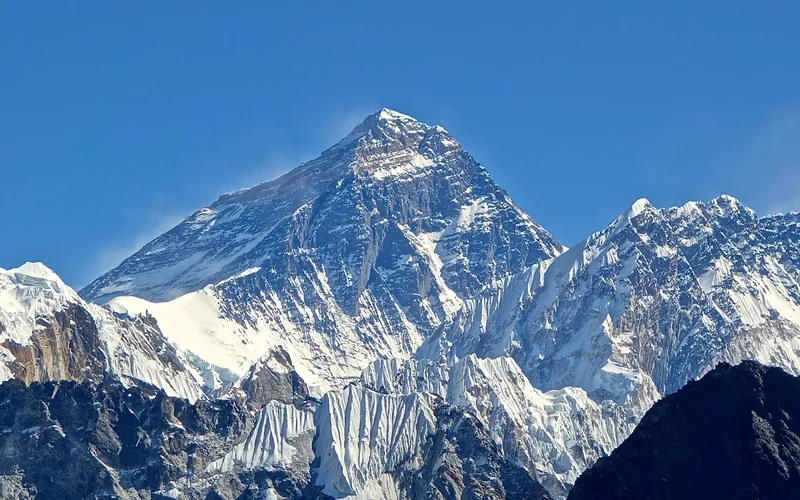
Mount Everest
Mount Everest is the highest mountain above sea level on Earth, standing at an official elevation of 8,848.86 meters (29,031.7 ft). Straddling the international frontier between Nepal and China, it is known locally as Sagarmatha in Nepali ('Goddess of the Sky') and Chomolungma in Tibetan ('Mother Goddess of the World'). The peak rises into the extreme upper troposphere, where oxygen levels drop to barely one-third of sea-level pressure. Climbers face hurricane-force jet stream winds, severe frostbite conditions, shifting ice crevasses in the Khumbu Icefall, and the dangerous Death Zone above 8,000 meters.
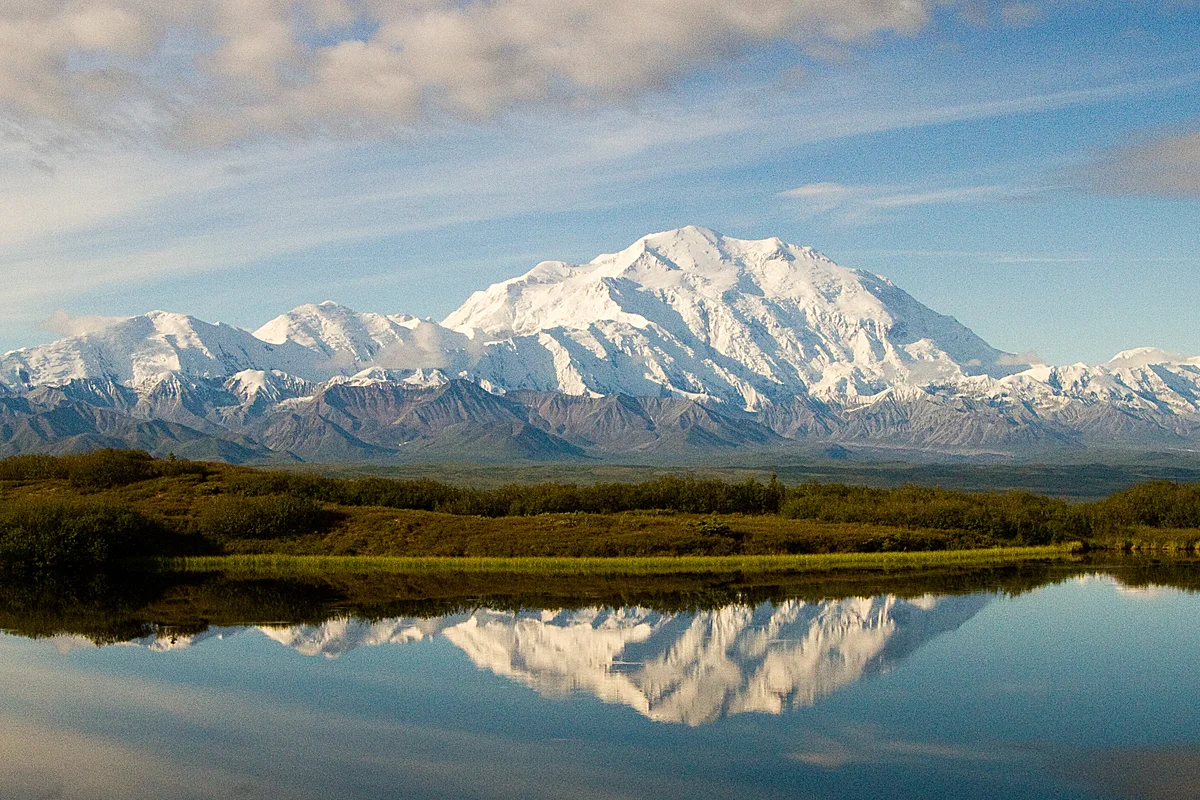
Denali (Mount McKinley)
Denali (Mount McKinley) is a majestic 6,000-meter peak rising to 6190 meters in the Alaska Range (Alaska, United States). Documented in international mountaineering archives following its historic first ascent in 1913 by Hudson Stuck, Harry Karstens, Walter Harper, Robert Tatum (United States), the peak presents technical ridgelines and high-altitude alpine terrain.
Visual Elevation Comparison & Atmosphere Scale
📊A. Mountain Identity and Physical Statistics
Dimensions & Geodesy| Metric | Mount Everest | Denali (Mount McKinley) |
|---|---|---|
| Surveyed Elevation | 8,849 m (29,032 ft) | 6,190 m (20,308 ft) |
| Global Elevation Ranking | Documented in peak dossier | Documented in peak dossier |
| Topographic Prominence | 8,849 m (29,032 ft) | 6,155 m (20,194 ft) |
| Country & Sovereignty | NP, CN | US |
| Geographic Coordinates | 27°59′17″ N, 86°55′30″ E | 63°04′09″ N, 151°00′25″ W |
| Massif Classification | Glaciated Pyramidal Massif | Glaciated Alpine Massif |
| Alternative / Native Names | Sagarmatha, Chomolungma, Qomolangma, Peak XV, Qomolungma | Standard international name |
🗺️B. Geography, Mountain Range & Terrain Characteristics
Topography & Relief| Primary Mountain Range | himalayas | alaska-range |
| Geographical Context | Mahalangur Himal subrange of the Central Himalayas, located on the border between Solukhumbu District in Nepal and Tingri County in Tibet, China. | Regional watershed and subrange documented in Mountainity archives. |
| Glacial Basin & Watershed | Khumbu (Solukhumbu), Tibet Autonomous Region | Alaska |
| Geographical Separation | The summits are separated by approximately 8,685 kilometers (5,397 miles) of planetary terrain. | |
🧗C. Standard Climbing Routes & Technical Lines
Route Topography| Standard / Normal Route | South Col Route (Southeast Ridge from Nepal) / Northeast Ridge (Tibet) | Standard expedition ascent line |
| First Ascent Route | South Col / Southeast Ridge | Pioneered during first successful expedition |
| Documented Route Guides | 8 technical route profiles in Mountainity directory | 2 technical route profiles in Mountainity directory |
⚠️D. Climbing Difficulty, Objective Hazards & Physiological Demands
Objective Safety| Physiological Altitude Zone | Death Zone (>8,000m)Atmospheric oxygen drops to ~33% of sea level. Supplementary O2 standard for most ascents; human body cannot acclimatize permanently. | Extreme Alpine (6,000m–6,999m)Severe cold and reduced pressure (~45%–50% O2). Requires multiple acclimatization cycles prior to summit pushes. |
| Oxygen Availability (Sea Level = 100%) | ~35% barometric oxygen partial pressure | ~48% barometric oxygen partial pressure |
| Primary Objective Hazards | Extreme hypoxia, Death Zone exposure, serac fall risk, avalanche hazard, and hurricane-force troposphere jet stream gales. | Crevasse fields, severe cold, acute mountain sickness (HAPE/HACE), high-angle mixed terrain, and serac collapse. |
📜E. Mountaineering History & Pioneer First Ascents
Historical Annals| First Ascent Date | May 29, 1953 | 1913 |
| First Ascent Team | Sir Edmund Hillary (New Zealand) and Tenzing Norgay (Nepal) | Hudson Stuck, Harry Karstens, Walter Harper, and Robert Tatum |
| Historical Expedition | 1953 British Mount Everest Expedition | Historical expedition annals |
| First Winter Ascent | February 17, 1980 (Krzysztof Wielicki, Leszek Cichy) | Documented in winter archives or seasonal ascents |
🌤️F. Summit Meteorology, Atmospheric Conditions & Seasons
Live Forecasts & Climate| Typical Climbing Season | Pre-Monsoon (April–May) & Post-Monsoon (Late September–October) | May to July (Alaska Range) or June–September (Cascades) |
| Live Summit Meteorology | View Mount Everest Live Summit Forecast → | View Denali (Mount McKinley) Live Summit Forecast → |
🎒G. Expedition Planning, Logistics & Alpine Tools
2027 Planning SuitesMount Everest Expedition Tools2027 Active
Access dedicated financial modeling and gateway flight intelligence calibrated for this summit.
Denali (Mount McKinley) Expedition Tools2027 Active
Access dedicated financial modeling and gateway flight intelligence calibrated for this summit.
H. Synthesis & Comparative Verdict
Mount Everest (8,849 m) and Denali (Mount McKinley) (6,190 m) represent distinct high-altitude mountaineering challenges. Mount Everest commands higher absolute altitude by 2,659 m (8,724 ft). When evaluating overall commitment, technical crux ratings, exposure, objective hazards such as avalanches or serac collapse, and regional weather stability prove as decisive as sheer summit altitude. Neither peak represents a universal winner; each demands dedicated conditioning, technical competence, and meticulous logistical preparation.
Alpine Monograph: Mount Everest vs Denali (Mount McKinley)
Mount Everest (8,849 m) and Denali (Mount McKinley) (6,190 m) represent one of the most compelling comparative studies in high-altitude mountaineering. Highlighting the planetary altitude champion versus the mountain with the greatest base-to-peak vertical rise on land, these two summits attract international attention for their contrasting topography, climatic extremes, and historical significance. While Mount Everest commands greater vertical elevation by 2,659 meters, sheer summit altitude is only one variable in determining the physical and psychological commitment demanded on each mountain.
From a technical standpoint, the difficulty profiles diverge across terrain and objective hazards. On Mount Everest, alpinists must contend with survival in the upper troposphere above 8,000m with supplemental oxygen on the South Col. Conversely, climbing Denali (Mount McKinley) presents a different matrix of alpine challenges, dominated by unsupported glacier load-hauling in extreme sub-polar arctic conditions with 5,500m of vertical relief. Route selection, seasonal snowpack stability, and exposure to high-velocity winds prove decisive on both massifs.
Historically, both peaks occupy celebrated chapters in alpine literature, having witnessed pioneering first ascents and daring modern traverses. In modern 2027 expedition planning, successful ascents require specialized acclimatization profiles, meticulous logistical preparation, and respect for local environmental regulations. Whether evaluating physiological strain in the upper atmosphere or technical rock-and-ice grades, each mountain stands as an elite benchmark of global mountaineering achievement.
Key Contrasting Differences
- Mount Everest stands 2,659 meters higher than Denali (Mount McKinley), creating a measurable atmospheric and barometric difference.
- Mount Everest is situated in NP/CN (himalayas), whereas Denali (Mount McKinley) anchors US (alaska-range).
- The primary crux on Mount Everest centers on survival in the upper troposphere above 8, whereas Denali (Mount McKinley) is defined by unsupported glacier load-hauling in extreme sub-polar arctic conditions with 5.
- Climbing styles and permit requirements reflect differing regional protocols between their respective mountaineering federations.
- Optimal 2027 weather windows depend on regional seasonal cycles and prevailing high-altitude jet-stream patterns.
Category-by-Category Analysis
📊Elevation & Identity Analysis
Mount Everest (8,849 m) versus Denali (Mount McKinley) (6,190 m), separated by 2,659 meters of vertical relief.
🗺️Geographical & Tectonic Contrast
Mount Everest anchors the himalayas in NP/CN. Denali (Mount McKinley) is located in the alaska-range in US.
🧗Route Topography & Crux Difficulty
Standard ascents on Mount Everest follow established routes, while Denali (Mount McKinley) requires navigating its recognized classic line.
⚠️Objective Hazards & Death Zone Exposure
Mount Everest tests endurance against survival in the upper troposphere above 8,000m with supplemental oxygen on the South Col. Denali (Mount McKinley) demands technical competence against unsupported glacier load-hauling in extreme sub-polar arctic conditions with 5,500m of vertical relief.
📜Pioneer History & Expedition Milestones
Both peaks feature celebrated expedition chronicles documented in historic archives and pioneer mountaineering annals.
🌤️Meteorological Windows & Jet Stream Influence
Seasonal meteorological conditions dictate that 2027 attempts align with optimal regional stability windows.
🎒Expedition Staging, Approach Treks & Gateway Logistics
Expedition planning requires dedicated base camp infrastructure, local porter support, and national park permits.
Connected Mountain Dossiers & Exploration Tools
Mount Everest Intelligence Resources
Explore dedicated profiles, routes, live meteorology, and historical records.
Denali (Mount McKinley) Intelligence Resources
Explore dedicated profiles, routes, live meteorology, and historical records.
Frequently Asked Questions: Mount Everest vs Denali (Mount McKinley)
Which mountain is higher, Mount Everest or Denali (Mount McKinley)?
Mount Everest (8,849 m) is higher than Denali (Mount McKinley) (6,190 m) by exactly 2,659 meters (8,724 feet).
Which mountain is technically more difficult to climb?
Technical difficulty depends on the chosen route. Mount Everest is characterized by survival in the upper troposphere above 8, while Denali (Mount McKinley) is renowned for unsupported glacier load-hauling in extreme sub-polar arctic conditions with 5.
In which countries are Mount Everest and Denali (Mount McKinley) located?
Mount Everest is located in NP/CN within the himalayas, whereas Denali (Mount McKinley) is located in US within the alaska-range.
What is the best climbing season for these mountains in 2027?
Climbing windows vary by region: Himalayan and Karakoram peaks typically favor pre-monsoon spring or mid-summer dry periods, whereas Andean and equatorial summits follow regional dry seasons.
Related Mountain Comparisons
Aconcagua vs Denali: High Altitude & Extreme Cold
Compare Aconcagua (6,961m) and Denali (6,190m): Southern vs Northern Hemisphere giants, extreme sub-zero weather, altitude sickness, and logistics.
Annapurna vs Nanga Parbat: Routes & History
Compare Annapurna I (8,091m) and Nanga Parbat (8,126m): Rupal Face, avalanche hazard, technical cruxes, and mountaineering death rates in 2027.
Eiger vs Matterhorn: Classic Alpine Icons
Compare the Eiger (3,967m) and Matterhorn (4,478m): the legendary Nordwand, Hörnli Ridge, technical rock cruxes, and pioneering Swiss ascents.
Compare Any Other Summits Across Earth
Use our interactive Mountain Comparison Engine to contrast any two peaks across elevation, topography, climbing routes, and summit meteorology.
Share Exploration
Global Mountain Intelligence
✓ Link copied to clipboard!