Mount Kilimanjaro vs Mount Kenya: Africa #1 vs #2 Peaks
Mount Kilimanjaro (5,895 m) and Mount Kenya (5,199 m) represent one of the most compelling comparative studies in high-altitude mountaineering. Highlighting the two highest mountains on the African continent, contrasting volcanic trekking with pure alpine rock climbing, these two summits attract international attention for their contrasting topography, climatic extremes, and historical significance.
Compare Any Two Mountains Side by Side
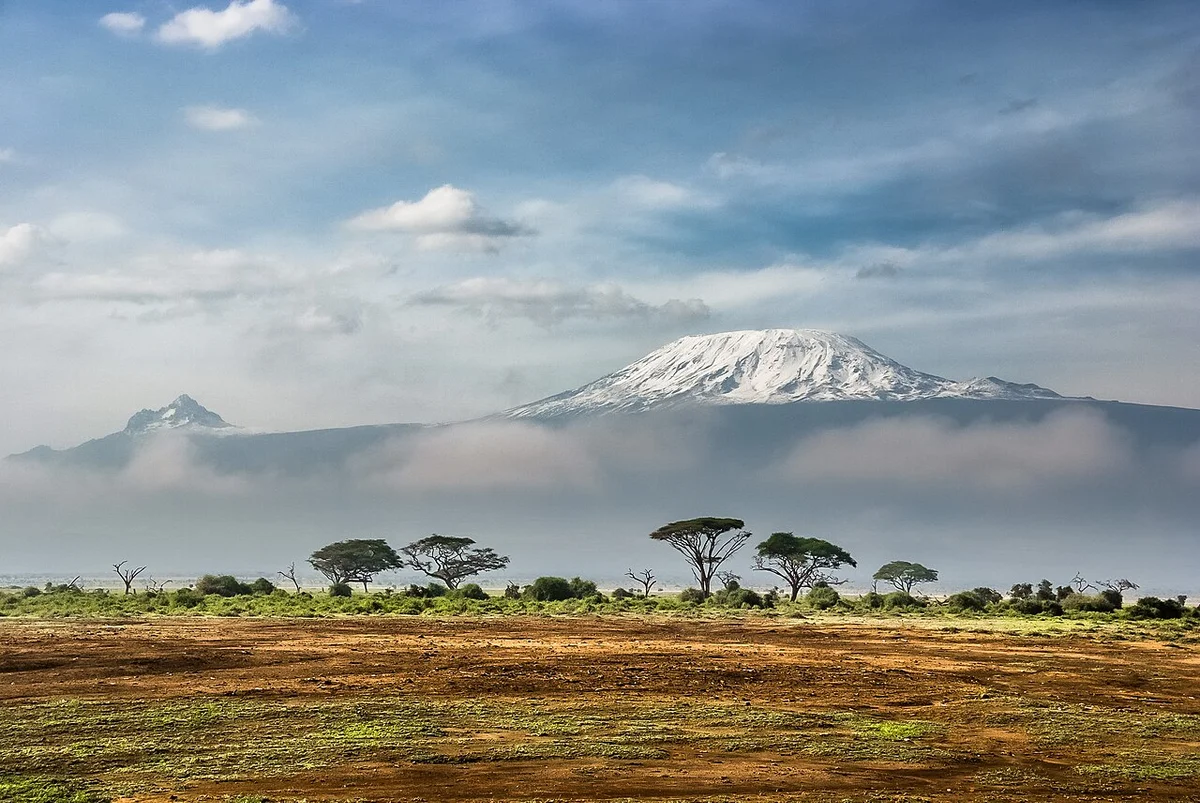
Mount Kilimanjaro
Mount Kilimanjaro is the highest mountain in Africa, the highest free-standing mountain in the world, and one of the Seven Summits, soaring to 5,895 metres (19,341 ft) above the plains of northeastern Tanzania. Consisting of three distinct volcanic cones—Kibo, Mawenzi (5,149 m), and Shira (4,005 m)—its summit at Uhuru Peak was first reached on October 6, 1889, by German geographer Hans Meyer, Austrian alpine pioneer Ludwig Purtscheller, and local Chagga mountain scout Yohani Lauwo.
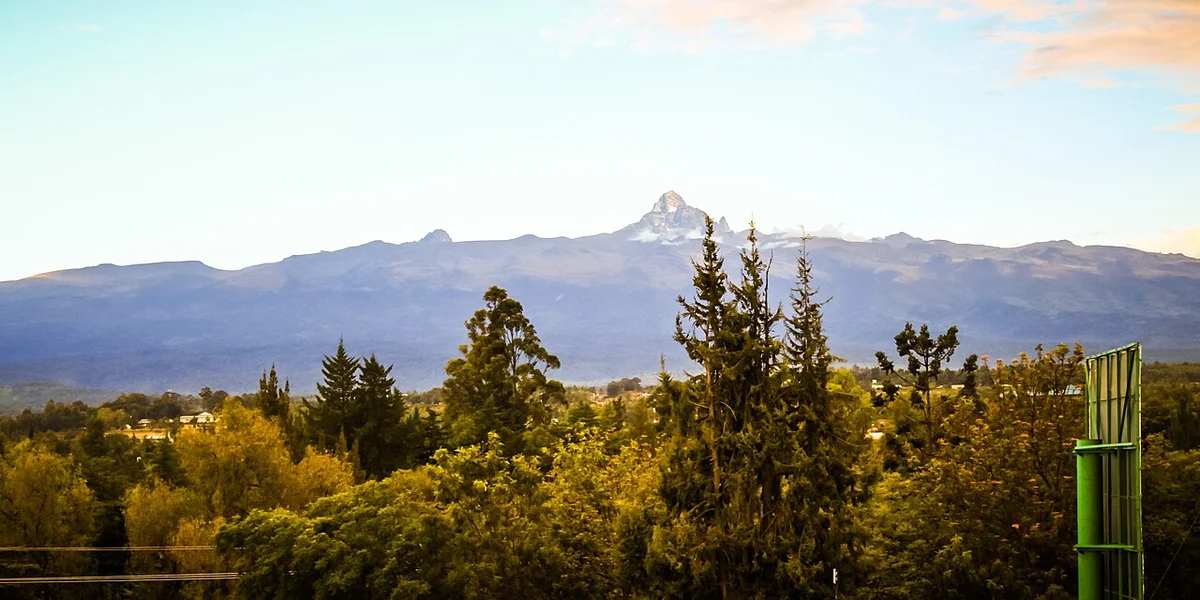
Mount Kenya
Mount Kenya is the second-highest mountain in Africa at 5,199 metres (17,057 ft), an ancient extinct stratovolcano that once rose over 7,000 metres before millions of years of glaciation eroded it into sheer rock bastions. Its highest twin summits—Batian (5,199 m) and Nelion (5,188 m)—present demanding, highly technical rock and ice climbing. Batian was first climbed on September 13, 1899, by British geographer Sir Halford Mackinder and Courmayeur alpine guides César Ollier and Josef Brocherel.
Visual Elevation Comparison & Atmosphere Scale
📊A. Mountain Identity and Physical Statistics
Dimensions & Geodesy| Metric | Mount Kilimanjaro | Mount Kenya |
|---|---|---|
| Surveyed Elevation | 5,895 m (19,341 ft) | 5,199 m (17,057 ft) |
| Global Elevation Ranking | Documented in peak dossier | Documented in peak dossier |
| Topographic Prominence | 5,885 m (19,308 ft) | 3,825 m (12,549 ft) |
| Country & Sovereignty | TZ | KE |
| Geographic Coordinates | 3°04′03″ S, 37°21′20″ E | 0°09′08″ S, 37°18′30″ E |
| Massif Classification | Colossal Free-Standing Stratovolcano with Three Volcanic Cones | Eroded Extinct Stratovolcano with Steep Trachyte/Phonolite Rock Spires |
| Alternative / Native Names | Kilima Njaro, Kibo, Uhuru Peak, Roof of Africa, Kaiser-Wilhelm-Spitze | Kirinyaga, Kinyaa, Batian, Ol Donyo Keri, Second Highest Peak in Africa |
🗺️B. Geography, Mountain Range & Terrain Characteristics
Topography & Relief| Primary Mountain Range | east-african-rift | east-african-rift |
| Geographical Context | Rising an astounding 4,900 metres directly from the surrounding acacia savannah near Moshi, Kilimanjaro contains five distinct ecological zones: agricultural cultivate, montane rainforest, moorland/heath, alpine desert, and Arctic glacial ice cap at the Kibo caldera. | Located just 16 kilometres south of the equator, Mount Kenya features an extraordinary equatorial alpine ecology with unique giant lobelias and dendrosenecios, surrounded by the dramatic U-shaped Teleki and Mackinder valleys and crowned by eleven receding glaciers. |
| Glacial Basin & Watershed | Kilimanjaro Region, Marangu, Kilimanjaro National Park | Central Province, Mount Kenya National Park, Teleki Valley |
| Geographical Separation | The summits are separated by approximately 324 kilometers (201 miles) of planetary terrain. | |
🧗C. Standard Climbing Routes & Technical Lines
Route Topography| Standard / Normal Route | Standard expedition ascent line | Standard expedition ascent line |
| First Ascent Route | Pioneered during first successful expedition | Pioneered during first successful expedition |
| Documented Route Guides | 1 technical route profiles in Mountainity directory | 1 technical route profiles in Mountainity directory |
⚠️D. Climbing Difficulty, Objective Hazards & Physiological Demands
Objective Safety| Physiological Altitude Zone | Very High Altitude (4,500m–5,999m)Acute Mountain Sickness (AMS) common without staged ascent. Typical base camp altitude in the Greater Ranges. | Very High Altitude (4,500m–5,999m)Acute Mountain Sickness (AMS) common without staged ascent. Typical base camp altitude in the Greater Ranges. |
| Oxygen Availability (Sea Level = 100%) | ~50% barometric oxygen partial pressure | ~54% barometric oxygen partial pressure |
| Primary Objective Hazards | Exposed ridgelines, rapid weather shifts, sudden temperature drops, and technical rockfall. | Exposed ridgelines, rapid weather shifts, sudden temperature drops, and technical rockfall. |
📜E. Mountaineering History & Pioneer First Ascents
Historical Annals| First Ascent Date | 1889-10-06 | 1899-09-13 |
| First Ascent Team | Hans Meyer, Ludwig Purtscheller, Yohani Lauwo, Mwini Amani | Sir Halford Mackinder, César Ollier, Josef Brocherel |
| Historical Expedition | Historical expedition annals | Historical expedition annals |
| First Winter Ascent | Documented in winter archives or seasonal ascents | Documented in winter archives or seasonal ascents |
🌤️F. Summit Meteorology, Atmospheric Conditions & Seasons
Live Forecasts & Climate| Typical Climbing Season | Regional Summer (Consult local weather forecasts & seasonal precipitation charts) | Regional Summer (Consult local weather forecasts & seasonal precipitation charts) |
| Live Summit Meteorology | View Mount Kilimanjaro Live Summit Forecast → | View Mount Kenya Live Summit Forecast → |
🎒G. Expedition Planning, Logistics & Alpine Tools
2027 Planning SuitesMount Kilimanjaro Expedition Tools2027 Active
Access dedicated financial modeling and gateway flight intelligence calibrated for this summit.
Mount Kenya Expedition Tools2027 Active
Access dedicated financial modeling and gateway flight intelligence calibrated for this summit.
H. Synthesis & Comparative Verdict
Mount Kilimanjaro (5,895 m) and Mount Kenya (5,199 m) represent distinct high-altitude mountaineering challenges. Mount Kilimanjaro commands higher absolute altitude by 696 m (2,283 ft). When evaluating overall commitment, technical crux ratings, exposure, objective hazards such as avalanches or serac collapse, and regional weather stability prove as decisive as sheer summit altitude. Neither peak represents a universal winner; each demands dedicated conditioning, technical competence, and meticulous logistical preparation.
Alpine Monograph: Mount Kilimanjaro vs Mount Kenya
Mount Kilimanjaro (5,895 m) and Mount Kenya (5,199 m) represent one of the most compelling comparative studies in high-altitude mountaineering. Highlighting the two highest mountains on the African continent, contrasting volcanic trekking with pure alpine rock climbing, these two summits attract international attention for their contrasting topography, climatic extremes, and historical significance. While Mount Kilimanjaro commands greater vertical elevation by 696 meters, sheer summit altitude is only one variable in determining the physical and psychological commitment demanded on each mountain.
From a technical standpoint, the difficulty profiles diverge across terrain and objective hazards. On Mount Kilimanjaro, alpinists must contend with high-altitude cardiovascular endurance through five ecological zones to Uhuru Peak on the crater rim. Conversely, climbing Mount Kenya presents a different matrix of alpine challenges, dominated by sustained technical multi-pitch rock climbing (UIAA Grade IV/V) on the rugged twin spires of Batian and Nelion. Route selection, seasonal snowpack stability, and exposure to high-velocity winds prove decisive on both massifs.
Historically, both peaks occupy celebrated chapters in alpine literature, having witnessed pioneering first ascents and daring modern traverses. In modern 2027 expedition planning, successful ascents require specialized acclimatization profiles, meticulous logistical preparation, and respect for local environmental regulations. Whether evaluating physiological strain in the upper atmosphere or technical rock-and-ice grades, each mountain stands as an elite benchmark of global mountaineering achievement.
Key Contrasting Differences
- Mount Kilimanjaro stands 696 meters higher than Mount Kenya, creating a measurable atmospheric and barometric difference.
- Mount Kilimanjaro is situated in TZ (east-african-rift), whereas Mount Kenya anchors KE (east-african-rift).
- The primary crux on Mount Kilimanjaro centers on high-altitude cardiovascular endurance through five ecological zones to Uhuru Peak on the crater rim, whereas Mount Kenya is defined by sustained technical multi-pitch rock climbing (UIAA Grade IV/V) on the rugged twin spires of Batian and Nelion.
- Climbing styles and permit requirements reflect differing regional protocols between their respective mountaineering federations.
- Optimal 2027 weather windows depend on regional seasonal cycles and prevailing high-altitude jet-stream patterns.
Category-by-Category Analysis
📊Elevation & Identity Analysis
Mount Kilimanjaro (5,895 m) versus Mount Kenya (5,199 m), separated by 696 meters of vertical relief.
🗺️Geographical & Tectonic Contrast
Mount Kilimanjaro anchors the east-african-rift in TZ. Mount Kenya is located in the east-african-rift in KE.
🧗Route Topography & Crux Difficulty
Standard ascents on Mount Kilimanjaro follow established routes, while Mount Kenya requires navigating its recognized classic line.
⚠️Objective Hazards & Death Zone Exposure
Mount Kilimanjaro tests endurance against high-altitude cardiovascular endurance through five ecological zones to Uhuru Peak on the crater rim. Mount Kenya demands technical competence against sustained technical multi-pitch rock climbing (UIAA Grade IV/V) on the rugged twin spires of Batian and Nelion.
📜Pioneer History & Expedition Milestones
Both peaks feature celebrated expedition chronicles documented in historic archives and pioneer mountaineering annals.
🌤️Meteorological Windows & Jet Stream Influence
Seasonal meteorological conditions dictate that 2027 attempts align with optimal regional stability windows.
🎒Expedition Staging, Approach Treks & Gateway Logistics
Expedition planning requires dedicated base camp infrastructure, local porter support, and national park permits.
Connected Mountain Dossiers & Exploration Tools
Mount Kilimanjaro Intelligence Resources
Explore dedicated profiles, routes, live meteorology, and historical records.
Mount Kenya Intelligence Resources
Explore dedicated profiles, routes, live meteorology, and historical records.
Frequently Asked Questions: Mount Kilimanjaro vs Mount Kenya
Which mountain is higher, Mount Kilimanjaro or Mount Kenya?
Mount Kilimanjaro (5,895 m) is higher than Mount Kenya (5,199 m) by exactly 696 meters (2,283 feet).
Which mountain is technically more difficult to climb?
Technical difficulty depends on the chosen route. Mount Kilimanjaro is characterized by high-altitude cardiovascular endurance through five ecological zones to Uhuru Peak on the crater rim, while Mount Kenya is renowned for sustained technical multi-pitch rock climbing (UIAA Grade IV/V) on the rugged twin spires of Batian and Nelion.
In which countries are Mount Kilimanjaro and Mount Kenya located?
Mount Kilimanjaro is located in TZ within the east-african-rift, whereas Mount Kenya is located in KE within the east-african-rift.
What is the best climbing season for these mountains in 2027?
Climbing windows vary by region: Himalayan and Karakoram peaks typically favor pre-monsoon spring or mid-summer dry periods, whereas Andean and equatorial summits follow regional dry seasons.
Related Mountain Comparisons
Aconcagua vs Denali: High Altitude & Extreme Cold
Compare Aconcagua (6,961m) and Denali (6,190m): Southern vs Northern Hemisphere giants, extreme sub-zero weather, altitude sickness, and logistics.
Annapurna vs Nanga Parbat: Routes & History
Compare Annapurna I (8,091m) and Nanga Parbat (8,126m): Rupal Face, avalanche hazard, technical cruxes, and mountaineering death rates in 2027.
Eiger vs Matterhorn: Classic Alpine Icons
Compare the Eiger (3,967m) and Matterhorn (4,478m): the legendary Nordwand, Hörnli Ridge, technical rock cruxes, and pioneering Swiss ascents.
Compare Any Other Summits Across Earth
Use our interactive Mountain Comparison Engine to contrast any two peaks across elevation, topography, climbing routes, and summit meteorology.
Share Exploration
Global Mountain Intelligence
✓ Link copied to clipboard!