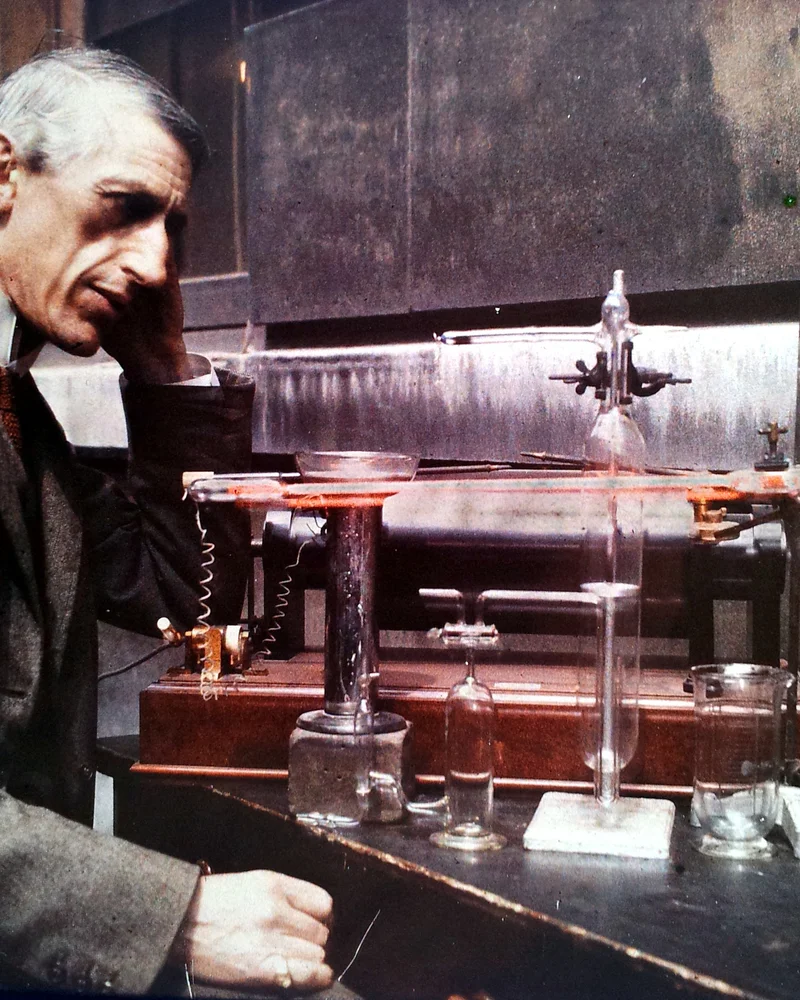
J. Norman Collie
John Norman Collie was an eminent Scottish organic chemist, pioneer mountaineer, and explorer who mapped vast unvisited regions of the Canadian Rockies. In 1898, he discovered and named the monumental Columbia Icefield, the hydrological apex of North America. He achieved numerous pioneer first ascents including Mount Athabasca, Mount Forbes, and Mount Bryce.
Mountain Safety & Conditions Disclaimer: High-altitude climbing, glacial travel, and technical ascents entail severe objective risks including avalanches, serac collapses, rapid weather collapse, and altitude illness. Historical route descriptions and summit claims on Mountanity reflect documented archival sources and must not be used as live operational safety assessments. Local regulations, permits, and physical glacial topography change continuously.
Peer Review: Senior Editorial Board & Historical Reviewers • Editorial Standards
Biographical Record & Archival Chronicle
Born on September 10, 1859, in Alderley Edge, Cheshire, John Norman Collie achieved world scientific renown as a brilliant organic chemist, developing pioneering work on aromatic compounds, neon illumination, and medical X-ray photography at University College London. An intrepid alpine purist, Collie learned climbing on the crags of the Isle of Skye alongside Albert F. Mummery, accompanying Mummery on the fateful 1895 British expedition to Nanga Parbat in the Himalayas. Beginning in 1897, Collie directed his exploratory passion toward the uncharted wilderness of the Canadian Rocky Mountains. Leading four seminal expeditions in 1897, 1898, 1900, and 1902, Collie traveled with pack trains along unmapped glacial valleys. In August 1898, after making the first ascent of Mount Athabasca with Hermann Woolley, Collie stood upon the summit and beheld an awe-inspiring, immense sheet of virgin ice spreading over more than one hundred square miles: the Columbia Icefield, the great mother of rivers feeding three oceans. Collie named the icefield and numerous surrounding giants, completing the first ascents of Mount Victoria, Mount Bryce, and Mount Forbes, then the highest known peak in Alberta. Collie co-authored Climbs and Exploration in the Canadian Rockies with Hugh Stutfield, providing the foundational cartography and climbing literature for the region. Collie passed away in September 1942 on the Isle of Skye, where he is buried beside his climbing companion John Mackenzie beneath the Cuillin mountains.
Notable Milestones & Ascents
- Discovered and named the 325-square-kilometre Columbia Icefield on August 18, 1898
- First ascent of Mount Athabasca (3,491 m) in 1898 with Hermann Woolley
- First ascent of Mount Forbes (3,612 m) in 1902, then the highest peak in the central Canadian Rockies
- First ascent of Mount Bryce (3,507 m) in 1902 and Mount Victoria (3,464 m) in 1897
- Surviving member of the historic 1895 Mummery expedition to Nanga Parbat (first 8,000m attempt in history)
- Co-authored the classic foundational book Climbs and Exploration in the Canadian Rockies (1903)
- Mount Collie in Yoho National Park named in his permanent honor
Key Statistics & Topographic Figures
- Columbia Icefield Discovery
- August 18, 1898
- Notable First Ascents
- Mount Athabasca, Mount Forbes, Mount Bryce
- Scientific Role
- Professor of Organic Chemistry, UCL
- Lifespan
- 1859 – 1942
- Himalayan Landmark
- 1895 Nanga Parbat Expedition
Archival Primary Source Quotations
“A new world was spread out at our feet; an enormous icefield stretched away to the horizon, surrounded by peaks of majestic stature.”
Defined Alpine Terminology & Concepts
- Hydrological Apex
- A singular high point on a continent from which water drains into three or more separate oceanic basins.
- Icefield
- A colossal, contiguous expanse of interconnected glaciers and snowfields covering a mountain plateau or basin.
Frequently Asked Questions: J. Norman Collie
Who was J. Norman Collie?
John Norman Collie was a renowned Scottish organic chemist, pioneer mountaineer, and explorer who discovered the Columbia Icefield in 1898.
How did J. Norman Collie discover the Columbia Icefield?
While making the first ascent of Mount Athabasca on August 18, 1898, Collie looked west and beheld a colossal 325-square-kilometre virgin ice sheet.
Why is the Columbia Icefield considered the hydrological apex of North America?
Meltwaters from the icefield flow into three different oceans: the Pacific Ocean, the Arctic Ocean, and the Atlantic Ocean via Hudson Bay.
What major first ascents did Norman Collie achieve in the Canadian Rockies?
He made the first ascents of Mount Athabasca (1898), Mount Victoria (1897), Mount Bryce (1902), and Mount Forbes (1902).
What was Norman Collie's scientific career?
He was Professor of Organic Chemistry at University College London, pioneering work on neon discharge tubes and medical diagnostic X-rays.
Did Norman Collie climb in the Himalayas?
Yes, he was a key member of Albert F. Mummery's historic 1895 expedition to Nanga Parbat, the first attempt on an 8,000-metre peak in history.
What classic book did Collie co-author about the Canadian Rockies?
Climbs and Exploration in the Canadian Rockies, published in 1903 with Hugh E. M. Stutfield.
Where is J. Norman Collie buried?
He is buried beside his climbing companion John Mackenzie at Struan Cemetery on the Isle of Skye beneath the Cuillin mountains.
Documented Expeditions (1)
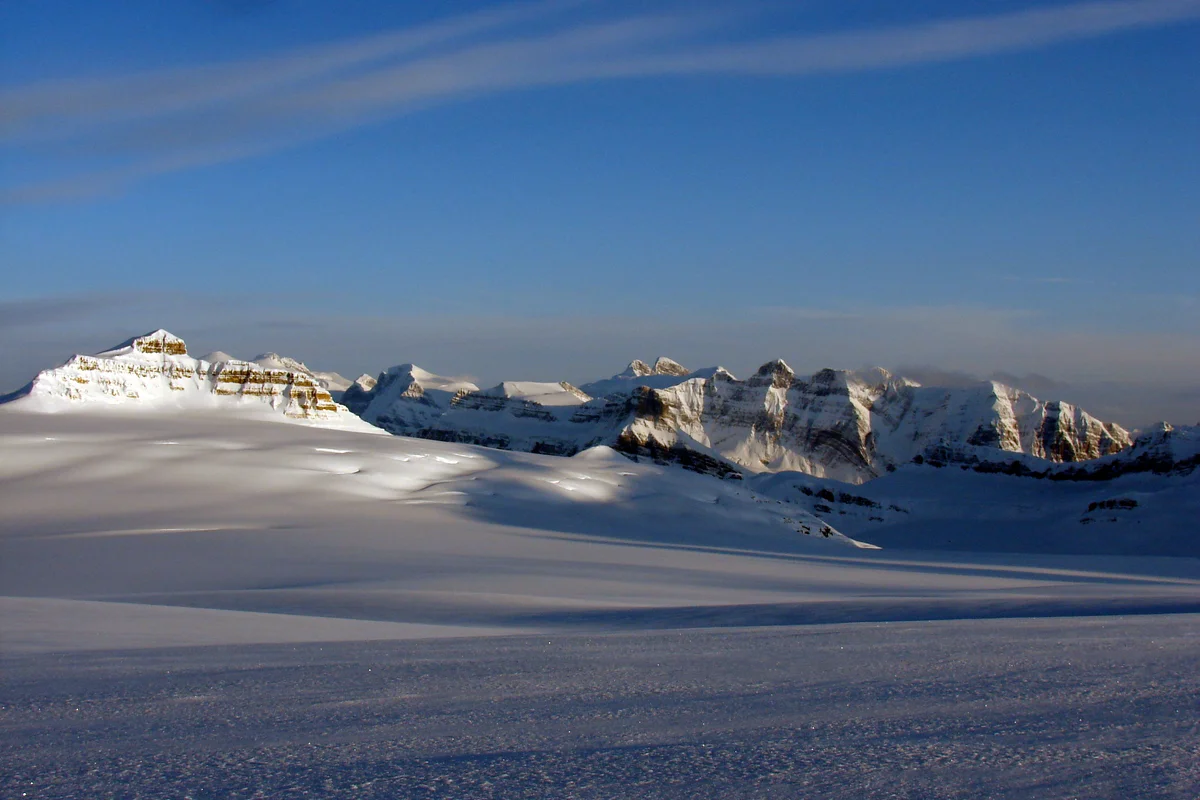
1898 Discovery of the Columbia Icefield by J. Norman Collie
On August 18, 1898, Scottish mountaineer and chemist J. Norman Collie made the first ascent of Mount Athabasca (3,491 m) with Hermann Woolley and discovered the immense 325-square-kilometre Columbia Icefield, the hydrological apex of North America.
Associated Chronicles & Stories (1)
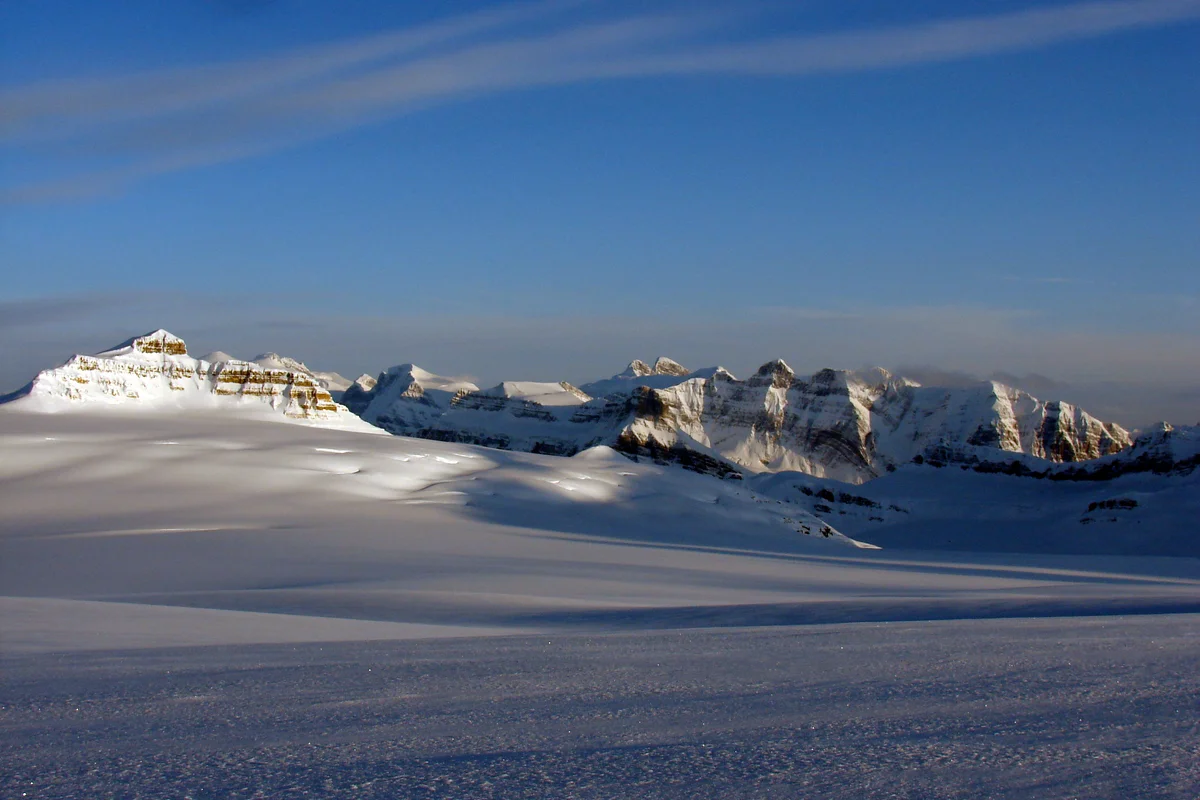
The Mother of Rivers: J. Norman Collie and the Discovery of the Columbia Icefield
On August 18, 1898, Scottish chemist and mountaineer J. Norman Collie climbed Mount Athabasca and beheld for the first time in human history the colossal expanse of the Columbia Icefield.
Documented Sources & Archival Citations
- Climbs and Exploration in the Canadian Rockies(Hugh E. M. Stutfield and J. Norman Collie / Longmans, Green, and Co.)
Supporting claim: Primary chronicle of the 1898 discovery of the Columbia Icefield and early Rockies ascents
Accessed/Documented: 2026 - Professor Norman Collie: An Arctic and Alpine Life(William C. Taylor / Luath Press)
Supporting claim: Detailed biography of Collie's scientific career and alpine achievements
Accessed/Documented: 2026