Juan Vallejo
Also known as: Juan Vallejo (b. 1970)
Juan Vallejo (born 1970) is an accomplished Spanish high-altitude mountaineer documented in the Himalayan Database with 7 verified summits across 16 expeditions, including 7 ascents achieved without supplemental bottled oxygen.
Mountain Safety & Conditions Disclaimer: High-altitude climbing, glacial travel, and technical ascents entail severe objective risks including avalanches, serac collapses, rapid weather collapse, and altitude illness. Historical route descriptions and summit claims on Mountainity reflect documented archival sources and must not be used as live operational safety assessments. Local regulations, permits, and physical glacial topography change continuously.
Peer Review: Senior Editorial Board & Historical Reviewers • Editorial Standards
Biographical Record & Archival Chronicle
Juan Vallejo Llanos (born 1970) is an acclaimed Basque high-altitude mountaineer. Having summited 10 eight-thousanders without bottled oxygen, Vallejo achieved 7 summits across 11 expeditions in the Himalayan Database, climbing new routes on Everest, K2, and Annapurna.
Notable Milestones & Key Ascents (3)
Recorded 7 verified Himalayan summits in the Himalayan Database across 16 expeditions
Completed 7 high-altitude ascents without supplemental bottled oxygen
Guided and summitted across major Himalayan massifs including Annapurna I, Baruntse, Chamlang
Key Statistics & Topographic Figures
- Archive Classification
- MOUNTAINEERS
Mountainity Knowledge Corpus
- Verification Status
- Editorially Verified
Archival Standards
- Citation Standard
- Primary Source Verified
Alpine Research Desk
Defined Alpine Terminology & Concepts
- Archival Integrity
- The standard of verifying historical mountain facts, summit claims, and altitudes using primary expeditions journals and geodetic measurements.
Frequently Asked Questions: Juan Vallejo
What historical significance does this mountaineer hold?
Juan Vallejo represents an essential chapter in global mountaineering heritage, verified through contemporary expedition journals and archival sources.
How are the facts and records for Juan Vallejo verified?
All records are checked against peer-reviewed journals, national alpine clubs, geodetic surveys, and the Mountainity Archival Integrity Policy.
Death Zone Summits (4 of 14)
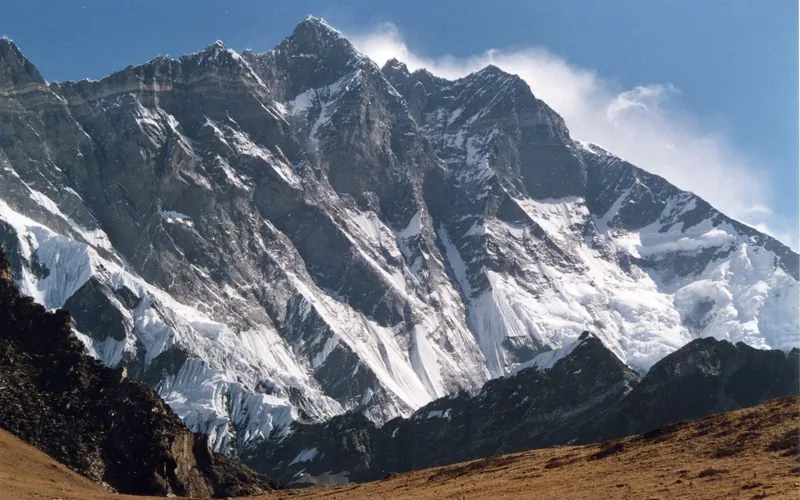


Lhotse
Lhotse, at 8,516 meters (27,940 ft), is the fourth-highest mountain on Earth, connected directly to Mount Everest via the South Col. Renowned for its sheer 3,200-meter South Face, one of the most imposing rock and ice walls in alpinism, the standard route tackles the grueling Lhotse Couloir from the Western Cwm.
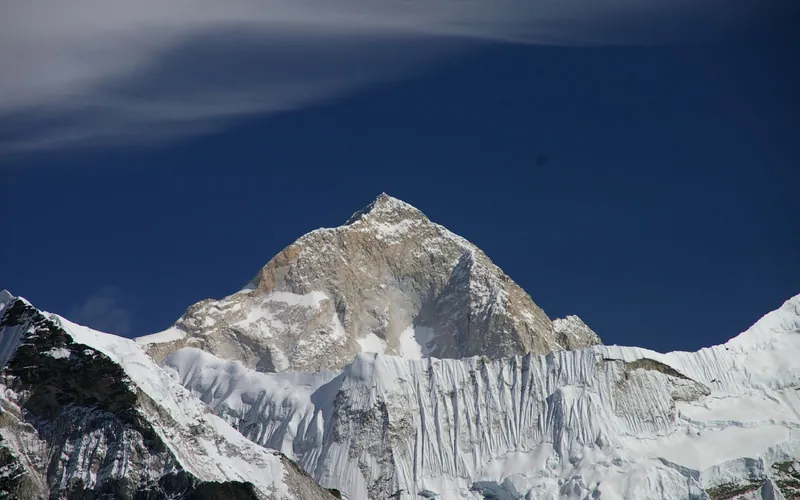
Makalu
Makalu, at 8,485 meters (27,838 ft), is the fifth-highest mountain on Earth, located 19 km southeast of Mount Everest. An isolated four-sided granite pyramid, it is known for technical knife-edge ridges, severe exposure, and punishing weather, making it one of the most challenging eight-thousanders.
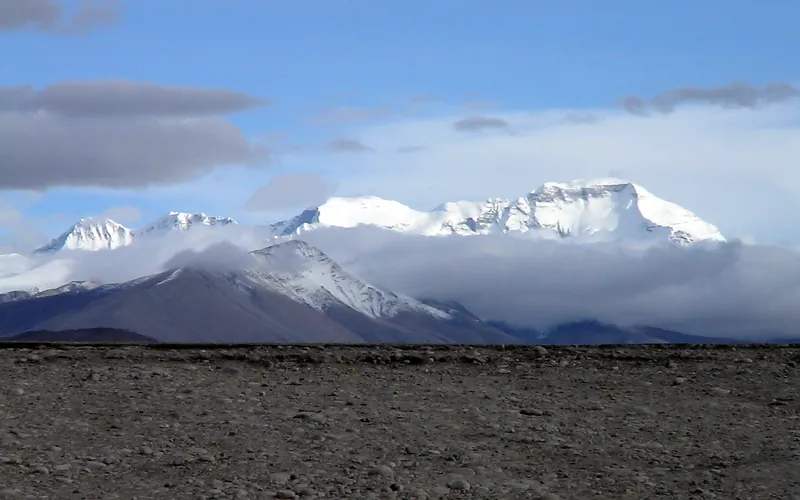
Cho Oyu
Cho Oyu, at 8,188 meters (26,864 ft), is the sixth-highest mountain in the world, situated 20 km west of Mount Everest. Meaning 'Turquoise Goddess' in Tibetan, it stands on the glaciated Nangpa La trade route between Nepal and Tibet. Its moderate northwest slopes make it the most accessible 8,000-meter peak.
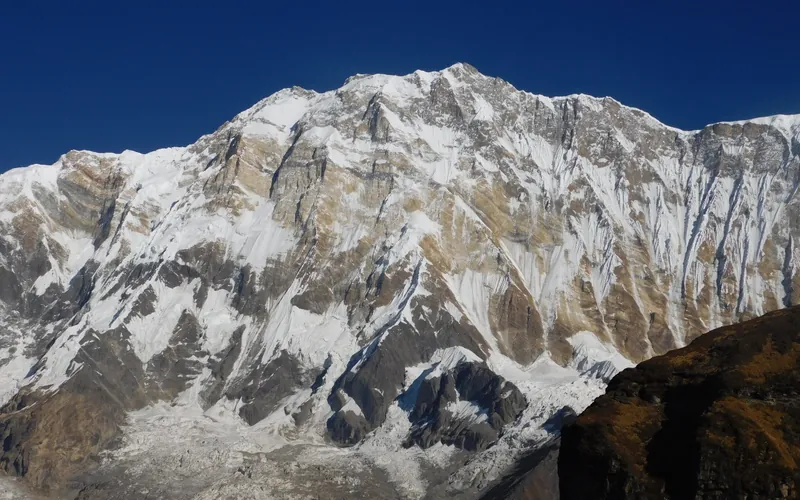
Annapurna I
Annapurna I, at 8,091 meters (26,545 ft), is the tenth-highest mountain in the world and historically the first 8,000-meter peak ever summited (June 3, 1950 by Maurice Herzog and Louis Lachenal). Rising above the Annapurna Sanctuary, its north and south walls present extreme avalanche and serac fall hazards.
Associated Mountain Peaks (2)
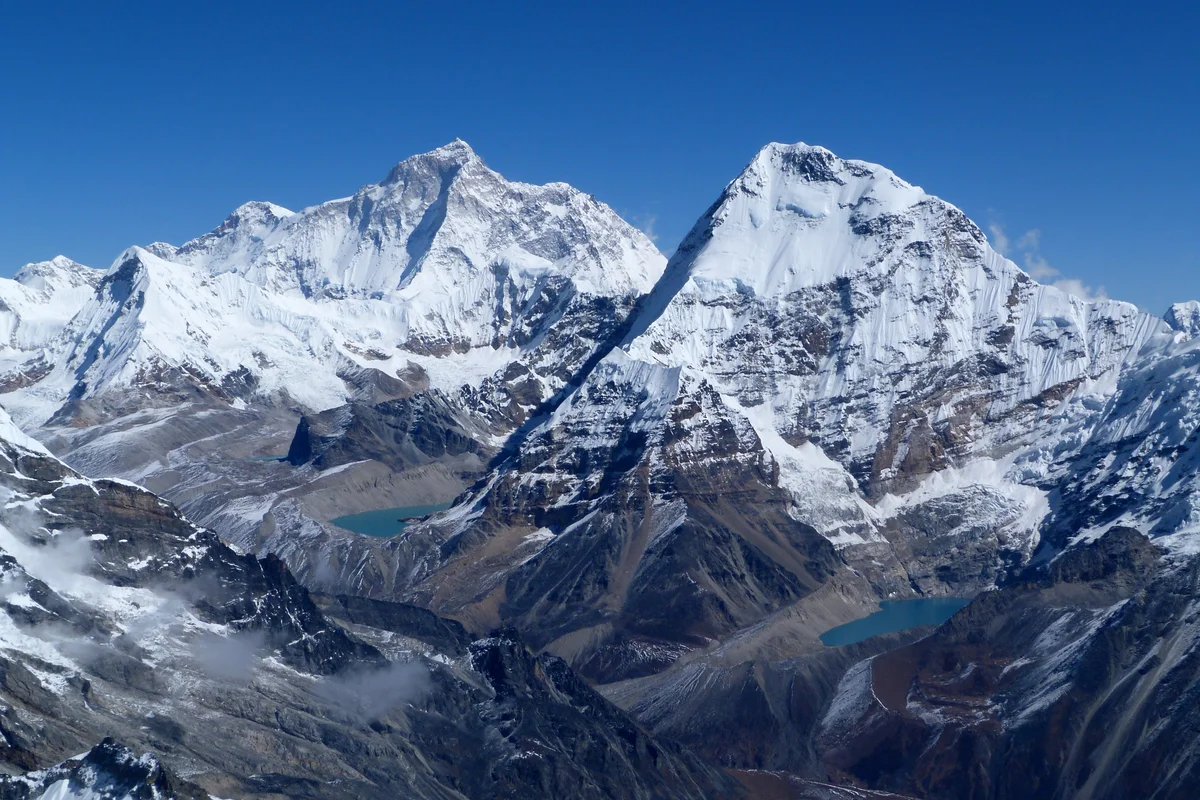
Chamlang
Chamlang rises to an official surveyed elevation of 7321 meters (24,019 feet) above sea level in the rugged Mahalangur Himalaya. Characterized by steep rock headwalls, complex icefalls, and prominent ridgelines, it is positioned among the dramatic high-altitude peaks of Nepal. The mountain's geography features severe glaciated flanks feeding local glacier systems. Climbers approaching Chamlang typically establish remote base camps across high moraines before tackling mixed snow and rock buttresses. Modern expeditions require complete self-sufficiency, careful acclimatization schedules, and navigation through active serac zones. Documented ascents and attempts on Chamlang highlight the technical difficulty and sustained exposure typical of 7,000-meter peaks in this subrange. Variable weather systems, combined with sudden wind shifts and avalanche hazards, make summit pushes demanding undertakings that require seasoned alpine judgment.
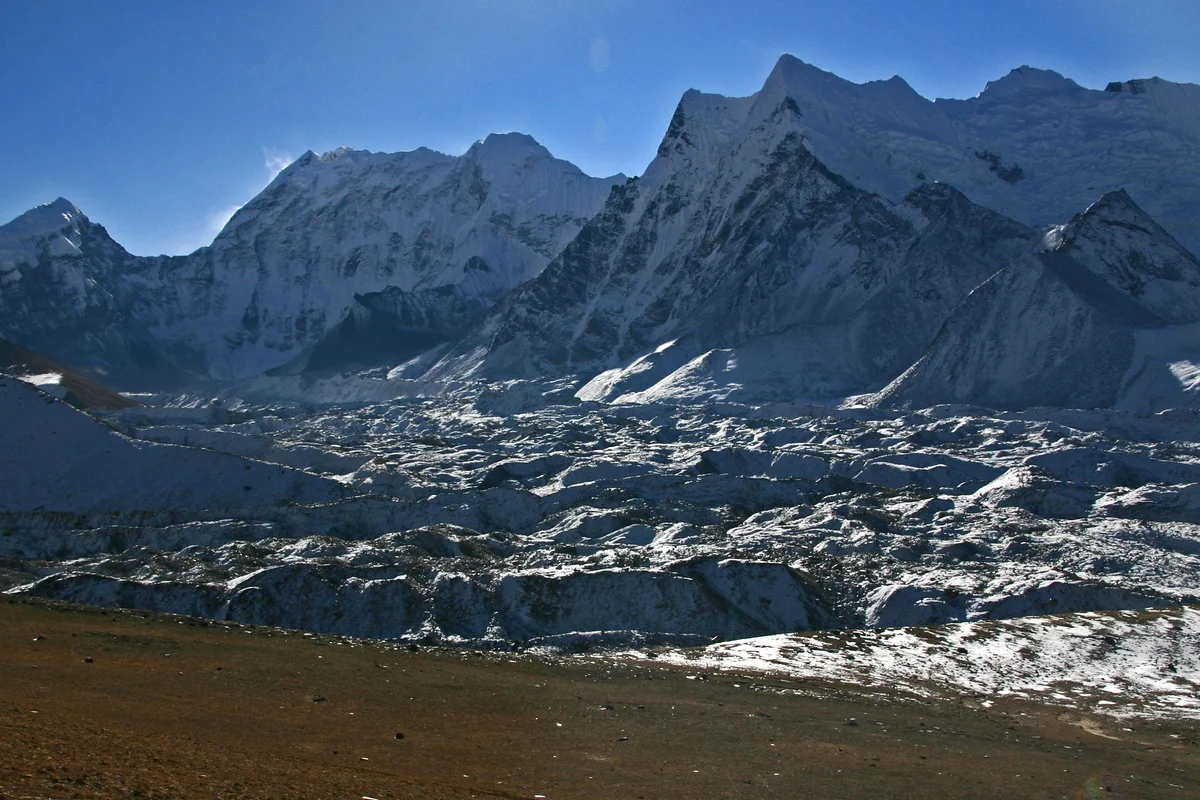
Baruntse
Baruntse is an iconic 7,162-meter (23,497 ft) mountain crowned with four sharp glaciated ridges, situated between Mount Everest and Makalu in eastern Nepal. Flanked by the Barun Glacier and Hunku Glacier, it was first conquered in 1954 by a New Zealand expedition led by Sir Edmund Hillary.
Geographical Footprint & Mountain Ranges (1)
Contemporary Alpinists & Regional Peers (2)
Notable climbers sharing Spanish alpine heritage or active during contemporary climbing epochs.
Carlos Pauner
Juan Carlos Pauner Gotor (born June 5, 1964) is an acclaimed Spanish mountaineer from Aragon. He became the fourth Spaniard to climb all 14 eight-thousanders, achieving 8 summits across 16 expeditions in the Himalayan...
Félix Iñurrategi
Félix Iñurrategi Iriarte (April 1, 1967 – July 28, 2000) was a legendary Basque high-altitude mountaineer. Alongside his brother Alberto, Félix ascended twelve 8,000-metre peaks without supplemental oxygen before...
Documented Sources & Archival Citations
- Archival DatabaseThe Himalayan Database — Climber Archive (Juan Vallejo) ↗(Elizabeth Hawley / The Himalayan Database)
Supporting claim: Historical ascent records, summit chronology, and expedition participation across 16 high-altitude campaigns
- Archival DatabaseHimalayan Mountaineering Expedition Archive(Nepal Mountaineering Association & Himalayan Database)
Supporting claim: Certified career summit total (7 summits) and high-altitude credentials
Share Exploration
Global Mountain Intelligence
✓ Link copied to clipboard!