Annapurna I
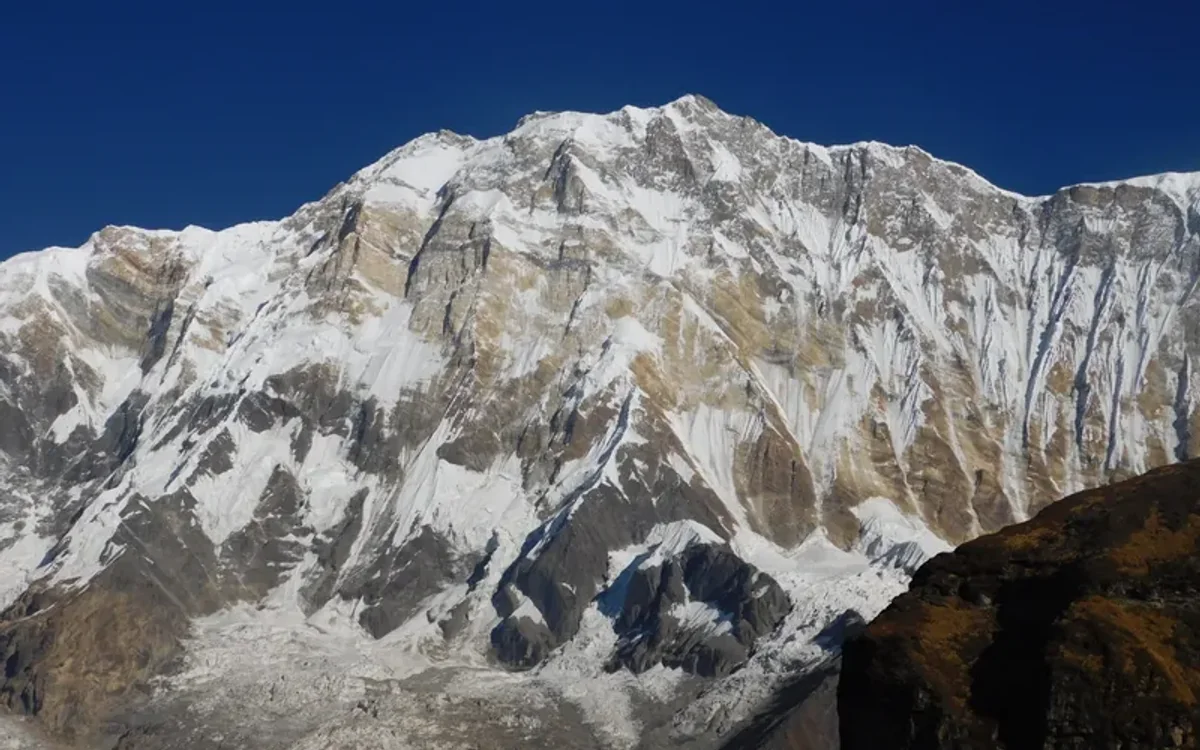
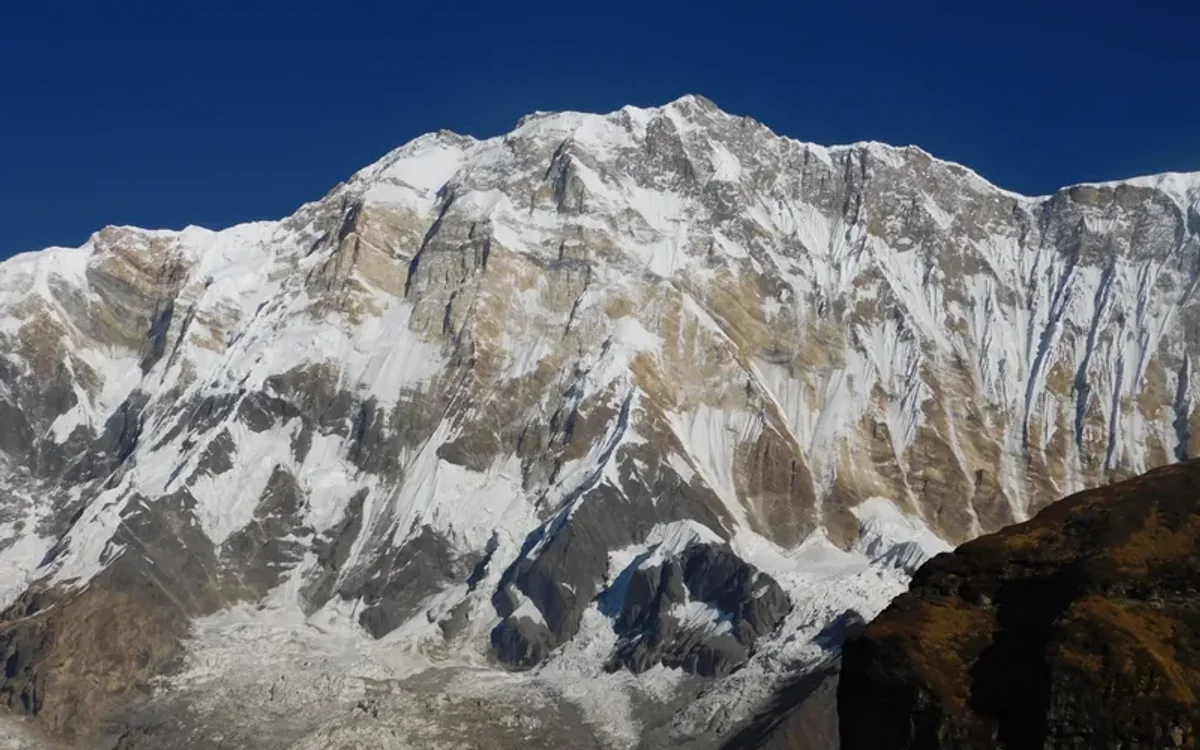
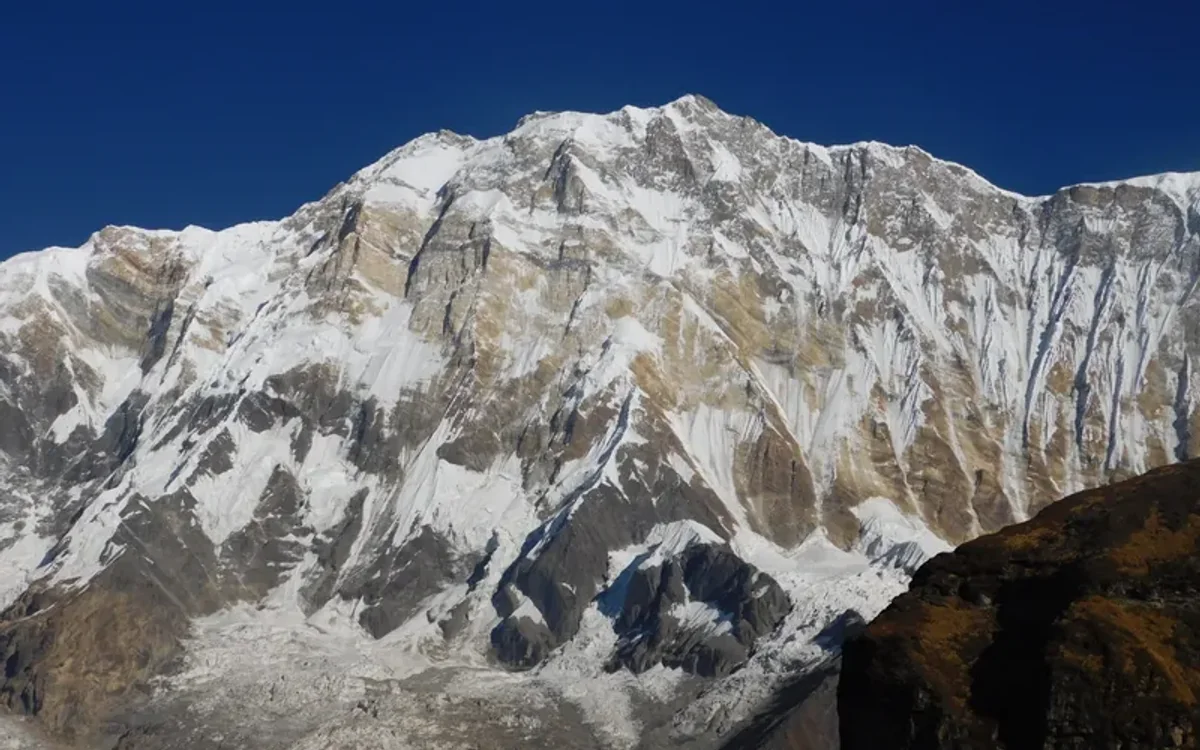
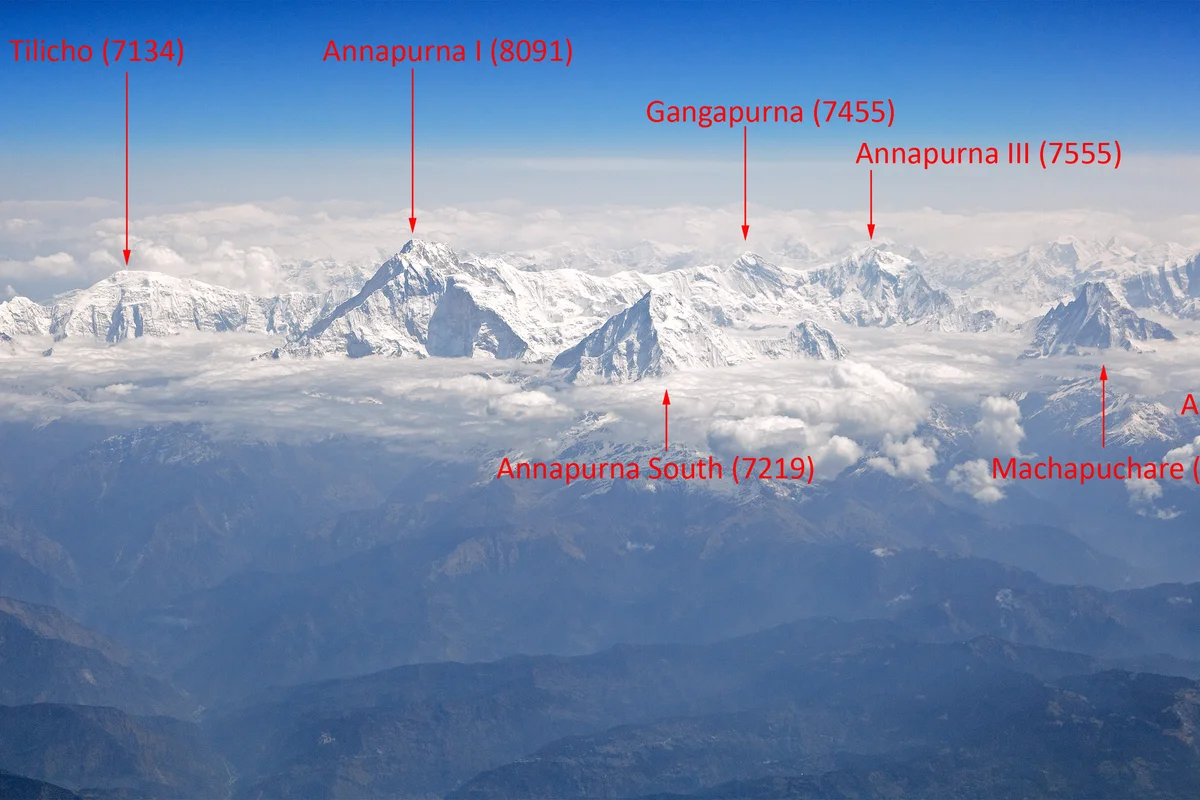
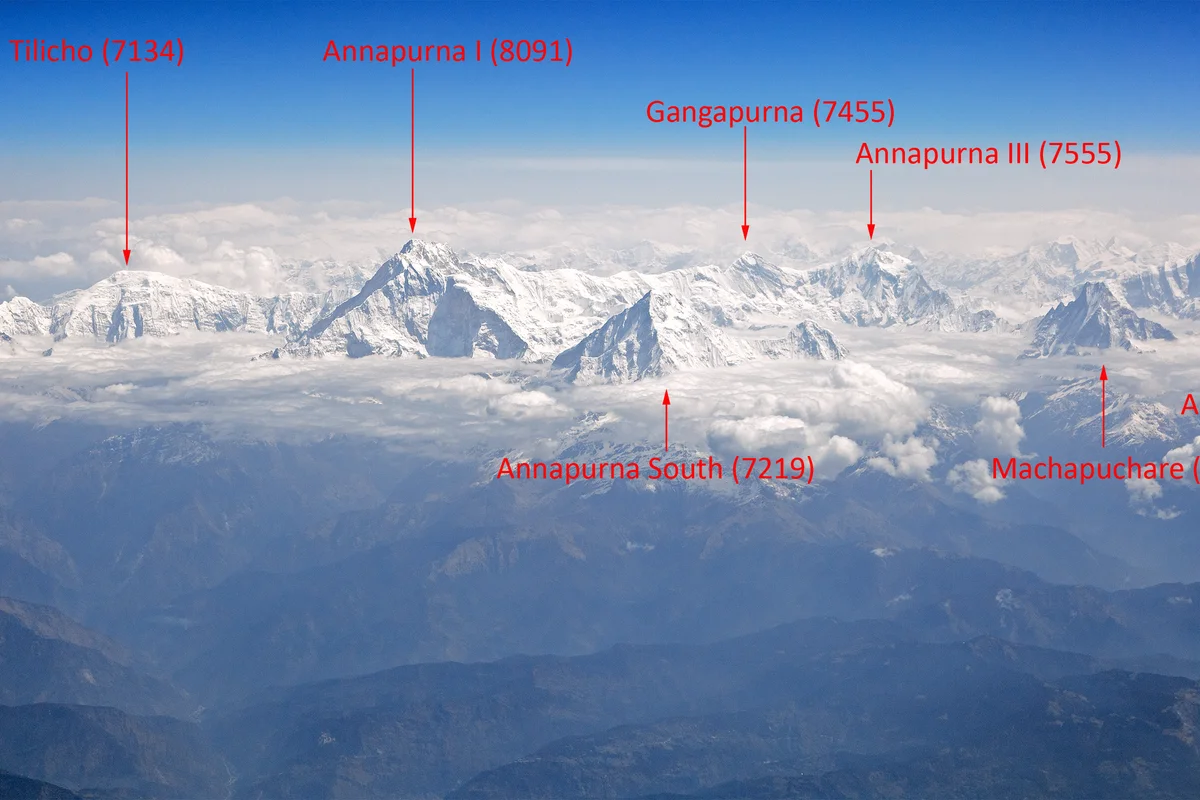
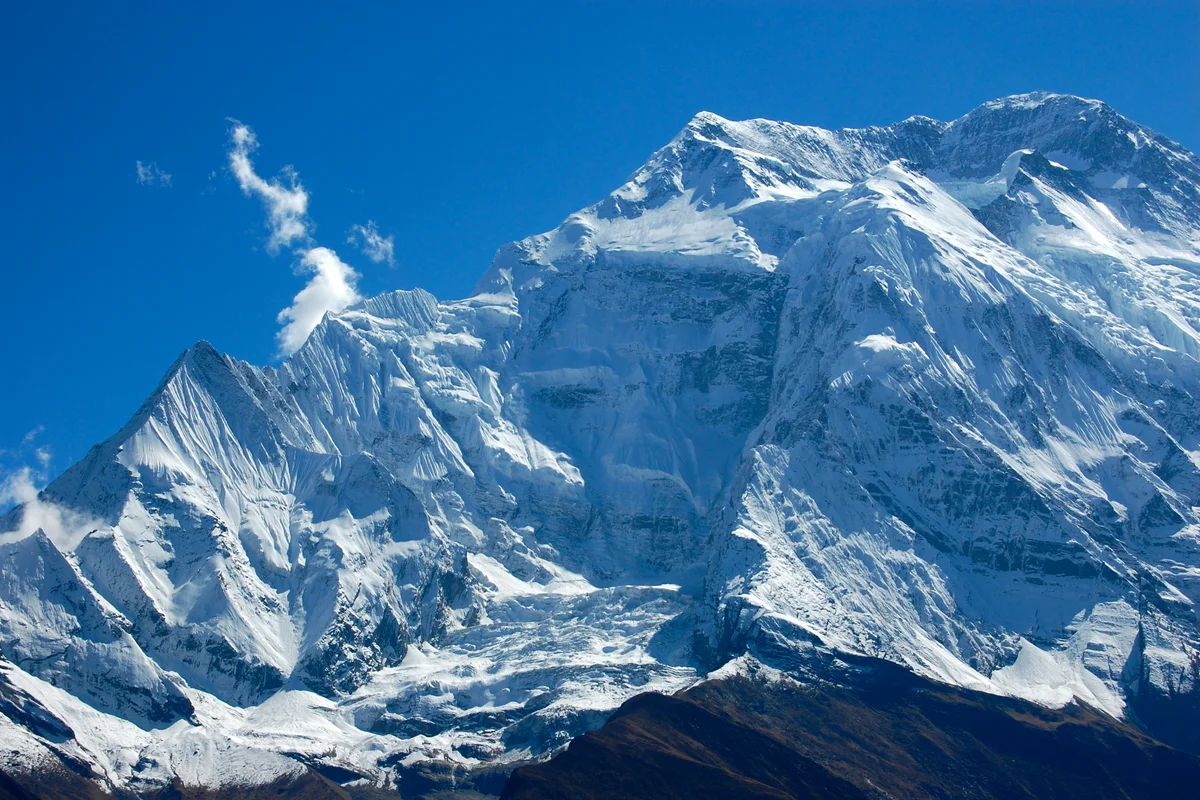
Annapurna I, at 8,091 meters (26,545 ft), is the tenth-highest mountain in the world and historically the first 8,000-meter peak ever summited (June 3, 1950 by Maurice Herzog and Louis Lachenal). Rising above the Annapurna Sanctuary, its north and south walls present extreme avalanche and serac fall hazards.
 Nepal
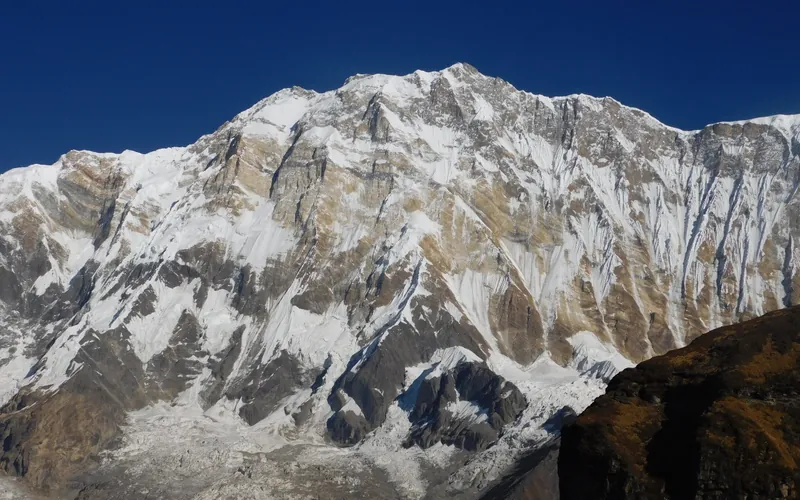
Mountain Safety & Conditions Disclaimer: High-altitude climbing, glacial travel, and technical ascents entail severe objective risks including avalanches, serac collapses, rapid weather collapse, and altitude illness. Historical route descriptions and summit claims on Mountainity reflect documented archival sources and must not be used as live operational safety assessments. Local regulations, permits, and physical glacial topography change continuously.
Peer Review: Senior Editorial Board & Historical Reviewers • Editorial Standards
Geographical Setting & Topography
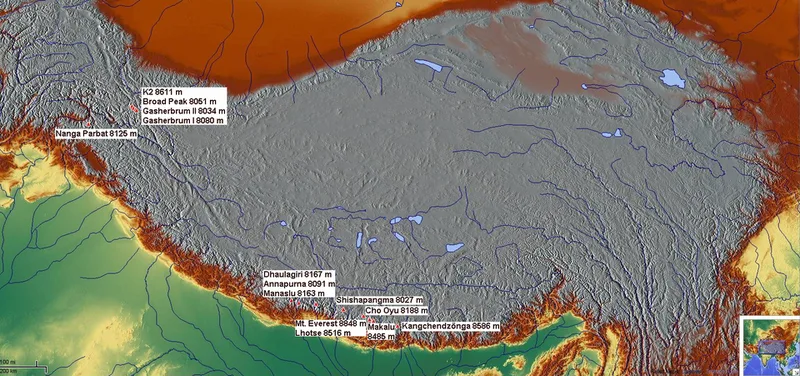
Annapurna massif of north-central Nepal, east of the Kali Gandaki Gorge dividing it from Dhaulagiri.
Historic First Ascent
June 3, 1950First Winter Ascent
February 3, 1987Topographic & Historical Footnotes
- Annapurna I was the very first 8,000-metre peak ever summited by humankind (June 3, 1950).
- Maurice Herzog and Louis Lachenal completed the climb without supplemental oxygen and without prior detailed topographic mapping.
Key Statistics & Topographic Figures
- Official Elevation
- 8,091 m (26,545 ft)
Survey Department of Nepal
- Topographic Prominence
- 2,984 m
Relief Metric
- First Ascent Date
- June 3, 1950
Maurice Herzog and Louis Lachenal
- Summit Time
- 2:00 PM / 14:00
June 3, 1950
- Expedition Leader
- Maurice Herzog
1950 French Annapurna Expedition
- First Winter Ascent
- February 3, 1987 by Jerzy Kukuczka, Artur Hajzer
Led by Jerzy Kukuczka
- Territory Codes
- NP
Sovereignty
Documented Historical Testimony
“The mountains are calling, and we must honor their grandeur with truth and historical precision.”
Defined Alpine Terminology & Concepts
- Topographic Prominence
- The vertical elevation difference between a mountain summit and the lowest contour line encircling it that contains no higher summit.
- Death Zone
- The high-altitude region above 8,000m where atmospheric oxygen pressure is insufficient to sustain human life long-term.
Annapurna I Mountain Weather Forecast
Meteorological Feed Unavailable
Unable to reach meteorological station endpoint. Please verify your connection or retry.
Loading condition...
Target Elevation: 8,091 mSafe summit ridge climbing requires gusts below 40 km/h.
Evaluating thermal loss...
Tracking glacial freezing boundary...
Assessing whiteout and cloud immersion hazards...
High-altitude snow glare requires Category 4 glacier glasses to prevent snow blindness.
Evaluating oxygen partial pressure...
Detailed 14-Day Summit Window & Weather Timeline
Explore day-by-day summit push safety windows, wind shear analysis, and extended multi-day forecasts for Annapurna I.
Explore Annapurna I (8,091 m) in Interactive 3D
Inspect steep glacial walls, hanging seracs, ridge approaches, and elevation relief with 360° rotation and terrain tilt.
Plan Your Annapurna I Expedition Budget & Flights
Model verified government royalties, commercial guide packages, equipment allocations, and compare gateway flights worldwide.
Search & Compare Expedition Flights
Find available flight connections to the airports serving your next mountain adventure.
Annapurna I Mountaineering Gear Checklist
Customise your equipment plan across 17 technical categories tailored to Annapurna I's 8,091 m altitude profile, technical route cruxes, and season.
Documented Climbing Routes
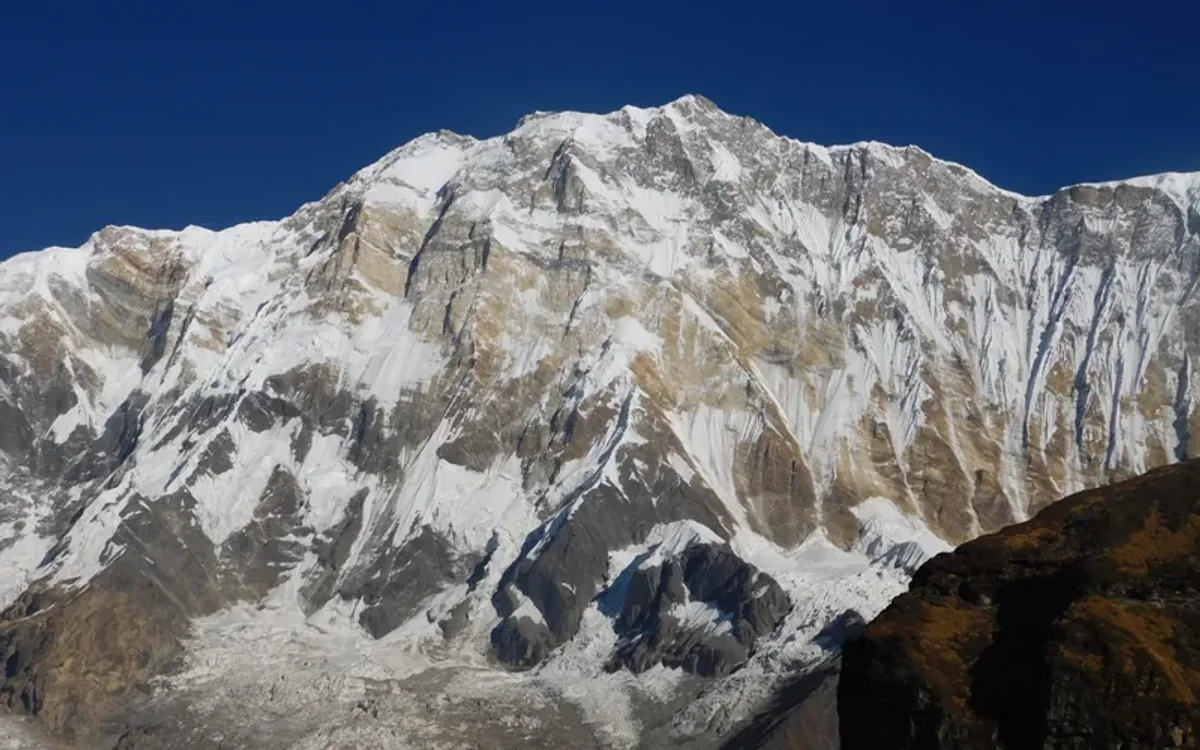
Annapurna East Ridge Traverse
The East Ridge of Annapurna I is an endless, saw-toothed arête stretching for miles above 7,500 meters, connecting Glacier Dome, Roc Noir, Annapurna East (8,026m), and the Main Summit (8,091m). In...
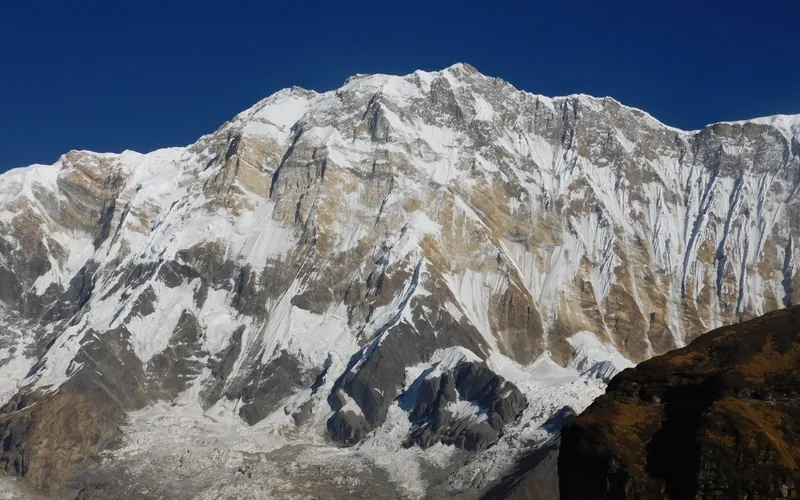
Annapurna I North Face (Herzog-Lachenal Route)
The North Face of Annapurna I is the historic first route ever climbed on an 8,000-meter peak, pioneered by French climbers Maurice Herzog and Louis Lachenal on June 3, 1950. Approached via the...
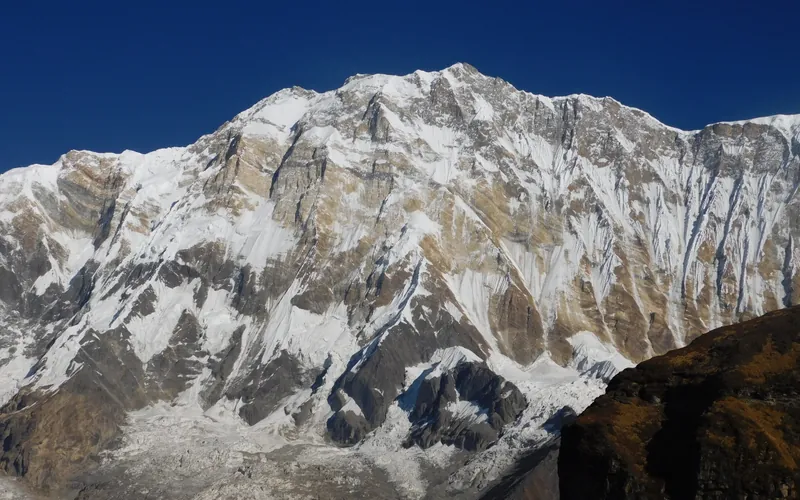
Annapurna I South Face (Bonington-Haston-Whillans Route)
The South Face of Annapurna I is one of the most formidable big-wall arenas in world mountaineering, rising 3,000 vertical metres of sheer rock, ice flutings, and overhanging bands directly from the...
Historical Expeditions (42)
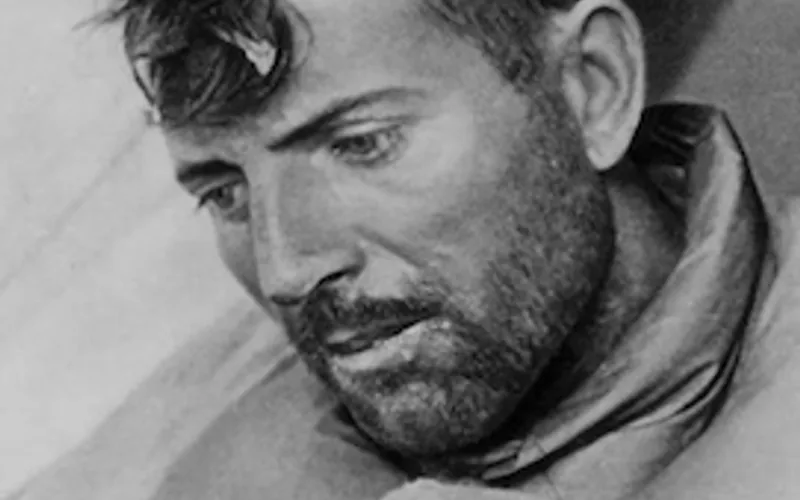
1950 French Annapurna Expedition
Led by Maurice Herzog, the 1950 French expedition made history by achieving the first summit of an 8,000-meter peak when Herzog and Louis Lachenal reached the top of Annapurna I (8,091m) on June 3, 1950, without supplemental oxygen.
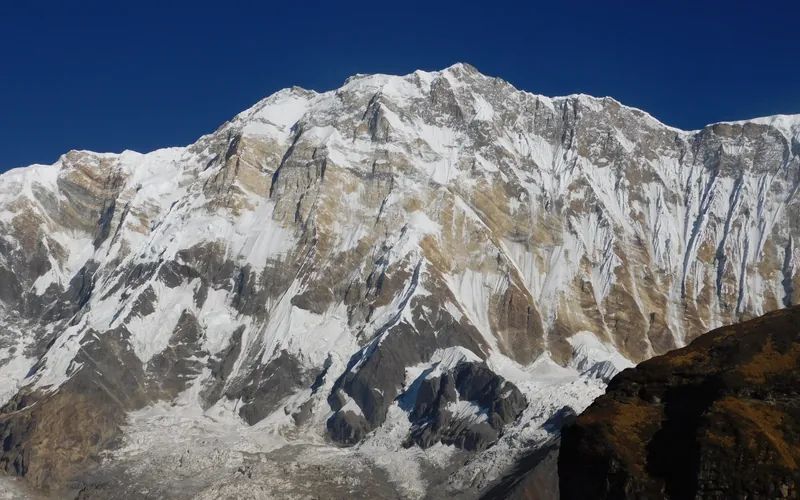
1961 Fritz Stammberger Annapurna I Historic Expedition
In 1961, the W Germany expedition led by Fritz Stammberger tackled Annapurna I (8091m) via the technical W side, providing foundational route documentation in the Golden Age of Himalayan exploration.
1965 Annapurna I Historic Expedition
In 1965, the Iran expedition led by tackled Annapurna I (8091m) via the technical Reconnaissance, providing foundational route documentation in the Golden Age of Himalayan exploration.
1965 Guenter Hauser Annapurna I Historic Expedition
In 1965, the W Germany expedition led by Guenter Hauser tackled Annapurna I (8091m) via the technical E Ridge, providing foundational route documentation in the Golden Age of Himalayan exploration.
1969 Ludwig Greissl Annapurna I Historic Expedition
In 1969, the W Germany expedition led by Ludwig Greissl tackled Annapurna I (8091m) via the technical E Ridge, providing foundational route documentation in the Golden Age of Himalayan exploration.
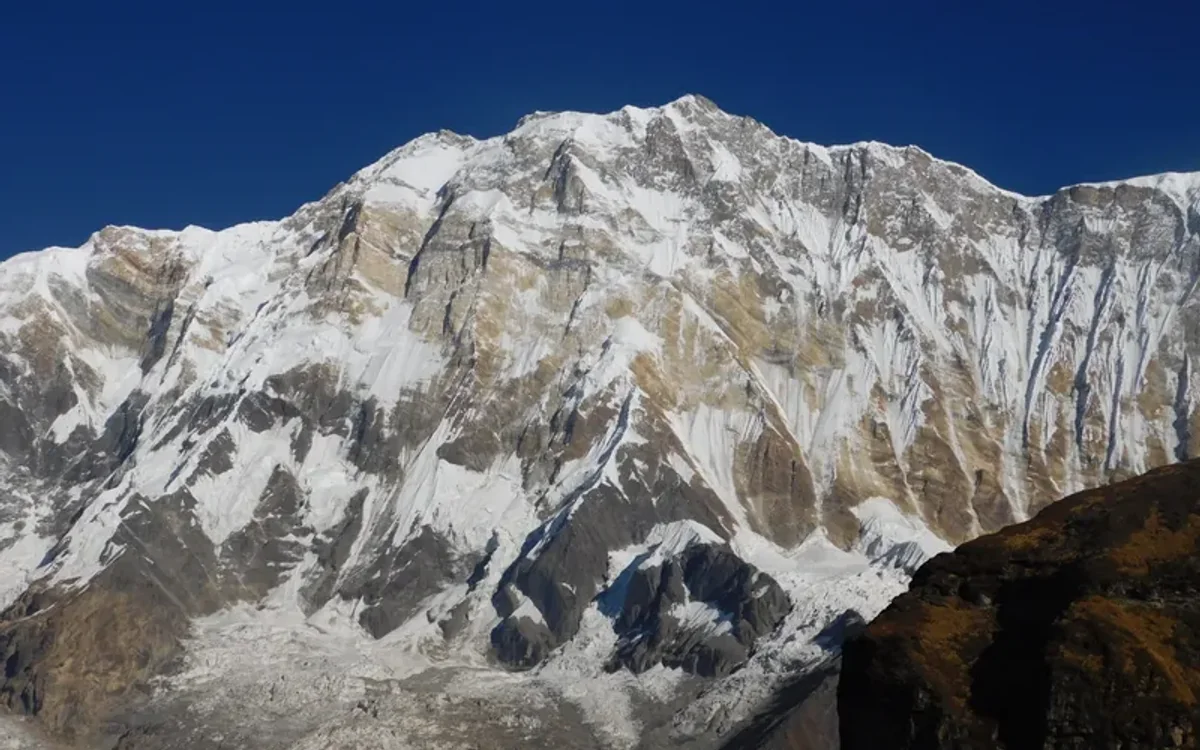
1970 British Annapurna South Face Expedition
Led by Chris Bonington, the 1970 British expedition achieved the monumental first ascent of Annapurna I's 3,000-meter South Face, with Don Whillans and Dougal Haston reaching the summit, ushering in the modern era of big-wall climbing.
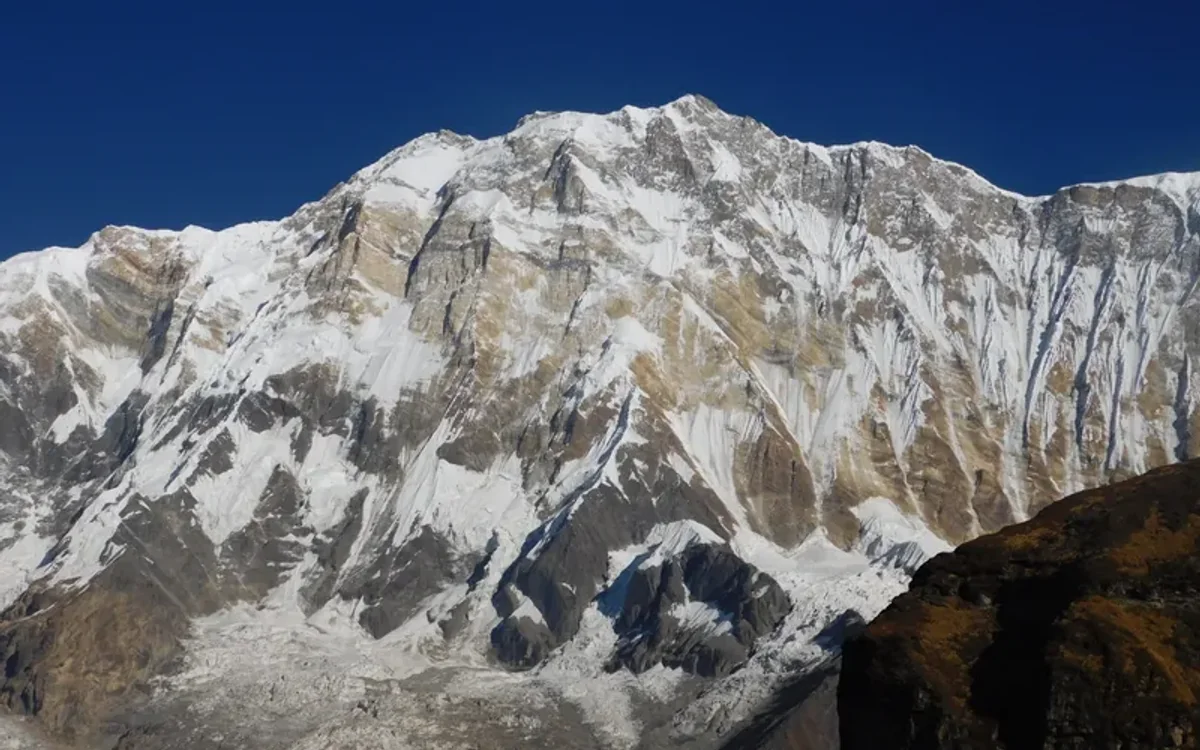
1977 Dutch Annapurna I Expedition
Led by Xander Verrijn Stuart, the 1977 Dutch expedition made national history when Mathieu van Rijswick and Sherpa Sonam summited Annapurna I via the North Face on October 13.
1978 American Women's Annapurna Expedition
Led by Dr. Arlene Blum, the historic all-female expedition achieved the first American ascent of Annapurna I (8,091m), placing Irene Miller and Vera Komarkova on the summit on October 15, 1978.
Summit Chronicles & Stories (16)
1970 Annapurna South Face: The Big-Wall Himalayan Dawn
In May 1970, Chris Bonington's British team shattered mountaineering conventions by breaching the 3,000-meter vertical fortress of Annapurna South Face.
1992 Annapurna South Face: Lafaille's Solo Survival Epic
In October 1992, Jean-Christophe Lafaille endured one of the most harrowing solitary descents in mountaineering history after partner Pierre Béghin fell to his death.
Kristin Harila: The 2022 Bremont 14 Peaks Campaign
Chronicle of Kristin Harila’s 2022 14 Peaks Bremont campaign: conquering 12 eight-thousanders in 147 days and setting the 69-day top-five world record.
Harila & Tenjen: Historic 2023 Annapurna I Summit Push
How Kristin Harila and Tenjen Sherpa conquered Annapurna I (8,091m) on June 5, 2023, sealing their eighth 8,000m peak.

Kristin Harila: 92-Day 14 Peaks Record & Modern Alpinism
The definitive chronicle of Kristin Harila and Tenjen Sherpa's record 92-day 14 peaks ascent, the K2 inquiry findings, and the ethics of modern alpinism.
Cold Lightning: Artur Hajzer and Jerzy Kukuczka Conquer
On February 3, 1987, Polish alpinists Artur Hajzer and Jerzy Kukuczka conquered Annapurna I in winter at -40°C, navigating blue ice and avalanche corridors without oxygen.
The Fourteenth Star: Juanito Oiarzabal Conquers Annapurna
On April 29, 1999, Basque powerhouse Juanito Oiarzabal conquered Annapurna I without bottled oxygen, becoming the third person in history to complete all fourteen 8,000-meter peaks without artificial gas.
The Brother's Ridge: Alberto Iñurrategi Conquers
On May 16, 2002, Basque purist Alberto Iñurrategi and Jean-Christophe Lafaille traversed Annapurna's lethal East Ridge without oxygen, completing all 14 peaks in memory of Alberto's late brother Félix.
Notable Mountaineers & Expedition Pioneers (152)
Abele Blanc
Born in the high alpine valleys of northwestern Italy, Abele Blanc developed into one of the country's most respected UIAGM mountain guides. Dedicated to clean high-altitude climbing, Blanc undertook multiple ascents...
Akebu
Akebu is an internationally recognized China mountaineer. Across 10 campaigns in the Himalayan Database, Akebu accomplished 6 verified summits without supplemental bottled oxygen on several ascents, establishing a...
Alan Hinkes
Alan Hinkes began climbing on the cliffs of Yorkshire and the Lake District before establishing difficult routes in the European Alps. Beginning his 8,000-metre quest in 1987 with Shishapangma, Hinkes pursued the...

Alberto Iñurrategi
Alberto Iñurrategi Iriarte was born on November 3, 1968, in Aretxabaleta, Gipuzkoa, in the Basque Country of northern Spain. Introduced to the mountains at an early age alongside his elder brother Félix, Alberto quickly...
Alberto Zerain
Alberto Zerain Berasategi was born on August 20, 1961, in Vitoria-Gasteiz, Álava, in the Basque Country of northern Spain. A boilermaker and dump truck driver by trade, Zerain was renowned as a 'worker-alpinist' who...
Alex MacIntyre
Alex MacIntyre was among the most brilliant and uncompromising high-altitude climbers of his generation, passionately rejecting heavy siege tactics in favor of lightweight, alpine-style ascents without fixed ropes or...
Alexei Bolotov
Alexei Bolotov (January 20, 1963 – May 15, 2013) was a world-class Russian extreme mountaineer. A two-time Piolet d'Or winner for the direct North Face of Jannu and the West Face of K2, Bolotov achieved 10 Himalayan...
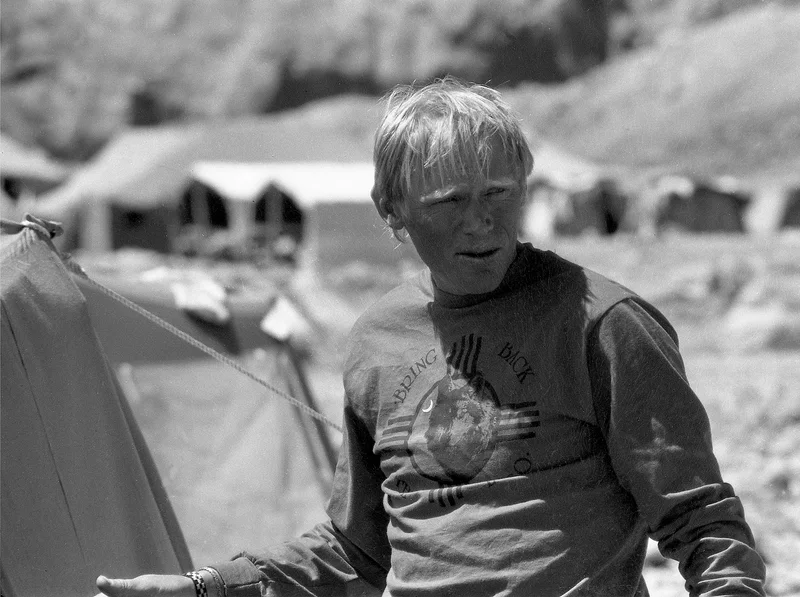
Anatoli Boukreev
Anatoli Nikolaevich Boukreev was born on January 16, 1958, in Korkino, Soviet Union, near the southern Ural Mountains. Moving to Alma-Ata in Kazakhstan to pursue physics and coaching, Boukreev integrated into the elite...
Frequently Asked Questions: Annapurna I
What is the verified elevation of Annapurna I?
Annapurna I has an official elevation of 8,091 meters (26,545 feet) above sea level (Survey Department of Nepal).
When was Annapurna I first climbed?
Annapurna I was first summited on June 3, 1950 at 2:00 PM / 14:00 by Maurice Herzog and Louis Lachenal (Expedition Leader: Maurice Herzog).
What mountain range and territories encompass Annapurna I?
Annapurna I is situated in Myagdi District, Gandaki Province across territory codes NP.
Documented Sources & Archival Citations
- Reference OverviewAnnapurna: First Conquest of an 8,000-Meter Peak(Maurice Herzog / Jonathan Cape)
Supporting claim: Classic narrative of the 1950 French pioneering first ascent
- Archival DatabaseHimalayan Database(Elizabeth Hawley Archive)
Supporting claim: Verified fatality rates, elevations, and route histories
- Archival DatabaseThe Himalayan Database — Peak Archive (Annapurna I) ↗(Elizabeth Hawley / The Himalayan Database)
Supporting claim: Official Nepal Himalayan peak registry, ascent records and geographical classification
Share Exploration
Global Mountain Intelligence
✓ Link copied to clipboard!