1970 Annapurna South Face: The Big-Wall Himalayan Dawn
In May 1970, Chris Bonington's British team shattered mountaineering conventions by breaching the 3,000-meter vertical fortress of Annapurna South Face.
Mountain Safety & Conditions Disclaimer: High-altitude climbing, glacial travel, and technical ascents entail severe objective risks including avalanches, serac collapses, rapid weather collapse, and altitude illness. Historical route descriptions and summit claims on Mountainity reflect documented archival sources and must not be used as live operational safety assessments. Local regulations, permits, and physical glacial topography change continuously.
Peer Review: Senior Editorial Board & Historical Reviewers • Editorial Standards
The Conceptual Leap: Shifting from Ridges to Faces
Throughout the golden age of Himalayan exploration in the 1950s, mountaineering teams focused almost exclusively on natural ridgelines and weaknesses of least resistance to claim maiden summits of the 8,000-metre peaks. By 1964, following the Chinese ascent of Shishapangma, every 8,000-metre summit on Earth had been climbed. A profound philosophical divide emerged within the mountaineering community: where should the future of high-altitude alpinism venture?
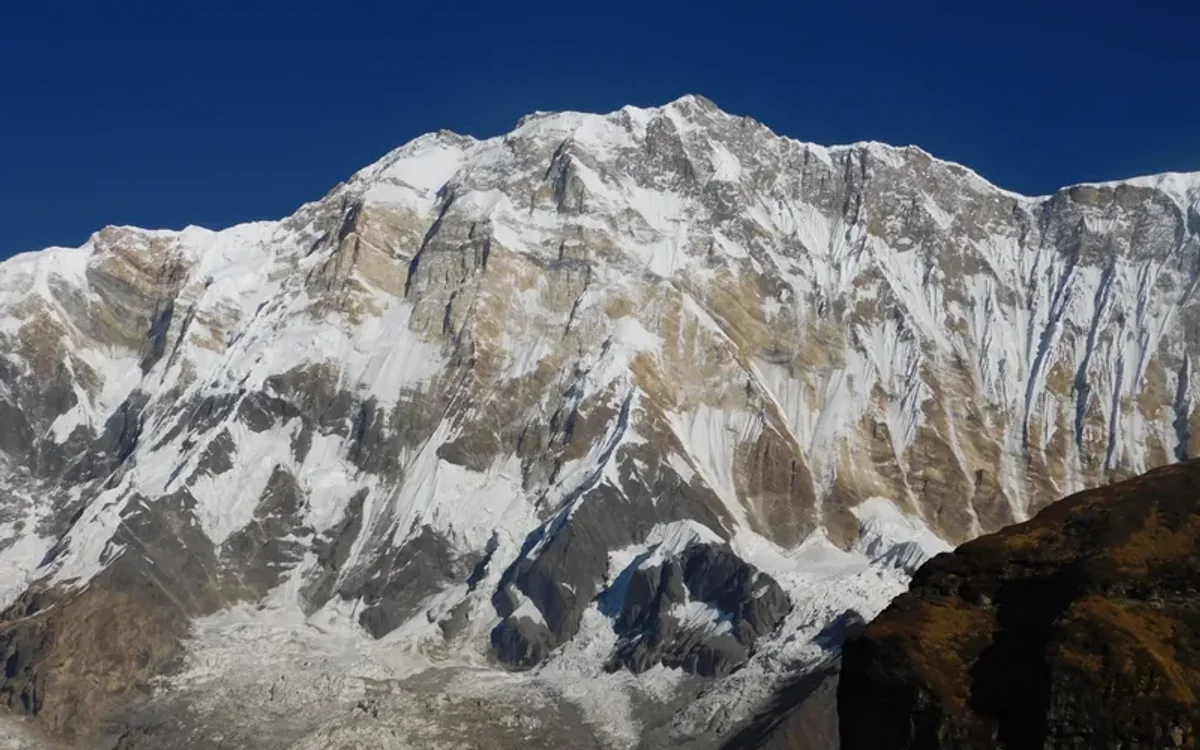
Christian Bonington, a visionary British climber and photojournalist who had made the first British ascent of the North Face of the Eiger in 1962, recognized that the next quantum leap lay in transferring the technical severity of Alpine big-wall rock and ice climbing directly onto the death-zone faces of the Greater Ranges. His chosen arena was Annapurna I (8,091m)—specifically its colossal South Face, an amphitheatre of hanging seracs, sheer diorite rock steps, and plunging couloirs rising 3,000 vertical meters above the Annapurna Sanctuary.
Assembling the British Dream Team
To undertake a project widely deemed impossible by traditionalists, Bonington gathered a formidable coalition of Britain’s and the international community’s finest hard-rock and big-wall practitioners:
- Chris Bonington: Expedition Leader, logistics planner, and tactical coordinator.
- Don Whillans: Master technician from the gritstone and Alpine hard routes, legendary for his intuitive mountain sense.
- Dougal Haston: Scottish ice and mixed master, veteran of the 1966 Eiger Direct direttissima.
- Ian Clough: Experienced Alpine stalwart, safety anchor, and logistical lieutenant.
- Mick Burke: Outstanding high-altitude cameraman and uncompromising lead climber.
- Nick Estcourt: Brilliant technical free climber and strategic support specialist.
- Martin Boysen: Leading British rock master, renowned for extreme cracks and slab movement.
- Tom Frost: Iconic Yosemite big-wall pioneer and gear innovator from California.
This synthesis of British technical prowess and Yosemite engineering principles proved decisive in conceiving how multi-pitch technical rock towers could be safely fixed at extreme altitudes.
The Siege: Establishing the Lifeline Across the Abyss
The expedition arrived at Base Camp in late March 1970. What confronted them was a vertical precipice battered by daily afternoon blizzards and regular powder avalanches funneling down flanking gullies. Rather than ascending a protected ridge, the route required scaling a massive central rib—a 10,000-foot prow of mixed rock and blue ice.
Over eight gruelling weeks, the team established a ladder of camps:
- Camp I (15,000 ft): Set at the base of the approach moraine.
- Camp II (19,000 ft): Placed beneath the lower ice cliffs after navigating dangerous avalanche cones.
- Camp III (20,100 ft): Dug into the snow slope leading into the central rib.
- Camp IV (21,500 ft): Perched on an exposed knife-edge ice crest requiring extensive platform cutting.
- Camp V (22,750 ft): Established directly below the formidable Rock Band.
The central crux of the route was the Rock Band—a sheer, near-vertical limestone buttress at 7,500 meters that barred access to the upper snowfields. Whillans and Haston spent agonizing days hammering pitons, placing aluminum expansion bolts into fractured limestone, and stringing thousands of feet of climbing rope while buffeted by sub-zero winds. Whillans famously led the final overhanging chimney with bare fingers in blinding spindle-drift.
The Summit Assault: Whillans and Haston Breached the Ramparts
By late May, the pre-monsoon storm clouds were gathering in the Bay of Bengal, signaling the close of the climbing window. Bonington threw all resources behind Whillans and Haston.
On May 26, 1970, Whillans and Haston pushed out of Camp VI (24,000 ft), carrying lightweight single-point bivy equipment and rudimentary closed-circuit oxygen rigs. Confronted by treacherous, sugary snow that provided zero purchase over smooth slab rock, they methodically clawed their way upward. Whillans chose an intricate diagonal traverse across the upper ice apron toward the crest.
At 2:30 PM on May 27, 1970, Don Whillans and Dougal Haston pulled themselves onto the windswept summit crest of Annapurna I. They had achieved what was universally heralded as the greatest breakthrough in Himalayan climbing history: the first successful ascent of an 8,000-metre peak by a major, technical big-wall face.
The Price of Triumph: Tragedy on the Descent
The celebratory atmosphere at the high camps was abruptly shattered during the retreat. On May 30, while descending between Camp II and Camp I, Ian Clough was struck and killed instantly by a collapsing serac on the lower approach slopes. Clough was buried near Base Camp in the Sanctuary, a poignant reminder of the relentless objective dangers that accompany Himalayan big-wall endeavors.
Lasting Impact on Global Mountaineering
Bonington’s 1970 Annapurna South Face campaign fundamentally redrew the blueprint of expeditionary mountaineering:
- It demonstrated that technical big-wall rock barriers could be conquered in the death zone through systematic tactical teamwork.
- It paved the way for Bonington’s historic 1975 Southwest Face of Everest expedition, which utilized the same high-tempo big-wall siege methodology.
- It inspired subsequent generations of Polish, Slovenian, and French alpinists to seek ever steeper and more direct lines across the great faces of Asia.
Key Statistics & Topographic Figures
- Category
- Historic Expeditions
Archival Subject
- Reading Time
- 14 min read
Narrative Length
- Key Mountain
- annapurna-i
Objective
- Ascent Route
- annapurna-south-face
Topography
- Verification
- Editorially Verified
Archival Standard
Defined Alpine Terminology & Concepts
- Summit Push
- The final continuous climbing effort from the highest established camp to the mountain apex and back.
- Death Zone Chronicle
- A verified, research-backed historical narrative documenting the human, technical, and environmental realities of an alpine expedition.
Frequently Asked Questions: 1970 Annapurna South Face: The Big-Wall Himalayan Dawn
What is the core chronicle and subject of "1970 Annapurna South Face: The Big-Wall Himalayan Dawn"?
In May 1970, Chris Bonington's British team shattered mountaineering conventions by breaching the 3,000-meter vertical fortress of Annapurna South Face.
Which mountain peaks and routes are featured in "1970 Annapurna South Face: The Big-Wall Himalayan Dawn"?
This narrative documents climbs on annapurna-i along the annapurna-south-face in Nepal.
Which documented expedition is chronicled in this story?
This historical chronicle captures the events of the 1970-british-annapurna-south-face, verified through contemporary journals and archival records.
Who authored and researched this archival chronicle?
Authored and researched by Mountainity Historical Research Desk, drawing on primary eyewitness testimonies, alpine club registries, and verified summit logs.
What makes this high-altitude chronicle historically significant?
Categorized under "Historic Expeditions", this chronicle preserves critical lessons in alpine leadership, survival, tactical speed, and human endurance in the death zone.
Related Mountains

Annapurna I
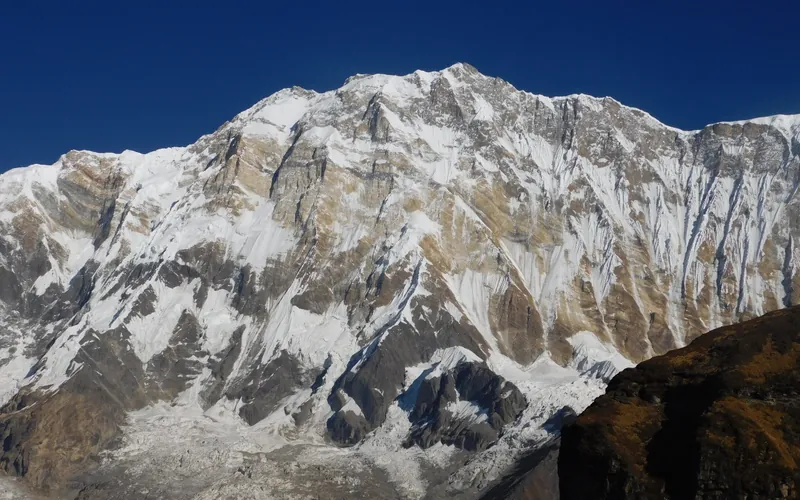
Annapurna I, at 8,091 meters (26,545 ft), is the tenth-highest mountain in the world and historically the first 8,000-meter peak ever summited (June 3, 1950 by Maurice Herzog and Louis Lachenal). Rising above the Annapurna Sanctuary, its north and south walls present extreme avalanche and serac fall hazards.
Ascent Route & Topography (1)
View All Routes →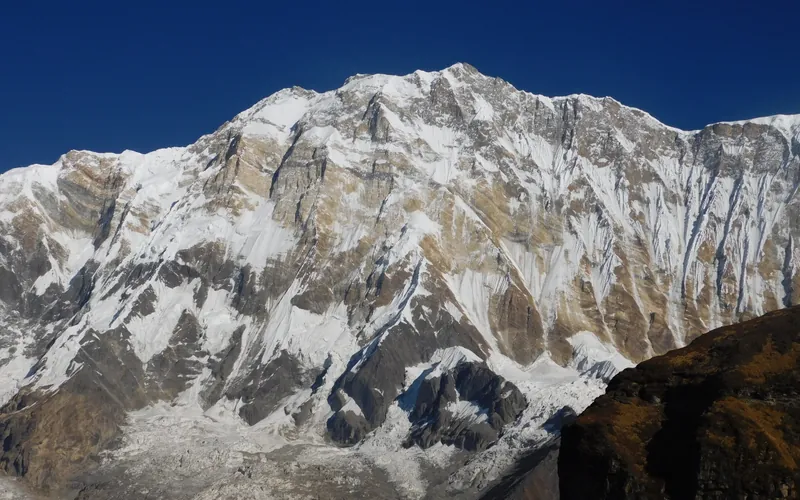
Annapurna I South Face (Bonington-Haston-Whillans Route)
The South Face of Annapurna I is one of the most formidable big-wall arenas in world mountaineering, rising 3,000 vertical metres of sheer rock, ice flutings, and overhanging bands directly from the...
Featured Mountaineers & Pioneers (4)
Browse All Mountaineers →
Ang Phurba Sherpa
Ang Phurba Sherpa was among the most respected figures in the golden era of Himalayan exploration. Hailing from the Solukhumbu region of Nepal, he earned renown for his exceptional high-altitude strength, leadership...

Sir Chris Bonington
Christian John Storey Bonington was born on August 6, 1934, in Hampstead, London. Educated at University College School and the Royal Military Academy Sandhurst, Bonington was commissioned into the Royal Tank Regiment,...
Don Whillans
Born in Salford, Lancashire, in 1933, Don Whillans began climbing on the gritstone crags of the Peak District, forming a world-famous partnership with Joe Brown. Together, they established fierce new rock routes across...
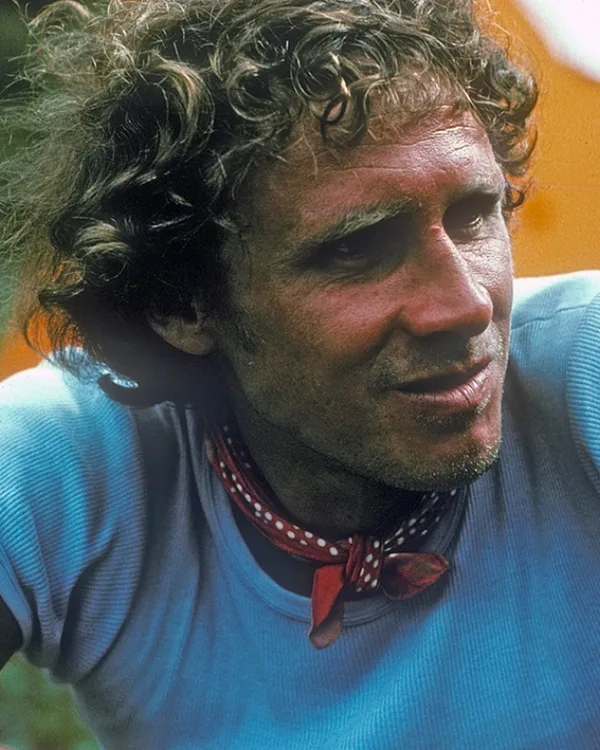
Dougal Haston
Dougal Haston was born on April 19, 1940, in Currie, a village southwest of Edinburgh, Scotland. Beginning his climbing career on the volcanic crags of Arthur's Seat and the sheer schist of the Scottish Highlands,...
Documented Expeditions (1)
View All Expeditions →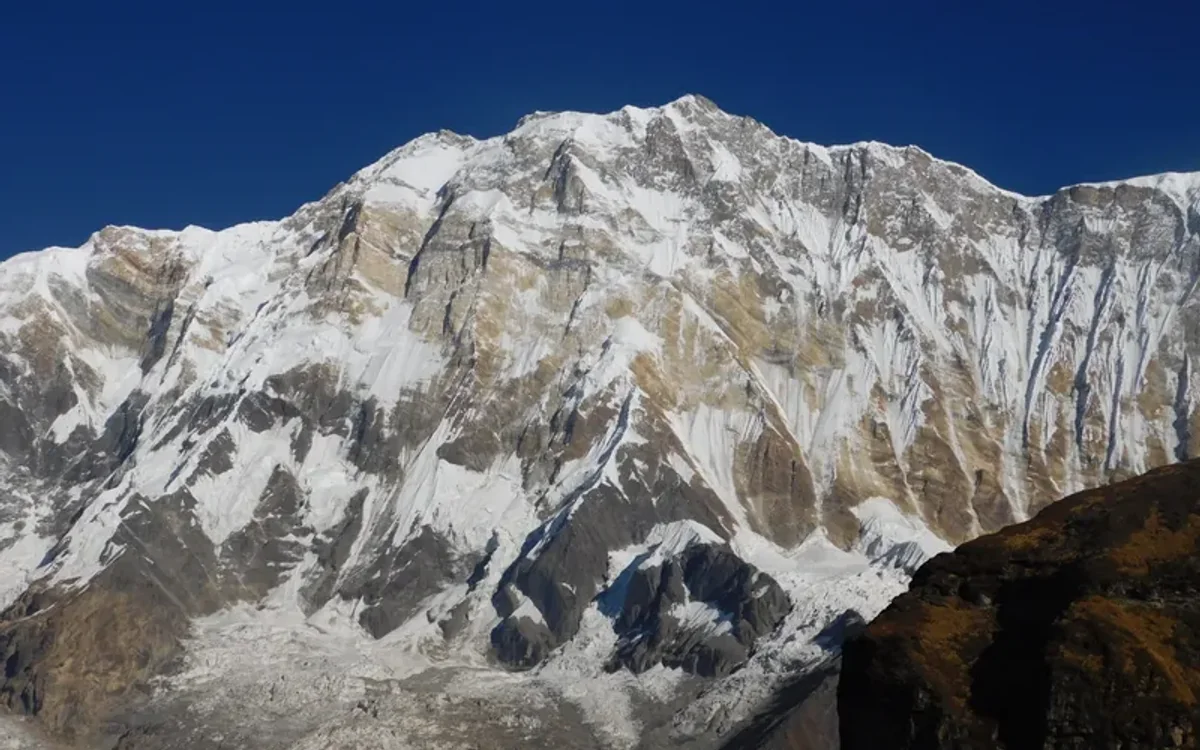
1970 British Annapurna South Face Expedition
Led by Chris Bonington, the 1970 British expedition achieved the monumental first ascent of Annapurna I's 3,000-meter South Face, with Don Whillans and Dougal Haston reaching the summit, ushering in the modern era of big-wall climbing.
Documented Sources & Archival Citations
- Primary Expedition ReportAnnapurna South Face(Christian Bonington / Cassell & Company)
- Alpine JournalThe Himalayan Journal Vol. 31: Annapurna South Face Expedition 1970(The Himalayan Club)
Share Exploration
Global Mountain Intelligence
✓ Link copied to clipboard!