1992 Annapurna South Face: Lafaille's Solo Survival Epic
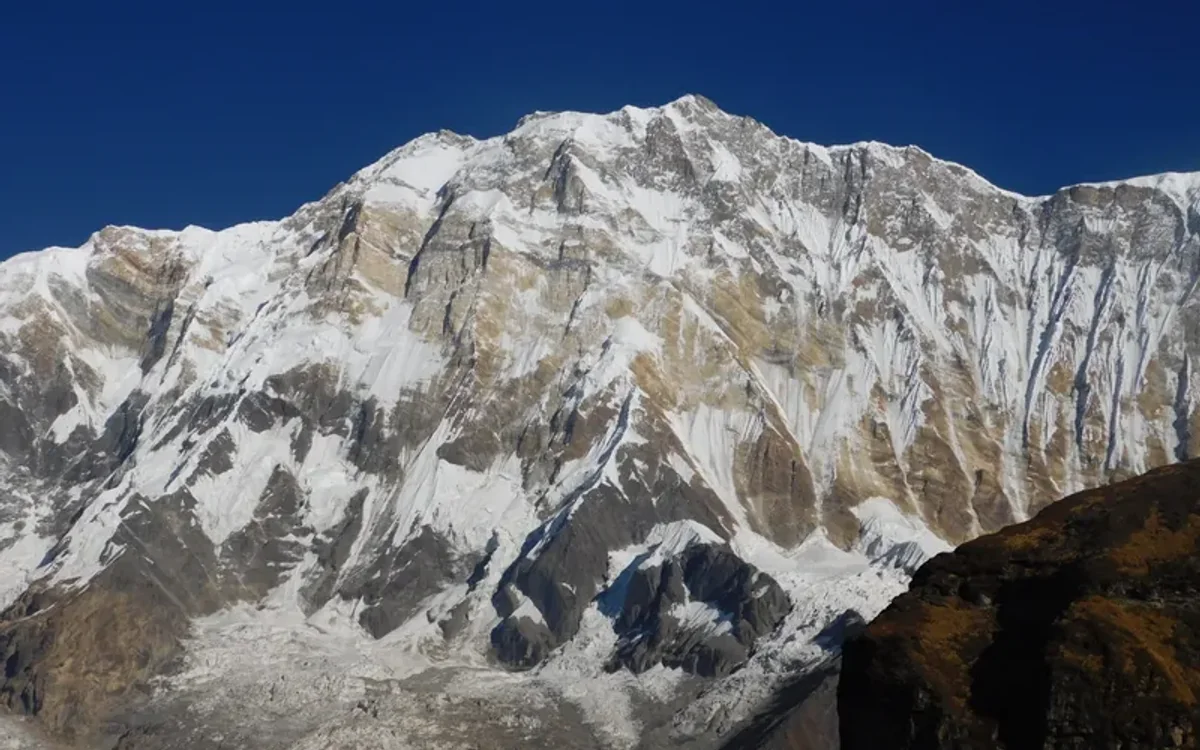
In October 1992, Jean-Christophe Lafaille endured one of the most harrowing solitary descents in mountaineering history after partner Pierre Béghin fell to his death.
Mountain Safety & Conditions Disclaimer: High-altitude climbing, glacial travel, and technical ascents entail severe objective risks including avalanches, serac collapses, rapid weather collapse, and altitude illness. Historical route descriptions and summit claims on Mountainity reflect documented archival sources and must not be used as live operational safety assessments. Local regulations, permits, and physical glacial topography change continuously.
Peer Review: Senior Editorial Board & Historical Reviewers • Editorial Standards
The Ambition: Two Men Against the Directissima
In October 1992, two of France’s premier alpinists arrived at the foot of Annapurna I’s South Face. Pierre Béghin, 41, was a seasoned high-altitude giant with five 8,000-metre first ascents in pure alpine style. Jean-Christophe Lafaille, 27, was a dazzling young rock technician and Chamonix guide embarking on his very first expedition to the Himalayas.
Their ambition was staggering: to forge a direct, independent route up the sheerest sector of the 3,000-meter South Face, between the 1970 British route and the 1981 Japanese line. They carried no fixed ropes, no support crew, and no bottled oxygen.
The Disaster at 7,100 Meters
Ascending smoothly despite freezing autumn gale winds, Béghin and Lafaille established a series of bivouacs up the wall, reaching 7,100 meters on October 11. Here, a fierce storm engulfed the mountain, depositing heavy snowfall and sending continuous spindrift avalanches sweeping down their proposed line.
Recognizing that conditions had become lethal, Béghin made the call to retreat. Because they had carried only minimal gear, their rappel anchors had to be husbanded with extreme care.
At 7,100 meters on a 60-degree snow and ice slope, Béghin placed a single aluminum snow picket into the unconsolidated snow. Unwilling to sacrifice a second anchor, Béghin tested the picket by clipping himself in and beginning to weight the rappel line.
Suddenly, the picket pulled free from the soft snow. Without a sound, Pierre Béghin plunged backward off the wall, tumbling thousands of meters down the South Face to his death. He took with him the expedition’s sole climbing rope, all their carabiners, and the descent hardware.
Five Days in the Abyss: Lafaille’s Solitary Odyssey
Lafaille stood alone on an icy stance at 7,100 meters. He had no rope, no radio, no bivy gear, and only twenty meters of 6mm accessory cord left in his pack. To mountaineering experts observing from afar, his position was an absolute death sentence.
What followed is universally regarded as one of the greatest individual feats of survival in the history of mountaineering:
- Downclimbing Backward (October 12–13): Lafaille began downclimbing thousands of vertical feet of 60-degree blue ice using only two ice tools and crampon front-points, facing inward toward the wall. Every single foot placement required meticulous balance; a slip meant joining Béghin in the abyss.
- The Shattered Arm (October 14): While downclimbing near the Rock Band at 6,500 meters, a falling rock dislodged by melting snow struck Lafaille’s right forearm, shattering the bone. With his arm broken and useless, he continued downclimbing one-handed, planting his left ice tool and kicking front-points repeatedly into the hard ice.
- The Tent Refuge (October 15): Dehydrated, delirious from hypoxia, and in excruciating pain, Lafaille reached the remnants of an abandoned tent platform at 6,000 meters. He spent two days immobilized, surviving on melted snow and sheer will to return to his pregnant wife, Katia.
Crawling to Freedom
On October 16, 1992, base camp trekker observers caught sight of a lone, blackened figure staggering and crawling across the moraine at the base of the South Face. Jean-Christophe Lafaille had completed his five-day solitary descent.
Lafaille would go on to become one of the most prolific high-altitude solo climbers of his era, summiting eleven 8,000-metre peaks without oxygen before disappearing on Makalu in 2006. His 1992 Annapurna survival remains an enduring testament to the unimaginable resilience of the human spirit when pushed to the ultimate boundaries of existence.
Key Statistics & Topographic Figures
- Category
- Historic Expeditions
Archival Subject
- Reading Time
- 14 min read
Narrative Length
- Key Mountain
- annapurna-i
Objective
- Ascent Route
- annapurna-south-face
Topography
- Verification
- Editorially Verified
Archival Standard
Defined Alpine Terminology & Concepts
- Summit Push
- The final continuous climbing effort from the highest established camp to the mountain apex and back.
- Death Zone Chronicle
- A verified, research-backed historical narrative documenting the human, technical, and environmental realities of an alpine expedition.
Frequently Asked Questions: 1992 Annapurna South Face: Lafaille's Solo Survival Epic
What is the core chronicle and subject of "1992 Annapurna South Face: Lafaille's Solo Survival Epic"?
In October 1992, Jean-Christophe Lafaille endured one of the most harrowing solitary descents in mountaineering history after partner Pierre Béghin fell to his death.
Which mountain peaks and routes are featured in "1992 Annapurna South Face: Lafaille's Solo Survival Epic"?
This narrative documents climbs on annapurna-i along the annapurna-south-face in Nepal.
Which documented expedition is chronicled in this story?
This historical chronicle captures the events of the 1992-beghin-lafaille-annapurna-south-face-attempt, verified through contemporary journals and archival records.
Who authored and researched this archival chronicle?
Authored and researched by Mountainity Historical Research Desk, drawing on primary eyewitness testimonies, alpine club registries, and verified summit logs.
What makes this high-altitude chronicle historically significant?
Categorized under "Historic Expeditions", this chronicle preserves critical lessons in alpine leadership, survival, tactical speed, and human endurance in the death zone.
Related Mountains
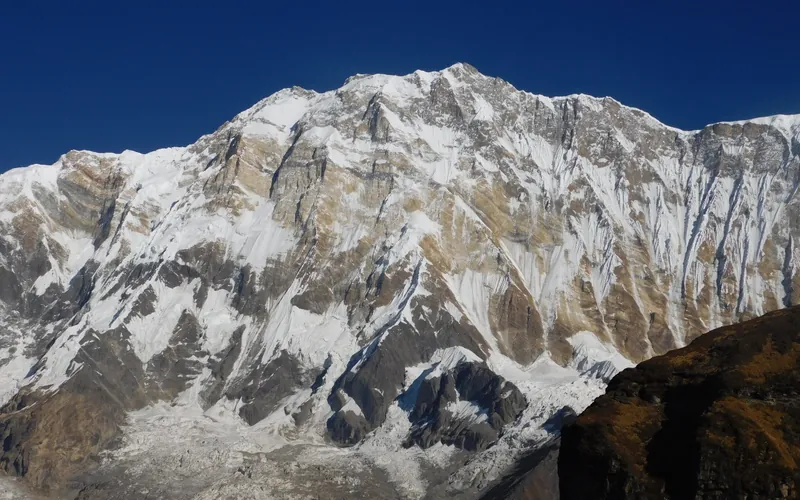

Annapurna I
Annapurna I, at 8,091 meters (26,545 ft), is the tenth-highest mountain in the world and historically the first 8,000-meter peak ever summited (June 3, 1950 by Maurice Herzog and Louis Lachenal). Rising above the Annapurna Sanctuary, its north and south walls present extreme avalanche and serac fall hazards.
Ascent Route & Topography (1)
View All Routes →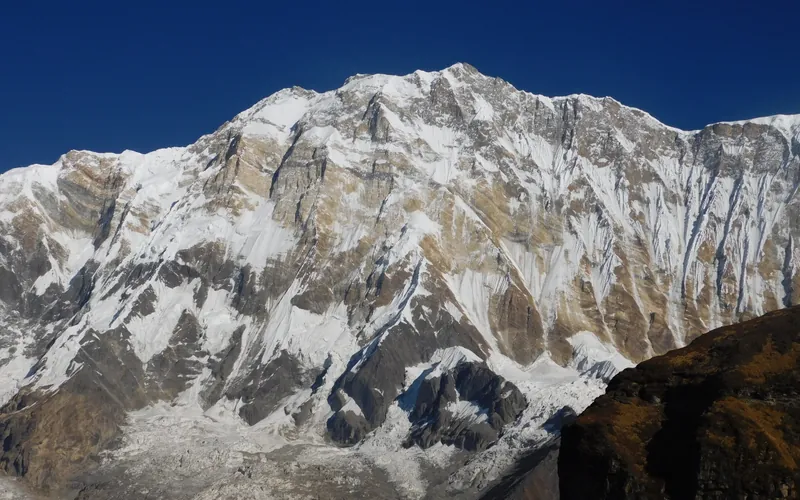
Annapurna I South Face (Bonington-Haston-Whillans Route)
The South Face of Annapurna I is one of the most formidable big-wall arenas in world mountaineering, rising 3,000 vertical metres of sheer rock, ice flutings, and overhanging bands directly from the...
Featured Mountaineers & Pioneers (1)
Browse All Mountaineers →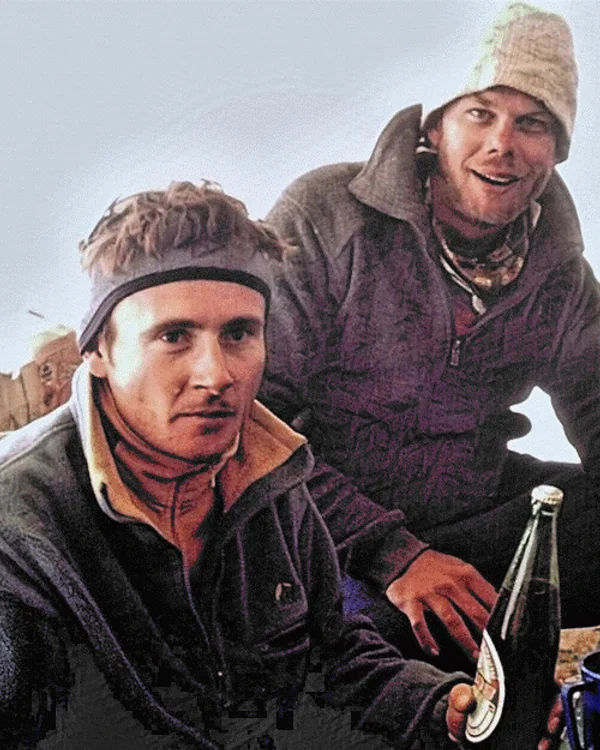
Jean-Christophe Lafaille
Jean-Christophe Lafaille was born on March 31, 1965, in Gap, Hautes-Alpes, France. Beginning as a world-class sport climber and mountain guide in the Dauphiné and Mont Blanc massifs, Lafaille pioneered cutting-edge solo...
Documented Expeditions (1)
View All Expeditions →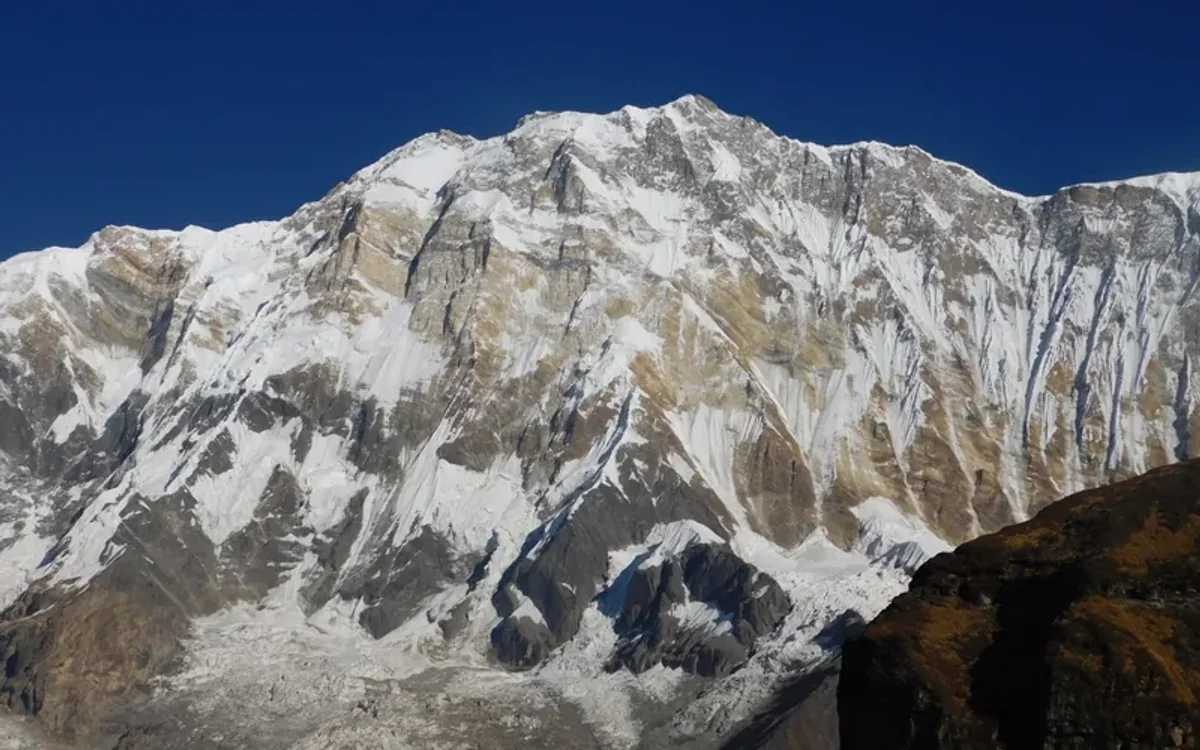
1992 Béghin-Lafaille Annapurna South Face Expedition
Elite French alpinists Pierre Béghin and Jean-Christophe Lafaille attempted a bold new route on Annapurna I's South Face; Béghin fell to his death, and Lafaille endured an epic five-day solo descent with a shattered arm.
Documented Sources & Archival Citations
- Primary Expedition ReportPrisonnier de l'Annapurna(Jean-Christophe Lafaille / Éditions Guérin)
- Alpine JournalThe Himalayan Journal Vol. 49: Annapurna South Face 1992 Expedition(The Himalayan Club)
Share Exploration
Global Mountain Intelligence
✓ Link copied to clipboard!