Kristin Harila: 92-Day 14 Peaks Record & Modern Alpinism
The definitive chronicle of Kristin Harila and Tenjen Sherpa's record 92-day 14 peaks ascent, the K2 inquiry findings, and the ethics of modern alpinism.
Mountain Safety & Conditions Disclaimer: High-altitude climbing, glacial travel, and technical ascents entail severe objective risks including avalanches, serac collapses, rapid weather collapse, and altitude illness. Historical route descriptions and summit claims on Mountainity reflect documented archival sources and must not be used as live operational safety assessments. Local regulations, permits, and physical glacial topography change continuously.
Peer Review: Senior Editorial Board & Historical Reviewers • Editorial Standards
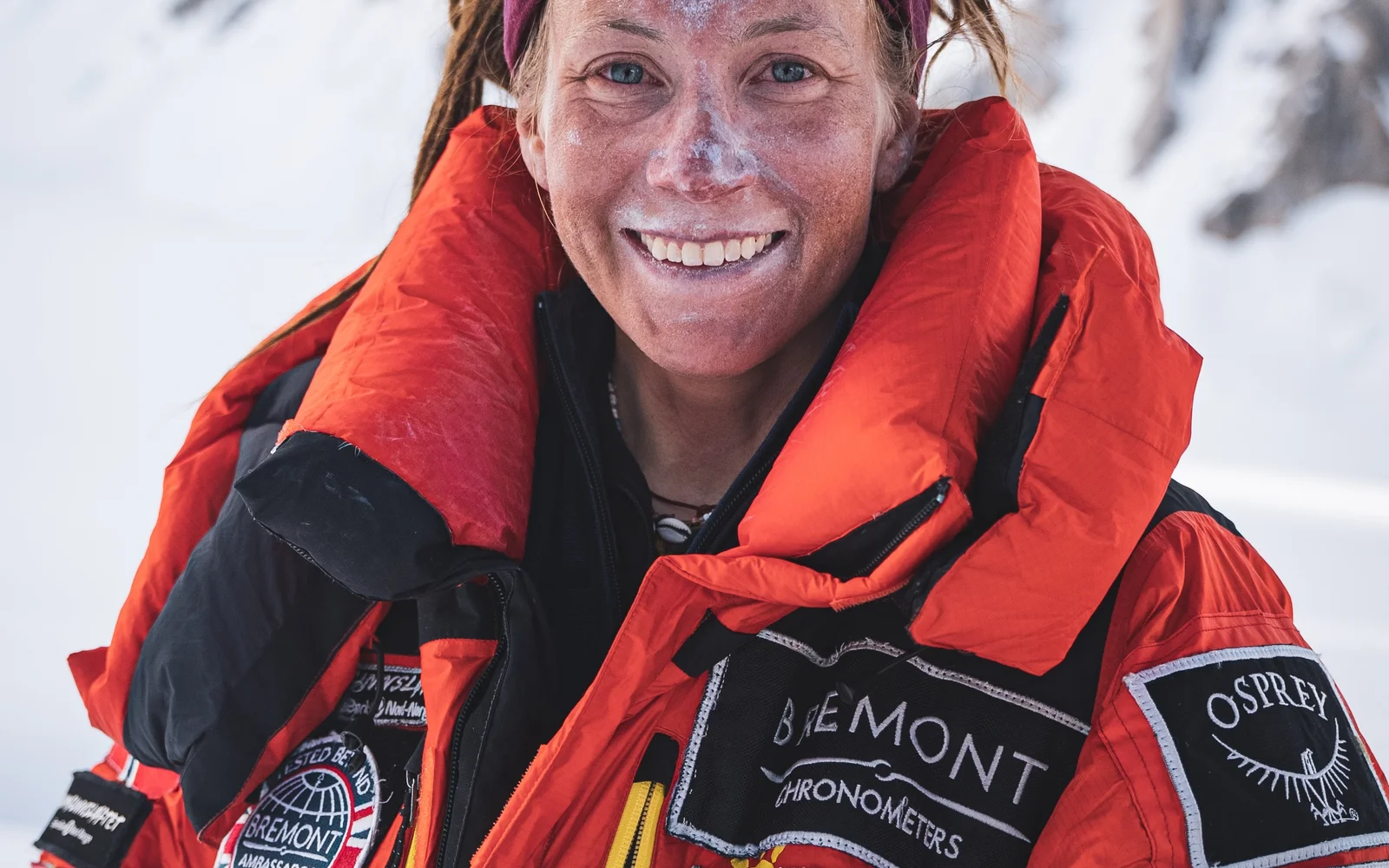
On July 27, 2023, Norwegian Sámi mountaineer Kristin Harila and Nepali climbing leader Tenjen Lama Sherpa stood on the summit of K2 in Pakistan, completing all fourteen of Earth’s 8,000-meter peaks in 92 days (1 hour and 45 minutes). Beginning on Shishapangma on April 26, 2023, their relentless sprint shattered all previous speed records under strict modern true-summit verification standards. Their joint achievement transformed high-altitude mountaineering, sparking global celebrations while catalyzing profound international debates regarding expedition ethics, commercial congestion, and the welfare of high-altitude porters.
Who Is Kristin Harila?
Born on March 28, 1986, in Vadsø on the Varanger Peninsula of Finnmark, Norway, Kristin Jonassen Harila was raised in the sub-arctic wilderness of northern Scandinavia. Proud of her indigenous Sámi heritage, she spent her formative years navigating frozen plateaus, hunting, fishing, and cross-country ski racing. Competing at a national junior level in Norway, Harila developed an extraordinary aerobic capacity, high pain tolerance, and cold-weather stamina that would later define her climbing career.
After retiring from competitive skiing, Harila built a successful corporate career as an executive in the furniture retail sector. Yet the call of the wild remained persistent. In 2015, during a holiday trek to Tanzania, she summited Mount Kilimanjaro (5,895m). Standing on Africa’s highest point ignited an obsession with vertical altitude that would alter her life permanently.
The Transition to High-Altitude Mountaineering
Between 2015 and 2019, Harila methodically transitioned from trekking to technical alpinism. In 2019, she traveled to the Nepalese Himalaya, summiting Lobuche East (6,119m) and Putha Hiunchuli (7,246m). In early 2020, she summited Aconcagua (6,961m) in Argentina and completed an arduous winter ski traverse across the arctic Finnmarksvidda plateau.
Her definitive breakthrough into the death zone came in May 2021. Climbing on Mount Everest and Lhotse via the South Col Route, Harila achieved a blistering linkup, summiting both giants in under twelve hours and establishing a new speed record for female climbers. Realizing her physiology excelled above 8,000 meters, Harila resigned from her corporate position, sold her apartment in Norway, and poured her life savings into pursuing the greatest challenge in modern mountaineering: climbing all fourteen eight-thousanders in a single season.
The 2022 Bremont 14 Peaks Campaign
In April 2022, Harila launched the Bremont 14 Peaks Project, aiming to break the 189-day benchmark set in 2019 by Nirmal Purja. Partnered with Nepali climbers Dawa Ongju Sherpa and Pasang Lhamu Sherpa, Harila commenced a whirlwind spring campaign in Nepal:
- Annapurna I (8,091m) — April 28, 2022
- Dhaulagiri I (8,167m) — May 8, 2022
- Kangchenjunga (8,586m) — May 14, 2022
- Mount Everest (8,848.86m) — May 22, 2022
- Lhotse (8,516m) — May 22, 2022 (9 hours 5 minutes after Everest)
- Makalu (8,485m) — May 27, 2022
By summiting Everest, K2, Kangchenjunga, Lhotse, and Makalu within 69 days, Harila set an official Guinness World Record for the fastest ascent of the world’s five highest mountains. Transferring to Pakistan’s Karakoram, she summited Nanga Parbat (July 1), K2 (July 22), Broad Peak (July 28), Gasherbrum II (August 8), and Gasherbrum I (August 11), before capping her 12th peak on Manaslu on September 22.
However, geopolitics intervened. Despite frantic diplomatic negotiations by the Norwegian foreign ministry and international mountaineering bodies, the Chinese government refused to issue climbing permits for Cho Oyu and Shishapangma due to strict zero-COVID border closures. Stranded at twelve summits after just 147 days, Harila was forced to terminate the 2022 project.
Relaunching in 2023: The 92-Day Quest
Refusing to accept defeat, Harila reorganized her operational strategy for spring 2023. Partnering with Seven Summit Treks, she joined forces with Tenjen Lama Sherpa, an elite climbing sirdar from Makalu who had recently summited Manaslu in pure astronomical winter with Basque alpinist Alex Txikon.
Crucially, in early April 2023, China reopened Tibet to international climbing expeditions. Rather than treating the 2022 campaign as an unfinished project, Harila and Tenjen chose to start completely afresh: they would attempt to climb all fourteen peaks from scratch, beginning on the Tibetan plateau.
The 92-Day Chronology: All Fourteen Summits
Between April 26 and July 27, 2023, Harila and Tenjen executed the fastest complete circuit of the fourteen eight-thousanders in mountaineering history:
| Order | Peak | Elevation | Summit Date | Country | Key Tactical Context |
|---|---|---|---|---|---|
| 1 | Shishapangma | 8,027 m | April 26, 2023 | China (Tibet) | Clock starts at 5:00 PM; verified true summit. |
| 2 | Cho Oyu | 8,188 m | May 3, 2023 | China (Tibet) | Tibetan double completed in 7 days. |
| 3 | Makalu | 8,485 m | May 13, 2023 | Nepal | Northwest Ridge; Tenjen’s home mountain. |
| 4 | Kangchenjunga | 8,586 m | May 18, 2023 | Nepal / India | Southwest Face; brutal 14-hour descent. |
| 5 | Mount Everest | 8,848.86 m | May 23, 2023 | Nepal / China | Summited at 3:15 AM via South Col. |
| 6 | Lhotse | 8,516 m | May 23, 2023 | Nepal / China | Summited at 11:15 AM; sub-8-hour traverse. |
| 7 | Dhaulagiri I | 8,167 m | May 29, 2023 | Nepal | Northeast Ridge; halfway point (7 peaks in 33 days). |
| 8 | Annapurna I | 8,091 m | June 5, 2023 | Nepal | North Face avalanche couloirs conquered. |
| 9 | Manaslu | 8,163 m | June 10, 2023 | Nepal | Reached absolute true crest; Nepal phase finished. |
| 10 | Nanga Parbat | 8,126 m | June 26, 2023 | Pakistan | Kinshofer Route on colossal Diamir Face. |
| 11 | Gasherbrum II | 8,035 m | July 15, 2023 | Pakistan / China | Southwest Ridge; opening of Baltoro finale. |
| 12 | Gasherbrum I | 8,080 m | July 18, 2023 | Pakistan / China | Hidden Peak summited 3 days after G-II. |
| 13 | Broad Peak | 8,051 m | July 23, 2023 | Pakistan / China | Precarious traverse across true summit ridge. |
| 14 | K2 | 8,611 m | July 27, 2023 | Pakistan / China | Summited at 10:45 AM; joint world record sealed. |
Tenjen Lama Sherpa: The Pillar of the Partnership
Throughout the 92-day campaign, Tenjen Lama Sherpa was not a support employee; he was Harila’s co-leader and climbing partner. Born in Na in the Makalu Barun valley, Tenjen had spent nearly two decades guiding international clients. His instinctive mountain sense, physical strength, and serene temperament complemented Harila’s fierce athletic drive.
Unlike commercial clients who rely passively on guides, Harila and Tenjen functioned as a unified high-altitude engine, sharing the psychological burden of relentless rotation and route assessment. Both climbers were formally recognized by Guinness World Records as joint holders of the world record.
Comparing Records: Harila, Purja, and Historical Criteria
To understand the magnitude of Harila and Tenjen’s 92-day record, one must examine the evolution of eight-thousander recordkeeping:
- Jerzy Kukuczka & Reinhold Messner: Completed all 14 peaks in the late 20th century across 8 to 16 years, largely pioneering new alpine routes without supplemental oxygen.
- Kim Chang-ho: In 2013, Korean climber Kim Chang-ho set the recognized benchmark of 7 years, 10 months, and 6 days without supplemental oxygen.
- Nirmal ‘Nimsdai’ Purja (2019): Shocked the global mountaineering establishment by climbing all 14 peaks in 189 days during Project Possible 14/7.
- Harila & Tenjen (2023): Completed all 14 peaks in 92 days (1 hour and 45 minutes), cutting Purja’s time by more than half.
The True-Summit Reclassification
A vital distinction lies in summit verification standards. In 2022, German alpine chronicler Eberhard Jurgalski published landmark research on 8000ers.com, proving that decades of historical summit claims on peaks like Manaslu, Dhaulagiri, and Annapurna had stopped short of the geological highest points (often at foresummits or prayer-flag waypoints).
Guinness World Records subsequently updated its verification rules, requiring verifiable proof of standing on the absolute true summit. While Purja had summited the foresummit of Manaslu and Dhaulagiri during his 2019 sprint (later returning in autumn 2021 to reach the true summits), Harila and Tenjen strictly adhered to true-summit protocols on every single mountain during their continuous 92-day push. Consequently, Guinness recognized Harila and Tenjen as the fastest climbers to true-summit all 14 eight-thousanders.
As of November 17, 2026, no verified mountaineer has surpassed Kristin Harila and Tenjen Lama Sherpa’s joint 92-day 1 hour 45 minute true-summit speed record. It is essential to distinguish this speed record from separate historical milestones: Chinese climber Dong Hong-Juan was recognized by Guinness as the first woman to reach the verified true summit of all fourteen peaks in April 2023; Chinese climber He Jing completed all 14 peaks without supplemental oxygen in October 2024, representing an oxygenless achievement; and Nirmal Purja completed his own all-14 oxygen-free project in autumn 2024. Each achievement represents a distinct stylistic category and historical milestone, none of which diminishes or alters Harila and Tenjen’s joint 92-day overall speed record.
The Everest–Lhotse Same-Day Linkup
Among the most astonishing athletic feats of the 2023 project was the May 23 linkup of Everest and Lhotse. After summiting Everest at 3:15 AM via the South Col Route, Harila and Tenjen descended to Camp 4 at 7,906m. Restocking fluids and oxygen cylinders, they traversed directly into the steep rock-and-ice couloir of Lhotse, cresting the true summit at 11:15 AM.
Covering both summits in exactly eight hours demonstrated a level of high-altitude aerobic conditioning and logistical precision rarely witnessed in Himalayan history.
The K2 Bottleneck Tragedy: Mohammad Hassan
On July 27, 2023, while climbing the Abruzzi Spur toward the final summit on K2, a catastrophic incident occurred that cast a dark shadow over the record.
At approximately 2:30 AM, in the treacherous couloir known as the Bottleneck (8,200m) beneath a colossal hanging serac, 27-year-old Pakistani high-altitude porter Mohammad Hassan—employed by the Lela Peak Expedition to fix ropes—fell approximately five meters from a narrow traverse line. Hassan remained suspended upside down over a crevasse edge, unable to right himself.
Congestion was severe, with over 100 climbers from various commercial expeditions queued along the single fixed rope. As documented by eyewitness testimonies and the official government inquiry, Harila’s team, including Brazilian camera operator Gabriel Tarso, spent substantial time attempting to pull Hassan up, securing him with anchor lines and providing him with warm clothing and supplemental oxygen. However, amidst continuous rockfall, extreme cold, and dwindling high-altitude reserves, the crowd moved past the injured porter. Hassan tragically died hours later of hypothermia and pulmonary distress.
Drone footage captured by Austrian climbers Wilhelm Steindl and Philip Flämig later showed climbers walking past Hassan’s body on their descent, sparking an international firestorm on social media and mainstream news outlets.
The Gilgit-Baltistan Inquiry Findings
Following international outrage, the Government of Gilgit-Baltistan formed an official four-member Fact-Finding Inquiry Committee to investigate the tragedy.
The inquiry report, published in September 2023, reached balanced and sobering conclusions:
- Porter Equipment and Training Deficits: The inquiry revealed that Mohammad Hassan lacked adequate extreme-cold protective gear, down clothing, and formal high-altitude mountaineering training. His employer had assigned him to extreme-altitude rope fixing without proper safety safeguards.
- Harila Team Cleared of Malice: The inquiry confirmed that members of Harila’s party, specifically Gabriel Tarso and her Sherpa team, had actively attempted to rescue and stabilize Hassan for over an hour before continuing their climb.
- Systemic Failures: The committee identified commercial negligence, overcrowding, lack of unified command among expedition leaders, and inadequate regulatory oversight by Pakistani tourism authorities as primary contributors to the disaster.
- Policy Recommendations: The committee recommended mandatory high-altitude insurance, standardized safety gear inspections, and certified technical training for all Pakistani high-altitude porters before issuing climbing permits.
Harila publicly defended her team’s actions, expressing deep grief for Hassan and his family. She subsequently supported international fundraisers to provide financial security for Hassan’s widow and young children, using her platform to advocate for systemic safety reforms across Pakistani mountaineering.
Tenjen’s Tragic Death and Enduring Legacy
Ten weeks after their triumphant summit of K2, tragedy struck again. In October 2023, Tenjen Lama Sherpa returned to Tibet to guide American climber Gina Marie Rzucidlo on Shishapangma. On October 7, massive avalanches swept the upper slopes beneath the summit crest, killing Tenjen, Rzucidlo, Anna Gutu, and Mingmar Sherpa.
Devastated by the loss of her climbing partner and co-leader, Kristin Harila dedicated herself to honoring Tenjen’s enduring legacy. She actively championed the Lama Sherpa Foundation (lamasherpafoundation.com), an independent non-profit foundation established to advance four core pillars across Himalayan mountaineering: safety, fair working conditions, fair pay, and sustainable value creation for indigenous communities. Central to this commitment is a dedicated education initiative providing sustained funding for the comprehensive primary, secondary, and higher education of Tenjen’s two sons, Dawa Bhote and Lakpa Bhote, in Kathmandu.
In tandem with family support, Harila co-founded the Tenjen-Harila Cleanup Project, focused on environmental remediation in Himalayan death zones by removing abandoned fixed ropes, shredded high-altitude tents, and discarded oxygen canisters above the South Col on Everest and the Bottleneck on K2. She also partnered with Appalachian State University climate scientist Dr. Baker Perry to support the maintenance and data collection of automated high-altitude meteorological stations installed across the Everest massif, helping advance understanding of climate warming in glaciated headwaters.
The Savage Mountain Documentary and Continued Discourse
The 2023 expedition and the K2 Bottleneck tragedy became the subject of the major 100-minute documentary feature Savage Mountain (Norwegian title: Harila – Nådeløse fjell; registered in Norwegian Film Institute production archives under the working title Moving Mountains). Directed by Even Sigstad and produced by Filip Christensen of Field Productions in partnership with Sky Documentaries, the film held its official Norwegian theatrical cinema premiere on September 4, 2026.
On November 6, 2026, Kristin Harila published an official distribution announcement outlining the verified broadcast and streaming platforms across specific licensed territories:
- Sky UK: Broadcast across Great Britain.
- Foxtel: Television and streaming distribution in Australia.
- SkyShowtime: Streaming distribution across the European and Nordic countries specifically listed in the official announcement.
- HBO: Streaming distribution across the licensed territories specified in the announcement.
- Canal+: Scheduled for release beginning on December 17, 2026, across the European territories designated in the announcement (explicitly establishing that Canal+ availability post-dates the November 17, 2026 research cutoff).
Crucially, the documentary was not released on an unrestricted global platform; its availability strictly reflects specific licensed regional partners. The film provides an unsparing, multi-perspective examination of high-altitude commercial logistics, contrasting Harila and Tenjen’s athletic speed record with the perilous realities endured by indigenous Pakistani high-altitude porters and Nepali Sherpas. It solidified the 2023 Karakoram season as a watershed moment in alpine ethics, prompting expedition agencies, sponsors, and governing federations to re-evaluate commercial duty of care.
2024–2026: A Continuing Alpine Odyssey
Following the emotional turbulence of 2023, Harila continued to push her personal limits across global alpine and polar environments without stepping away from high-altitude exploration:
- 2024 Matterhorn Ascent (August 5, 2024): Summited the iconic Matterhorn (4,478m) in Switzerland via the classic Hörnli Ridge, maintaining technical rock-and-ice competence.
- 2024 Shishapangma Summit (October 9, 2024): Returned to Shishapangma in Tibet for an autumn ascent, completing an emotional climb dedicated to Tenjen’s memory.
- 2024 South Pole Solo Ski Expedition: In December 2024, attempted an unsupported solo ski crossing toward the South Pole across Antarctica, hauling an expedition sledge over 700 kilometers across the polar ice sheet before an acute lumbar spine injury forced a measured medical extraction on December 30, 2024.
- 2025 Mount Vinson Summit (January 4, 2025): Summited Mount Vinson (4,892m), the highest peak in Antarctica, via the Branscomb Glacier route, advancing her Seven Summits quest under pristine polar skies.
- 2025 Carstensz Pyramid Summit (October 21, 2025): Scaled Carstensz Pyramid (Puncak Jaya, 4,884m) in Papua via the normal route, completing the technical rock apex on the Messner Seven Summits list.
- 2026 Everest Triple Crown & Oxygen-Free Everest Breakthrough:
- April 21 & May 3, 2026: Completed two high acclimatization rotations on Lobuche East (6,119m).
- May 17, 2026: Conquered technical Nuptse (7,861m) via the South Face, locking in the first and most technically demanding peak of the Triple Crown.
- May 21, 2026: Summited Lhotse (8,516m) via the normal route utilizing supplemental oxygen due to gale-force jet stream winds.
- May 27, 2026: Reached the true summit of Mount Everest (8,848.86m) via the South Col Route without supplemental bottled oxygen, becoming the first Norwegian climber in history to stand on the roof of the world without oxygen and the first woman worldwide to complete the Everest Triple Crown (Nuptse, Lhotse, Everest) in a single climbing season.
Conclusion: The Reality of Modern High-Altitude Climbing
Kristin Harila’s mountaineering journey embodies the triumph, controversy, and complexity of 21st-century alpinism. Her 92-day world record with Tenjen Lama Sherpa proved that athletic endurance, logistical mastery, and cross-cultural partnership could compress years of extreme mountaineering into three extraordinary months.
Yet her story also stands as a permanent reminder that the death zone cannot be conquered in isolation from human ethics. True mountaineering greatness resides not merely in the speed of the ascent, but in the respect, protection, and collective honor accorded to every soul who steps onto the roof of the world.
Key Statistics & Topographic Figures
- Category
- Speed Alpinism & World Records
Archival Subject
- Reading Time
- 24 min read
Narrative Length
- Key Mountain
- shishapangma, cho-oyu, makalu, kangchenjunga, mount-everest, lhotse, dhaulagiri, annapurna-i, manaslu, nanga-parbat, gasherbrum-ii, gasherbrum-i, broad-peak, k2, nuptse
Objective
- Ascent Route
- abruzzi-spur, south-col-route, lhotse-normal-route, kinshofer-route, shishapangma-normal-route
Topography
- Verification
- Editorially Verified
Archival Standard
Defined Alpine Terminology & Concepts
- Summit Push
- The final continuous climbing effort from the highest established camp to the mountain apex and back.
- Death Zone Chronicle
- A verified, research-backed historical narrative documenting the human, technical, and environmental realities of an alpine expedition.
Frequently Asked Questions: Kristin Harila: 92-Day 14 Peaks Record & Modern Alpinism
What is the core chronicle and subject of "Kristin Harila: 92-Day 14 Peaks Record & Modern Alpinism"?
The definitive chronicle of Kristin Harila and Tenjen Sherpa's record 92-day 14 peaks ascent, the K2 inquiry findings, and the ethics of modern alpinism.
Which mountain peaks and routes are featured in "Kristin Harila: 92-Day 14 Peaks Record & Modern Alpinism"?
This narrative documents climbs on shishapangma, cho-oyu, makalu, kangchenjunga, mount-everest, lhotse, dhaulagiri, annapurna-i, manaslu, nanga-parbat, gasherbrum-ii, gasherbrum-i, broad-peak, k2, nuptse along the abruzzi-spur, south-col-route, lhotse-normal-route, kinshofer-route, shishapangma-normal-route in Norway.
Which documented expedition is chronicled in this story?
This historical chronicle captures the events of the 2023-harila-tenjen-k2, 2023-harila-tenjen-mount-everest, 2023-harila-tenjen-shishapangma, 2022-harila-bremont-14-peaks, 2026-harila-everest-triple-crown, verified through contemporary journals and archival records.
Who authored and researched this archival chronicle?
Authored and researched by Mountainity Historical Research Desk, drawing on primary eyewitness testimonies, alpine club registries, and verified summit logs.
What makes this high-altitude chronicle historically significant?
Categorized under "Speed Alpinism & World Records", this chronicle preserves critical lessons in alpine leadership, survival, tactical speed, and human endurance in the death zone.
Related Mountains


Mount Everest
Mount Everest is the highest mountain above sea level on Earth, standing at an official elevation of 8,848.86 meters (29,031.7 ft). Straddling the international frontier between Nepal and China, it is known locally as Sagarmatha in Nepali ('Goddess of the Sky') and Chomolungma in Tibetan ('Mother Goddess of the World'). The peak rises into the extreme upper troposphere, where oxygen levels drop to barely one-third of sea-level pressure. Climbers face hurricane-force jet stream winds, severe frostbite conditions, shifting ice crevasses in the Khumbu Icefall, and the dangerous Death Zone above 8,000 meters.

K2
K2, at 8,611 meters (28,251 ft), is the second-highest mountain on Earth and widely regarded as the most technically demanding and lethal 8,000-meter peak. Located in the heart of the Karakoram on the border between Pakistan and China, K2 is characterized by sheer relief, severe weather anomalies, and persistent objective hazards including the notorious Bottleneck couloir.
Kangchenjunga
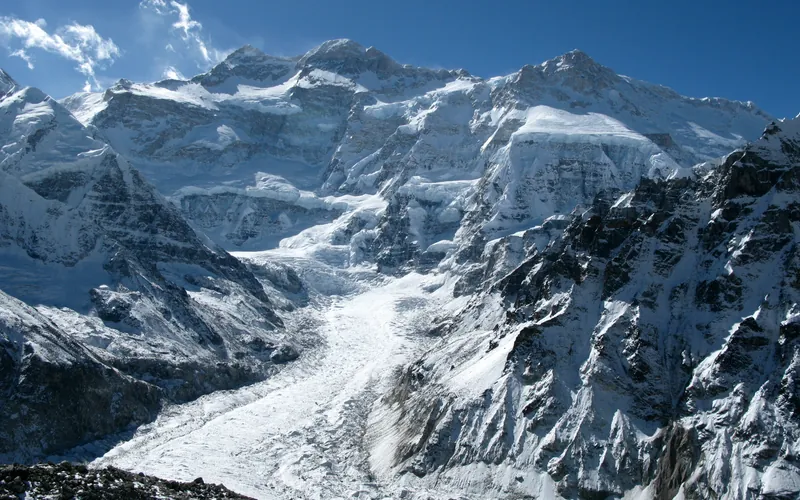
Kangchenjunga, at 8,586 meters (28,169 ft), is the third-highest mountain on Earth, rising on the border between Nepal and Sikkim, India. Honored as sacred by locals, early ascent teams respected local beliefs by stopping short of the actual highest crest. It features immense vertical relief and notorious storm cycles.
Lhotse
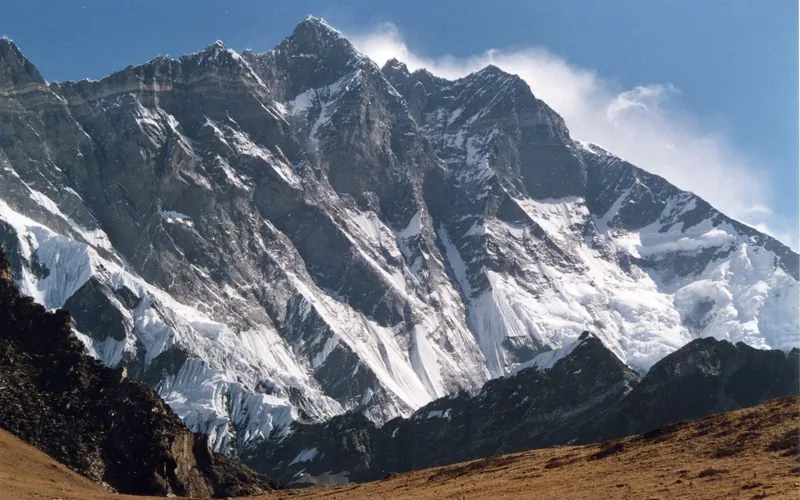
Lhotse, at 8,516 meters (27,940 ft), is the fourth-highest mountain on Earth, connected directly to Mount Everest via the South Col. Renowned for its sheer 3,200-meter South Face, one of the most imposing rock and ice walls in alpinism, the standard route tackles the grueling Lhotse Couloir from the Western Cwm.
Makalu
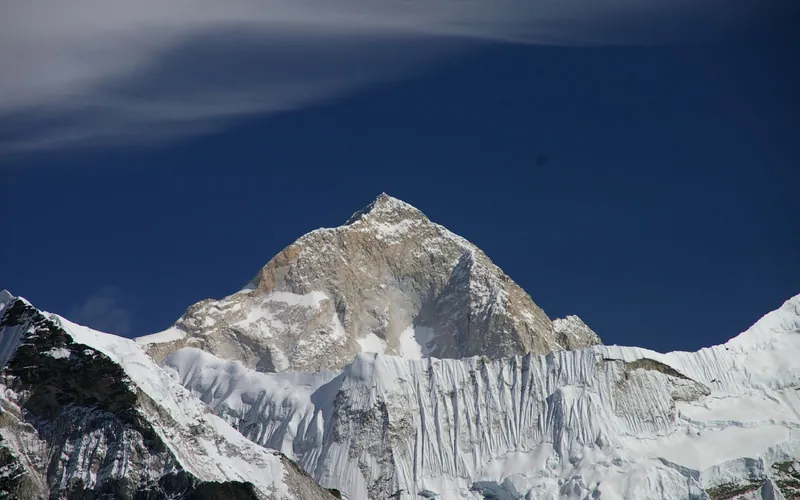
Makalu, at 8,485 meters (27,838 ft), is the fifth-highest mountain on Earth, located 19 km southeast of Mount Everest. An isolated four-sided granite pyramid, it is known for technical knife-edge ridges, severe exposure, and punishing weather, making it one of the most challenging eight-thousanders.
Cho Oyu
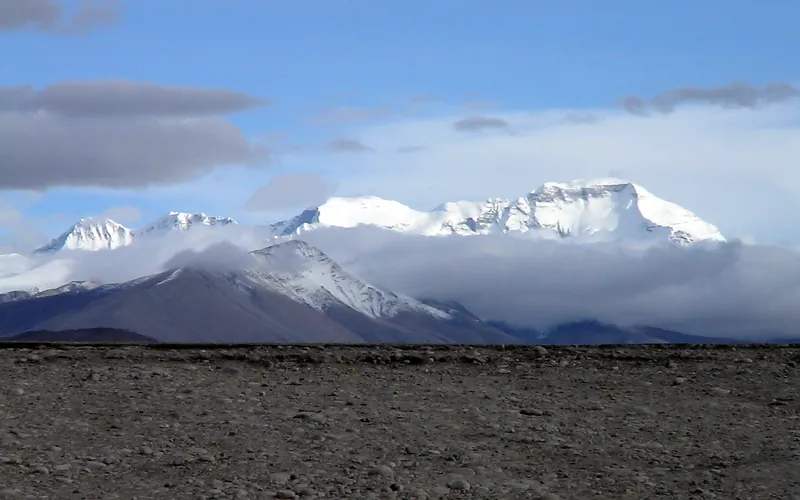
Cho Oyu, at 8,188 meters (26,864 ft), is the sixth-highest mountain in the world, situated 20 km west of Mount Everest. Meaning 'Turquoise Goddess' in Tibetan, it stands on the glaciated Nangpa La trade route between Nepal and Tibet. Its moderate northwest slopes make it the most accessible 8,000-meter peak.
Dhaulagiri I
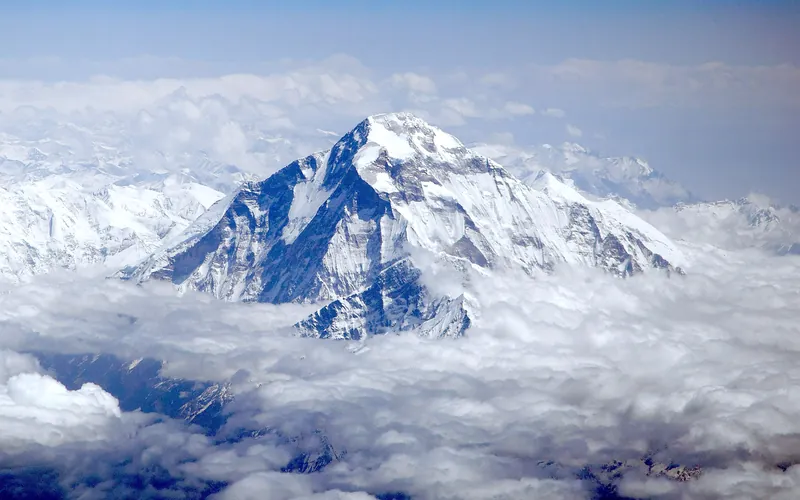
Dhaulagiri I, at 8,167 meters (26,795 ft), is the seventh-highest mountain on Earth and the highest peak situated entirely within Nepal. Rising steeply above the Kali Gandaki Gorge—the deepest gorge on Earth—opposite Annapurna, Dhaulagiri forms a staggering 7,000-meter vertical rise from the river valley.
Manaslu
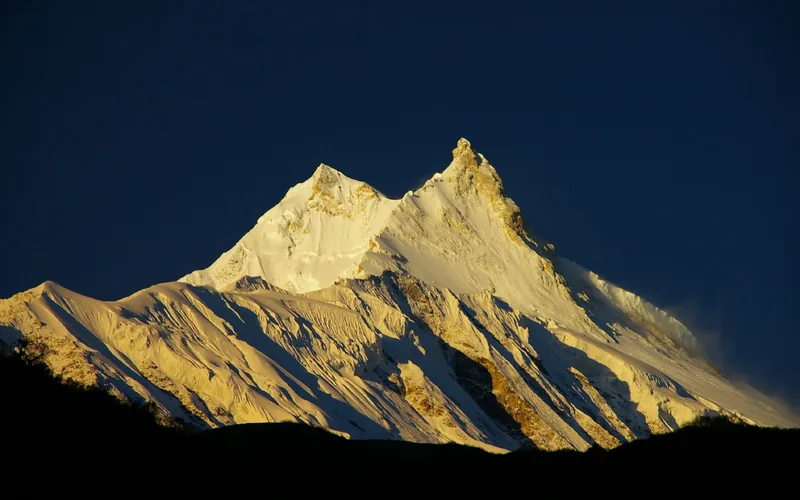
Manaslu, at 8,163 meters (26,781 ft), is the eighth-highest mountain in the world, situated in the Mansiri Himal of west-central Nepal. Known as the 'Mountain of the Spirit', its long ridges and valley glaciers offer dramatic topography culminating in a delicate, exposed knife-edge summit crest.
Nanga Parbat
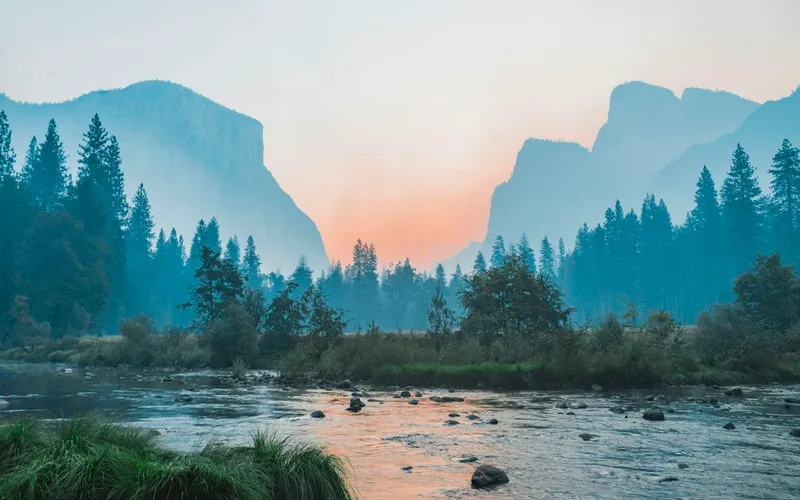
Nanga Parbat, at 8,126 meters (26,660 ft), is the ninth-highest mountain on Earth and the western anchor of the Himalayas in Pakistan. It boasts the Rupal Face, the highest vertical precipice in the world at 4,600 meters from valley floor to summit. Known for profound climbing history, highlighted by Hermann Buhl's legendary solo summit without supplemental oxygen in 1953.
Annapurna I
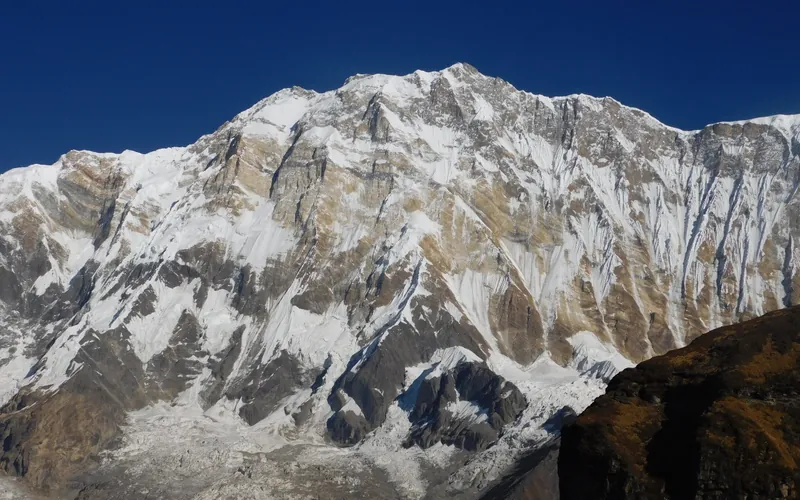
Annapurna I, at 8,091 meters (26,545 ft), is the tenth-highest mountain in the world and historically the first 8,000-meter peak ever summited (June 3, 1950 by Maurice Herzog and Louis Lachenal). Rising above the Annapurna Sanctuary, its north and south walls present extreme avalanche and serac fall hazards.
Gasherbrum I
Gasherbrum I, at 8,080 meters (26,510 ft), is the eleventh-highest mountain on Earth, also known as Hidden Peak or K5. Named by William Martin Conway in 1892 due to its extreme seclusion behind the Gasherbrum ridge, it stands on the border between Pakistan and China. First summited in 1958 by an American expedition led by Nicholas Clinch, it was also the scene of Reinhold Messner and Peter Habeler's historic 1975 alpine-style ascent without supplemental oxygen.
Broad Peak
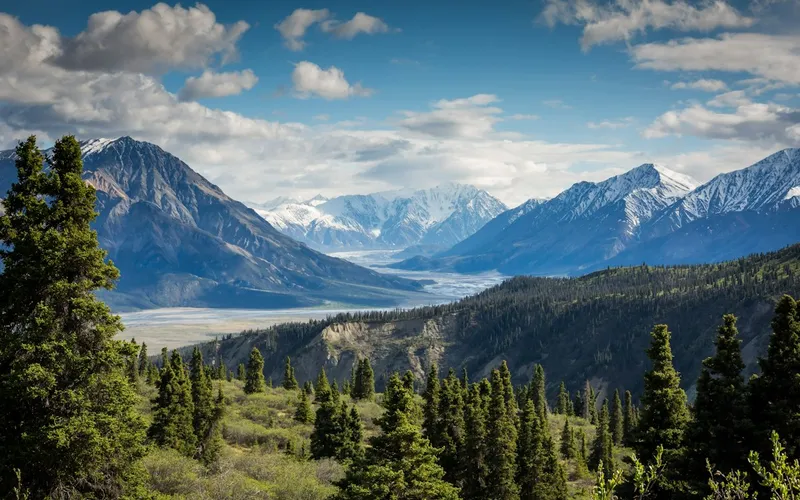
Broad Peak, at 8,051 meters (26,414 ft), is the twelfth-highest mountain in the world. Located in the Karakoram directly across the Godwin-Austen Glacier from K2, it is famous for its 1.5-kilometre-long summit crest. First climbed in lightweight alpine style without supplemental oxygen or high-altitude porters in 1957 by an Austrian team.
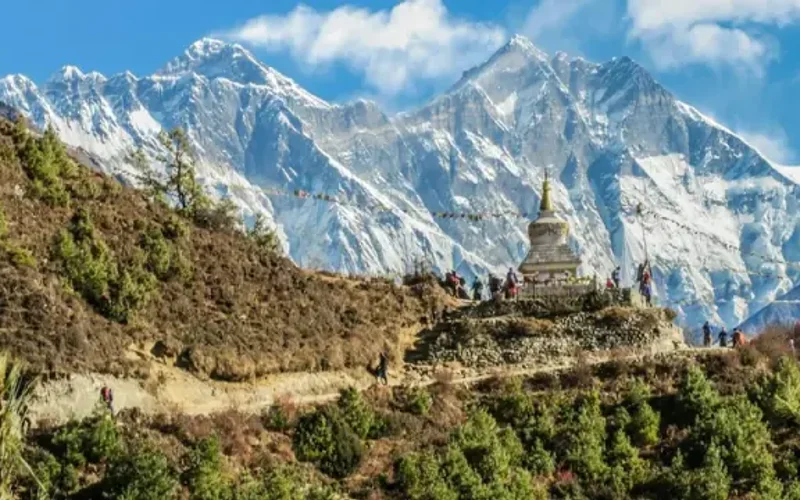
Gasherbrum II
Gasherbrum II, standing at 8,035 meters (26,362 ft), is the thirteenth-highest mountain on Earth and the third-highest peak of the Gasherbrum massif in the Karakoram. Located at the head of the Baltoro Glacier on the Pakistan-China frontier, it features a classic pyramidal profile with challenging ice couloirs. First summited in 1956 by an Austrian team, it was famously climbed in pure alpine style in 1982 by Reinhold Messner, Nazir Sabir, and Sher Khan.
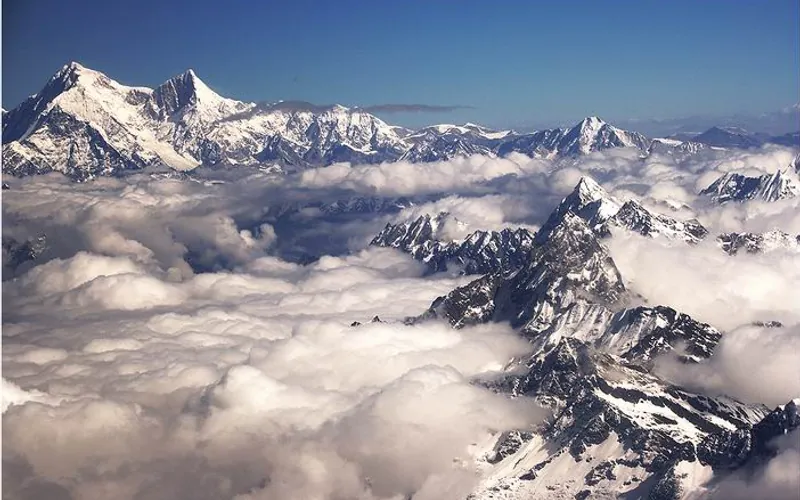
Shishapangma
Shishapangma, at 8,027 meters (26,335 ft), is the fourteenth-highest mountain on Earth and the only 8,000-meter peak situated entirely within Tibetan/Chinese territory. Due to geopolitical restrictions, it was the final eight-thousander to be climbed, summited by a Chinese expedition on May 2, 1964.
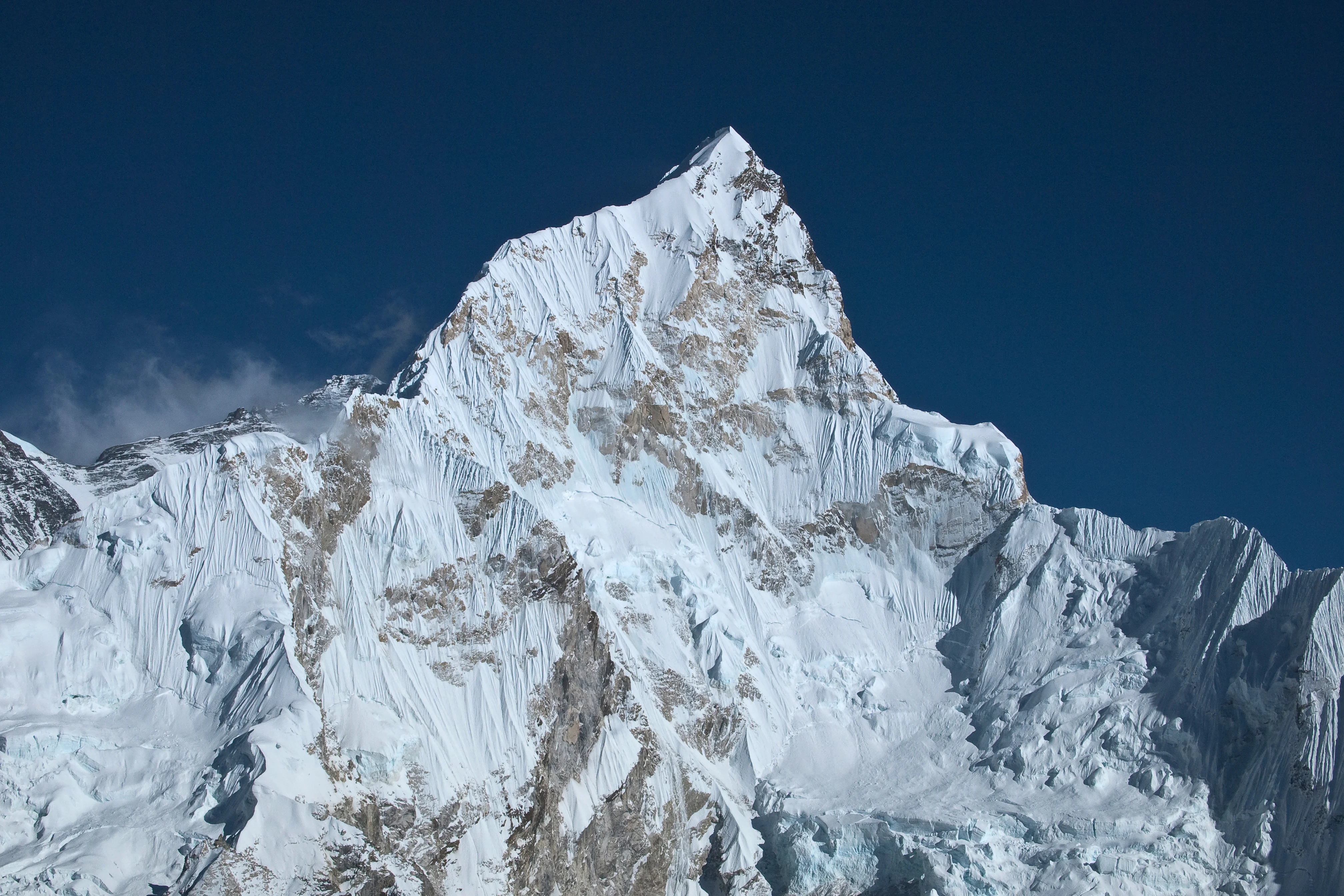
Nuptse
Nuptse is a dramatic 7,861-meter mountain in the Khumbu region of the Nepalese Himalayas, lying two kilometers west-southwest of Mount Everest and forming the formidable southwestern wall of the Western Cwm. In Tibetan, its name translates directly to 'West Peak', signifying its position in the monumental Everest-Lhotse-Nuptse horseshoe. The south face of Nuptse is an extraordinarily steep 2,500-meter wall of ice flutes, vertical rock buttresses, and hanging glaciers that is considered one of the greatest alpine climbing challenges on Earth. The mountain was first climbed on May 16, 1961, by British mountaineer Dennis Davis and Sherpa legend Tashi Sherpa via the North Ridge.
Ascent Route & Topography (5)
View All Routes →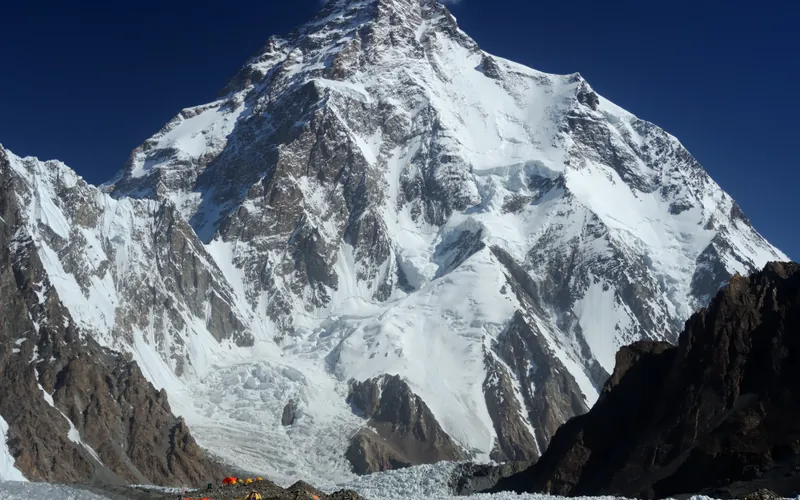
Abruzzi Spur (Southeast Ridge)
The Abruzzi Spur is the most famous and frequently climbed route on K2, tracing the mountain's steep southeast ridge from the Godwin-Austen Glacier to the summit. First explored in 1909 by Prince...
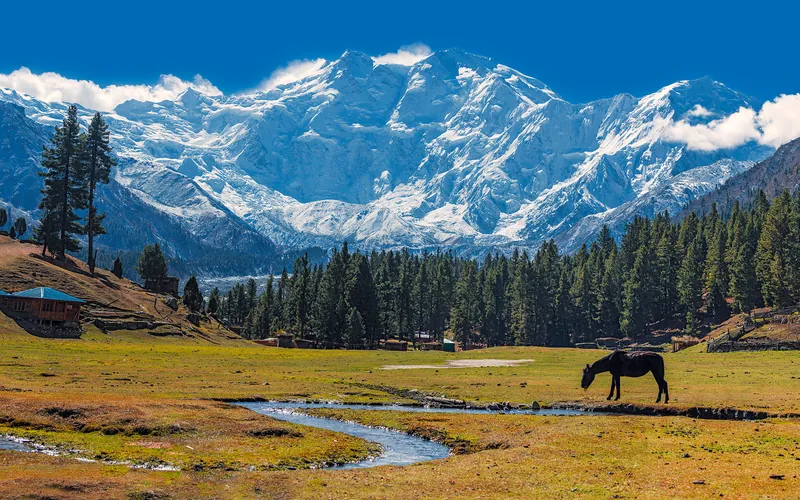
Kinshofer Route (Diamir Face)
The Kinshofer Route is the standard climbing route up the Diamir Face on Nanga Parbat's western side. First climbed in 1962 by German mountaineer Toni Kinshofer and his teammates, it is famous for...
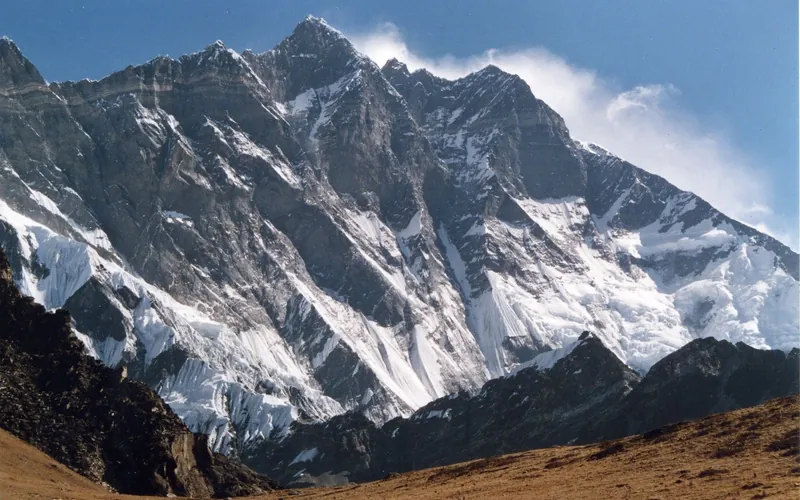
Lhotse Normal Route (West Face & Couloir)
The Normal Route on Lhotse shares the Everest South Col route through the treacherous Khumbu Icefall and across the Western Cwm up to Camp 3 on the Lhotse Face (7,200m). Beyond the Yellow Band, the...
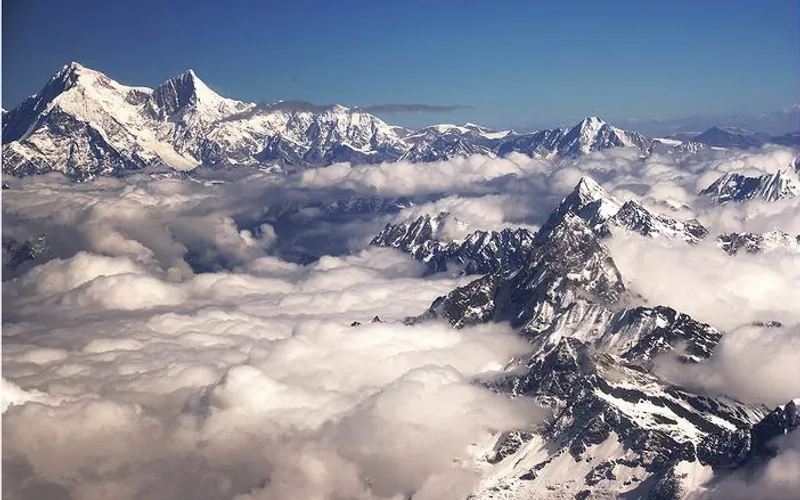
Shishapangma Northwest Ridge (Normal Route)
The Northwest Ridge is the standard route on Shishapangma, situated entirely in Tibet and first ascended by a Chinese expedition in 1964. Approached from the dry, high-altitude plateau of southern...
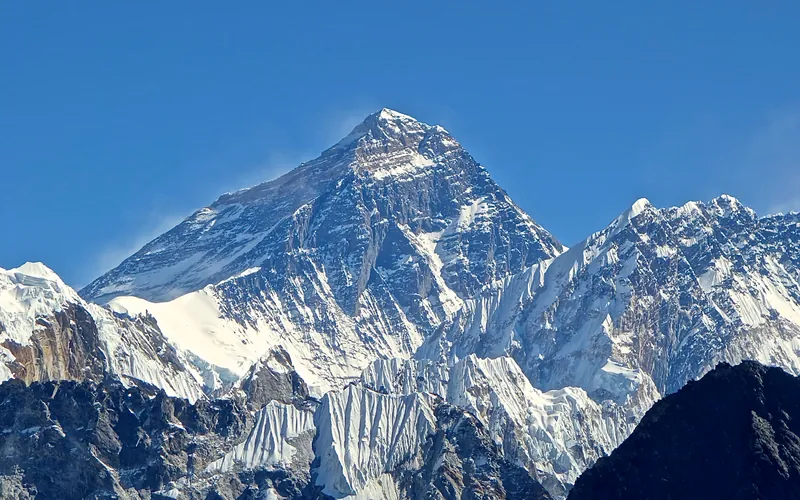
South Col & Southeast Ridge (Normal Route)
The South Col Route along the Southeast Ridge is the historic path of the 1953 first ascent and the most popular route on Mount Everest. Starting from Base Camp on the Khumbu Glacier in Nepal,...
Featured Mountaineers & Pioneers (2)
Browse All Mountaineers →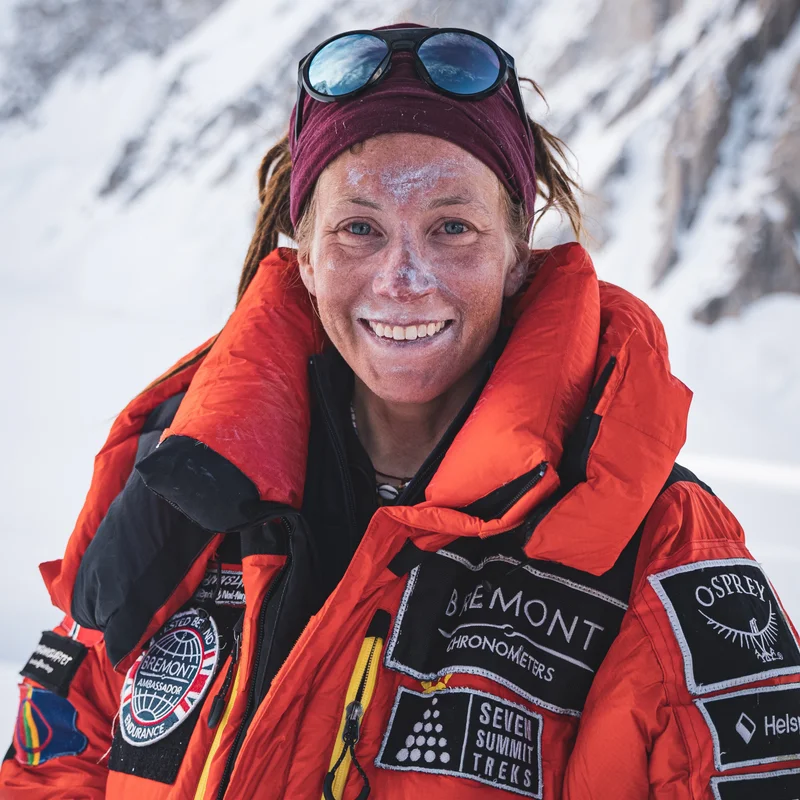
Kristin Harila
Kristin Jonassen Harila was born on March 28, 1986, in Vadsø, a coastal municipality on the Varanger Peninsula in Finnmark, Norway’s northernmost arctic territory. Deeply proud of her indigenous Sámi roots, Harila grew...
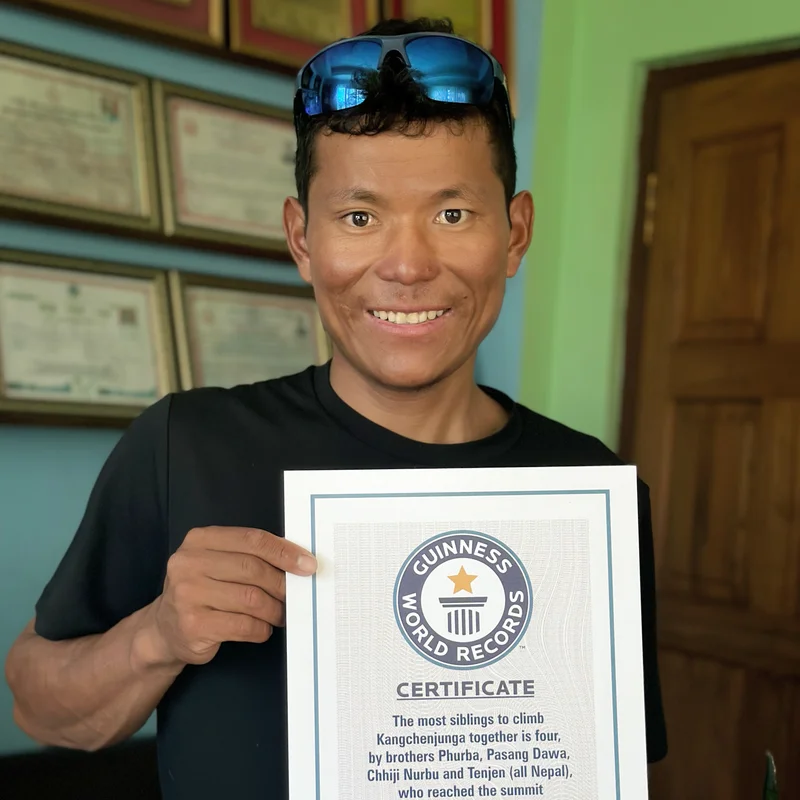
Tenjen Lama Sherpa
Tenjen 'Lama' Sherpa was born around 1988 in the remote, high-altitude village of Na in the Makalu Barun valley of Sankhuwasabha District, eastern Nepal. Like generations of Sherpa before him, Tenjen turned to the...
Documented Expeditions (5)
View All Expeditions →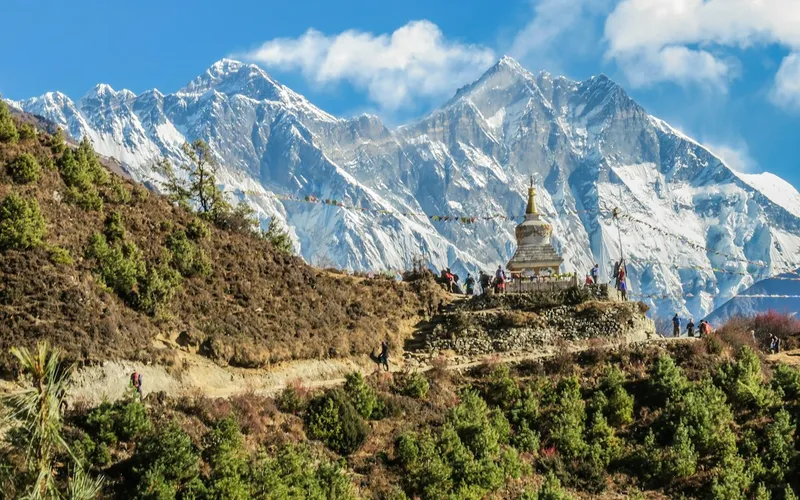
2022 Kristin Harila Bremont 14 Peaks Campaign
During her 2022 Bremont 14 Peaks campaign, Kristin Harila summited 12 eight-thousanders in five months and set the world record for the five highest peaks in 69 days.
2023 Kristin Harila & Tenjen Sherpa K2 Expedition
On July 27, 2023, Kristin Harila and Tenjen (Lama) Sherpa summited K2 (8,611m), setting the official Guinness World Record of 92 days for all 14 eight-thousanders.
2023 Kristin Harila & Tenjen Sherpa Mount Everest Expedition
On May 23, 2023, at 3:15 AM, Kristin Harila and Tenjen (Lama) Sherpa stood atop Mount Everest (8,848.86m), kicking off a record same-day Everest–Lhotse traverse.
2023 Kristin Harila & Tenjen Sherpa Shishapangma Expedition
On April 26, 2023, Kristin Harila and Tenjen (Lama) Sherpa summited Shishapangma (8,027m) via the North Face, starting the official 92-day clock on their historic true-summit world record.
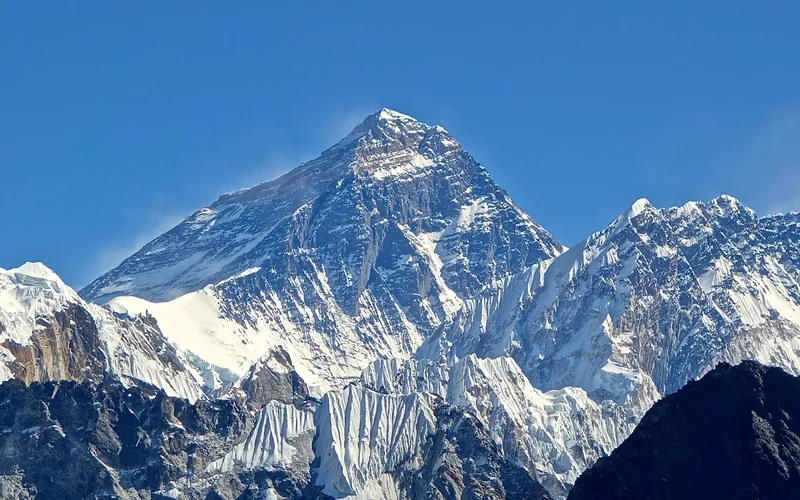
2026 Kristin Harila Everest Triple Crown & No-O2 Ascent
In May 2026, Kristin Harila completed the Everest Triple Crown (Nuptse, Lhotse, Everest) in one season, summiting Mount Everest without supplemental oxygen on May 27.
Documented Sources & Archival Citations
- Kristin Harila Official Summit Archive: 2023 Expeditions ↗(Kristin Harila Official)
Supporting claim: Official expedition timestamps, route choices, and summit records across all 14 eight-thousanders
- Guinness World Records: Fastest true-summit ascent of all 14 eight-thousanders ↗(Guinness World Records)
Supporting claim: Ratification of the joint 92-day world record for Kristin Harila and Tenjen (Lama) Sherpa
- Guinness World Records: Fastest ascent of all mountains over 8,000 m (female) ↗(Guinness World Records)
Supporting claim: Official ratification of the fastest female 14 peaks true-summit record
- Guinness World Records: Reclassifying the 8000ers ↗(Guinness World Records)
Supporting claim: Analysis of Eberhard Jurgalski true-summit criteria and historical reclassification of 14-peak records
- Government of Gilgit-Baltistan Fact-Finding Inquiry Report: Death of High-Altitude Porter on K2 ↗(Government of Gilgit-Baltistan Tourism Department)
Supporting claim: Comprehensive official findings into the Bottleneck tragedy on July 27, 2023
- Anadolu Agency: Inquiry into death of Pakistani porter at K2 clears Norwegian climber ↗(Anadolu Agency)
Supporting claim: Official reporting on the government inquiry findings and rescue efforts in the Bottleneck
Supporting claim: Official announcement of the feature documentary film and international co-production details
- Kristin Harila Official: Savage Mountain Announcement ↗(Kristin Harila Official)
Supporting claim: Official announcement on November 6, 2026 detailing licensed broadcast and streaming rollout
- Norwegian Film Institute: Savage Mountain Production Record ↗(Norwegian Film Institute)
Supporting claim: Official cinematic metadata confirming 100-minute runtime, director Even Sigstad, and September 4, 2026 premiere
- Wikimedia Commons: File:Kristin in 2023.jpg (Original Photograph) ↗(Wikimedia Commons / Thaneswar Guragai)
Supporting claim: Authentic high-altitude photograph of Kristin Harila captured in the Karakoram on July 15, 2023; licensed under CC BY-SA 4.0, cropped and converted to WebP
- Kristin Harila Official: Everest Without Supplemental Oxygen ↗(Kristin Harila Official)
Supporting claim: Documentation of May 27, 2026 no-O2 Everest summit and single-season Triple Crown
- Lama Sherpa Foundation: Mission & Community Initiatives ↗(Lama Sherpa Foundation)
Supporting claim: Documentation of worker safety initiatives, fair working conditions, and education funding for Tenjen sons
Share Exploration
Global Mountain Intelligence
✓ Link copied to clipboard!