
Kozo Komatsu
Kozo Komatsu is an accomplished japan high-altitude mountaineer with 7 certified summits recorded across 7 high-altitude Himalayan expeditions.
Mountain Safety & Conditions Disclaimer: High-altitude climbing, glacial travel, and technical ascents entail severe objective risks including avalanches, serac collapses, rapid weather collapse, and altitude illness. Historical route descriptions and summit claims on Mountainity reflect documented archival sources and must not be used as live operational safety assessments. Local regulations, permits, and physical glacial topography change continuously.
Peer Review: Senior Editorial Board & Historical Reviewers • Editorial Standards
Biographical Record & Archival Chronicle
Kozo Komatsu is an internationally recognized Japan mountaineer. Across 7 campaigns in the Himalayan Database, Kozo Komatsu accomplished 7 verified summits without supplemental bottled oxygen on several ascents, establishing a distinguished career in high-altitude expedition climbing.
Notable Milestones & Key Ascents (3)
Recorded 7 certified Himalayan summits in the Himalayan Database across 7 expeditions
Completed 3 ascents without supplemental oxygen
Summitted across major Himalayan massifs including Dhaulagiri I, Dhaulagiri II, Dhaulagiri III
Key Statistics & Topographic Figures
- Archive Classification
- MOUNTAINEERS
Mountainity Knowledge Corpus
- Verification Status
- Editorially Verified
Archival Standards
- Citation Standard
- Primary Source Verified
Alpine Research Desk
Defined Alpine Terminology & Concepts
- Archival Integrity
- The standard of verifying historical mountain facts, summit claims, and altitudes using primary expeditions journals and geodetic measurements.
Frequently Asked Questions: Kozo Komatsu
What historical significance does this mountaineer hold?
Kozo Komatsu represents an essential chapter in global mountaineering heritage, verified through contemporary expedition journals and archival sources.
How are the facts and records for Kozo Komatsu verified?
All records are checked against peer-reviewed journals, national alpine clubs, geodetic surveys, and the Mountainity Archival Integrity Policy.
Death Zone Summits (1 of 14)
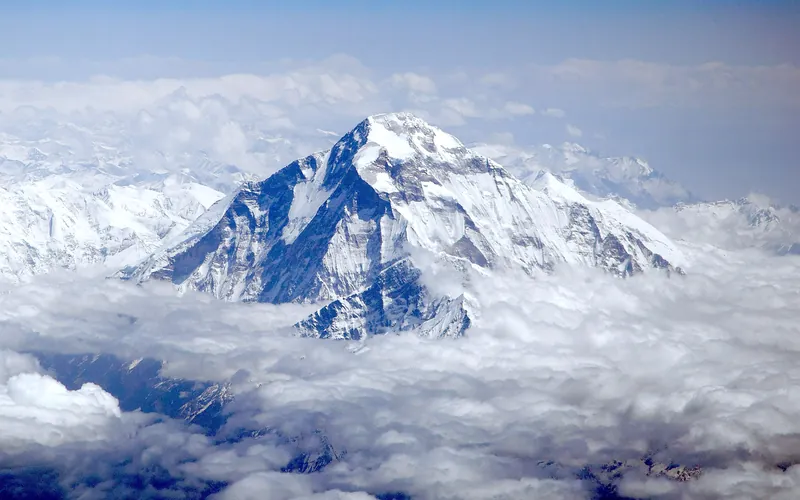

Dhaulagiri I
Dhaulagiri I, at 8,167 meters (26,795 ft), is the seventh-highest mountain on Earth and the highest peak situated entirely within Nepal. Rising steeply above the Kali Gandaki Gorge—the deepest gorge on Earth—opposite Annapurna, Dhaulagiri forms a staggering 7,000-meter vertical rise from the river valley.
Associated Mountain Peaks (5)
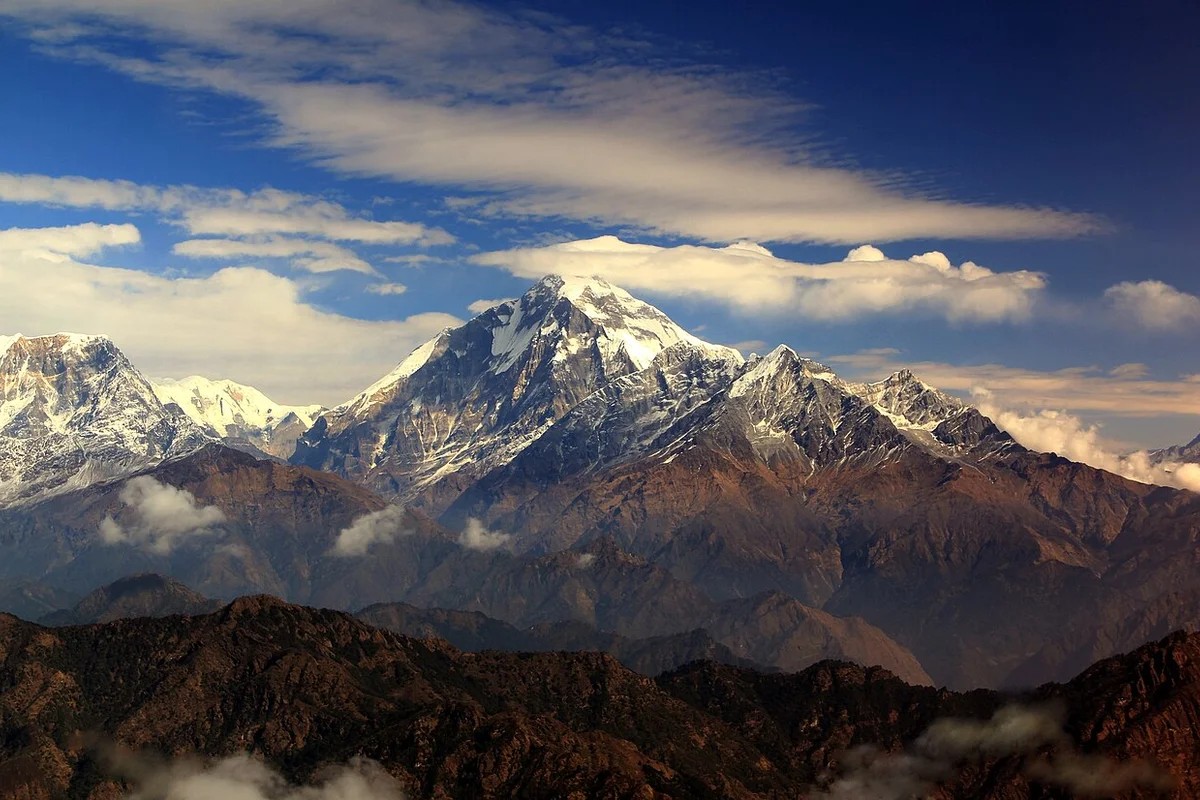
Dhaulagiri II
Dhaulagiri II is the 30th highest mountain on Earth at 7,751 meters (25,430 ft). Standing as the second highest peak of the Dhaulagiri range in western Nepal, it is an independent mountain of immense stature with a prominence of 2,396 meters above the remote Hidden Valley.
Dhaulagiri III
Dhaulagiri III, soaring to 7,715 meters in the rugged Dhaulagiri Himal of west-central Nepal, is the third highest bastion of the legendary Dhaulagiri chain. Anchoring the central spine of the range between Dhaulagiri II and Dhaulagiri V, the peak overlooks the desolate valleys of Dolpo to the north and the precipitous depths of the Kali Gandaki gorge to the east. Dhaulagiri III was first conquered on October 20, 1973, by German climbers Klaus Schreckenbach and Gerhard Haberl alongside Austrian colleagues during a demanding post-monsoon expedition. The ascent entailed negotiating sweeping glaciated ridges, unstable snow mushrooms, and fierce katabatic winds sweeping off the Tibetan plateau. Dhaulagiri III remains one of the purest and most remote high-altitude objectives in the Nepal Himalaya, preserving an untouched wilderness character away from commercial trekking circuits.
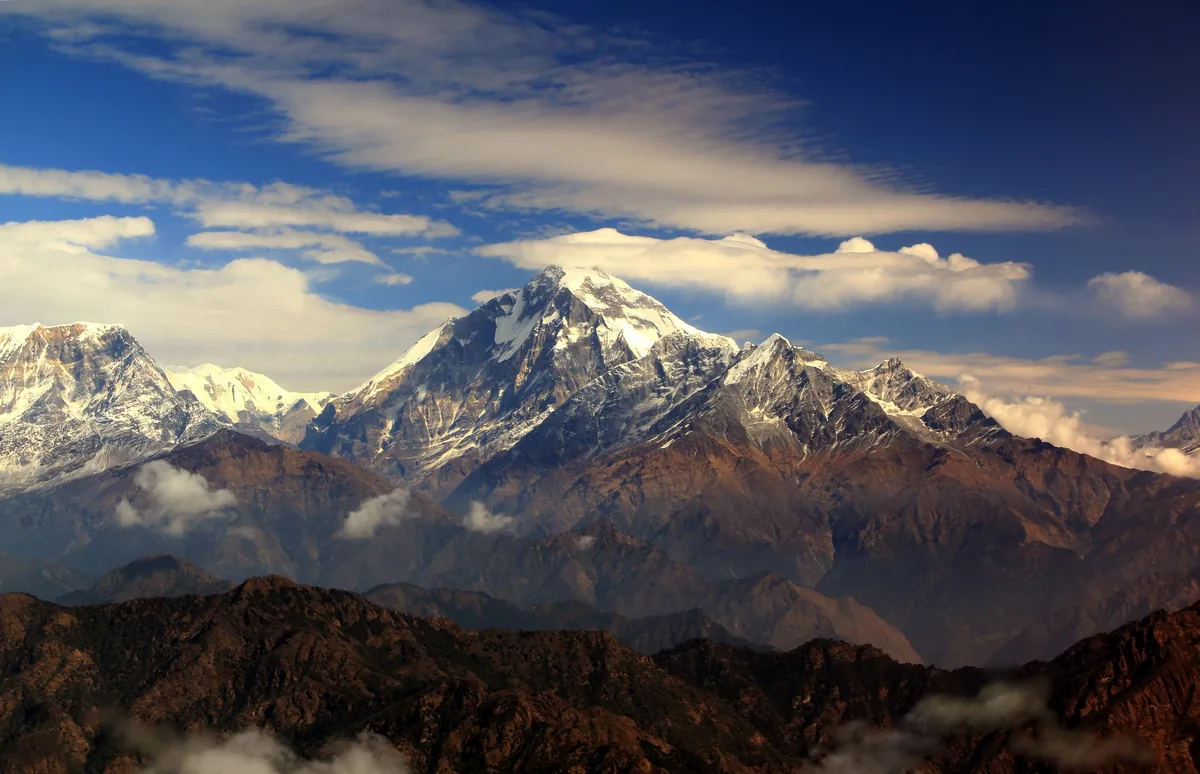
Dhaulagiri IV
Dhaulagiri IV rises to an official surveyed elevation of 7661 meters (25,135 feet) above sea level in the rugged Dhaulagiri Himalaya. Characterized by steep rock headwalls, complex icefalls, and prominent ridgelines, it is positioned among the dramatic high-altitude peaks of Nepal. The mountain's geography features severe glaciated flanks feeding local glacier systems. Climbers approaching Dhaulagiri IV typically establish remote base camps across high moraines before tackling mixed snow and rock buttresses. Modern expeditions require complete self-sufficiency, careful acclimatization schedules, and navigation through active serac zones. The Dhaulagiri massif in Nepal extends 120 km (70 mi) from the Kaligandaki River west to the Bheri. This massif is bounded on the north and southwest by tributaries of the Bheri River and on the southeast by the Myagdi Khola. The range lies 40 miles (65 km) northwest of Annapurna and is located in Myagdi District of Nepal. Documented ascents and attempts on Dhaulagiri IV highlight the technical difficulty and sustained exposure typical of 7,000-meter peaks in this subrange. Variable weather systems, combined with sudden wind shifts and avalanche hazards, make summit pushes demanding undertakings that require seasoned alpine judgment.
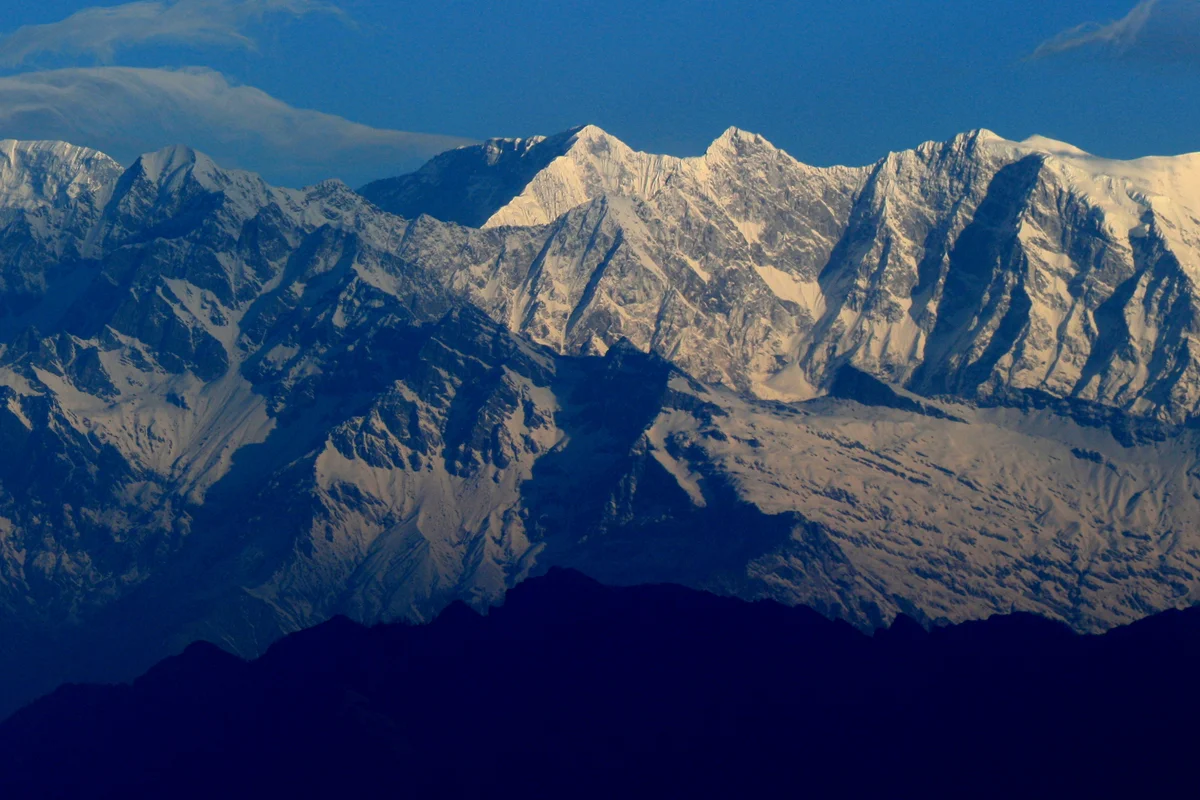
Dhaulagiri V
Dhaulagiri V rises to an official surveyed elevation of 7618 meters (24,993 feet) above sea level in the rugged Dhaulagiri Himalaya. Characterized by steep rock headwalls, complex icefalls, and prominent ridgelines, it is positioned among the dramatic high-altitude peaks of Nepal. The mountain's geography features severe glaciated flanks feeding local glacier systems. Climbers approaching Dhaulagiri V typically establish remote base camps across high moraines before tackling mixed snow and rock buttresses. Modern expeditions require complete self-sufficiency, careful acclimatization schedules, and navigation through active serac zones. Dhaulagiri II (Nepali: धौलागिरी २) is a mountain lying on the border of Karnali Province and Gandaki Province, Nepal. It is part of the Dhaulagiri mountain range in north-central Nepal at an elevation of 7,751 metres (25,430 ft) and with the prominence of 2,391 metres (7,844 ft). Dhaulagiri II is the second highest mountain in the Dhaulagiri mountain range and it was first climbed by an Austrian-American expedition from its northwest side. Documented ascents and attempts on Dhaulagiri V highlight the technical difficulty and sustained exposure typical of 7,000-meter peaks in this subrange. Variable weather systems, combined with sudden wind shifts and avalanche hazards, make summit pushes demanding undertakings that require seasoned alpine judgment.
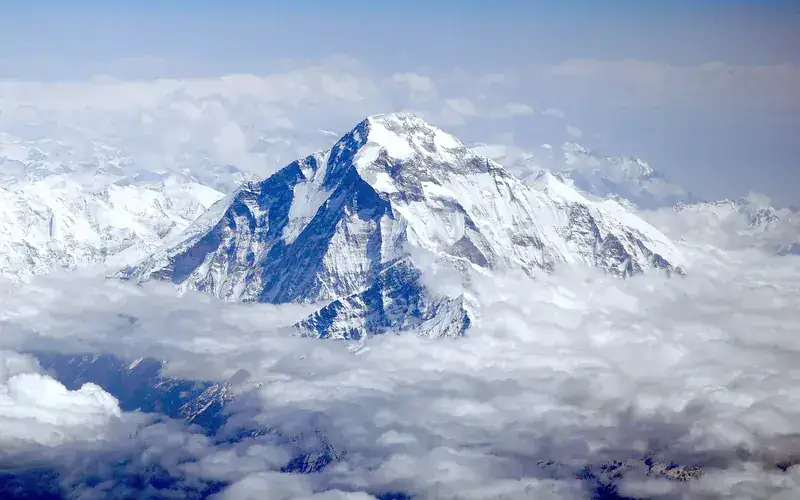
Tsaurabong Peak
Tsaurabong Peak, also known as Chara Ban Peak and White Peak, reaches 6,395 meters south-southeast of Dhaulagiri V in the high Dhaulagiri massif of Myagdi, Nepal. The summit was first attained in 1974 by a Japanese expedition led by Ken Ishihara via the East Ridge. Rising over the deep gorges of the Myagdi Khola, Tsaurabong presents gleaming white ice flutings, fragile cornices, and severe vertical relief.
Geographical Footprint & Mountain Ranges (1)
Documented Expeditions (6)
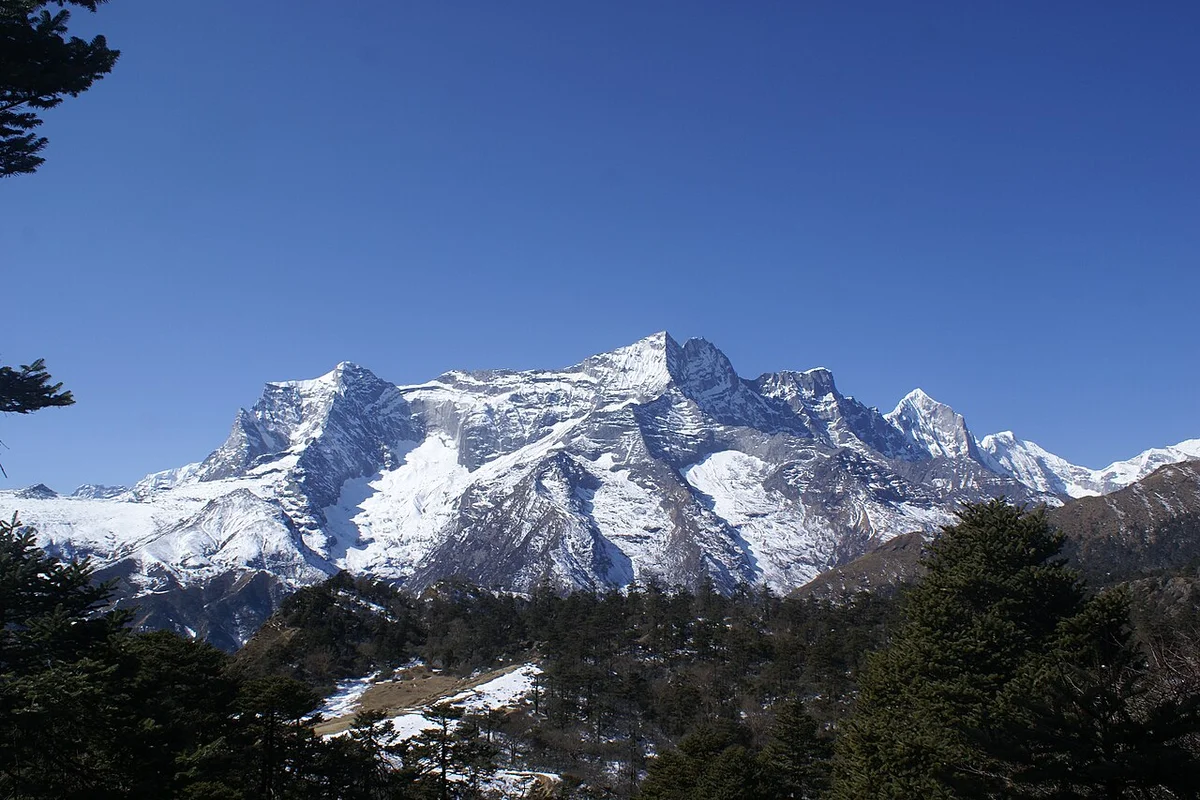
1978 Kozo Komatsu Kwangde Ri Historic Expedition
In 1978, the Japan expedition led by Kozo Komatsu tackled Kwangde Ri (6186m) via the technical S side, demonstrating advanced siege and alpine tactics in the Big Wall era.
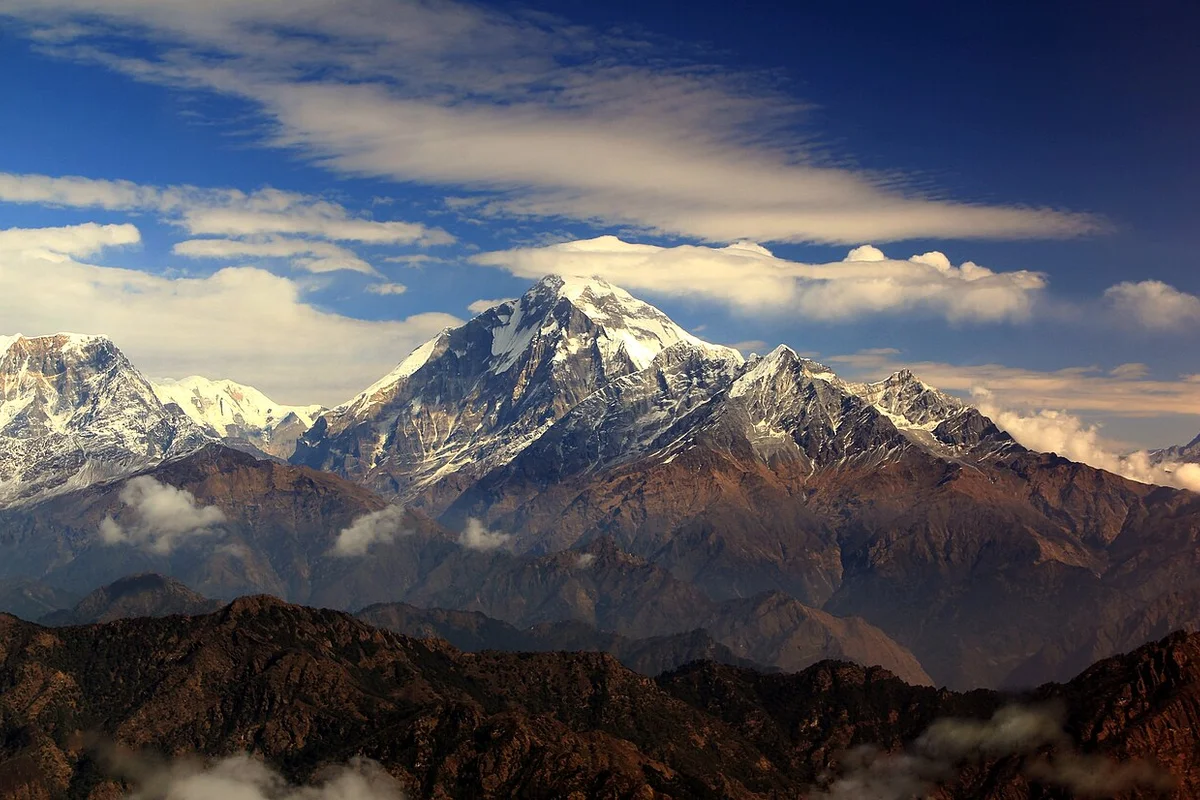
1979 Michiko Takahashi Dhaulagiri II Historic Expedition
In 1979, the Japan expedition led by Michiko Takahashi tackled Dhaulagiri II (7751m) via the technical S side of E Ridge, demonstrating advanced siege and alpine tactics in the Big Wall era.
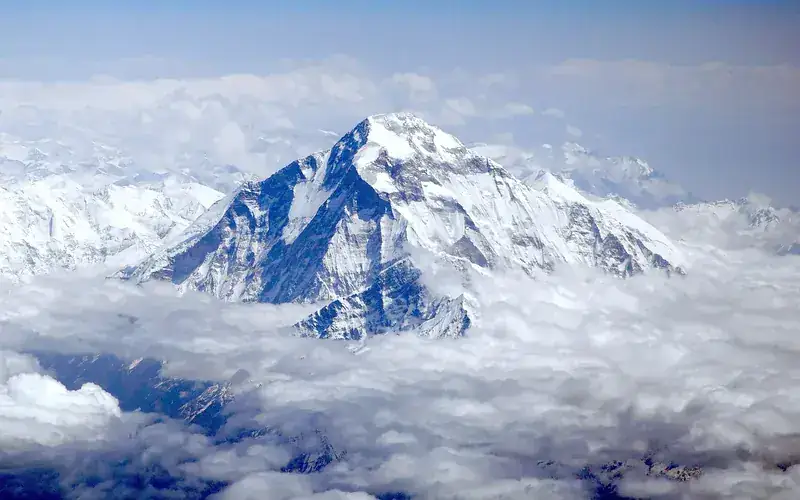
1979 Michiko Takahashi Dhaulagiri III Historic Expedition
In 1979, the Japan expedition led by Michiko Takahashi tackled Dhaulagiri III (7715m) via the technical NE Ridge up; SW Ridge down (from D-II to D-V), demonstrating advanced siege and alpine tactics in the Big Wall era.
1979 Michiko Takahashi Dhaulagiri V Historic Expedition
In 1979, the Japan expedition led by Michiko Takahashi tackled Dhaulagiri V (7618m) via the technical SE Ridge, demonstrating advanced siege and alpine tactics in the Big Wall era.
1982 Norio Sasaki Dhaulagiri I Historic First Ascent
In 1982, the Japan expedition led by Norio Sasaki achieved the historic first ascent of Dhaulagiri I (8167m) via the N Face-NW Ridge, expanding technical alpine boundaries in the Himalayas.
1982 Norio Sasaki Dhaulagiri I Historic First Ascent
In 1982, the Japan expedition led by Norio Sasaki achieved the historic first ascent of Dhaulagiri I (8167m) via the N Face-NW Ridge, pioneering a bold new direct route.
Documented Expedition Partners (13)
Alpinists with documented shared expedition rosters, co-ascents, or collaborative high-altitude campaigns alongside Kozo Komatsu.
Ang Gyalzen Sherpa
Ang Gyalzen Sherpa is a seasoned high-altitude professional from Nepal. Over 11 expeditions documented in the Himalayan Database of Elizabeth Hawley, Ang Gyalzen Sherpa achieved 6 summits, providing critical...
Ang Pasang Sherpa
Ang Pasang Sherpa (born 1984) is a distinguished Nepalese mountaineering leader and high-altitude guide. Across 99 expeditions cataloged in the Himalayan Database, Ang Pasang reached 57 summits, including 25 climbs...
Ang Tshering Sherpa
Ang Tshering Sherpa (born 1981) is a veteran Nepalese mountain guide documented across 58 expeditions in the Himalayan Database. He achieved 13 summits, including 8 without bottled oxygen, on Mount Everest, Cho Oyu, and...
Kuniaki Yagihara
Kuniaki Yagihara is a veteran Japanese mountaineer and former president of the Japanese Alpine Club. Over 13 campaigns in the Himalayan Database, Yagihara achieved 4 summits across Mount Everest, Cho Oyu, Yalung Kang,...
Lhakpa Norbu Sherpa
Lhakpa Norbu Sherpa is an accomplished Nepalese high-altitude mountain guide. In 11 expeditions in the Himalayan Database, he recorded 8 summits across Mount Everest, Cho Oyu, and Ama Dablam.
Michiko Takahashi
Michiko Takahashi is a dedicated Japanese female mountaineer. Over 12 campaigns in the Himalayan Database, Takahashi achieved summits of Cho Oyu and Chhukung Chuli, demonstrating enduring commitment to Himalayan...
Nawang Yonden Sherpa
Nawang Yonden Sherpa (born 1952) is a veteran Nepalese high-altitude mountaineer from the Solukhumbu district. Documented across 16 expeditions in the Himalayan Database, he achieved 9 summits on Mount Everest and Cho...
Nima Dorje Sherpa
Nima Dorje Sherpa is a seasoned high-altitude professional from Nepal. Over 18 expeditions documented in the Himalayan Database of Elizabeth Hawley, Nima Dorje Sherpa achieved 17 summits, providing critical...
Nima Kancha Sherpa
Nima Kancha Sherpa (born 1975) is an experienced Nepalese high-altitude guide whose career encompasses 26 expeditions. Nima Kancha has achieved 19 summits across Mount Everest, Cho Oyu, Baruntse, and Ama Dablam.
Nima Rita Sherpa
Nima Rita Sherpa is an accomplished Nepalese high-altitude mountain guide from the Solukhumbu district. In 11 expeditions in the Himalayan Database, he recorded 7 summits across Mount Everest, Cho Oyu, and Ama Dablam.
Noboru Yamada
Noboru Yamada (February 9, 1950 – February 24, 1989) was one of Japan's greatest high-altitude mountaineers. Yamada climbed nine eight-thousanders, achieving 11 summits across 15 expeditions in the Himalayan Database,...
Phurba Gyalje/Gyalzen Sherpa
Phurba Gyalje Sherpa is an exceptional Nepalese mountain guide boasting a perfect 100% summit success rate across 5 campaigns in the Himalayan Database, summiting Mount Everest, Kangchenjunga, and Cho Oyu.
Yoshitomi Okura
Yoshitomi Okura (born 1951) is a veteran Japanese high-altitude mountaineer and expedition leader. Documented across 18 expeditions in the Himalayan Database, Okura achieved 10 summits, including ascents on Mount...
Contemporary Alpinists & Regional Peers (6)
Notable climbers sharing Japan alpine heritage or active during contemporary climbing epochs.
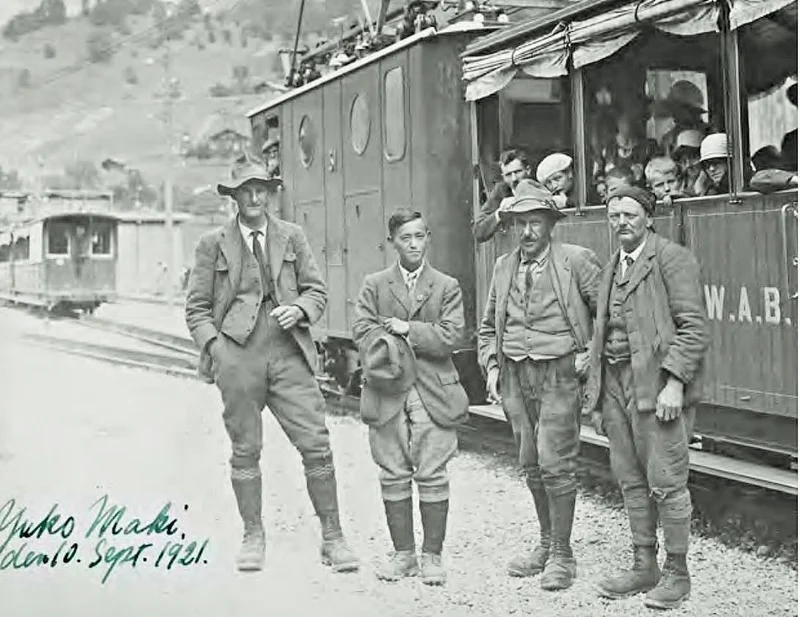
Aritsune Maki
Aritsune Maki (known widely as Maki Yūkō) was born on February 5, 1894, in Sendai, Miyagi Prefecture, Japan. Educated at Keio University, Maki developed into a brilliant technical rock climber in the Japanese Alps...
Chizuko Kono
Chizuko Kono (1946–2013) was a pioneering Japanese female high-altitude mountaineer. Over 8 campaigns in the Himalayan Database, Kono achieved 5 summits across Mount Everest, Cho Oyu, Manaslu, Chhukung Chuli, and...
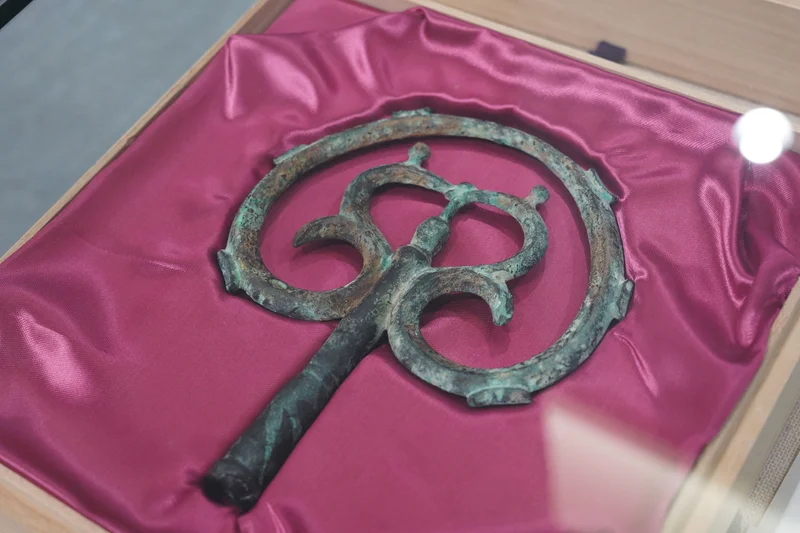
Chōjirō Uji
Chōjirō Uji was born in 1841 in Oyama (present-day Kamiichi), Toyama Prefecture, Japan. Born into a mountain family, Chōjirō became a renowned matagi (traditional wilderness hunter) and expert guide across the rugged...
Eiko Funahashi
Eiko Funahashi is a veteran Japanese female mountaineer. Across 11 campaigns in the Himalayan Database, Funahashi achieved summits of Manaslu (8,163m) and Urkema Peak, showcasing remarkable endurance in high-altitude...
Hirofumi Konishi
Hirofumi Konishi is an experienced Japanese high-altitude climber. Over 13 expeditions in the Himalayan Database, Konishi achieved 3 summits strictly without supplemental oxygen, climbing Cho Oyu, Dhaulagiri I, and Ama...
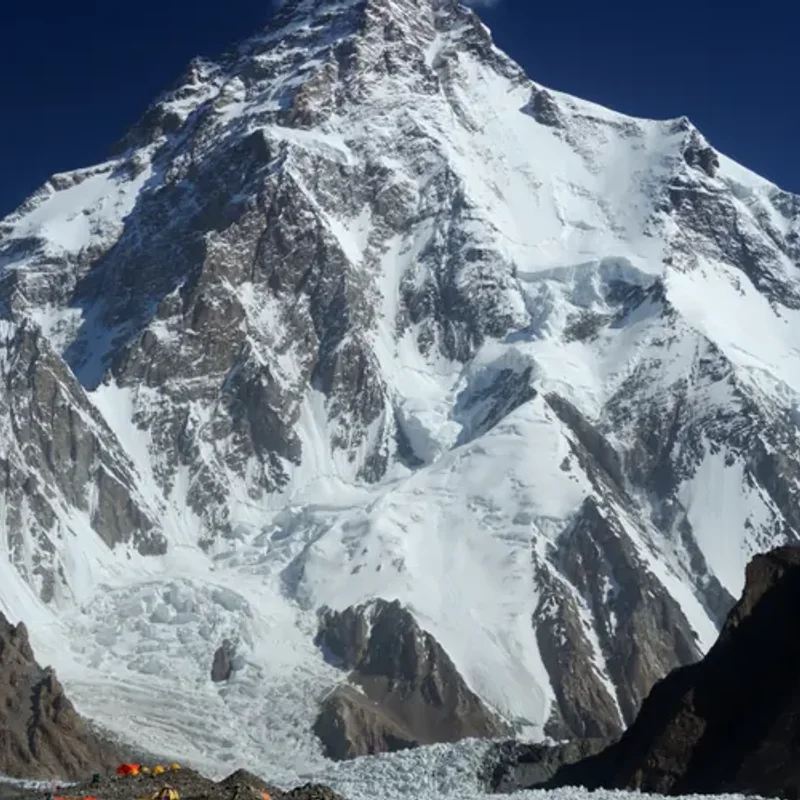
Hiroshi Yoshino
Hiroshi Yoshino became one of Japan's most successful big-ridge mountaineers during the golden era of Japanese Himalayan exploration. In October 1978, on Dhaulagiri I (8,167m), Yoshino was part of the Japanese Alpine...
Documented Sources & Archival Citations
- Archival DatabaseThe Himalayan Database — The Expedition Archives of Elizabeth Hawley ↗(Himalayan Database)
Supporting claim: Historical ascent records, summit chronology, and expedition participation across 7 high-altitude campaigns
- Archival DatabaseHimalayan Mountaineering Expedition Archive(Nepal Mountaineering Association & Himalayan Database)
Supporting claim: Certified career summit total (7 summits) and high-altitude credentials
Share Exploration
Global Mountain Intelligence
✓ Link copied to clipboard!