Pisang Peak
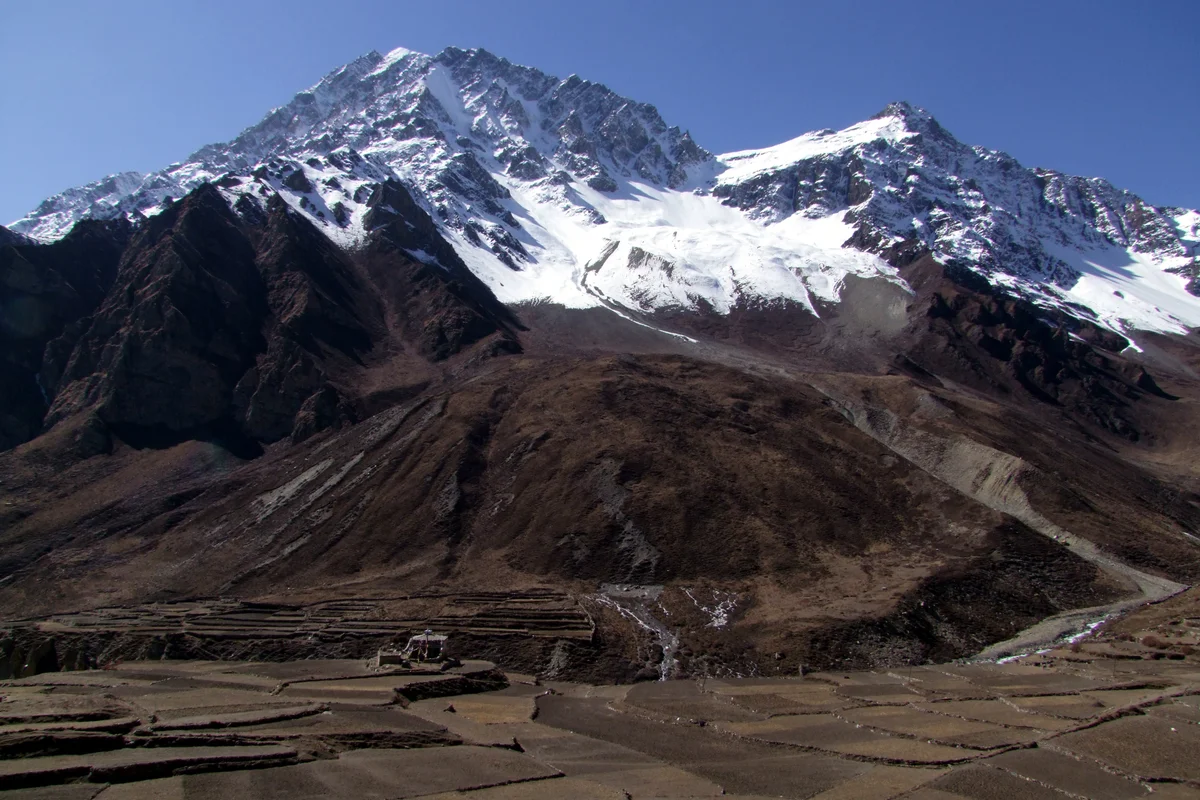
Pisang Peak is a majestic 6,000-meter peak rising to 6091 meters in the Himalaya (Gandaki, Nepal). Documented in international mountaineering archives following its historic first ascent in 1955 by German expedition led by Arthur Böll (Germany), the peak presents technical ridgelines and high-altitude alpine terrain.
 Nepal
Mountain Safety & Conditions Disclaimer: High-altitude climbing, glacial travel, and technical ascents entail severe objective risks including avalanches, serac collapses, rapid weather collapse, and altitude illness. Historical route descriptions and summit claims on Mountainity reflect documented archival sources and must not be used as live operational safety assessments. Local regulations, permits, and physical glacial topography change continuously.
Peer Review: Senior Editorial Board & Historical Reviewers • Editorial Standards
Historic First Ascent
1955Key Statistics & Topographic Figures
- Official Elevation
- 6,091 m (19,984 ft)
Official Cartographic Survey
- Topographic Prominence
- 680 m
Relief Metric
- First Ascent Date
- 1955
German expedition led by Arthur Böll
- Territory Codes
- NP
Sovereignty
Documented Historical Testimony
“The mountains are calling, and we must honor their grandeur with truth and historical precision.”
Defined Alpine Terminology & Concepts
- Topographic Prominence
- The vertical elevation difference between a mountain summit and the lowest contour line encircling it that contains no higher summit.
- Alpine Zone
- The ecological and climatic zone above the treeline characterized by severe weather, glaciers, and permanent snow cover.
Pisang Peak Mountain Weather Forecast
Meteorological Feed Unavailable
Unable to reach meteorological station endpoint. Please verify your connection or retry.
Loading condition...
Target Elevation: 6,091 mSafe summit ridge climbing requires gusts below 40 km/h.
Evaluating thermal loss...
Tracking glacial freezing boundary...
Assessing whiteout and cloud immersion hazards...
High-altitude snow glare requires Category 4 glacier glasses to prevent snow blindness.
Evaluating oxygen partial pressure...
Detailed 14-Day Summit Window & Weather Timeline
Explore day-by-day summit push safety windows, wind shear analysis, and extended multi-day forecasts for Pisang Peak.
Explore Pisang Peak (6,091 m) in Interactive 3D
Inspect steep glacial walls, hanging seracs, ridge approaches, and elevation relief with 360° rotation and terrain tilt.
Plan Your Pisang Peak Expedition Budget & Flights
Model verified government royalties, commercial guide packages, equipment allocations, and compare gateway flights worldwide.
Search & Compare Expedition Flights
Find available flight connections to the airports serving your next mountain adventure.
Pisang Peak Mountaineering Gear Checklist
Customise your equipment plan across 17 technical categories tailored to Pisang Peak's 6,091 m altitude profile, technical route cruxes, and season.
Historical Expeditions (1)
1955 Heinz Steinmetz Pisang Peak Historic First Ascent
In 1955, the W Germany expedition led by Heinz Steinmetz achieved the historic first ascent of Pisang Peak (6091m) via the SW Face-W Ridge?, marking a milestone in Himalayan mountaineering history.
Notable Mountaineers & Expedition Pioneers (1)
Heinz Steinmetz
Heinz Steinmetz was a distinguished German Himalayan pioneer who made history on May 30, 1955, by achieving the first ascent of Annapurna IV (7,525m) with Harald Biller and Gerd Bischoff. In 5 expeditions in the...
Frequently Asked Questions: Pisang Peak
What is the verified elevation of Pisang Peak?
Pisang Peak has an official elevation of 6,091 meters (19,984 feet) above sea level (Official Cartographic Survey).
When was Pisang Peak first climbed?
Pisang Peak was first summited on 1955 by German expedition led by Arthur Böll.
What mountain range and territories encompass Pisang Peak?
Pisang Peak is situated in Gandaki across territory codes NP.
Documented Sources & Archival Citations
- Archival DatabaseThe Himalayan Database — Peak Archive (Pisang) ↗(Elizabeth Hawley / The Himalayan Database)
Supporting claim: Official Nepal Himalayan peak registry, ascent records and geographical classification
Share Exploration
Global Mountain Intelligence
✓ Link copied to clipboard!