The Solitary Step: Killar Khashirov and the 1829 First Ascent of Mount Elbrus
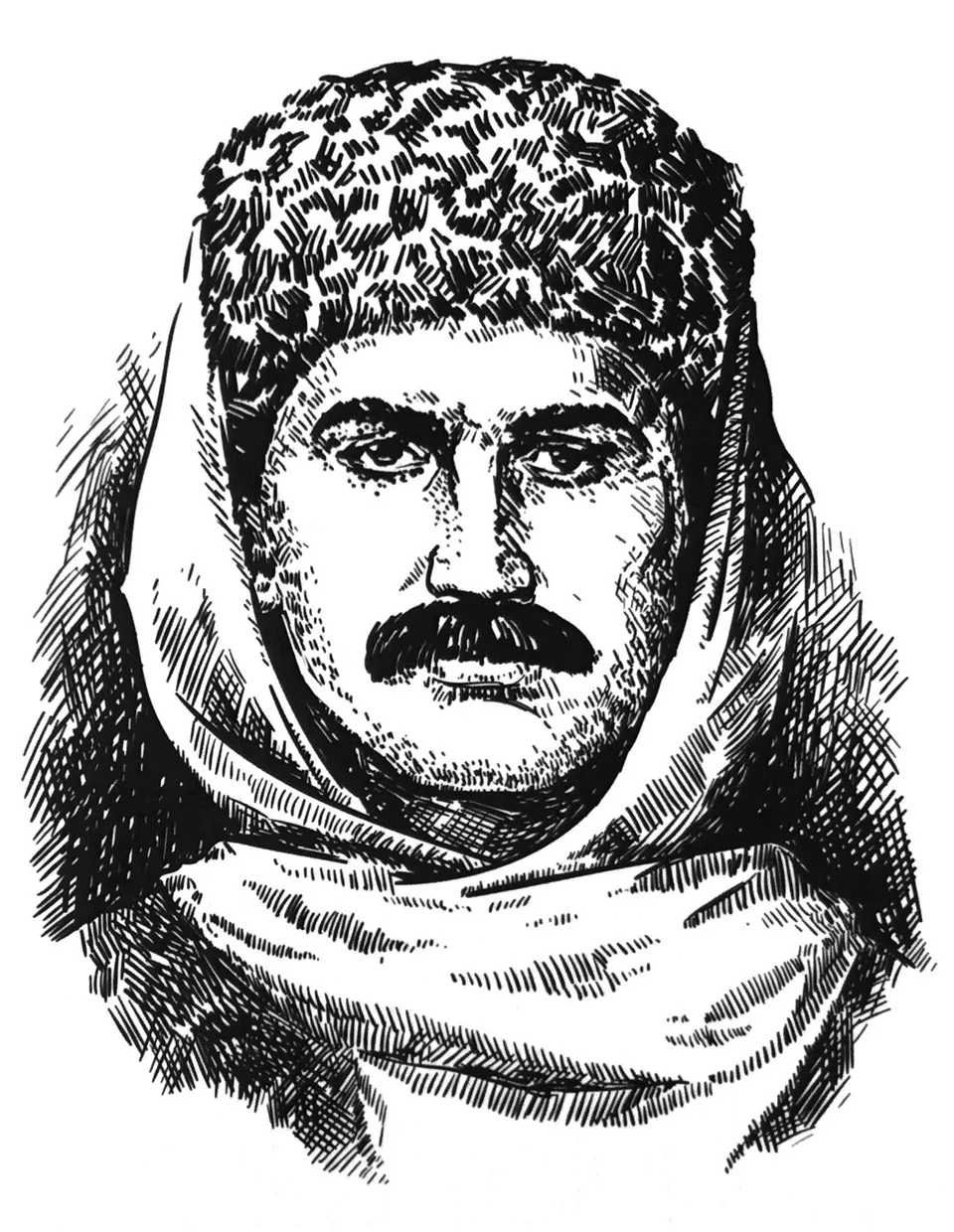
On July 22, 1829, Circassian scout Killar Khashirov climbed solo through thin Arctic air to become the first human being to stand atop Mount Elbrus (5,621 m).
Mountain Safety & Conditions Disclaimer: High-altitude climbing, glacial travel, and technical ascents entail severe objective risks including avalanches, serac collapses, rapid weather collapse, and altitude illness. Historical route descriptions and summit claims on Mountanity reflect documented archival sources and must not be used as live operational safety assessments. Local regulations, permits, and physical glacial topography change continuously.
Peer Review: Senior Editorial Board & Historical Reviewers • Editorial Standards
The Solitary Step: Killar Khashirov and the 1829 First Ascent of Mount Elbrus
The White Colossus of Eurasia
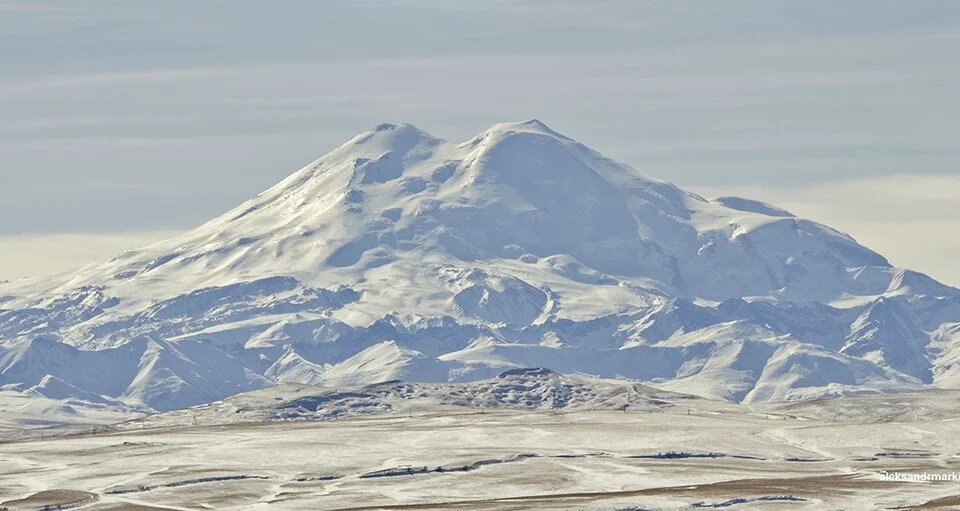
In the northern reaches of the Greater Caucasus, where the Eurasian tectonic plate buckles against the Arabian platform, the colossal twin-headed stratovolcano of Mount Elbrus dominates the sky. Rising to 5,642 metres, Elbrus is Europe’s continental high point and one of the world’s most isolated, prominent mountain summits. Draped under 138 square kilometres of perpetual ice and volcanic firn, the mountain was known to the native Circassians as Oshkhamakhua—the Mountain of Happiness—and to the Balkars as Mingi Taw, the Eternal Mountain.
For centuries, local legends declared Elbrus unclimbable. Severe sub-polar blizzards, sulfurous volcanic fumaroles, and bottomless glacial crevasses guarded its heights. To venture above the snowline was to challenge the wrath of ancient spirits.
In the early summer of 1829, General Georgi Emmanuel, commander of the Russian Caucasus Line and a veteran of the Napoleonic Wars, resolved to lead a massive scientific and military expedition into the high heart of the Caucasus under the sponsorship of the Russian Imperial Academy of Sciences.
“The summit seemed suspended in the blue ether, an unreachable dome of virgin silver above the clouds.” — Heinrich Lenz, Expedition Physicist, 1829
The Scientific Caravan at Dzhily-Su
General Emmanuel gathered an illustrious assembly of European scholars:
- Heinrich Lenz, brilliant twenty-five-year-old physicist who would later formulate Lenz’s Law of electromagnetism.
- Adolph Theodor Kupffer, astronomer and mineralogist.
- Édouard Ménétries, French zoologist and entomologist.
- Carl Anton von Meyer, botanist.
Recognizing that European scientific theory meant nothing without local mountain wisdom, Emmanuel recruited local Circassian and Balkar mountain hunters. Among them was Killar Khashirov (Khillar Khashirov), a lean Kabardian scout renowned throughout the Baksan Valley for his stamina, keen mountain vision, and fearlessness on ice.
The caravan of 650 infantrymen, 350 Cossacks, and dozens of pack horses marched south across the rugged volcanic plateaus to establish Base Camp near the warm mineral springs of Dzhily-Su (2,500 m). Above them, the eastern volcanic dome of Elbrus towered like an insurmountable wall of white fire.
The Assault into the Thin Air
On July 21, 1829, a selected climbing party pushed upward across loose volcanic scree to establish an assault bivouac on a high moraine bench at 3,800 metres. The night was bitterly cold, and howling winds shook the heavy canvas tents.
At 3:00 AM on July 22, the climbers stepped out into the crisp, frozen air. As the sun rose over the Caspian Sea, casting the triangular shadow of Elbrus across Ciscaucasia, the team began ascending the northern ice ramp.
Soon, the brutal physiology of high altitude made itself felt. The European scientists, unaccustomed to hypoxic exertion above 4,000 metres, gasped for breath. Severe headaches, nausea, and frostbite took their toll. One by one, the Cossack soldiers and scientists halted. Physicist Heinrich Lenz made a valiant effort, clawing his way past 4,500 metres before collapsing from sheer physical exhaustion.
Only one man refused to yield: Killar Khashirov.
The Solitary Triumph on the Eastern Dome
Stripping down to his traditional wool felt cloak and leather mountain boots, Khashirov pressed upward alone. Without crampons or modern mountaineering ropes, using only a sturdy wooden iron-tipped walking pole, he skillfully cut steps into the frozen volcanic firn.
Down at Base Camp, General Emmanuel, his staff officers, and the resting scientists watched the high slopes through a high-powered brass telescope. Through the lens, they tracked a tiny black speck moving deliberately across the immense white caldron.
At approximately 11:00 AM on July 22, 1829, Killar Khashirov stepped onto the eastern summit crater of Mount Elbrus at 5,621 metres. He stood where no human being had ever stood before.
Khashirov paused on the summit rim, surrounded by an infinite panorama stretching from the steppes of Russia to the jagged spires of Svaneti. He carefully erected a stone cairn, retrieved a fragment of volcanic basalt as proof of his triumph, and began his careful descent.
When Khashirov strode back into Base Camp that evening, holding the summit rock in his hand, General Emmanuel ordered a 101-gun cannon salute that echoed across the Caucasian gorges. Khashirov was awarded a bounty of 400 silver rubles, and an inscription commemorating his ascent was chiseled into a giant volcanic boulder near Dzhily-Su. His solitary step onto Mount Elbrus opened the grand history of Eurasian high-altitude mountaineering.
Key Statistics & Topographic Figures
- Category
- Caucasian Pioneers
Archival Subject
- Reading Time
- 16 min read
Narrative Length
- Key Mountain
- mount-elbrus
Objective
- Ascent Route
- elbrus-south-normal-route
Topography
- Verification
- Editorially Verified
Archival Standard
Archival Primary Source Quotations
“In the mountains, truth is etched in ice and granite; every step requires unwavering respect for the heights.”
Defined Alpine Terminology & Concepts
- Summit Push
- The final continuous climbing effort from the highest established camp to the mountain apex and back.
- Death Zone Chronicle
- A verified, research-backed historical narrative documenting the human, technical, and environmental realities of an alpine expedition.
Frequently Asked Questions: The Solitary Step: Killar Khashirov and the 1829 First Ascent of Mount Elbrus
What is the core chronicle and subject of "The Solitary Step: Killar Khashirov and the 1829 First Ascent of Mount Elbrus"?
On July 22, 1829, Circassian scout Killar Khashirov climbed solo through thin Arctic air to become the first human being to stand atop Mount Elbrus (5,621 m).
Which mountain peaks and routes are featured in "The Solitary Step: Killar Khashirov and the 1829 First Ascent of Mount Elbrus"?
This narrative documents climbs on mount-elbrus along the elbrus-south-normal-route in Russia.
Which documented expedition is chronicled in this story?
This historical chronicle captures the events of the 1829-khashirov-emmanuel-elbrus-east-peak, verified through contemporary journals and archival records.
Who authored and researched this archival chronicle?
Authored and researched by Mountainity Historical Research Desk, drawing on primary eyewitness testimonies, alpine club registries, and verified summit logs.
What makes this high-altitude chronicle historically significant?
Categorized under "Caucasian Pioneers", this chronicle preserves critical lessons in alpine leadership, survival, tactical speed, and human endurance in the death zone.
Related Mountains
Mount Elbrus
Mount Elbrus is the highest mountain in Russia and Europe, soaring to 5,642 metres as the tenth-most topographically prominent peak on Earth and one of the Seven Summits. Situated in the Russian Caucasus near the Georgian border, this colossal dormant stratovolcano features two ice-capped volcanic domes separated by a high saddle at 5,416 metres. The eastern summit (5,621 m) was first climbed in 1829 by Circassian scout Killar Khashirov, while the true continental high point on the western summit (5,642 m) was conquered in 1874 by Florence Craufurd Grove, Frederick Gardiner, Horace Walker, Peter Knubel, and Balkar guide Ahiya Sottaev.
Documented Sources & Archival Citations
- Voyage au mont Elbrouz et dans le Caucase(General Georgi Emmanuel / Imperial Russian Academy of Sciences)
Supporting claim: Official scientific expedition chronicle of Killar Khashirov's maiden ascent of Mount Elbrus
Accessed/Documented: 1829 - The Frosty Caucasus(Florence Craufurd Grove / Longmans, Green, and Co.)
Supporting claim: Historical analysis of Khashirov's pioneer 1829 ascent cited by early British explorers
Accessed/Documented: 1875