Triumph and Catastrophe: The 1865 Matterhorn First Ascent and the Broken Rope
On July 14, 1865, Edward Whymper, Michel Croz, and Peter Taugwalder Sr. claimed the summit of the Matterhorn, only for four teammates to plunge to their deaths on descent when the rope severed, closing the Golden Age of Alpinism.
Mountain Safety & Conditions Disclaimer: High-altitude climbing, glacial travel, and technical ascents entail severe objective risks including avalanches, serac collapses, rapid weather collapse, and altitude illness. Historical route descriptions and summit claims on Mountanity reflect documented archival sources and must not be used as live operational safety assessments. Local regulations, permits, and physical glacial topography change continuously.
Peer Review: Senior Editorial Board & Historical Reviewers • Editorial Standards
The Race for the Inaccessible Crest
By mid-July 1865, the Matterhorn stood as the final unclimbed sovereign pyramid in the Western Alps. Dozens of attempts by the strongest alpinists in Europe had ended in retreat against its daunting vertical towers and sheer gully systems. When British illustrator Edward Whymper learned that his erstwhile partner, Valtournenche guide Jean-Antoine Carrel, was secretly mounting an all-Italian assault from the south, he moved with frantic haste. Uniting forces with Lord Francis Douglas, the Reverend Charles Hudson, young Douglas Hadow, celebrated Chamonix guide Michel-Auguste Croz, and Zermatt veteran Peter Taugwalder Sr. with his son Peter Jr., Whymper forged a seven-man party resolved to attempt the untried Hörnli Ridge from Zermatt.
Departing on the morning of July 13, the seven climbers established an orderly high bivouac at 3,350 metres. The ridge above proved astonishingly feasible compared to the shattered battlements seen from the valley, yielding steady upward progress along easy ledges and broken couloirs.
Standing on the Peak of Europe
At daybreak on July 14, Croz and Whymper took the lead across the rocky spine. Above the Shoulder, the ridge reared upward in an icy mantle of slabs. Croz stepped forward, clearing footholds with his axe and offering ironclad security to his companions. Surmounting the final headwall, Whymper and Croz unroped and ran the last hundred yards side by side to the virgin summit ridge.
Peering down into the Italian depths, Whymper spotted Carrel’s party hundreds of metres below on the Lion Ridge. Shouting and rolling stones to signal their victory, the British-Swiss-French team exulted in claiming the greatest prize in mountaineering. For one hour under cloudless cobalt skies, the seven men basked in unrivaled glory atop the 4,478-metre crest.
The Fatal Slip on the Descents
The descent began at two o’clock with the party tied onto a single continuous line. Croz led downward, carefully placing the feet of young, exhausted Douglas Hadow on the slippery rock steps below the summit ridge. Reverend Hudson followed, with Lord Douglas behind him, then Peter Taugwalder Sr., Whymper, and young Taugwalder bringing up the rear.
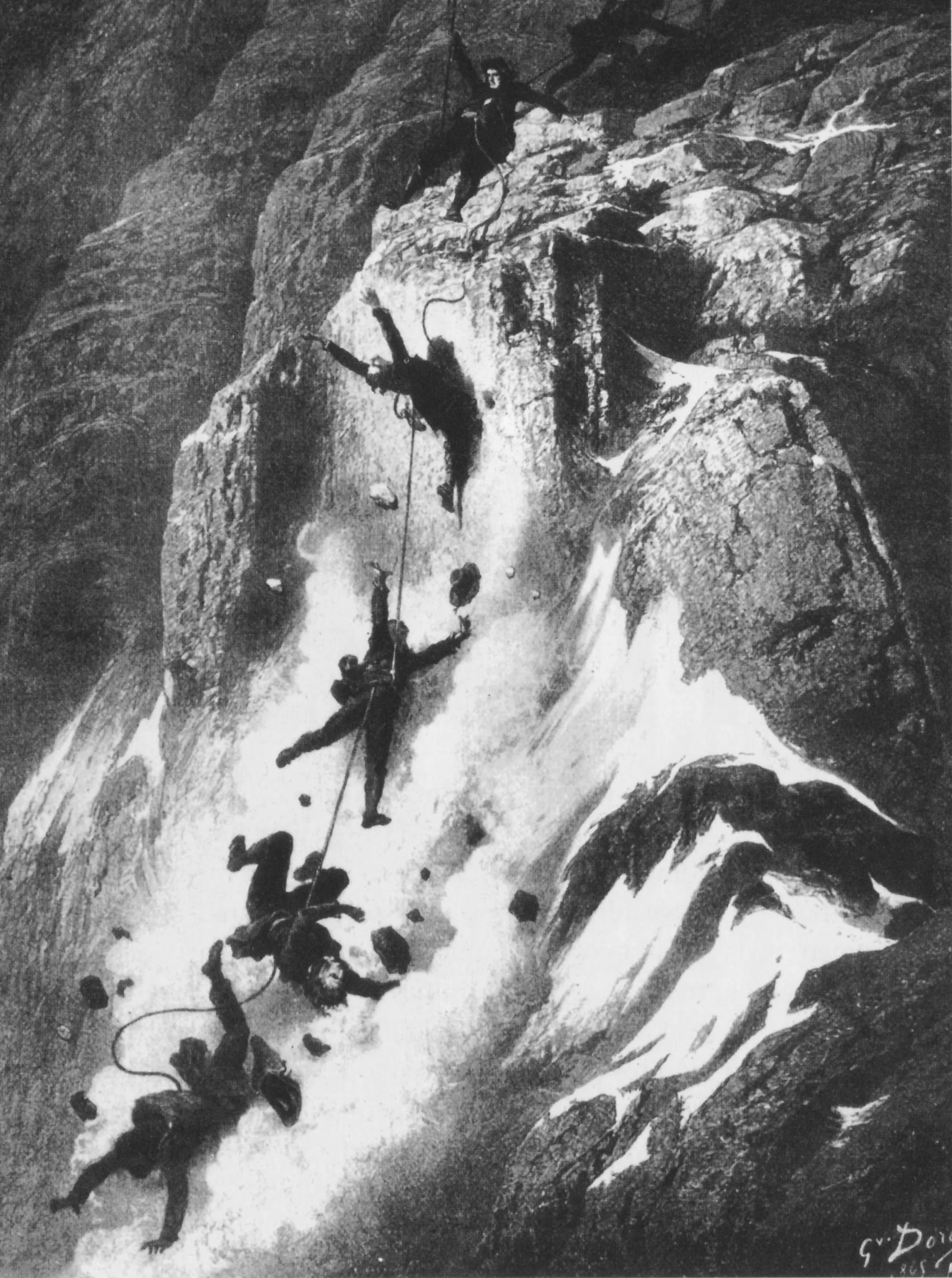
Moments after Croz turned to resume his own downward step, Hadow slipped violently. Both feet flew from the polished slab, striking Croz squarely in the back and knocking the French guide headlong down the cliff. Hudson was instantly ripped from his stance, followed immediately by Lord Douglas. Hearing Croz’s cry, Whymper and Taugwalder Sr. threw themselves backward against the mountain rock, bracing with every ounce of sinew.
For an agonizing fraction of a second, the hemp rope held taut against the tremendous jerk. Then, with a dull snap like a pistol shot, the lifeline between Taugwalder and Lord Douglas severed clean.
The Silence of the Glacier
Whymper and the two Taugwalders watched in paralyzed horror as their four companions tumbled helplessly down the sheer precipice, sliding thousands of feet onto the Matterhorn Glacier below. Left clinging to the mountain, the three survivors spent hours weeping in shock before creeping carefully down the cliffs to safety.
The tragic accident brought an end to the golden decade of alpine exploration. Peter Taugwalder was cruelly accused by suspicious rumors of cutting the cord, though official investigations confirmed the rope had snapped from the sheer violent impact of four falling men. Today, the severed rope fragment remains preserved in the Zermatt Alpine Museum, an eternal testament to mountaineering’s greatest triumph and darkest catastrophe.
Primary Sources: Scrambles Amongst the Alps (Edward Whymper, 1871); The Matterhorn (Guido Rey); Records of the Alpine Club (1865). All archival imagery and text verified.
Key Statistics & Topographic Figures
- Category
- Alpine Golden Age
Archival Subject
- Reading Time
- 16 min read
Narrative Length
- Key Mountain
- matterhorn
Objective
- Ascent Route
- matterhorn-hornli-ridge
Topography
- Verification
- Editorially Verified
Archival Standard
Archival Primary Source Quotations
“In the mountains, truth is etched in ice and granite; every step requires unwavering respect for the heights.”
Defined Alpine Terminology & Concepts
- Summit Push
- The final continuous climbing effort from the highest established camp to the mountain apex and back.
- Death Zone Chronicle
- A verified, research-backed historical narrative documenting the human, technical, and environmental realities of an alpine expedition.
Frequently Asked Questions: Triumph and Catastrophe: The 1865 Matterhorn First Ascent and the Broken Rope
What is the core chronicle and subject of "Triumph and Catastrophe: The 1865 Matterhorn First Ascent and the Broken Rope"?
On July 14, 1865, Edward Whymper, Michel Croz, and Peter Taugwalder Sr. claimed the summit of the Matterhorn, only for four teammates to plunge to their deaths on descent when the rope severed, closing the Golden Age of Alpinism.
Which mountain peaks and routes are featured in "Triumph and Catastrophe: The 1865 Matterhorn First Ascent and the Broken Rope"?
This narrative documents climbs on matterhorn along the matterhorn-hornli-ridge in Switzerland.
Which documented expedition is chronicled in this story?
This historical chronicle captures the events of the 1865-whymper-croz-taugwalder-matterhorn-hornli, verified through contemporary journals and archival records.
Who authored and researched this archival chronicle?
Authored and researched by Mountainity Historical Research Desk, drawing on primary eyewitness testimonies, alpine club registries, and verified summit logs.
What makes this high-altitude chronicle historically significant?
Categorized under "Alpine Golden Age", this chronicle preserves critical lessons in alpine leadership, survival, tactical speed, and human endurance in the death zone.
Related Mountains


Matterhorn
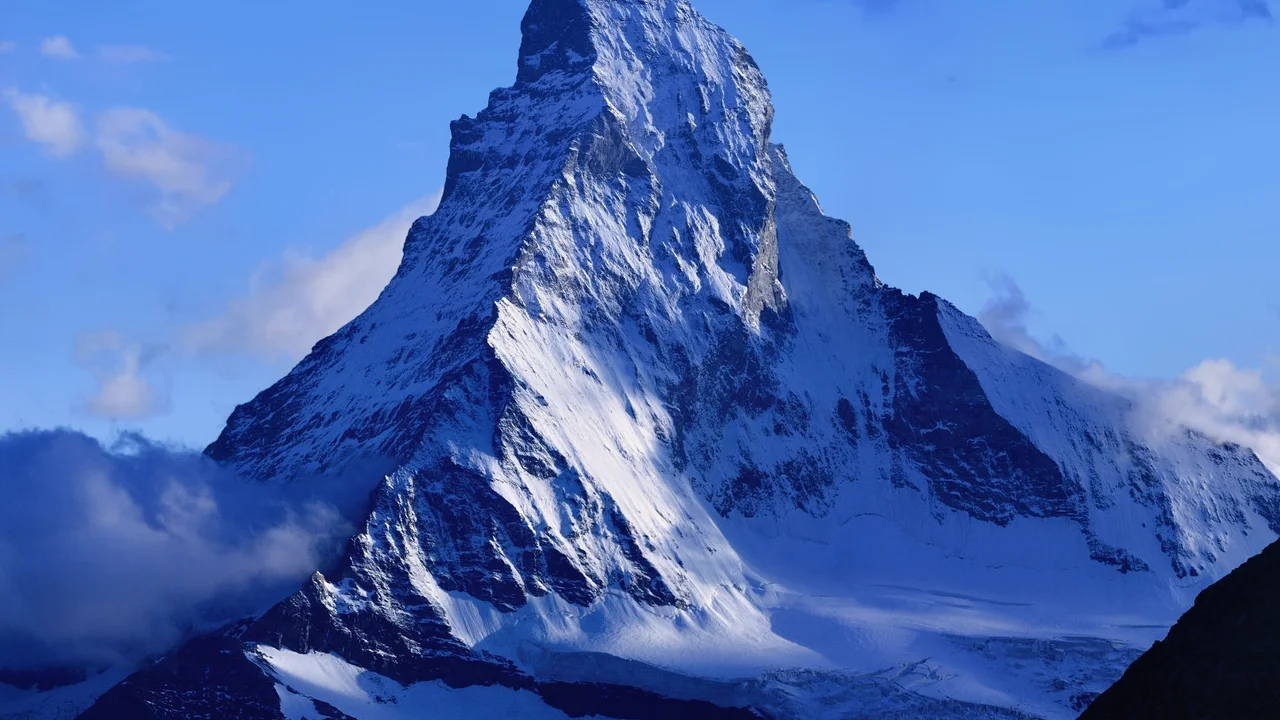
The Matterhorn (Monte Cervino), at 4,478 meters (14,692 ft), is one of the most recognizable and dramatic pyramidal peaks in the world. Straddling the border between Zermatt, Switzerland, and Breuil-Cervinia, Italy, its four triangular faces match the cardinal points of the compass. Its historic first ascent by Edward Whymper on July 14, 1865, and the tragic fall of four teammates on the descent marked the end of the Golden Age of Alpinism.
Documented Sources & Archival Citations
- Scrambles Amongst the Alps in the Years 1860–69(Edward Whymper / John Murray, London)
Supporting claim: Primary first-hand account by Whymper of the 1865 Matterhorn ascent and disaster
Accessed/Documented: 2026