
Switzerland
Switzerland is the geological and cultural heart of the Alpine world — a landlocked confederation of 26 cantons where some of the greatest mountain walls, glaciers, and summits on Earth rise above ancient farming villages and cowbell-ringing high pastures. Home to the Bernese Oberland's Jungfrau, Eiger, and Mönch, and to the Pennine Alps Matterhorn and Dufourspitze, Switzerland has produced iconic guides, pioneered the sport of alpinism, and built the world's most storied mountain guiding tradition.
Peer Review: Senior Editorial Board & Historical Reviewers • Editorial Standards
Key Statistics & Topographic Figures
- Archive Classification
- COUNTRIES
Mountanity Knowledge Corpus
- Verification Status
- Editorially Verified
Archival Standards
- Citation Standard
- Primary Source Verified
Alpine Research Desk
Mountain Peaks in Switzerland
Technical profiles, elevations, and ascent histories for summits located in or spanning Switzerland.
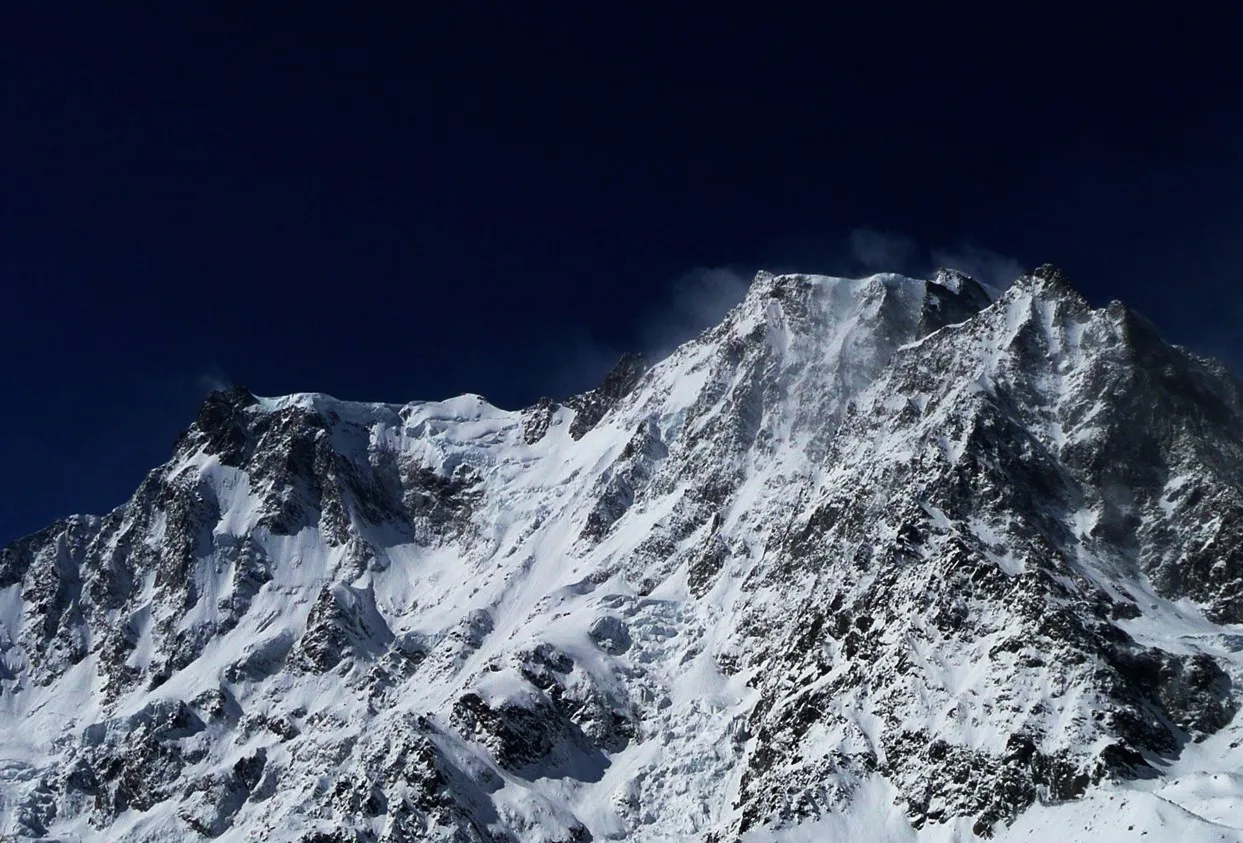

Dufourspitze
The Dufourspitze (4,634 m / 15,203 ft) is the highest peak in Switzerland and the second-highest summit in the Alps, surpassed only by Mont Blanc. It forms the crowning summit of the Monte Rosa massif, a vast fortress of Pennine granite straddling the Swiss-Italian border above Zermatt and Gressoney. Named in honor of Guillaume-Henri Dufour, the Swiss Federal Army general who created the first modern topographic map of Switzerland, the Dufourspitze was first climbed on August 1, 1855, by a party led by the brothers J.G. and C. Smyth with guides Matthäus and Johannes Zumtaugwald, Ulrich Lauener, and Johann and Stephan Biner.
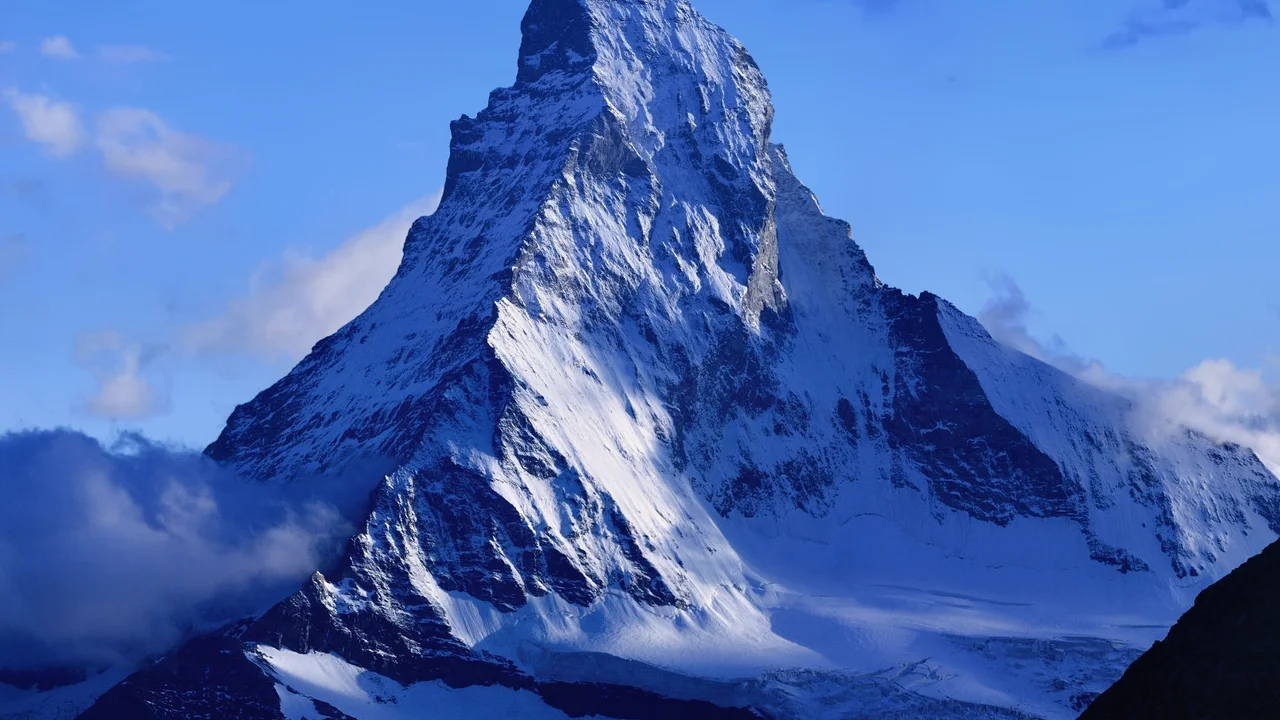
Matterhorn
The Matterhorn (Monte Cervino), at 4,478 meters (14,692 ft), is one of the most recognizable and dramatic pyramidal peaks in the world. Straddling the border between Zermatt, Switzerland, and Breuil-Cervinia, Italy, its four triangular faces match the cardinal points of the compass. Its historic first ascent by Edward Whymper on July 14, 1865, and the tragic fall of four teammates on the descent marked the end of the Golden Age of Alpinism.
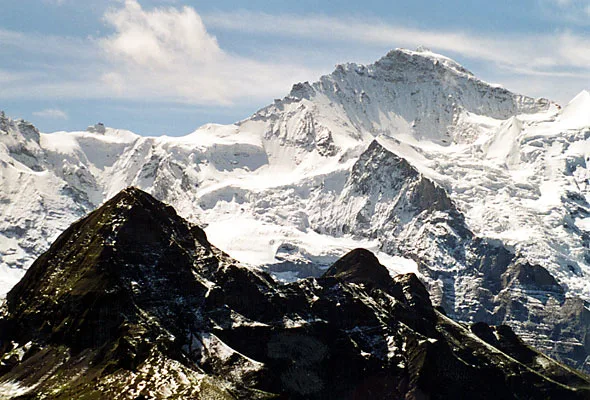
Jungfrau
The Jungfrau (4,158 m / 13,642 ft) is the third-highest peak in the Bernese Oberland and one of the most iconic mountains in the world, forming the spectacular triumvirate with the Eiger and the Mönch above Grindelwald. Its name, meaning 'Young Woman' or 'Virgin,' was given by medieval monks who saw in the long white snowfields of its south face the outline of a white veil. First climbed on August 3, 1811, by Rudolf and Hieronymus Meyer guided by local chamois hunters Joseph Bortis and Alois Volker, the Jungfrau now hosts the Jungfraujoch, at 3,454 m the highest railway station in Europe, designated a UNESCO World Heritage Site.
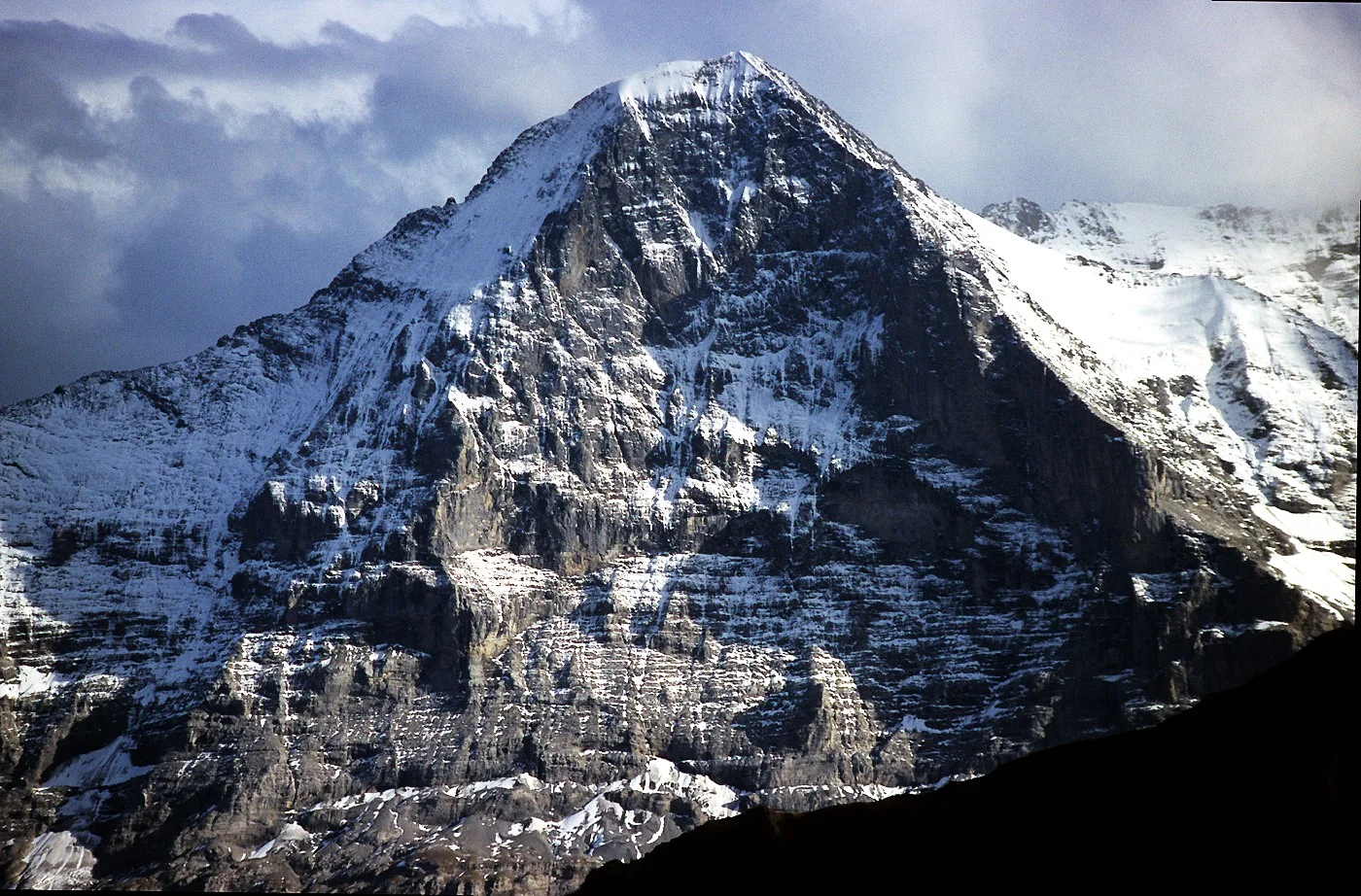
Eiger
The Eiger, standing at 3,967 meters (13,015 ft) in the Bernese Alps of Switzerland, is globally renowned for its monstrous 1,800-meter (5,900 ft) sheer vertical North Face (the *Eiger-Nordwand*). Feared as the *Mordwand* ('Murder Wall') following catastrophic climbing tragedies in the 1930s, it remained the last great problem of the Alps until conquered in July 1938 by Anderl Heckmair, Ludwig Vörg, Heinrich Harrer, and Fritz Kasparek.
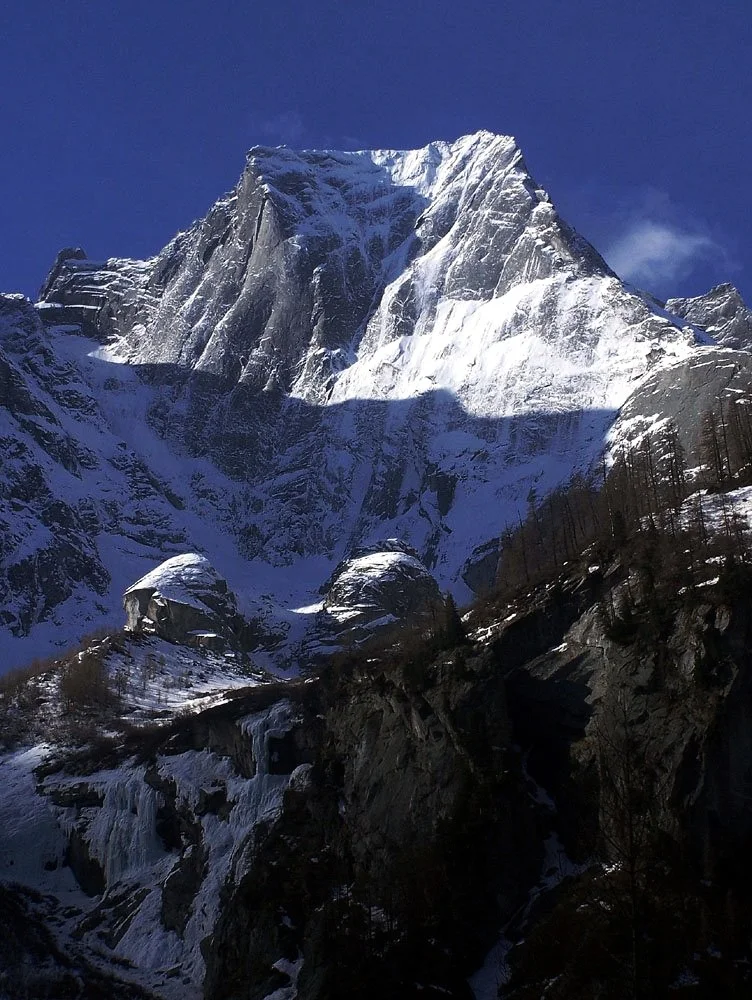
Piz Badile
Piz Badile is a celebrated 3,308-meter granite peak in the Bregaglia Alps on the border of Switzerland and Italy. Its name, derived from the Romansh word for shovel due to its distinctive shape from the north, is legendary for the colossal 800-meter smooth Northeast Face. This smooth sea of vertical granite slabs was first conquered in July 1937 by Italian master Riccardo Cassin with Vittorio Ratti and Gino Esposito, alongside Mario Molteni and Giuseppe Valsecchi, marking one of the Six Great North Faces of the Alps.
Mountain Ranges Spanning Switzerland
Geographic mountain massifs, regional topography, and glaciated chains within Switzerland.
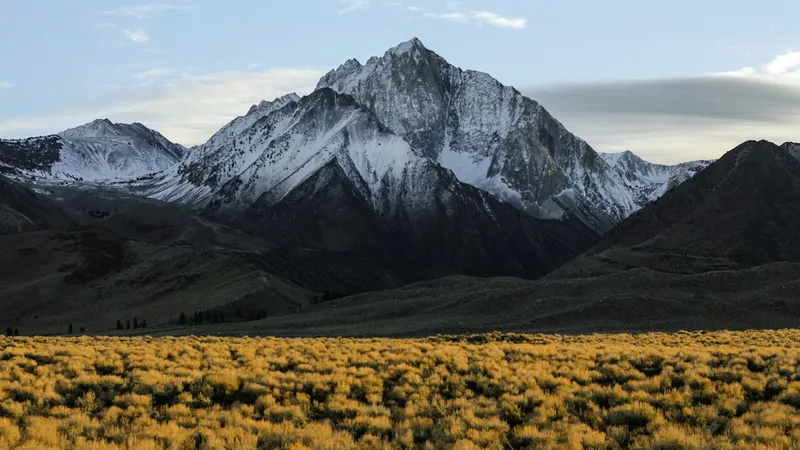
European Alps
The historic cradle of modern mountaineering, extending in an arc across central Europe. Featuring classic granite massifs, iconic glaciers, and historic summits including Mont Blanc, the Matterhorn, and the Grandes Jorasses.
Documented Climbing Routes
Classic lines of ascent, technical difficulties, and objective hazards across Switzerland's summits.
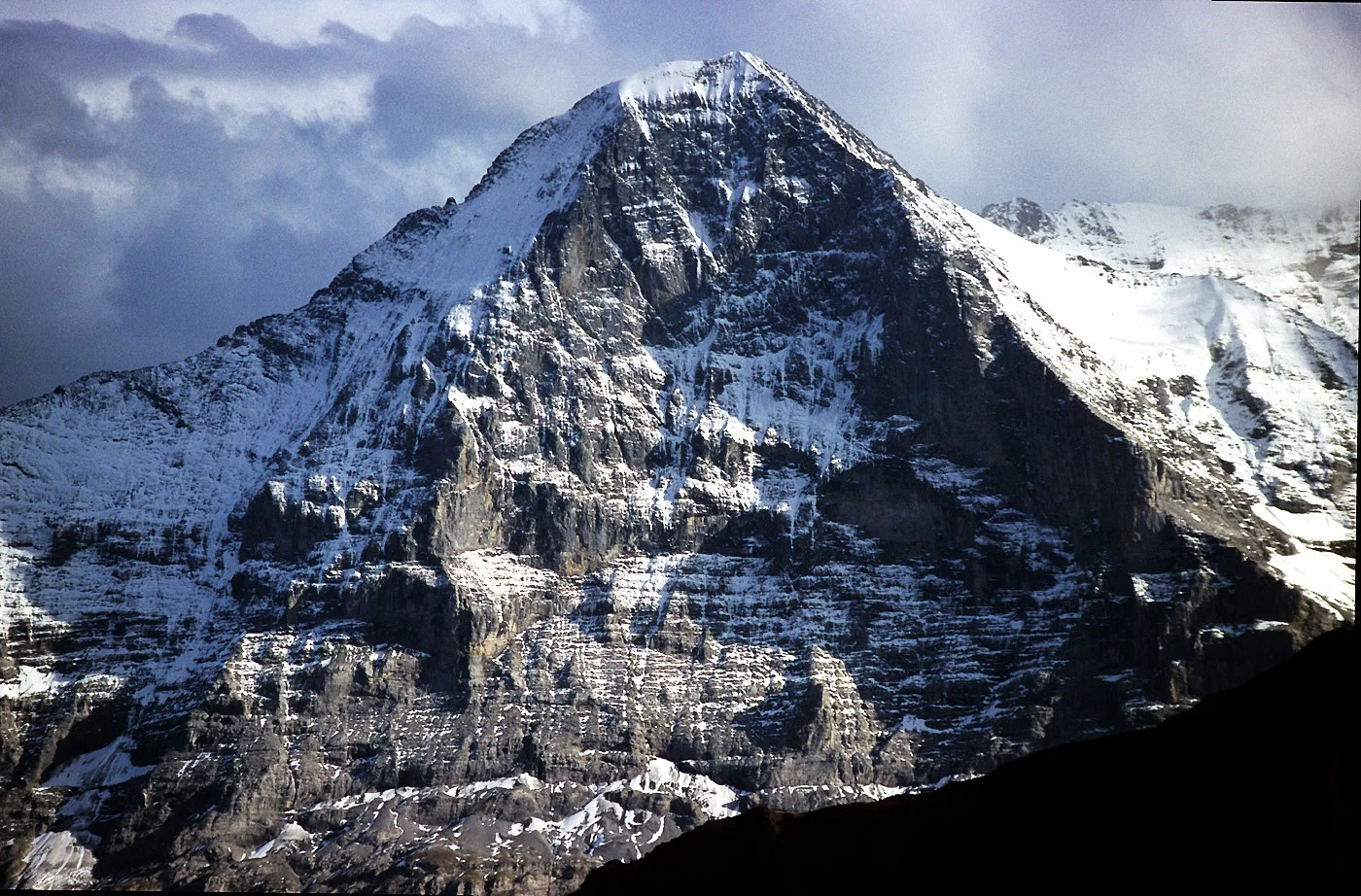
Eiger North Face (1938 Heckmair Route)
The legendary 1,800-meter original route up the Eiger North Face (3,967m), first climbed between July 21 and 24, 1938, by Anderl Heckmair, Ludwig Vörg, Heinrich Harrer, and Fritz Kasparek. Negotiating an intricate, terrifying labyrinth of down-sloping limestone ledges, friable verglas, and hanging icefields, the route traverses the notorious Hinterstoisser Traverse, Swallow's Nest, the First and Second Icefields, the Death Bivouac, the Ramp, the Traverse of the Gods, and the sinister snowfield known as the White Spider before conquering the Exit Cracks to reach the summit.
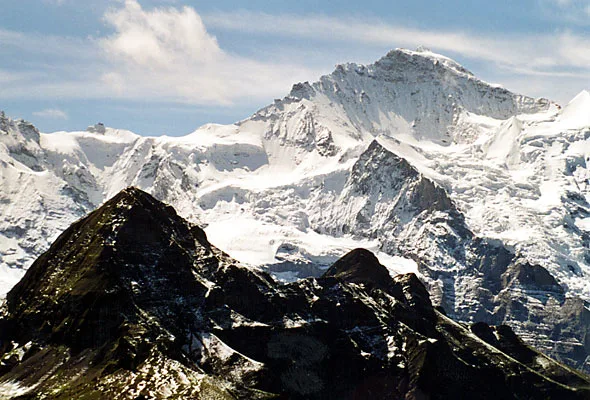
Jungfrau Rottalgrat (Rottal Ridge)
The Jungfrau Rottalgrat (Rottal Ridge) is the classic mountaineer's route to the Jungfrau summit (4,158 m), ascending from the Jungfraujoch railway station (3,454 m) via the Rottalsattel and the exposed south-west ridge to the summit snowfield. A serious high-alpine route at altitude, demanding crevassed glacier travel on the upper Jungfraufirn, steep mixed snow and rock on the Rottalgrat proper, and experienced navigation in frequent cloud or storm, the Rottalgrat is graded AD and represents the finest true mountaineer's day on the Jungfrau — distinct from the tourist ascent by the Jungfraujoch railway.
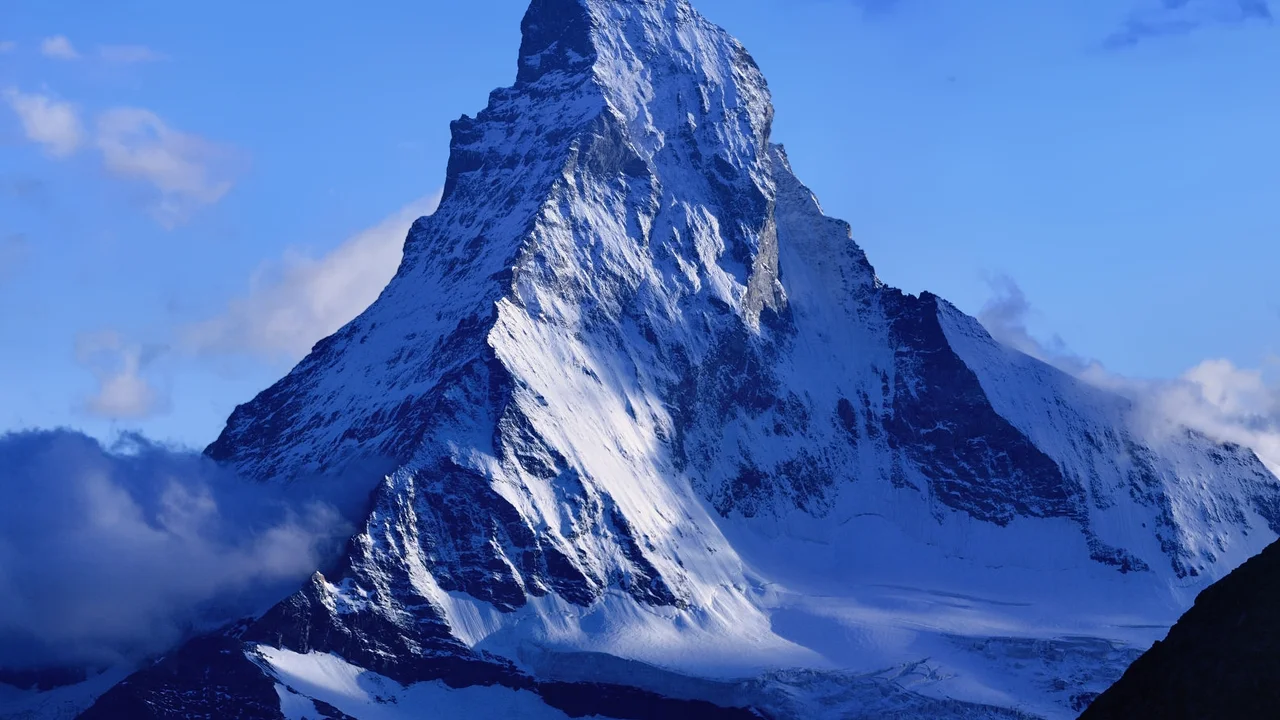
Hörnli Ridge (Normal Route)
The Hörnli Ridge (Hörnligrat) is the northeast ridge of the Matterhorn and the standard normal route from Zermatt. Starting from the Hörnli Hut (3,260m), the route follows the sharp, crumbling crystalline schist ridge, traversing steep rock steps, the Solvay emergency refuge (4,003m), and the steep upper Moseley Slabs. Fixed ropes assist climbers over the steep summit headwall (the Shoulder) before reaching the knife-edge Swiss summit crest at 4,478 meters. First climbed on July 14, 1865, by Edward Whymper's party.
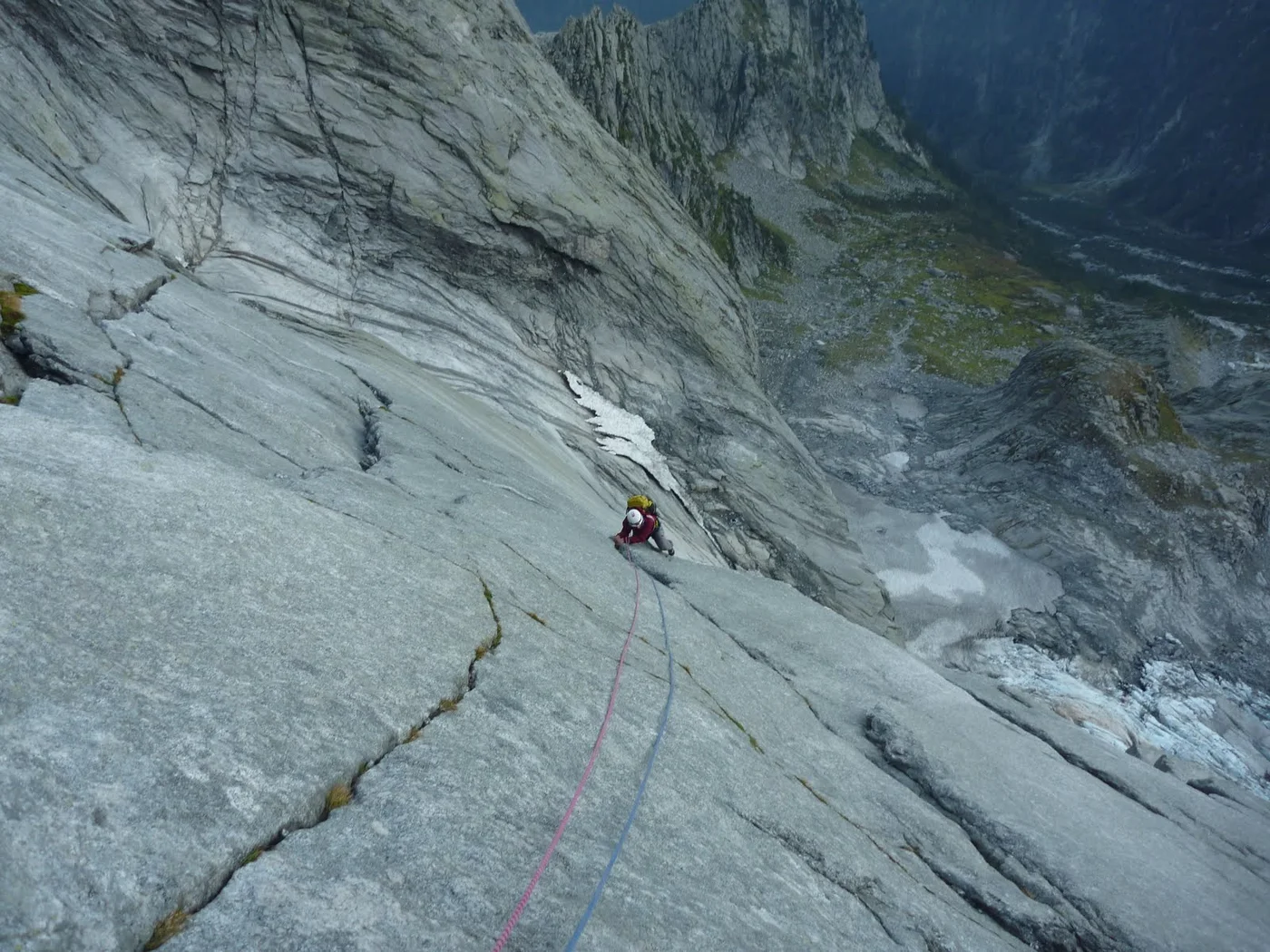
Northeast Face (Cassin Route)
The Northeast Face of Piz Badile, universally known as the Cassin Route, is one of the Six Great North Faces of the Alps. First climbed in July 1937 by Italian master Riccardo Cassin, Vittorio Ratti, and Gino Esposito, who joined forces on the face with Mario Molteni and Giuseppe Valsecchi, the route ascends an unbroken 800-meter vertical shield of pristine granite slabs and dihedrals.
Historic Expeditions & First Ascents
Epoch-making sieges and triumphant summits recorded within Switzerland's alpine history.
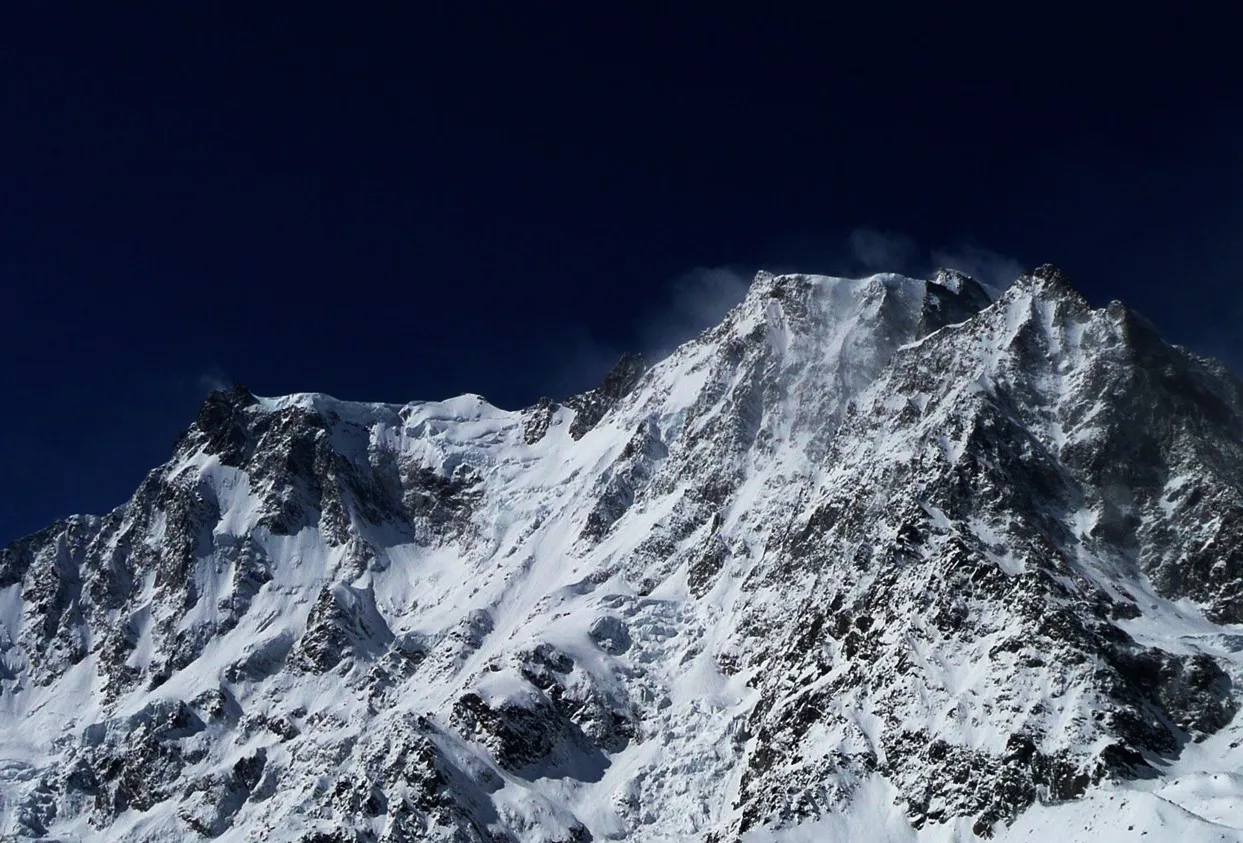
1855 Smyth Brothers Dufourspitze Monte Rosa First Ascent
On August 1, 1855 — eight years before the Matterhorn and a decade before the peak of the Golden Age — a British team of five led by the brothers J.G. and C. Smyth with Zermatt guides Matthäus Zumtaugwald and Ulrich Lauener completed the first ascent of the Dufourspitze, the highest summit in Switzerland and the second-highest peak in the Alps.
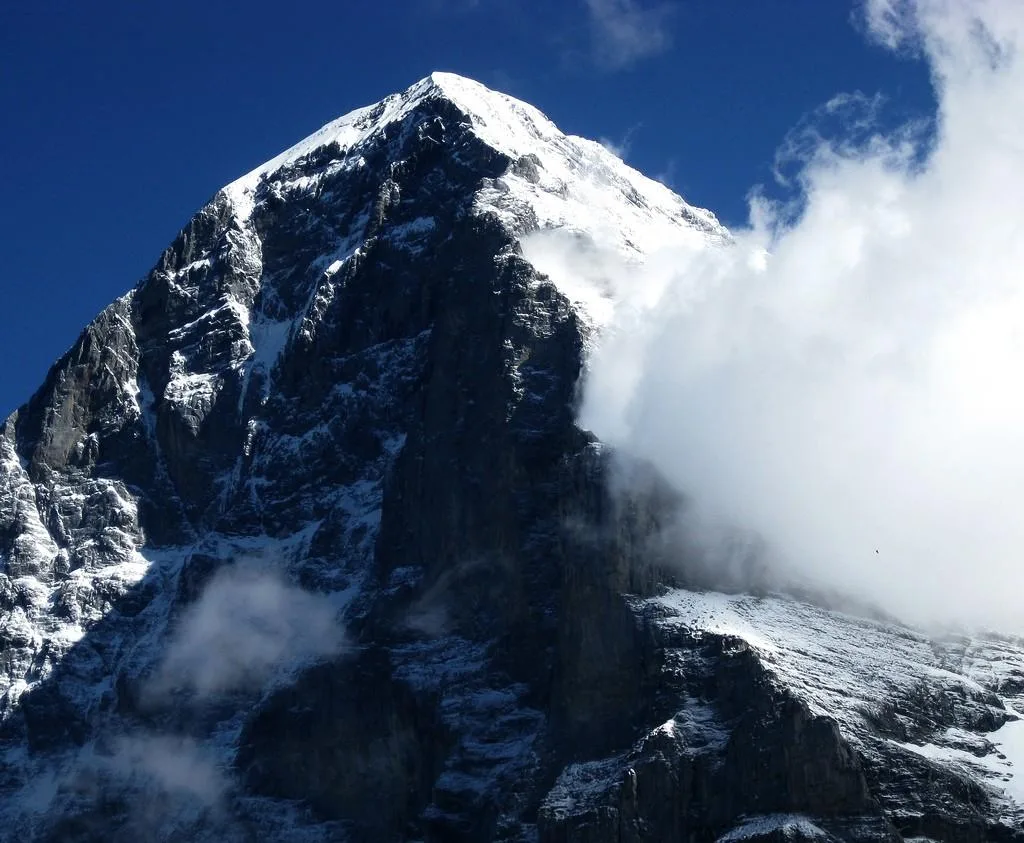
1858 Almer & Barrington Eiger West Flank First Ascent
On August 11, 1858, Irish landowner Charles Barrington and Grindelwald guides Christian Almer and Peter Bohren completed the first ascent of the Eiger via the straightforward West Flank, kicking off the Bernese Oberland's Golden Age of first ascents.
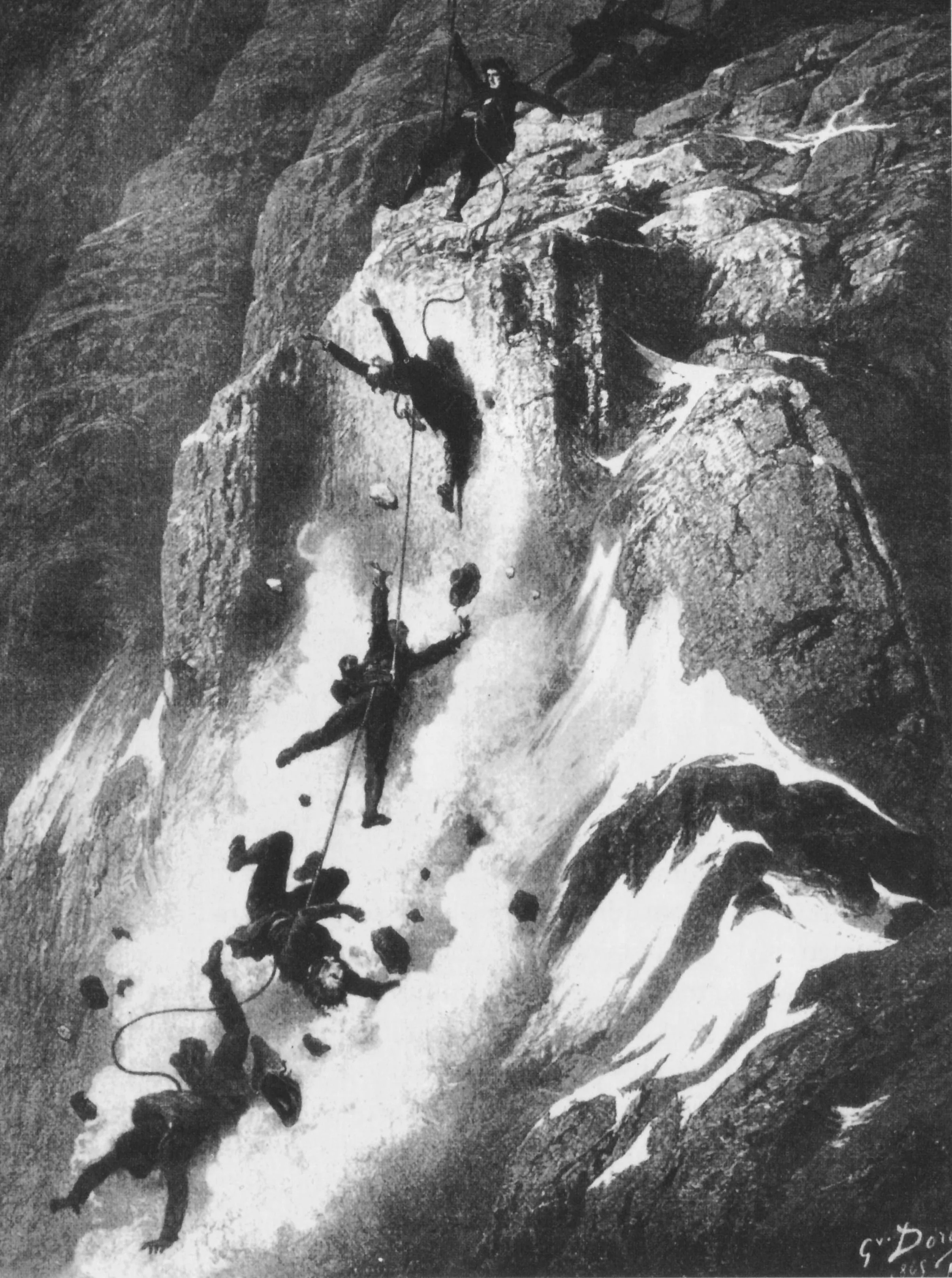
1865 Whymper-Croz-Taugwalder Matterhorn First Ascent & Descent Disaster
On July 14, 1865, Edward Whymper, Michel Croz, Peter Taugwalder Sr., Peter Taugwalder Jr., Lord Francis Douglas, Reverend Charles Hudson, and Douglas Hadow completed the Matterhorn's first ascent via the Hörnli Ridge — only for four teammates to fall to their deaths on the descent when a connecting rope snapped, ending the Golden Age of Alpinism.
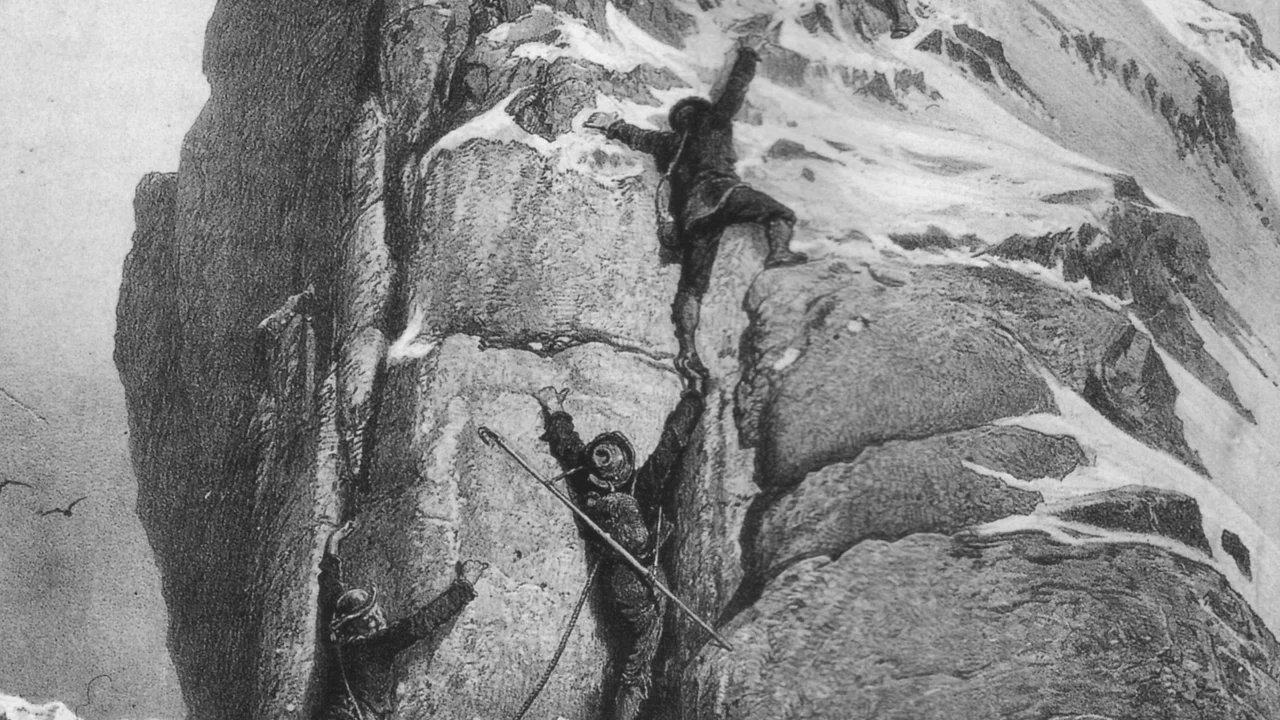
1865 Edward Whymper Matterhorn First Ascent Expedition
The dramatic July 1865 expedition led by English illustrator Edward Whymper that achieved the maiden first ascent of the Matterhorn (4,478m) via the Hörnli Ridge, ending in triumph overshadowed by the catastrophic rope snap that took four lives on descent.
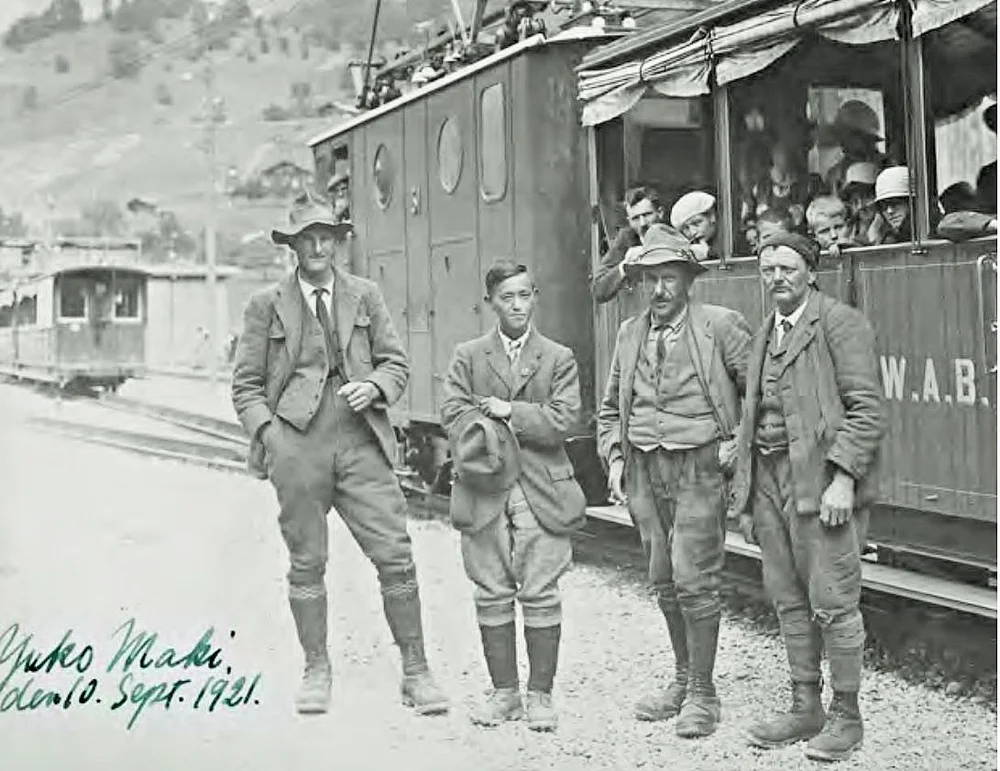
1921 Aritsune Maki Historic First Ascent of the Eiger Mittellegi Ridge
On September 10, 1921, Japanese alpinist Aritsune Maki (Maki Yūkō) alongside Swiss guides Fritz Steuri, Samuel Brawand, and Fritz Amatter achieved the historic first ascent of the Eiger's Mittellegi Ridge, conquering one of the most formidable unclimbed arêtes in the Bernese Alps.
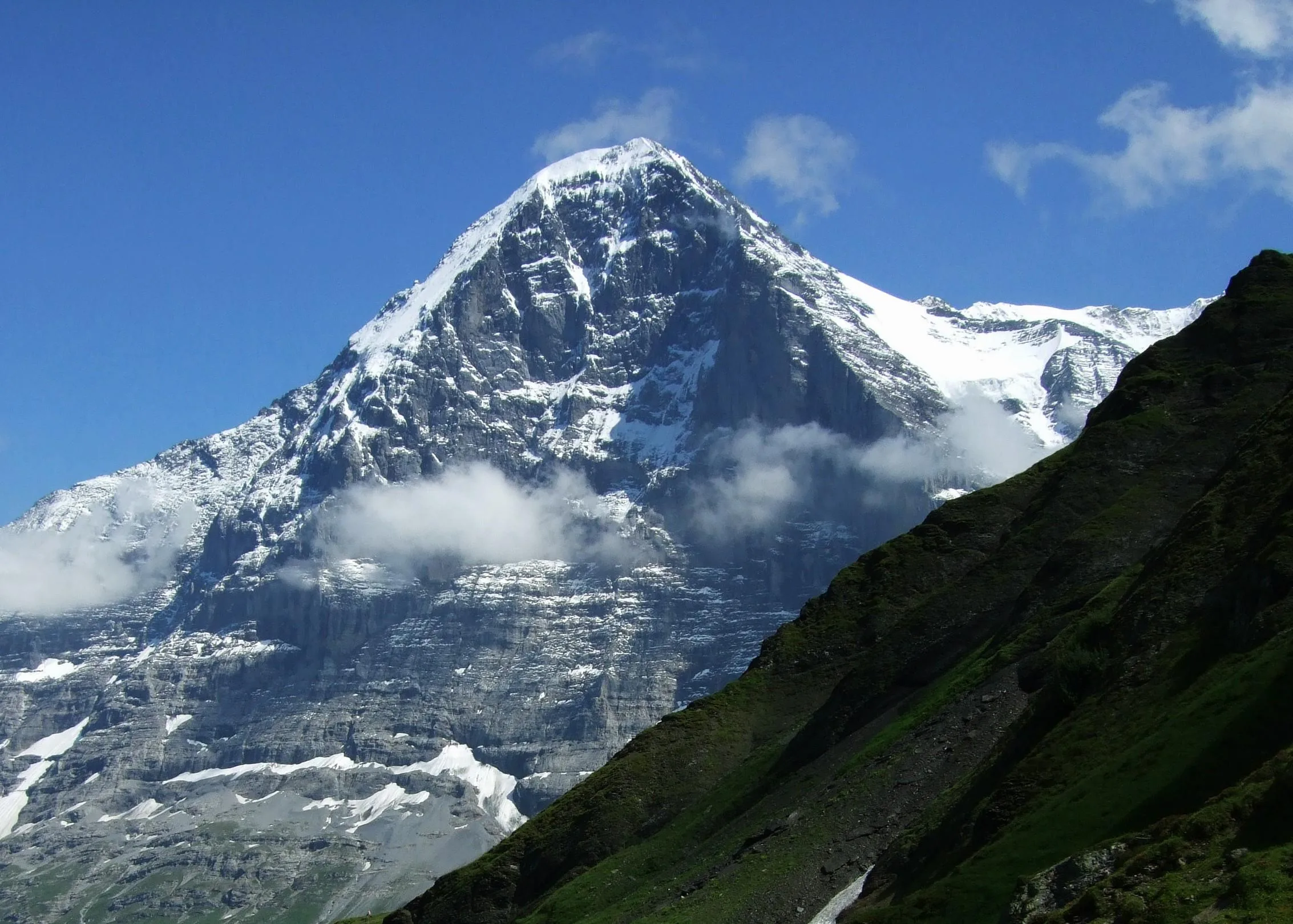
1936 Hinterstoisser-Kurz Eiger North Face Tragedy
In July 1936, Bavarian climbers Andreas Hinterstoisser and Toni Kurz, with Austrian climbers Willy Angerer and Edi Rainer, pioneered the critical Hinterstoisser Traverse on the Eiger North Face before being trapped in a storm. Three died; Kurz survived alone on the wall for 24 hours before dying metres from rescue.
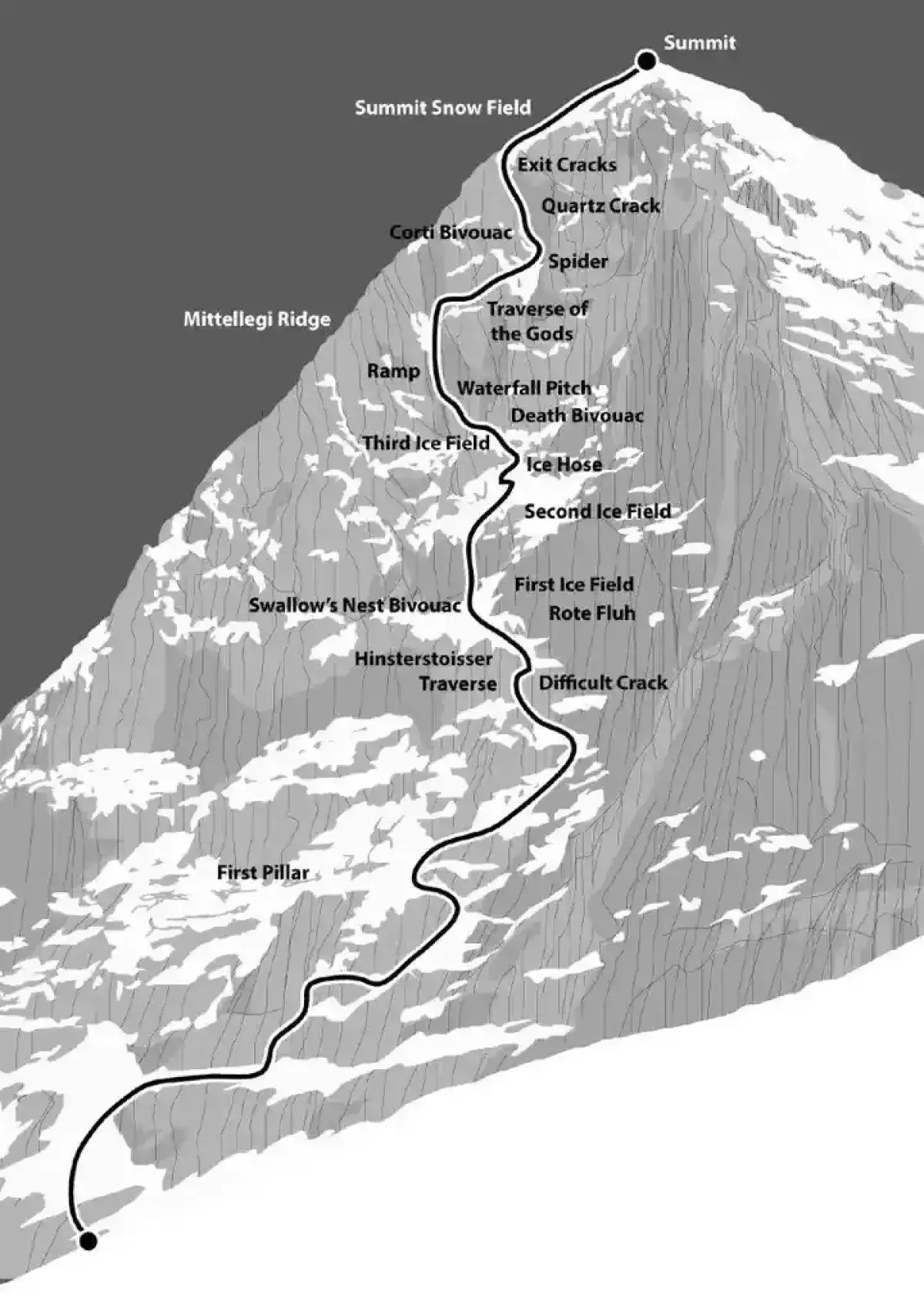
1938 German-Austrian Eiger North Face Expedition
The epic July 1938 expedition in which Bavarian alpinists Anderl Heckmair and Ludwig Vörg joined forces with Austrians Heinrich Harrer and Fritz Kasparek to conquer the terrifying 1,800-meter Eiger North Face over four grueling days of storms, rockfalls, and avalanches.
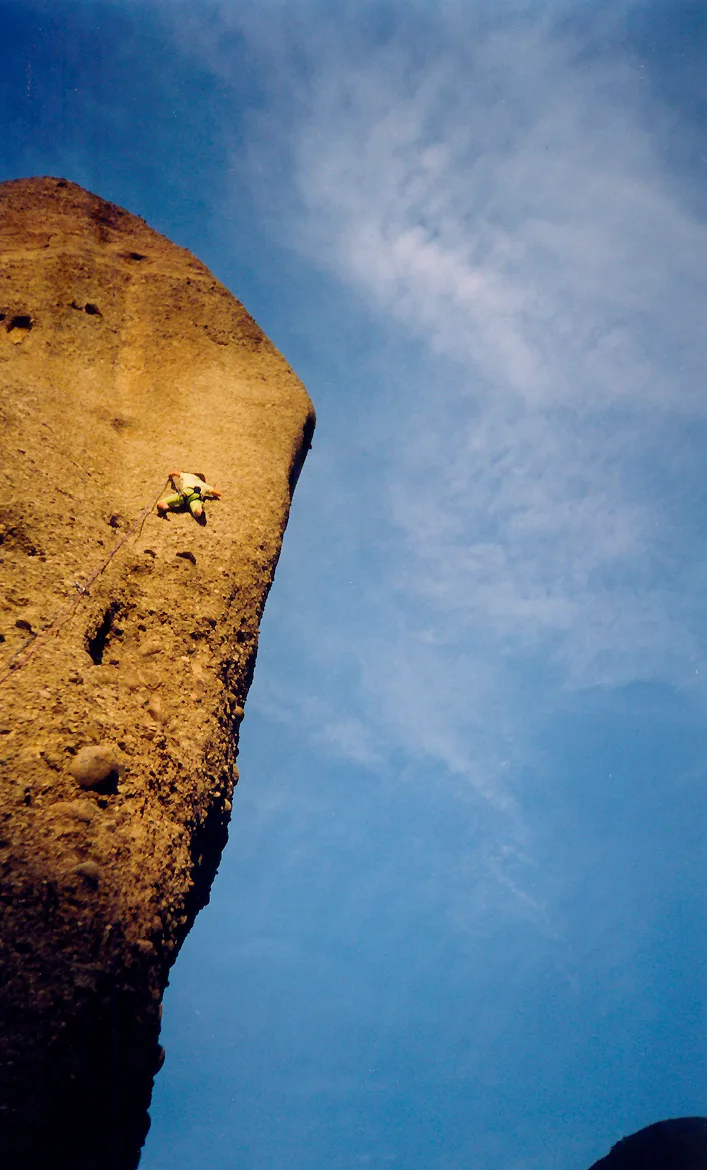
1992 Catherine Destivelle Eiger North Face Winter Solo
On March 9–10, 1992, 31-year-old French alpinist Catherine Destivelle made mountaineering history as the first woman to solo the 1,800-meter North Face of the Eiger in winter, ascending the Heckmair Route in just 17 hours of climbing.
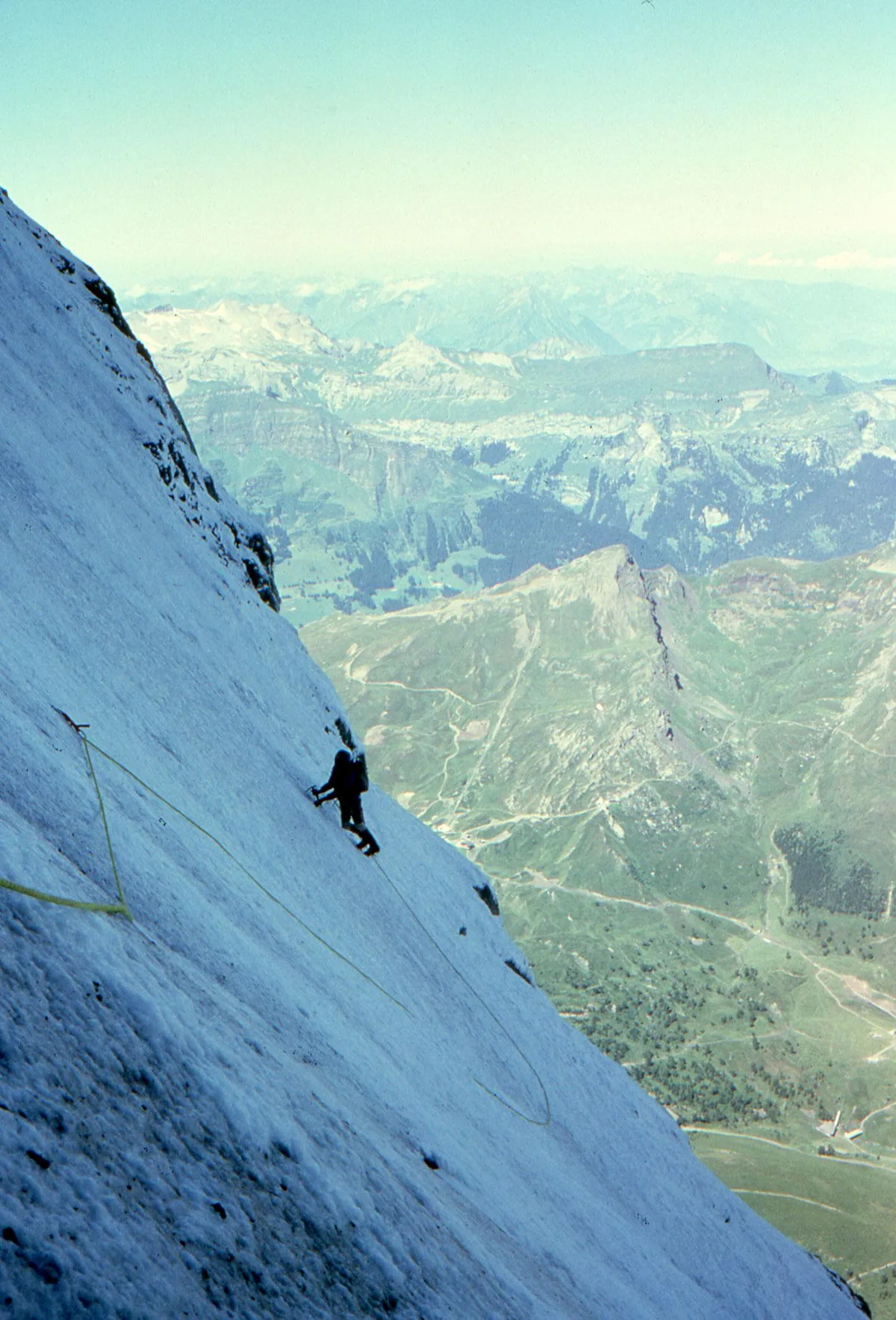
2015 Ueli Steck Eiger North Face Solo Speed Record
On November 16, 2015, Swiss speed climbing icon Ueli Steck shattered the solo speed record on the 1,800-meter North Face of the Eiger, ascending the historic Heckmair Route completely unroped in an astonishing 2 hours, 22 minutes, and 50 seconds.
Pioneer Mountaineers of Switzerland
Biographical chronicles of legendary high-altitude alpinists hailing from Switzerland.
Albin Schelbert
Albin Schelbert was born on July 24, 1932, in Muotathal in the Canton of Schwyz, Switzerland. Hailing from a traditional Swiss mountain family, Schelbert developed into a powerhouse rock and ice climber, earning his certified Swiss UIAGM mountain guide patent at a young age and forging difficult new lines across the Uri Alps and the Glarus Alps. In 1960, Schelbert was chosen by expedition leader Max Eiselin to join the international Swiss-Austrian Dhaulagiri Expedition. Rising steeply between the Annapurna sanctuary and the Tibetan borderland, Dhaulagiri (8,167m) was the highest unclimbed mountain in the world. When the expedition's Pilatus Porter transport plane crashed on the Northeast Col, Schelbert played a crucial role in packing heavy loads across the high glaciers to establish Camp V and Camp VI. On May 13, 1960, Schelbert set out from Camp VI (7,800m) in the primary summit party. Moving without supplemental oxygen despite biting sub-zero gale force winds, Schelbert climbed alongside Peter Diener, Ernst Forrer, Kurt Diemberger, and Sherpas Nawang Dorje and Nyima Dorje. Traversing the upper ice couloir and summit ridge, Schelbert stood on the 8,167-meter summit of Dhaulagiri I, completing the first ascent of Nepal's mighty White Mountain. Schelbert continued his elite alpine career as one of Switzerland's most sought-after guides and technical climbers, notably participating in severe winter ascents in the Bernese Oberland. On June 21, 1975, Schelbert was tragically killed in a climbing accident in the Swiss Alps at age 42, revered by the Swiss Alpine Club as a paragon of alpine modesty, strength, and pioneering spirit.
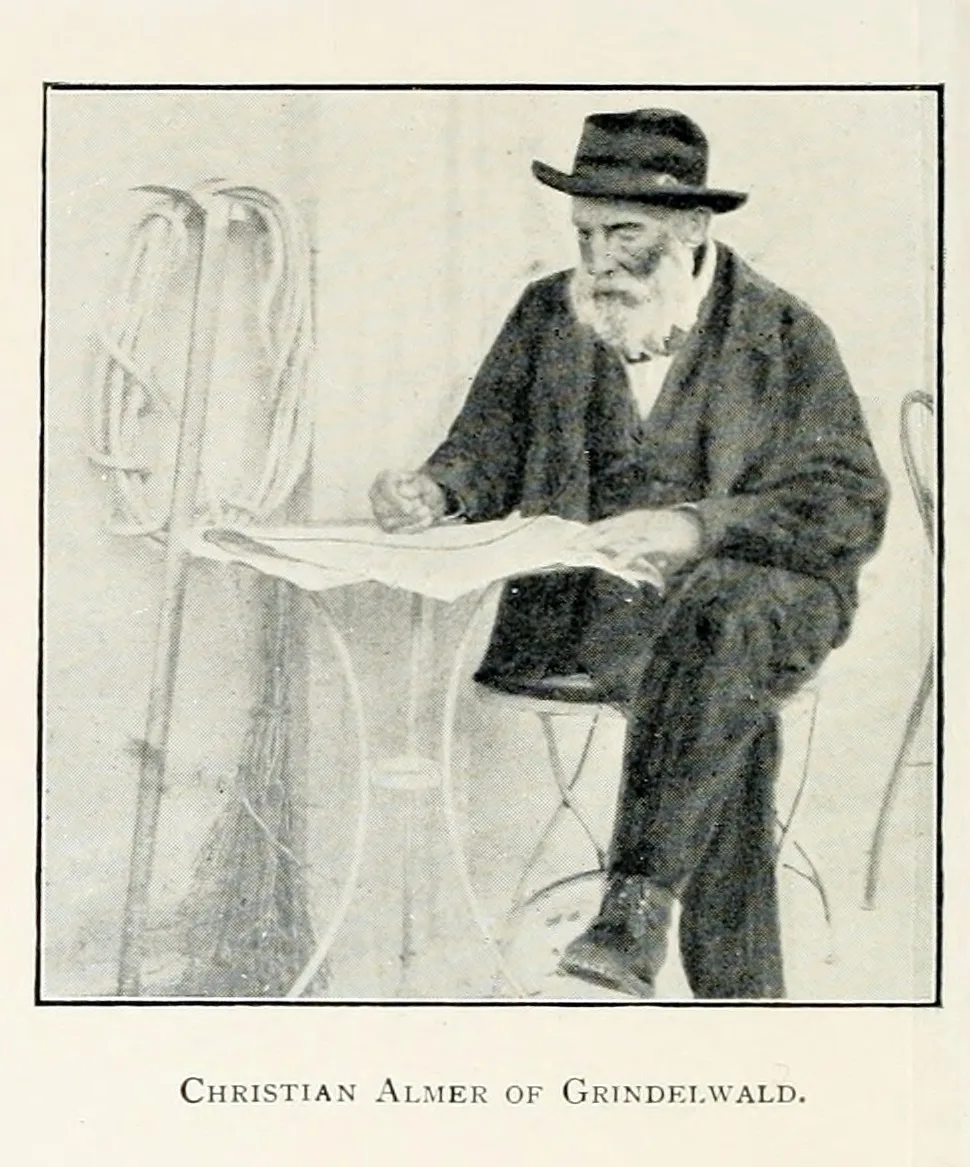
Christian Almer
Born on February 15, 1826, in Grindelwald at the foot of the Bernese Oberland's greatest limestone walls, Christian Almer grew up in a farming family whose sons had guided hunters and chamois stalkers across the high passes since the days of Napoleon. From his youth, Almer showed an uncanny instinct for snow and ice, learning the treacherous crevasse systems of the Grindelwald glaciers by heart before he was twenty. In 1854, Almer assisted Alfred Wills on the ascent of the Wetterhorn above Grindelwald, the climb widely credited with launching the Golden Age of Alpinism and inspiring the founding of the Alpine Club. Over the following twenty years, Almer became the most sought-after guide in the Alps, his calm authority and extraordinary physical strength drawing the most ambitious British climbers to Grindelwald at the start of each summer season. He made the first ascent of the Eiger's straightforward West Flank with Charles Barrington in 1858, and three years later pioneered a route up the fearsome Schreckhorn, one of the sharpest and most remote summits in the Bernese Alps. In August 1864, Almer joined Edward Whymper in the French Alps, and together they made the first ascent of the Barre des Écrins, the highest summit in the Dauphiné Alps. In the summer of 1865, during the extraordinary final culmination of the Golden Age, Almer guided Whymper's team up the Aiguille Verte above Chamonix, a spectacular ascent completed just days after Whymper's tragic Matterhorn triumph. Almer retired from active guiding in the 1890s and lived to the remarkable age of 72, surviving to see his grandsons continue his guiding dynasty. He died in Grindelwald on January 12, 1898, with an unmatched record of first ascents across the Bernese Oberland, Pennine Alps, and Dauphiné, all accomplished without a single client fatality.
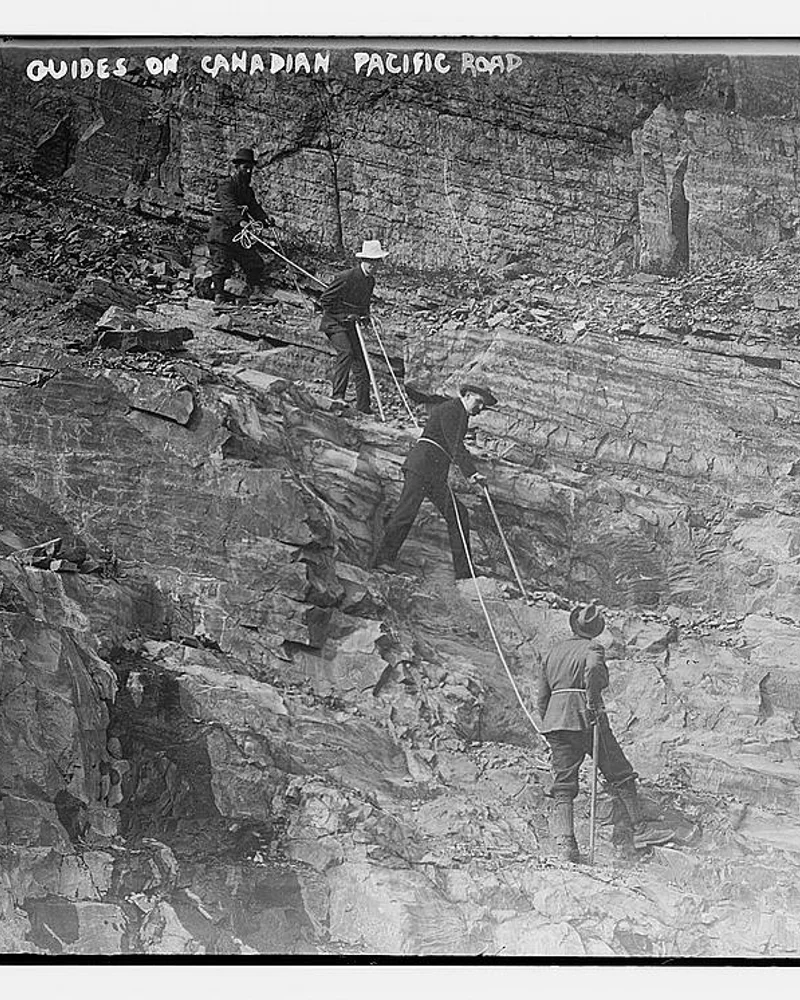
Edward Feuz
Born on September 29, 1884, in Interlaken, Switzerland, Edward Feuz Junior was the son of Edward Feuz Senior, one of the original Swiss guides brought to Canada in 1899 by the Canadian Pacific Railway to introduce safety and European alpine technique to tourists visiting the luxury hotels at Banff, Lake Louise, and Glacier House. Learning climbing from early youth in the Bernese Oberland, young Feuz arrived in Canada in 1903. Over the next forty-five years, Feuz became the undisputed face of Canadian mountaineering. Based at the famed Swiss village of Edelweiss near Golden, British Columbia, Feuz led over one thousand guided climbs and achieved more than one hundred first ascents across the Canadian Rockies and Columbia Mountains. His landmark first ascents included Mount Sir Sandford (3,519 m), the highest peak in the Selkirk Mountains, conquered in 1912 with Howard Palmer, as well as Mount Tupper, Mount Goodsir North Tower, and Mount Victoria's difficult routes. Known for his supreme calm, impeccable rope management, and sharp weather forecasting, Feuz guided clients through blizzards, rockfall, and crevasse rescue with an unprecedented record: across four decades of technical guiding on unmapped peaks, he never suffered a single fatal accident on his rope. In 1949, Feuz retired, remaining in Golden where he became a living legend. Feuz passed away in 1981 at the age of ninety-six, remembered as the master builder of Canadian alpine guiding traditions.
Erhard Loretan
Erhard Loretan was born on April 28, 1959, in Bulle in the Canton of Fribourg, Switzerland. Raised in the shadow of the Pre-Alps, he began climbing local limestone spires at age eleven. Endowed with exceptional lung capacity, a lean, muscular frame, and an innate sense of mountain agility, Loretan trained as a cabinetmaker before qualifying as a UIAGM mountain guide at age twenty-two. Rejecting conventional siege climbing methods, heavy gear, and fixed ropes, Loretan championed high-velocity alpine style: climbing light, moving fast, and striking when weather windows opened. In 1982, at age twenty-three, Loretan made his Himalayan debut by summiting Nanga Parbat (8,126m) via the Diamir Face. The following year, in the summer of 1983, he stunned international mountaineering by climbing three Karakoram 8,000-meter peaks within seventeen days alongside Marcel Rüedi: Gasherbrum II on June 16, Gasherbrum I on June 23, and Broad Peak on June 30. All were completed in lightweight alpine style without supplemental oxygen. In 1984, Loretan and Norbert Joos made the historic first alpine-style ascent of the direct South Face of Annapurna I (8,091m), traversing the mountain by descending the North Face. In December 1985, he completed the first winter ascent of the direct East Face of Dhaulagiri I (8,167m) alongside Pierre-Alain Steiner. Loretan's crowning masterpiece occurred in late August 1986 on Mount Everest (8,848m). Climbing alongside Swiss partner Jean Troillet, the pair launched a radical speed assault on the direct North Face via the Japanese Couloir and Hornbein Couloir. Moving in absolute alpine style without oxygen, ropes, or tents, they climbed through the night to avoid rockfall, reaching the summit of Everest at 1:30 PM on August 30 after 31 hours of continuous movement. After resting on top, they made an extraordinary descent: sitting on their windproof anoraks and rucksacks, they glissaded down the 3,000-meter 60-degree snow face, reaching Advanced Base Camp in just 3.5 hours. Their total round-trip time of 43 hours remains one of the greatest feats in high-altitude history. In 1988, Loretan teamed with Wojciech Kurtyka to conquer the vertical 1,000-meter East Face of Trango Nameless Tower (6,239m). In 1989, he set a solo winter record in Switzerland, climbing thirteen north faces in the Bernese Alps in thirteen days. On October 5, 1995, by summiting Kangchenjunga (8,586m), Loretan completed the ascent of all fourteen 8,000-meter peaks, becoming only the third human to achieve the feat after Reinhold Messner and Jerzy Kukuczka, climbing every single peak without supplemental oxygen. Tragically, on April 28, 2011—his fifty-second birthday—Loretan was killed while guiding a client on the Grünhorn in the Bernese Alps when the client slipped on an icy ridge and pulled both climbers down an 800-meter face. Erhard Loretan is universally honored as a purist pioneer who redefined the limits of speed, commitment, and lightweight style in the death zone.
Ernst Forrer
Ernst Forrer was born on December 3, 1932, in Wildhaus in the Toggenburg valley of the Canton of St. Gallen, Switzerland. Growing up beneath the sheer limestone cliffs of the Churfirsten, Forrer became one of Switzerland’s most naturally gifted mountain guides and ski mountaineers, renowned for his physical durability and rock climbing agility. In early 1960, Forrer joined the Swiss Dhaulagiri Expedition organized by Max Eiselin. Dhaulagiri was then the highest unclimbed mountain on Earth, having defeated numerous expeditions over the preceding decade. While the team utilized a ski-equipped Pilatus Porter airplane ('Yeti') to establish a high landing strip on the Northeast Col, an engine failure caused a crash-landing on the glacier, leaving the team without aerial resupply and requiring sheer physical endurance to establish the higher camps on foot. Undaunted, Forrer, alongside Albin Schelbert, Peter Diener, Kurt Diemberger, and Sherpas Nawang Dorje and Nyima Dorje, established Camp VI at 7,800 meters. On the freezing morning of May 13, 1960, Forrer climbed in the lead rope team up the jagged Northeast Ridge. Reaching the summit pyramid without bottled oxygen, Forrer stepped onto the highest point of Dhaulagiri I at 8,167 meters, making history alongside his five companions. Following his Himalayan achievement, Forrer continued a long career as a revered mountain guide in the Swiss Alps, leading ascents across the Mont Blanc massif, the Valais 4,000-meter peaks, and expeditions to the South American Andes. He remains celebrated in Swiss mountaineering annals as a quiet master of high-altitude alpine exploration.
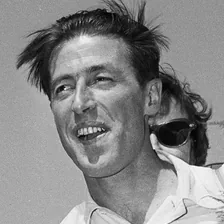
Ernst Reiss
Ernst 'Ere' Reiss was born on February 24, 1920, in Davos, Switzerland. Immersed in the high alpine valleys of the Graubünden canton, Reiss trained as a precision mechanic before dedicating his life to alpine rescue, high-altitude guiding, and mountaineering innovation. In the late 1940s, Reiss established himself as one of Switzerland's finest ice and mixed technicians, completing daring ascents in the Bernese Oberland and the Mont Blanc massif. In 1952, Reiss was selected as a lead assault climber for both the spring and autumn Swiss Mount Everest Expeditions organized by the Swiss Foundation for Alpine Research. Operating in the Western Cwm, Reiss was instrumental in forcing the first passage up the sheer ice ramparts of the Geneva Spur and onto the South Col at 8,000 meters, forging the exact high-altitude gateway that British climbers Hillary and Tenzing utilized to conquer Everest the following year. In the spring of 1956, Reiss returned to the Khumbu region on the monumental Swiss Mount Everest and Lhotse Expedition led by Albert Eggler. Tasked specifically with the first ascent of Everest's towering neighbor, Lhotse (8,516m), Reiss partnered with Swiss Army captain Fritz Luchsinger. Above Camp IV in the Western Cwm, the pair forged an audacious line up the Lhotse Face and entered the menacing, rock-strewn Lhotse Couloir—a claustrophobic 1,100-meter funnel of 50-degree hard ice. On May 18, 1956, using open-circuit oxygen equipment, Reiss and Luchsinger fought their way through bitter gales and cascading spindrift to reach the razor-sharp summit ridge of Lhotse at 8,516 meters. Five days later, their Swiss teammates achieved the second and third ascents of Mount Everest, making the 1956 Swiss expedition one of the most successful high-altitude campaigns in history. Reiss later played a foundational role in modern Swiss air-rescue (Rega) and authored the widely read autobiography Mein Weg als Bergsteiger (1959). He passed away in Basel on August 3, 2010, at the age of ninety.
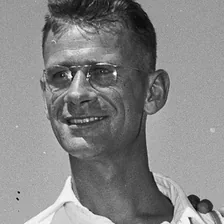
Fritz Luchsinger
Fritz Luchsinger was born on March 8, 1921, in Zurich, Switzerland. A career officer in the Swiss Army specializing in military mountain training and alpine logistics, Luchsinger combined rigorous discipline with exceptional high-altitude endurance and rock-and-ice craftsmanship. In the Swiss Alps, he completed major ascents across the Valais and Bernese Alps before being selected for the landmark 1956 Swiss Mount Everest and Lhotse Expedition. During the long trek into the Khumbu region in early 1956, disaster nearly struck when Luchsinger collapsed with acute appendicitis near Namche Bazaar. In an era without helicopter rescue, expedition doctor Gabriel Chevalley and local Tibetan healers treated him with intensive antibiotic therapy and complete immobilization inside the local Buddhist monastery. In an astonishing display of physical recovery, Luchsinger rejoined the climbing team weeks later at Base Camp and quickly regained full high-altitude fitness. Teaming up with Davos master climber Ernst Reiss, Luchsinger was assigned the primary summit assault on Lhotse (8,516m). Ascending from the Western Cwm, the two Swiss climbers pioneered a route up the upper Lhotse Face and forced their way through the perilous 1,100-meter technical gully known as the Lhotse Couloir. On May 18, 1956, battling sub-zero gales and loose rock bands, Luchsinger and Reiss reached the summit crest, completing the maiden ascent of the fourth-highest mountain in the world. Luchsinger continued climbing at the highest levels well into his later years. In May 1980, at the age of fifty-nine, he summited Dhaulagiri I (8,167m) without supplemental oxygen. In April 1983, while leading an alpine-style expedition on Shishapangma (8,027m) in Tibet, Luchsinger developed acute high-altitude pulmonary edema at 7,800 meters and tragically passed away on April 28, 1983. He remains honored as one of Switzerland’s most courageous and resilient Himalayan pioneers.
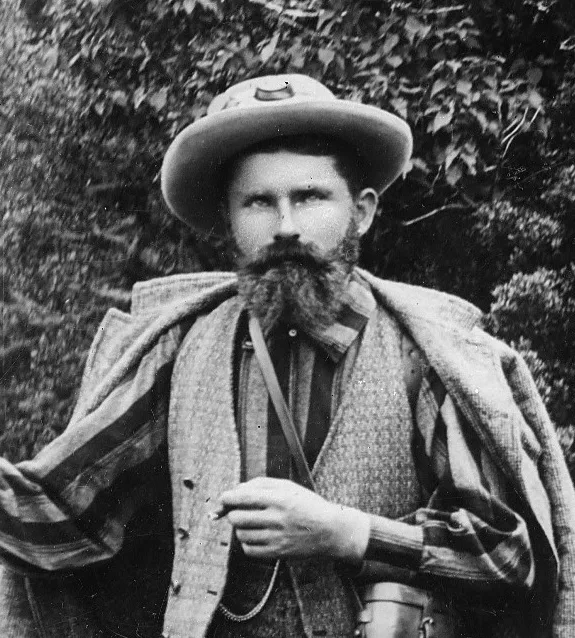
Matthias Zurbriggen
Born on May 15, 1856, in Saas-Fee in the Valais Alps of Switzerland, Matthias Zurbriggen grew up in humble circumstances before becoming one of the most gifted and enduring mountain guides of the 19th century. Possessing phenomenal stamina and high-altitude physiological adaptability, Zurbriggen was hired for epic exploratory expeditions across three continents. In 1892, he served as lead guide on Sir Martin Conway's Karakoram expedition, reaching 6,890 metres on Pioneer Peak on Baltoro Kangri to establish a new world mountaineering altitude record. In 1895, Zurbriggen traveled to New Zealand, where he completed the historic second ascent of Aoraki / Mount Cook and the first solo climb of the peak via the hazardous Zurbriggen Ridge. His crowning triumph arrived on January 14, 1897, during Edward FitzGerald's British expedition to the high Andes of Argentina. After FitzGerald collapsed from acute mountain sickness at 6,000 metres, Zurbriggen pressed upward alone through sub-zero gales and loose scree to stand atop the 6,961-metre summit of Aconcagua, marking the first human ascent of the highest mountain in the Americas. Later that season, he also achieved the first ascent of Tupungato (6,570 m). Zurbriggen published his celebrated autobiography, 'From the Alps to the Andes', in 1899. He died in Geneva on June 21, 1917, remembered as a fearless titan of global alpine exploration.
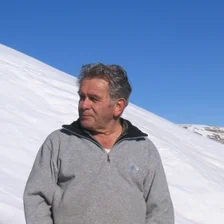
Peter Diener
Peter Diener was born on January 29, 1934, in Zittau, Saxony (Germany). Developing an early passion for rock climbing in the sandstone towers of the Zittau Mountains and the Elbe Sandstone, Diener escaped East Germany in 1952, seeking alpine freedom in Switzerland. Settling in the Bernese Oberland and later in Winterthur, he quickly joined the vanguard of extreme European alpinists, mastering the Grandes Jorasses Walker Spur, the Petit Dru Bonatti Pillar, and severe routes on the Eiger. In 1960, Swiss expedition organizer Max Eiselin recruited Diener for the international Swiss-Austrian expedition to Dhaulagiri I (8,167m)—the formidable peak that had repulsed seven prior expeditions from France, Switzerland, Argentina, and Austria. The 1960 expedition made aviation history by using a prototype ski-equipped Pilatus PC-6 Porter airplane named 'Yeti' to airlift supplies to the Northeast Col at 5,700 meters before the plane crashed during takeoff (with no fatalities). Moving up the rugged Northeast Ridge, Diener, alongside Ernst Forrer, Albin Schelbert, Kurt Diemberger, and Sherpas Nawang Dorje and Nyima Dorje, established the high assault camp at 7,800 meters. On May 13, 1960, battling extreme sub-zero winds and without supplemental oxygen, Diener reached the 8,167-meter summit of Dhaulagiri I, completing the first ascent of the world's seventh-highest peak. Following his Himalayan triumph, Diener worked for decades in the Swiss mountain sports industry, designing advanced mountaineering equipment and safety harnesses. He remained an active climber and lecturer well into his eighties before passing away on October 19, 2021, at age 87 in Switzerland.
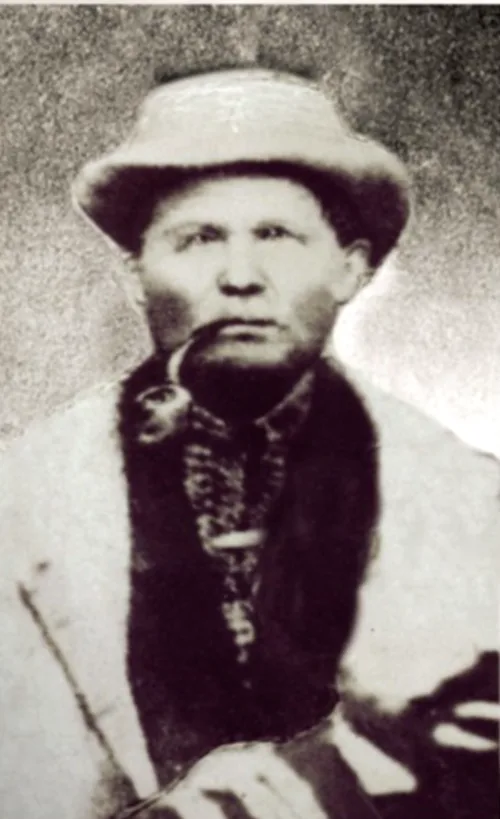
Peter Taugwalder Sr.
Born in Zermatt in 1820, Peter Taugwalder grew up in the shadow of the Matterhorn's overwhelming pyramid, a peak that every guide in the village had studied for decades but no one dared to attempt. As a chamois hunter and experienced mountain guide, Taugwalder had learned the technical language of ice and rock from the Hörnli ridge and Zmutt glacier approaches since his youth. By the early 1860s, he had established himself as one of Zermatt's most respected and physically powerful guides. In the summer of 1865, Taugwalder accepted the pivotal role of senior guide on Edward Whymper's Matterhorn team alongside the legendary Chamonix guide Michel-Auguste Croz, Lord Francis Douglas, the Reverend Charles Hudson, and Douglas Hadow. On July 14, 1865, the party of seven departed Whymper's high bivouac at 3,818 metres before dawn and scrambled up the Hörnli ridge's rocky arête. Near the summit, Michel Croz and Whymper raced the last few metres to the top, confirming that Jean-Antoine Carrel's rival Italian team ascending the opposite face had been beaten. The seven men stood triumphant on the summit before beginning the descent. Near a patch of hard snow, the inexperienced Douglas Hadow slipped, pulling Charles Hudson and Michel Croz off their footholds. The connecting rope snapped — almost certainly due to old, lightweight rope used at that section — and four men tumbled silently over the edge. Taugwalder, Whymper, and young Peter Taugwalder Jr. held themselves to the mountain by sheer grip and survived. Taugwalder was subsequently accused in the Swiss press of deliberately cutting the rope to save himself, a charge rigorously investigated and ultimately found to be entirely without foundation by Swiss authorities. The accusation cast a shadow over his final decades, and Taugwalder emigrated to the United States briefly before returning to Zermatt, where he died in 1888.
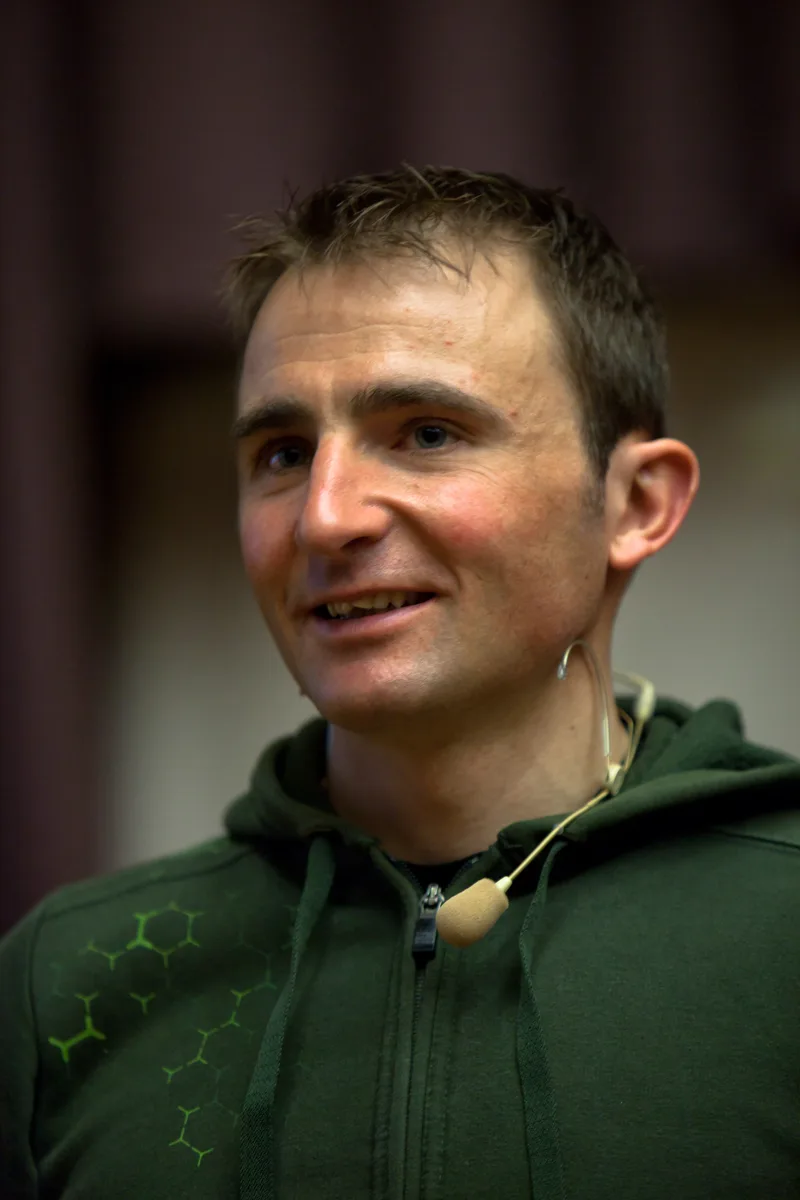
Ueli Steck
Ueli Steck was born on October 4, 1976, in Langnau im Emmental in central Switzerland. The third son of a copper craftsman, Steck played competitive youth ice hockey before discovering rock climbing at age twelve in the limestone cliffs of the Swiss Jura. Gifted with phenomenal natural agility and an obsessive training discipline, he progressed rapidly to extreme mixed climbing, soloing the formidable Heckmair Route on the North Face of the Eiger (3,967m) for the first time at age eighteen. Steck revolutionized modern mountaineering by treating high-altitude alpinism as an elite endurance sport. Integrating cardiovascular interval training, meticulous weight reduction down to the gram, and mental conditioning, Steck approached giant walls not with traditional heavy bivouac gear, but in light-and-fast sprints. Between 2007 and 2015, he engaged in a friendly speed rivalry on the great north faces of the Alps (Eiger, Matterhorn, Grandes Jorasses). In November 2015, Steck set his definitive Eiger North Face solo speed record, climbing the entire 1,800-metre Heckmair Route completely unroped in an astonishing 2 hours, 22 minutes, and 50 seconds. Steck brought this hyper-speed methodology to the Himalaya with breathtaking audacity. In 2011, he soloed the South Face of Shishapangma (8,027m) in just 10.5 hours. In October 2013, Steck pulled off what many consider the greatest solo climb in Himalayan history: climbing the 3,000-metre South Face of Annapurna I (8,091m) along the Lafaille Route alone and at night, reaching the summit and descending back to Base Camp in just 28 hours, for which he was awarded his second prestigious Piolet d'Or. In 2015, he completed the '82 Summits' challenge, climbing all 82 four-thousanders of the Alps in just 62 days, travelling exclusively by foot, bicycle, and paraglider. On April 30, 2017, while acclimatizing on Nuptse for an ambitious Everest-Lhotse traverse without oxygen, Steck fell to his death at age 40, leaving an indelible imprint on the history of fast-and-light alpinism.
Archival Primary Source Quotations
“Great things are done when men and mountains meet; this is not done by jostling in the street.”
Defined Alpine Terminology & Concepts
- Archival Integrity
- The standard of verifying historical mountain facts, summit claims, and altitudes using primary expeditions journals and geodetic measurements.
Frequently Asked Questions: Switzerland Mountaineering
What historical significance does this countrie hold?
Switzerland represents an essential chapter in global mountaineering heritage, verified through contemporary expedition journals and archival sources.
How are the facts and records for Switzerland verified?
All records are checked against peer-reviewed journals, national alpine clubs, geodetic surveys, and the Mountanity Archival Integrity Policy.