1936 Hinterstoisser-Kurz Eiger North Face Tragedy
In July 1936, Bavarian climbers Andreas Hinterstoisser and Toni Kurz, with Austrian climbers Willy Angerer and Edi Rainer, pioneered the critical Hinterstoisser Traverse on the Eiger North Face before being trapped in a storm. Three died; Kurz survived alone on the wall for 24 hours before dying metres from rescue.
Mountain Safety & Conditions Disclaimer: High-altitude climbing, glacial travel, and technical ascents entail severe objective risks including avalanches, serac collapses, rapid weather collapse, and altitude illness. Historical route descriptions and summit claims on Mountanity reflect documented archival sources and must not be used as live operational safety assessments. Local regulations, permits, and physical glacial topography change continuously.
Peer Review: Senior Editorial Board & Historical Reviewers • Editorial Standards
Official Expedition Narrative & Archival Record
The summer of 1936 on the Eiger North Face was a season of extraordinary courage and catastrophe. The 1,800-metre wall had already claimed multiple lives in 1935 when two young Bavarians became the first to attempt it seriously, and by 1936 the Eiger's unclimbed north face had become the most obsessed-over objective in European alpinism. On July 18, Berchtesgadener Andreas Hinterstoisser and Toni Kurz, teamed with Austrians Willy Angerer and Edi Rainer, set out from the foot of the face in fine weather. At the critical first limestone slab band — a smooth, vertical wall of grey rock that had repelled all previous attempts — Hinterstoisser executed a revolutionary pendulum traverse: swinging outward on a fixed rope, he crossed fifty metres of blank holdless limestone to gain a small ledge system above. No one had ever conceived of traversing horizontally across the face rather than climbing straight up. The move worked. The four men crossed and pressed higher, reaching the Second Icefield and beyond, attaining a new height record on the face. Then Willy Angerer was struck by falling stone and knocked semi-conscious. The team made the agonizing decision to descend. When they reached the Hinterstoisser Traverse from above — the section that had been their key to the upper face — they discovered catastrophically that the rope for the traverse had been pulled up after their crossing. They could not pendulum back. They were trapped on the face above a section of blank limestone with no means of descent. In deteriorating storm, the four men attempted to abseil and downclimb the vertical, iced rock on pitons driven into stone, fighting through the night of July 20 to 21. Angerer, Rainer, and Hinterstoisser all perished — from rockfall injuries, exhaustion, or falls from the wet stone. Only Toni Kurz was alive at dawn on July 22, hanging by his rope on a small ledge in the storm. Railway workers and mountain guides emerged from the Eigerwand railway tunnel into the face and found Kurz hanging only forty metres above them. Over the course of a full desperate day, Kurz — with one arm already paralyzed — unraveled rope strands, spliced them, and lowered himself toward the rescuers below. As darkness fell, Kurz had lowered himself to within three metres of the guides' outstretched hands. The splice knot in the rope jammed in a carabiner. His hands, black with frostbite, could no longer bend. He said softly, 'Ich kann nicht mehr' — 'I cannot go on' — and died dangling in mid-air. Two years later, Anderl Heckmair's 1938 team left the Hinterstoisser Traverse rope permanently in place. The lesson had been bought in the highest possible price.
Documented Team Composition
- Andreas Hinterstoisser (Leader, Germany — Killed)
- Toni Kurz (Climber, Germany — Survived alone 24+ hours, died metres from rescue)
- Willy Angerer (Climber, Austria — Killed, rockfall injury)
- Edi Rainer (Climber, Austria — Killed)
Key Statistics & Topographic Figures
- Dates
- July 18 – 22, 1936
- Wall Height
- 1,800 m (5,900 ft) vertical face
- Casualties
- All 4 climbers perished
- Bivouac Endurance
- Over 24 hours suspended in space by Toni Kurz
Archival Primary Source Quotations
“Toni Kurz fought like a lion against cold, storm, and the impossible cliff; his endurance remains unequaled.”
Defined Alpine Terminology & Concepts
- Hinterstoisser Traverse
- A 40-metre horizontal pendulum across blank limestone connecting the First Step and First Icefield.
- Death Bivouac (Todesbiwak)
- The notorious high bivouac site on the Eiger North Face where Sedlmayr and Mehringer froze in 1935.
Frequently Asked Questions: 1936 Hinterstoisser-Kurz Eiger North Face Tragedy
What was the 1936 Hinterstoisser and Kurz Eiger North Face expedition?
In July 1936, Andreas Hinterstoisser, Toni Kurz, Willy Angerer, and Edi Rainer made a heroic attempt to climb the virgin 1,800m Eiger North Face.
What was the Hinterstoisser Traverse invented during this climb?
A daring horizontal pendulum swing across smooth limestone slabs that opened the only route to the upper icefields.
Why did the 1936 expedition turn into a catastrophe?
A violent storm struck, Willy Angerer was injured by rockfall, and the retreat was blocked because the traverse rope had not been left in place.
How did Toni Kurz spend his final hours on the Eiger?
Kurz survived suspended on a rope overnight in a howling blizzard, dying inches from rescuers when a rope knot jammed in his carabiner.
Did any of the four climbers survive the 1936 Eiger attempt?
No, all four mountaineers perished on the mountain between July 21 and July 22, 1936.
Where were the rescuers positioned during Toni Kurz's rescue attempt?
Rescuers reached the Stollenloch observation window of the Jungfrau railway tunnel directly inside the Eiger North Face.
How high on the Eiger North Face did the 1936 team reach?
The team reached the Death Bivouac area above the Second Icefield at over 3,300 metres before turning back.
What tactical lesson did the 1938 first ascent team learn from 1936?
Heckmair's 1938 team ensured the Hinterstoisser Traverse rope was permanently anchored, safeguarding a line of retreat.
Ascent Route & Topography
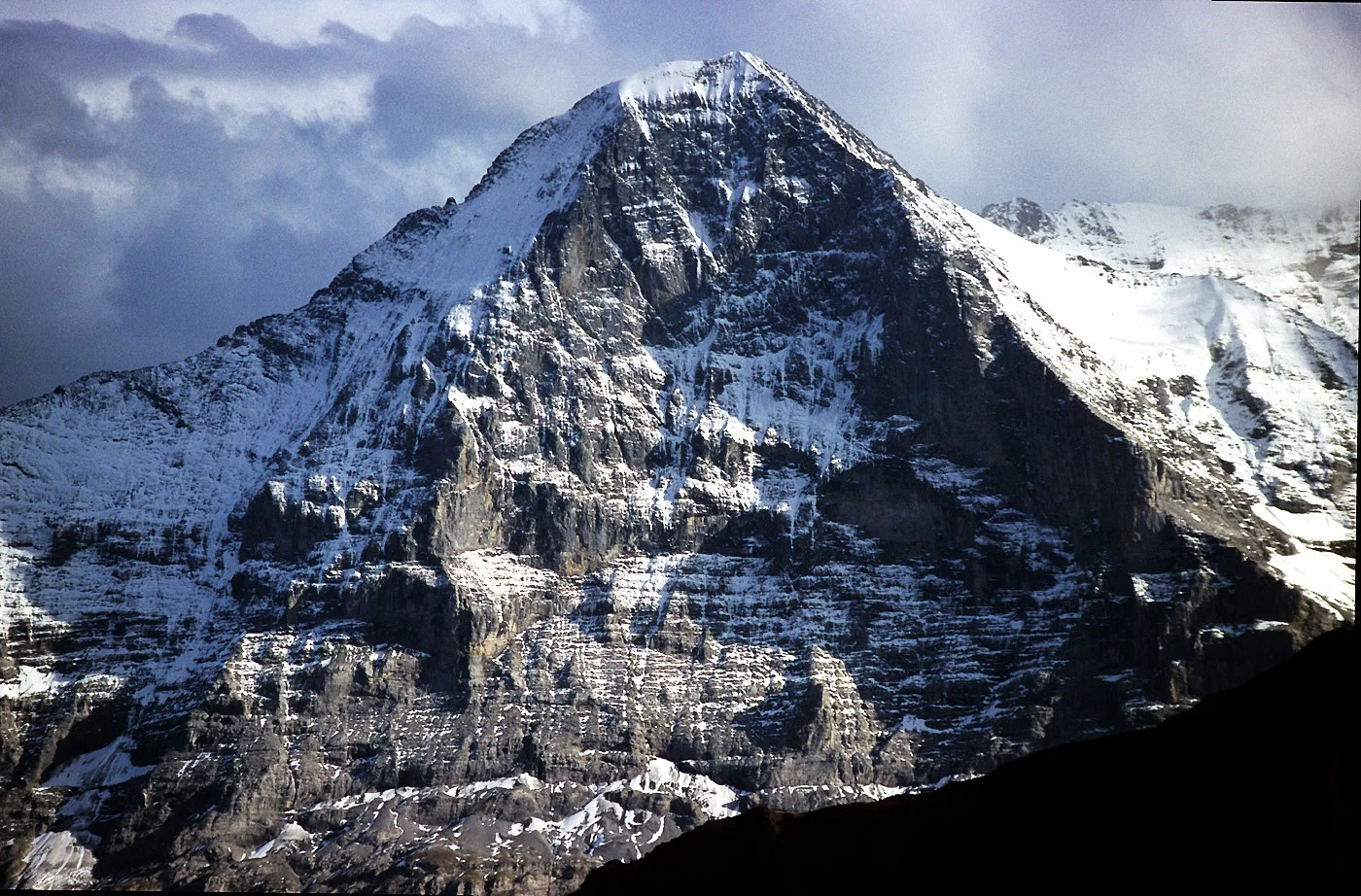
Eiger North Face (1938 Heckmair Route)
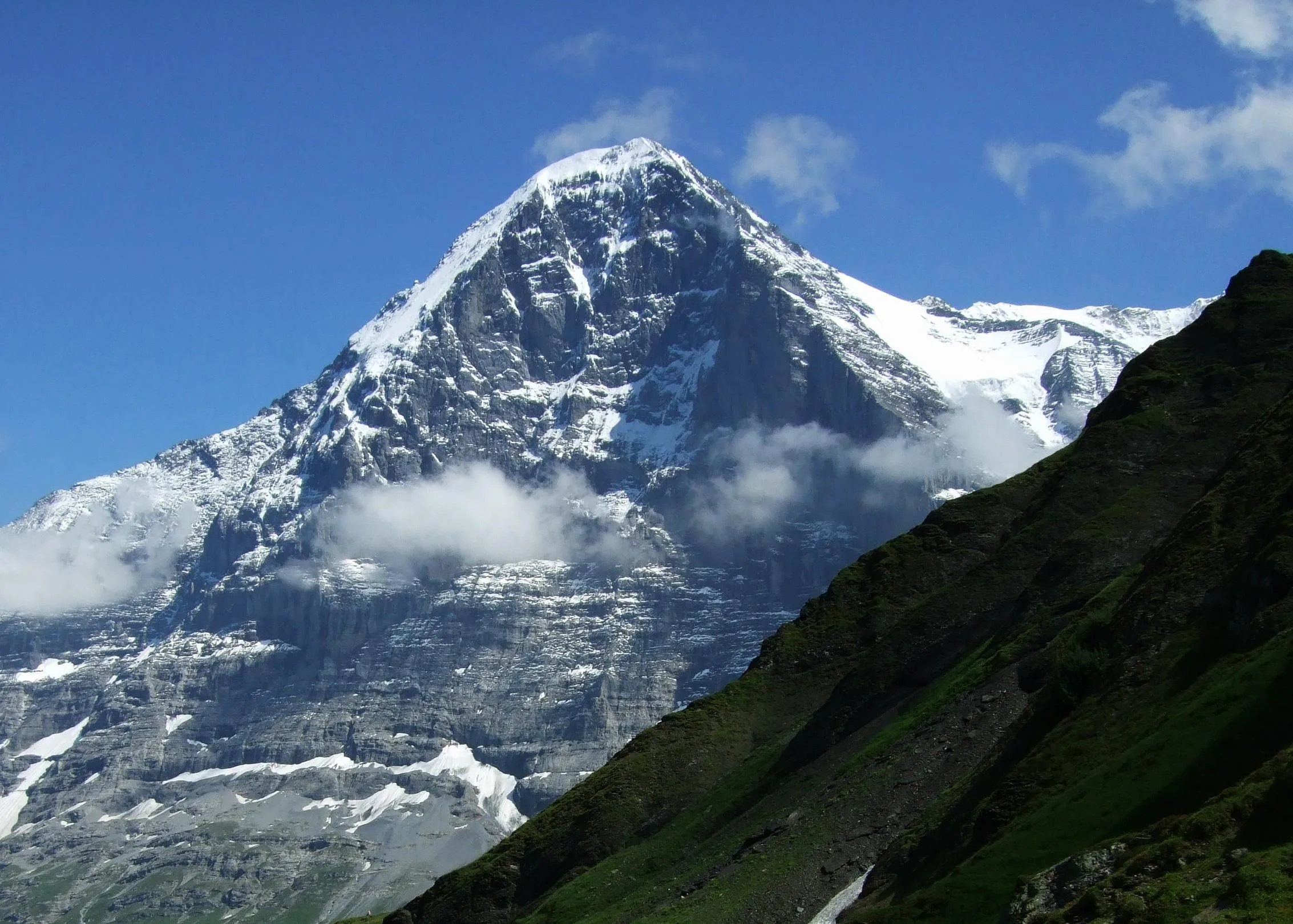
The legendary 1,800-meter original route up the Eiger North Face (3,967m), first climbed between July 21 and 24, 1938, by Anderl Heckmair, Ludwig Vörg, Heinrich Harrer, and Fritz Kasparek. Negotiating an intricate, terrifying labyrinth of down-sloping limestone ledges, friable verglas, and hanging icefields, the route traverses the notorious Hinterstoisser Traverse, Swallow's Nest, the First and Second Icefields, the Death Bivouac, the Ramp, the Traverse of the Gods, and the sinister snowfield known as the White Spider before conquering the Exit Cracks to reach the summit.
Target Objective Peak
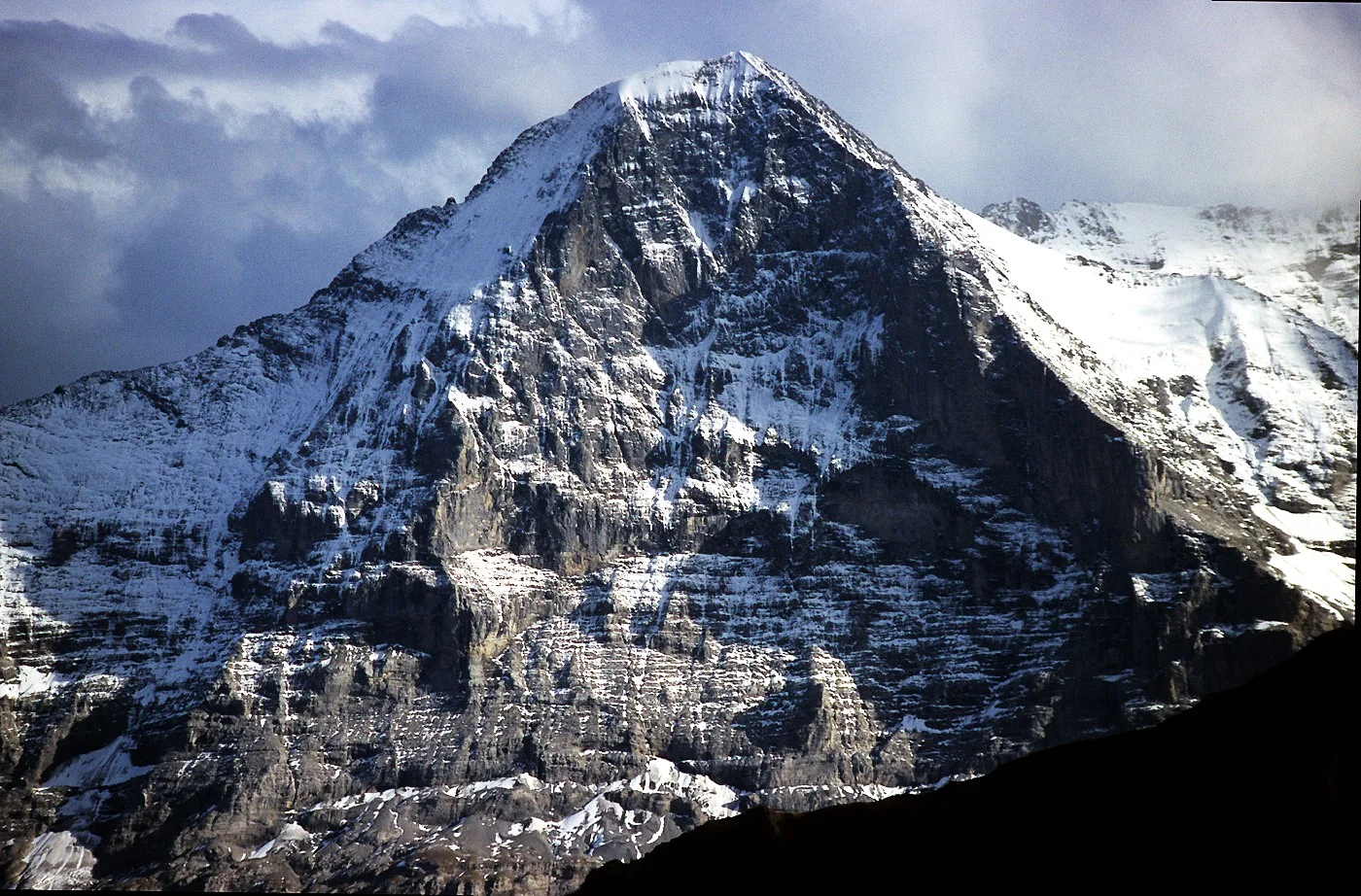

Eiger
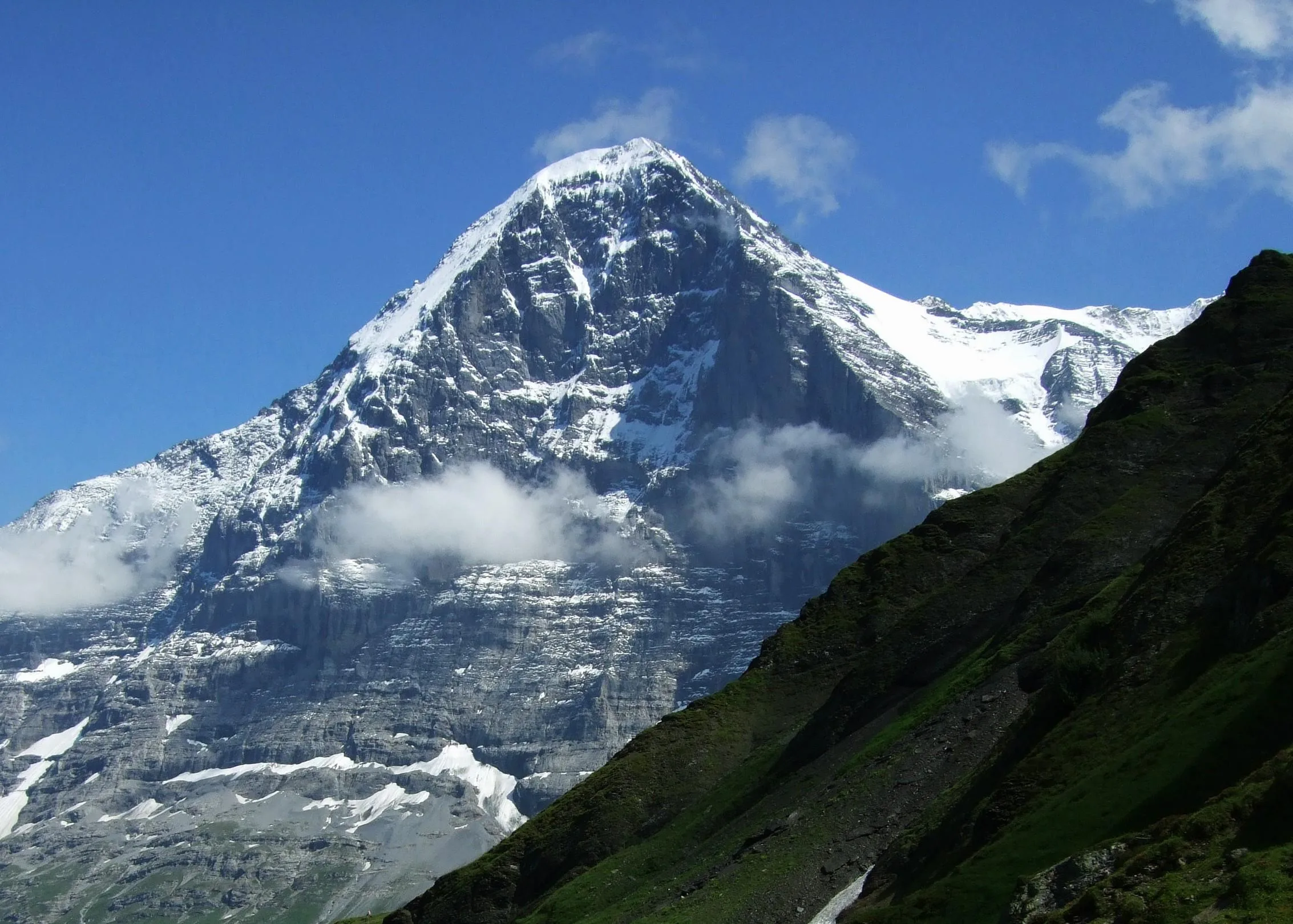
The Eiger, standing at 3,967 meters (13,015 ft) in the Bernese Alps of Switzerland, is globally renowned for its monstrous 1,800-meter (5,900 ft) sheer vertical North Face (the *Eiger-Nordwand*). Feared as the *Mordwand* ('Murder Wall') following catastrophic climbing tragedies in the 1930s, it remained the last great problem of the Alps until conquered in July 1938 by Anderl Heckmair, Ludwig Vörg, Heinrich Harrer, and Fritz Kasparek.
Featured Expedition Climbers
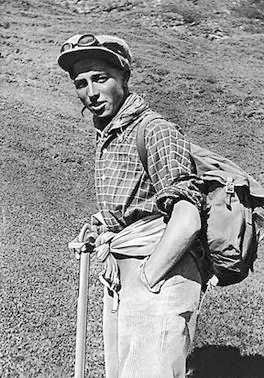
Andreas Hinterstoisser
Born on June 29, 1910, in Berchtesgaden in the Bavarian Alps, Andreas Hinterstoisser was a natural rock athlete who had developed exceptional technique on the fierce limestone walls of the Berchtesgadener Land. An accomplished climber in both summer and winter conditions, Hinterstoisser demonstrated an intuitive reading of blank rock that set him apart from most climbers of his generation. By the mid-1930s, the Eiger North Face — the last great unsolved problem of the Alps — had claimed several lives and attracted the most ambitious young climbers from Germany and Austria, driven partly by the politically charged mountaineering nationalism of the era. In the summer of 1936, Hinterstoisser partnered with his close friend Toni Kurz and two Austrian climbers, Willy Angerer and Edi Rainer, for an attempt on the face. On July 18, the four-man team set out from the foot of the 1,800-metre wall. At the critical first band of smooth, vertical limestone that had stopped all previous parties — the slabs below the First Icefield — Hinterstoisser improvised a revolutionary horizontal pendulum manoeuvre, swinging across the holdless wall on a fixed rope to gain a small ledge system on the far side. No one had conceived of traversing the face horizontally rather than attacking it straight up. The move worked, and the four climbers crossed the traverse and pushed high onto the face. They reached the Second Icefield and beyond, setting a new height record on the face. Then storm descended and disaster followed: Angerer had been struck by rockfall, the weather was deteriorating, and the team made the fatal decision to descend. When they reached the Hinterstoisser Traverse from above, they found that the rope across the slabs had been pulled up after their crossing. They had no means to reverse the traverse. The entire party was trapped. Hinterstoisser died during the subsequent stormy descent on the night of July 21, unable to downclimb the verglas-coated rock. He was twenty-five years old. Two years later, Heckmair, Vörg, Harrer, and Kasparek left the Hinterstoisser Traverse rope permanently in place — a lesson learned in blood.
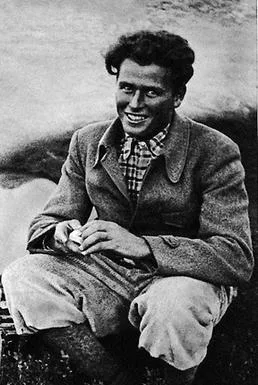
Toni Kurz
Born on July 16, 1913, in Berchtesgaden in the Bavarian Alps, Anton Kurz grew up amid the limestone towers and demanding routes of the Berchtesgadener Land. A skilled and ambitious young climber, Kurz quickly distinguished himself on the local alpine crags before setting his sights on the great north faces of the Alps that had become the obsession of a generation of young German and Austrian climbers in the 1930s. In the summer of 1936, Kurz teamed with fellow Berchtesgadener Andreas Hinterstoisser and two Austrians, Willy Angerer and Edi Rainer, for an attempt on the still-unclimbed Eiger North Face. On July 18, the four-man team crossed Hinterstoisser's revolutionary pendulum traverse across smooth limestone and pushed high onto the face. On July 19, storm descended. Willy Angerer, who had been struck by rockfall, could no longer climb effectively. The party turned to descend. At the bottom of the Hinterstoisser Traverse, they discovered catastrophically that the rope used for the pendulum had already been pulled up — they could not reverse it. Trapped on the wall in a screaming blizzard, the four men attempted to descend the vertical ice-glazed rock by hammering in pitons. During the night of July 21 to 22, Rainer, Angerer, and Hinterstoisser all perished — from exhaustion, injury, or falls. Kurz alone remained alive, hanging by his harness rope on a small ledge in the storm. When mountain railway workers and guides emerged from the Stollenloch window tunnel into the face at dawn on July 22, they found Kurz alive, shouting down to them. They were only 40 metres below him — close enough to hear his voice clearly — but could not reach him on the vertical ground. Through a day of extraordinary suffering, rescuers talked Kurz through rappelling down one rope while climbing up the second to retrieve the pieces, then splicing them into a single rope to reach them. After more than 24 hours on the wall alone, Kurz lowered himself close enough to the guides to almost touch their outstretched hands. But the splice knot in the rope jammed in a carabiner, and Kurz's fingers, black with frostbite, could no longer bend. He said, softly, 'Ich kann nicht mehr' — 'I cannot go on' — and died, dangling in mid-air, three metres above rescue.
Associated Historical Chronicles & Stories
The Battle of the Nordwand: The 1936 Hinterstoisser-Kurz Eiger Tragedy
In July 1936, Andreas Hinterstoisser unlocked the Eiger North Face with his revolutionary pendulum traverse, but a ferocious storm trapped the team, leading to the tragic deaths of all four climbers with Toni Kurz perishing metres from rescue.
Documented Sources & Archival Citations
- The White Spider: The History of the Eiger's North Face(Heinrich Harrer / Rupert Hart-Davis, London)
Supporting claim: Definitive first-person chronicle of the 1936 Hinterstoisser-Kurz tragedy, with eyewitness rescue accounts and the role of the traverse in the 1938 success
Accessed/Documented: 2026 - Eiger: The Vertical Arena(Daniel Anker / The Mountaineers Books)
Supporting claim: Authoritative historical analysis of the 1936 attempt, the Hinterstoisser Traverse, Kurz's final hours, and the rescue team's witness statements
Accessed/Documented: 2026 - The Alpine Journal: 1936 Eiger North Face Accident Report(The Alpine Club, London)
Supporting claim: Official Alpine Club accident report and sworn statements from the 1936 rescue party at the Stollenloch window
Accessed/Documented: 2026