The Battle of the Nordwand: The 1936 Hinterstoisser-Kurz Eiger Tragedy
In July 1936, Andreas Hinterstoisser unlocked the Eiger North Face with his revolutionary pendulum traverse, but a ferocious storm trapped the team, leading to the tragic deaths of all four climbers with Toni Kurz perishing metres from rescue.
Mountain Safety & Conditions Disclaimer: High-altitude climbing, glacial travel, and technical ascents entail severe objective risks including avalanches, serac collapses, rapid weather collapse, and altitude illness. Historical route descriptions and summit claims on Mountanity reflect documented archival sources and must not be used as live operational safety assessments. Local regulations, permits, and physical glacial topography change continuously.
Peer Review: Senior Editorial Board & Historical Reviewers • Editorial Standards
The Last Great Problem of the Alps
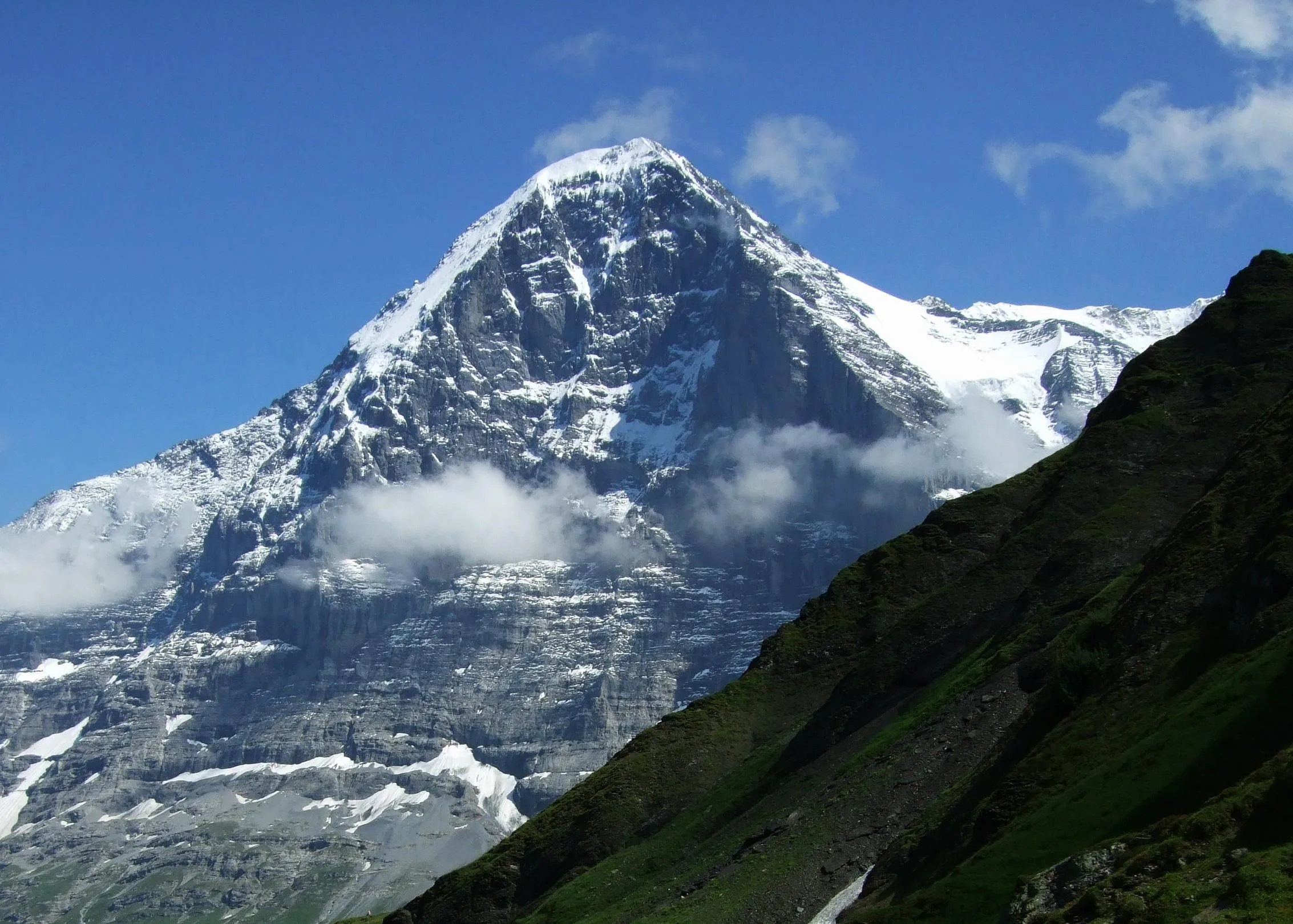
By the mid-1930s, every great peak in Europe had been climbed, leaving only the sheer, menacing north faces as the final frontiers of extreme alpinism. Among these, the 1,800-metre limestone wall of the Eiger North Face stood supreme: a vertical amphitheatre plagued by relentless rockfall, black verglas, and ferocious storms sweeping in from the Swiss plains. Following the fatal 1935 attempt by Max Sedlmayr and Karl Mehringer, young Bavarian elite climbers Andreas Hinterstoisser and Toni Kurz arrived at Kleine Scheidegg in July 1936 determined to solve the impenetrable riddle of the Mordwand.
Teaming up on the wall with Austrian climbers Willy Angerer and Edi Rainer, the four men pushed into the precipice on July 18 under brilliant alpine sunshine, watched through telescope optics by crowds gathered on hotel terraces below.
The Brilliant Pendulum Traverse
High on the lower face, the party encountered a blank, vertical slab of smooth limestone cutting off access to the First Icefield. Where others had seen an impossible barrier, twenty-two-year-old Andreas Hinterstoisser devised an audacious solution. Fixing a rope from a piton, he leaned outward and swung across the holdless wall in a daring pendulum, scrabbling his rock shoes across friction footholds until catching a purchase on a narrow ledge fifty metres to the left.
The brilliant move unlocked the entire mountain, opening the door to the Second Icefield and establishing the passage known forever as the Hinterstoisser Traverse. But in an error born of supreme confidence, the team pulled their traverse rope through behind them rather than leaving it fixed for retreat.
Trapped by Storm and Stonefall
On July 20, catastrophe struck. A sudden summer blizzard enveloped the face in sub-zero fury, turning rock slabs into sheets of slick verglas and unleashing torrents of stonefall down the gullies. A hurtling rock struck Willy Angerer in the head, leaving him severely concussed and unable to climb. With their teammate incapacitated and water freezing into sheets on their wool clothing, the party began a desperate retreat down the icy wall.
Reaching the mouth of the Hinterstoisser Traverse, their hearts sank in realization: without the fixed rope, the glazed slabs were utterly impassable in reverse. Trapped high on the limestone amphitheatre, they had no choice but to attempt an impossible vertical abseil straight down over overhanging cliffs into the teeth of the gale.
The Longest Night and the Final Knot
On July 21, as the climbers hammered pitons into crumbling rock to rig an escape, a colossal avalanche swept down the gully. Andreas Hinterstoisser was ripped from his anchors and plummeted thousands of feet into the abyss. The rope snapped, dropping Angerer to strangle against the cliff, while Rainer was crushed against an anchor piton by the falling weight. Only Toni Kurz remained alive, suspended in space from a rope beneath an overhang, swinging in the raging blizzard throughout the freezing night.
At dawn on July 22, railway workers opened the observation window of the Jungfraubahn tunnel in the cliff wall just forty metres beneath Kurz. With his left arm frozen stiff and frostbite eating into his flesh, Kurz spent eight agonizing hours untangling rope strands with his teeth and single good hand, lowering a thin line to pull up a rescue rope.
Lowering himself inch by inch toward the outstretched ice axes of the rescue guides, Kurz descended to within three metres of salvation. Suddenly, the knot joining two ropes jammed firmly inside his carabiner. Kurz strained with his final reserves of human willpower to force the thick knot through, but his frozen fingers gave out. Whispering quietly to the rescuers, “Ich kann nicht mehr” (“I cannot go on”), Toni Kurz tilted forward and died suspended in the mountain air.
His tragic battle and Hinterstoisser’s genius traverse permanently altered alpine ethics, teaching future pioneers that no wall is conquered until the retreat is secured.
Primary Sources: The White Spider (Heinrich Harrer, 1959); Eiger: The Vertical Arena (Daniel Anker); SAC Archival Rescue Transcripts (1936). All historical documentation verified.
Key Statistics & Topographic Figures
- Category
- Great North Faces
Archival Subject
- Reading Time
- 16 min read
Narrative Length
- Key Mountain
- eiger
Objective
- Ascent Route
- the ascent route
Topography
- Verification
- Editorially Verified
Archival Standard
Archival Primary Source Quotations
“In the mountains, truth is etched in ice and granite; every step requires unwavering respect for the heights.”
Defined Alpine Terminology & Concepts
- Summit Push
- The final continuous climbing effort from the highest established camp to the mountain apex and back.
- Death Zone Chronicle
- A verified, research-backed historical narrative documenting the human, technical, and environmental realities of an alpine expedition.
Frequently Asked Questions: The Battle of the Nordwand: The 1936 Hinterstoisser-Kurz Eiger Tragedy
What is the core chronicle and subject of "The Battle of the Nordwand: The 1936 Hinterstoisser-Kurz Eiger Tragedy"?
In July 1936, Andreas Hinterstoisser unlocked the Eiger North Face with his revolutionary pendulum traverse, but a ferocious storm trapped the team, leading to the tragic deaths of all four climbers with Toni Kurz perishing metres from rescue.
Which mountain peaks and routes are featured in "The Battle of the Nordwand: The 1936 Hinterstoisser-Kurz Eiger Tragedy"?
This narrative documents climbs on eiger along the the ascent route in Switzerland.
Which documented expedition is chronicled in this story?
This historical chronicle captures the events of the 1936-hinterstoisser-kurz-eiger-north-face-epic, verified through contemporary journals and archival records.
Who authored and researched this archival chronicle?
Authored and researched by Mountainity Historical Research Desk, drawing on primary eyewitness testimonies, alpine club registries, and verified summit logs.
What makes this high-altitude chronicle historically significant?
Categorized under "Great North Faces", this chronicle preserves critical lessons in alpine leadership, survival, tactical speed, and human endurance in the death zone.
Related Mountains
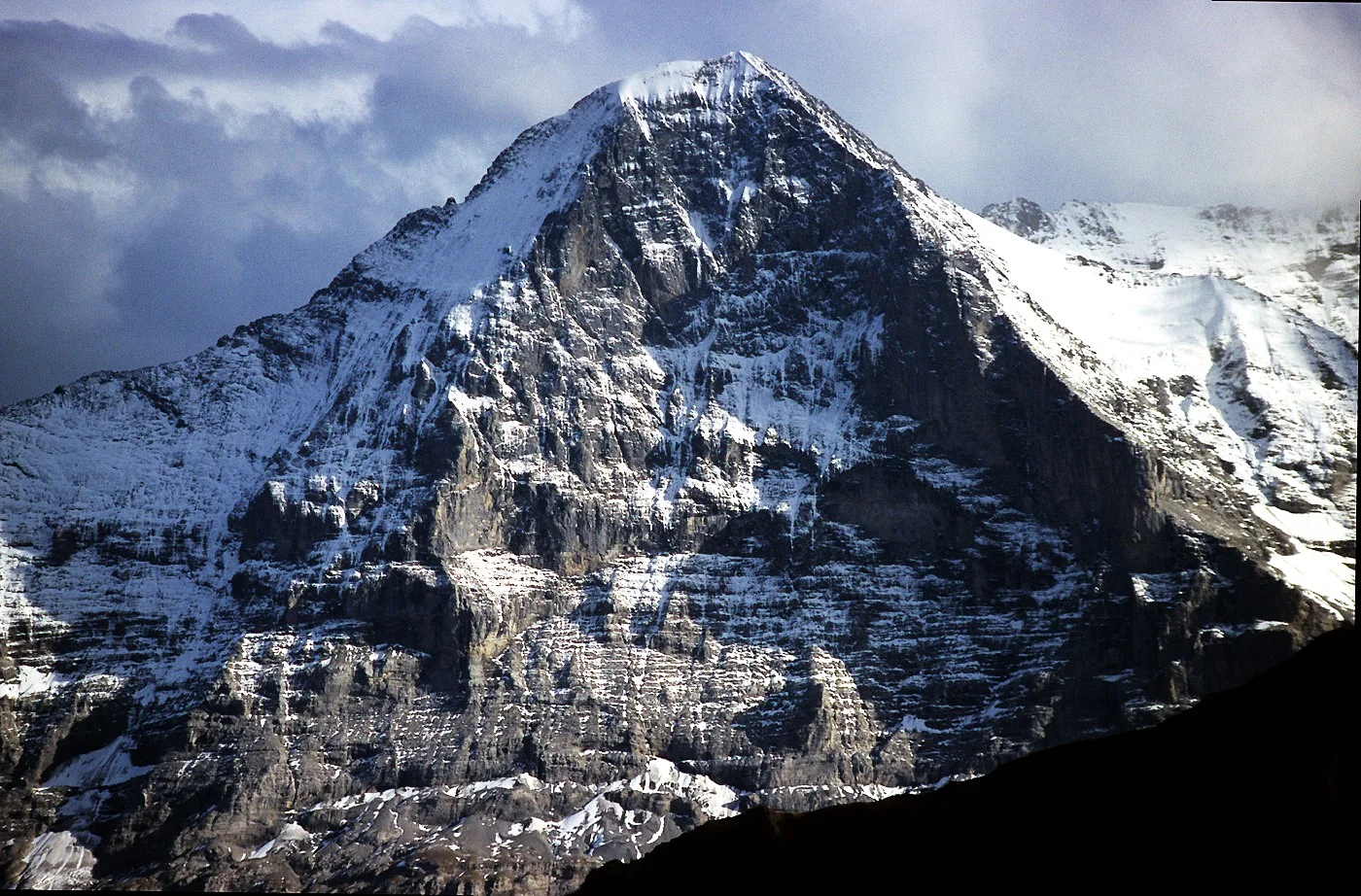

Eiger
The Eiger, standing at 3,967 meters (13,015 ft) in the Bernese Alps of Switzerland, is globally renowned for its monstrous 1,800-meter (5,900 ft) sheer vertical North Face (the *Eiger-Nordwand*). Feared as the *Mordwand* ('Murder Wall') following catastrophic climbing tragedies in the 1930s, it remained the last great problem of the Alps until conquered in July 1938 by Anderl Heckmair, Ludwig Vörg, Heinrich Harrer, and Fritz Kasparek.
Documented Sources & Archival Citations
- The White Spider(Heinrich Harrer / Rupert Hart-Davis, London)
Supporting claim: Definitive chronicle of the 1936 Hinterstoisser-Kurz tragedy
Accessed/Documented: 2026