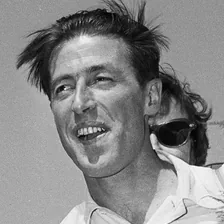
Ernst Reiss
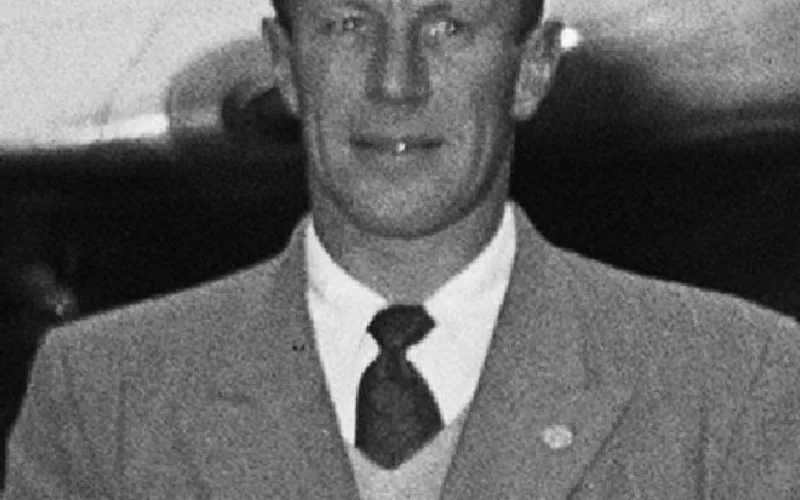
Ernst Reiss was a distinguished Swiss mountaineer and alpine rescue pioneer who achieved the historic first ascent of Lhotse (8,516m), the world's fourth-highest peak, on May 18, 1956, alongside Fritz Luchsinger. A veteran of the 1952 Swiss Everest attempts, Reiss conquered the grueling 1,100-meter Lhotse Couloir from the Western Cwm.
Mountain Safety & Conditions Disclaimer: High-altitude climbing, glacial travel, and technical ascents entail severe objective risks including avalanches, serac collapses, rapid weather collapse, and altitude illness. Historical route descriptions and summit claims on Mountanity reflect documented archival sources and must not be used as live operational safety assessments. Local regulations, permits, and physical glacial topography change continuously.
Peer Review: Senior Editorial Board & Historical Reviewers • Editorial Standards
Biographical Record & Archival Chronicle
Ernst 'Ere' Reiss was born on February 24, 1920, in Davos, Switzerland. Immersed in the high alpine valleys of the Graubünden canton, Reiss trained as a precision mechanic before dedicating his life to alpine rescue, high-altitude guiding, and mountaineering innovation. In the late 1940s, Reiss established himself as one of Switzerland's finest ice and mixed technicians, completing daring ascents in the Bernese Oberland and the Mont Blanc massif.
In 1952, Reiss was selected as a lead assault climber for both the spring and autumn Swiss Mount Everest Expeditions organized by the Swiss Foundation for Alpine Research. Operating in the Western Cwm, Reiss was instrumental in forcing the first passage up the sheer ice ramparts of the Geneva Spur and onto the South Col at 8,000 meters, forging the exact high-altitude gateway that British climbers Hillary and Tenzing utilized to conquer Everest the following year.
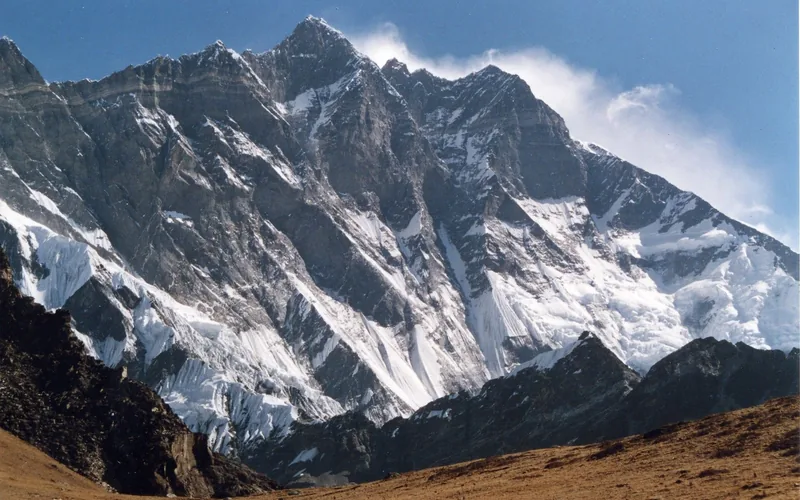
In the spring of 1956, Reiss returned to the Khumbu region on the monumental Swiss Mount Everest and Lhotse Expedition led by Albert Eggler. Tasked specifically with the first ascent of Everest's towering neighbor, Lhotse (8,516m), Reiss partnered with Swiss Army captain Fritz Luchsinger. Above Camp IV in the Western Cwm, the pair forged an audacious line up the Lhotse Face and entered the menacing, rock-strewn Lhotse Couloir—a claustrophobic 1,100-meter funnel of 50-degree hard ice.
On May 18, 1956, using open-circuit oxygen equipment, Reiss and Luchsinger fought their way through bitter gales and cascading spindrift to reach the razor-sharp summit ridge of Lhotse at 8,516 meters. Five days later, their Swiss teammates achieved the second and third ascents of Mount Everest, making the 1956 Swiss expedition one of the most successful high-altitude campaigns in history. Reiss later played a foundational role in modern Swiss air-rescue (Rega) and authored the widely read autobiography Mein Weg als Bergsteiger (1959). He passed away in Basel on August 3, 2010, at the age of ninety.
Notable Milestones & Ascents
- Historic first ascent of Lhotse (8,516m) on May 18, 1956, alongside Fritz Luchsinger
- Pioneered the 1,100-meter Lhotse Couloir (Normal Route) from the Western Cwm
- Pioneered the route across the Geneva Spur to the South Col on Mount Everest in 1952
- Key climbing leader on both 1952 Swiss Mount Everest expeditions (Spring and Autumn)
- Pioneer in high-altitude mountain rescue tactics and early development of Swiss Air-Rescue (Rega)
- Author of Mein Weg als Bergsteiger (1959)
Key Statistics & Topographic Figures
- Lhotse First Ascent
- May 18, 1956
World 4th Highest Mountain
- Couloir Dimensions
- 1,100 meters, 45°-50° hard ice
Technical Funnel Crux
- Geneva Spur Pioneer
- 1952 Swiss Everest
South Col Route Creator
- Lifespan
- Davos, 1920 – Basel, 2010
Swiss Alpine Legend
Archival Primary Source Quotations
“We stood upon a point of rock and snow smaller than a table top, suspended between the heavens and the earth.”
Defined Alpine Terminology & Concepts
- Lhotse Couloir
- The 1,100-meter ice and rock gully pitching up the final pyramid of Lhotse from the Western Cwm to the summit arête.
- Rega
- The Swiss Air-Rescue organization, pioneered by alpine guides including Ernst Reiss to conduct air recoveries in extreme alpine terrain.
Frequently Asked Questions: Ernst Reiss
What was Ernst Reiss’s landmark achievement on Lhotse?
Swiss climber Ernst Reiss made the historic first ascent of Lhotse (8,516m) on May 18, 1956, alongside Fritz Luchsinger, climbing the grueling 1,100-meter Lhotse Couloir.
What did Ernst Reiss achieve on Mount Everest in 1952?
On the 1952 Swiss Everest expeditions, Reiss pioneered the route up the Lhotse Face via the Geneva Spur, reaching the South Col at 8,000 meters and paving the way for the 1953 conquest.
What was Ernst Reiss’s role in Swiss mountain rescue?
Reiss was a foundational leader in the development of the Swiss Air-Rescue service (Rega), pioneering high-altitude helicopter rescue techniques in the Alps.
What autobiography did Ernst Reiss write?
He wrote Mein Weg als Bergsteiger (My Path as a Mountaineer), published in 1959, documenting the 1952 Everest and 1956 Lhotse campaigns.
Associated Summits (2)



Mount Everest
Mount Everest is the highest mountain above sea level on Earth, standing at an official elevation of 8,848.86 meters (29,031.7 ft). Straddling the international frontier between Nepal and China, it is known locally as Sagarmatha in Nepali ('Goddess of the Sky') and Chomolungma in Tibetan ('Mother Goddess of the World'). The peak rises into the extreme upper troposphere, where oxygen levels drop to barely one-third of sea-level pressure. Climbers face hurricane-force jet stream winds, severe frostbite conditions, shifting ice crevasses in the Khumbu Icefall, and the dangerous Death Zone above 8,000 meters.
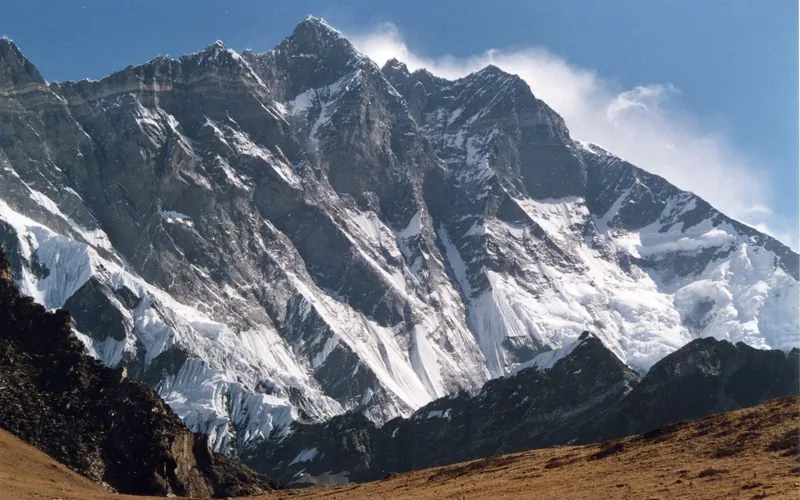
Lhotse
Lhotse, at 8,516 meters (27,940 ft), is the fourth-highest mountain on Earth, connected directly to Mount Everest via the South Col. Renowned for its sheer 3,200-meter South Face, one of the most imposing rock and ice walls in alpinism, the standard route tackles the grueling Lhotse Couloir from the Western Cwm.
Pioneered & Associated Routes (6)
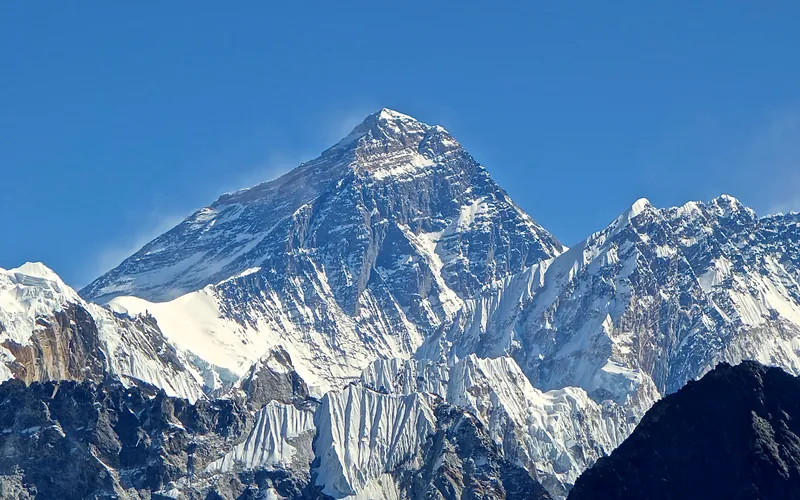
Mount Everest North Face (Hornbein Couloir Direct)
The North Face of Mount Everest via the Japanese Couloir and the sheer Hornbein Couloir is one of the most direct and formidable ice lines in the Himalayas. Rising 3,000 vertical meters from the Rongbuk Glacier to the summit, it funnels through a narrow 60-degree snow-and-ice cleft slicing straight through the Yellow Band and upper limestone cliffs of the North Face. In August 1986, Swiss alpinists Erhard Loretan and Jean Troillet executed one of the most audacious speed climbs in mountain history: climbing the entire face in a single 31-hour push at night without supplemental oxygen, tents, or fixed ropes. After summiting on August 30, they glissaded down the 3,000-meter face on their backs and buttocks in just 3.5 hours, completing the entire round trip in an astonishing 43 hours.
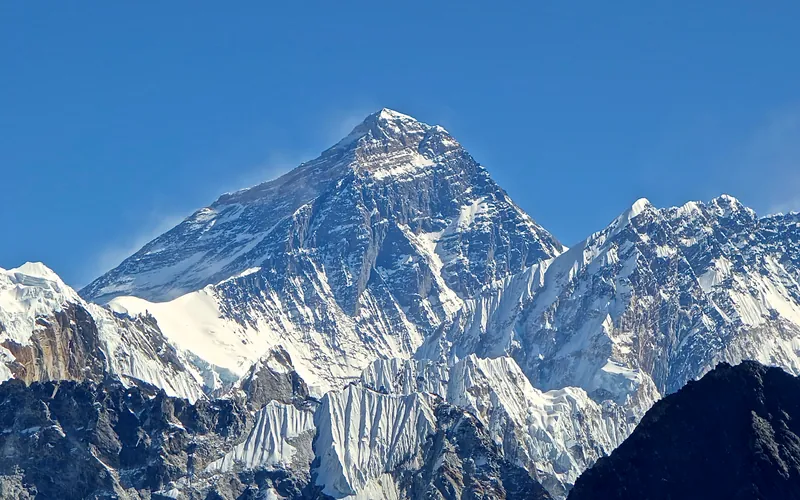
North Col & Northeast Ridge Route
The historic northern route on Mount Everest (8,848.86m), ascending from the Rongbuk and East Rongbuk glaciers to breach the icy wall of the North Col (7,020m). From the col, the route traverses the wind-blasted Northwest Ridge onto the North Face before joining the razor-like Northeast Ridge, navigating the notorious First, Second, and Third Steps in the Death Zone. This was the stage of George Mallory and Andrew Irvine's fateful 1924 climb and was first definitively surmounted on May 25, 1960, by Chinese climbers Wang Fuzhou, Qu Yinhua, and Gongbu.
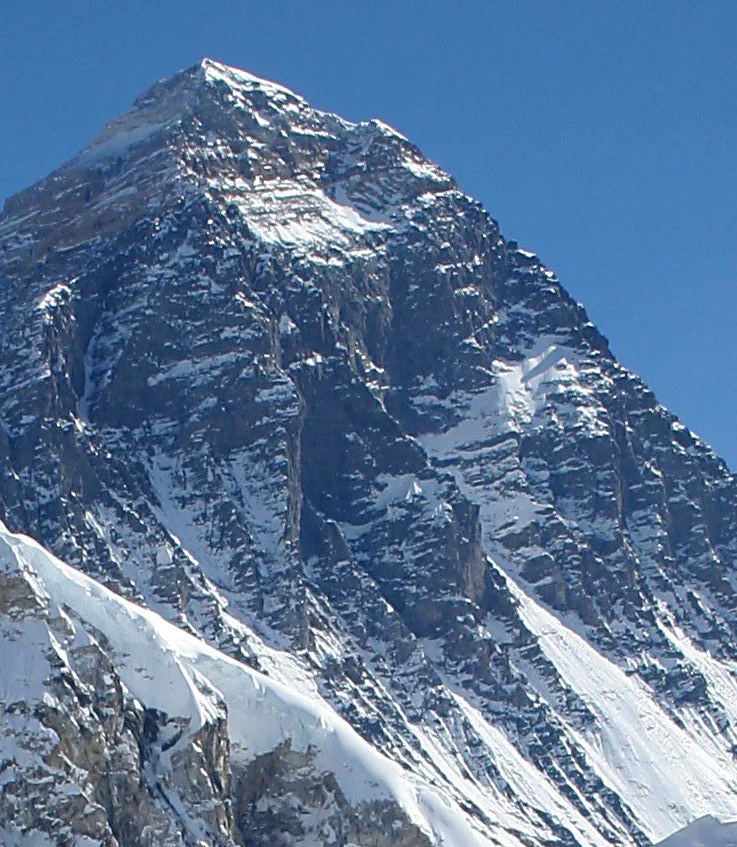
Mount Everest Southwest Face (Bonington Route)
The Southwest Face of Mount Everest (8,848.86m) rises 2,300 vertical meters from the Western Cwm to the summit, presenting one of the largest and most forbidding rock and ice faces in the world. Dominated by the vertical 300-meter 'Rock Band' at 8,200–8,500 meters, the face repelled six international attempts between 1969 and 1974. In autumn 1975, a legendary British expedition led by Chris Bonington breached the face when Paul Braithwaite and Nick Estcourt unlocked the key ramp through the Rock Band. On September 24, 1975, Doug Scott and Dougal Haston climbed to the South Summit and pushed on to the main summit, becoming the first Britons to conquer Everest. Trapped by nightfall during their descent, they survived an epic open bivouac at 8,760 meters without oxygen, sleeping bags, or frostbite.
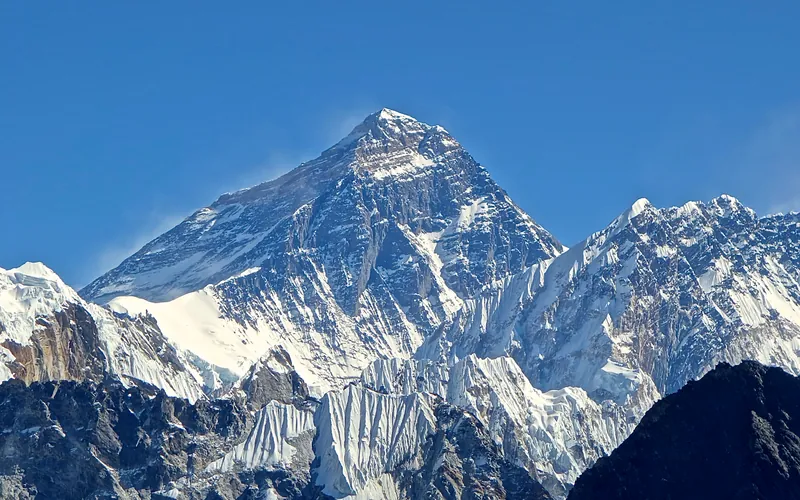
Mount Everest Complete West Ridge (Yugoslav Direct)
The Complete West Ridge of Mount Everest is one of the most formidable and sustained technical routes on the mountain. Pioneered in spring 1979 by an elite Yugoslav expedition led by Tone Škarja, the route tackles the integral knife-edge crest directly from the Lho La col (6,026m) all the way to the 8,848.86m summit. Unlike the 1963 American West Ridge route which diverted into the Hornbein Couloir from the North Face, the Yugoslav line stayed strictly along the razor-edge crest of the West Ridge, surmounting technical rock buttresses up to Grade V+ at extreme altitude before traversing around the Yellow Band. On May 13, 1979, Andrej Štremfelj and Nejc Zaplotnik achieved the first ascent of the complete ridge, followed two days later by Stane Belak, Marjan Manfreda, and Ang Phu Sherpa in one of the greatest feats in Himalayan history.
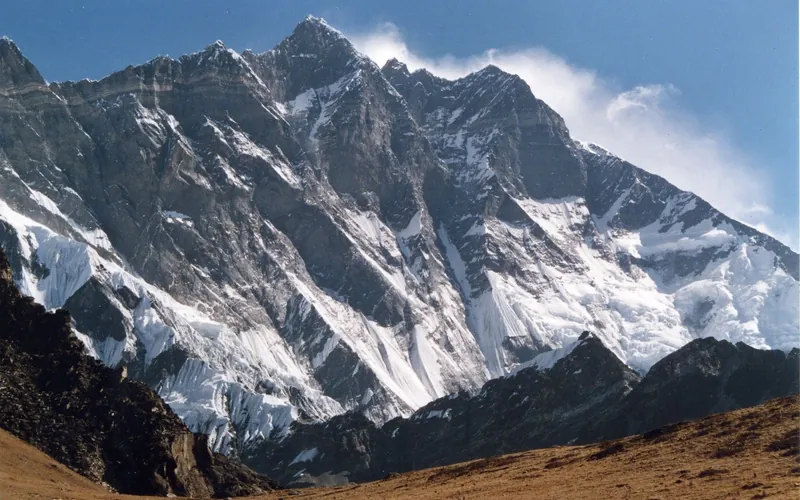
Lhotse Normal Route (West Face & Couloir)
The Normal Route on Lhotse shares the Everest South Col route through the treacherous Khumbu Icefall and across the Western Cwm up to Camp 3 on the Lhotse Face (7,200m). Beyond the Yellow Band, the route splits right from the South Col route and ascends directly into the notorious Lhotse Couloir—a narrow, 500-meter vertical gully of 45-to-50-degree hard blue ice funneling into the 8,516m summit.
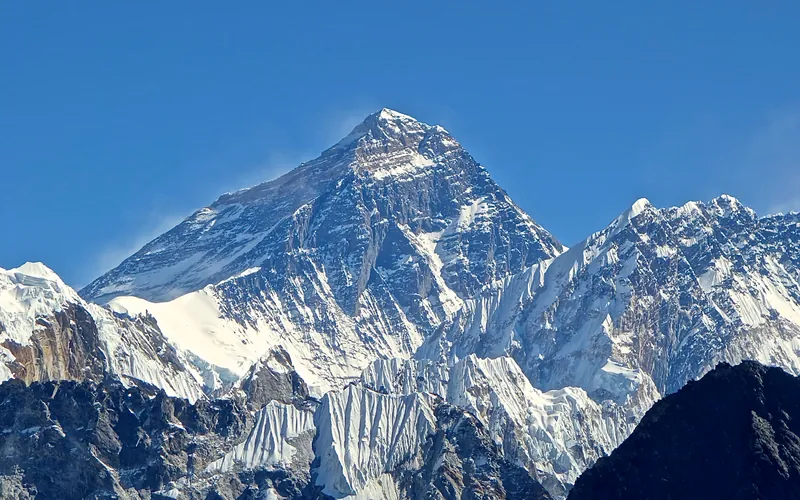
South Col & Southeast Ridge (Normal Route)
The South Col Route along the Southeast Ridge is the historic path of the 1953 first ascent and the most popular route on Mount Everest. Starting from Base Camp on the Khumbu Glacier in Nepal, climbers navigate the shifting seracs of the Khumbu Icefall into the Western Cwm. The route then scales the icy 45-degree slope of the Lhotse Face to the South Col at 7,925 meters, launching the final summit bid through the Balcony, South Summit, and Hillary Step to the summit of Earth at 8,848.86 meters.
Documented Expeditions (2)
1952 Swiss Mount Everest Expedition
Led by Edouard Wyss-Dunant, the historic spring 1952 Swiss expedition unlocked the Khumbu Icefall and South Col route, where Raymond Lambert and Tenzing Norgay reached 8,595 meters.
1956 Swiss Mount Everest and Lhotse Expedition
Organized by the Swiss Foundation for Alpine Research, this celebrated expedition made the first ascent of Lhotse (8,516m) on May 18, 1956, when Ernst Reiss and Fritz Luchsinger conquered the Lhotse Couloir, followed days later by Swiss summits on Mount Everest.
Associated Chronicles & Stories (1)
Lhotse 1956: Ernst Reiss, Fritz Luchsinger, and the 1,100-Meter Couloir
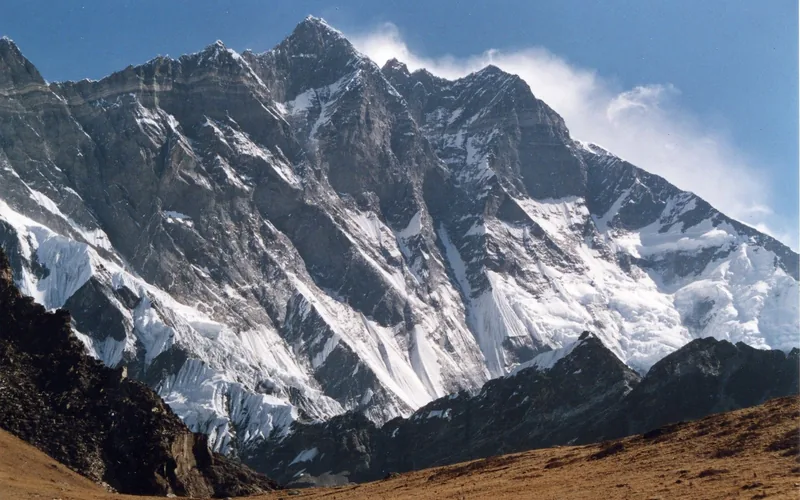
On May 18, 1956, Swiss climbers Ernst Reiss and Fritz Luchsinger achieved the historic first ascent of Lhotse (8,516m), conquering the grueling 1,100-meter ice couloir to claim Earth's fourth-highest giant.
Documented Sources & Archival Citations
- Mein Weg als Bergsteiger (My Path as a Mountaineer)(Ernst Reiss / Orell Füssli Verlag)
Supporting claim: Autobiographical account of the 1952 Everest attempts and the 1956 Lhotse first ascent
Accessed/Documented: 1959 - The Swiss Everest-Lhotse Expedition 1956(Albert Eggler / Swiss Foundation for Alpine Research)
Supporting claim: Official expedition leader narrative detailing logistics, team roster, and summit day
Accessed/Documented: 1957 - The Himalayan Database: Spring 1956 Lhotse Records(Elizabeth Hawley Archive)
Supporting claim: Verified expedition logs, ascent timestamps, and route confirmation
Accessed/Documented: 2026