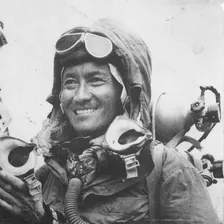
Tenzing Norgay
Tenzing Norgay was a Nepali-Indian Sherpa mountaineer who achieved global renown by making the first confirmed summit ascent of Mount Everest alongside Sir Edmund Hillary on May 29, 1953. A veteran of seven Everest expeditions, he previously reached a world altitude record of 8,595 meters with Raymond Lambert in 1952. Norgay later served as the founding Director of Field Training at the Himalayan Mountaineering Institute in Darjeeling.
Mountain Safety & Conditions Disclaimer: High-altitude climbing, glacial travel, and technical ascents entail severe objective risks including avalanches, serac collapses, rapid weather collapse, and altitude illness. Historical route descriptions and summit claims on Mountanity reflect documented archival sources and must not be used as live operational safety assessments. Local regulations, permits, and physical glacial topography change continuously.
Peer Review: Senior Editorial Board & Historical Reviewers • Editorial Standards
Biographical Record & Archival Chronicle
Tenzing Norgay was born in late May 1914 in the Khumbu region of northeastern Nepal into a Tibetan yak-herding family, initially given the name Namgyal Wangdi. Following a childhood illness, his parents consulted the revered head lama of Rongbuk Monastery, Ngawang Tenzin Norbu, who advised renaming the boy Tenzing Norgay, translating to 'wealthy fortunate follower of religion'. Raised beneath the shadows of Everest, he was captivated from early boyhood by stories of foreign expeditions attempting the sacred mountain. At age nineteen, determined to carve out an independent life, he ran away from home to the Toong Soong settlement in Darjeeling, India, where British climbing expeditions recruited indigenous high-altitude porters.
In 1935, legendary explorer Eric Shipton hired the twenty-year-old Tenzing for the fifth British Everest reconnaissance expedition after noticing his warm smile and remarkable physical strength. Tenzing quickly distinguished himself through his tireless work ethic, endurance, and cheerful resilience. He returned to Everest on the 1936 British attempt led by Hugh Ruttledge and the 1938 expedition under H. W. Tilman, ascending to 8,300 meters on the Tibetan North Col route. During the late 1940s, Tenzing expanded his technical mountaineering portfolio across northern India, joining a Swiss expedition in 1947 to make the first ascent of Kedarnath (6,940m) in the Garhwal Himalaya, and surviving a clandestine, unauthorized attempt on Everest with Canadian eccentric Earl Denman.
In the spring of 1952, the Swiss Foundation for Alpine Research mounted an expedition to Everest led by Edouard Wyss-Dunant. For the first time in Himalayan history, Tenzing was engaged not as a subordinate porter, but as Sirdar and a full climbing member. He forged an instant, profound brotherhood with Swiss mountain guide Raymond Lambert. Together, they unlocked the treacherous route through the Khumbu Icefall, crossed the Western Cwm, and scaled the Geneva Spur to reach the South Col (7,925m). On May 28, 1952, without adequate sleeping bags or warm fluids, Lambert and Tenzing pushed to an astonishing altitude of 8,595 meters (28,199 ft) along the Southeast Ridge—establishing the highest point humans had ever reached. While severe hypoxia and failing oxygen gear forced their retreat, their breakthrough proved that the summit was attainable via the southern route.
When Colonel John Hunt organized the 1953 British Mount Everest Expedition, Tenzing's peerless high-altitude experience made his appointment as Sirdar and lead climber indispensable. Teaming with New Zealand climber Edmund Hillary on the second assault pair, Tenzing carried heavy loads to establish Camp IX high on the Southeast Ridge at 8,500 meters. On the morning of May 29, 1953, the duo moved steadily along the knife-edge crest. Hillary chimneyed up the 12-meter rock wall now known as the Hillary Step, and at 11:30 AM, Hillary and Tenzing stepped onto the 8,848.86-meter summit together. Tenzing spent fifteen minutes on the summit: he unfurled the flags of the United Nations, Great Britain, Nepal, and India, and buried offerings of biscuits, sweets, and a small red-and-blue pencil from his daughter Nima in the summit snow as a Buddhist gesture of gratitude to the mountain goddess Chomolungma.
Following the ascent, Tenzing was celebrated as a hero across Asia and the Western world, awarded the George Medal by Queen Elizabeth II, the Order of the Star of Nepal, and the Padma Bhushan by the Republic of India. In 1954, Indian Prime Minister Jawaharlal Nehru established the Himalayan Mountaineering Institute (HMI) in Darjeeling, appointing Tenzing as its inaugural Director of Field Training. For over two decades, Tenzing trained thousands of Indian and international climbers in modern alpine safety, glacier craft, and ethical expedition leadership. He passed away in Darjeeling on May 9, 1986, leaving an indelible legacy as the standard-bearer for Sherpa climbing excellence and Himalayan heritage.
Notable Milestones & Ascents
- First confirmed human ascent of Mount Everest (8,848.86m) on May 29, 1953 with Sir Edmund Hillary
- Reached world altitude record of 8,595m (28,199 ft) with Raymond Lambert during 1952 Swiss expedition
- Pioneered the South Col route through the Khumbu Icefall, Western Cwm, and Geneva Spur
- First ascent of Kedarnath (6,940m / 22,769 ft) in the Garhwal Himalaya with André Roch (1947)
- Veteran of seven historical Mount Everest expeditions between 1935 and 1953
- Inaugural Director of Field Training at the Himalayan Mountaineering Institute (HMI) in Darjeeling (1954)
- Awarded the George Medal (UK), Star of Nepal (1st Class), and Padma Bhushan (India)
Key Statistics & Topographic Figures
- Everest First Ascent
- May 29, 1953
With Sir Edmund Hillary at 11:30 AM
- Swiss Altitude Record
- 8,595 Meters (28,199 ft)
May 28, 1952 with Raymond Lambert
- Total Everest Expeditions
- 7 Expeditions
Between 1935 and 1953
- Kedarnath First Ascent
- 6,940 Meters
Garhwal Himalaya with André Roch (1947)
- HMI Field Director
- 1954–1976
Trained Generations of Himalayan Alpinists
- British Royal Honor
- George Medal (GM)
Conferred by Queen Elizabeth II (1953)
Archival Primary Source Quotations
“To travel, to experience and learn: that is to live. The mountain cannot be conquered; one can only stand upon its summit for a few brief minutes and give thanks.”
“If it is a shame to be the second man on Mount Everest, then I will have to live with this shame. We reached the top together, as brothers.”
“Tenzing possessed an astonishing high-altitude constitution and a natural grace on steep ice. He was not merely a member of the team; he was our heart and soul.”
Defined Alpine Terminology & Concepts
- Sirdar
- The chief indigenous guide and foreman of high-altitude Sherpa climbing teams, responsible for route staging, logistics, porter welfare, and tactical coordination with expedition leadership.
- Western Cwm
- A broad, undulating glacial valley (6,000m to 6,800m) situated between the Southwest Face of Everest and Nuptse, first unlocked by Tenzing Norgay and the 1952 Swiss expedition.
- Geneva Spur
- A prominent rib of black limestone and slate jutting from the upper Lhotse Face at 7,600 to 7,900 meters, named after the 1952 Swiss expedition team that first pioneered the passage.
- Tiger of the Snows
- An honorific title awarded to elite Himalayan Sherpas who demonstrated exceptional courage, physical endurance, and loyalty carrying heavy expedition payloads into extreme altitudes.
Frequently Asked Questions: Tenzing Norgay
Who was Tenzing Norgay and why is he considered a legendary mountaineer?
Tenzing Norgay (1914–1986), born Namgyal Wangdi and nicknamed 'Tiger of the Snows', was a Nepali-Indian Sherpa mountaineer who achieved world fame alongside Sir Edmund Hillary by making the first confirmed summit ascent of Mount Everest on May 29, 1953. A veteran of seven Everest expeditions, he had previously set a world altitude record of 8,595 meters with Swiss climber Raymond Lambert in 1952. Norgay later served as the inaugural Director of Field Training at the Himalayan Mountaineering Institute (HMI) in Darjeeling.
How did Tenzing Norgay and Sir Edmund Hillary reach the summit of Mount Everest in 1953?
On May 28, 1953, Tenzing Norgay and Edmund Hillary established a high tent at 8,500 meters on the Southeast Ridge. Setting off at 6:30 AM on May 29 using open-circuit oxygen apparatus, they navigated the steep snow ridge to the base of a 12-meter rock crack now known as the Hillary Step. After Hillary chimneyed up the rock face and belayed Tenzing, the pair crossed the final corniced ridge, stepping onto the 8,848.86-meter summit together at 11:30 AM.
What was the 1952 Swiss Everest Expedition and what altitude record did Tenzing achieve?
During the spring 1952 Swiss Mount Everest Expedition led by Edouard Wyss-Dunant, Tenzing Norgay served as Sirdar and equal climbing partner with Geneva guide Raymond Lambert. Together, they forged the route through the Khumbu Icefall, Western Cwm, and Geneva Spur to the South Col (7,925m). On May 28, 1952, enduring sub-zero temperatures without sleeping bags at 8,400 meters, they climbed to an unprecedented 8,595 meters (28,199 ft)—establishing a world altitude record that paved the way for the 1953 British victory.
What did Tenzing Norgay leave at the summit of Mount Everest in 1953?
Upon reaching the summit of Mount Everest on May 29, 1953, Tenzing Norgay made a Buddhist offering of gratitude to Chomolungma by digging a small hole in the snow and burying biscuits, chocolate, sweets, and a small blue-and-red pencil given to him by his daughter Nima. He also unfurled and held up the national flags of Great Britain, Nepal, and India alongside the flag of the United Nations for Hillary's famous summit photograph.
What was Tenzing Norgay's role at the Himalayan Mountaineering Institute (HMI)?
In 1954, following the historic Everest ascent, Indian Prime Minister Jawaharlal Nehru founded the Himalayan Mountaineering Institute (HMI) in Darjeeling, West Bengal, to train Indian and international youth in mountaineering craft. Tenzing Norgay was appointed as the inaugural Director of Field Training, a role he held for more than two decades, training thousands of climbers and transforming modern Sherpa climbing culture.
What honors and civilian awards did Tenzing Norgay receive?
Tenzing Norgay received the George Medal from Queen Elizabeth II and the Queen Elizabeth II Coronation Medal in 1953, the Order of the Star of Nepal (Supradipta-Manyabara-Nepal-Tara, 1st Class) from King Tribhuvan of Nepal, the Padma Bhushan from the Republic of India in 1959, and the Hubbard Medal from the National Geographic Society in 1954.
Associated Summits (1)
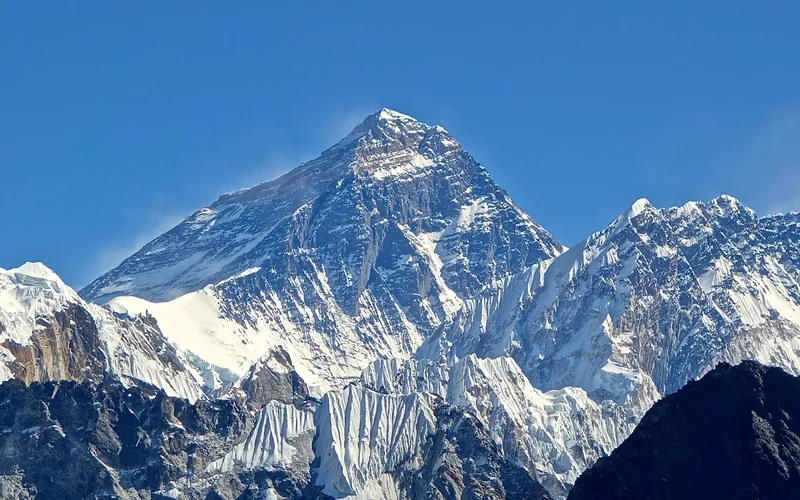


Mount Everest
Mount Everest is the highest mountain above sea level on Earth, standing at an official elevation of 8,848.86 meters (29,031.7 ft). Straddling the international frontier between Nepal and China, it is known locally as Sagarmatha in Nepali ('Goddess of the Sky') and Chomolungma in Tibetan ('Mother Goddess of the World'). The peak rises into the extreme upper troposphere, where oxygen levels drop to barely one-third of sea-level pressure. Climbers face hurricane-force jet stream winds, severe frostbite conditions, shifting ice crevasses in the Khumbu Icefall, and the dangerous Death Zone above 8,000 meters.
Pioneered & Associated Routes (5)
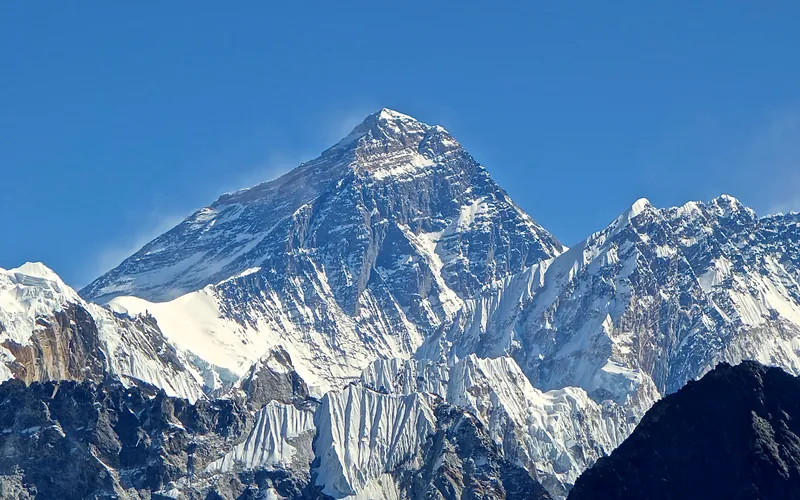
Mount Everest North Face (Hornbein Couloir Direct)
The North Face of Mount Everest via the Japanese Couloir and the sheer Hornbein Couloir is one of the most direct and formidable ice lines in the Himalayas. Rising 3,000 vertical meters from the Rongbuk Glacier to the summit, it funnels through a narrow 60-degree snow-and-ice cleft slicing straight through the Yellow Band and upper limestone cliffs of the North Face. In August 1986, Swiss alpinists Erhard Loretan and Jean Troillet executed one of the most audacious speed climbs in mountain history: climbing the entire face in a single 31-hour push at night without supplemental oxygen, tents, or fixed ropes. After summiting on August 30, they glissaded down the 3,000-meter face on their backs and buttocks in just 3.5 hours, completing the entire round trip in an astonishing 43 hours.
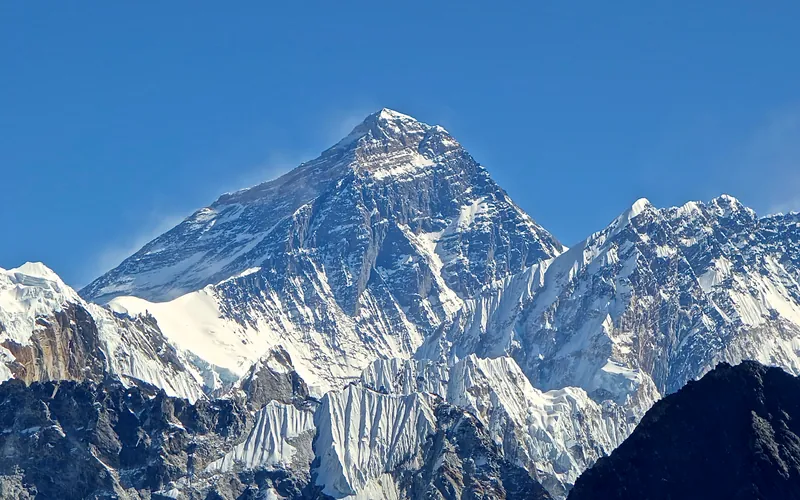
North Col & Northeast Ridge Route
The historic northern route on Mount Everest (8,848.86m), ascending from the Rongbuk and East Rongbuk glaciers to breach the icy wall of the North Col (7,020m). From the col, the route traverses the wind-blasted Northwest Ridge onto the North Face before joining the razor-like Northeast Ridge, navigating the notorious First, Second, and Third Steps in the Death Zone. This was the stage of George Mallory and Andrew Irvine's fateful 1924 climb and was first definitively surmounted on May 25, 1960, by Chinese climbers Wang Fuzhou, Qu Yinhua, and Gongbu.
Mount Everest Southwest Face (Bonington Route)
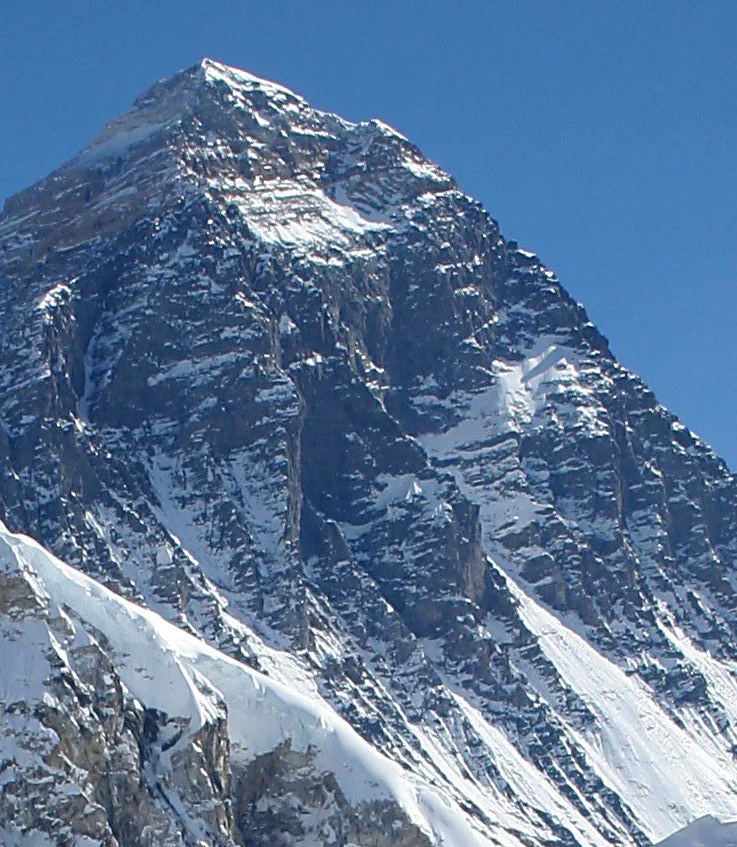
The Southwest Face of Mount Everest (8,848.86m) rises 2,300 vertical meters from the Western Cwm to the summit, presenting one of the largest and most forbidding rock and ice faces in the world. Dominated by the vertical 300-meter 'Rock Band' at 8,200–8,500 meters, the face repelled six international attempts between 1969 and 1974. In autumn 1975, a legendary British expedition led by Chris Bonington breached the face when Paul Braithwaite and Nick Estcourt unlocked the key ramp through the Rock Band. On September 24, 1975, Doug Scott and Dougal Haston climbed to the South Summit and pushed on to the main summit, becoming the first Britons to conquer Everest. Trapped by nightfall during their descent, they survived an epic open bivouac at 8,760 meters without oxygen, sleeping bags, or frostbite.
Mount Everest Complete West Ridge (Yugoslav Direct)
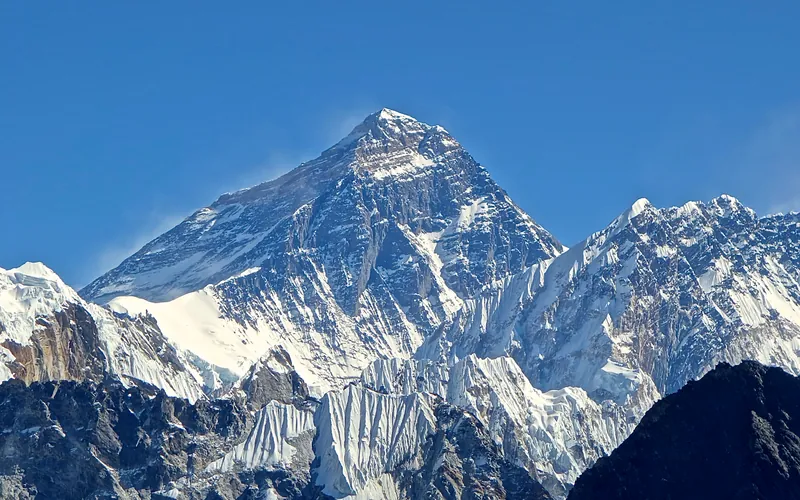
The Complete West Ridge of Mount Everest is one of the most formidable and sustained technical routes on the mountain. Pioneered in spring 1979 by an elite Yugoslav expedition led by Tone Škarja, the route tackles the integral knife-edge crest directly from the Lho La col (6,026m) all the way to the 8,848.86m summit. Unlike the 1963 American West Ridge route which diverted into the Hornbein Couloir from the North Face, the Yugoslav line stayed strictly along the razor-edge crest of the West Ridge, surmounting technical rock buttresses up to Grade V+ at extreme altitude before traversing around the Yellow Band. On May 13, 1979, Andrej Štremfelj and Nejc Zaplotnik achieved the first ascent of the complete ridge, followed two days later by Stane Belak, Marjan Manfreda, and Ang Phu Sherpa in one of the greatest feats in Himalayan history.
South Col & Southeast Ridge (Normal Route)
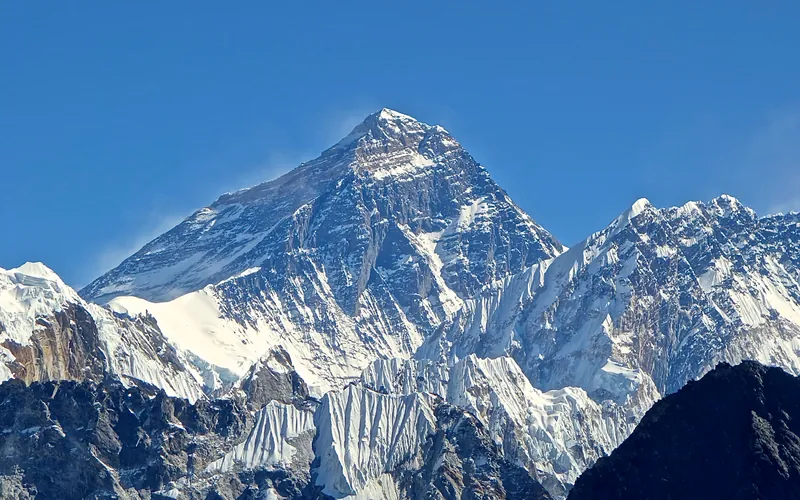
The South Col Route along the Southeast Ridge is the historic path of the 1953 first ascent and the most popular route on Mount Everest. Starting from Base Camp on the Khumbu Glacier in Nepal, climbers navigate the shifting seracs of the Khumbu Icefall into the Western Cwm. The route then scales the icy 45-degree slope of the Lhotse Face to the South Col at 7,925 meters, launching the final summit bid through the Balcony, South Summit, and Hillary Step to the summit of Earth at 8,848.86 meters.
Documented Expeditions (2)
1952 Swiss Mount Everest Expedition
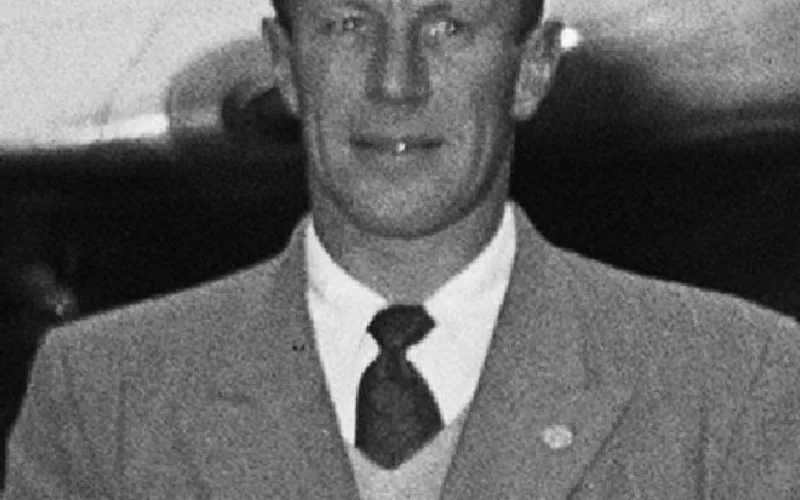
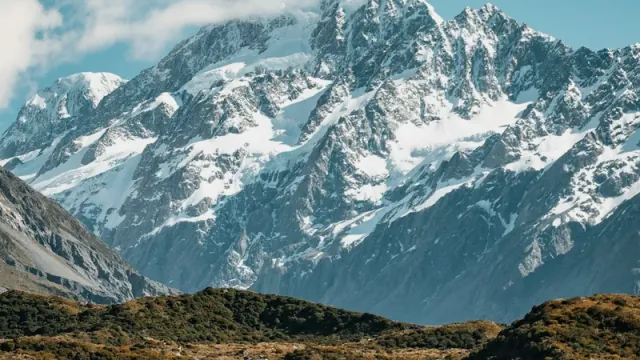
Led by Edouard Wyss-Dunant, the historic spring 1952 Swiss expedition unlocked the Khumbu Icefall and South Col route, where Raymond Lambert and Tenzing Norgay reached 8,595 meters.
1953 British Mount Everest Expedition
Led by Colonel John Hunt, the ninth British expedition achieved the monumental first confirmed human ascent of Mount Everest on May 29, 1953.
Associated Chronicles & Stories (2)
The 1953 Ascent of Everest: Hillary, Tenzing, and the Summit of the World
On May 29, 1953, Edmund Hillary and Tenzing Norgay stood atop the highest point on Earth, turning decades of Himalayan failure into mountaineering triumph.
1952 Swiss Everest Expedition: The 8,595m Breakthrough
How Tenzing Norgay and Raymond Lambert forged the South Col route and climbed to 8,595m, blazing the trail for Everest's conquest.
Documented Sources & Archival Citations
- Man of Everest: The Autobiography of Tenzing(Tenzing Norgay & James Ramsey Ullman / Harrap)
Supporting claim: Autobiography detailing Sherpa heritage, 1952 Swiss attempt, and 1953 Everest ascent
Accessed/Documented: 1955 - Tenzing: Hero of Everest(Ed Douglas / National Geographic)
Supporting claim: Comprehensive biographical chronicle of Tenzing's life, expeditions, and mountaineering legacy
Accessed/Documented: 2003 - The Ascent of Everest(John Hunt / Hodder & Stoughton)
Supporting claim: Official expedition narrative of the 1953 British climb and Hillary-Tenzing summit partnership
Accessed/Documented: 1953 - Forerunners to Everest: The Story of the Two Swiss Expeditions of 1952(René Dittert, Gabriel Chevalley & Raymond Lambert / Allen & Unwin)
Supporting claim: Official account of the 1952 Swiss expedition and the 8,595-meter altitude record
Accessed/Documented: 1954 - Jamling Tenzing Norgay Photographic Archive (1953)(Jamling Tenzing Norgay / Wikimedia Commons / CC BY-SA 3.0)
Supporting claim: Verified authentic photographic portrait of Tenzing Norgay during the 1953 Everest campaign
Accessed/Documented: 1953