1952 Swiss Mount Everest Expedition
Led by Edouard Wyss-Dunant, the historic spring 1952 Swiss expedition unlocked the Khumbu Icefall and South Col route, where Raymond Lambert and Tenzing Norgay reached 8,595 meters.
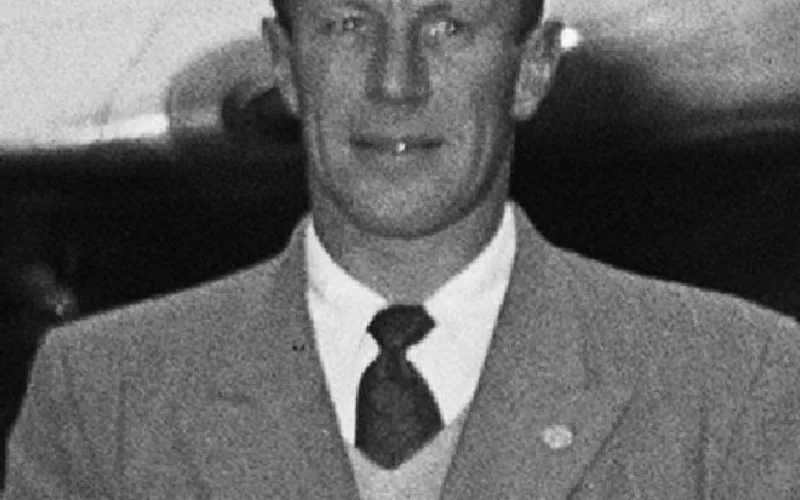
Mountain Safety & Conditions Disclaimer: High-altitude climbing, glacial travel, and technical ascents entail severe objective risks including avalanches, serac collapses, rapid weather collapse, and altitude illness. Historical route descriptions and summit claims on Mountanity reflect documented archival sources and must not be used as live operational safety assessments. Local regulations, permits, and physical glacial topography change continuously.
Peer Review: Senior Editorial Board & Historical Reviewers • Editorial Standards
Official Expedition Narrative & Archival Record
In the spring of 1952, the Swiss Foundation for Alpine Research launched an expedition to Mount Everest (8,848.86m) led by Dr. Edouard Wyss-Dunant. For the first time in Himalayan history, Sherpa leader Tenzing Norgay was treated not merely as a high-altitude porter, but as a full climbing partner. Alongside Geneva mountain guide Raymond Lambert, Tenzing pioneered the route through the chaotic seracs of the Khumbu Icefall, unlocked the Western Cwm, and forced a line across the Lhotse Face via the rock rib now known as the Geneva Spur to reach the desolate South Col (7,925m). On May 28, 1952, despite lacking adequate high-altitude tents and sleeping bags at their tiny Camp VI (8,400m), Lambert and Tenzing pushed upward along the Southeast Ridge. Clad in heavy wool and down without sufficient fluids, they reached an unprecedented altitude of 8,595 meters (28,199 ft)—just 250 vertical meters below the summit—establishing the highest point human feet had ever stood. Although exhausted and forced to retreat by deteriorating weather and failing oxygen apparatus, their route discovery directly established the path used for the first successful ascent one year later.
Documented Team Composition
- Edouard Wyss-Dunant (Expedition Leader)
- Raymond Lambert (Lead Climber)
- Tenzing Norgay (Sirdar & Lead Climber)
- Ernst Reiss (Lead Climber & Geneva Spur Pioneer)
- Gabriel Chevalley (Expedition Doctor)
- René Dittert
- Jean-Jacques Asper
Key Statistics & Topographic Figures
- Altitude Record
- 8,595 m (28,199 ft)
World Record in May 1952
- Assault Climbers
- Raymond Lambert & Tenzing Norgay
Lead Summit Pair
- Expedition Leader
- Dr. Edouard Wyss-Dunant
Swiss Foundation for Alpine Research
- Route Unlocked
- Khumbu Icefall & Western Cwm
Pioneered South Route
Archival Primary Source Quotations
“If Lambert and Tenzing had reached the summit in 1952, all mountaineers would have rejoiced. Their courageous pathfinding opened the gate for us.”
Defined Alpine Terminology & Concepts
- Geneva Spur
- A prominent black rock rib rising above the upper Western Cwm towards the South Col, first named and climbed by the 1952 Swiss expedition.
- Western Cwm
- A broad, gently rising glacial valley situated between Everest, Lhotse, and Nuptse, nicknamed the Valley of Silence.
Frequently Asked Questions: 1952 Swiss Mount Everest Expedition
How close did the 1952 Swiss expedition get to the summit of Everest?
Swiss guide Raymond Lambert and Sherpa Sirdar Tenzing Norgay reached an astonishing altitude of 8,595 meters (28,199 feet) on the Southeast Ridge on May 28, 1952, coming within roughly 250 vertical meters of the summit before retreating due to failing oxygen gear and extreme dehydration.
Why was the 1952 Swiss Everest expedition historically important?
The 1952 Swiss expedition proved for the first time that Mount Everest could be climbed via the southern approach through Nepal. They unlocked the route through the treacherous Khumbu Icefall, pioneered the traverse of the Western Cwm, scaled the Geneva Spur, and reached the South Col, laying the exact blueprint used by the British in 1953.
How did Tenzing Norgay’s role change during the 1952 Swiss expedition?
For the first time in Himalayan history, Tenzing was treated not merely as a high-altitude porter, but as a full expedition partner and equal climbing companion. His deep mutual respect and partnership with Raymond Lambert forged Tenzing into an elite summit leader.
Why did Lambert and Tenzing have to turn back at 8,595 meters?
The pair endured an unplanned survival bivouac at 8,400 meters in a tiny two-man tent without sleeping bags or a functioning stove to melt snow for water. Severely dehydrated, freezing, and with their prototype oxygen sets malfunctioning, continuing would have meant certain death.
Who led the spring 1952 Swiss Mount Everest Expedition?
The expedition was organized by the Swiss Foundation for Alpine Research and led by physician and mountaineer Dr. Edouard Wyss-Dunant, with René Dittert serving as climbing leader.
Ascent Route & Topography
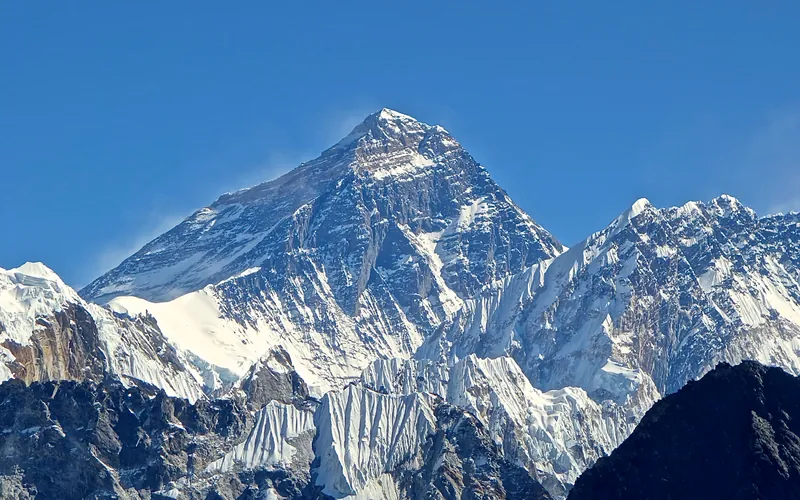
South Col & Southeast Ridge (Normal Route)
The South Col Route along the Southeast Ridge is the historic path of the 1953 first ascent and the most popular route on Mount Everest. Starting from Base Camp on the Khumbu Glacier in Nepal, climbers navigate the shifting seracs of the Khumbu Icefall into the Western Cwm. The route then scales the icy 45-degree slope of the Lhotse Face to the South Col at 7,925 meters, launching the final summit bid through the Balcony, South Summit, and Hillary Step to the summit of Earth at 8,848.86 meters.
Target Objective Peak



Mount Everest
Mount Everest is the highest mountain above sea level on Earth, standing at an official elevation of 8,848.86 meters (29,031.7 ft). Straddling the international frontier between Nepal and China, it is known locally as Sagarmatha in Nepali ('Goddess of the Sky') and Chomolungma in Tibetan ('Mother Goddess of the World'). The peak rises into the extreme upper troposphere, where oxygen levels drop to barely one-third of sea-level pressure. Climbers face hurricane-force jet stream winds, severe frostbite conditions, shifting ice crevasses in the Khumbu Icefall, and the dangerous Death Zone above 8,000 meters.
Featured Expedition Climbers
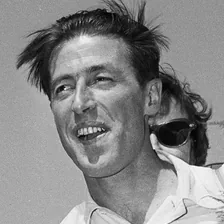
Ernst Reiss
Ernst 'Ere' Reiss was born on February 24, 1920, in Davos, Switzerland. Immersed in the high alpine valleys of the Graubünden canton, Reiss trained as a precision mechanic before dedicating his life to alpine rescue, high-altitude guiding, and mountaineering innovation. In the late 1940s, Reiss established himself as one of Switzerland's finest ice and mixed technicians, completing daring ascents in the Bernese Oberland and the Mont Blanc massif. In 1952, Reiss was selected as a lead assault climber for both the spring and autumn Swiss Mount Everest Expeditions organized by the Swiss Foundation for Alpine Research. Operating in the Western Cwm, Reiss was instrumental in forcing the first passage up the sheer ice ramparts of the Geneva Spur and onto the South Col at 8,000 meters, forging the exact high-altitude gateway that British climbers Hillary and Tenzing utilized to conquer Everest the following year. In the spring of 1956, Reiss returned to the Khumbu region on the monumental Swiss Mount Everest and Lhotse Expedition led by Albert Eggler. Tasked specifically with the first ascent of Everest's towering neighbor, Lhotse (8,516m), Reiss partnered with Swiss Army captain Fritz Luchsinger. Above Camp IV in the Western Cwm, the pair forged an audacious line up the Lhotse Face and entered the menacing, rock-strewn Lhotse Couloir—a claustrophobic 1,100-meter funnel of 50-degree hard ice. On May 18, 1956, using open-circuit oxygen equipment, Reiss and Luchsinger fought their way through bitter gales and cascading spindrift to reach the razor-sharp summit ridge of Lhotse at 8,516 meters. Five days later, their Swiss teammates achieved the second and third ascents of Mount Everest, making the 1956 Swiss expedition one of the most successful high-altitude campaigns in history. Reiss later played a foundational role in modern Swiss air-rescue (Rega) and authored the widely read autobiography Mein Weg als Bergsteiger (1959). He passed away in Basel on August 3, 2010, at the age of ninety.
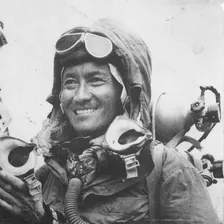
Tenzing Norgay
Tenzing Norgay was born in late May 1914 in the Khumbu region of northeastern Nepal into a Tibetan yak-herding family, initially given the name Namgyal Wangdi. Following a childhood illness, his parents consulted the revered head lama of Rongbuk Monastery, Ngawang Tenzin Norbu, who advised renaming the boy Tenzing Norgay, translating to 'wealthy fortunate follower of religion'. Raised beneath the shadows of Everest, he was captivated from early boyhood by stories of foreign expeditions attempting the sacred mountain. At age nineteen, determined to carve out an independent life, he ran away from home to the Toong Soong settlement in Darjeeling, India, where British climbing expeditions recruited indigenous high-altitude porters. In 1935, legendary explorer Eric Shipton hired the twenty-year-old Tenzing for the fifth British Everest reconnaissance expedition after noticing his warm smile and remarkable physical strength. Tenzing quickly distinguished himself through his tireless work ethic, endurance, and cheerful resilience. He returned to Everest on the 1936 British attempt led by Hugh Ruttledge and the 1938 expedition under H. W. Tilman, ascending to 8,300 meters on the Tibetan North Col route. During the late 1940s, Tenzing expanded his technical mountaineering portfolio across northern India, joining a Swiss expedition in 1947 to make the first ascent of Kedarnath (6,940m) in the Garhwal Himalaya, and surviving a clandestine, unauthorized attempt on Everest with Canadian eccentric Earl Denman. In the spring of 1952, the Swiss Foundation for Alpine Research mounted an expedition to Everest led by Edouard Wyss-Dunant. For the first time in Himalayan history, Tenzing was engaged not as a subordinate porter, but as Sirdar and a full climbing member. He forged an instant, profound brotherhood with Swiss mountain guide Raymond Lambert. Together, they unlocked the treacherous route through the Khumbu Icefall, crossed the Western Cwm, and scaled the Geneva Spur to reach the South Col (7,925m). On May 28, 1952, without adequate sleeping bags or warm fluids, Lambert and Tenzing pushed to an astonishing altitude of 8,595 meters (28,199 ft) along the Southeast Ridge—establishing the highest point humans had ever reached. While severe hypoxia and failing oxygen gear forced their retreat, their breakthrough proved that the summit was attainable via the southern route. When Colonel John Hunt organized the 1953 British Mount Everest Expedition, Tenzing's peerless high-altitude experience made his appointment as Sirdar and lead climber indispensable. Teaming with New Zealand climber Edmund Hillary on the second assault pair, Tenzing carried heavy loads to establish Camp IX high on the Southeast Ridge at 8,500 meters. On the morning of May 29, 1953, the duo moved steadily along the knife-edge crest. Hillary chimneyed up the 12-meter rock wall now known as the Hillary Step, and at 11:30 AM, Hillary and Tenzing stepped onto the 8,848.86-meter summit together. Tenzing spent fifteen minutes on the summit: he unfurled the flags of the United Nations, Great Britain, Nepal, and India, and buried offerings of biscuits, sweets, and a small red-and-blue pencil from his daughter Nima in the summit snow as a Buddhist gesture of gratitude to the mountain goddess Chomolungma. Following the ascent, Tenzing was celebrated as a hero across Asia and the Western world, awarded the George Medal by Queen Elizabeth II, the Order of the Star of Nepal, and the Padma Bhushan by the Republic of India. In 1954, Indian Prime Minister Jawaharlal Nehru established the Himalayan Mountaineering Institute (HMI) in Darjeeling, appointing Tenzing as its inaugural Director of Field Training. For over two decades, Tenzing trained thousands of Indian and international climbers in modern alpine safety, glacier craft, and ethical expedition leadership. He passed away in Darjeeling on May 9, 1986, leaving an indelible legacy as the standard-bearer for Sherpa climbing excellence and Himalayan heritage.
Associated Historical Chronicles & Stories
1952 Swiss Everest Expedition: The 8,595m Breakthrough
How Tenzing Norgay and Raymond Lambert forged the South Col route and climbed to 8,595m, blazing the trail for Everest's conquest.
Documented Sources & Archival Citations
- Forerunners to Everest: The Story of the Two Swiss Expeditions of 1952(René Dittert, Gabriel Chevalley & Raymond Lambert / Allen & Unwin)
Supporting claim: Detailed chronicle of the 1952 Swiss spring and autumn Everest climbs
Accessed/Documented: 1954 - Man of Everest: The Autobiography of Tenzing(Tenzing Norgay & James Ramsey Ullman / Harrap)
Supporting claim: Tenzing's personal account of climbing to 8,595m with Raymond Lambert
Accessed/Documented: 1955