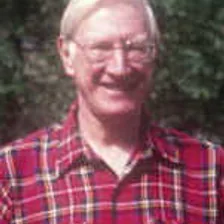
George Band
George Band, OBE, was a distinguished British mountaineer, geologist, and author who achieved the historic first ascent of Kangchenjunga (8,586m) on May 25, 1955, with Joe Brown. The youngest climber on the 1953 Everest expedition, Band later served as President of both the Alpine Club and the British Mountaineering Council.
Mountain Safety & Conditions Disclaimer: High-altitude climbing, glacial travel, and technical ascents entail severe objective risks including avalanches, serac collapses, rapid weather collapse, and altitude illness. Historical route descriptions and summit claims on Mountanity reflect documented archival sources and must not be used as live operational safety assessments. Local regulations, permits, and physical glacial topography change continuously.
Peer Review: Senior Editorial Board & Historical Reviewers • Editorial Standards
Biographical Record & Archival Chronicle
George Christopher Band was born on February 2, 1929, in Taipei, Taiwan, where his parents were British missionary educators. Returning to England for his schooling at Eltham College, Band entered Queens' College, Cambridge, to read geology and petroleum engineering. At Cambridge, his elegant climbing style, boundless energy, and natural leadership quickly propelled him to President of the prestigious Cambridge University Mountaineering Club (CUMC), where he forged difficult routes in the Alps and the Scottish Highlands.
In 1953, at just twenty-four years of age, Band was selected by Colonel John Hunt as the youngest climbing member of the historic ninth British Mount Everest Expedition. Entrusted with crucial high-altitude logistics and route-finding, Band pioneered the vital upper approach through the Western Cwm and spent grueling days establishing Camp VII high on the sheer ice sheets of the Lhotse Face, directly paving the way for Hillary and Tenzing's ultimate summit success.
Two years later, in 1955, Band joined Dr. Charles Evans on the British Kangchenjunga Expedition. While Joe Brown brought raw working-class grit and rock-climbing mastery, Band contributed formidable ice-craft, intellectual poise, and unwavering high-altitude stamina. Teaming up for the premier assault from Camp VI at 8,200 meters on May 25, 1955, Band and Brown climbed through the Sickle Couloir and negotiated the terrifying rock band below the crest. When Brown pulled through the steep crack at 8,500 meters, Band followed cleanly. Reaching the upper snow slope, both men respectfully halted five feet below the highest physical crest, honoring the promise made to the Chogyal of Sikkim to preserve the divine sanctity of the mountain.
Band later led the 1958 Cambridge University Expedition to the Karakoram, achieving the first ascent of Rakaposhi's neighbor, Minapin (Diran) ridge, and spent an illustrious global career as a petroleum geologist with Royal Dutch Shell. Deeply dedicated to alpine governance and Sherpa welfare, Band served as President of the Alpine Club (1987–1989), President of the British Mountaineering Council (BMC), and Chairman of the Himalayan Trust UK, working closely with Sir Edmund Hillary to build schools and hospitals in Nepal. In 2008, Queen Elizabeth II appointed him Officer of the Order of the British Empire (OBE). George Band passed away on August 26, 2011, in Hampshire, celebrated as one of Britain's most graceful and ethical mountaineering statesmen.
Notable Milestones & Ascents
- First ascent of Kangchenjunga (8,586m) on May 25, 1955, alongside Joe Brown
- Youngest climbing member (age 24) on the historic 1953 British Mount Everest Expedition
- Pioneered high-altitude route through the Western Cwm and established Camp VII on the Lhotse Face on Everest
- Faithfully respected local Buddhist beliefs by halting five feet short of Kangchenjunga's summit
- Served as President of the Alpine Club (1987–1989) and President of the British Mountaineering Council
- Chairman of the Himalayan Trust UK, directing educational and medical support for Nepalese mountain communities
- Appointed Officer of the Order of the British Empire (OBE) in the 2008 New Year Honours
- Author of Road to Kangchenjunga and Summit: 150 Years of the Alpine Club
Key Statistics & Topographic Figures
- Kangchenjunga Summit
- May 25, 1955
First Ascent with Joe Brown
- 1953 Everest Member
- Youngest Climber (Age 24)
Lhotse Face Route Pioneer
- Alpine Club President
- 1987–1989
Mountaineering Statesman
- Royal Honor
- Officer of the Order of the British Empire (OBE)
2008 New Year Honours
Archival Primary Source Quotations
“We had climbed Kangchenjunga, but the mountain remained intact, pure, and unconquered in the eyes of those who loved it.”
Defined Alpine Terminology & Concepts
- Western Cwm
- A broad, high-altitude glacial valley situated between Everest, Lhotse, and Nuptse, navigated by George Band in 1953.
- Chogyal of Sikkim
- The hereditary Buddhist monarch and spiritual ruler of Sikkim who secured the historic promise to leave Kangchenjunga’s summit untrodden.
Frequently Asked Questions: George Band
Who was George Band in mountaineering history?
George Band, OBE, was a British mountaineer, geologist, and author who, alongside Joe Brown, achieved the first ascent of Kangchenjunga (8,586m) on May 25, 1955.
What was George Band’s role on Mount Everest in 1953?
At age 24, Band was the youngest climbing member of the 1953 British Everest expedition, pioneering the route through the Western Cwm and establishing Camp VII on the Lhotse Face.
Why did George Band stop short of Kangchenjunga’s actual summit?
Band and Joe Brown deliberately stopped five feet below the summit crest to honor a solemn treaty with the Chogyal of Sikkim, ensuring human feet never desecrated the sacred mountain peak.
What leadership positions did George Band hold?
Band served as President of the Alpine Club (1987–1989), President of the British Mountaineering Council (BMC), and Chairman of the Himalayan Trust UK.
Associated Summits (2)
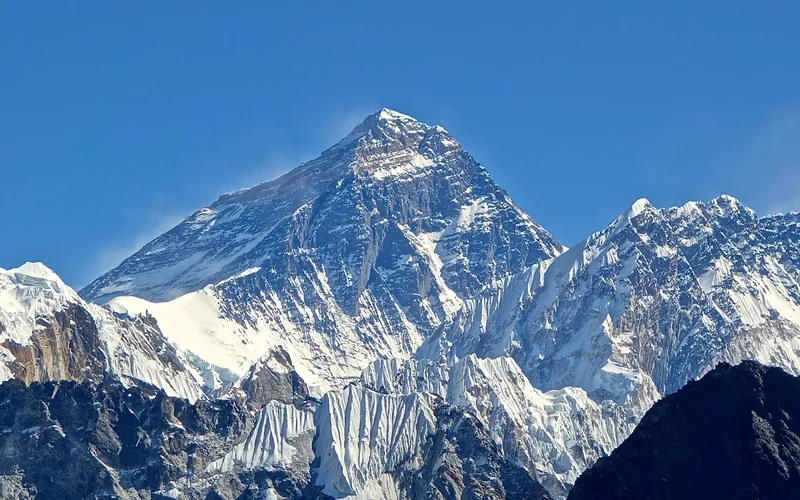


Mount Everest
Mount Everest is the highest mountain above sea level on Earth, standing at an official elevation of 8,848.86 meters (29,031.7 ft). Straddling the international frontier between Nepal and China, it is known locally as Sagarmatha in Nepali ('Goddess of the Sky') and Chomolungma in Tibetan ('Mother Goddess of the World'). The peak rises into the extreme upper troposphere, where oxygen levels drop to barely one-third of sea-level pressure. Climbers face hurricane-force jet stream winds, severe frostbite conditions, shifting ice crevasses in the Khumbu Icefall, and the dangerous Death Zone above 8,000 meters.
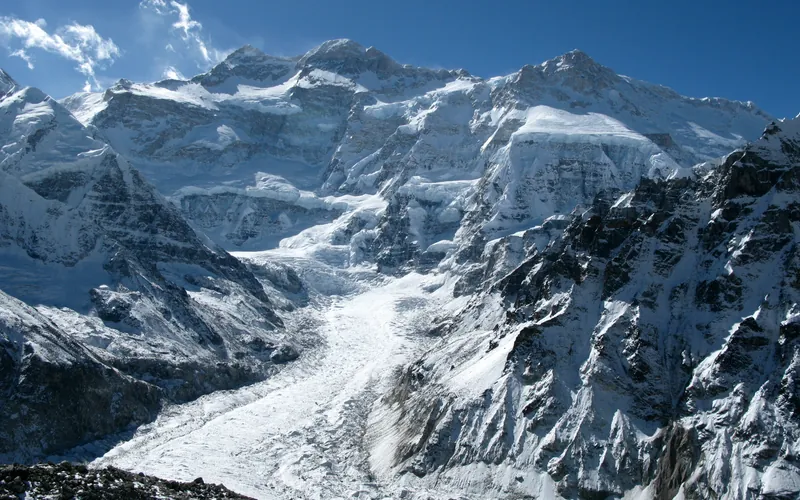

Kangchenjunga
Kangchenjunga, at 8,586 meters (28,169 ft), is the third-highest mountain on Earth, rising on the border between Nepal and Sikkim, India. Honored as sacred by locals, early ascent teams respected local beliefs by stopping short of the actual highest crest. It features immense vertical relief and notorious storm cycles.
Pioneered & Associated Routes (6)
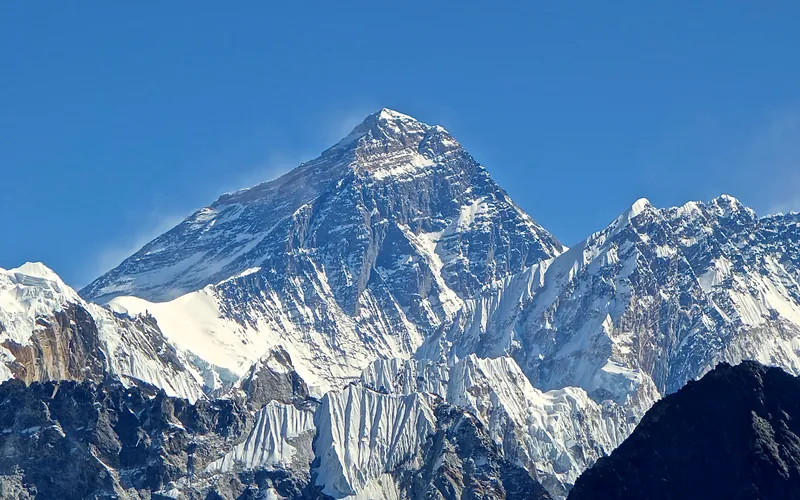
Mount Everest North Face (Hornbein Couloir Direct)
The North Face of Mount Everest via the Japanese Couloir and the sheer Hornbein Couloir is one of the most direct and formidable ice lines in the Himalayas. Rising 3,000 vertical meters from the Rongbuk Glacier to the summit, it funnels through a narrow 60-degree snow-and-ice cleft slicing straight through the Yellow Band and upper limestone cliffs of the North Face. In August 1986, Swiss alpinists Erhard Loretan and Jean Troillet executed one of the most audacious speed climbs in mountain history: climbing the entire face in a single 31-hour push at night without supplemental oxygen, tents, or fixed ropes. After summiting on August 30, they glissaded down the 3,000-meter face on their backs and buttocks in just 3.5 hours, completing the entire round trip in an astonishing 43 hours.
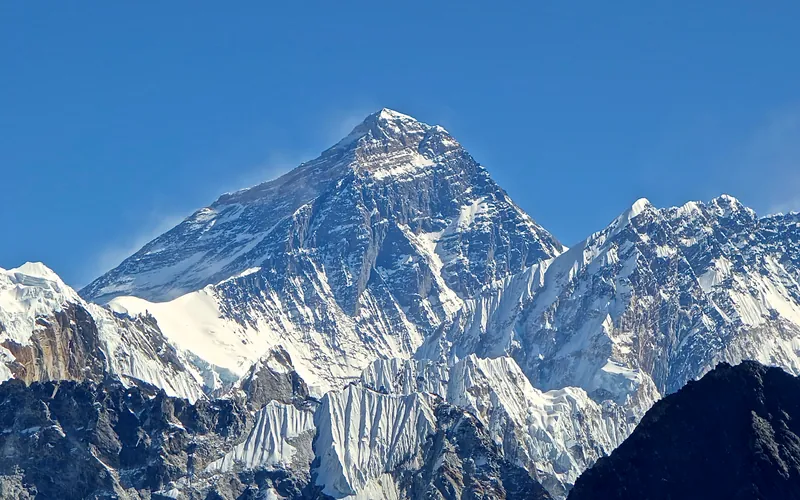
North Col & Northeast Ridge Route
The historic northern route on Mount Everest (8,848.86m), ascending from the Rongbuk and East Rongbuk glaciers to breach the icy wall of the North Col (7,020m). From the col, the route traverses the wind-blasted Northwest Ridge onto the North Face before joining the razor-like Northeast Ridge, navigating the notorious First, Second, and Third Steps in the Death Zone. This was the stage of George Mallory and Andrew Irvine's fateful 1924 climb and was first definitively surmounted on May 25, 1960, by Chinese climbers Wang Fuzhou, Qu Yinhua, and Gongbu.
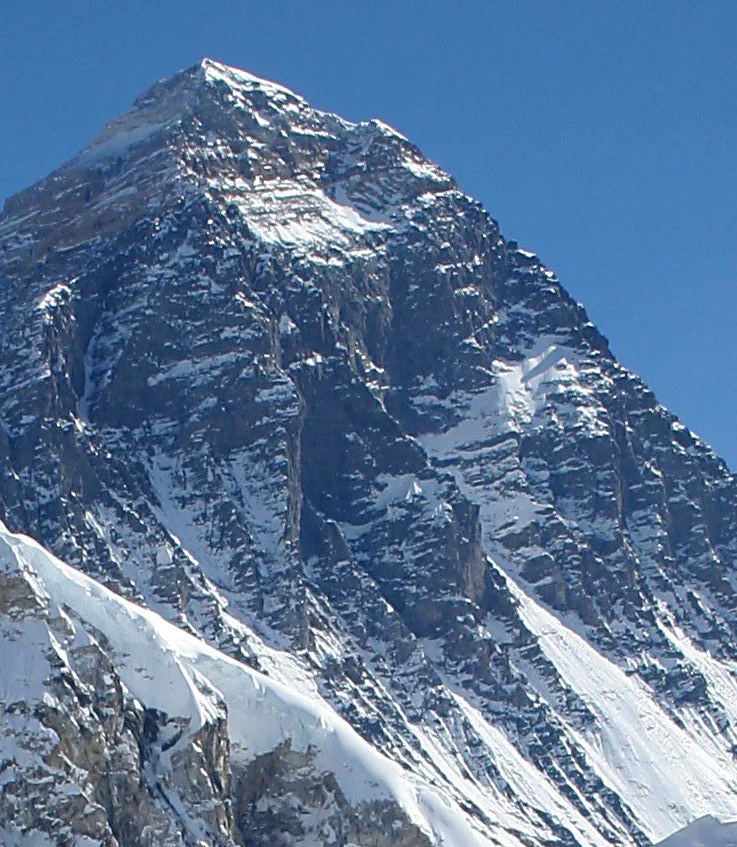
Mount Everest Southwest Face (Bonington Route)
The Southwest Face of Mount Everest (8,848.86m) rises 2,300 vertical meters from the Western Cwm to the summit, presenting one of the largest and most forbidding rock and ice faces in the world. Dominated by the vertical 300-meter 'Rock Band' at 8,200–8,500 meters, the face repelled six international attempts between 1969 and 1974. In autumn 1975, a legendary British expedition led by Chris Bonington breached the face when Paul Braithwaite and Nick Estcourt unlocked the key ramp through the Rock Band. On September 24, 1975, Doug Scott and Dougal Haston climbed to the South Summit and pushed on to the main summit, becoming the first Britons to conquer Everest. Trapped by nightfall during their descent, they survived an epic open bivouac at 8,760 meters without oxygen, sleeping bags, or frostbite.
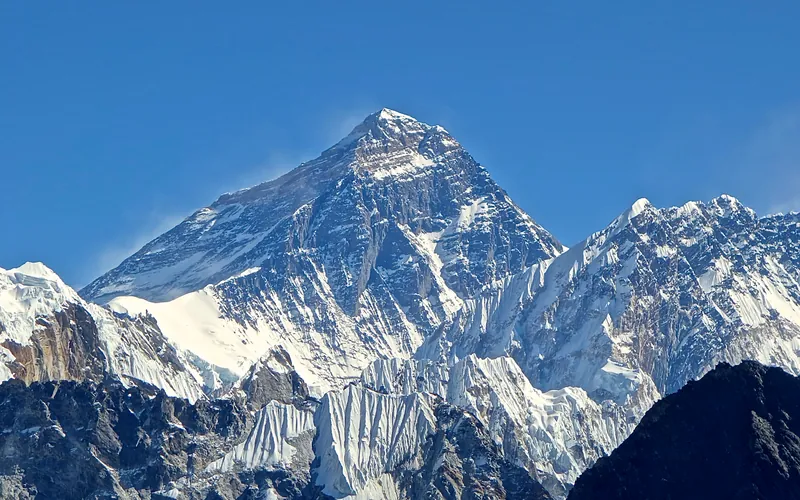
Mount Everest Complete West Ridge (Yugoslav Direct)
The Complete West Ridge of Mount Everest is one of the most formidable and sustained technical routes on the mountain. Pioneered in spring 1979 by an elite Yugoslav expedition led by Tone Škarja, the route tackles the integral knife-edge crest directly from the Lho La col (6,026m) all the way to the 8,848.86m summit. Unlike the 1963 American West Ridge route which diverted into the Hornbein Couloir from the North Face, the Yugoslav line stayed strictly along the razor-edge crest of the West Ridge, surmounting technical rock buttresses up to Grade V+ at extreme altitude before traversing around the Yellow Band. On May 13, 1979, Andrej Štremfelj and Nejc Zaplotnik achieved the first ascent of the complete ridge, followed two days later by Stane Belak, Marjan Manfreda, and Ang Phu Sherpa in one of the greatest feats in Himalayan history.
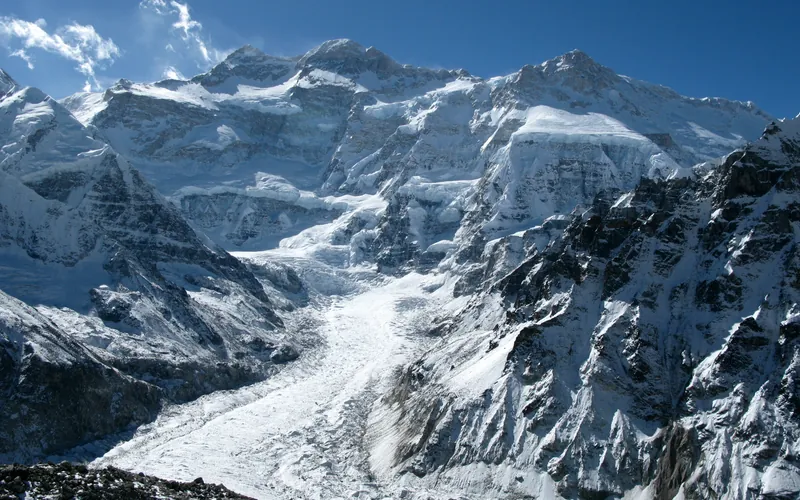
Kangchenjunga Southwest Face (Normal Route)
The Southwest Face route is the classic line of ascent on Kangchenjunga, climbing out of the Yalung Glacier cirque in eastern Nepal. First forged in 1955 by British mountaineers Joe Brown and George Band, the route negotiates heavily broken glacial icefalls, ascends the vast hanging snow terrace of The Great Shelf, and threads steep rock gullies in the Sickle Couloir before reaching the delicate summit crest.
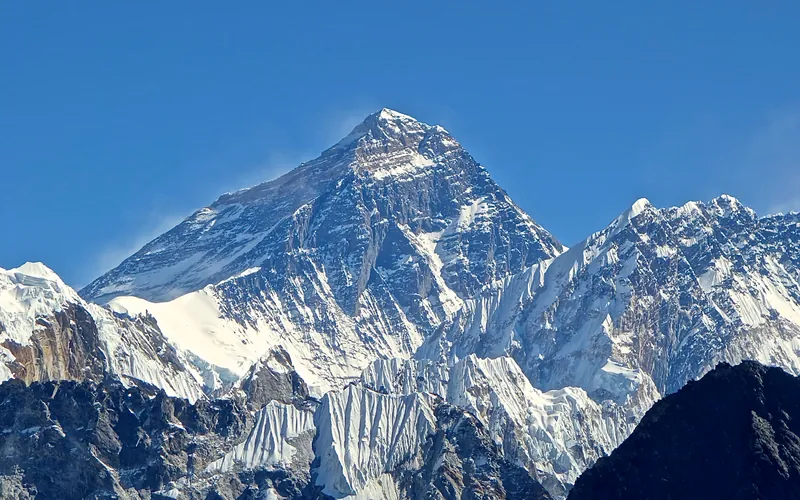
South Col & Southeast Ridge (Normal Route)
The South Col Route along the Southeast Ridge is the historic path of the 1953 first ascent and the most popular route on Mount Everest. Starting from Base Camp on the Khumbu Glacier in Nepal, climbers navigate the shifting seracs of the Khumbu Icefall into the Western Cwm. The route then scales the icy 45-degree slope of the Lhotse Face to the South Col at 7,925 meters, launching the final summit bid through the Balcony, South Summit, and Hillary Step to the summit of Earth at 8,848.86 meters.
Documented Expeditions (2)
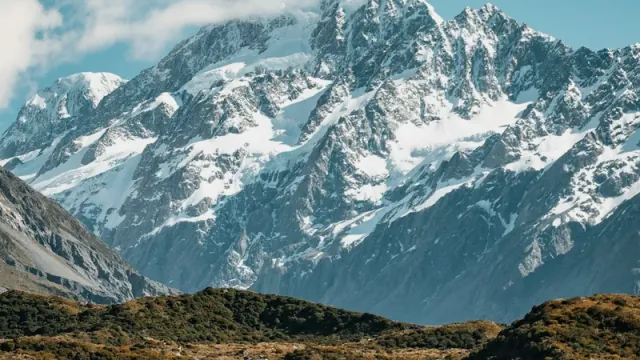
1953 British Mount Everest Expedition
Led by Colonel John Hunt, the ninth British expedition achieved the monumental first confirmed human ascent of Mount Everest on May 29, 1953.
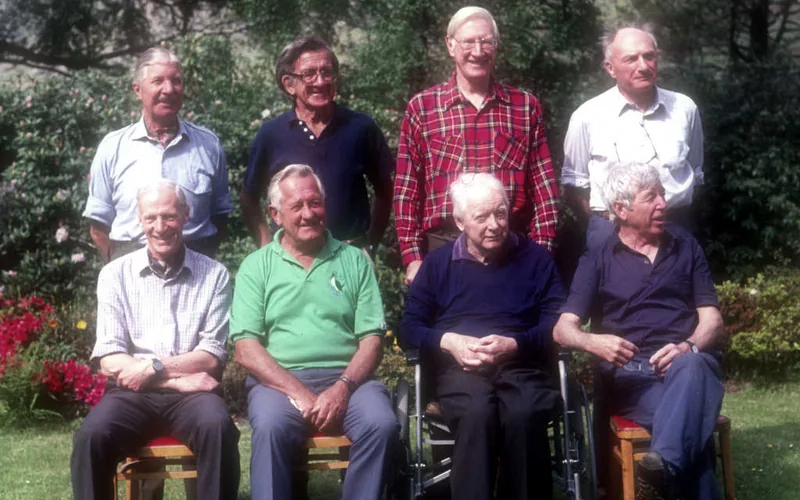
1955 British Kangchenjunga Expedition
Led by Dr. Charles Evans, this landmark British expedition achieved the first ascent of Kangchenjunga (8,586m) on May 25, 1955, when Joe Brown and George Band reached the summit ridge via the Southwest Face, followed the next day by Norman Hardie and Tony Streather.
Associated Chronicles & Stories (1)
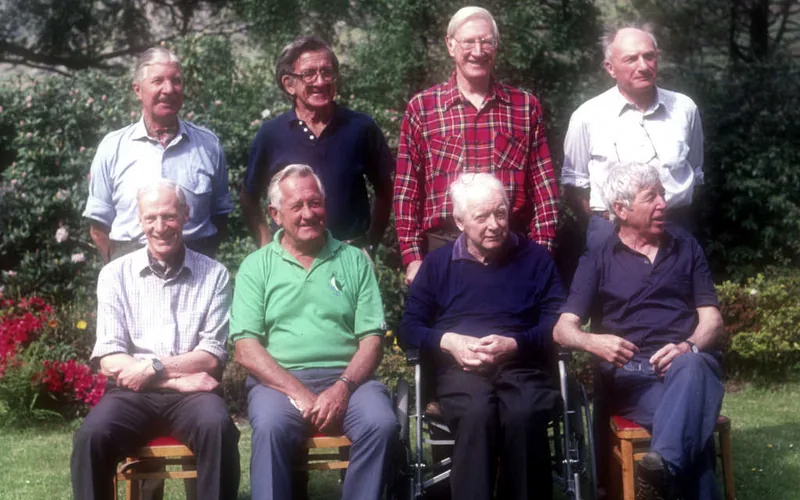
Kangchenjunga 1955: The Sacred Summit and the Human Fly
On May 25, 1955, Joe Brown and George Band achieved the first ascent of Kangchenjunga (8,586m), overcoming a vertical rock wall at 8,500 meters while keeping their promise to leave the sacred summit crest untrodden.
Documented Sources & Archival Citations
- Road to Kangchenjunga(George Band / Travel Book Club)
Supporting claim: Autobiographical account of the approach march, high camps, and first ascent of Kangchenjunga
Accessed/Documented: 1956 - Kangchenjunga: The Untrodden Peak(Charles Evans / Hodder & Stoughton)
Supporting claim: Official expedition chronicle documenting George Band's tactical and summit partnership with Joe Brown
Accessed/Documented: 1956 - The Himalayan Database: Kangchenjunga 1955(Elizabeth Hawley Archive)
Supporting claim: Official expedition records, summit timestamps, and route data
Accessed/Documented: 2026