1953 British Mount Everest Expedition
Led by Colonel John Hunt, the ninth British expedition achieved the monumental first confirmed human ascent of Mount Everest on May 29, 1953.
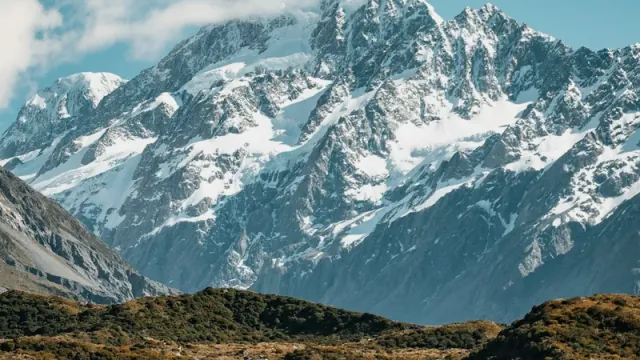
Mountain Safety & Conditions Disclaimer: High-altitude climbing, glacial travel, and technical ascents entail severe objective risks including avalanches, serac collapses, rapid weather collapse, and altitude illness. Historical route descriptions and summit claims on Mountanity reflect documented archival sources and must not be used as live operational safety assessments. Local regulations, permits, and physical glacial topography change continuously.
Peer Review: Senior Editorial Board & Historical Reviewers • Editorial Standards
Official Expedition Narrative & Archival Record
On the morning of May 29, 1953, New Zealand climber Edmund Hillary and Nepali-Tibetan sardar Tenzing Norgay stepped onto the 8,848.86-meter summit of Mount Everest via the South Col and Southeast Ridge. After an earlier assault pair (Tom Bourdillon and Charles Evans) was forced to retreat within 100 meters of the crest due to malfunctioning closed-circuit oxygen equipment, Hillary and Tenzing pushed from a lonely tent pitched at 8,500 meters. Overcoming the sheer 12-meter rock outcrop now known worldwide as the Hillary Step, they reached the apex at 11:30 AM, embraced in mutual triumph, and safely initiated their descent into history.
Documented Team Composition
- John Hunt (Expedition Leader)
- Sir Edmund Hillary (Summit Climber)
- Tenzing Norgay (Sardar & Summit Climber)
- George Band (Youngest Member & Lhotse Route Pioneer)
- Tom Bourdillon (First Assault Team)
- Charles Evans (First Assault Team)
- George Lowe
- Wilfrid Noyce
- Griffith Pugh (Expedition Physiologist)
Key Statistics & Topographic Figures
- Summit Timestamp
- 11:30 AM, May 29, 1953
First Confirmed Ascent
- Summit Climbers
- Edmund Hillary & Tenzing Norgay
Second Assault Pair
- Crux Feature
- Hillary Step (8,790m)
Grade V Rock & Cornice
- Expedition Leader
- Colonel John Hunt
Joint Himalayan Committee
- Climbing Route
- South Col & Southeast Ridge
Nepal Approach
- Oxygen System
- Open-Circuit Oxygen
Hillary & Tenzing Configuration
Archival Primary Source Quotations
“Well, George, we knocked the bastard off.”
Defined Alpine Terminology & Concepts
- Hillary Step
- A historic 12-meter near-vertical rock face at 8,790 meters on Mount Everest’s Southeast Ridge, named after Sir Edmund Hillary who first climbed it in 1953.
- South Col
- A sharp, wind-scoured mountain pass at 7,925 meters between Mount Everest and Lhotse, serving as the launch point (Camp IV) for summit pushes on the southern route.
Frequently Asked Questions: 1953 British Mount Everest Expedition
Who reached the summit of Mount Everest first in 1953?
Sir Edmund Hillary of New Zealand and Tenzing Norgay of Nepal reached the summit of Mount Everest together at 11:30 AM on May 29, 1953. In their autobiographies and public statements, both climbers maintained that they stepped onto the summit as an equal partnership and one united team.
What was the Hillary Step and how did Hillary climb it?
The Hillary Step was a formidable 12-meter (39-foot) near-vertical rock face situated at approximately 8,790 meters on the Southeast Ridge of Everest. Edmund Hillary climbed it by jamming his body into a narrow crack between the rock and the snow cornice, levering his way up with crampons while Tenzing belayed him from below.
What oxygen equipment did the 1953 British Everest expedition use?
The expedition used two distinct oxygen setups: open-circuit systems (which mixed bottled oxygen with atmospheric air, used successfully by Hillary and Tenzing) and experimental closed-circuit systems (which recycled exhaled breath through a soda-lime canister, used by Tom Bourdillon and Charles Evans during the first summit attempt).
Why did Bourdillon and Evans turn back before the summit on May 26, 1953?
Tom Bourdillon and Charles Evans reached the South Summit (8,750m)—the highest point reached by humans at that time—but turned back because Evans experienced failure with his closed-circuit oxygen apparatus, snow conditions were deteriorating, and they did not have enough daylight or oxygen to safely attempt the final ridge and return.
What did Tenzing Norgay leave on the summit of Mount Everest?
As a devout Buddhist, Tenzing Norgay dug a small hollow in the summit snow and placed an offering of biscuits, hard sweets, chocolate, and a small red-and-blue pencil given to him by his daughter Nima. Hillary also buried a small crucifix given to him by expedition leader John Hunt.
How was the news of the 1953 Everest ascent sent to London?
Times correspondent James Morris relayed a coded message via runner from Base Camp to the radio transmitter at Namche Bazaar: "Snow conditions bad stop advanced base abandoned yesterday stop awaiting improvement." In the pre-arranged code, this translated to "Summit reached by Hillary and Tenzing." The news reached London on the morning of June 2, 1953, coinciding with the coronation of Queen Elizabeth II.
Who was the leader of the 1953 British Everest Expedition?
Colonel John Hunt (later Lord Hunt) was the military officer and alpine mountaineer appointed by the Joint Himalayan Committee to organize and lead the 1953 British expedition, renowned for his meticulous logistics and emphasis on collective team spirit.
What route did the 1953 expedition take to climb Everest?
The team climbed via the southern route from Nepal, ascending through the Khumbu Icefall, advancing along the Western Cwm, climbing the steep Lhotse Face to reach the South Col at 7,925 meters, and then pushing up the Southeast Ridge to the summit.
Ascent Route & Topography
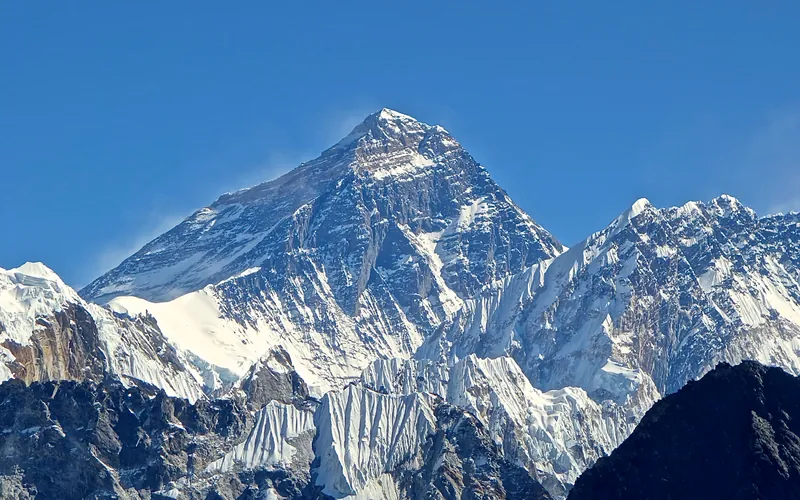
South Col & Southeast Ridge (Normal Route)
The South Col Route along the Southeast Ridge is the historic path of the 1953 first ascent and the most popular route on Mount Everest. Starting from Base Camp on the Khumbu Glacier in Nepal, climbers navigate the shifting seracs of the Khumbu Icefall into the Western Cwm. The route then scales the icy 45-degree slope of the Lhotse Face to the South Col at 7,925 meters, launching the final summit bid through the Balcony, South Summit, and Hillary Step to the summit of Earth at 8,848.86 meters.
Target Objective Peak
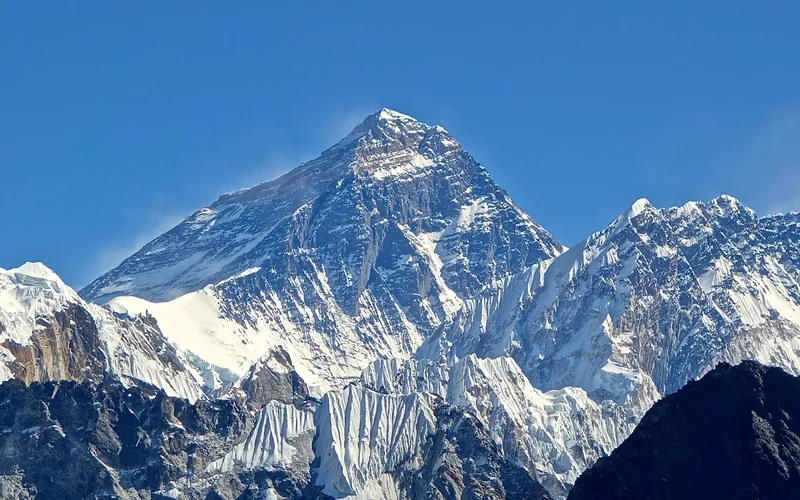


Mount Everest
Mount Everest is the highest mountain above sea level on Earth, standing at an official elevation of 8,848.86 meters (29,031.7 ft). Straddling the international frontier between Nepal and China, it is known locally as Sagarmatha in Nepali ('Goddess of the Sky') and Chomolungma in Tibetan ('Mother Goddess of the World'). The peak rises into the extreme upper troposphere, where oxygen levels drop to barely one-third of sea-level pressure. Climbers face hurricane-force jet stream winds, severe frostbite conditions, shifting ice crevasses in the Khumbu Icefall, and the dangerous Death Zone above 8,000 meters.
Featured Expedition Climbers
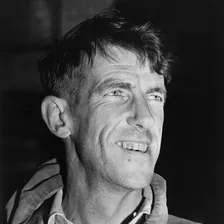
Sir Edmund Hillary
Edmund Percival Hillary was born in Auckland, New Zealand, on July 20, 1919. A school trip to Mount Ruapehu sparked his lifelong passion for alpine climbing. He completed his first major ascent on Mount Ollivier (1,933m) in 1939. During World War II, Hillary served as a navigator in the Royal New Zealand Air Force. Afterward, he trained under master alpine guide Harry Ayres in the Southern Alps. On January 30, 1948, Hillary and Ayres achieved the first ascent of Mount Cook's South Ridge. This demanding technical climb established Hillary as New Zealand's foremost ice climber. In 1951, Eric Shipton recruited Hillary for the British Everest Reconnaissance Expedition. Hillary and George Lowe pioneered a viable route through the chaotic Khumbu Icefall. Their breakthrough unlocked the southern approach into the Western Cwm. Hillary returned to the Himalayas for the 1952 British Cho Oyu Expedition. There, he tested experimental open-circuit oxygen equipment above 6,800 meters. Colonel John Hunt subsequently selected Hillary for the 1953 British Mount Everest Expedition. On May 29, 1953, Hillary and Tenzing Norgay launched their summit push from 8,500 meters. High on the Southeast Ridge, they encountered a formidable 12-meter rock barrier. This vertical cliff between rock and snow is now called the Hillary Step. Hillary jammed his body into a narrow crack and levered upward with crampons. He breached the crux and safely belayed Tenzing up the pitch. At 11:30 AM, both men reached the 8,848.86-meter summit of Mount Everest. They achieved the first confirmed human summit in history. Between 1956 and 1958, Hillary led the New Zealand Trans-Antarctic expedition party. He drove three modified Ferguson farm tractors across treacherous crevassed icefields. On January 4, 1958, Hillary's team successfully reached the South Pole. It was the first overland journey to the pole since Captain Scott in 1912. In 1960, Hillary organized the high-altitude Silver Hut Expedition. His team conducted physiological research and made the first ascent of Ama Dablam. Hillary dedicated decades of his life to helping the Sherpa communities of Nepal. In 1960, he established the Himalayan Trust to fund essential local infrastructure. The foundation built 27 schools, two hospitals, and twelve medical clinics in Solukhumbu. It also constructed the mountain airstrip at Lukla to connect remote villages. Grateful Sherpas honored Hillary with the affectionate title of Burra Sahib. In 2003, Nepal granted Hillary honorary citizenship, making him the first foreign national so recognized. Queen Elizabeth II invested him as a Knight Companion of the Garter in 1995. Hillary passed away in 2008, remembered worldwide as a compassionate explorer.
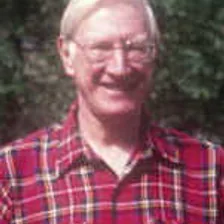
George Band
George Christopher Band was born on February 2, 1929, in Taipei, Taiwan, where his parents were British missionary educators. Returning to England for his schooling at Eltham College, Band entered Queens' College, Cambridge, to read geology and petroleum engineering. At Cambridge, his elegant climbing style, boundless energy, and natural leadership quickly propelled him to President of the prestigious Cambridge University Mountaineering Club (CUMC), where he forged difficult routes in the Alps and the Scottish Highlands. In 1953, at just twenty-four years of age, Band was selected by Colonel John Hunt as the youngest climbing member of the historic ninth British Mount Everest Expedition. Entrusted with crucial high-altitude logistics and route-finding, Band pioneered the vital upper approach through the Western Cwm and spent grueling days establishing Camp VII high on the sheer ice sheets of the Lhotse Face, directly paving the way for Hillary and Tenzing's ultimate summit success. Two years later, in 1955, Band joined Dr. Charles Evans on the British Kangchenjunga Expedition. While Joe Brown brought raw working-class grit and rock-climbing mastery, Band contributed formidable ice-craft, intellectual poise, and unwavering high-altitude stamina. Teaming up for the premier assault from Camp VI at 8,200 meters on May 25, 1955, Band and Brown climbed through the Sickle Couloir and negotiated the terrifying rock band below the crest. When Brown pulled through the steep crack at 8,500 meters, Band followed cleanly. Reaching the upper snow slope, both men respectfully halted five feet below the highest physical crest, honoring the promise made to the Chogyal of Sikkim to preserve the divine sanctity of the mountain. Band later led the 1958 Cambridge University Expedition to the Karakoram, achieving the first ascent of Rakaposhi's neighbor, Minapin (Diran) ridge, and spent an illustrious global career as a petroleum geologist with Royal Dutch Shell. Deeply dedicated to alpine governance and Sherpa welfare, Band served as President of the Alpine Club (1987–1989), President of the British Mountaineering Council (BMC), and Chairman of the Himalayan Trust UK, working closely with Sir Edmund Hillary to build schools and hospitals in Nepal. In 2008, Queen Elizabeth II appointed him Officer of the Order of the British Empire (OBE). George Band passed away on August 26, 2011, in Hampshire, celebrated as one of Britain's most graceful and ethical mountaineering statesmen.
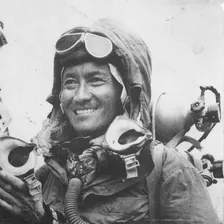
Tenzing Norgay
Tenzing Norgay was born in late May 1914 in the Khumbu region of northeastern Nepal into a Tibetan yak-herding family, initially given the name Namgyal Wangdi. Following a childhood illness, his parents consulted the revered head lama of Rongbuk Monastery, Ngawang Tenzin Norbu, who advised renaming the boy Tenzing Norgay, translating to 'wealthy fortunate follower of religion'. Raised beneath the shadows of Everest, he was captivated from early boyhood by stories of foreign expeditions attempting the sacred mountain. At age nineteen, determined to carve out an independent life, he ran away from home to the Toong Soong settlement in Darjeeling, India, where British climbing expeditions recruited indigenous high-altitude porters. In 1935, legendary explorer Eric Shipton hired the twenty-year-old Tenzing for the fifth British Everest reconnaissance expedition after noticing his warm smile and remarkable physical strength. Tenzing quickly distinguished himself through his tireless work ethic, endurance, and cheerful resilience. He returned to Everest on the 1936 British attempt led by Hugh Ruttledge and the 1938 expedition under H. W. Tilman, ascending to 8,300 meters on the Tibetan North Col route. During the late 1940s, Tenzing expanded his technical mountaineering portfolio across northern India, joining a Swiss expedition in 1947 to make the first ascent of Kedarnath (6,940m) in the Garhwal Himalaya, and surviving a clandestine, unauthorized attempt on Everest with Canadian eccentric Earl Denman. In the spring of 1952, the Swiss Foundation for Alpine Research mounted an expedition to Everest led by Edouard Wyss-Dunant. For the first time in Himalayan history, Tenzing was engaged not as a subordinate porter, but as Sirdar and a full climbing member. He forged an instant, profound brotherhood with Swiss mountain guide Raymond Lambert. Together, they unlocked the treacherous route through the Khumbu Icefall, crossed the Western Cwm, and scaled the Geneva Spur to reach the South Col (7,925m). On May 28, 1952, without adequate sleeping bags or warm fluids, Lambert and Tenzing pushed to an astonishing altitude of 8,595 meters (28,199 ft) along the Southeast Ridge—establishing the highest point humans had ever reached. While severe hypoxia and failing oxygen gear forced their retreat, their breakthrough proved that the summit was attainable via the southern route. When Colonel John Hunt organized the 1953 British Mount Everest Expedition, Tenzing's peerless high-altitude experience made his appointment as Sirdar and lead climber indispensable. Teaming with New Zealand climber Edmund Hillary on the second assault pair, Tenzing carried heavy loads to establish Camp IX high on the Southeast Ridge at 8,500 meters. On the morning of May 29, 1953, the duo moved steadily along the knife-edge crest. Hillary chimneyed up the 12-meter rock wall now known as the Hillary Step, and at 11:30 AM, Hillary and Tenzing stepped onto the 8,848.86-meter summit together. Tenzing spent fifteen minutes on the summit: he unfurled the flags of the United Nations, Great Britain, Nepal, and India, and buried offerings of biscuits, sweets, and a small red-and-blue pencil from his daughter Nima in the summit snow as a Buddhist gesture of gratitude to the mountain goddess Chomolungma. Following the ascent, Tenzing was celebrated as a hero across Asia and the Western world, awarded the George Medal by Queen Elizabeth II, the Order of the Star of Nepal, and the Padma Bhushan by the Republic of India. In 1954, Indian Prime Minister Jawaharlal Nehru established the Himalayan Mountaineering Institute (HMI) in Darjeeling, appointing Tenzing as its inaugural Director of Field Training. For over two decades, Tenzing trained thousands of Indian and international climbers in modern alpine safety, glacier craft, and ethical expedition leadership. He passed away in Darjeeling on May 9, 1986, leaving an indelible legacy as the standard-bearer for Sherpa climbing excellence and Himalayan heritage.
Associated Historical Chronicles & Stories
The 1953 Ascent of Everest: Hillary, Tenzing, and the Summit of the World
On May 29, 1953, Edmund Hillary and Tenzing Norgay stood atop the highest point on Earth, turning decades of Himalayan failure into mountaineering triumph.
Documented Sources & Archival Citations
- The Ascent of Everest(John Hunt / Hodder & Stoughton)
Supporting claim: Official narrative of the 1953 British expedition and summit day
Accessed/Documented: 1953 - Man of Everest(Tenzing Norgay & James Ramsey Ullman / Harrap)
Supporting claim: Firsthand Sherpa perspective on the 1953 climb and Hillary partnership
Accessed/Documented: 1955