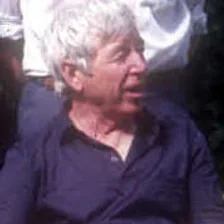
Joe Brown
Joe Brown, CBE, was a legendary British mountaineer and rock-climbing pioneer known as 'The Human Fly.' On May 25, 1955, he and George Band achieved the historic first ascent of Kangchenjunga (8,586m), the world's third-highest mountain, overcoming severe high-altitude rock pitches while honoring a sacred pact to leave the summit crest untrodden.
Mountain Safety & Conditions Disclaimer: High-altitude climbing, glacial travel, and technical ascents entail severe objective risks including avalanches, serac collapses, rapid weather collapse, and altitude illness. Historical route descriptions and summit claims on Mountanity reflect documented archival sources and must not be used as live operational safety assessments. Local regulations, permits, and physical glacial topography change continuously.
Peer Review: Senior Editorial Board & Historical Reviewers • Editorial Standards
Biographical Record & Archival Chronicle
Joseph 'Joe' Brown was born on September 26, 1930, in Ardwick, an impoverished working-class district of Manchester, England. The youngest of seven children, Brown left school at age fourteen to work as a plumber and builder. In the post-war years, he discovered rock climbing in the Peak District and Snowdonia, transforming the sport with his preternatural balance, immense grip strength, and audacious technical vision. Known as 'The Human Fly' and the leading light of the working-class Rock and Ice Club, Brown established benchmark routes across Britain—including Cenotaph Corner, Cemetery Gates, and Vector—that redefined the limits of free climbing.
In early 1955, expedition leader Dr. Charles Evans invited the 24-year-old Brown to join the British Kangchenjunga Expedition. Until that moment, Kangchenjunga (8,586m), the third-highest peak on Earth, had repelled five international attempts and was widely considered more technically formidable than Everest or K2. Approaching via the Yalung Glacier in eastern Nepal, the expedition navigated treacherous icefalls and established high camps up the Southwest Face. Out of respect for the religious beliefs of the people of Sikkim, who worship Kangchenjunga as the sacred seat of their deities, Evans signed a solemn pact with the Chogyal (King of Sikkim) promising that no climber would ever set foot on the actual summit crest.
On May 25, 1955, Joe Brown and Cambridge mountaineer George Band set off from Camp VI at 8,200 meters for the summit push. Using open-circuit oxygen equipment, they climbed the steep ice of the Sickle Couloir until confronting the mountain's ultimate obstacle: a near-vertical rock headwall at 8,500 meters. Taking off his outer mittens, Brown climbed an overhanging rock crack bare-handed in the sub-zero Death Zone, jamming his fingers into granite fissures to pull through a pitch of severe British VS/HVS rock difficulty. Breaching the headwall, Brown and Band walked up a gentle snow ramp, halting five feet below the highest crest as promised to keep the summit untrodden.
Brown cemented his status as one of the greatest all-around mountaineers in history with subsequent landmark ascents. In 1956, he conquered the seemingly unclimbable granite obelisk of the Mustagh Tower (7,273m) in the Karakoram with Ian McNaught-Davis. In 1976, he led the first ascent of the terrifying vertical monolith of Trango (Nameless) Tower (6,239m) alongside Mo Anthoine. For his extraordinary contributions to mountaineering, Brown was appointed Member of the Order of the British Empire (MBE) and Commander of the Order of the British Empire (CBE). He passed away peacefully at his home in Llanberis, Wales, on April 15, 2020, at the age of eighty-nine.
Notable Milestones & Ascents
- First ascent of Kangchenjunga (8,586m) on May 25, 1955, alongside George Band
- Led the 8,500m rock crux pitch on Kangchenjunga bare-handed, setting a world record for high-altitude rock difficulty
- Honored the sacred treaty with the Chogyal of Sikkim by halting five feet below the summit of Kangchenjunga
- First ascent of the Mustagh Tower (7,273m) in the Karakoram in 1954 alongside Ian McNaught-Davis
- First ascent of the sheer granite monolith of Trango (Nameless) Tower (6,239m) in 1976
- Pioneered legendary UK rock climbs including Cenotaph Corner, Cemetery Gates, and Vector
- Honored as Member of the Order of the British Empire (MBE) in 1968 and Commander (CBE) in 2011
- Co-founder of the legendary Rock and Ice Club that democratized British mountaineering
Key Statistics & Topographic Figures
- Kangchenjunga Summit
- May 25, 1955
First Ascent of World 3rd Highest
- Rock Crux Elevation
- 8,500m (27,880 ft)
Extreme Bare-Handed Pitch
- Mustagh Tower Ascent
- 1956 (First Ascent)
Karakoram Granite Needle
- Trango Tower Ascent
- 1976 (First Ascent)
Big Wall Pioneer
Archival Primary Source Quotations
“I took off my outer mitts and jammed my fingers into the freezing rock crack. At twenty-eight thousand feet, every pull demanded everything you had in your soul.”
Defined Alpine Terminology & Concepts
- Sickle Couloir
- A steep 55-degree ice and mixed rock couloir piercing Kangchenjunga’s upper headwall above 8,200 meters.
- Rock and Ice Club
- A legendary post-war British climbing collective of working-class climbers from Manchester that revolutionized rock-climbing standards.
Frequently Asked Questions: Joe Brown
Why was Joe Brown nicknamed "The Human Fly"?
Joe Brown was dubbed "The Human Fly" due to his astonishing balance, extraordinary grip strength, and pioneering ability to climb near-frictionless rock slabs and overhanging cracks across Britain.
What was Joe Brown’s role in the 1955 first ascent of Kangchenjunga?
Alongside George Band, Joe Brown led the first summit team on May 25, 1955, conquering the terrifying 8,500-meter rock crux bare-handed while respecting the sacred summit sanctuary.
Did Joe Brown climb bare-handed at 8,500 meters on Kangchenjunga?
Yes. Facing a vertical, overhanging rock headwall at 8,500 meters in the Sickle Couloir, Brown took off his thick outer mittens and jammed his fingers bare-handed into icy cracks to pull through a pitch of severe rock difficulty.
What other legendary peaks did Joe Brown conquer?
Brown made the first ascent of the terrifying Karakoram granite spire of the Mustagh Tower (7,273m) in 1956 and the first ascent of Trango (Nameless) Tower (6,239m) in 1976.
What royal honors did Joe Brown receive?
Joe Brown was appointed Member of the Order of the British Empire (MBE) in 1968 and Commander of the Order of the British Empire (CBE) in 2011 for services to rock climbing and mountaineering.
Associated Summits (1)
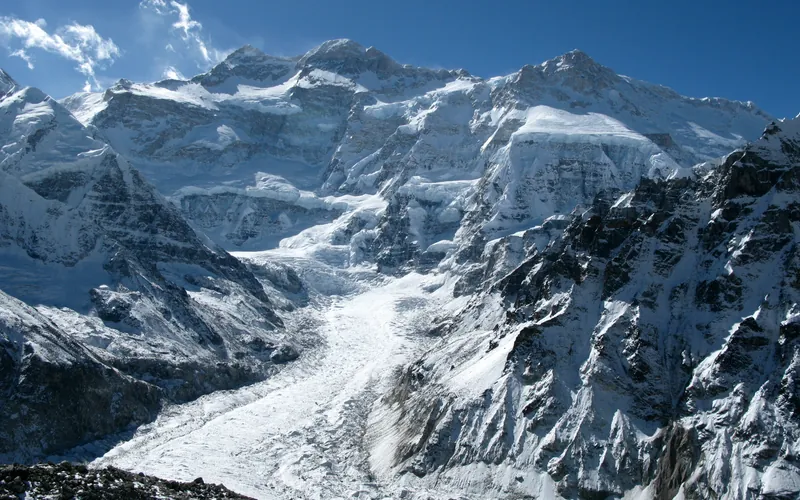


Kangchenjunga
Kangchenjunga, at 8,586 meters (28,169 ft), is the third-highest mountain on Earth, rising on the border between Nepal and Sikkim, India. Honored as sacred by locals, early ascent teams respected local beliefs by stopping short of the actual highest crest. It features immense vertical relief and notorious storm cycles.
Pioneered & Associated Routes (1)
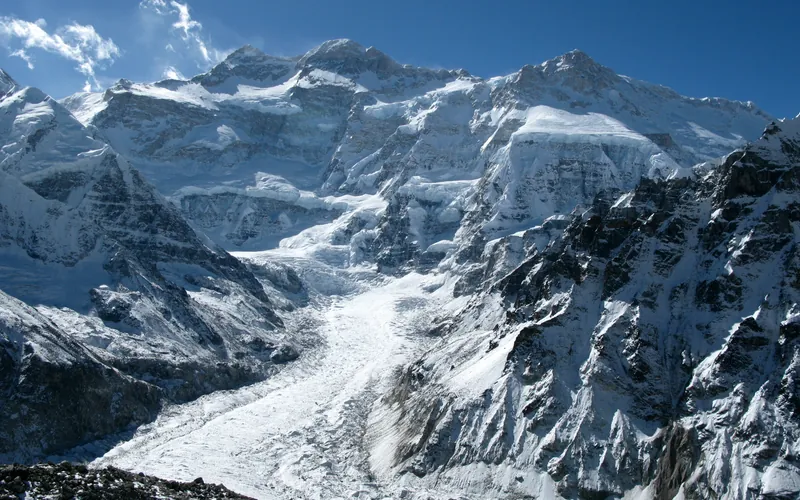
Kangchenjunga Southwest Face (Normal Route)
The Southwest Face route is the classic line of ascent on Kangchenjunga, climbing out of the Yalung Glacier cirque in eastern Nepal. First forged in 1955 by British mountaineers Joe Brown and George Band, the route negotiates heavily broken glacial icefalls, ascends the vast hanging snow terrace of The Great Shelf, and threads steep rock gullies in the Sickle Couloir before reaching the delicate summit crest.
Documented Expeditions (1)
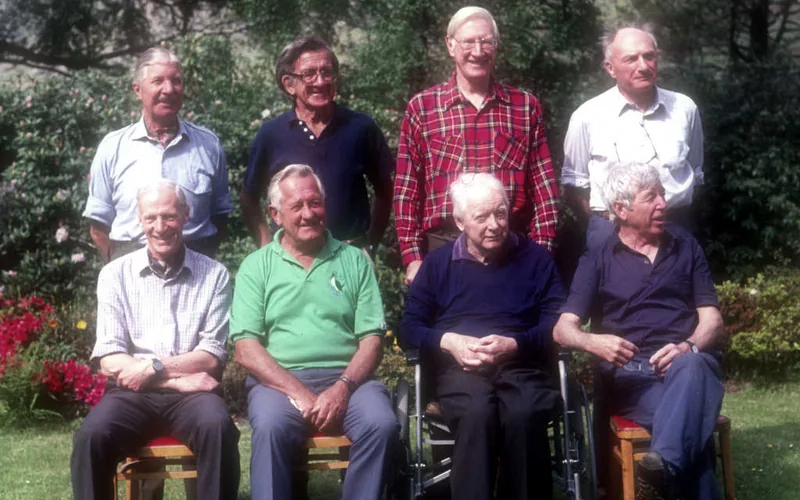
1955 British Kangchenjunga Expedition
Led by Dr. Charles Evans, this landmark British expedition achieved the first ascent of Kangchenjunga (8,586m) on May 25, 1955, when Joe Brown and George Band reached the summit ridge via the Southwest Face, followed the next day by Norman Hardie and Tony Streather.
Associated Chronicles & Stories (1)
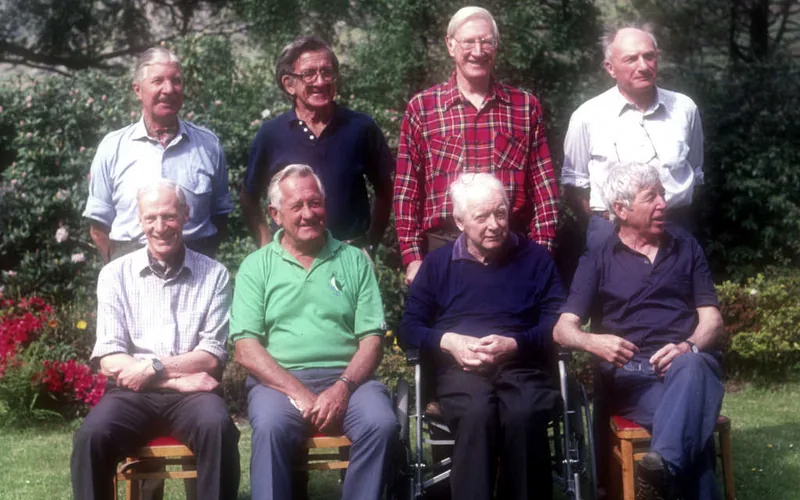
Kangchenjunga 1955: The Sacred Summit and the Human Fly
On May 25, 1955, Joe Brown and George Band achieved the first ascent of Kangchenjunga (8,586m), overcoming a vertical rock wall at 8,500 meters while keeping their promise to leave the sacred summit crest untrodden.
Documented Sources & Archival Citations
- The Hard Years: An Autobiography(Joe Brown / Victor Gollancz)
Supporting claim: Official autobiography documenting working-class origins, British rock climbs, and the Kangchenjunga first ascent
Accessed/Documented: 1967 - Kangchenjunga: The Untrodden Peak(Charles Evans / Hodder & Stoughton)
Supporting claim: Expedition leader's narrative detailing route strategy, summit push, and the sacred summit pact
Accessed/Documented: 1956 - The Himalayan Database: Spring 1955 Kangchenjunga Expedition(Elizabeth Hawley Archive)
Supporting claim: Official expedition records, team rosters, and summit timestamps
Accessed/Documented: 2026