1955 British Kangchenjunga Expedition
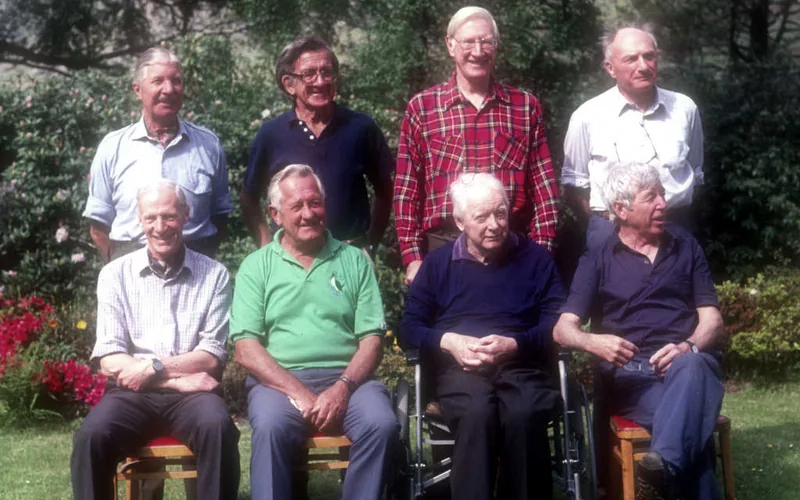
Led by Dr. Charles Evans, this landmark British expedition achieved the first ascent of Kangchenjunga (8,586m) on May 25, 1955, when Joe Brown and George Band reached the summit ridge via the Southwest Face, followed the next day by Norman Hardie and Tony Streather.
Mountain Safety & Conditions Disclaimer: High-altitude climbing, glacial travel, and technical ascents entail severe objective risks including avalanches, serac collapses, rapid weather collapse, and altitude illness. Historical route descriptions and summit claims on Mountanity reflect documented archival sources and must not be used as live operational safety assessments. Local regulations, permits, and physical glacial topography change continuously.
Peer Review: Senior Editorial Board & Historical Reviewers • Editorial Standards
Official Expedition Narrative & Archival Record
In early 1955, the British Alpine Club and the Royal Geographical Society organized the British Kangchenjunga Expedition under the leadership of Dr. Charles Evans, deputy leader of the 1953 Everest triumph. Towering at 8,586 meters on the border of eastern Nepal and Sikkim, Kangchenjunga was revered by locals as the divine abode of protective deities. Before entering the mountain valley, Evans met with the Chogyal (King) of Sikkim and signed a solemn religious covenant: the British climbers pledged to stop short of the actual summit crest so that human boots would never defile the sacred mountain top. Approaching through the wild Yalung valley, the team pioneered a complex route through the broken seracs and icefalls of the lower Yalung Glacier. By mid-May, they established Camp V on the massive hanging terrace known as The Great Shelf (7,200m) and Camp VI at 8,200 meters directly beneath the precipitous Sickle Couloir. On May 25, 1955, using open-circuit oxygen apparatus, working-class Manchester climbing master Joe Brown and Cambridge geologist George Band set off for the summit. Climbing through hard 55° ice in the Sickle Couloir, the pair encountered an intimidating, near-vertical rock barrier at 8,500 meters that appeared impassable. In sub-zero temperatures, Joe Brown removed his outer mitts and tackled an overhanging fissure in bare wool gloves, executing severe rock-climbing moves high in the Death Zone. Breaching the headwall, Band joined him, and the two walked gently up the final snow slope, halting five feet below the highest crest at 3:00 PM to honor their sacred treaty. Twenty-four hours later, on May 26, the second assault team composed of New Zealand engineer Norman Hardie and Captain Tony Streather repeated the ascent, sealing one of the most flawless and ethically celebrated triumphs in Himalayan history.
Documented Team Composition
- Dr. Charles Evans (Expedition Leader)
- Joe Brown (First Summit Pair, May 25)
- George Band (First Summit Pair, May 25)
- Norman Hardie (Second Summit Pair, May 26)
- Tony Streather (Second Summit Pair, May 26)
- John Angelo Jackson
- Neil Mather
- Dr. John Clegg (Physiologist)
- Dawa Tenzing (Sirdar)
Key Statistics & Topographic Figures
- Summit Dates
- May 25 & 26, 1955
Four Climbers Summited
- First Summit Pair
- Joe Brown & George Band
May 25, 1955
- Second Summit Pair
- Norman Hardie & Tony Streather
May 26, 1955
- Summit Height
- 8,586 meters (28,169 ft)
World 3rd Highest
- Sacred Covenant
- Halted 5 ft short of summit
Preserved Sacred Crest
Archival Primary Source Quotations
“We had climbed Kangchenjunga, but the mountain remained intact, pure, and unconquered in the eyes of those who loved it.”
“I took off my outer mitts and jammed my fingers into the freezing rock crack. At twenty-eight thousand feet, every pull demanded everything you had in your soul.”
Defined Alpine Terminology & Concepts
- The Great Shelf
- A vast hanging snow and ice terrace cutting across Kangchenjunga’s Southwest Face at 7,200 meters, providing the staging platform for the upper camps.
- Sickle Couloir
- A steep 55-degree ice and mixed rock couloir piercing the upper headwall of Kangchenjunga above 8,200 meters.
Frequently Asked Questions: 1955 British Kangchenjunga Expedition
Who made the first ascent of Kangchenjunga in 1955?
British climbers Joe Brown and George Band made the first ascent of Kangchenjunga (8,586m) on May 25, 1955, followed twenty-four hours later on May 26 by Norman Hardie and Tony Streather.
Why didn’t the climbers step on the actual summit of Kangchenjunga?
To honor a solemn treaty with the Chogyal of Sikkim and local Buddhist traditions that revere the mountain as sacred, the climbers deliberately stopped five feet below the highest crest to leave the summit untrodden.
Who led the 1955 British Kangchenjunga expedition?
Dr. Charles Evans, a British brain surgeon and deputy leader of the victorious 1953 Everest expedition, led the team to success without casualties.
What was the technical crux overcome by Joe Brown on Kangchenjunga?
At 8,500 meters in the Sickle Couloir, Joe Brown removed his outer mitts and climbed an overhanging granite crack bare-handed, setting a historic benchmark for extreme rock climbing at extreme altitude.
What route was climbed on Kangchenjunga in 1955?
The Southwest Face route ascending out of the Yalung Glacier cirque in eastern Nepal via the Great Shelf (7,200m) and the Sickle Couloir.
Ascent Route & Topography
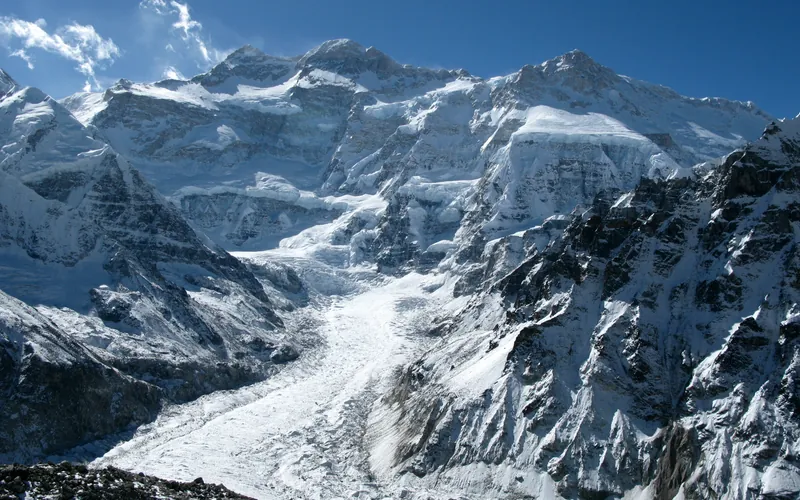
Kangchenjunga Southwest Face (Normal Route)
The Southwest Face route is the classic line of ascent on Kangchenjunga, climbing out of the Yalung Glacier cirque in eastern Nepal. First forged in 1955 by British mountaineers Joe Brown and George Band, the route negotiates heavily broken glacial icefalls, ascends the vast hanging snow terrace of The Great Shelf, and threads steep rock gullies in the Sickle Couloir before reaching the delicate summit crest.
Target Objective Peak
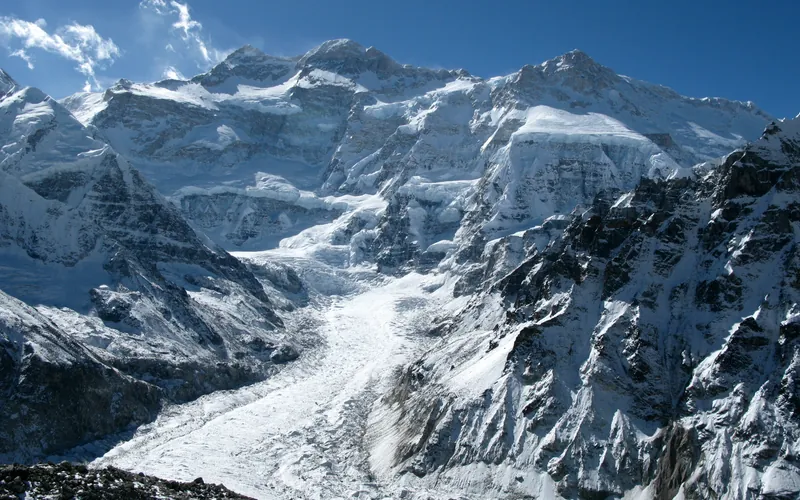


Kangchenjunga
Kangchenjunga, at 8,586 meters (28,169 ft), is the third-highest mountain on Earth, rising on the border between Nepal and Sikkim, India. Honored as sacred by locals, early ascent teams respected local beliefs by stopping short of the actual highest crest. It features immense vertical relief and notorious storm cycles.
Featured Expedition Climbers
George Band
George Christopher Band was born on February 2, 1929, in Taipei, Taiwan, where his parents were British missionary educators. Returning to England for his schooling at Eltham College, Band entered Queens' College, Cambridge, to read geology and petroleum engineering. At Cambridge, his elegant climbing style, boundless energy, and natural leadership quickly propelled him to President of the prestigious Cambridge University Mountaineering Club (CUMC), where he forged difficult routes in the Alps and the Scottish Highlands. In 1953, at just twenty-four years of age, Band was selected by Colonel John Hunt as the youngest climbing member of the historic ninth British Mount Everest Expedition. Entrusted with crucial high-altitude logistics and route-finding, Band pioneered the vital upper approach through the Western Cwm and spent grueling days establishing Camp VII high on the sheer ice sheets of the Lhotse Face, directly paving the way for Hillary and Tenzing's ultimate summit success. Two years later, in 1955, Band joined Dr. Charles Evans on the British Kangchenjunga Expedition. While Joe Brown brought raw working-class grit and rock-climbing mastery, Band contributed formidable ice-craft, intellectual poise, and unwavering high-altitude stamina. Teaming up for the premier assault from Camp VI at 8,200 meters on May 25, 1955, Band and Brown climbed through the Sickle Couloir and negotiated the terrifying rock band below the crest. When Brown pulled through the steep crack at 8,500 meters, Band followed cleanly. Reaching the upper snow slope, both men respectfully halted five feet below the highest physical crest, honoring the promise made to the Chogyal of Sikkim to preserve the divine sanctity of the mountain. Band later led the 1958 Cambridge University Expedition to the Karakoram, achieving the first ascent of Rakaposhi's neighbor, Minapin (Diran) ridge, and spent an illustrious global career as a petroleum geologist with Royal Dutch Shell. Deeply dedicated to alpine governance and Sherpa welfare, Band served as President of the Alpine Club (1987–1989), President of the British Mountaineering Council (BMC), and Chairman of the Himalayan Trust UK, working closely with Sir Edmund Hillary to build schools and hospitals in Nepal. In 2008, Queen Elizabeth II appointed him Officer of the Order of the British Empire (OBE). George Band passed away on August 26, 2011, in Hampshire, celebrated as one of Britain's most graceful and ethical mountaineering statesmen.
Joe Brown
Joseph 'Joe' Brown was born on September 26, 1930, in Ardwick, an impoverished working-class district of Manchester, England. The youngest of seven children, Brown left school at age fourteen to work as a plumber and builder. In the post-war years, he discovered rock climbing in the Peak District and Snowdonia, transforming the sport with his preternatural balance, immense grip strength, and audacious technical vision. Known as 'The Human Fly' and the leading light of the working-class Rock and Ice Club, Brown established benchmark routes across Britain—including Cenotaph Corner, Cemetery Gates, and Vector—that redefined the limits of free climbing. In early 1955, expedition leader Dr. Charles Evans invited the 24-year-old Brown to join the British Kangchenjunga Expedition. Until that moment, Kangchenjunga (8,586m), the third-highest peak on Earth, had repelled five international attempts and was widely considered more technically formidable than Everest or K2. Approaching via the Yalung Glacier in eastern Nepal, the expedition navigated treacherous icefalls and established high camps up the Southwest Face. Out of respect for the religious beliefs of the people of Sikkim, who worship Kangchenjunga as the sacred seat of their deities, Evans signed a solemn pact with the Chogyal (King of Sikkim) promising that no climber would ever set foot on the actual summit crest. On May 25, 1955, Joe Brown and Cambridge mountaineer George Band set off from Camp VI at 8,200 meters for the summit push. Using open-circuit oxygen equipment, they climbed the steep ice of the Sickle Couloir until confronting the mountain's ultimate obstacle: a near-vertical rock headwall at 8,500 meters. Taking off his outer mittens, Brown climbed an overhanging rock crack bare-handed in the sub-zero Death Zone, jamming his fingers into granite fissures to pull through a pitch of severe British VS/HVS rock difficulty. Breaching the headwall, Brown and Band walked up a gentle snow ramp, halting five feet below the highest crest as promised to keep the summit untrodden. Brown cemented his status as one of the greatest all-around mountaineers in history with subsequent landmark ascents. In 1956, he conquered the seemingly unclimbable granite obelisk of the Mustagh Tower (7,273m) in the Karakoram with Ian McNaught-Davis. In 1976, he led the first ascent of the terrifying vertical monolith of Trango (Nameless) Tower (6,239m) alongside Mo Anthoine. For his extraordinary contributions to mountaineering, Brown was appointed Member of the Order of the British Empire (MBE) and Commander of the Order of the British Empire (CBE). He passed away peacefully at his home in Llanberis, Wales, on April 15, 2020, at the age of eighty-nine.
Associated Historical Chronicles & Stories
Kangchenjunga 1955: The Sacred Summit and the Human Fly
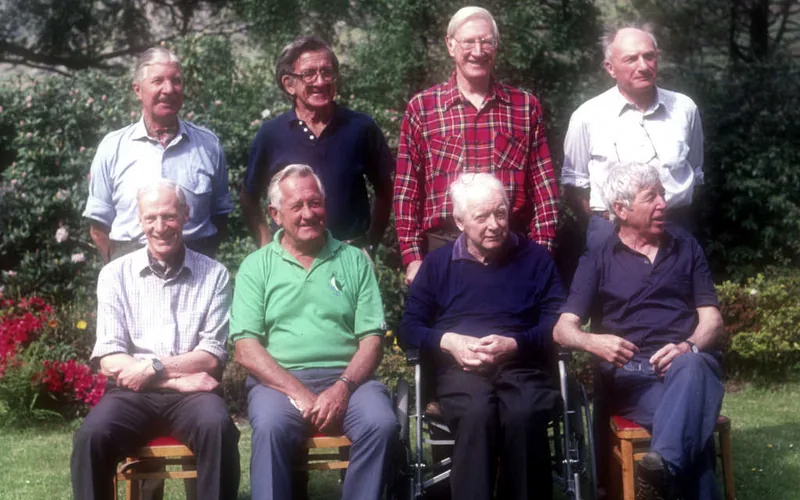
On May 25, 1955, Joe Brown and George Band achieved the first ascent of Kangchenjunga (8,586m), overcoming a vertical rock wall at 8,500 meters while keeping their promise to leave the sacred summit crest untrodden.
Documented Sources & Archival Citations
- Kangchenjunga: The Untrodden Peak(Charles Evans / Hodder & Stoughton)
Supporting claim: Official expedition leader narrative detailing route planning, logistics, and summit push
Accessed/Documented: 1956 - The Hard Years: An Autobiography(Joe Brown / Victor Gollancz)
Supporting claim: Eyewitness account by summit climber Joe Brown of the 8,500m rock crux pitch
Accessed/Documented: 1967 - Road to Kangchenjunga(George Band / Travel Book Club)
Supporting claim: Detailed personal record of high camp life, oxygen logistics, and the summit ridge
Accessed/Documented: 1956 - The Himalayan Database: Spring 1955 Kangchenjunga Records(Elizabeth Hawley Archive)
Supporting claim: Official expedition records, ascent dates, and summit rosters
Accessed/Documented: 2026