1956 Swiss Mount Everest and Lhotse Expedition
Organized by the Swiss Foundation for Alpine Research, this celebrated expedition made the first ascent of Lhotse (8,516m) on May 18, 1956, when Ernst Reiss and Fritz Luchsinger conquered the Lhotse Couloir, followed days later by Swiss summits on Mount Everest.
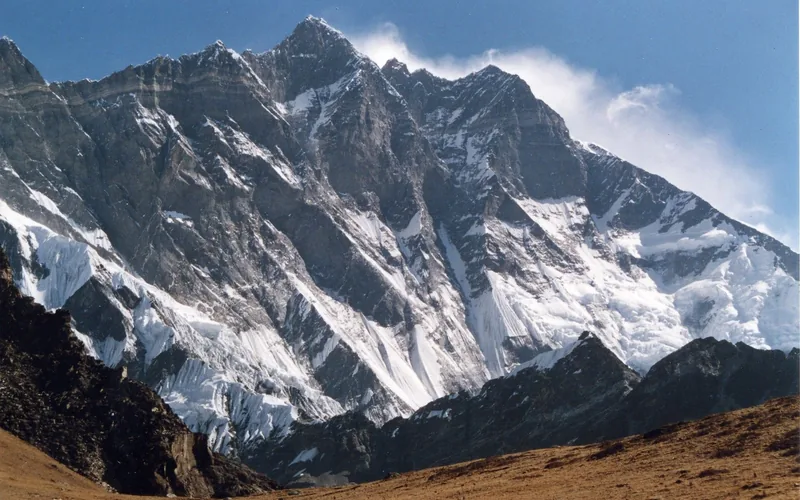
Mountain Safety & Conditions Disclaimer: High-altitude climbing, glacial travel, and technical ascents entail severe objective risks including avalanches, serac collapses, rapid weather collapse, and altitude illness. Historical route descriptions and summit claims on Mountanity reflect documented archival sources and must not be used as live operational safety assessments. Local regulations, permits, and physical glacial topography change continuously.
Peer Review: Senior Editorial Board & Historical Reviewers • Editorial Standards
Official Expedition Narrative & Archival Record
In early 1956, the Swiss Foundation for Alpine Research returned to the Khumbu Himal with an elite climbing team led by Albert Eggler. Determined to claim the virgin summit of Lhotse (8,516m)—the fourth-highest mountain on Earth—and achieve the second ascent of Mount Everest, the Swiss established Base Camp on the Khumbu Glacier in early April. Navigating the treacherous seracs of the Khumbu Icefall, the team set advanced camps throughout the Western Cwm. On May 18, 1956, lead assault climbers Ernst Reiss and Fritz Luchsinger (who had made a miraculous recovery from acute appendicitis during the approach) set off from Camp VI at 7,800 meters. Their objective was the terrifying, near-vertical chimney known as the Lhotse Couloir—an 1,100-meter funnel of 50-degree hard ice and loose yellow limestone. Breathing bottled oxygen and battling gale-force winds, Reiss and Luchsinger chipped steps up the freezing gully and crested the exposed, knife-edge summit ridge at 8,516 meters at 12:45 PM, completing the maiden ascent of Lhotse. Demonstrating unmatched alpine versatility, the expedition followed this triumph by sending two teams to the summit of Mount Everest via the South Col. On May 23, Ernst Schmied and Jürg Marmet achieved the second ascent of Everest, followed on May 24 by Adolf Reist and Hans-Rudolf von Gunten for the third ascent. The 1956 Swiss campaign entered history as one of the most comprehensive double-triumphs in high-altitude mountaineering.
Documented Team Composition
- Albert Eggler (Expedition Leader)
- Ernst Reiss (Lhotse First Ascender, May 18)
- Fritz Luchsinger (Lhotse First Ascender, May 18)
- Jürg Marmet (Everest Summiter, May 23)
- Ernst Schmied (Everest Summiter, May 23)
- Adolf Reist (Everest Summiter, May 24)
- Hans-Rudolf von Gunten (Everest Summiter, May 24)
- Dr. Eduard Leuthold (Expedition Doctor)
- Fritz Müller (Glaciologist)
- Pasang Dawa Lama (High-Altitude Sirdar)
Key Statistics & Topographic Figures
- First Ascent Date
- May 18, 1956
Lhotse Maiden Summit
- First Ascenders
- Ernst Reiss & Fritz Luchsinger
Swiss Alpine Partnership
- Couloir Dimensions
- 1,100m vertical, 45°-50° blue ice
Technical Crux Funnel
- Everest Repeats
- May 23 & 24, 1956
2nd & 3rd Historic Summits
Archival Primary Source Quotations
“We stood upon a point of rock and snow smaller than a table top, suspended between the heavens and the earth. There was no joy of victory, only a profound thankfulness.”
Defined Alpine Terminology & Concepts
- Lhotse Couloir
- A steep, narrow 1,100-meter ice gully that breaches the upper rocky headwall of Lhotse leading to the knife-edge summit arête.
- Geneva Spur
- A prominent black rock rib on the Lhotse Face first climbed by the Swiss in 1952 to unlock the route to the South Col of Everest.
Frequently Asked Questions: 1956 Swiss Mount Everest and Lhotse Expedition
Who made the first ascent of Lhotse in 1956?
Swiss mountaineers Ernst Reiss and Fritz Luchsinger achieved the historic first ascent of Lhotse (8,516m) on May 18, 1956, climbing the steep Lhotse Couloir from the Western Cwm.
What is the Lhotse Couloir and why is it dangerous?
The Lhotse Couloir is a claustrophobic, 1,100-meter technical ice chute pitching at 45 to 50 degrees through the final summit headwall, prone to rockfall and high-altitude spindrift avalanches.
How did Fritz Luchsinger overcome illness during the 1956 expedition?
Luchsinger suffered acute appendicitis at Namche Bazaar. Without surgery, he was treated with high doses of antibiotics and bed rest at Tengboche Monastery, miraculously recovering to make the first ascent.
What historic double triumph did the 1956 Swiss expedition achieve?
In addition to the first ascent of Lhotse on May 18, Swiss teammates completed the second and third ascents of Mount Everest on May 23 and 24, 1956.
Ascent Route & Topography
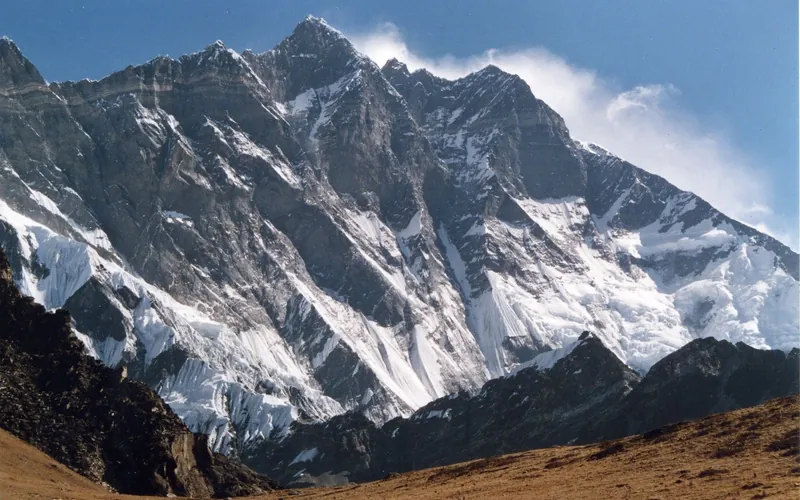
Lhotse Normal Route (West Face & Couloir)
The Normal Route on Lhotse shares the Everest South Col route through the treacherous Khumbu Icefall and across the Western Cwm up to Camp 3 on the Lhotse Face (7,200m). Beyond the Yellow Band, the route splits right from the South Col route and ascends directly into the notorious Lhotse Couloir—a narrow, 500-meter vertical gully of 45-to-50-degree hard blue ice funneling into the 8,516m summit.
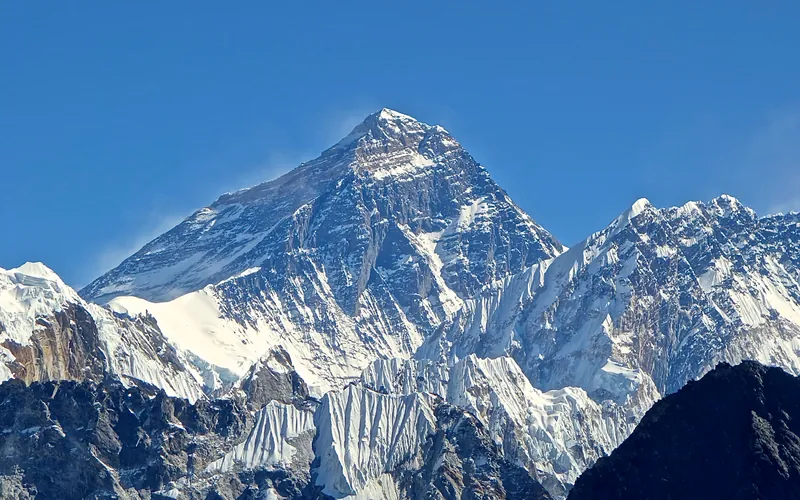
South Col & Southeast Ridge (Normal Route)
The South Col Route along the Southeast Ridge is the historic path of the 1953 first ascent and the most popular route on Mount Everest. Starting from Base Camp on the Khumbu Glacier in Nepal, climbers navigate the shifting seracs of the Khumbu Icefall into the Western Cwm. The route then scales the icy 45-degree slope of the Lhotse Face to the South Col at 7,925 meters, launching the final summit bid through the Balcony, South Summit, and Hillary Step to the summit of Earth at 8,848.86 meters.
Target Objective Peaks
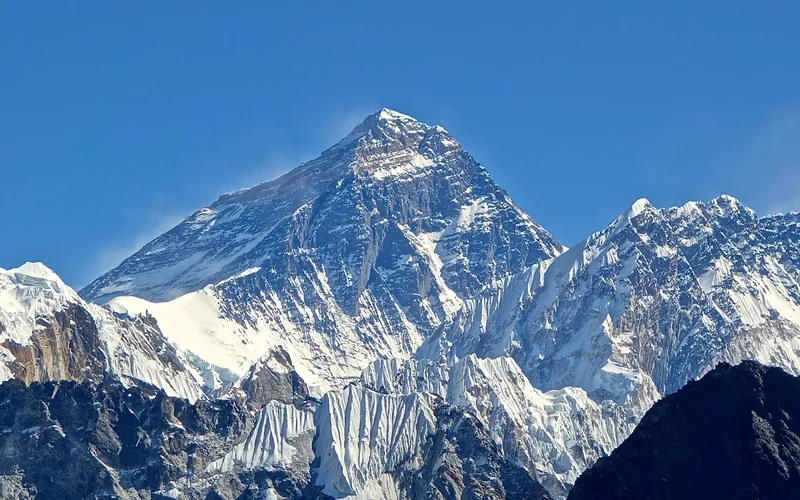


Mount Everest
Mount Everest is the highest mountain above sea level on Earth, standing at an official elevation of 8,848.86 meters (29,031.7 ft). Straddling the international frontier between Nepal and China, it is known locally as Sagarmatha in Nepali ('Goddess of the Sky') and Chomolungma in Tibetan ('Mother Goddess of the World'). The peak rises into the extreme upper troposphere, where oxygen levels drop to barely one-third of sea-level pressure. Climbers face hurricane-force jet stream winds, severe frostbite conditions, shifting ice crevasses in the Khumbu Icefall, and the dangerous Death Zone above 8,000 meters.
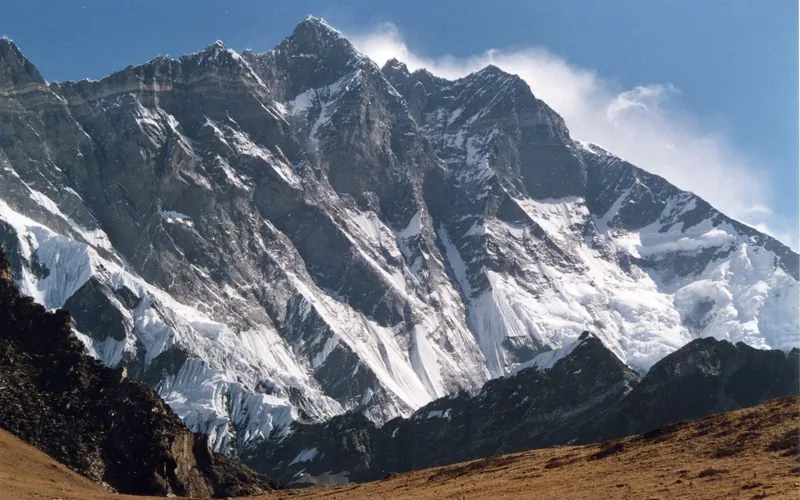
Lhotse
Lhotse, at 8,516 meters (27,940 ft), is the fourth-highest mountain on Earth, connected directly to Mount Everest via the South Col. Renowned for its sheer 3,200-meter South Face, one of the most imposing rock and ice walls in alpinism, the standard route tackles the grueling Lhotse Couloir from the Western Cwm.
Featured Expedition Climbers
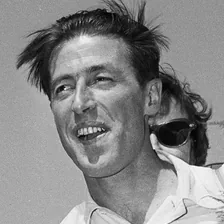
Ernst Reiss
Ernst 'Ere' Reiss was born on February 24, 1920, in Davos, Switzerland. Immersed in the high alpine valleys of the Graubünden canton, Reiss trained as a precision mechanic before dedicating his life to alpine rescue, high-altitude guiding, and mountaineering innovation. In the late 1940s, Reiss established himself as one of Switzerland's finest ice and mixed technicians, completing daring ascents in the Bernese Oberland and the Mont Blanc massif. In 1952, Reiss was selected as a lead assault climber for both the spring and autumn Swiss Mount Everest Expeditions organized by the Swiss Foundation for Alpine Research. Operating in the Western Cwm, Reiss was instrumental in forcing the first passage up the sheer ice ramparts of the Geneva Spur and onto the South Col at 8,000 meters, forging the exact high-altitude gateway that British climbers Hillary and Tenzing utilized to conquer Everest the following year. In the spring of 1956, Reiss returned to the Khumbu region on the monumental Swiss Mount Everest and Lhotse Expedition led by Albert Eggler. Tasked specifically with the first ascent of Everest's towering neighbor, Lhotse (8,516m), Reiss partnered with Swiss Army captain Fritz Luchsinger. Above Camp IV in the Western Cwm, the pair forged an audacious line up the Lhotse Face and entered the menacing, rock-strewn Lhotse Couloir—a claustrophobic 1,100-meter funnel of 50-degree hard ice. On May 18, 1956, using open-circuit oxygen equipment, Reiss and Luchsinger fought their way through bitter gales and cascading spindrift to reach the razor-sharp summit ridge of Lhotse at 8,516 meters. Five days later, their Swiss teammates achieved the second and third ascents of Mount Everest, making the 1956 Swiss expedition one of the most successful high-altitude campaigns in history. Reiss later played a foundational role in modern Swiss air-rescue (Rega) and authored the widely read autobiography Mein Weg als Bergsteiger (1959). He passed away in Basel on August 3, 2010, at the age of ninety.
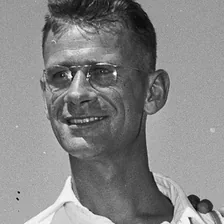
Fritz Luchsinger
Fritz Luchsinger was born on March 8, 1921, in Zurich, Switzerland. A career officer in the Swiss Army specializing in military mountain training and alpine logistics, Luchsinger combined rigorous discipline with exceptional high-altitude endurance and rock-and-ice craftsmanship. In the Swiss Alps, he completed major ascents across the Valais and Bernese Alps before being selected for the landmark 1956 Swiss Mount Everest and Lhotse Expedition. During the long trek into the Khumbu region in early 1956, disaster nearly struck when Luchsinger collapsed with acute appendicitis near Namche Bazaar. In an era without helicopter rescue, expedition doctor Gabriel Chevalley and local Tibetan healers treated him with intensive antibiotic therapy and complete immobilization inside the local Buddhist monastery. In an astonishing display of physical recovery, Luchsinger rejoined the climbing team weeks later at Base Camp and quickly regained full high-altitude fitness. Teaming up with Davos master climber Ernst Reiss, Luchsinger was assigned the primary summit assault on Lhotse (8,516m). Ascending from the Western Cwm, the two Swiss climbers pioneered a route up the upper Lhotse Face and forced their way through the perilous 1,100-meter technical gully known as the Lhotse Couloir. On May 18, 1956, battling sub-zero gales and loose rock bands, Luchsinger and Reiss reached the summit crest, completing the maiden ascent of the fourth-highest mountain in the world. Luchsinger continued climbing at the highest levels well into his later years. In May 1980, at the age of fifty-nine, he summited Dhaulagiri I (8,167m) without supplemental oxygen. In April 1983, while leading an alpine-style expedition on Shishapangma (8,027m) in Tibet, Luchsinger developed acute high-altitude pulmonary edema at 7,800 meters and tragically passed away on April 28, 1983. He remains honored as one of Switzerland’s most courageous and resilient Himalayan pioneers.
Associated Historical Chronicles & Stories
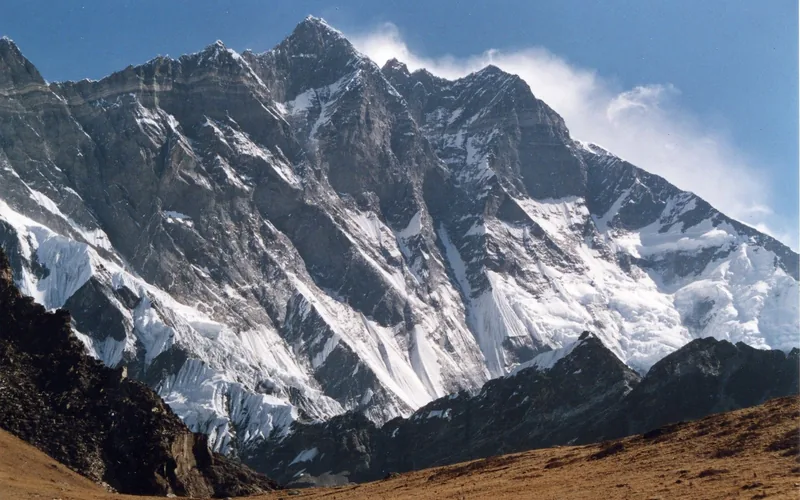
Lhotse 1956: Ernst Reiss, Fritz Luchsinger, and the 1,100-Meter Couloir
On May 18, 1956, Swiss climbers Ernst Reiss and Fritz Luchsinger achieved the historic first ascent of Lhotse (8,516m), conquering the grueling 1,100-meter ice couloir to claim Earth's fourth-highest giant.
Documented Sources & Archival Citations
- The Swiss Everest-Lhotse Expedition 1956(Albert Eggler / Swiss Foundation for Alpine Research)
Supporting claim: Official expedition narrative detailing the Lhotse first ascent and Everest repeat climbs
Accessed/Documented: 1957 - Mein Weg als Bergsteiger(Ernst Reiss / Orell Füssli)
Supporting claim: Firsthand technical account of negotiating the 1,100m Lhotse Couloir
Accessed/Documented: 1959 - The Himalayan Database: Spring 1956 Lhotse & Everest(Elizabeth Hawley Archive)
Supporting claim: Official expedition records, ascent timestamps, and member registries
Accessed/Documented: 2026