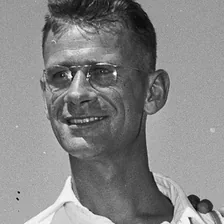
Fritz Luchsinger
Fritz Luchsinger was a Swiss mountaineer and military officer who made the historic first ascent of Lhotse (8,516m) on May 18, 1956, alongside Ernst Reiss. Overcoming a life-threatening bout of appendicitis during the approach march, Luchsinger conquered the steep Lhotse Couloir and later summited Dhaulagiri I at age fifty-nine.
Mountain Safety & Conditions Disclaimer: High-altitude climbing, glacial travel, and technical ascents entail severe objective risks including avalanches, serac collapses, rapid weather collapse, and altitude illness. Historical route descriptions and summit claims on Mountanity reflect documented archival sources and must not be used as live operational safety assessments. Local regulations, permits, and physical glacial topography change continuously.
Peer Review: Senior Editorial Board & Historical Reviewers • Editorial Standards
Biographical Record & Archival Chronicle
Fritz Luchsinger was born on March 8, 1921, in Zurich, Switzerland. A career officer in the Swiss Army specializing in military mountain training and alpine logistics, Luchsinger combined rigorous discipline with exceptional high-altitude endurance and rock-and-ice craftsmanship. In the Swiss Alps, he completed major ascents across the Valais and Bernese Alps before being selected for the landmark 1956 Swiss Mount Everest and Lhotse Expedition.
During the long trek into the Khumbu region in early 1956, disaster nearly struck when Luchsinger collapsed with acute appendicitis near Namche Bazaar. In an era without helicopter rescue, expedition doctor Gabriel Chevalley and local Tibetan healers treated him with intensive antibiotic therapy and complete immobilization inside the local Buddhist monastery. In an astonishing display of physical recovery, Luchsinger rejoined the climbing team weeks later at Base Camp and quickly regained full high-altitude fitness.
Teaming up with Davos master climber Ernst Reiss, Luchsinger was assigned the primary summit assault on Lhotse (8,516m). Ascending from the Western Cwm, the two Swiss climbers pioneered a route up the upper Lhotse Face and forced their way through the perilous 1,100-meter technical gully known as the Lhotse Couloir. On May 18, 1956, battling sub-zero gales and loose rock bands, Luchsinger and Reiss reached the summit crest, completing the maiden ascent of the fourth-highest mountain in the world.
Luchsinger continued climbing at the highest levels well into his later years. In May 1980, at the age of fifty-nine, he summited Dhaulagiri I (8,167m) without supplemental oxygen. In April 1983, while leading an alpine-style expedition on Shishapangma (8,027m) in Tibet, Luchsinger developed acute high-altitude pulmonary edema at 7,800 meters and tragically passed away on April 28, 1983. He remains honored as one of Switzerland’s most courageous and resilient Himalayan pioneers.
Notable Milestones & Ascents
- Historic first ascent of Lhotse (8,516m) on May 18, 1956, alongside Ernst Reiss
- Overcame near-fatal acute appendicitis at Namche Bazaar to complete the first ascent of Lhotse
- First person to climb the steep 1,100m Lhotse Couloir to the summit crest
- Summited Dhaulagiri I (8,167m) in 1980 at the age of 59
- Served with distinction as an alpine officer in the Swiss Armed Forces
Key Statistics & Topographic Figures
- Lhotse First Ascent
- May 18, 1956
Partner of Ernst Reiss
- Dhaulagiri I Summit
- May 1980 (Age 59)
Oxygenless Himalayan Summit
- Military Service
- Swiss Army Alpine Troops
Captain & Mountain Instructor
Archival Primary Source Quotations
“To overcome pain in the valley and stand on the crest of Lhotse taught me that human determination is limitless.”
Defined Alpine Terminology & Concepts
- Tengboche Monastery
- The leading Tibetan Buddhist monastery in Khumbu, Nepal, where Luchsinger rested during his recovery from acute appendicitis in 1956.
- High-Altitude Pulmonary Edema (HAPE)
- A life-threatening accumulation of fluid in the lungs caused by acute oxygen deprivation at extreme altitude.
Frequently Asked Questions: Fritz Luchsinger
Who was Fritz Luchsinger?
Fritz Luchsinger was a Swiss Army officer and mountaineer who achieved the historic first ascent of Lhotse (8,516m) on May 18, 1956, alongside Ernst Reiss.
How did Fritz Luchsinger overcome illness during the 1956 expedition?
Luchsinger suffered near-fatal acute appendicitis at Namche Bazaar. Without modern surgical facilities, he was treated with intensive antibiotics and monastery rest, recovering to conquer Lhotse.
What other 8,000-meter peak did Fritz Luchsinger conquer?
In May 1980, at the age of 59, Luchsinger summited Dhaulagiri I (8,167m) without supplemental oxygen.
How did Fritz Luchsinger die?
Luchsinger died of high-altitude pulmonary edema at 7,800 meters on April 28, 1983, during an alpine-style attempt on Shishapangma in Tibet.
Associated Summits (2)
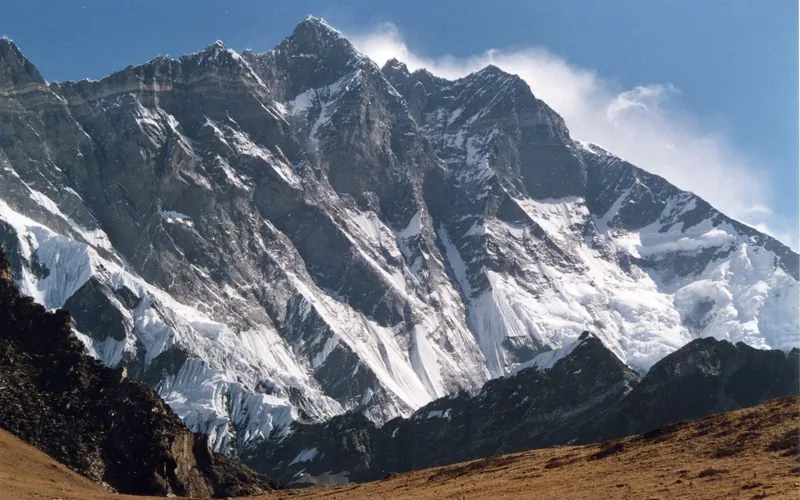


Lhotse
Lhotse, at 8,516 meters (27,940 ft), is the fourth-highest mountain on Earth, connected directly to Mount Everest via the South Col. Renowned for its sheer 3,200-meter South Face, one of the most imposing rock and ice walls in alpinism, the standard route tackles the grueling Lhotse Couloir from the Western Cwm.
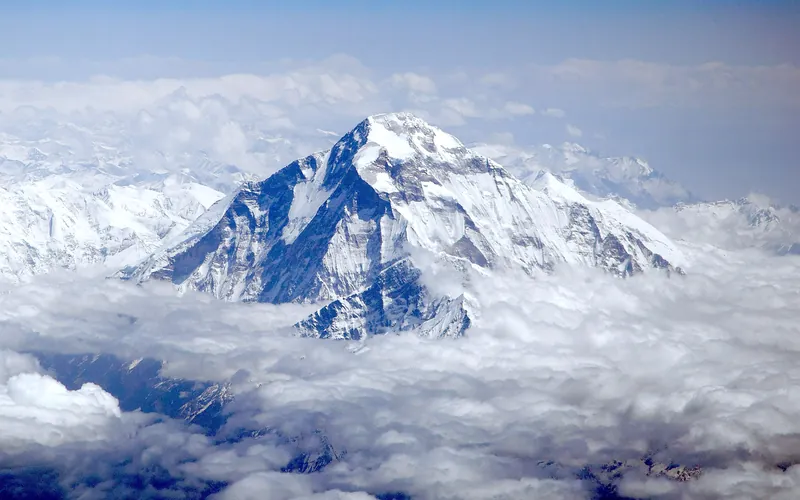
Dhaulagiri I
Dhaulagiri I, at 8,167 meters (26,795 ft), is the seventh-highest mountain on Earth and the highest peak situated entirely within Nepal. Rising steeply above the Kali Gandaki Gorge—the deepest gorge on Earth—opposite Annapurna, Dhaulagiri forms a staggering 7,000-meter vertical rise from the river valley.
Pioneered & Associated Routes (2)
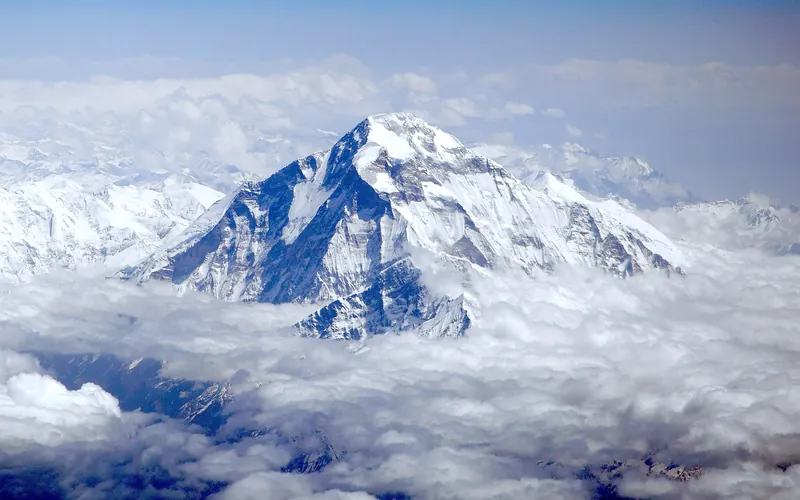
Dhaulagiri I Northeast Ridge (Normal Route)
The Northeast Ridge is the standard climbing route on Dhaulagiri I, first ascended in 1960 by a Swiss-Austrian team. The route begins on the glaciated Mayangdi Khola valley, climbs to the Northeast Col (5,700m), and works its way up the mountain's north-northeast face. The upper section traverses steep, wind-scoured blue ice shelves below the summit rocks and negotiates a final, exposed couloir leading directly to the 8,167m summit.
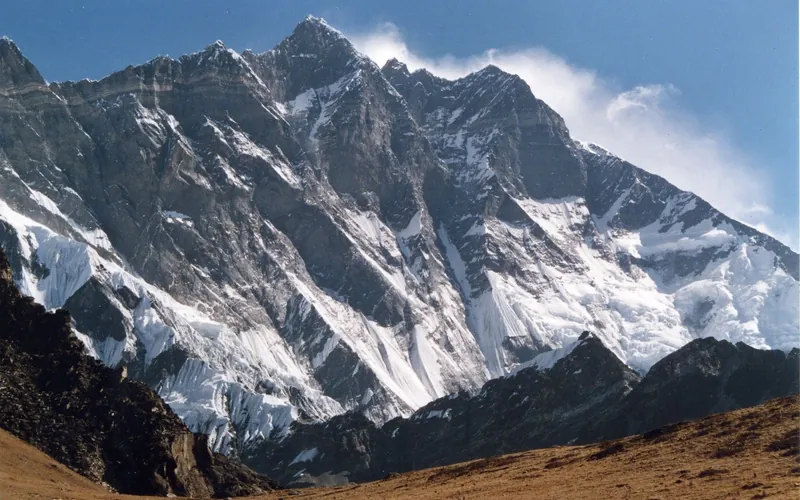
Lhotse Normal Route (West Face & Couloir)
The Normal Route on Lhotse shares the Everest South Col route through the treacherous Khumbu Icefall and across the Western Cwm up to Camp 3 on the Lhotse Face (7,200m). Beyond the Yellow Band, the route splits right from the South Col route and ascends directly into the notorious Lhotse Couloir—a narrow, 500-meter vertical gully of 45-to-50-degree hard blue ice funneling into the 8,516m summit.
Documented Expeditions (1)
1956 Swiss Mount Everest and Lhotse Expedition
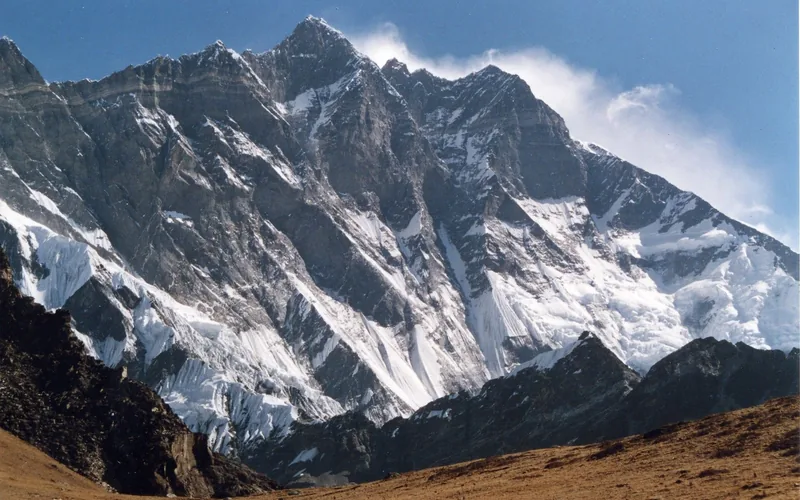
Organized by the Swiss Foundation for Alpine Research, this celebrated expedition made the first ascent of Lhotse (8,516m) on May 18, 1956, when Ernst Reiss and Fritz Luchsinger conquered the Lhotse Couloir, followed days later by Swiss summits on Mount Everest.
Associated Chronicles & Stories (1)
Lhotse 1956: Ernst Reiss, Fritz Luchsinger, and the 1,100-Meter Couloir
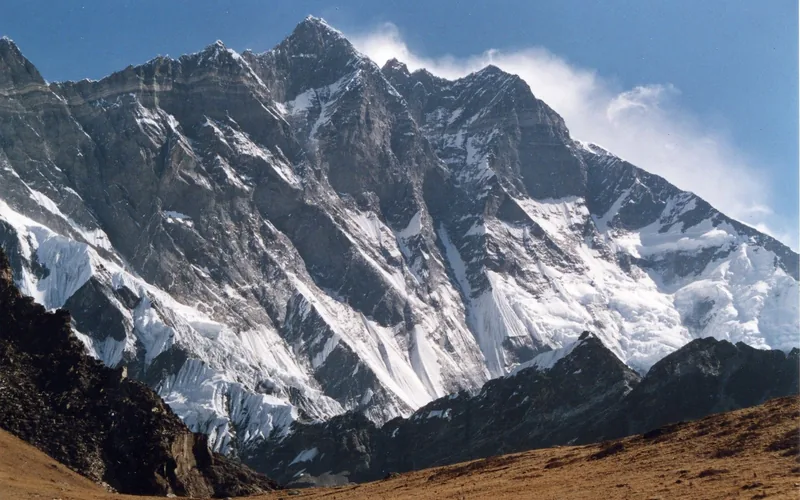
On May 18, 1956, Swiss climbers Ernst Reiss and Fritz Luchsinger achieved the historic first ascent of Lhotse (8,516m), conquering the grueling 1,100-meter ice couloir to claim Earth's fourth-highest giant.
Documented Sources & Archival Citations
- The Swiss Everest-Lhotse Expedition 1956(Albert Eggler / Swiss Foundation for Alpine Research)
Supporting claim: Official expedition account documenting Luchsinger's illness, recovery, and summit climb
Accessed/Documented: 1957 - Mein Weg als Bergsteiger(Ernst Reiss / Orell Füssli)
Supporting claim: Climbing partner Ernst Reiss's eyewitness reflections on Luchsinger's stamina on Lhotse
Accessed/Documented: 1959 - The Himalayan Database: Lhotse 1956 & Dhaulagiri 1980(Elizabeth Hawley Archive)
Supporting claim: Official verification of summit records and timestamps
Accessed/Documented: 2026