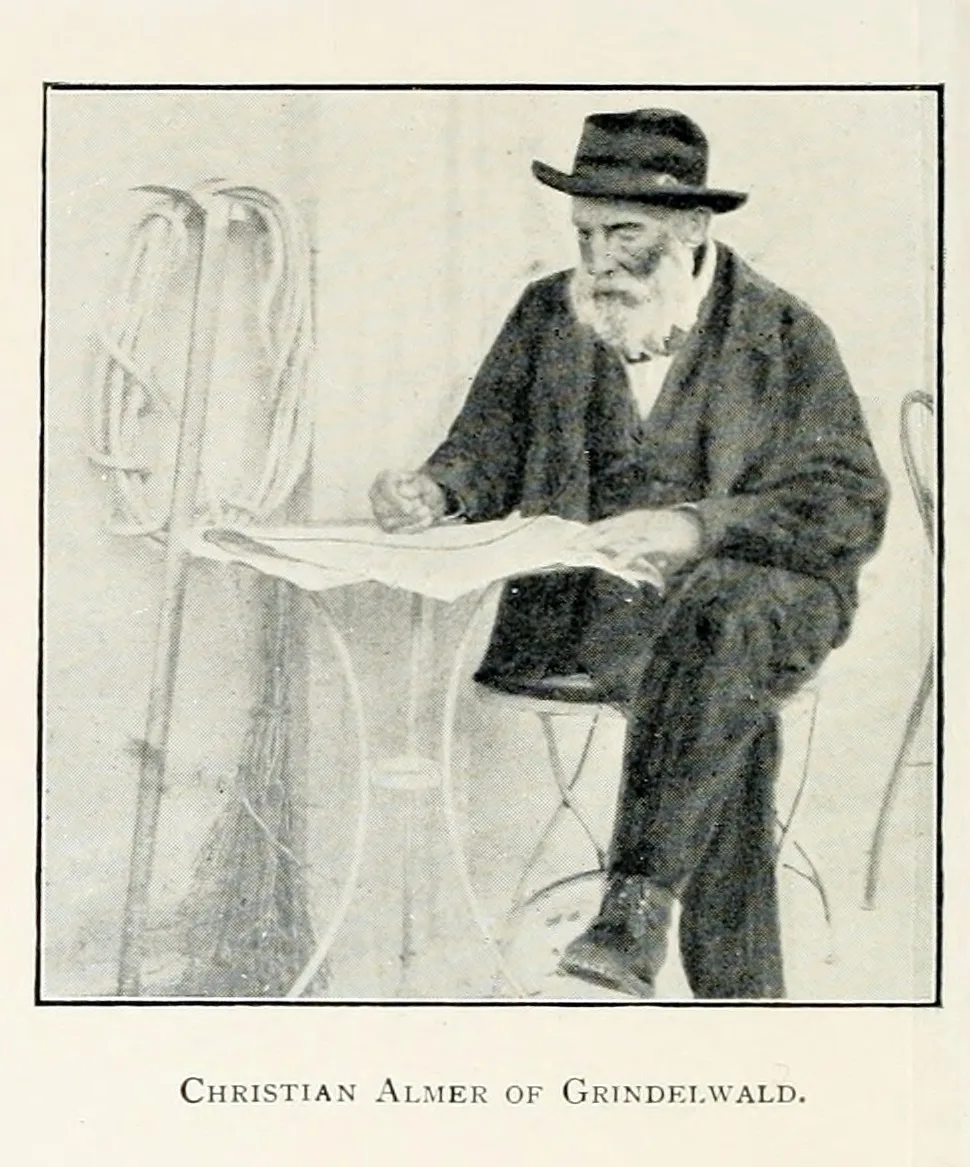
Christian Almer
Christian Almer was the supreme mountain guide of the Alpine Golden Age, completing more first ascents of major Alpine summits than any guide of his era. Born in Grindelwald in 1826, Almer guided first ascents of the Eiger in 1858, Wetterhorn in 1854, Schreckhorn in 1861, Barre des Écrins in 1864, and Aiguille Verte in 1865, partnering repeatedly with Edward Whymper.
Mountain Safety & Conditions Disclaimer: High-altitude climbing, glacial travel, and technical ascents entail severe objective risks including avalanches, serac collapses, rapid weather collapse, and altitude illness. Historical route descriptions and summit claims on Mountanity reflect documented archival sources and must not be used as live operational safety assessments. Local regulations, permits, and physical glacial topography change continuously.
Peer Review: Senior Editorial Board & Historical Reviewers • Editorial Standards
Biographical Record & Archival Chronicle
Born on February 15, 1826, in Grindelwald at the foot of the Bernese Oberland's greatest limestone walls, Christian Almer grew up in a farming family whose sons had guided hunters and chamois stalkers across the high passes since the days of Napoleon. From his youth, Almer showed an uncanny instinct for snow and ice, learning the treacherous crevasse systems of the Grindelwald glaciers by heart before he was twenty. In 1854, Almer assisted Alfred Wills on the ascent of the Wetterhorn above Grindelwald, the climb widely credited with launching the Golden Age of Alpinism and inspiring the founding of the Alpine Club. Over the following twenty years, Almer became the most sought-after guide in the Alps, his calm authority and extraordinary physical strength drawing the most ambitious British climbers to Grindelwald at the start of each summer season. He made the first ascent of the Eiger's straightforward West Flank with Charles Barrington in 1858, and three years later pioneered a route up the fearsome Schreckhorn, one of the sharpest and most remote summits in the Bernese Alps. In August 1864, Almer joined Edward Whymper in the French Alps, and together they made the first ascent of the Barre des Écrins, the highest summit in the Dauphiné Alps. In the summer of 1865, during the extraordinary final culmination of the Golden Age, Almer guided Whymper's team up the Aiguille Verte above Chamonix, a spectacular ascent completed just days after Whymper's tragic Matterhorn triumph. Almer retired from active guiding in the 1890s and lived to the remarkable age of 72, surviving to see his grandsons continue his guiding dynasty. He died in Grindelwald on January 12, 1898, with an unmatched record of first ascents across the Bernese Oberland, Pennine Alps, and Dauphiné, all accomplished without a single client fatality.
Notable Milestones & Ascents
- First ascent of the Eiger (3,967 m) West Flank with Charles Barrington on August 11, 1858
- First ascent of the Schreckhorn (4,078 m) in the Bernese Oberland in 1861
- First ascent of the Barre des Écrins (4,102 m), highest summit of the Dauphiné Alps, with Edward Whymper in 1864
- First ascent of the Aiguille Verte (4,122 m) above Chamonix in July 1865 with Edward Whymper
- More major Alpine first ascents than any mountain guide of the Golden Age era
- Guided hundreds of climbing seasons across the Bernese Alps and Pennine Alps with a perfect safety record
Key Statistics & Topographic Figures
- Born and Died
- February 15, 1826 – January 12, 1898 (aged 71)
- Eiger First Ascent
- August 11, 1858 (West Flank)
- Major First Ascents
- Over 30 first ascents across the Western Alps
- Guiding Career
- Over 40 years without a single fatal client accident
Archival Primary Source Quotations
“Christian Almer was the most reliable, sure-footed, and brave guide who ever swung an axe in the Alps.”
Defined Alpine Terminology & Concepts
- Golden Age of Alpinism
- The decade between Wills' ascent of the Wetterhorn in 1854 and Whymper's ascent of the Matterhorn in 1865.
- Step-Cutting
- The historic technique of carving footholds into steep hard ice using a heavy forged alpenstock or ice axe.
Frequently Asked Questions: Christian Almer
Who was Christian Almer?
Christian Almer (1826–1898) was a legendary Swiss mountain guide from Grindelwald widely revered as the dean of Alpine Golden Age guides.
What famous mountains did Christian Almer first climb?
Almer made first ascents of the Eiger (1858), Mönch (1857), Schreckhorn (1861), Barre des Écrins (1864), and Aiguille Verte (1865).
Who was Christian Almer's frequent climbing partner?
Almer partnered repeatedly with British mountaineer Edward Whymper and pioneering alpinist W.A.B. Coolidge.
Did Christian Almer guide the first ascent of the Eiger?
Yes, Almer led the first ascent of the Eiger via the West Flank on August 11, 1858, alongside Charles Barrington and Peter Bohren.
What was Christian Almer's guiding safety record?
Almer guided hundreds of alpine expeditions across Switzerland and France throughout his forty-year career with zero client fatalities.
What golden jubilee did Christian Almer celebrate on the Wetterhorn?
In 1896, Almer celebrated his golden wedding anniversary by climbing the Wetterhorn with his wife Margaritha at age seventy.
Where was Christian Almer born and buried?
Almer was born on February 15, 1826, in Grindelwald, Switzerland, and is buried in the mountain cemetery of Grindelwald.
What is Christian Almer's legacy in mountaineering history?
Almer pioneered professional alpine guiding standards, ethical client safety, and step-cutting technique during the Golden Age.
Associated Summits (2)
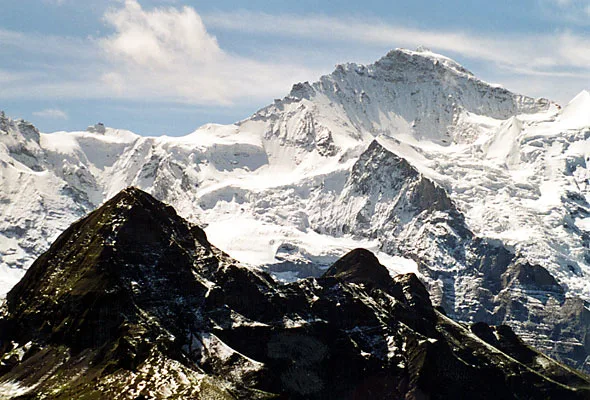

Jungfrau
The Jungfrau (4,158 m / 13,642 ft) is the third-highest peak in the Bernese Oberland and one of the most iconic mountains in the world, forming the spectacular triumvirate with the Eiger and the Mönch above Grindelwald. Its name, meaning 'Young Woman' or 'Virgin,' was given by medieval monks who saw in the long white snowfields of its south face the outline of a white veil. First climbed on August 3, 1811, by Rudolf and Hieronymus Meyer guided by local chamois hunters Joseph Bortis and Alois Volker, the Jungfrau now hosts the Jungfraujoch, at 3,454 m the highest railway station in Europe, designated a UNESCO World Heritage Site.
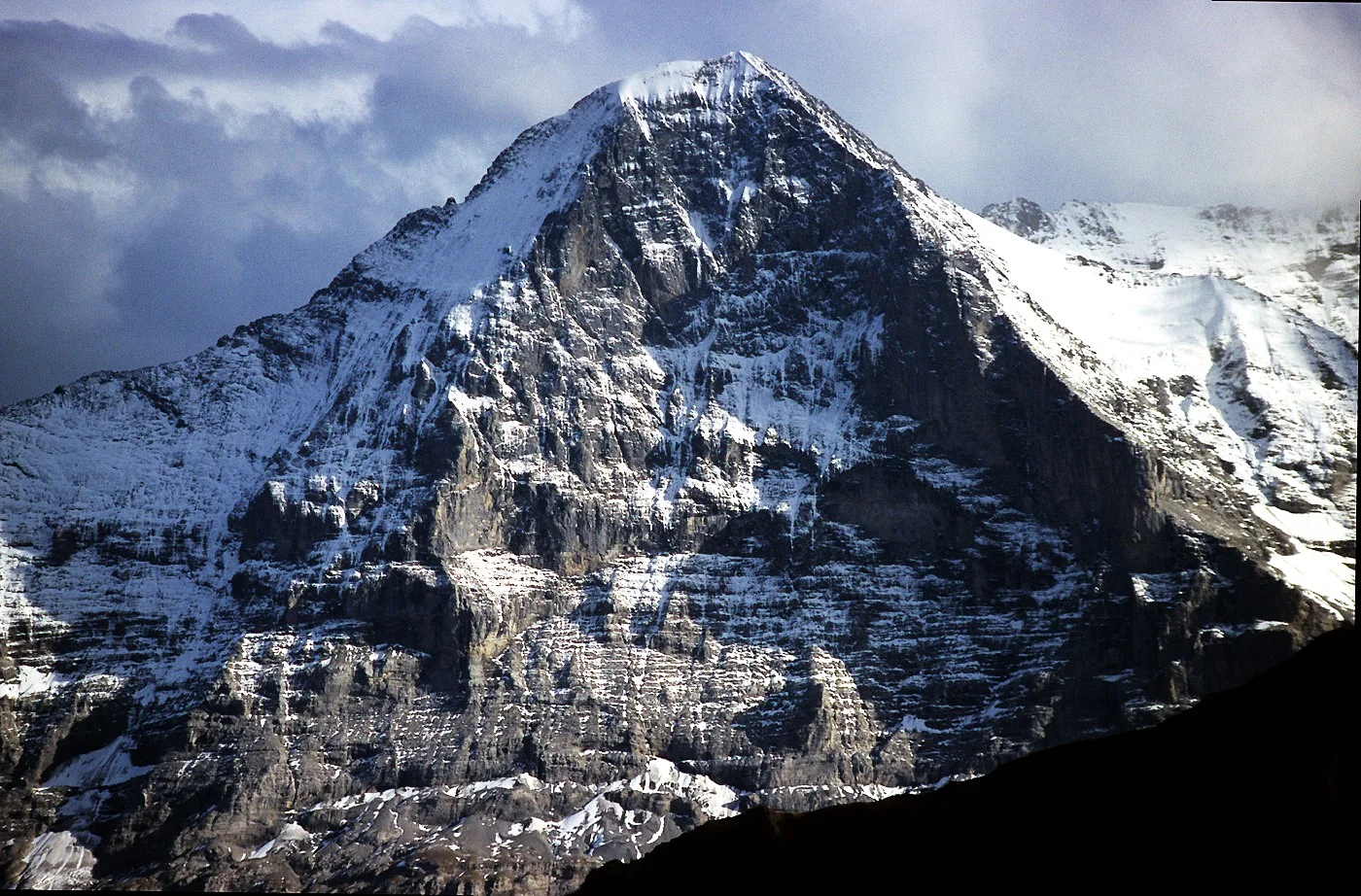
Eiger
The Eiger, standing at 3,967 meters (13,015 ft) in the Bernese Alps of Switzerland, is globally renowned for its monstrous 1,800-meter (5,900 ft) sheer vertical North Face (the *Eiger-Nordwand*). Feared as the *Mordwand* ('Murder Wall') following catastrophic climbing tragedies in the 1930s, it remained the last great problem of the Alps until conquered in July 1938 by Anderl Heckmair, Ludwig Vörg, Heinrich Harrer, and Fritz Kasparek.
Pioneered & Associated Routes (2)
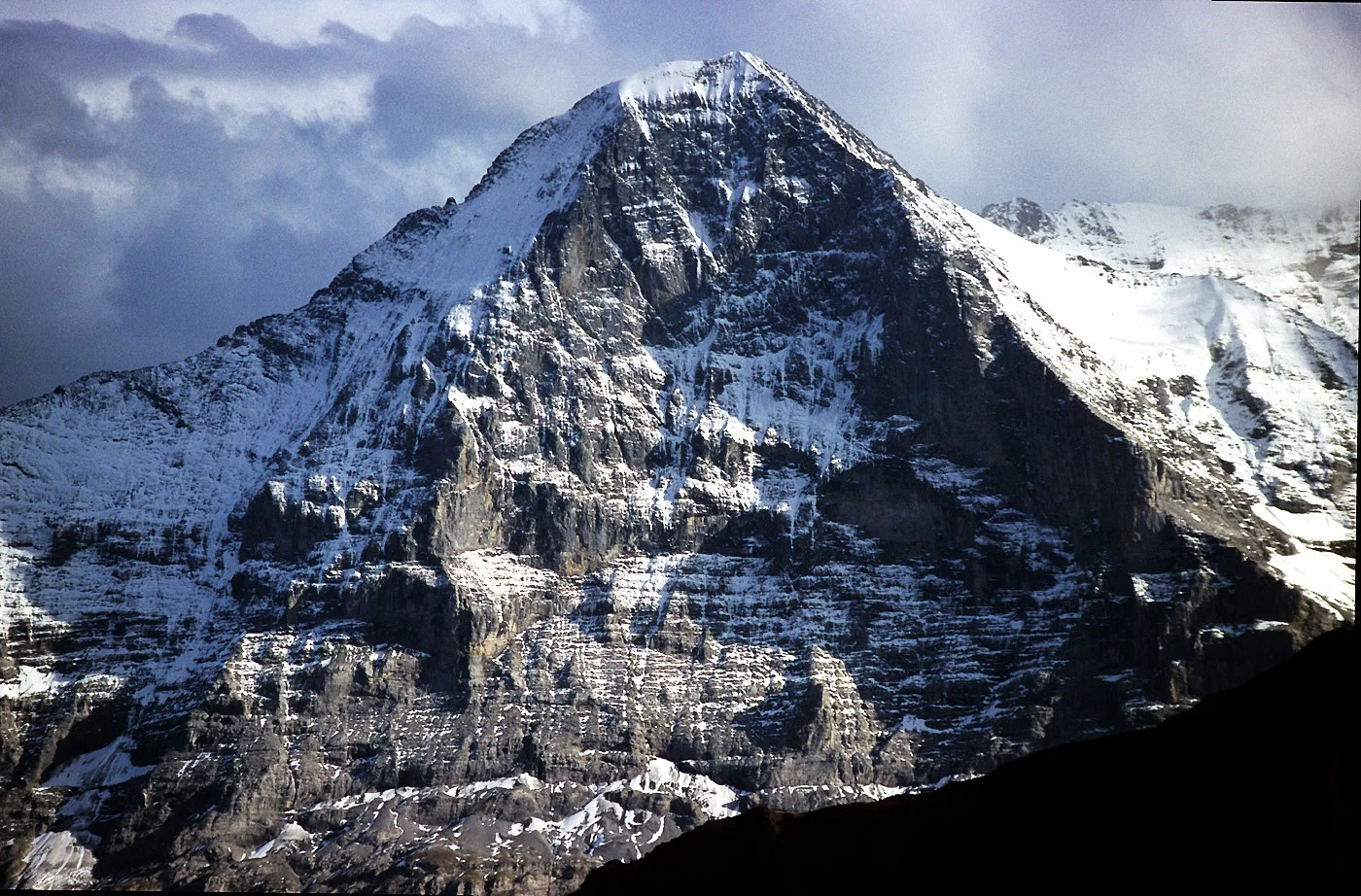
Eiger North Face (1938 Heckmair Route)
The legendary 1,800-meter original route up the Eiger North Face (3,967m), first climbed between July 21 and 24, 1938, by Anderl Heckmair, Ludwig Vörg, Heinrich Harrer, and Fritz Kasparek. Negotiating an intricate, terrifying labyrinth of down-sloping limestone ledges, friable verglas, and hanging icefields, the route traverses the notorious Hinterstoisser Traverse, Swallow's Nest, the First and Second Icefields, the Death Bivouac, the Ramp, the Traverse of the Gods, and the sinister snowfield known as the White Spider before conquering the Exit Cracks to reach the summit.
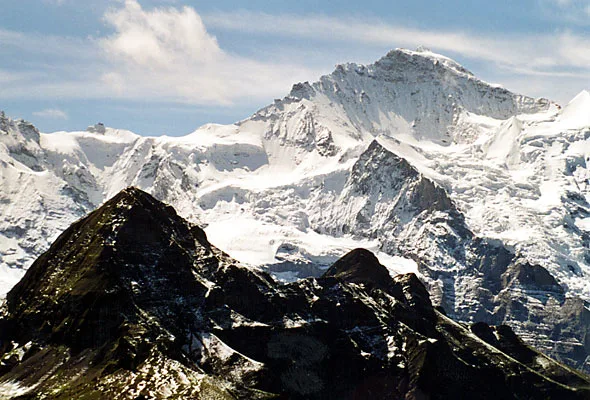
Jungfrau Rottalgrat (Rottal Ridge)
The Jungfrau Rottalgrat (Rottal Ridge) is the classic mountaineer's route to the Jungfrau summit (4,158 m), ascending from the Jungfraujoch railway station (3,454 m) via the Rottalsattel and the exposed south-west ridge to the summit snowfield. A serious high-alpine route at altitude, demanding crevassed glacier travel on the upper Jungfraufirn, steep mixed snow and rock on the Rottalgrat proper, and experienced navigation in frequent cloud or storm, the Rottalgrat is graded AD and represents the finest true mountaineer's day on the Jungfrau — distinct from the tourist ascent by the Jungfraujoch railway.
Documented Expeditions (2)
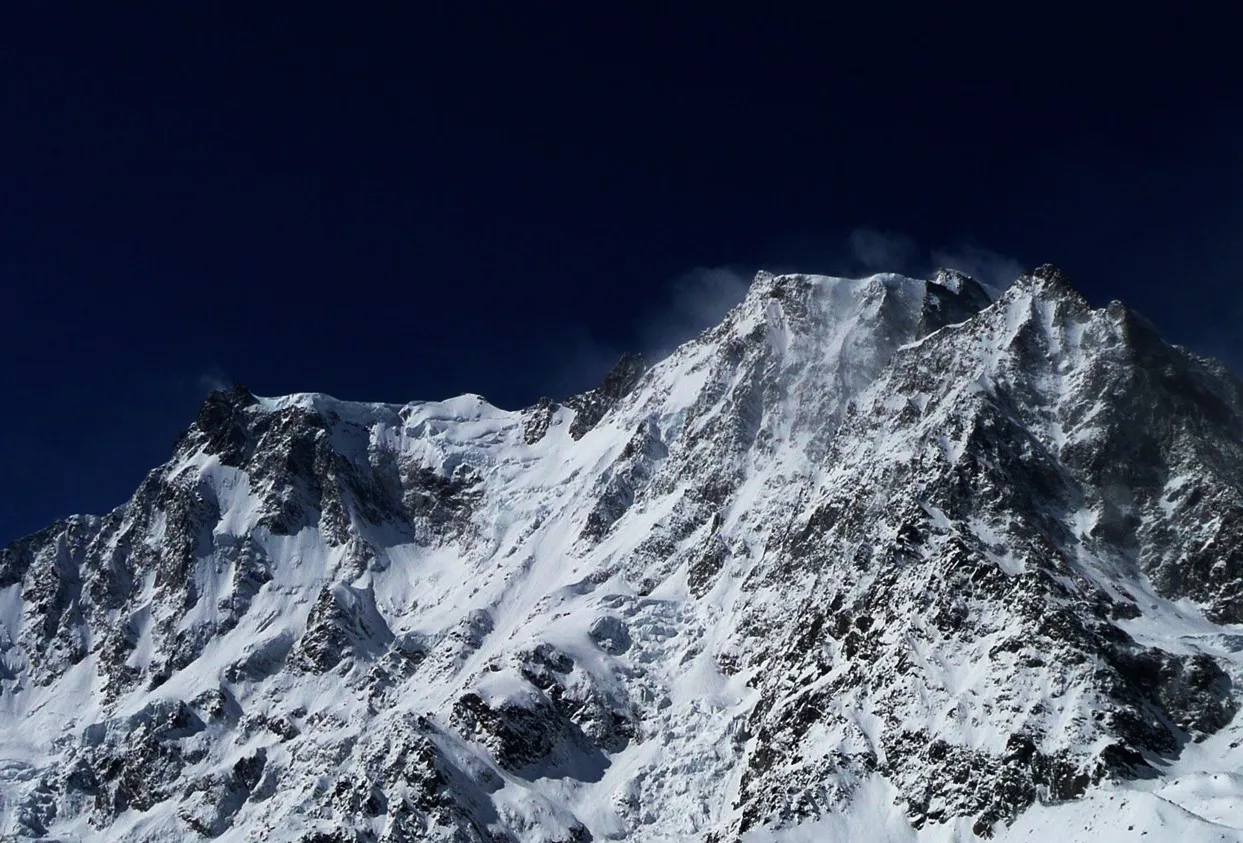
1855 Smyth Brothers Dufourspitze Monte Rosa First Ascent
On August 1, 1855 — eight years before the Matterhorn and a decade before the peak of the Golden Age — a British team of five led by the brothers J.G. and C. Smyth with Zermatt guides Matthäus Zumtaugwald and Ulrich Lauener completed the first ascent of the Dufourspitze, the highest summit in Switzerland and the second-highest peak in the Alps.
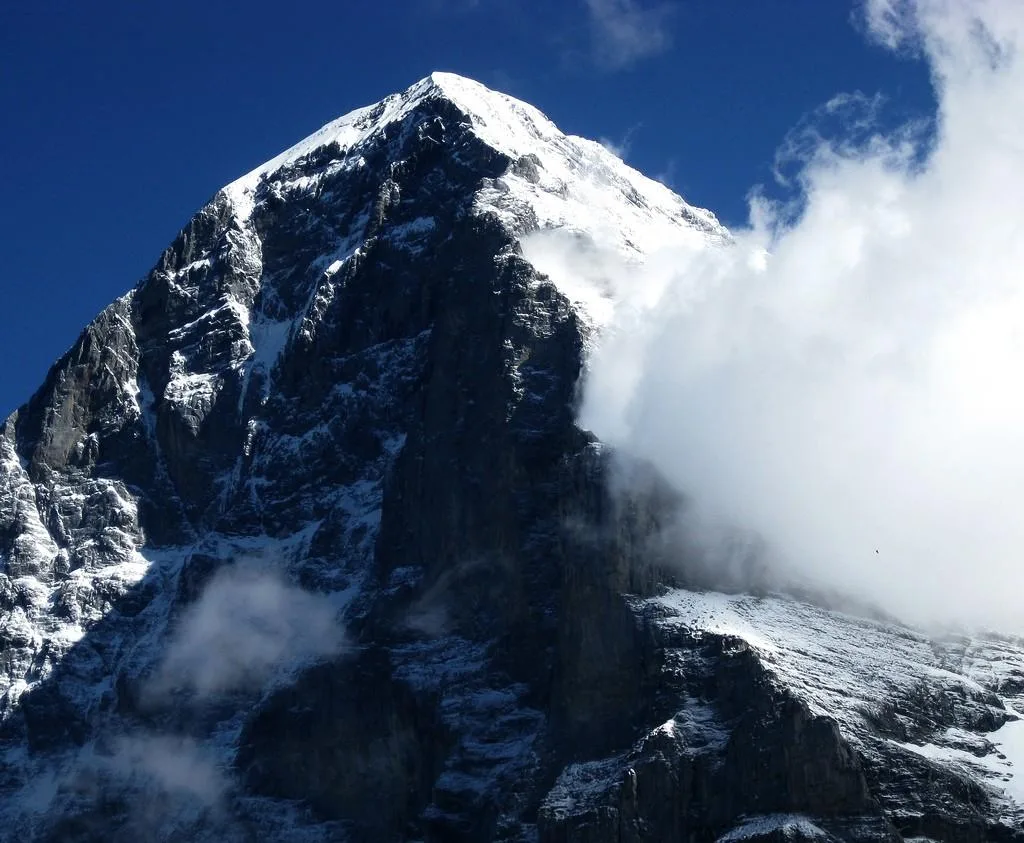
1858 Almer & Barrington Eiger West Flank First Ascent
On August 11, 1858, Irish landowner Charles Barrington and Grindelwald guides Christian Almer and Peter Bohren completed the first ascent of the Eiger via the straightforward West Flank, kicking off the Bernese Oberland's Golden Age of first ascents.
Associated Chronicles & Stories (2)
Crowning Monte Rosa: The 1855 First Ascent of Switzerland Highest Peak
On August 1, 1855, the Smyth brothers and pioneering Valais guides conquered the icy labyrinth of the Grenzgletscher and west ridge to complete the first ascent of the Dufourspitze, the highest summit in Switzerland.
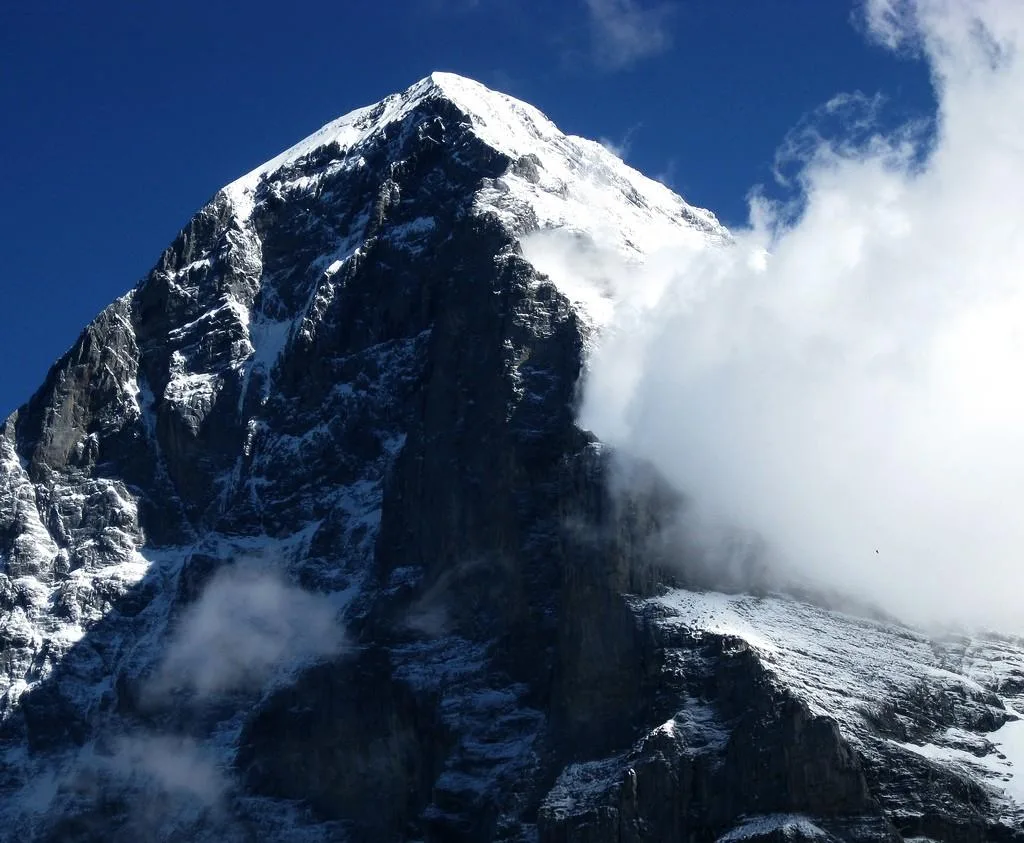
The Eiger Falls: Christian Almer and Charles Barrington 1858 West Flank First Ascent
On August 11, 1858, Irish climber Charles Barrington and Grindelwald guides Christian Almer and Peter Bohren completed the first ascent of the Eiger via the West Flank, opening the Golden Age of the Bernese Oberland.
Documented Sources & Archival Citations
- The Alpine Journal: Tributes to Christian Almer(The Alpine Club, London)
Supporting claim: Comprehensive Golden Age Alpine Club biographical records and first ascent registrations for Christian Almer
Accessed/Documented: 2026 - Scrambles Amongst the Alps in the Years 1860–69(Edward Whymper / John Murray, London)
Supporting claim: Primary first-hand account of shared first ascents with Christian Almer including Barre des Écrins and Aiguille Verte
Accessed/Documented: 2026 - The Golden Age of Alpinism(Ronald Clark / Museum Press, London)
Supporting claim: Historical chronicle of Almer's central role in the major first ascents of the Alpine Golden Age 1854–1865
Accessed/Documented: 2026