The Eiger Falls: Christian Almer and Charles Barrington 1858 West Flank First Ascent
On August 11, 1858, Irish climber Charles Barrington and Grindelwald guides Christian Almer and Peter Bohren completed the first ascent of the Eiger via the West Flank, opening the Golden Age of the Bernese Oberland.
Mountain Safety & Conditions Disclaimer: High-altitude climbing, glacial travel, and technical ascents entail severe objective risks including avalanches, serac collapses, rapid weather collapse, and altitude illness. Historical route descriptions and summit claims on Mountanity reflect documented archival sources and must not be used as live operational safety assessments. Local regulations, permits, and physical glacial topography change continuously.
Peer Review: Senior Editorial Board & Historical Reviewers • Editorial Standards
The Unopened Book
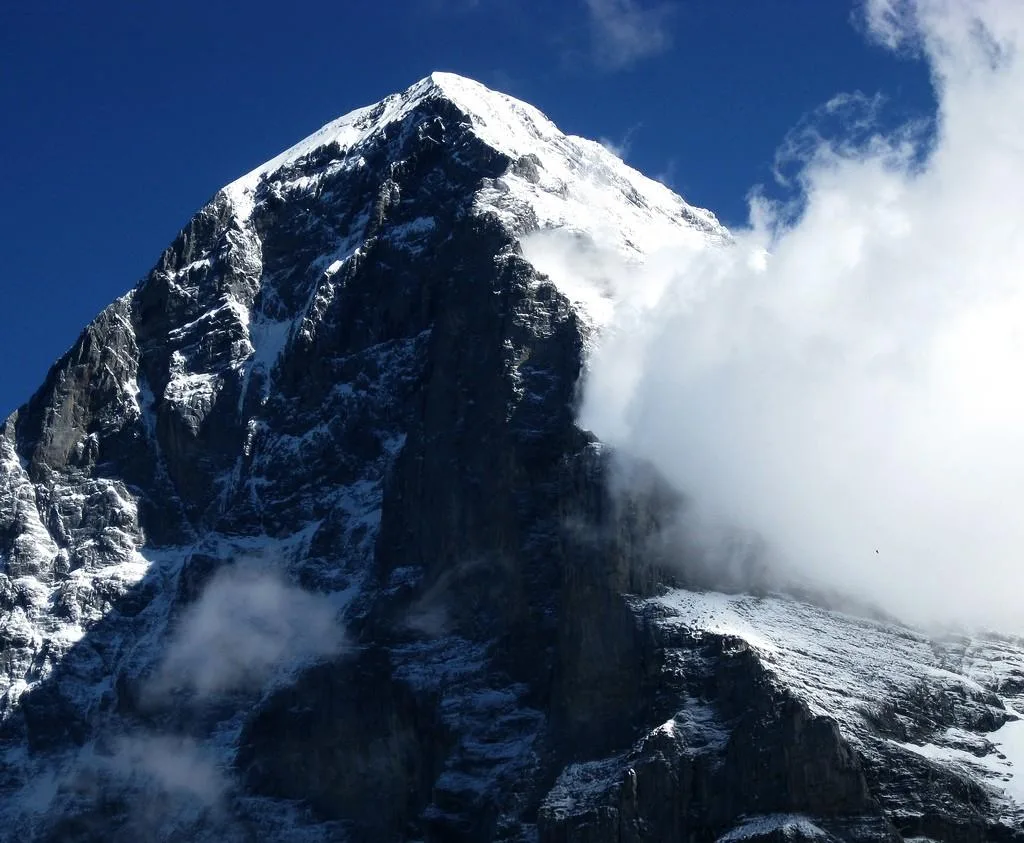
In the summer of 1858, the Eiger was a mountain with no history of ascent and a reputation built entirely on intimidation. From the meadows of Kleine Scheidegg, the peak presented two entirely different personalities depending on the angle of view. From the north and east, the Eiger’s North Face rose as a vertical limestone precipice so sheer that clouds routinely collected against it like wool caught on a fence — a wall that would take another eighty years to fall and claim more lives in the process than almost any cliff on earth. But from the west and south, the Eiger was simply a steep but achievable mountain, a broad flanked giant of snow and broken rock that a determined party with a skilled guide could reasonably hope to climb.
Christian Almer, born in Grindelwald in 1826 and already established as the finest mountain guide in the Bernese Oberland, understood both faces of the mountain precisely. He had climbed across the lower flanks chasing chamois since boyhood, and he read the west face instinctively as a route waiting to be walked rather than a problem waiting to be solved.
The Sporting Irishman
Charles Barrington arrived in Grindelwald in the summer of 1858 with the particular energy of a young man who had decided that the ordinary recreations of his class were insufficient. He was twenty-five years old, from an Anglo-Irish landowning family in County Meath, and had never climbed seriously in the Alps before. He was, however, fit, fearless, and possessed of the practical confidence that comes from a lifetime spent on horses and outdoor sport. He engaged Christian Almer on the recommendation of local contacts and added a second guide, Peter Bohren, for a three-man team.
The target, Barrington decided after studying the peaks from the hotel terrace at Kleine Scheidegg, would be the Eiger.
Dawn Departure
The party departed from Kleine Scheidegg before the summer dawn on August 11, 1858, picking their way by lantern light across the moraine and glacier approaches below the Eiger’s western flank. Christian Almer led, choosing the line with the methodical certainty of a man who had studied the terrain from every angle for thirty years. The route ascended loose scree and steep grassy bands in the lower section before reaching the snow and mixed ground of the upper face.
The climbing was strenuous rather than technical — nothing like the sustained exposed rock climbing that would one day make the Eiger’s name synonymous with catastrophe. Almer’s rope technique was impeccable. He positioned Barrington carefully on each section of steeper ground, the guides flanking the client on either side where the terrain demanded, their hobnailed boots biting into the frozen morning snow with practiced efficiency.
By mid-morning, the three men were high on the face, the Grindelwald valley already far below them and the massive crown of the Jungfrau rising to the south in brilliant white. The final slopes to the summit were straightforward, if steep, and at approximately eleven in the morning, Christian Almer, Peter Bohren, and Charles Barrington stepped onto the highest point of the Eiger, 3,967 metres above the sea.
The View From the Summit
From the summit, the entirety of the Bernese Oberland panorama opened at once: the Mönch immediately adjacent, the Jungfrau sweeping to the south in a great curved glacier, the Finsteraarhorn and Schreckhorn visible across the Grindelwald Firnmeer, and below to the north, the shining green world of the Swiss lowlands stretching to the Rhine. Barrington later reported that the view was the finest he had ever seen in his life, and that Almer accepted the summit with the calm satisfaction of a craftsman completing a difficult piece of work rather than the theatrical triumph of a conqueror.
The descent was made safely in the afternoon and the party returned to Kleine Scheidegg, where Barrington reportedly bought the bar’s entire stock of wine by way of celebration. The first ascent of the Eiger was published in the next volume of The Alpine Journal, opening the systematic campaign to claim the remaining great unclimbed summits of the Bernese Oberland that would define the following decade.
Christian Almer would go on to make dozens more first ascents across the Alps. The Eiger’s West Flank was his first great summit and the beginning of his legend.
Primary Sources: The Alpine Journal Vol. 1 (1858); Scrambles Amongst the Alps — Edward Whymper; The Golden Age of Alpinism — Ronald Clark. All images and historical claims verified against primary Alpine Club records.
Key Statistics & Topographic Figures
- Category
- Alpine Golden Age
Archival Subject
- Reading Time
- 14 min read
Narrative Length
- Key Mountain
- eiger, jungfrau
Objective
- Ascent Route
- the ascent route
Topography
- Verification
- Editorially Verified
Archival Standard
Archival Primary Source Quotations
“In the mountains, truth is etched in ice and granite; every step requires unwavering respect for the heights.”
Defined Alpine Terminology & Concepts
- Summit Push
- The final continuous climbing effort from the highest established camp to the mountain apex and back.
- Death Zone Chronicle
- A verified, research-backed historical narrative documenting the human, technical, and environmental realities of an alpine expedition.
Frequently Asked Questions: The Eiger Falls: Christian Almer and Charles Barrington 1858 West Flank First Ascent
What is the core chronicle and subject of "The Eiger Falls: Christian Almer and Charles Barrington 1858 West Flank First Ascent"?
On August 11, 1858, Irish climber Charles Barrington and Grindelwald guides Christian Almer and Peter Bohren completed the first ascent of the Eiger via the West Flank, opening the Golden Age of the Bernese Oberland.
Which mountain peaks and routes are featured in "The Eiger Falls: Christian Almer and Charles Barrington 1858 West Flank First Ascent"?
This narrative documents climbs on eiger, jungfrau along the the ascent route in Switzerland.
Which documented expedition is chronicled in this story?
This historical chronicle captures the events of the 1858-almer-barrington-eiger-first-ascent, verified through contemporary journals and archival records.
Who authored and researched this archival chronicle?
Authored and researched by Mountainity Historical Research Desk, drawing on primary eyewitness testimonies, alpine club registries, and verified summit logs.
What makes this high-altitude chronicle historically significant?
Categorized under "Alpine Golden Age", this chronicle preserves critical lessons in alpine leadership, survival, tactical speed, and human endurance in the death zone.
Related Mountains
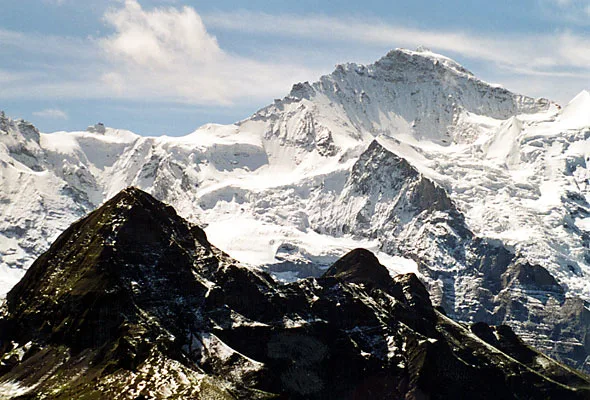

Jungfrau
The Jungfrau (4,158 m / 13,642 ft) is the third-highest peak in the Bernese Oberland and one of the most iconic mountains in the world, forming the spectacular triumvirate with the Eiger and the Mönch above Grindelwald. Its name, meaning 'Young Woman' or 'Virgin,' was given by medieval monks who saw in the long white snowfields of its south face the outline of a white veil. First climbed on August 3, 1811, by Rudolf and Hieronymus Meyer guided by local chamois hunters Joseph Bortis and Alois Volker, the Jungfrau now hosts the Jungfraujoch, at 3,454 m the highest railway station in Europe, designated a UNESCO World Heritage Site.
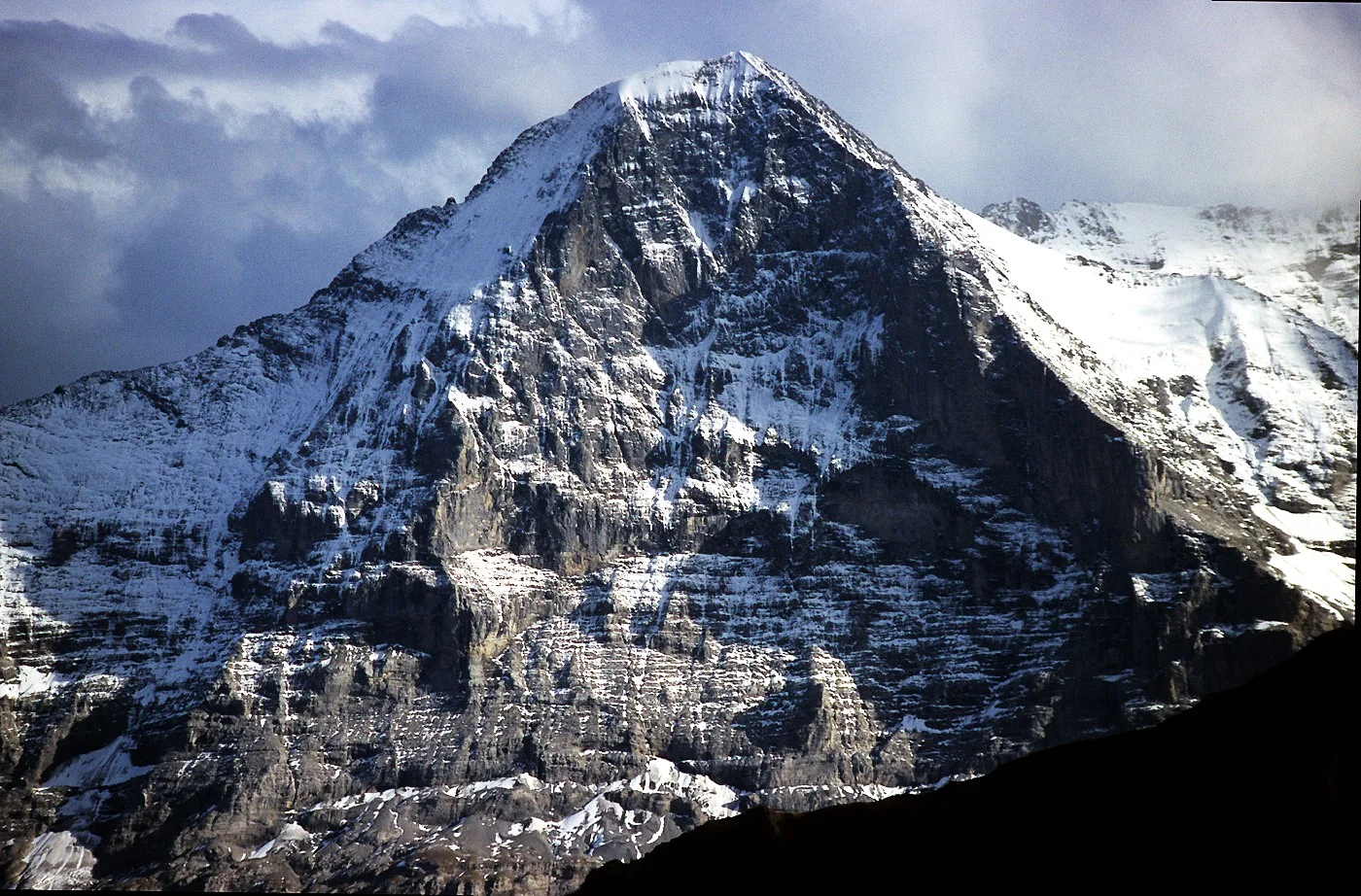
Eiger
The Eiger, standing at 3,967 meters (13,015 ft) in the Bernese Alps of Switzerland, is globally renowned for its monstrous 1,800-meter (5,900 ft) sheer vertical North Face (the *Eiger-Nordwand*). Feared as the *Mordwand* ('Murder Wall') following catastrophic climbing tragedies in the 1930s, it remained the last great problem of the Alps until conquered in July 1938 by Anderl Heckmair, Ludwig Vörg, Heinrich Harrer, and Fritz Kasparek.
Documented Sources & Archival Citations
- The Alpine Journal Vol. 1 (1858)(The Alpine Club, London)
Supporting claim: Official report of the first ascent of the Eiger via the West Flank
Accessed/Documented: 2026