Jungfrau
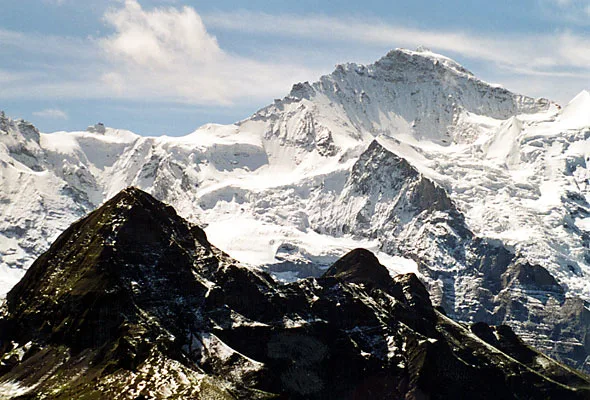
The Jungfrau (4,158 m / 13,642 ft) is the third-highest peak in the Bernese Oberland and one of the most iconic mountains in the world, forming the spectacular triumvirate with the Eiger and the Mönch above Grindelwald. Its name, meaning 'Young Woman' or 'Virgin,' was given by medieval monks who saw in the long white snowfields of its south face the outline of a white veil.
 Switzerland
Mountain Safety & Conditions Disclaimer: High-altitude climbing, glacial travel, and technical ascents entail severe objective risks including avalanches, serac collapses, rapid weather collapse, and altitude illness. Historical route descriptions and summit claims on Mountanity reflect documented archival sources and must not be used as live operational safety assessments. Local regulations, permits, and physical glacial topography change continuously.
Peer Review: Senior Editorial Board & Historical Reviewers • Editorial Standards
Geographical Setting & Topography
Bernese Oberland, forming the eastern anchor of the Jungfrau massif, visible from the Bernese lowlands and often dusted with fresh snow well into July. Borders the Aletsch Glacier, the largest glacier in the Alps.
Historic First Ascent
Date: August 3, 1811
Ascent Team: Rudolf and Hieronymus Meyer (Switzerland) guided by Joseph Bortis and Alois Volker
Key Statistics & Topographic Figures
- Elevation
- 4,158 m (13,642 ft)
- Prominence
- 1,017 m (3,337 ft)
- First Ascent
- August 3, 1811 (Meyer brothers)
- UNESCO Inscription
- 2001 (Swiss Alps Jungfrau-Aletsch)
- Jungfraujoch Station
- 3,454 m (Highest railway station in Europe)
Archival Primary Source Quotations
“The Jungfrau towers in silent, immaculate grandeur, the crowned queen of the Bernese Oberland.”
Defined Alpine Terminology & Concepts
- Jungfraujoch
- The high alpine saddle connecting the Jungfrau and Mönch peaks, hosting Europe's highest railway station.
- Aletsch Glacier
- The largest glacier in the European Alps, covering over 80 square kilometres.
Jungfrau Mountain Weather Forecast
Detailed 14-Day Summit Window & Weather Timeline
Explore day-by-day summit push safety windows, wind shear analysis, and extended multi-day forecasts for Jungfrau.
Explore Jungfrau (4,158 m) in Interactive 3D
Inspect steep glacial walls, hanging seracs, ridge approaches, and elevation relief with 360° rotation and terrain tilt in WebGL.
Documented Climbing Routes (1)
Jungfrau Rottalgrat (Rottal Ridge)
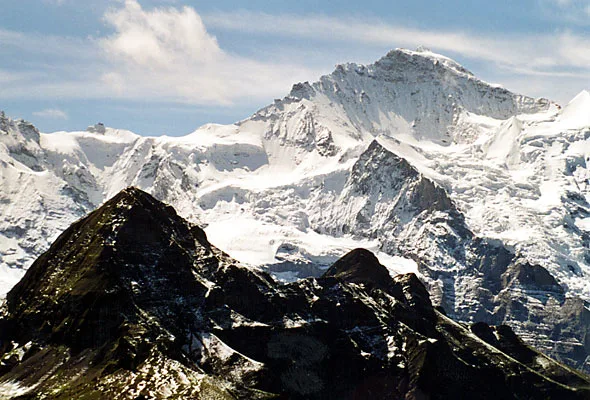
The Jungfrau Rottalgrat (Rottal Ridge) is the classic mountaineer's route to the Jungfrau summit (4,158 m), ascending from the Jungfraujoch railway station (3,454 m) via the Rottalsattel and the exposed south-west ridge to the summit snowfield. A serious high-alpine route at altitude, demanding crevassed glacier travel on the upper Jungfraufirn, steep mixed snow and rock on the Rottalgrat proper, and experienced navigation in frequent cloud or storm, the Rottalgrat is graded AD and represents the finest true mountaineer's day on the Jungfrau — distinct from the tourist ascent by the Jungfraujoch railway.
Historical Expeditions (1)
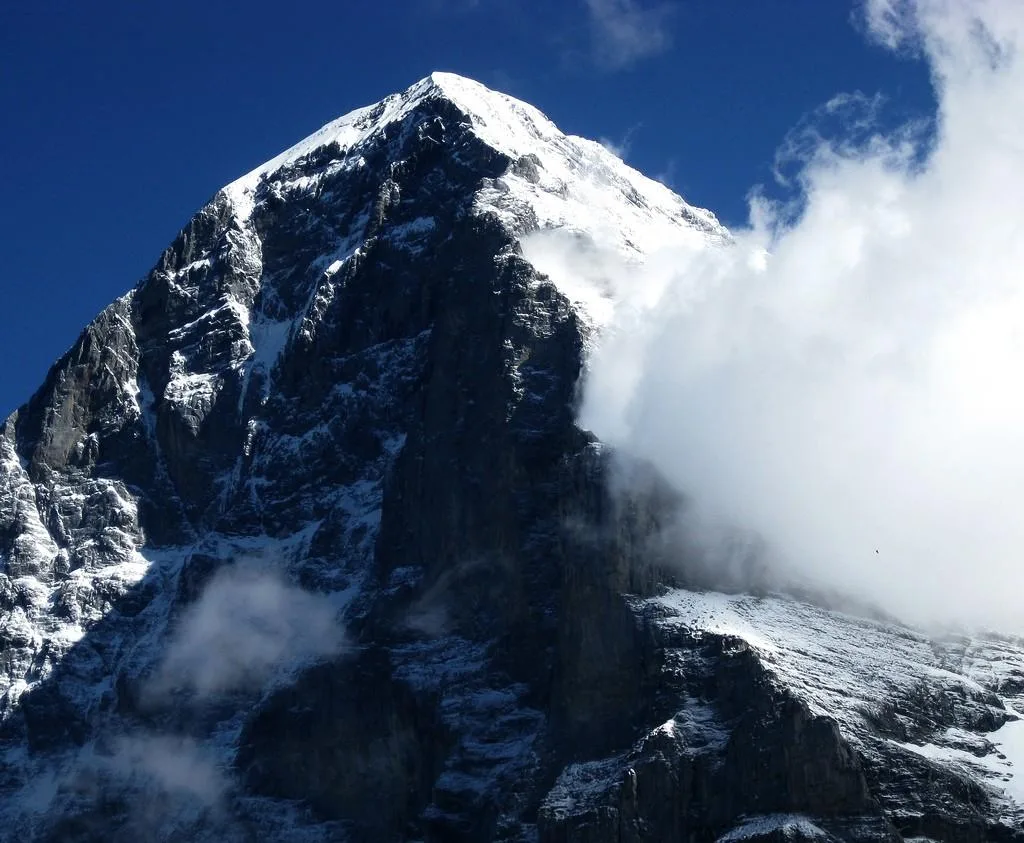
1858 Almer & Barrington Eiger West Flank First Ascent
On August 11, 1858, Irish landowner Charles Barrington and Grindelwald guides Christian Almer and Peter Bohren completed the first ascent of the Eiger via the straightforward West Flank, kicking off the Bernese Oberland's Golden Age of first ascents.
Summit Chronicles & Stories (1)
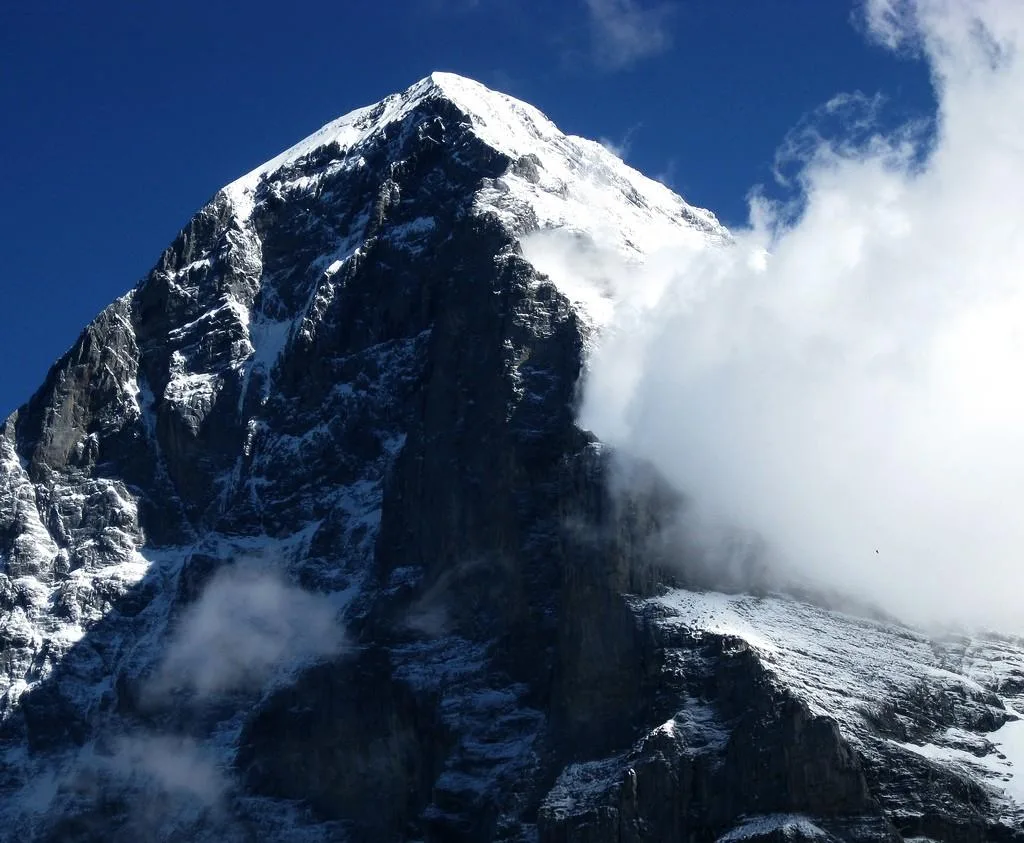
The Eiger Falls: Christian Almer and Charles Barrington 1858 West Flank First Ascent
On August 11, 1858, Irish climber Charles Barrington and Grindelwald guides Christian Almer and Peter Bohren completed the first ascent of the Eiger via the West Flank, opening the Golden Age of the Bernese Oberland.
Frequently Asked Questions: Jungfrau
What is the Jungfrau?
The Jungfrau (4,158 m / 13,642 ft) is a celebrated mountain in the Bernese Alps of Switzerland, part of the famed Eiger-Mönch-Jungfrau triumvirate.
When was the Jungfrau first climbed?
The Jungfrau was first summited on August 3, 1811, by Swiss brothers Johann Rudolf and Hieronymus Meyer with two local chamois hunters.
What does the name Jungfrau mean?
Jungfrau translates to 'Maiden' or 'Virgin' in German, originating from the historic convent at Interlaken.
What famous railway runs inside the Jungfrau?
The Jungfrau Railway tunnels through the Eiger and Mönch to reach the Jungfraujoch station at 3,454 m, the highest railway station in Europe.
Is the Jungfrau a UNESCO World Heritage site?
Yes, the Jungfrau-Aletsch region was designated the first natural UNESCO World Heritage site in the Alps in 2001.
What is the classic mountaineering route on the Jungfrau?
The normal mountaineering route ascends from the Jungfraujoch across the upper glacier via the Rottalsattel (graded PD+).
What glacier originates below the Jungfrau?
The Aletsch Glacier, the longest and most voluminous glacier in the European Alps (approx. 23 km), originates on the Jungfrau plateau.
What canton is the Jungfrau located in?
The Jungfrau straddles the boundary between the Canton of Bern and the Canton of Valais in south-central Switzerland.
Documented Sources & Archival Citations
- The Alpine Journal: First Ascents of the Bernese Oberland(The Alpine Club, London)
Supporting claim: Official Alpine Club historical records of the 1811 Jungfrau first ascent by the Meyer brothers
Accessed/Documented: 2026 - The Bernese Alps: A Guide for Walkers and Climbers(Kev Reynolds / Cicerone Press)
Supporting claim: Detailed geographical and historical account of the Jungfrau, its approaches, routes, and UNESCO World Heritage designation
Accessed/Documented: 2026 - Jungfrau Region: UNESCO World Natural Heritage Documentation(UNESCO World Heritage Centre)
Supporting claim: Official UNESCO documentation of the Jungfrau-Aletsch World Heritage Area including geological and cultural significance
Accessed/Documented: 2026