1865 Edward Whymper Matterhorn First Ascent Expedition
The dramatic July 1865 expedition led by English illustrator Edward Whymper that achieved the maiden first ascent of the Matterhorn (4,478m) via the Hörnli Ridge, ending in triumph overshadowed by the catastrophic rope snap that took four lives on descent.
Mountain Safety & Conditions Disclaimer: High-altitude climbing, glacial travel, and technical ascents entail severe objective risks including avalanches, serac collapses, rapid weather collapse, and altitude illness. Historical route descriptions and summit claims on Mountanity reflect documented archival sources and must not be used as live operational safety assessments. Local regulations, permits, and physical glacial topography change continuously.
Peer Review: Senior Editorial Board & Historical Reviewers • Editorial Standards
Official Expedition Narrative & Archival Record
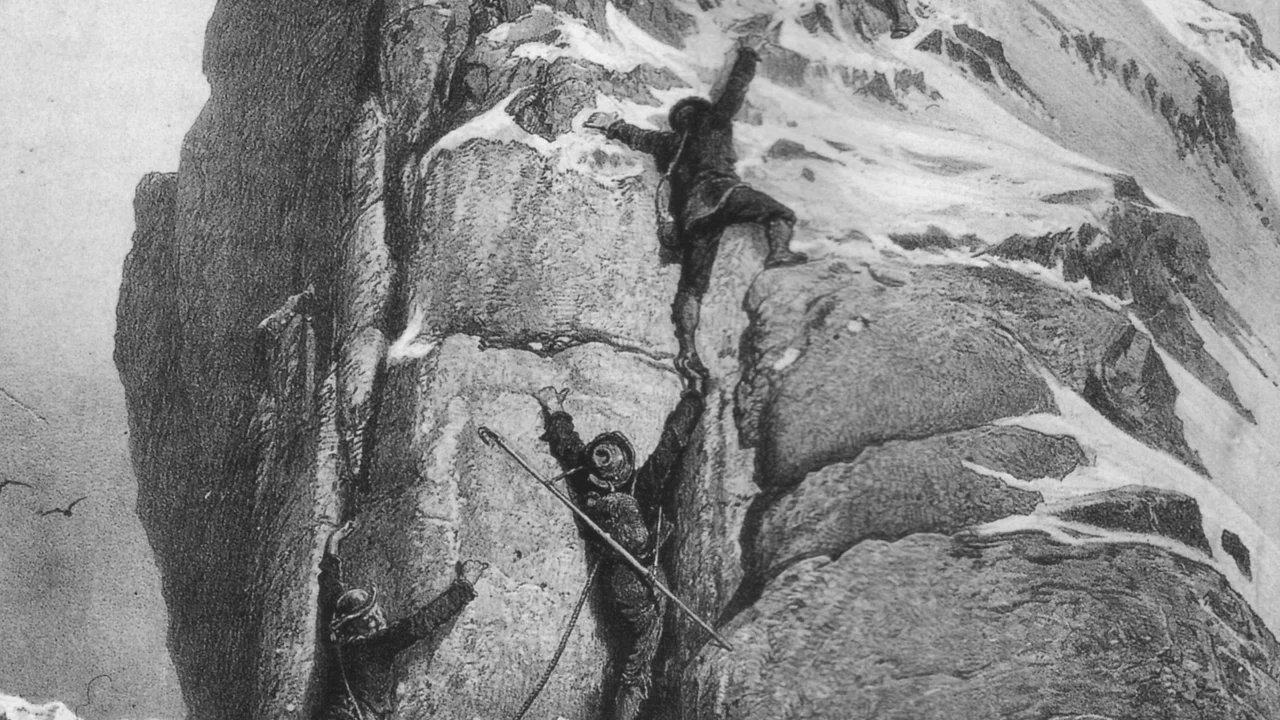
On July 13, 1865, a seven-man party departed Zermatt under the leadership of 25-year-old English artist Edward Whymper. Having failed seven times on the Italian Lion Ridge and learning that Italian rival Jean-Antoine Carrel was mounting a national assault from Breuil, Whymper rapidly united with Lord Francis Douglas, Reverend Charles Hudson, novice climber Douglas Hadow, celebrated Chamonix guide Michel Croz, and Zermatt guides Peter Taugwalder father and son. Ascending the untested Swiss Hörnli Ridge, the party bivouacked comfortably above the Schwarzsee. On the morning of July 14, they traversed upward with remarkable ease across angled rock ledges before encountering the steep, frozen slab section below the summit now known as the Moseley Slabs and Roof. Croz and Whymper unroped and raced ahead, stepping onto the untouched 4,478-meter summit crest at 1:40 PM. Peerless in triumph, Whymper peered over the Italian precipice and shouted down to Carrel's team, turning them back in defeat. However, during the roped descent down the treacherous North Face snow slabs, Hadow slipped, knocking Croz off his balance. The sudden violent jolt dragged Hudson and Douglas from their footholds. As Whymper and the elder Taugwalder braced against the rock, the old reserve rope between Douglas and Taugwalder snapped under the dynamic load. Whymper watched helplessly as Croz, Hadow, Hudson, and Douglas tumbled four thousand feet down the sheer Matterhorn North Face onto the Matterhorn Glacier. The tragedy concluded the Golden Age of Alpinism and sent shockwaves across Victorian Britain.
Documented Team Composition
- Edward Whymper (Expedition Leader & Summiter)
- Michel Croz (Lead Chamonix Guide, Summiter, Perished)
- Reverend Charles Hudson (Summiter, Perished)
- Lord Francis Douglas (Summiter, Perished)
- Douglas Hadow (Summiter, Perished)
- Peter Taugwalder Sr. (Zermatt Guide & Summiter)
- Peter Taugwalder Jr. (Zermatt Guide & Summiter)
Key Statistics & Topographic Figures
- Summit Date
- July 14, 1865 (1:40 PM)
Maiden First Ascent
- Fatalities on Descent
- 4 Climbers
Broken Rope Tragedy
- Peak Elevation
- 4,478 meters (14,692 ft)
Pennine Alps
- Historical Milestone
- End of the Golden Age of Alpinism
Victorian Landmark
Archival Primary Source Quotations
“Climb if you will, but remember that courage and strength are nought without prudence, and that a momentary negligence may destroy the happiness of a lifetime.”
Defined Alpine Terminology & Concepts
- Hörnli Ridge
- The iconic northeast rock ridge of the Matterhorn rising above Zermatt, pioneered by Whymper in 1865 and now the standard normal climbing route.
- Moseley Slabs
- A steep section of rock slabs on the upper Hörnli Ridge directly below the summit roof, requiring delicate balance on sloping ledges.
Frequently Asked Questions: 1865 Edward Whymper Matterhorn First Ascent Expedition
Who climbed the Matterhorn first?
A seven-man team led by English illustrator Edward Whymper achieved the maiden first ascent of the Matterhorn (4,478m) on July 14, 1865, via the Swiss Hörnli Ridge.
What happened during the descent of the Matterhorn in 1865?
During the descent down the icy North Face slabs, novice climber Douglas Hadow slipped, knocking guide Michel Croz off his feet. The fall wrenched Charles Hudson and Lord Francis Douglas down. When Whymper and Peter Taugwalder braced, the rope snapped, plunging all four men 4,000 feet to their deaths.
Why did the rope break on the Matterhorn in 1865?
The climbers were inadvertently tied together with a thin, weak Manila reserve cord rather than the stout official Alpine Club climbing rope, which was unable to withstand the dynamic shock load of four falling men.
Who died in the 1865 Matterhorn accident?
Four climbers were killed: Chamonix guide Michel Croz, English clergyman Charles Hudson, young nobleman Lord Francis Douglas, and novice Douglas Hadow.
What route did Edward Whymper take up the Matterhorn?
Whymper climbed the Hörnli Ridge (Northeast Ridge) from Zermatt, proving that the angled rock slabs sloped inward like natural stairs and were far less steep than they appeared from below.
Who was Edward Whymper racing against on the Matterhorn?
Whymper was racing against his former Italian climbing partner Jean-Antoine Carrel, who was leading a patriotic Italian team up the Southwest (Lion) Ridge from Breuil-Cervinia at the exact same time.
How many attempts did Edward Whymper make before summiting the Matterhorn?
Whymper made seven unsuccessful attempts on the Matterhorn between 1861 and 1865, almost all on the Italian Lion Ridge, before succeeding on his eighth attempt via the Hörnli Ridge.
What is the famous warning quote written by Edward Whymper?
Whymper famously wrote in Scrambles Amongst the Alps: "Climb if you will, but remember that courage and strength are nought without prudence, and that a momentary negligence may destroy the happiness of a lifetime."
Ascent Route & Topography
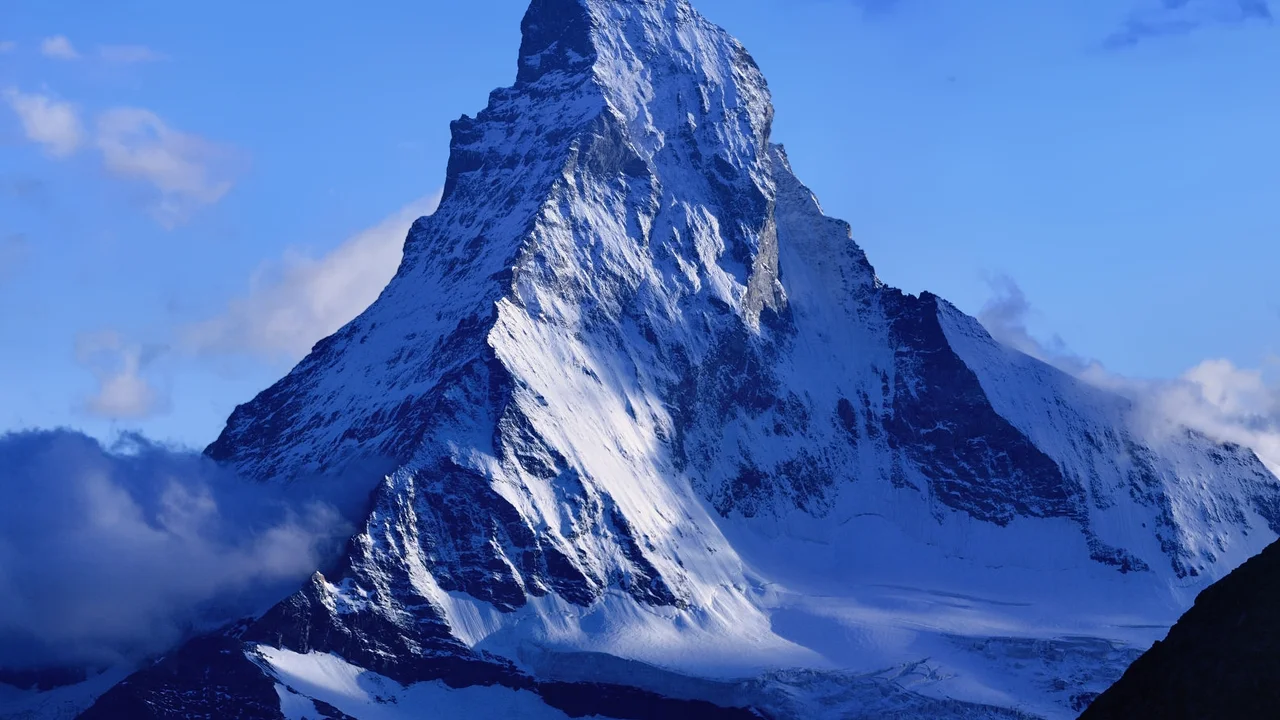
Hörnli Ridge (Normal Route)
The Hörnli Ridge (Hörnligrat) is the northeast ridge of the Matterhorn and the standard normal route from Zermatt. Starting from the Hörnli Hut (3,260m), the route follows the sharp, crumbling crystalline schist ridge, traversing steep rock steps, the Solvay emergency refuge (4,003m), and the steep upper Moseley Slabs. Fixed ropes assist climbers over the steep summit headwall (the Shoulder) before reaching the knife-edge Swiss summit crest at 4,478 meters. First climbed on July 14, 1865, by Edward Whymper's party.
Target Objective Peak
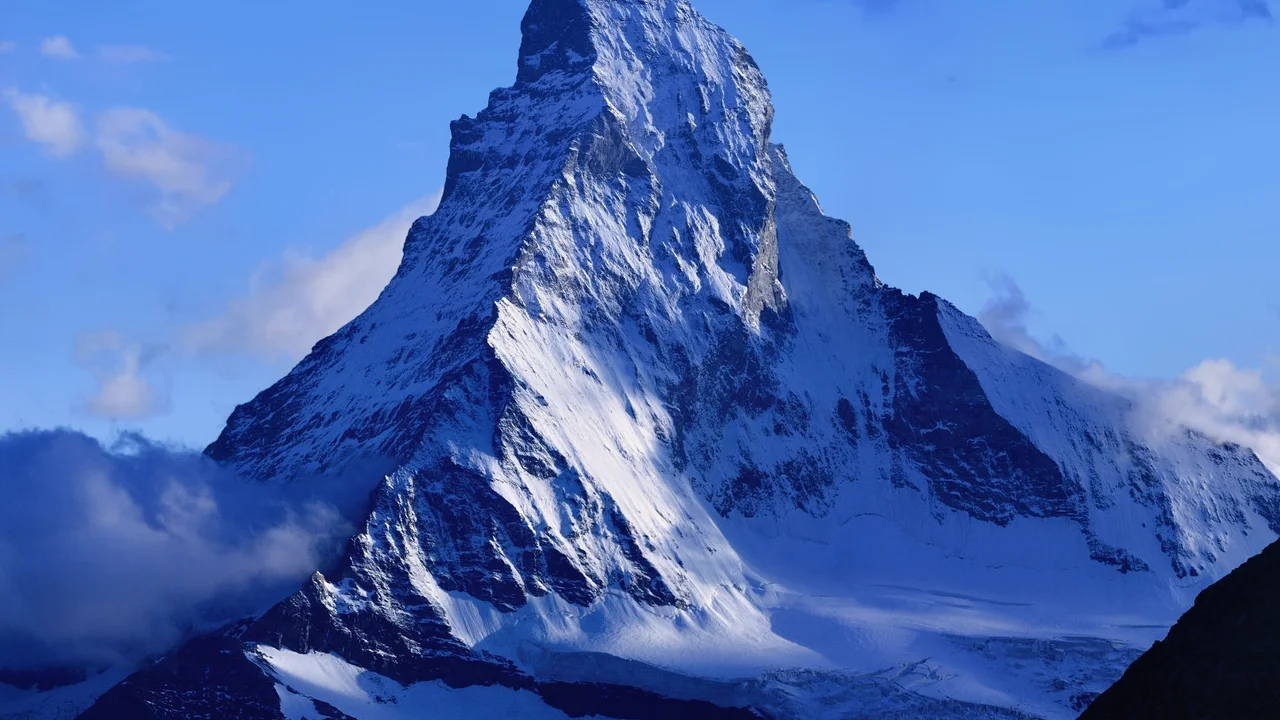


Matterhorn
The Matterhorn (Monte Cervino), at 4,478 meters (14,692 ft), is one of the most recognizable and dramatic pyramidal peaks in the world. Straddling the border between Zermatt, Switzerland, and Breuil-Cervinia, Italy, its four triangular faces match the cardinal points of the compass. Its historic first ascent by Edward Whymper on July 14, 1865, and the tragic fall of four teammates on the descent marked the end of the Golden Age of Alpinism.
Featured Expedition Climber
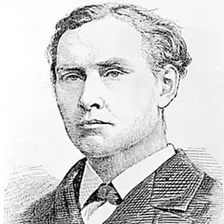
Edward Whymper
Edward Whymper was born on April 27, 1840, in London, England. Trained as a master wood engraver and artist, Whymper was dispatched to the Alps in 1860 by a London publisher to sketch alpine landscapes. Captivated by the sublime architecture of the high peaks, Whymper rapidly evolved into one of the most athletic and daring mountaineers of the Victorian era, pioneering first ascents of the Barre des Écrins (4,102m), the Aiguille Verte (4,122m), and the Grand Cornier. Between 1861 and 1865, Whymper became obsessed with the Matterhorn (4,478m)—the terrifying rock obelisk above Zermatt that was widely regarded by local guides as an inaccessible precipice. After seven unsuccessful attempts, primarily on the Italian Lion Ridge with Italian guide Jean-Antoine Carrel, Whymper shifted his focus to the Swiss Hörnli Ridge. Learning that Carrel was mounting an Italian national assault from Breuil, Whymper hastily assembled a seven-man party in Zermatt, including Lord Francis Douglas, Reverend Charles Hudson, Douglas Hadow, Chamonix guide Michel Croz, and Zermatt guides Peter Taugwalder father and son. On July 14, 1865, Whymper's party breached the steep upper Moseley Slabs and reached the 4,478-meter summit at 1:40 PM, beating Carrel's Italian team by hundreds of meters. However, the triumph turned into an enduring Victorian tragedy during the descent: inexperienced climber Douglas Hadow slipped on the steep ice below the summit, knocking Michel Croz off his feet and dragging Charles Hudson and Lord Francis Douglas with them. Whymper and the elder Taugwalder braced themselves, but the thin Manila reserve rope snapped under the dynamic load, plunging all four men four thousand feet down the North Face to their deaths. The Matterhorn catastrophe caused an international sensation, triggering inquiries and public debate that Whymper chronicled in his bestselling masterpiece *Scrambles Amongst the Alps* (1871). Undeterred, Whymper shifted his exploratory focus to the South American Andes in 1880, making the first ascent of Chimborazo (6,268m)—then believed to be the world's highest peak—and Cotopaxi. Whymper passed away on September 16, 1911, in Chamonix, immortalized as one of the defining giants of mountaineering history.
Associated Historical Chronicles & Stories
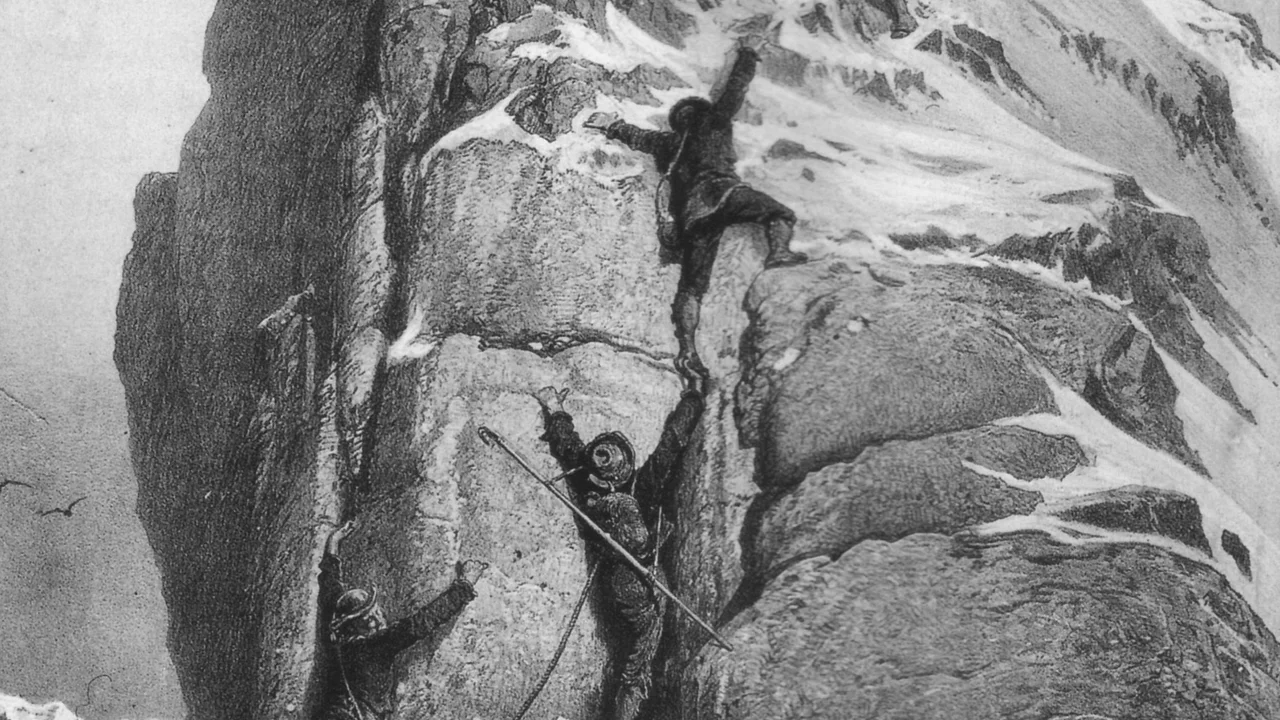
Matterhorn 1865: Whymper's Triumph and the Broken Rope Tragedy
On July 14, 1865, Edward Whymper conquered the supposedly unscalable Matterhorn (4,478m) via the Swiss Hörnli Ridge, only for victory to turn into one of mountaineering's greatest disasters when a rope snapped on descent, claiming four lives.
Documented Sources & Archival Citations
- Scrambles Amongst the Alps in the Years 1860–69(Edward Whymper / John Murray)
Supporting claim: Primary eyewitness account detailing the Hörnli Ridge route, summit victory, and fatal rope failure
Accessed/Documented: 1871 - The Alpine Journal Archive: The Matterhorn Accident of 1865(The Alpine Club UK)
Supporting claim: Official inquiry report, depositions of survivors Whymper and Taugwalder, and technical analysis
Accessed/Documented: 2026