1938 German-Austrian Eiger North Face Expedition
The epic July 1938 expedition in which Bavarian alpinists Anderl Heckmair and Ludwig Vörg joined forces with Austrians Heinrich Harrer and Fritz Kasparek to conquer the terrifying 1,800-meter Eiger North Face over four grueling days of storms, rockfalls, and avalanches.
Mountain Safety & Conditions Disclaimer: High-altitude climbing, glacial travel, and technical ascents entail severe objective risks including avalanches, serac collapses, rapid weather collapse, and altitude illness. Historical route descriptions and summit claims on Mountanity reflect documented archival sources and must not be used as live operational safety assessments. Local regulations, permits, and physical glacial topography change continuously.
Peer Review: Senior Editorial Board & Historical Reviewers • Editorial Standards
Official Expedition Narrative & Archival Record
On July 21, 1938, two separate two-man teams entered the sinister 1,800-meter amphitheater of the Eiger North Face (*Eigerwand*) in the Bernese Alps of Switzerland. The wall had claimed eight lives over the preceding three years and was regarded as the most terrifying precipice in Europe. Austrian climbers Heinrich Harrer and Fritz Kasparek climbed ahead in traditional nailed boots. Hours later, Bavarian masters Anderl Heckmair and Ludwig Vörg entered the face equipped with revolutionary 12-point front-pointing crampons. Catching up with the Austrians on the Second Icefield, Heckmair recognized that climbing independently on a narrow, avalanche-raked wall would endanger everyone. The four men made the historic decision to tie together into a single four-man rope team, with Heckmair taking the sharp end. Over four harrowing days, the party endured three freezing bivouacs on tiny rock ledges in howling blizzards. Heckmair led through the water-streaked chimneys of the Ramp and navigated the precarious Traverse of the Gods. On the infamous White Spider, a 60-degree icefield that funneled continuous spindrift avalanches, the climbers fought for their lives as cascading powder snow threatened to sweep them off the wall. During the final assault on the vertical Exit Cracks in a blinding snowstorm, Kasparek slipped from an icy foothold; Heckmair lunged to arrest the fall, taking the pick of an ice axe through his palm. At 3:30 PM on July 24, 1938, Heckmair led the exhausted, frostbitten team onto the knife-edge summit crest of the Eiger, solving the 'Last Problem of the Alps' and cementing their triumph into mountaineering lore.
Documented Team Composition
- Anderl Heckmair (Lead Climber, Germany)
- Ludwig Vörg (Support Climber, Germany)
- Heinrich Harrer (Support Climber, Austria)
- Fritz Kasparek (Lead Rock Climber, Austria)
Key Statistics & Topographic Figures
- Summit Date
- July 24, 1938 (3:30 PM)
Maiden First Ascent
- Face Vertical Relief
- 1,800 meters (5,900 ft)
Concave Limestone Wall
- Summit Team
- Heckmair, Vörg, Harrer, Kasparek
German-Austrian Coalition
- Historical Milestone
- Last Problem of the Alps
Pre-WWII Alpinism
Archival Primary Source Quotations
“We looked into each other’s eyes and knew: we were brothers on this wall.”
Defined Alpine Terminology & Concepts
- The White Spider (Die Weiße Spinne)
- The funnel-shaped hanging icefield high on the Eiger North Face whose radiating gullies resemble spider legs, acting as a natural chute for avalanches.
- Hinterstoisser Traverse
- A sheer 75-degree polished limestone slab on the lower Eiger North Face first breached by Andreas Hinterstoisser in 1936 using a tension rope traverse.
Frequently Asked Questions: 1938 German-Austrian Eiger North Face Expedition
Who first climbed the North Face of the Eiger in 1938?
A combined German-Austrian team of four climbers—Anderl Heckmair, Ludwig Vörg, Heinrich Harrer, and Fritz Kasparek—achieved the historic maiden first ascent of the 1,800m Eiger North Face between July 21 and 24, 1938.
What made the Eiger North Face so dangerous before 1938?
Known as the "Mordwand" (Murder Wall), the 1,800m concave limestone wall funneled relentless rockfalls, sudden waterfalls, and blinding summer blizzards, claiming eight lives between 1935 and 1938 before the first ascent.
What is the White Spider on the Eiger North Face?
The White Spider (Die Weiße Spinne) is an upper 60-degree snow-and-ice basin whose radiating ice gullies resemble a giant spider, funneling continuous spindrift avalanches and stones directly onto climbers.
What climbing innovation did Anderl Heckmair use on the Eiger in 1938?
Heckmair and Vörg used newly developed 12-point crampons with horizontal front points, pioneering the modern front-pointing technique that allowed them to scale vertical ice without laboriously chopping steps.
How many days did the 1938 first ascent team spend on the Eiger North Face?
The four men spent nearly four days on the wall, enduring three sub-zero bivouacs on narrow rock shelves while battling fierce summer blizzards and cascading snow.
Why did the German and Austrian climbers join together on the Eiger?
Heckmair caught up with the slower Austrian pair on the Second Icefield and recognized that competing on a narrow, avalanche-swept face was suicidal, proposing they unite into a single brotherhood of four.
What happened when Fritz Kasparek slipped during the 1938 Eiger climb?
In the Exit Cracks, Kasparek slipped from an icy foothold; Heckmair lunged to arrest the rope, taking the flying pick of Kasparek’s ice axe through his own palm, successfully preventing all four men from falling.
What classic book did Heinrich Harrer write about the Eiger North Face?
Heinrich Harrer authored "The White Spider" (Die Weiße Spinne, 1959), considered one of the greatest classics of mountaineering literature, detailing the early tragedies and the 1938 conquest.
Ascent Route & Topography
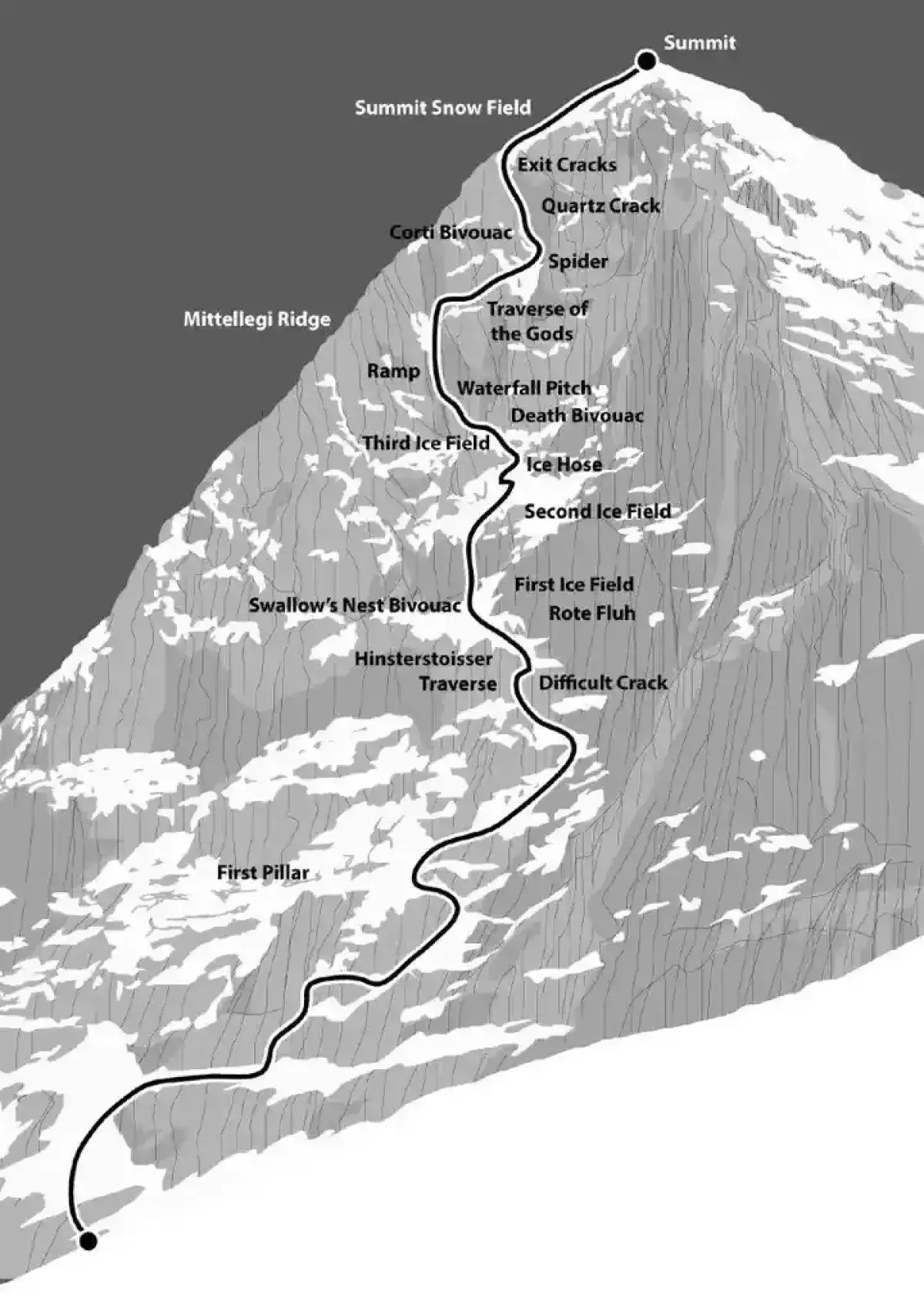
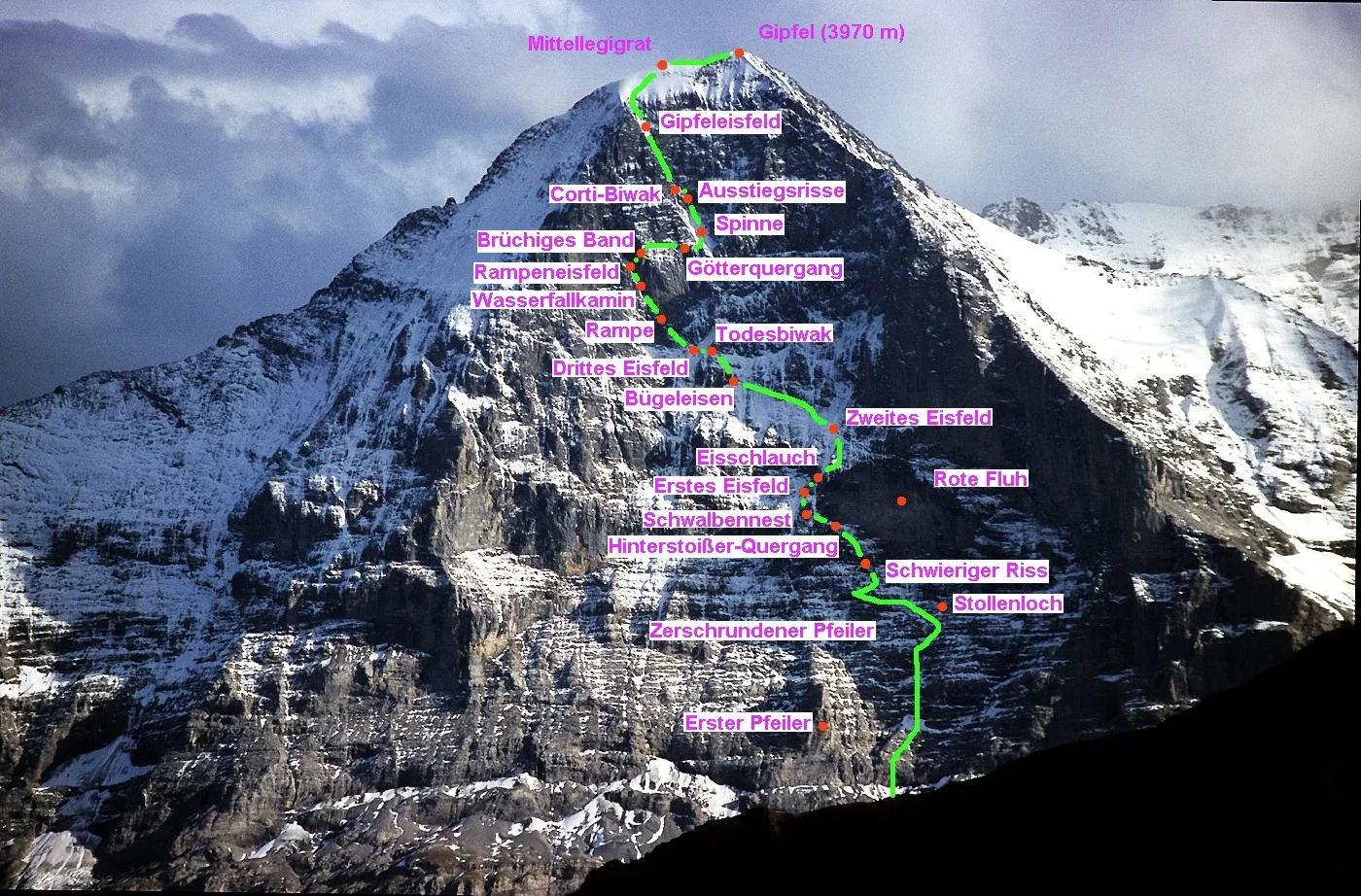
Eiger North Face (1938 Heckmair Route)
The legendary 1,800-meter original route up the Eiger North Face (3,967m), first climbed between July 21 and 24, 1938, by Anderl Heckmair, Ludwig Vörg, Heinrich Harrer, and Fritz Kasparek. Negotiating an intricate, terrifying labyrinth of down-sloping limestone ledges, friable verglas, and hanging icefields, the route traverses the notorious Hinterstoisser Traverse, Swallow's Nest, the First and Second Icefields, the Death Bivouac, the Ramp, the Traverse of the Gods, and the sinister snowfield known as the White Spider before conquering the Exit Cracks to reach the summit.
Target Objective Peak
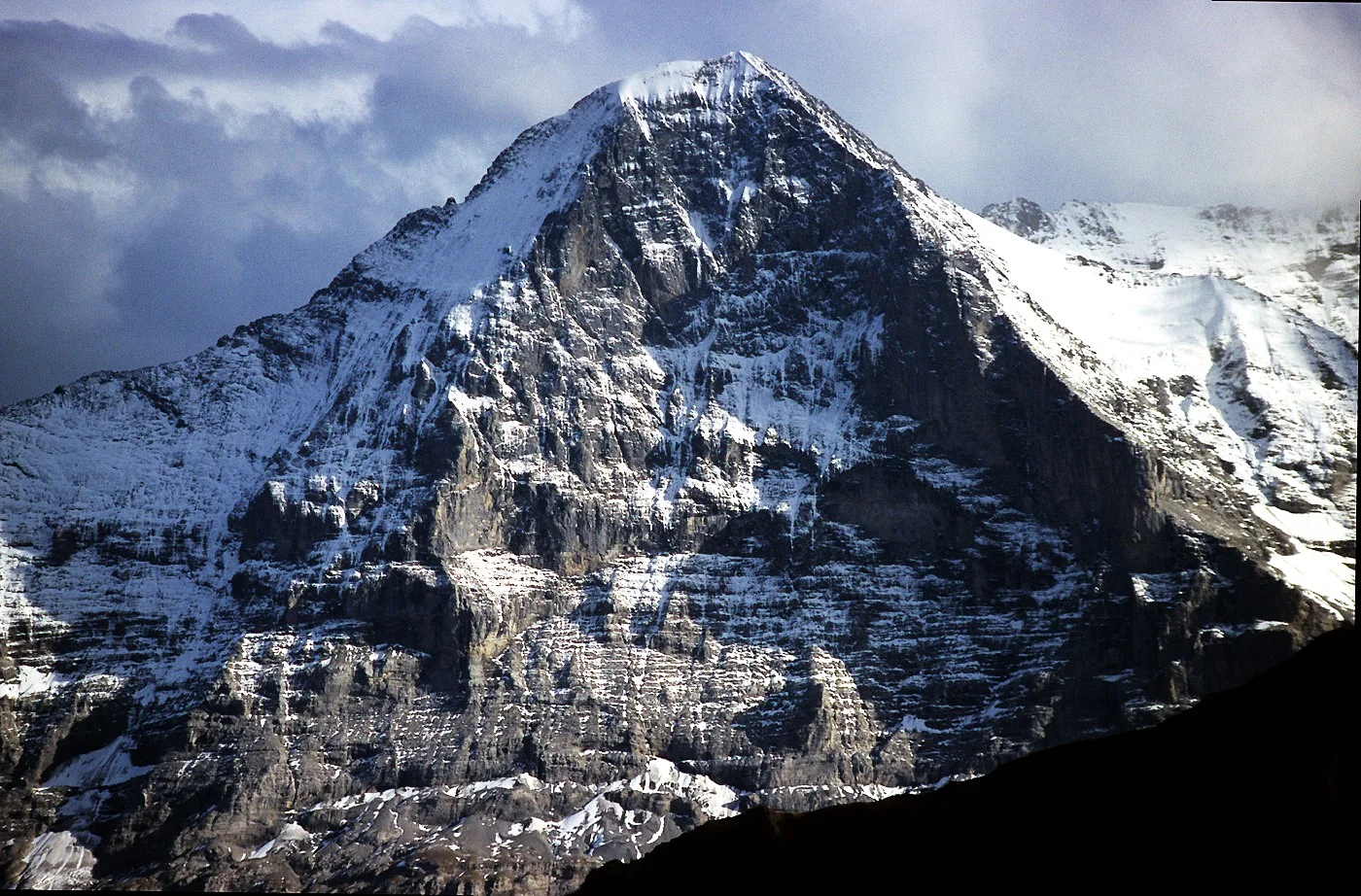

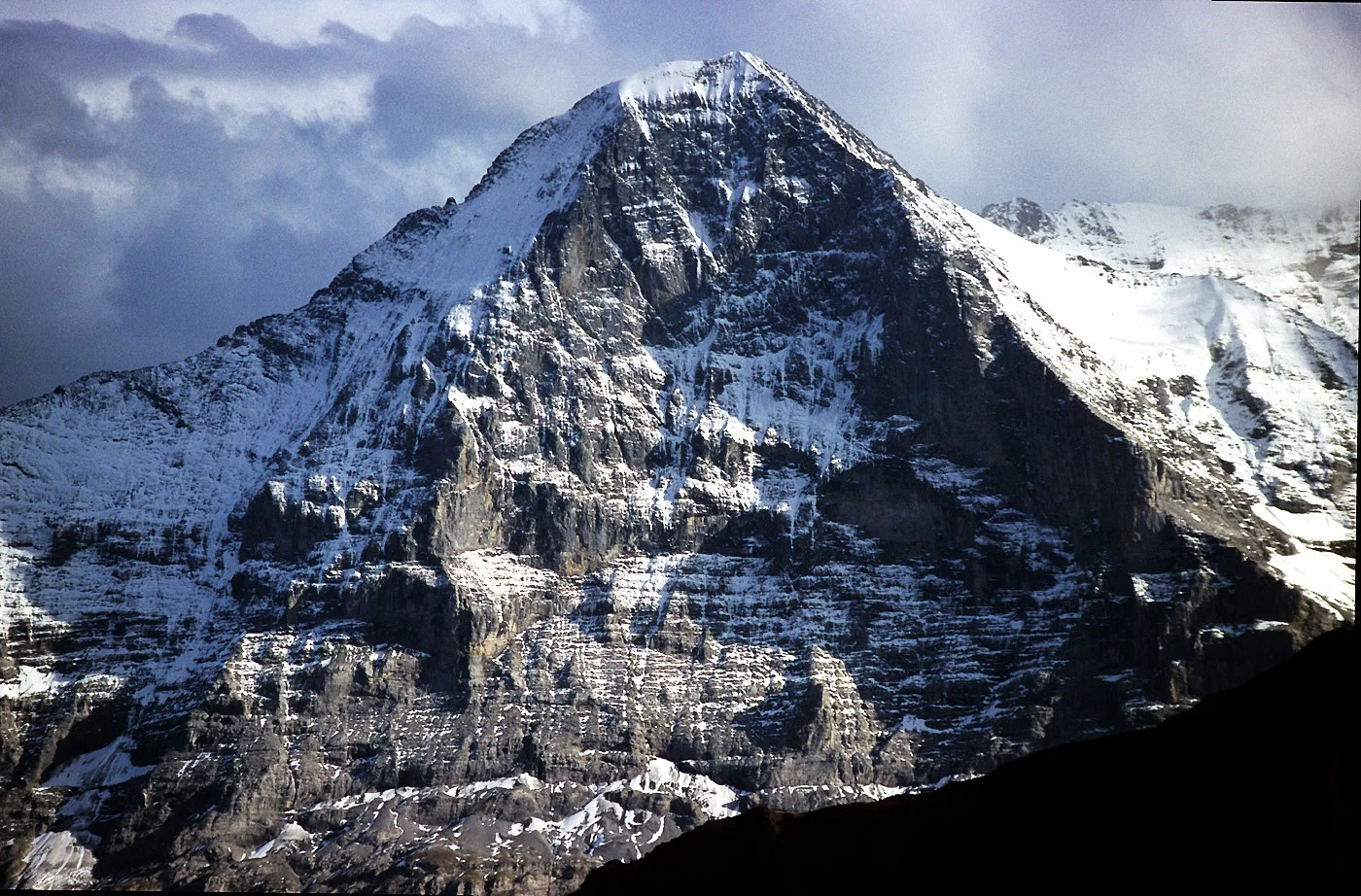
Eiger
The Eiger, standing at 3,967 meters (13,015 ft) in the Bernese Alps of Switzerland, is globally renowned for its monstrous 1,800-meter (5,900 ft) sheer vertical North Face (the *Eiger-Nordwand*). Feared as the *Mordwand* ('Murder Wall') following catastrophic climbing tragedies in the 1930s, it remained the last great problem of the Alps until conquered in July 1938 by Anderl Heckmair, Ludwig Vörg, Heinrich Harrer, and Fritz Kasparek.
Featured Expedition Climbers
Anderl Heckmair
Andreas 'Anderl' Heckmair was born on October 12, 1906, in Munich, Germany. Raised in an orphanage following the death of his father in the First World War, Heckmair was apprenticed as a horticulturist before the Great Depression plunged Germany into economic despair. Turning to the high Alps as both refuge and proving ground, Heckmair lived for years in alpine huts and tent camps on a few pennies a day, rapidly developing into one of the most athletic and daring rock and ice masters in Europe. Throughout the 1930s, the 1,800-meter vertical limestone wall of the Eiger North Face (the *Eigerwand*) had defied every human attempt, claiming the lives of eight elite European climbers—including the agonizing, slow death of Andreas Hinterstoisser and Toni Kurz in 1936. The Swiss press christened it the *Mordwand* ('Murder Wall'), and the local cantonal government banned all climbing on the face. Heckmair analyzed previous failures with cool tactical genius. While earlier climbers had relied on clumsy 10-point crampons and spent hours hacking steps in hard water-ice with axes, Heckmair and his partner Ludwig Vörg obtained revolutionary new 12-point crampons recently designed by Italian blacksmith Laurent Grivel. Featuring two rigid, forward-pointing horizontal steel spikes, these crampons allowed a climber to kick their toes directly into vertical ice, moving with breathtaking speed. On July 21, 1938, Heckmair and Vörg entered the North Face. High on the Second Icefield, they overtook an Austrian duo, Heinrich Harrer and Fritz Kasparek, who were climbing in traditional nailed boots without crampons. Recognizing that competing against each other on an avalanche-swept face was suicidal, Heckmair proposed merging their ropes into a single four-man unit, with Heckmair taking the lead on the sharp end. Over four grueling days and three sub-zero bivouacs, Heckmair methodically unpicked the wall's secrets: pioneering through the icy chimneys of the Ramp, leading across the exposed Traverse of the Gods, and front-pointing through the swirling spindrift avalanches of the White Spider. During the final push through the Exit Cracks in a roaring summer blizzard, Kasparek slipped; Heckmair lunged forward and arrested the fall, taking the pick of an ice axe through his own palm in the process. At 3:30 PM on July 24, 1938, Heckmair hauled his frostbitten companions over the summit rim of the Eiger into howling gales. The 'Last Problem of the Alps' had been conquered. Following the Second World War, Heckmair dedicated his life to training mountain professionals, serving as the founding president of the Association of German Mountain and Ski Guides. He passed away peacefully on February 1, 2005, in Oberstdorf at the grand age of 98, universally revered as a titan of mountaineering history.
Heinrich Harrer
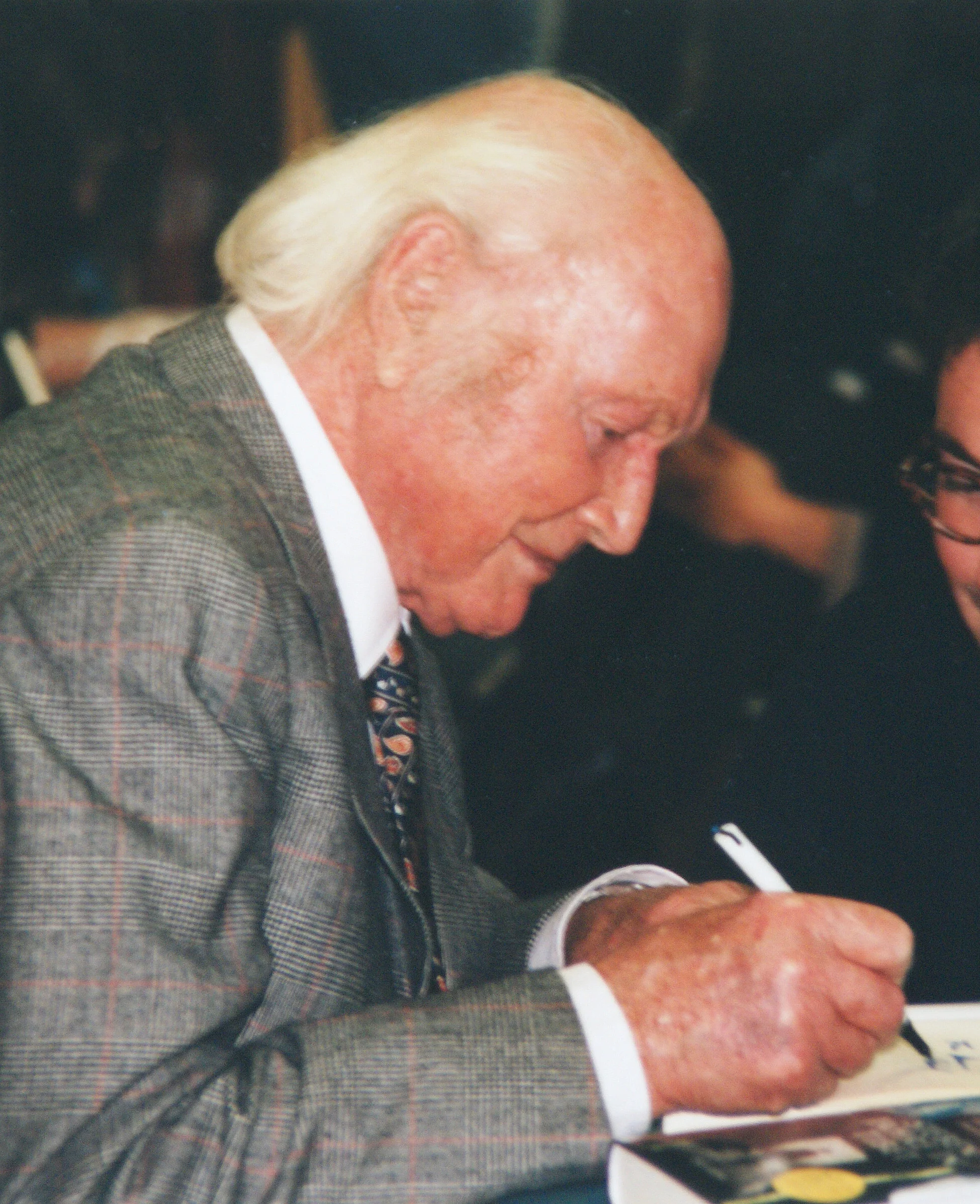
Heinrich Harrer was born on July 6, 1912, in Hüttenberg, Carinthia, Austria. A prodigiously gifted multi-sport athlete, Harrer studied geography and sports science at the University of Graz, competing in the 1936 Winter Olympics in Garmisch-Partenkirchen and winning the world championship in the downhill ski race. Drawn to extreme rock climbing in the Kaisergebirge and Julian Alps, Harrer resolved in 1938 to tackle the most formidable alpine objective in the world: the unclimbed 1,800-meter North Face of the Eiger. In July 1938, Harrer teamed up with Viennese climber Fritz Kasparek. Lacking modern 12-point crampons, Harrer wore traditional triple-nailed leather mountaineering boots. On the lower icefields, they were overtaken by Bavarian masters Anderl Heckmair and Ludwig Vörg. Realizing that cooperation meant survival, the two pairs joined ropes. Over four harrowing days of blizzards, rockfalls, and bivouacs, Harrer carried heavy support equipment and belayed Heckmair as the Bavarian led the treacherous pitches of the Ramp, the Traverse of the Gods, and the White Spider. On July 24, 1938, all four men stood upon the summit, conquering the 'Last Problem of the Alps'. In 1939, Harrer joined the German reconnaissance expedition to Nanga Parbat in British India. Following the outbreak of the Second World War in September 1939, Harrer and his companions were arrested by British authorities and interned in the Dehradun prison camp near the Himalayas. After several failed attempts, Harrer and Peter Aufschnaiter escaped in May 1944, disguised as native laborers, and undertook a breathtaking 21-month trek across fifty high Himalayan passes into forbidden Tibet. Arriving destitute in the holy city of Lhasa in January 1946, Harrer won the trust of the Tibetan nobility through his surveying and cartographic skills. He was introduced to the young 14th Dalai Lama (then 11 years old), becoming his personal tutor in English, geography, science, and Western culture. Their profound bond endured until Harrer's death. When Chinese forces entered Tibet in 1950, Harrer fled to the West, publishing his masterpiece *Seven Years in Tibet* (1952), which became an international publishing phenomenon translated into 53 languages and adapted into an acclaimed Hollywood film starring Brad Pitt. In 1959, Harrer published *The White Spider*, universally acknowledged as the definitive historical chronicle of the Eiger North Face. In 1962, Harrer led the expedition that achieved the maiden first ascent of Carstensz Pyramid (Puncak Jaya, 4,884m) in West Papua (New Guinea), the highest peak in Oceania and one of the Seven Summits. He spent his later years founding the Heinrich Harrer Museum in Hüttenberg and promoting human rights for Tibet. He passed away on January 7, 2006, in Friesach at age 93.
Associated Historical Chronicles & Stories
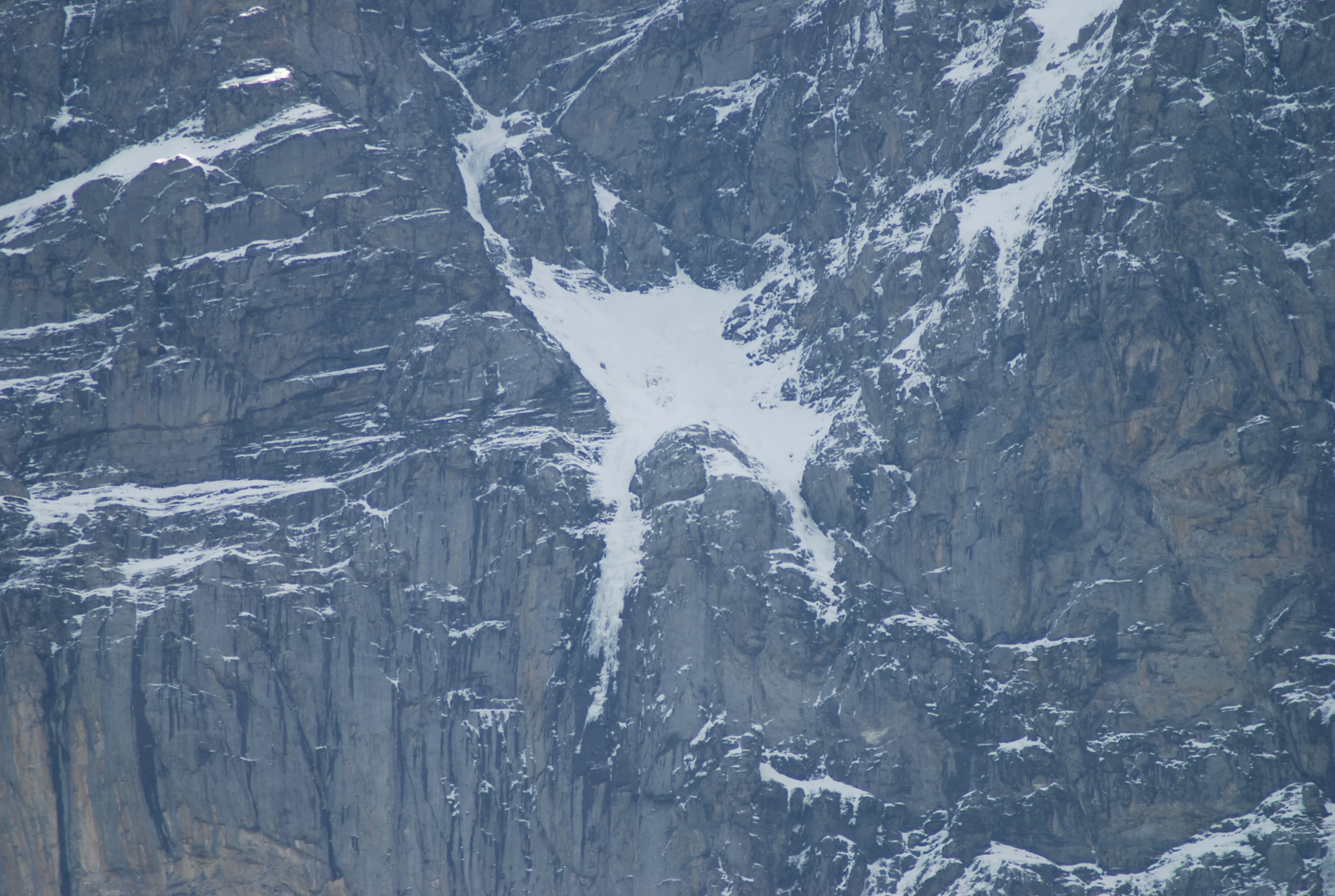
Eiger 1938: The Conquest of the Murder Wall and the White Spider
Between July 21 and 24, 1938, Anderl Heckmair and Heinrich Harrer led a four-man team up the terrifying 1,800-meter Eiger North Face, surmounting avalanches and the White Spider to solve the Last Problem of the Alps.
Documented Sources & Archival Citations
- The White Spider: The History of the Eiger's North Face(Heinrich Harrer / Rupert Hart-Davis)
Supporting claim: Official narrative detailing the merging of the two teams, the bivouacs, and the summit victory
Accessed/Documented: 1959 - My Life: Eiger North Face, Grandes Jorasses & Other Adventures(Anderl Heckmair / Vertebrate Publishing)
Supporting claim: First-hand technical climbing log of the route leadership, gear, and White Spider traverse
Accessed/Documented: 2002 - The Alpine Journal Archive: The Eigerwand Ascent, July 1938(The Alpine Club UK)
Supporting claim: Contemporary assessment and verification of the first ascent by the Alpine Club
Accessed/Documented: 1939