Eiger 1938: The Conquest of the Murder Wall and the White Spider
Between July 21 and 24, 1938, Anderl Heckmair and Heinrich Harrer led a four-man team up the terrifying 1,800-meter Eiger North Face, surmounting avalanches and the White Spider to solve the Last Problem of the Alps.
Mountain Safety & Conditions Disclaimer: High-altitude climbing, glacial travel, and technical ascents entail severe objective risks including avalanches, serac collapses, rapid weather collapse, and altitude illness. Historical route descriptions and summit claims on Mountanity reflect documented archival sources and must not be used as live operational safety assessments. Local regulations, permits, and physical glacial topography change continuously.
Peer Review: Senior Editorial Board & Historical Reviewers • Editorial Standards
In the late 1930s, no piece of rock and ice on Earth inspired greater dread, morbid fascination, and international hysteria than the North Face of the Eiger (Eigerwand). Plunging 1,800 meters (nearly 6,000 vertical feet) in a concave wall of rotten limestone, black verglas, and hanging icefields directly above the luxury hotels of Kleine Scheidegg in the Swiss Bernese Oberland, it was universally regarded as the “Last Problem of the Alps.”
Through the telescope lenses on the hotel terrace, wealthy tourists sipping cocktails could watch real-life gladiators battling for survival on the icy cliffs. The wall had earned the sinister nickname Mordwand (“Murder Wall”) after claiming the lives of eight of Europe’s finest young climbers. In 1935, Max Sedlmayr and Karl Mehringer froze to death during a five-day tempest at what is still called the Death Bivouac. In July 1936, a catastrophe of unbearable horror unfolded when Bavarian climbers Andreas Hinterstoisser and Toni Kurz, along with Austrians Willy Angerer and Edi Rainer, were trapped by avalanches while retreating. One by one, three of the men died. Toni Kurz survived suspended in mid-air on a severed climbing rope overnight. The next morning, as railway rescue guides stood barely a few yards below him on the gallery window of the Jungfrau Railway, Kurz struggled for hours with frostbitten fingers to untwist his rope before whispering his immortal final words: “Ich kann nicht mehr” (“I can do no more”) and slumping forward dead.
Following the 1936 tragedy, the Cantonal Council of Bern officially banned all climbing on the Eiger North Face. But bans could not extinguish the burning ambition of a new generation of alpinists.
The Two Rival Teams: Nailed Boots vs. Front Points
In late July 1938, the weather over the Bernese Oberland finally stabilized. Two separate pairs of elite mountaineers set out independently from the screes of Alpiglen into the icy amphitheater.
The first pair consisted of Austrian alpinists Heinrich Harrer, an Olympic downhill skier and geographer from Graz, and Fritz Kasparek, a daring Viennese rock specialist. Uniquely, Harrer carried no crampons; he climbed the entire 1,800-meter mixed face wearing traditional Austrian triple-nailed leather mountain boots (tricounis), forcing Kasparek to laboriously cut thousands of steps in hard black water-ice with his ice axe.
Hours behind them entered a powerhouse Bavarian pair: 31-year-old Munich mountain guide Anderl Heckmair and his stalwart partner Ludwig Vörg. Heckmair had analyzed the horrors of previous attempts and brought a technological revolution: newly forged 12-point crampons designed by Italian craftsman Laurent Grivel. By featuring two horizontal, forward-pointing steel spikes extending past the toe, Heckmair could kick his boots directly into sheer vertical ice slopes and sprint upward using front-pointing technique, moving at triple the speed of traditional step-cutters.
The Historic Union on the Second Icefield
On the second morning, high above the Hinterstoisser Traverse on the steep, frozen slopes of the Second Icefield, Heckmair and Vörg caught up with the slower Austrian pair. In the fiercely competitive pre-war climate, nationalist rivalries often turned deadly. But Heckmair, possessed of profound mountain maturity, recognized that having two separate ropes on an avalanche-swept wall was an invitation to catastrophe.
Heckmair shouted across the ice to Harrer and Kasparek, proposing an immediate brotherhood: they would tie their ropes together into a single four-man unit. Heckmair, with his front-pointing crampons and ferocious climbing drive, would take the permanent lead on the sharp end, supported by Vörg. Harrer and Kasparek would manage the heavy bivouac gear and anchor the belays from behind. The union of German and Austrian climbers transformed two competing teams into an unbreakable fraternal force.
The Battle with the White Spider
Over the next two days, the mountain threw its entire terrifying arsenal at the climbers. Heckmair methodically unlocked the vertical pitches: wriggling through the dripping, frozen waterfall chimneys of the Ramp, tiptoeing across the dizzying, bottomless exposure of the Traverse of the Gods, and leading onto the sinister hanging icefield known as The White Spider (Die Weiße Spinne).
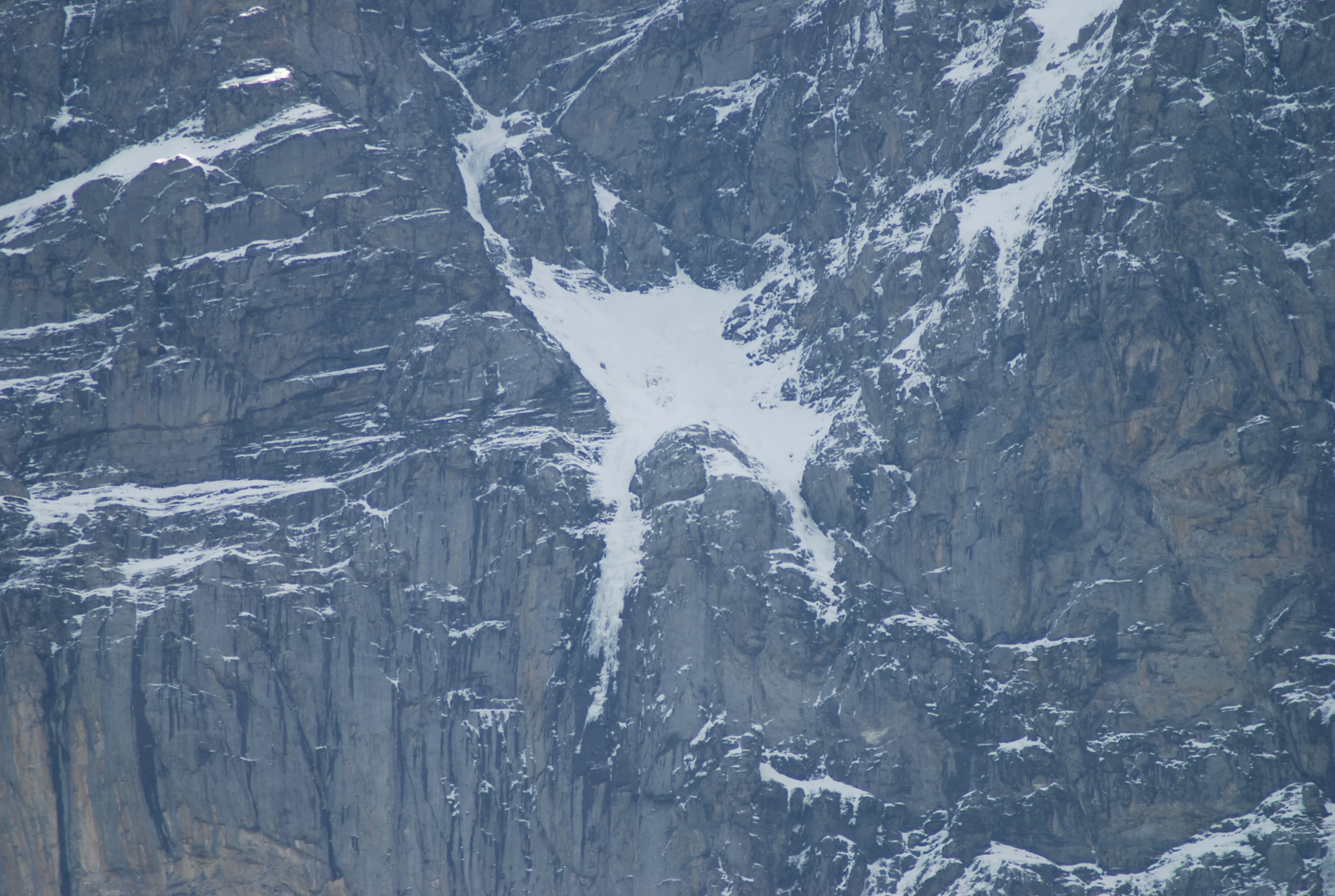
The White Spider is the emotional and physical crux of the Eiger: an immense, steep snow amphitheater from which radiating ice gullies spread across the upper wall like the legs of a monstrous arachnid. The funnel acts as a natural chute for every rockfall and spindrift avalanche tumbling from the summit ridge.
As the four men huddled in their third bivouac below the Spider, a violent summer blizzard struck the mountain. Hurricane-force winds howled across the precipice, plunging the temperature to -15°C. Cascades of pulverized powder snow poured over the climbers in continuous torrents, threatening to suffocate them or rip them from their precarious piton anchors.
At dawn on July 24, with retreat completely impossible down the frozen wall, Heckmair launched an all-or-nothing assault up the 60-degree ice slopes of the Spider. Front-pointing through blinding sheets of spindrift, Heckmair hammered pitons into invisible cracks beneath the ice.
Near the top of the Exit Cracks, as they negotiated a vertical chimney glazed with water-ice, Fritz Kasparek lost his footing on an ice ledge. Kasparek plummeted backward into space. Positioned just below him on a tiny stance, Heckmair reacted with lightning instinct: he threw his body across the rock and braced to arrest the rope shock. Kasparek’s flailing ice axe plunged through Heckmair’s palm, pinning the Bavarian’s hand to the rock. Ignoring the agonizing wound and bleeding heavily into the snow, Heckmair held the fall, preventing a catastrophic chain-reaction disaster that would have plunged all four men to their deaths.
Summit and Immortality: July 24, 1938
Binding his punctured hand with a frozen handkerchief, Heckmair refused to yield the lead. Breaching the final overhang of the Exit Cracks, he chipped steps up the summit icefield into the teeth of the gale.
At 3:30 PM on Sunday, July 24, 1938, Anderl Heckmair, Ludwig Vörg, Heinrich Harrer, and Fritz Kasparek scrambled onto the knife-edge summit crest of the Eiger. Shrouded in howling blizzard clouds, weeping through ice-encrusted goggles, the four men embraced in exhausted triumph. The “Last Problem of the Alps” had been conquered.
Descending via the West Flank in the storm, they reached the safety of the Eigergletscher station, where news of their survival triggered jubilant celebrations across Europe. Heinrich Harrer would later chronicle the epic struggle in his 1959 masterpiece The White Spider, an immortal classic that inspired millions of climbers. Anderl Heckmair’s tactical mastery of the 12-point crampon front-pointing technique fundamentally ushered in the modern era of extreme mixed ice climbing, forever proving that human courage, brotherhood, and innovation can prevail against the most terrifying walls on Earth.
Key Statistics & Topographic Figures
- Category
- Historic Expeditions
Archival Subject
- Reading Time
- 15 min read
Narrative Length
- Key Mountain
- eiger
Objective
- Ascent Route
- eiger-north-face-heckmair
Topography
- Verification
- Editorially Verified
Archival Standard
Archival Primary Source Quotations
“In the mountains, truth is etched in ice and granite; every step requires unwavering respect for the heights.”
Defined Alpine Terminology & Concepts
- Summit Push
- The final continuous climbing effort from the highest established camp to the mountain apex and back.
- Death Zone Chronicle
- A verified, research-backed historical narrative documenting the human, technical, and environmental realities of an alpine expedition.
Frequently Asked Questions: Eiger 1938: The Conquest of the Murder Wall and the White Spider
What is the core chronicle and subject of "Eiger 1938: The Conquest of the Murder Wall and the White Spider"?
Between July 21 and 24, 1938, Anderl Heckmair and Heinrich Harrer led a four-man team up the terrifying 1,800-meter Eiger North Face, surmounting avalanches and the White Spider to solve the Last Problem of the Alps.
Which mountain peaks and routes are featured in "Eiger 1938: The Conquest of the Murder Wall and the White Spider"?
This narrative documents climbs on eiger along the eiger-north-face-heckmair in Switzerland.
Which documented expedition is chronicled in this story?
This historical chronicle captures the events of the 1938-eiger-north-face, verified through contemporary journals and archival records.
Who authored and researched this archival chronicle?
Authored and researched by Mountainity Historical Research Desk, drawing on primary eyewitness testimonies, alpine club registries, and verified summit logs.
What makes this high-altitude chronicle historically significant?
Categorized under "Historic Expeditions", this chronicle preserves critical lessons in alpine leadership, survival, tactical speed, and human endurance in the death zone.
Related Mountains

Eiger
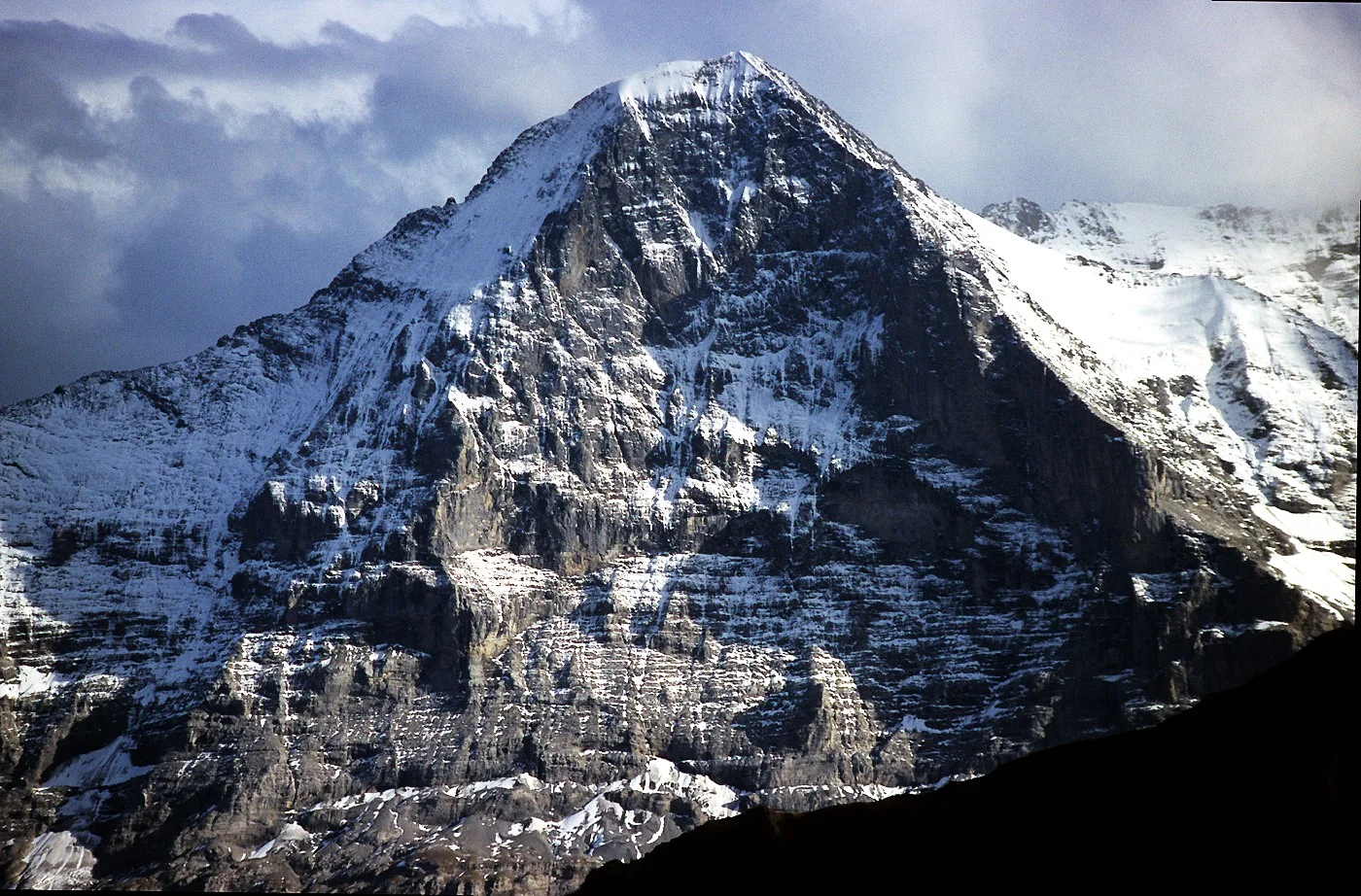
The Eiger, standing at 3,967 meters (13,015 ft) in the Bernese Alps of Switzerland, is globally renowned for its monstrous 1,800-meter (5,900 ft) sheer vertical North Face (the *Eiger-Nordwand*). Feared as the *Mordwand* ('Murder Wall') following catastrophic climbing tragedies in the 1930s, it remained the last great problem of the Alps until conquered in July 1938 by Anderl Heckmair, Ludwig Vörg, Heinrich Harrer, and Fritz Kasparek.
Documented Sources & Archival Citations
- The White Spider: The History of the Eiger's North Face(Heinrich Harrer / Rupert Hart-Davis)
Supporting claim: Authoritative historical and first-hand chronicle of the 1938 Eiger first ascent and early tragedies
Accessed/Documented: 1959 - My Life: Eiger North Face, Grandes Jorasses & Other Adventures(Anderl Heckmair / Vertebrate Publishing)
Supporting claim: First-person technical climbing account of route leadership, gear, and front-pointing through the storm
Accessed/Documented: 2002 - The Alpine Journal Archive: The Eigerwand Ascent, July 1938(The Alpine Club UK)
Supporting claim: Contemporary evaluation and technical analysis of the 1,800m route
Accessed/Documented: 1939