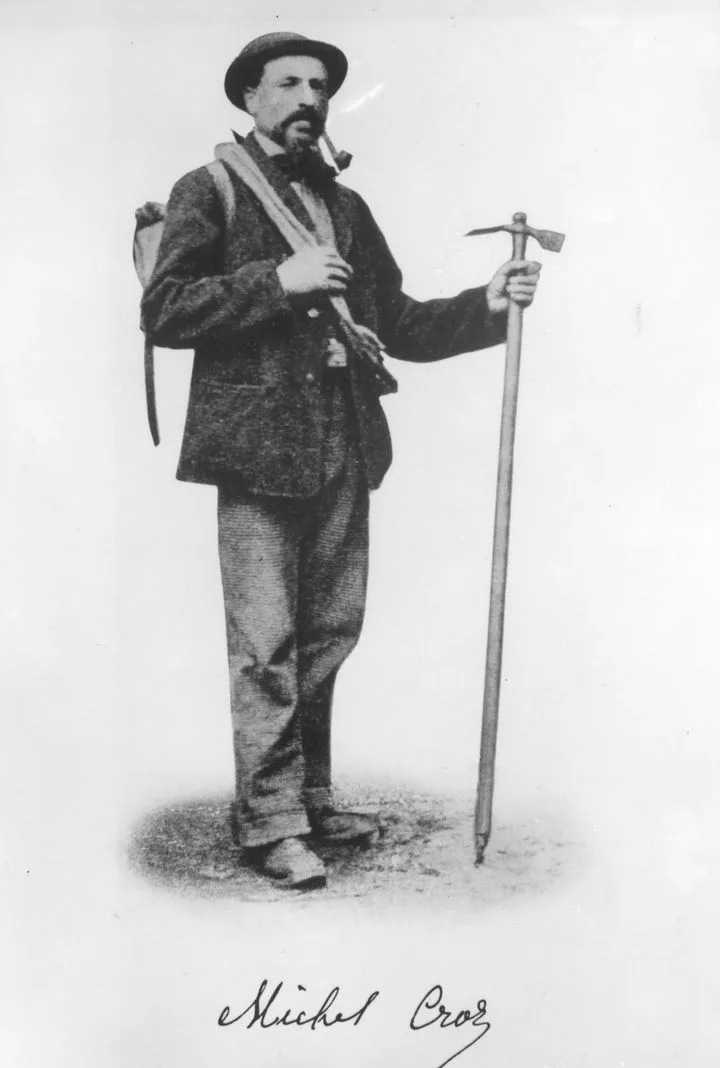
Michel-Auguste Croz
Michel-Auguste Croz was the supreme Chamonix mountain guide of the Alpine Golden Age — bold, fast, technically masterful, and universally beloved by the British climbers he led. Croz pioneered first ascents of the Barre des Écrins in 1864, the Grandes Jorasses in 1865, and led the summit rope on the Matterhorn on July 14, 1865, only to be torn to his death on the descent in the most famous mountaineering tragedy of all time.
Mountain Safety & Conditions Disclaimer: High-altitude climbing, glacial travel, and technical ascents entail severe objective risks including avalanches, serac collapses, rapid weather collapse, and altitude illness. Historical route descriptions and summit claims on Mountanity reflect documented archival sources and must not be used as live operational safety assessments. Local regulations, permits, and physical glacial topography change continuously.
Peer Review: Senior Editorial Board & Historical Reviewers • Editorial Standards
Biographical Record & Archival Chronicle
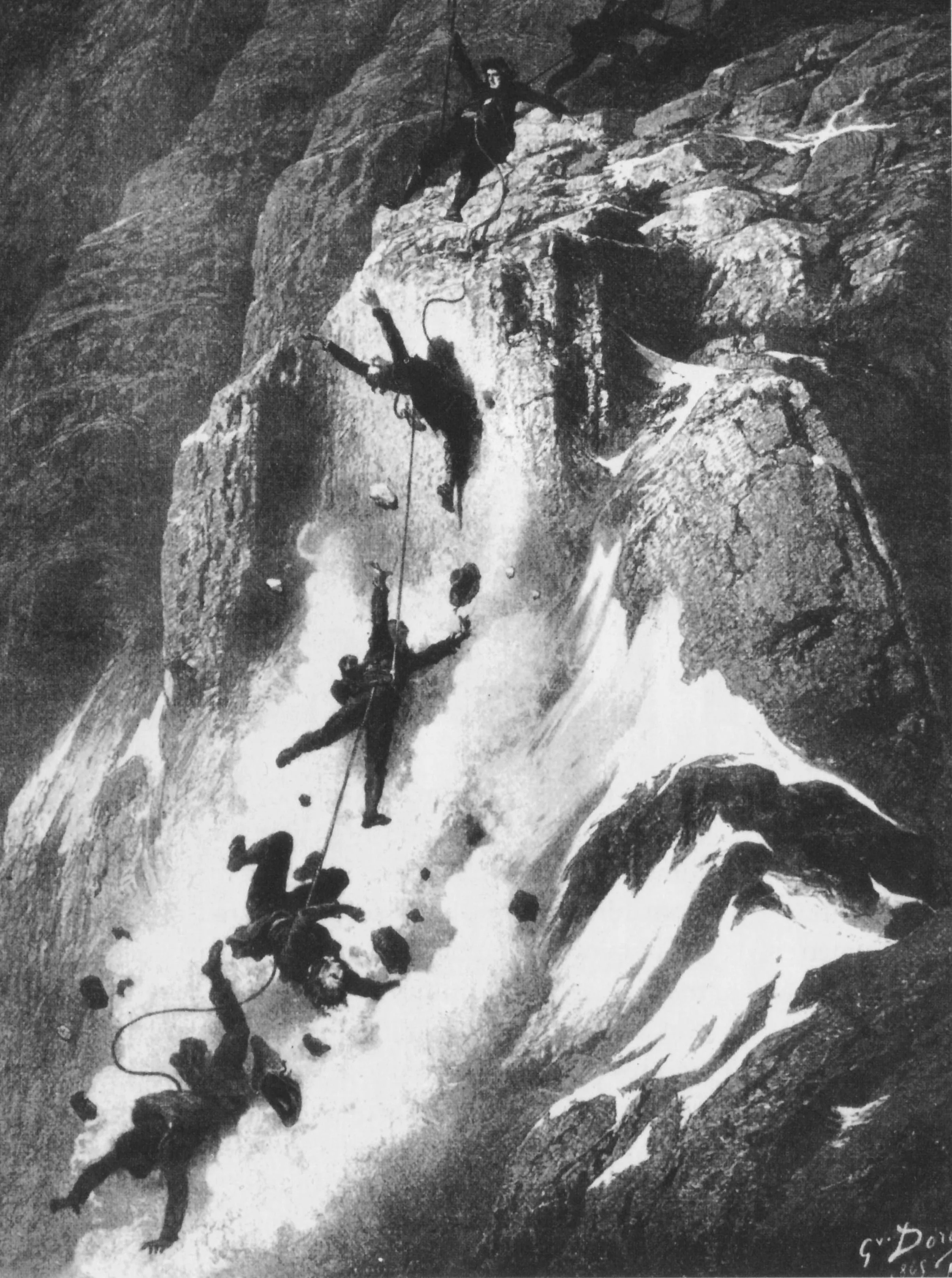
Born in Le Tour in the Chamonix valley on April 22, 1830, Michel-Auguste Croz was raised among the great glacier torrents and granite aiguilles that define the Mont Blanc massif. He became a professional mountain guide at an early age, quickly distinguishing himself for an uncanny speed and sure-footedness on Alpine terrain that seasoned British climbers found breathtaking. By the early 1860s, Edward Whymper — whose Matterhorn obsession would define the decade — specifically sought out Croz above all other guides, writing admiringly that Croz was the finest guide he had ever climbed with. Together they pioneered first ascents of extraordinary difficulty. In August 1864, Whymper, Croz, and a small team completed the first ascent of the Barre des Écrins (4,102 m), the highest peak of the Dauphiné Alps, a serious mixed route demanding navigation of steep glaciers and exposed ridges. In June 1865, Croz stood on the summit of the Grandes Jorasses above Chamonix — one of the most impressive north-facing walls in the entire Alps — completing another major first ascent. In the fateful summer of 1865, Croz joined Whymper's team for the Matterhorn. On July 14, Croz led the final ridge approach with characteristic boldness, racing ahead of the party and arriving at the summit alongside Whymper in a sprint. He sat on the summit to eat and rest before organizing the descent rope order. On the descent near a patch of snow above the couloirs that plunge into the Matterhorn Glacier, the inexperienced Douglas Hadow lost his footing. Croz, who had just stepped forward to assist Hadow, was pulled violently off his stance. Four men — Croz, Hudson, Hadow, and Lord Douglas — plunged 1,200 metres and fell to their deaths on the glacier below. Croz was thirty-five years old. His death devastated the British climbing community and effectively marked the end of the Golden Age of Alpinism.
Notable Milestones & Ascents
- First ascent of the Barre des Écrins (4,102 m), highest summit of the Dauphiné Alps, with Edward Whymper in August 1864
- First ascent of the Grandes Jorasses (4,208 m) Pointe Whymper via the south face in June 1865
- Led the summit push on the first ascent of the Matterhorn (4,478 m) on July 14, 1865, reaching the top alongside Whymper
- First ascent of Mont Dolent (3,820 m), the triple-border peak of France, Switzerland, and Italy, in 1864
- Considered by Edward Whymper to be the finest and bravest mountain guide he ever climbed with
- Pioneered numerous technical routes across the Mont Blanc massif and Dauphiné Alps during his career
Key Statistics & Topographic Figures
- Born and Died
- April 22, 1830 – July 14, 1865 (aged 35)
- Barre des Écrins
- First ascent on June 25, 1864 (4,102 m)
- Grandes Jorasses
- First ascent of Pointe Whymper on June 24, 1865
- Matterhorn Summit
- First ascent on July 14, 1865
Archival Primary Source Quotations
“A braver man than Michel Croz never trod the earth, nor one who was a more genuine lover of mountains.”
Defined Alpine Terminology & Concepts
- Pointe Croz
- A 4,110-metre peak on the summit ridge of the Grandes Jorasses massif in the Mont Blanc range.
- Lead Guide
- The senior alpine professional responsible for navigating the route, setting protection, and kicking or cutting steps.
Frequently Asked Questions: Michel-Auguste Croz
Who was Michel-Auguste Croz?
Michel-Auguste Croz (1830–1865) was a supreme French mountain guide from Chamonix renowned as the greatest lead climber of the Golden Age.
What major first ascents did Michel Croz achieve?
Croz led first ascents of Barre des Écrins (1864), Grandes Jorasses Pointe Whymper (1865), Mont Dolent (1864), and the Matterhorn (1865).
How did Michel Croz die?
Croz perished on July 14, 1865, descending the Matterhorn when Douglas Hadow slipped and knocked him from his stance above the north face.
What was Michel Croz's relationship with Edward Whymper?
Whymper considered Croz his finest and most inspirational alpine guide, achieving numerous historic Alpine first ascents together.
Where was Michel Croz born?
Croz was born on April 22, 1830, in the hamlet of Le Tour in the upper Chamonix valley, France.
Where is Michel Croz buried?
Croz is buried in the mountain cemetery of Zermatt, Switzerland, where his headstone honors his supreme climbing leadership.
What was Croz's climbing style?
Croz was famed for extraordinary speed, flawless route instinct on mixed ground, and fearless step-cutting on vertical ice.
What feature on the Grandes Jorasses is named after Croz?
Pointe Croz (4,110 m), one of the prominent summit teeth along the crest of the Grandes Jorasses, honors Michel Croz.
Associated Summits (2)



Matterhorn
The Matterhorn (Monte Cervino), at 4,478 meters (14,692 ft), is one of the most recognizable and dramatic pyramidal peaks in the world. Straddling the border between Zermatt, Switzerland, and Breuil-Cervinia, Italy, its four triangular faces match the cardinal points of the compass. Its historic first ascent by Edward Whymper on July 14, 1865, and the tragic fall of four teammates on the descent marked the end of the Golden Age of Alpinism.
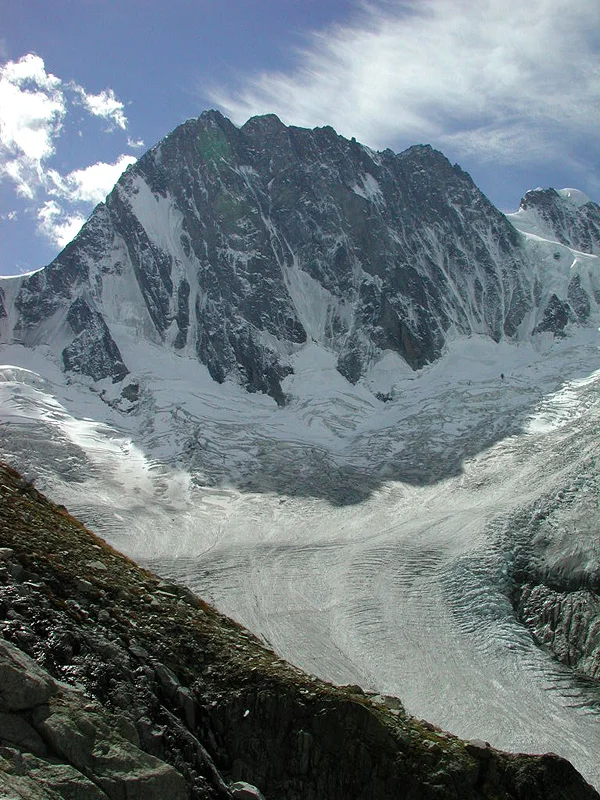

Grandes Jorasses
The Grandes Jorasses, crowning at Pointe Walker at 4,208 meters (13,806 ft), is one of the most celebrated mountain massifs in the European Alps, rising along the Franco-Italian border in the Mont Blanc massif. Its legendary 1,200-meter sheer North Face is revered as one of the Six Great North Faces of the Alps. First climbed directly up the central Walker Spur by Riccardo Cassin in 1938, it witnessed a historic modern milestone in March 2015 when British solo climber Tom Ballard completed his winter solo hexalogy of the Alps.
Pioneered & Associated Routes (3)
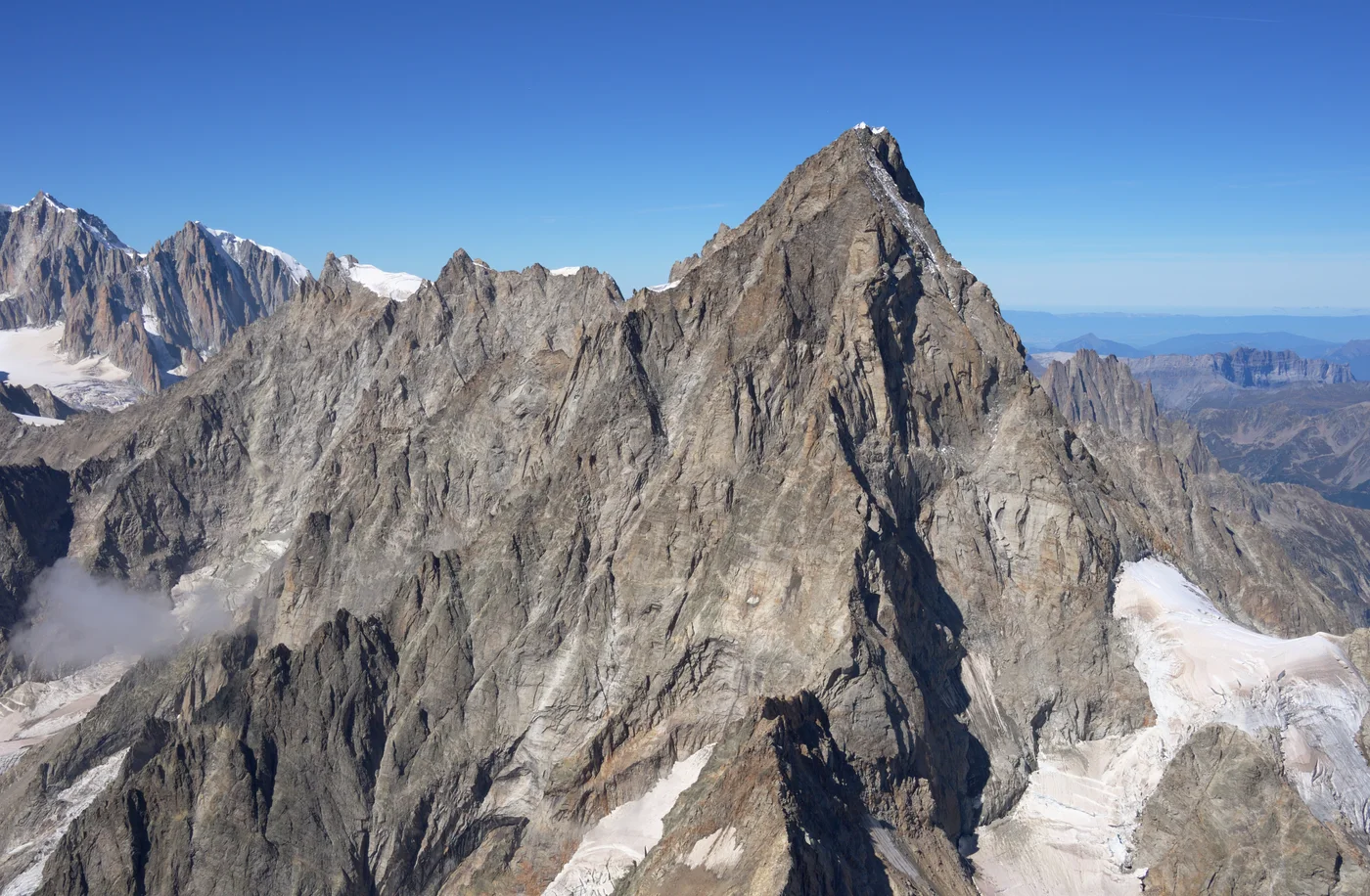
Walker Spur (North Face)
The Walker Spur on the North Face of the Grandes Jorasses is one of the supreme classic alpine mixed routes in the world. Ascending 1,200 metres directly to Pointe Walker (4,208m), it features sustained technical climbing across granite slabs, icy dihedrals, and exposed arêtes graded ED1, with difficulties up to UIAA VI / 5.10a. Conquered in August 1938 by Riccardo Cassin, Gino Esposito, and Ugo Tizzoni, it achieved modern acclaim when Tom Ballard made an astonishing solo winter ascent in March 2015.

Hörnli Ridge (Normal Route)
The Hörnli Ridge (Hörnligrat) is the northeast ridge of the Matterhorn and the standard normal route from Zermatt. Starting from the Hörnli Hut (3,260m), the route follows the sharp, crumbling crystalline schist ridge, traversing steep rock steps, the Solvay emergency refuge (4,003m), and the steep upper Moseley Slabs. Fixed ropes assist climbers over the steep summit headwall (the Shoulder) before reaching the knife-edge Swiss summit crest at 4,478 meters. First climbed on July 14, 1865, by Edward Whymper's party.
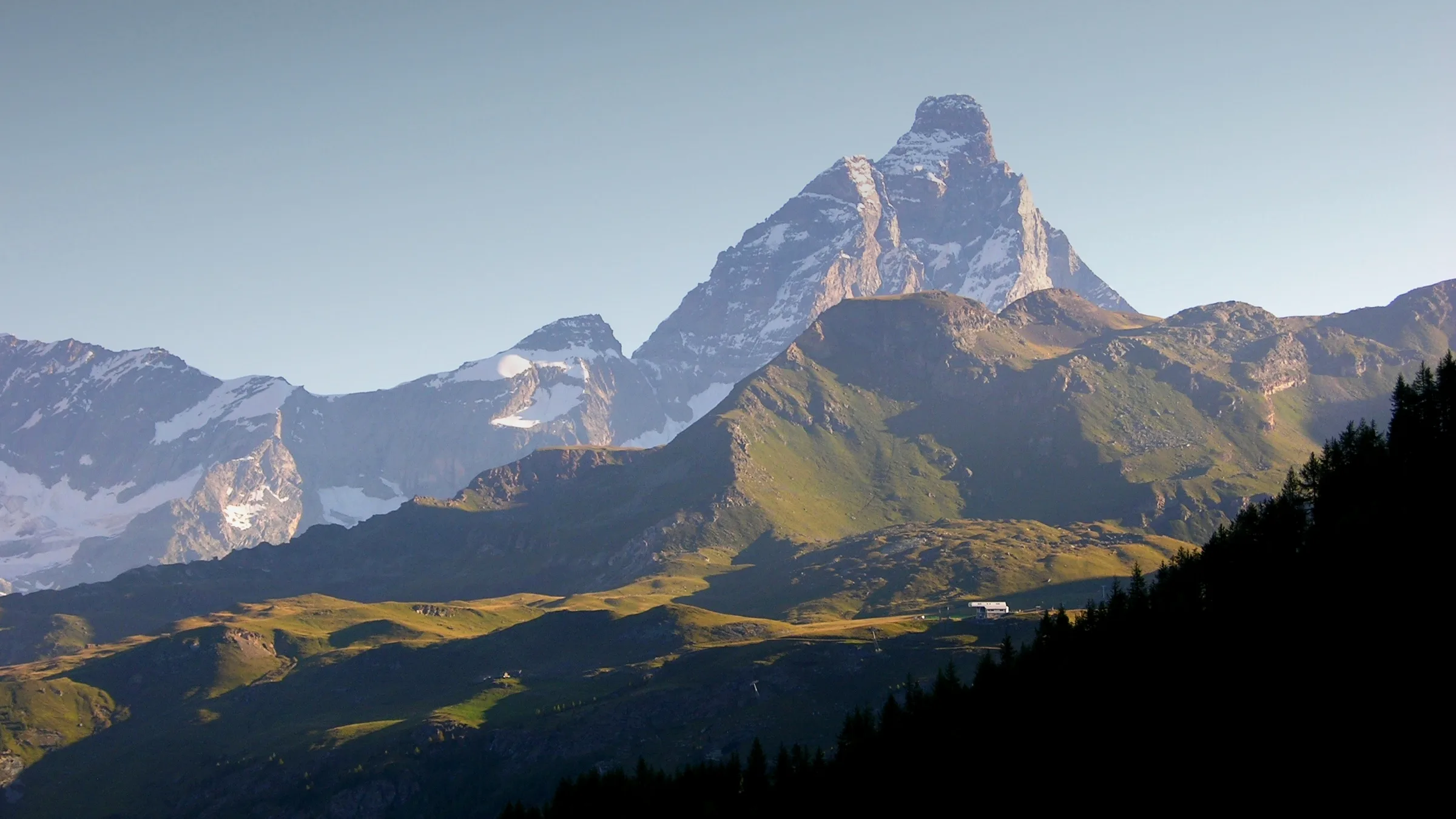
Matterhorn Lion Ridge (Cresta del Leone)
The Matterhorn Lion Ridge (Cresta del Leone / Italian Normal Route) is the historic Italian line to the Matterhorn summit, ascending from the Rifugio Theodul and Breuil-Cervinia on the Italian south-west face via the Col du Lion, the Tête du Lion, and the Great Tower. Pioneered by Jean-Antoine Carrel on July 17, 1865 — three days after Whymper's Hörnli ascent — the Lion Ridge remains the longer, more exposed, and more technically demanding of the two standard Matterhorn routes, graded AD+/D with sustained UIAA IV passages and dramatic 3,000-metre drops into the Valtournenche.
Documented Expeditions (1)
1865 Whymper-Croz-Taugwalder Matterhorn First Ascent & Descent Disaster
On July 14, 1865, Edward Whymper, Michel Croz, Peter Taugwalder Sr., Peter Taugwalder Jr., Lord Francis Douglas, Reverend Charles Hudson, and Douglas Hadow completed the Matterhorn's first ascent via the Hörnli Ridge — only for four teammates to fall to their deaths on the descent when a connecting rope snapped, ending the Golden Age of Alpinism.
Documented Sources & Archival Citations
- Scrambles Amongst the Alps in the Years 1860–69(Edward Whymper / John Murray, London)
Supporting claim: Primary first-hand account by Whymper of all shared climbs with Croz including Barre des Écrins, Grandes Jorasses, and the 1865 Matterhorn tragedy
Accessed/Documented: 2026 - The Alpine Journal: Memoir of Michel-Auguste Croz(The Alpine Club, London)
Supporting claim: Official Alpine Club tribute and biographical records for Michel-Auguste Croz following his death on the Matterhorn
Accessed/Documented: 2026 - The Matterhorn: A History(Daniel Anker / Bergverlag Rother)
Supporting claim: Authoritative historical study of Croz's technical leadership role on the 1865 Matterhorn first ascent
Accessed/Documented: 2026