1865 Whymper-Croz-Taugwalder Matterhorn First Ascent & Descent Disaster
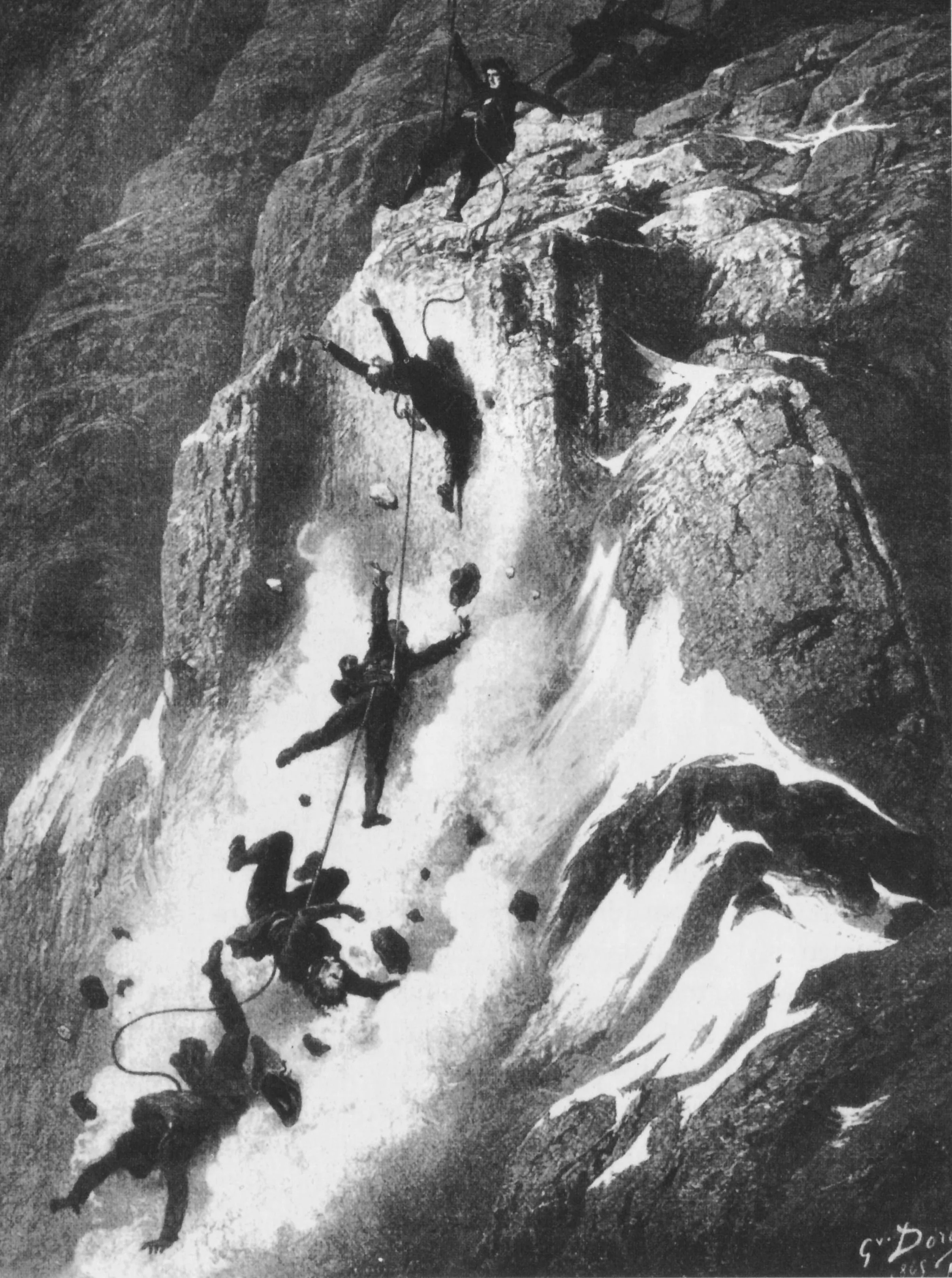
On July 14, 1865, Edward Whymper, Michel Croz, Peter Taugwalder Sr., Peter Taugwalder Jr., Lord Francis Douglas, Reverend Charles Hudson, and Douglas Hadow completed the Matterhorn's first ascent via the Hörnli Ridge — only for four teammates to fall to their deaths on the descent when a connecting rope snapped, ending the Golden Age of Alpinism.
Mountain Safety & Conditions Disclaimer: High-altitude climbing, glacial travel, and technical ascents entail severe objective risks including avalanches, serac collapses, rapid weather collapse, and altitude illness. Historical route descriptions and summit claims on Mountanity reflect documented archival sources and must not be used as live operational safety assessments. Local regulations, permits, and physical glacial topography change continuously.
Peer Review: Senior Editorial Board & Historical Reviewers • Editorial Standards
Official Expedition Narrative & Archival Record
No single day in the history of mountaineering carries the emotional, cultural, and symbolic weight of July 14, 1865 on the Matterhorn. For Edward Whymper, the ascent had consumed seven attempts over four summers. He had been turned back by storm, equipment failure, and bad fortune more times than he could count. Now, with a hastily assembled team of seven — himself, the supreme Chamonix guide Michel Croz, Zermatt guides Peter Taugwalder Sr. and his son Peter Jr., Lord Francis Douglas, the Reverend Charles Hudson of Cambridge, and the inexperienced young Douglas Hadow — Whymper attacked the mountain via the Hörnli Ridge on the Swiss eastern face, a line the guides of Zermatt had long believed feasible but never attempted in serious force. Departing from a high bivouac at 3,818 metres before dawn on July 14, the party climbed the rocky arête of the Hörnli in the crisp summer air. The technical difficulties proved less severe than the mountain's forbidding reputation had suggested. By early afternoon, Whymper and Michel Croz were racing the final metres to the summit in a burst of competitive excitement, Croz pulling off his boots and driving his hobnailed socks into the summit rock. They arrived first. Below, Carrel's Italian team could be seen far down the south face — beaten. Seven people stood on the 4,478-metre summit. The descent began in orderly fashion. Then near a patch of hard ice below the summit, Douglas Hadow slipped. Croz — who had stepped forward to help steady Hadow's feet — was jerked off his stance. The rope linking Croz, Hadow, Hudson, and Lord Douglas snapped. Four men fell. In absolute silence they swept down the north face. A cloud closed over the mountain. Whymper and the two Taugwalders, who had been secured on a separate rope, held the mountain by grip and will alone. They descended safely, arriving in Zermatt shattered. The rope that snapped was found to be old and thin — a reserve piece never intended for load-bearing use. Peter Taugwalder was accused in the Swiss press of cutting the rope to save himself, a charge investigated by Swiss courts and found to be entirely without foundation. The four victims were never fully recovered from the glacier. The disaster convulsed the Alpine Club, Parliament, and Queen Victoria, who reportedly asked whether mountain climbing could be banned. The end of the Golden Age had arrived on the summit of the Matterhorn.
Documented Team Composition
- Edward Whymper (Leader, United Kingdom)
- Michel-Auguste Croz (Senior Guide, France — Killed on Descent)
- Peter Taugwalder Sr. (Guide, Switzerland — Survived)
- Peter Taugwalder Jr. (Guide, Switzerland — Survived)
- Lord Francis Douglas (Climber, United Kingdom — Killed on Descent)
- Reverend Charles Hudson (Climber, United Kingdom — Killed on Descent)
- Douglas Hadow (Climber, United Kingdom — Killed on Descent)
Key Statistics & Topographic Figures
- Summit Date
- July 14, 1865
- Summit Altitude
- 4,478 m (14,692 ft)
- Casualties
- 4 climbers perished on descent
- Survivors
- 3 climbers (Whymper, Taugwalder Sr. & Jr.)
Archival Primary Source Quotations
“At 1:40 p.m. the world was at our feet, and the Matterhorn was conquered.”
Defined Alpine Terminology & Concepts
- Hörnli Shoulder
- The prominent snow and rock shoulder at 4,000 metres on the northeast ridge of the Matterhorn.
- Golden Age of Alpinism
- The prolific 1854–1865 era when the majority of 4,000-metre Alpine peaks were climbed for the first time.
Frequently Asked Questions: 1865 Whymper-Croz-Taugwalder Matterhorn First Ascent & Descent Disaster
What was the 1865 Whymper-Croz Matterhorn first ascent?
On July 14, 1865, Edward Whymper, Michel Croz, Peter Taugwalder Sr., and four companions made the historic first ascent of the Matterhorn via the Hörnli Ridge.
What tragedy occurred during the descent of the Matterhorn in 1865?
Douglas Hadow slipped on the upper slabs, dragging Croz, Charles Hudson, and Lord Francis Douglas to their deaths when the rope broke.
Who survived the 1865 Matterhorn disaster?
Edward Whymper, Peter Taugwalder Sr., and Peter Taugwalder Jr. survived when the frayed rope severed between Douglas and the elder Taugwalder.
How high is the Matterhorn summit reached by the 1865 party?
The summit reaches 4,478 metres (14,692 ft), straddling the Swiss-Italian frontier above Zermatt.
What kind of rope was used during the 1865 descent?
A lighter reserve sash-cord line had unfortunately been tied between Lord Douglas and Taugwalder, failing under the sudden shock load.
What was Queen Victoria's reaction to the Matterhorn accident?
Grief-stricken by the deaths of British gentlemen, Queen Victoria reportedly considered issuing a royal ban on alpine mountaineering.
Where are the victims of the 1865 disaster buried?
Michel Croz, Charles Hudson, and Douglas Hadow are buried in the Zermatt cemetery; Lord Douglas's body was never recovered.
Why is the 1865 climb considered the end of the Golden Age of Alpinism?
The conquest of the last great alpine peak, combined with the catastrophic loss of life, closed the era of unclimbed major Alpine summits.
Ascent Route & Topography

Hörnli Ridge (Normal Route)
The Hörnli Ridge (Hörnligrat) is the northeast ridge of the Matterhorn and the standard normal route from Zermatt. Starting from the Hörnli Hut (3,260m), the route follows the sharp, crumbling crystalline schist ridge, traversing steep rock steps, the Solvay emergency refuge (4,003m), and the steep upper Moseley Slabs. Fixed ropes assist climbers over the steep summit headwall (the Shoulder) before reaching the knife-edge Swiss summit crest at 4,478 meters. First climbed on July 14, 1865, by Edward Whymper's party.
Target Objective Peak



Matterhorn
The Matterhorn (Monte Cervino), at 4,478 meters (14,692 ft), is one of the most recognizable and dramatic pyramidal peaks in the world. Straddling the border between Zermatt, Switzerland, and Breuil-Cervinia, Italy, its four triangular faces match the cardinal points of the compass. Its historic first ascent by Edward Whymper on July 14, 1865, and the tragic fall of four teammates on the descent marked the end of the Golden Age of Alpinism.
Featured Expedition Climbers
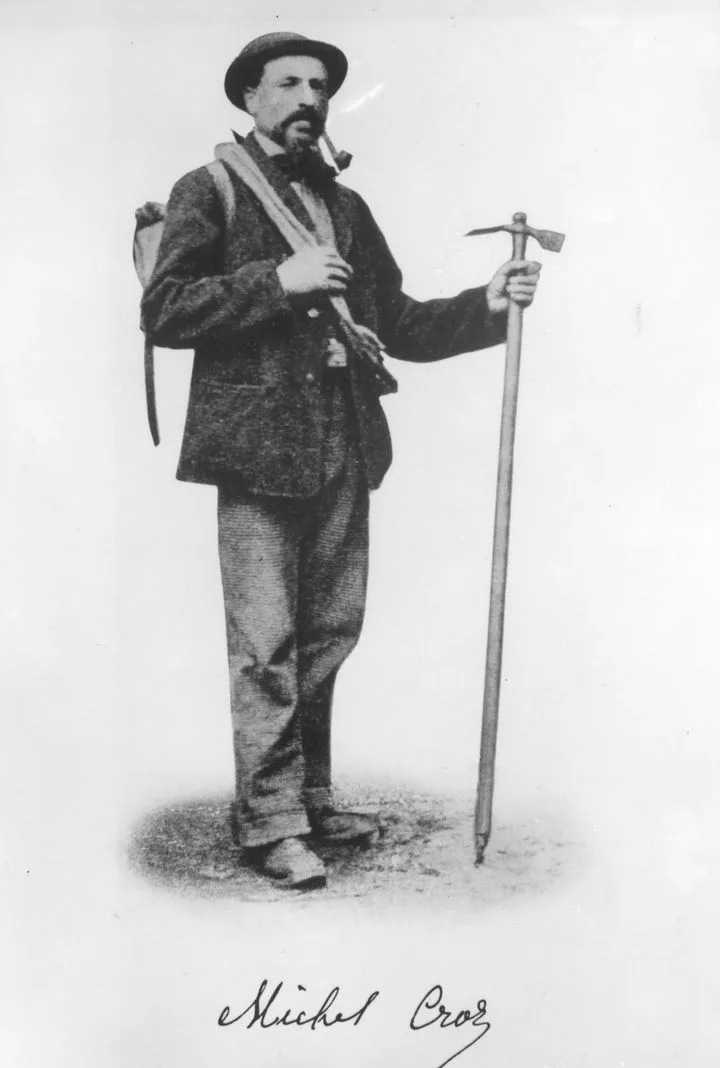
Michel-Auguste Croz
Born in Le Tour in the Chamonix valley on April 22, 1830, Michel-Auguste Croz was raised among the great glacier torrents and granite aiguilles that define the Mont Blanc massif. He became a professional mountain guide at an early age, quickly distinguishing himself for an uncanny speed and sure-footedness on Alpine terrain that seasoned British climbers found breathtaking. By the early 1860s, Edward Whymper — whose Matterhorn obsession would define the decade — specifically sought out Croz above all other guides, writing admiringly that Croz was the finest guide he had ever climbed with. Together they pioneered first ascents of extraordinary difficulty. In August 1864, Whymper, Croz, and a small team completed the first ascent of the Barre des Écrins (4,102 m), the highest peak of the Dauphiné Alps, a serious mixed route demanding navigation of steep glaciers and exposed ridges. In June 1865, Croz stood on the summit of the Grandes Jorasses above Chamonix — one of the most impressive north-facing walls in the entire Alps — completing another major first ascent. In the fateful summer of 1865, Croz joined Whymper's team for the Matterhorn. On July 14, Croz led the final ridge approach with characteristic boldness, racing ahead of the party and arriving at the summit alongside Whymper in a sprint. He sat on the summit to eat and rest before organizing the descent rope order. On the descent near a patch of snow above the couloirs that plunge into the Matterhorn Glacier, the inexperienced Douglas Hadow lost his footing. Croz, who had just stepped forward to assist Hadow, was pulled violently off his stance. Four men — Croz, Hudson, Hadow, and Lord Douglas — plunged 1,200 metres and fell to their deaths on the glacier below. Croz was thirty-five years old. His death devastated the British climbing community and effectively marked the end of the Golden Age of Alpinism.
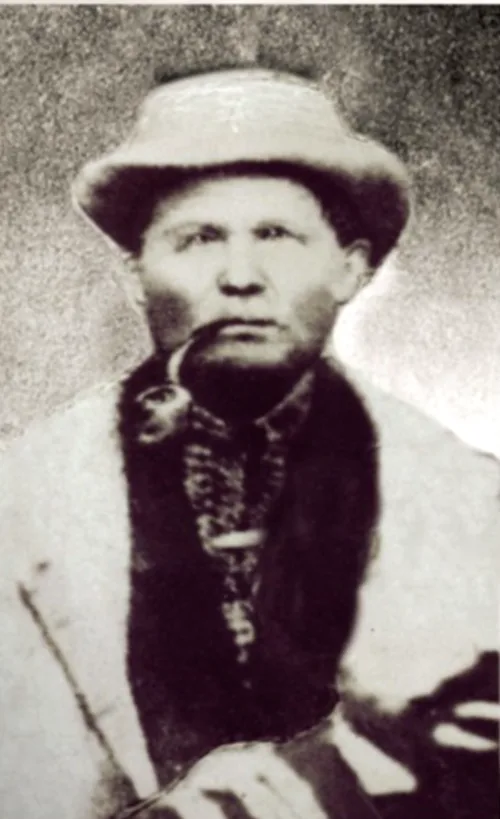
Peter Taugwalder Sr.
Born in Zermatt in 1820, Peter Taugwalder grew up in the shadow of the Matterhorn's overwhelming pyramid, a peak that every guide in the village had studied for decades but no one dared to attempt. As a chamois hunter and experienced mountain guide, Taugwalder had learned the technical language of ice and rock from the Hörnli ridge and Zmutt glacier approaches since his youth. By the early 1860s, he had established himself as one of Zermatt's most respected and physically powerful guides. In the summer of 1865, Taugwalder accepted the pivotal role of senior guide on Edward Whymper's Matterhorn team alongside the legendary Chamonix guide Michel-Auguste Croz, Lord Francis Douglas, the Reverend Charles Hudson, and Douglas Hadow. On July 14, 1865, the party of seven departed Whymper's high bivouac at 3,818 metres before dawn and scrambled up the Hörnli ridge's rocky arête. Near the summit, Michel Croz and Whymper raced the last few metres to the top, confirming that Jean-Antoine Carrel's rival Italian team ascending the opposite face had been beaten. The seven men stood triumphant on the summit before beginning the descent. Near a patch of hard snow, the inexperienced Douglas Hadow slipped, pulling Charles Hudson and Michel Croz off their footholds. The connecting rope snapped — almost certainly due to old, lightweight rope used at that section — and four men tumbled silently over the edge. Taugwalder, Whymper, and young Peter Taugwalder Jr. held themselves to the mountain by sheer grip and survived. Taugwalder was subsequently accused in the Swiss press of deliberately cutting the rope to save himself, a charge rigorously investigated and ultimately found to be entirely without foundation by Swiss authorities. The accusation cast a shadow over his final decades, and Taugwalder emigrated to the United States briefly before returning to Zermatt, where he died in 1888.
Associated Historical Chronicles & Stories
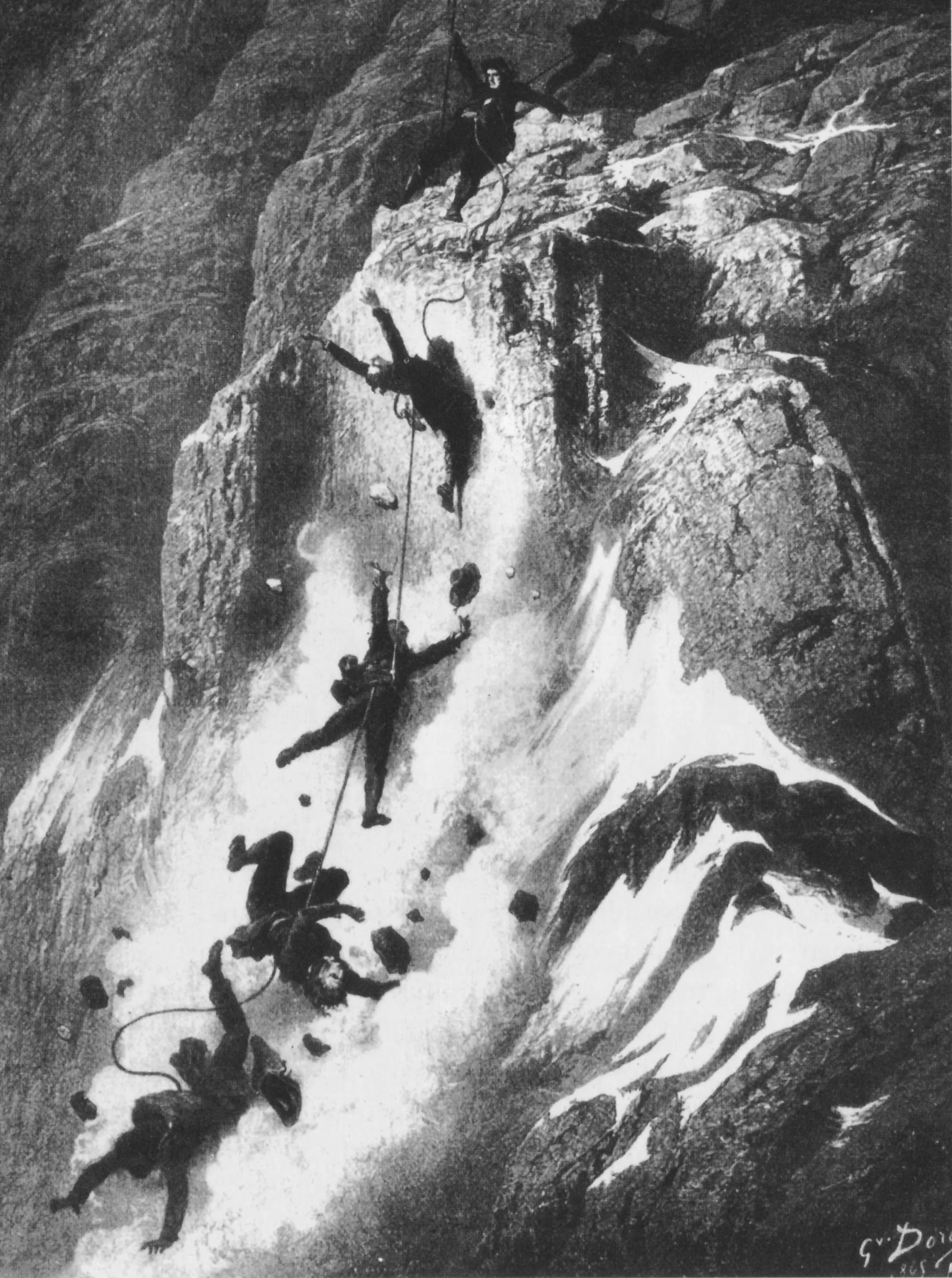
Triumph and Catastrophe: The 1865 Matterhorn First Ascent and the Broken Rope
On July 14, 1865, Edward Whymper, Michel Croz, and Peter Taugwalder Sr. claimed the summit of the Matterhorn, only for four teammates to plunge to their deaths on descent when the rope severed, closing the Golden Age of Alpinism.
Documented Sources & Archival Citations
- Scrambles Amongst the Alps in the Years 1860–69(Edward Whymper / John Murray, London)
Supporting claim: Primary first-hand account by Edward Whymper of the Matterhorn summit day, the descent, the rope failure, and the four deaths
Accessed/Documented: 2026 - The Matterhorn(Guido Rey / T. Fisher Unwin, London)
Supporting claim: Comprehensive Italian and Swiss historical account of the 1865 ascent and the investigation into the rope-cutting allegations against Taugwalder
Accessed/Documented: 2026 - The Alpine Journal: The Matterhorn Disaster — Official Inquiry (1865)(The Alpine Club, London)
Supporting claim: Official Alpine Club proceedings and Swiss judicial records from the 1865 Matterhorn disaster inquiry
Accessed/Documented: 2026