Into the Steaming Cauldron: Reiss and Escobar's 1872 Conquest of Cotopaxi
On November 28, 1872, German volcanologist Wilhelm Reiss and Colombian explorer Ángel María Escobar made the historic first ascent of Volcán Cotopaxi (5,897 m), standing on the steaming rim of its 800-metre active caldera.
Mountain Safety & Conditions Disclaimer: High-altitude climbing, glacial travel, and technical ascents entail severe objective risks including avalanches, serac collapses, rapid weather collapse, and altitude illness. Historical route descriptions and summit claims on Mountanity reflect documented archival sources and must not be used as live operational safety assessments. Local regulations, permits, and physical glacial topography change continuously.
Peer Review: Senior Editorial Board & Historical Reviewers • Editorial Standards
Into the Steaming Cauldron: Reiss and Escobar’s 1872 Conquest of Cotopaxi
The Untamed Furnace of the Equator
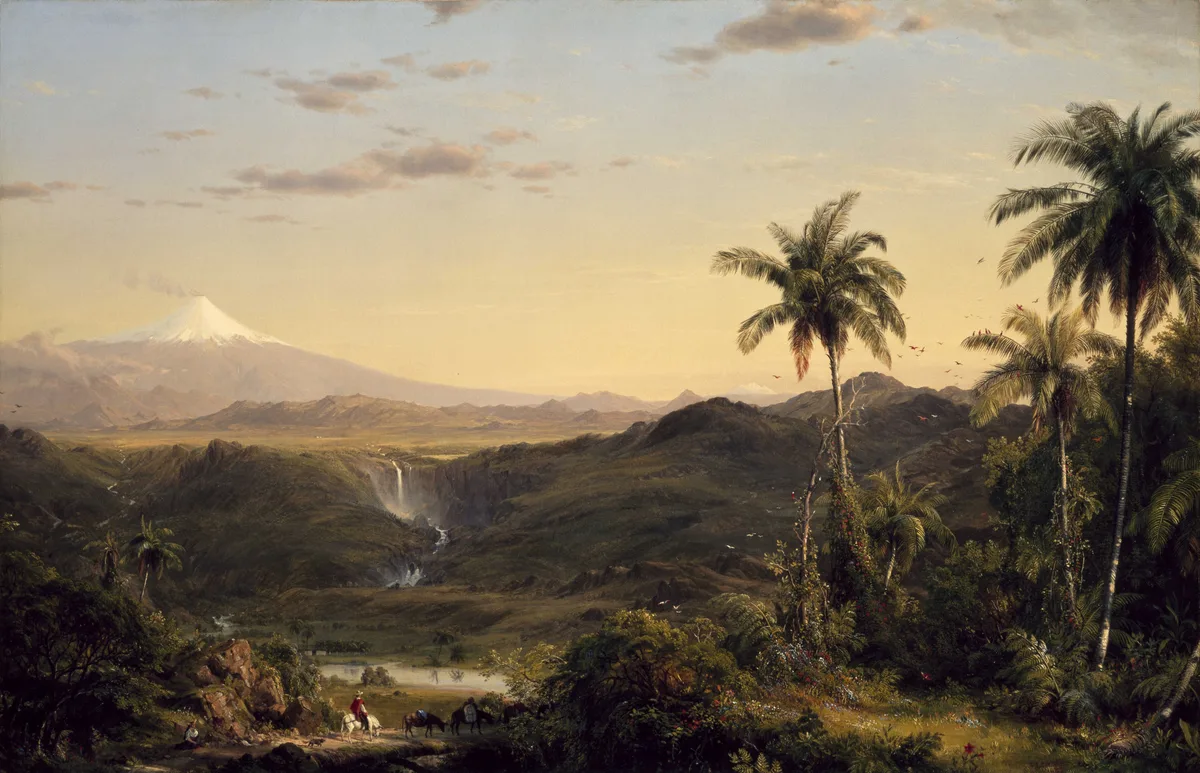
Rising symmetrically like a flawless porcelain cone above the Inter-Andean valley, Volcán Cotopaxi (5,897 m) was feared across northern South America as a sleeping demon. Its catastrophic eruptions in 1742, 1768, and 1853 had obliterated settlements, buried fertile plains in volcanic mudflows (lahars), and rained ash onto distant Pacific ports. For centuries, Spanish chroniclers, indigenous peoples, and visiting European naturalists had deemed the volcano utterly impossible to climb.
Enter German geologist and volcanologist Wilhelm Reiss. Having arrived in Ecuador in 1868, Reiss spent four years mapping volcanic structures. Convinced that scientific progress required inspecting volcanic mechanisms at their source, Reiss resolved to stand on Cotopaxi’s crater rim. Joining him was Ángel María Escobar, a remarkably resilient Colombian-Ecuadorian explorer whose high-altitude fortitude and terrain instincts proved indispensable.
“To behold the colossal crater of Cotopaxi smoking peacefully beneath an azure sky is to witness the primordial workshop of the planet.” — Wilhelm Reiss, Über eine Ersteigung des Vulkans Cotopaxi
The Climb of November 28, 1872
On November 27, 1872, Reiss and Escobar established an advance camp on the southwestern ash slopes at approximately 4,600 metres. Local porters fled back to the safety of the valley, terrified of volcanic tremors and poisonous gases. Undaunted, the two men huddled through a freezing night in their light canvas shelter.
At 4:00 AM on November 28, roped together and wielding wooden-shafted ice axes, Reiss and Escobar launched their summit push. The lower cone consisted of treacherous volcanic ash and loose scoria, into which their boots sank to the ankles with every upward lunge. Above 5,100 metres, they encountered hard glacial ice mantling the volcano’s upper slopes.
Cutting steps into 40-degree firn, Reiss and Escobar carefully circumvented giant transverse crevasses whose blue depths seemed bottomless. As they approached the looming dark cliff of Yanasacha (‘Black Rock’), sulfuric fumes began drifting across the snowfields. The air became acrid and thin, burning their throats and eyes.
Standing on the Rim of Fire
At 10:30 AM, after six hours of continuous climbing, Reiss and Escobar pulled themselves up the final firn crest and stood upon the northern rim of Cotopaxi’s summit crater at 5,897 metres.
The sight that greeted them was staggering. An immense, nearly circular caldera stretched eight hundred metres across, plunging precipitously over three hundred metres to a floor covered in steaming sulfur terraces and incandescent fissures. Towering columns of steam and sulfur dioxide drifted into the crystalline Andean sky.
Reiss set up his barometric apparatus to calculate the volcano’s true elevation, confirming it at 5,897 metres. Meanwhile, Escobar bravely traversed along the inner crater lip, gathering sulfur deposits and volcanic basalt specimens. For nearly two hours, the German scientist and the South American mountaineer surveyed this unearthly natural furnace before beginning their descent.
A Landmark in Andean Alpinism
By late afternoon, Reiss and Escobar reached the safety of the paramo, bringing back proof that Cotopaxi’s summit could be conquered. Their triumph was not merely a personal victory; it marked the first time that a native South American mountaineer, Ángel María Escobar, had achieved the first ascent of an active 5,800-metre volcano.
Wilhelm Reiss published his findings in Berlin in 1873, demystifying the giant of the northern Andes and paving the way for Edward Whymper’s famous overnight camp in the crater eight years later. The 1872 ascent remains one of the crowning achievements of nineteenth-century exploratory geology and alpine courage.
Key Statistics & Topographic Figures
- Category
- Andean Pioneers
Archival Subject
- Reading Time
- 14 min read
Narrative Length
- Key Mountain
- cotopaxi
Objective
- Ascent Route
- cotopaxi-normal-route
Topography
- Verification
- Editorially Verified
Archival Standard
Archival Primary Source Quotations
“In the mountains, truth is etched in ice and granite; every step requires unwavering respect for the heights.”
Defined Alpine Terminology & Concepts
- Summit Push
- The final continuous climbing effort from the highest established camp to the mountain apex and back.
- Death Zone Chronicle
- A verified, research-backed historical narrative documenting the human, technical, and environmental realities of an alpine expedition.
Frequently Asked Questions: Into the Steaming Cauldron: Reiss and Escobar's 1872 Conquest of Cotopaxi
What is the core chronicle and subject of "Into the Steaming Cauldron: Reiss and Escobar's 1872 Conquest of Cotopaxi"?
On November 28, 1872, German volcanologist Wilhelm Reiss and Colombian explorer Ángel María Escobar made the historic first ascent of Volcán Cotopaxi (5,897 m), standing on the steaming rim of its 800-metre active caldera.
Which mountain peaks and routes are featured in "Into the Steaming Cauldron: Reiss and Escobar's 1872 Conquest of Cotopaxi"?
This narrative documents climbs on cotopaxi along the cotopaxi-normal-route in Ecuador.
Which documented expedition is chronicled in this story?
This historical chronicle captures the events of the 1872-reiss-escobar-cotopaxi-first-ascent, verified through contemporary journals and archival records.
Who authored and researched this archival chronicle?
Authored and researched by Mountainity Historical Research Desk, drawing on primary eyewitness testimonies, alpine club registries, and verified summit logs.
What makes this high-altitude chronicle historically significant?
Categorized under "Andean Pioneers", this chronicle preserves critical lessons in alpine leadership, survival, tactical speed, and human endurance in the death zone.
Related Mountains
Cotopaxi
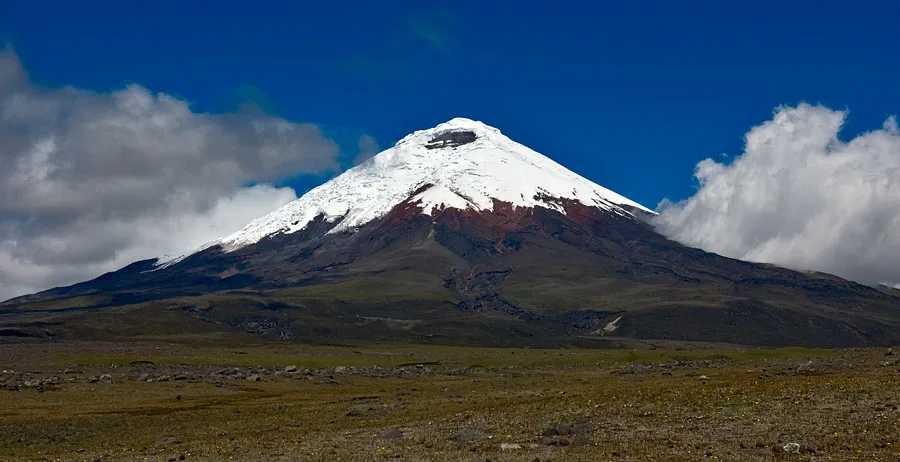
Volcán Cotopaxi is a near-perfect symmetrical stratovolcano rising to 5,897 metres in the Eastern Cordillera of the Ecuadorian Andes. One of the highest historically active volcanoes on Earth, its snow-mantled cone encases an 800-metre-wide crater emitting sulfurous steam vents and fumaroles. The volcano was first climbed on November 28, 1872, by German geologist Wilhelm Reiss and Colombian-Ecuadorian explorer Ángel María Escobar, who spent hours surveying the inner crater rim.
Documented Sources & Archival Citations
- Über eine Ersteigung des Vulkans Cotopaxi(Wilhelm Reiss / Zeitschrift der Deutschen Geologischen Gesellschaft)
Supporting claim: Firsthand scientific report and chronological narrative of the 1872 Cotopaxi first ascent
Accessed/Documented: 1873 - Travels Amongst the Great Andes of the Equator(Edward Whymper / John Murray)
Supporting claim: Historical verification of the Reiss and Escobar crater rim ascent on Cotopaxi
Accessed/Documented: 1892