Conquering the Crown of Europe: The 1874 First Ascent of Mount Elbrus West Peak
On July 28, 1874, Florence Craufurd Grove, Frederick Gardiner, Horace Walker, Peter Knubel, and Ahiya Sottaev stood on Elbrus West Peak (5,642 m), conquering Europe's highest point.
Mountain Safety & Conditions Disclaimer: High-altitude climbing, glacial travel, and technical ascents entail severe objective risks including avalanches, serac collapses, rapid weather collapse, and altitude illness. Historical route descriptions and summit claims on Mountanity reflect documented archival sources and must not be used as live operational safety assessments. Local regulations, permits, and physical glacial topography change continuously.
Peer Review: Senior Editorial Board & Historical Reviewers • Editorial Standards
Conquering the Crown of Europe: The 1874 First Ascent of Mount Elbrus West Peak
The Battle of the Twin Peaks
Following Killar Khashirov’s pioneer 1829 ascent of the Eastern Peak of Mount Elbrus, imperial Russian topographers conducted precise theodolite triangulations across the central Caucasus. Their measurements revealed a startling geographical reality: the western volcanic dome of Elbrus rose to 5,642 metres, surpassing the eastern dome (5,621 m) by twenty-one vertical metres.
The true continental summit of Europe—the crowning jewel of Eurasian geography—remained completely untouched by human footsteps.
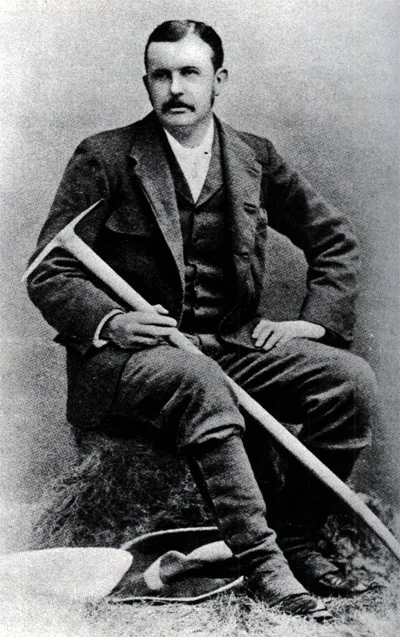
In 1874, Florence Craufurd Grove, an elite thirty-six-year-old British mountaineer and prominent member of the Alpine Club, resolved to mount a definitive expedition to claim this supreme prize. Grove recruited an extraordinary team:
- Frederick Gardiner, Scottish ship-owner and brilliant pioneer of guideless climbing.
- Horace Walker, veteran of first ascents of Pointe Walker on the Grandes Jorasses and the Schreckhorn.
- Peter Knubel, renowned Swiss mountain guide from Zermatt.
- Ahiya Sottaev, legendary Balkar mountain hunter and guide from the Baksan Valley, whose profound understanding of Caucasian snow conditions proved vital.
“There lay Elbruz, great monarch of the range, looking down with icy disdain upon two continents.” — Florence Craufurd Grove, The Frosty Caucasus
Into the Frozen Baksan Gorges
Traveling via the Black Sea and Georgia, Grove’s party crossed the high Caucasian passes into the rugged valleys of Kabardino-Balkaria. Arriving in the village of Terskol at the base of Elbrus, they engaged Sottaev and local Balkar porters.
On July 26, 1874, the climbers shouldered heavy packs and began their ascent of the southern glaciated volcano flank. Climbing past cascading glacial streams, they gained the volcanic lava ridges that would later become known as the Garabashi and Pastukhov Rocks (4,700 m).
At 4,200 metres, amidst fields of basalt debris and wind-sculpted seracs, the team set up their high bivouac. The night was savage: temperatures plummeted to -15°C, and fierce gale-force gusts ripped across the exposed volcanic plateau.
The Push Across the Saddle
At 2:00 AM on July 28, 1874, the climbers roped together and began their summit push under freezing moonlight. Peter Knubel and Ahiya Sottaev rotated in the lead, step-chopping with their heavy wood-shafted ice axes across hard volcanic firn.
By dawn, they entered the vast, wind-scoured depression known as the Saddle (5,416 m), which separates the twin giants of Elbrus. Here, the thin air hit them with punishing intensity. Every step required three deep gasping breaths. Altitude sickness induced pounding migraines and bitter nausea, but Grove, Gardiner, and Walker pressed steadily upward.
Turning toward the Western Summit, they faced a steep 35-degree snow slope heavily encrusted with brittle rime ice. Knubel hacked out deep foot-ledges, anchoring the rope as Gardiner and Grove followed in his steps.
Standing on Europe’s Highest Throne
At 11:30 AM on July 28, 1874, Florence Craufurd Grove, Frederick Gardiner, Horace Walker, Peter Knubel, and Ahiya Sottaev stepped onto the broad, rounded snow dome of the Western Summit at 5,642 metres.
They stood upon the absolute highest point on the European continent.
Surrounding them was an awe-inspiring 360-degree vista: to the south, the ferocious jagged granite teeth of Ushba, Shkhara, and Dykhtau stood like frozen sentinels against the azure sky; to the north, the boundless green steppes of Russia stretched into infinity.
Ahiya Sottaev, who had also accompanied Freshfield in 1868, proudly became the first man in history to summit both peaks of Mount Elbrus. Grove’s celebrated chronicle, The Frosty Caucasus, published the following year, became an international best-seller and permanently enshrined this 1874 expedition in the pantheon of global alpine exploration.
Key Statistics & Topographic Figures
- Category
- Caucasian Pioneers
Archival Subject
- Reading Time
- 16 min read
Narrative Length
- Key Mountain
- mount-elbrus
Objective
- Ascent Route
- elbrus-south-normal-route
Topography
- Verification
- Editorially Verified
Archival Standard
Archival Primary Source Quotations
“In the mountains, truth is etched in ice and granite; every step requires unwavering respect for the heights.”
Defined Alpine Terminology & Concepts
- Summit Push
- The final continuous climbing effort from the highest established camp to the mountain apex and back.
- Death Zone Chronicle
- A verified, research-backed historical narrative documenting the human, technical, and environmental realities of an alpine expedition.
Frequently Asked Questions: Conquering the Crown of Europe: The 1874 First Ascent of Mount Elbrus West Peak
What is the core chronicle and subject of "Conquering the Crown of Europe: The 1874 First Ascent of Mount Elbrus West Peak"?
On July 28, 1874, Florence Craufurd Grove, Frederick Gardiner, Horace Walker, Peter Knubel, and Ahiya Sottaev stood on Elbrus West Peak (5,642 m), conquering Europe's highest point.
Which mountain peaks and routes are featured in "Conquering the Crown of Europe: The 1874 First Ascent of Mount Elbrus West Peak"?
This narrative documents climbs on mount-elbrus along the elbrus-south-normal-route in Russia.
Which documented expedition is chronicled in this story?
This historical chronicle captures the events of the 1874-grove-gardiner-elbrus-west-peak-first-ascent, verified through contemporary journals and archival records.
Who authored and researched this archival chronicle?
Authored and researched by Mountainity Historical Research Desk, drawing on primary eyewitness testimonies, alpine club registries, and verified summit logs.
What makes this high-altitude chronicle historically significant?
Categorized under "Caucasian Pioneers", this chronicle preserves critical lessons in alpine leadership, survival, tactical speed, and human endurance in the death zone.
Related Mountains
Mount Elbrus
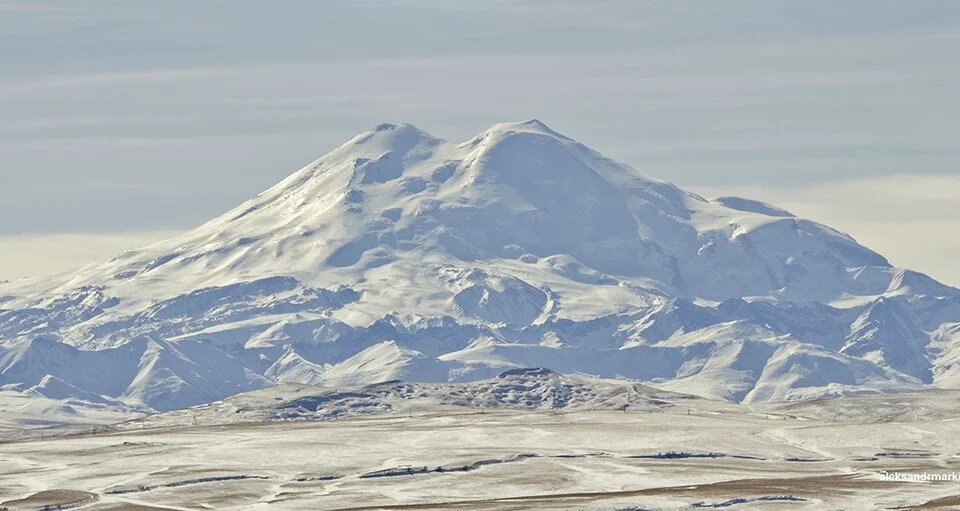
Mount Elbrus is the highest mountain in Russia and Europe, soaring to 5,642 metres as the tenth-most topographically prominent peak on Earth and one of the Seven Summits. Situated in the Russian Caucasus near the Georgian border, this colossal dormant stratovolcano features two ice-capped volcanic domes separated by a high saddle at 5,416 metres. The eastern summit (5,621 m) was first climbed in 1829 by Circassian scout Killar Khashirov, while the true continental high point on the western summit (5,642 m) was conquered in 1874 by Florence Craufurd Grove, Frederick Gardiner, Horace Walker, Peter Knubel, and Balkar guide Ahiya Sottaev.
Documented Sources & Archival Citations
- The Frosty Caucasus(Florence Craufurd Grove / Longmans, Green, and Co.)
Supporting claim: Firsthand expedition narrative of the 1874 conquest of Elbrus West Peak
Accessed/Documented: 1875 - The Alpine Journal: The Ascent of Elbruz(The Alpine Club UK)
Supporting claim: Official expedition paper detailing the first ascent of Europe's true summit
Accessed/Documented: 1875