King of the Andes: Whymper and the Carrels Conquer Chimborazo in 1880
On January 4, 1880, legendary British climber Edward Whymper and Italian guides Louis Carrel and Jean-Antoine Carrel conquered Chimborazo (6,263 m), standing upon Earth's closest surface point to the Sun.
Mountain Safety & Conditions Disclaimer: High-altitude climbing, glacial travel, and technical ascents entail severe objective risks including avalanches, serac collapses, rapid weather collapse, and altitude illness. Historical route descriptions and summit claims on Mountanity reflect documented archival sources and must not be used as live operational safety assessments. Local regulations, permits, and physical glacial topography change continuously.
Peer Review: Senior Editorial Board & Historical Reviewers • Editorial Standards
King of the Andes: Whymper and the Carrels Conquer Chimborazo in 1880
A Reunion of Matterhorn Rivals
Fifteen years after the dramatic and tragic conquest of the Matterhorn in 1865, Edward Whymper turned his eyes to South America. European alpinism had entered a new phase: having conquered the major peaks of the Alps, the world’s greatest climbers sought virgin cordilleras across the globe. Whymper chose the equatorial Andes of Ecuador, determined to investigate the physiological mysteries of altitude sickness and claim the unclimbed crown of Nevado Chimborazo (6,263 m).
To ensure success on equatorial ice, Whymper knew he needed the most formidable icecraft in Europe. In an extraordinary act of reconciliation, Whymper hired his former Matterhorn adversary, the legendary Jean-Antoine Carrel of Valtournenche, alongside Carrel’s exceptionally agile cousin, Louis Carrel. The bitter rivalry of 1865 was set aside in the service of high-altitude exploration.
“We were feverish, our faces were flushed, our breathing was quick and laborious… it seemed that our bodies were suddenly incapable of work.” — Edward Whymper, Travels Amongst the Great Andes of the Equator
The Agony of Acclimatization
Arriving in Guayaquil in December 1879, Whymper and the Carrels marched inland across rainforests and ascending paramo valleys to establish their base camp on Chimborazo’s western slopes. On December 27, they established a high tent camp at 5,000 metres.
Within hours of arriving at 5,000 metres, all three men were struck down by acute mountain sickness with unprecedented violence. Jean-Antoine Carrel lay prostrated in his sleeping bag, gasping for air; Louis Carrel suffered excruciating headaches; Whymper himself experienced fever, burning lungs, and dizziness. Unlike modern climbers with pressurized gear and pharmaceuticals, Whymper studied their misery with clinical detachment, recording pulse rates, body temperatures, and barometric drops every hour.
After four days of enforced rest, their bodies adapted. On the morning of January 4, 1880, roped together under freezing starlight at 5:35 AM, the trio stepped onto the virgin glacier.
Conquering the Equatorial Dome
Louis Carrel took the lead, wielding his long Valtournenche ice axe to cut steps into steep 45-degree firn ramps. Scrambling past the colossal basalt buttress later christened El Castillo (5,350 m), the climbers surmounted crevasses and brittle penitente fields. Above 5,800 metres, where Humboldt had been turned back seventy-eight years before, they traversed the western upper plateau.
At 3:45 PM, gasping in the desperately thin air, they conquered the western crest: Cumbre Veintimilla (6,230 m). But as the clouds momentarily parted, Whymper spotted a second, higher snow dome several hundred metres to the east. Despite debilitating exhaustion and fading daylight, the Carrels refused to claim a partial victory.
Trudging through waist-deep, powdery snow where every step required three deep gasps, the three men reached the highest point of the plateau at 4:45 PM. Standing atop Cumbre Whymper at 6,263 metres, they stood higher than any humans had ever climbed. Due to Earth’s equatorial bulge, they were standing at the point on Earth’s surface furthest from the planetary core—closer to the Sun and the stars than any living soul.
Silencing the Skeptics
When Whymper and the Carrels returned to Quito, they were met with polite incredulity. Local residents and foreign diplomats refused to believe that foreign climbers had stood atop Chimborazo, a peak deemed unclimbable by generations of locals.
Infuriated by the slur on his honor and the Carrels’ skill, Whymper staged a masterstroke. On July 3, 1880, he returned to Chimborazo and climbed it a second time—accompanied by two Ecuadorian companions, Francisco Campaña and David Beltrán—via an entirely new route on the northwest flank. As they stood on the summit, Volcán Cotopaxi sixty miles to the northeast suddenly erupted, sending a colossal black ash plume twenty thousand feet into the sky. Whymper sketched the dramatic scene from Chimborazo’s icy summit, securing irrefutable proof that forever silenced his detractors.
Key Statistics & Topographic Figures
- Category
- Andean Pioneers
Archival Subject
- Reading Time
- 16 min read
Narrative Length
- Key Mountain
- chimborazo
Objective
- Ascent Route
- chimborazo-whymper-route
Topography
- Verification
- Editorially Verified
Archival Standard
Archival Primary Source Quotations
“In the mountains, truth is etched in ice and granite; every step requires unwavering respect for the heights.”
Defined Alpine Terminology & Concepts
- Summit Push
- The final continuous climbing effort from the highest established camp to the mountain apex and back.
- Death Zone Chronicle
- A verified, research-backed historical narrative documenting the human, technical, and environmental realities of an alpine expedition.
Frequently Asked Questions: King of the Andes: Whymper and the Carrels Conquer Chimborazo in 1880
What is the core chronicle and subject of "King of the Andes: Whymper and the Carrels Conquer Chimborazo in 1880"?
On January 4, 1880, legendary British climber Edward Whymper and Italian guides Louis Carrel and Jean-Antoine Carrel conquered Chimborazo (6,263 m), standing upon Earth's closest surface point to the Sun.
Which mountain peaks and routes are featured in "King of the Andes: Whymper and the Carrels Conquer Chimborazo in 1880"?
This narrative documents climbs on chimborazo along the chimborazo-whymper-route in Ecuador.
Which documented expedition is chronicled in this story?
This historical chronicle captures the events of the 1880-whymper-carrel-chimborazo-first-ascent, verified through contemporary journals and archival records.
Who authored and researched this archival chronicle?
Authored and researched by Mountainity Historical Research Desk, drawing on primary eyewitness testimonies, alpine club registries, and verified summit logs.
What makes this high-altitude chronicle historically significant?
Categorized under "Andean Pioneers", this chronicle preserves critical lessons in alpine leadership, survival, tactical speed, and human endurance in the death zone.
Related Mountains
Chimborazo
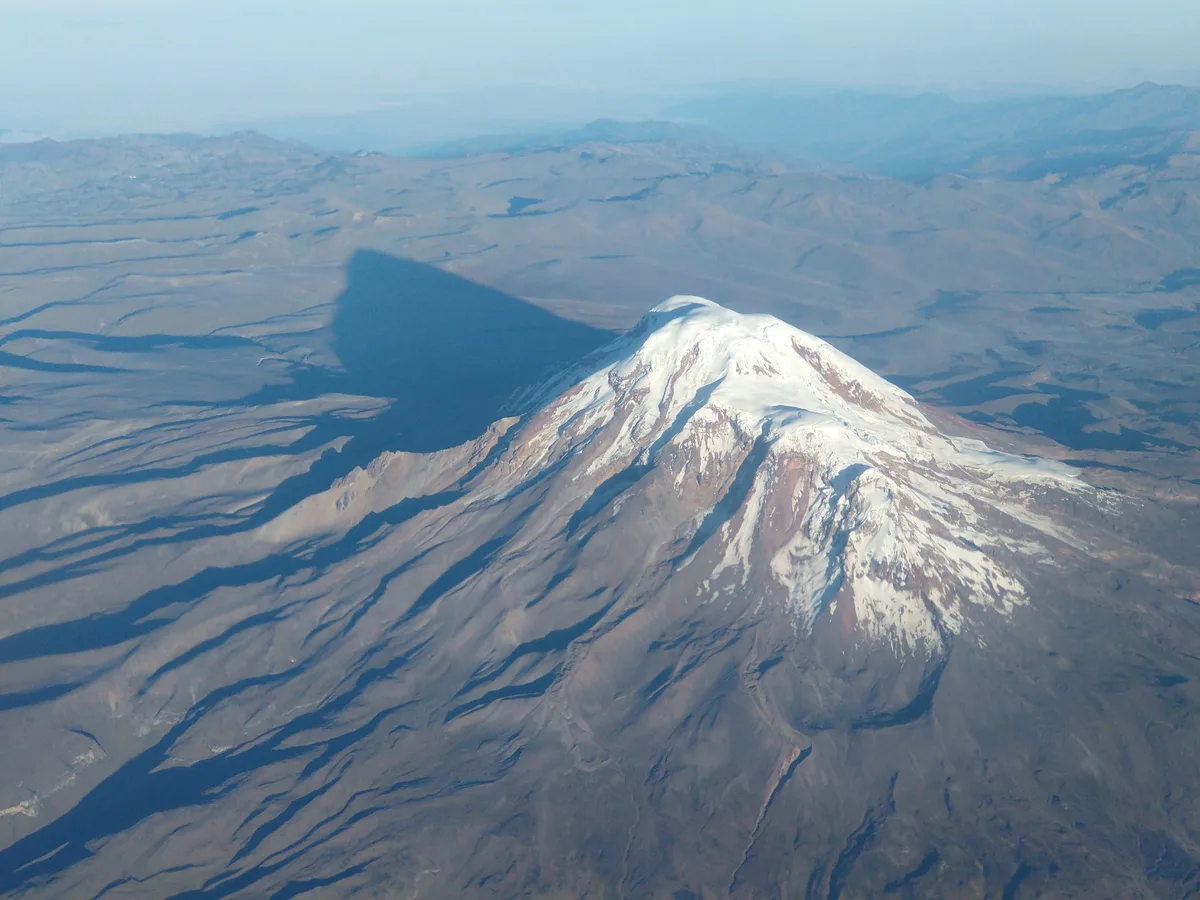
Nevado Chimborazo is a colossal 6,263-metre glaciated stratovolcano in the Cordillera Occidental of Ecuador. Because Earth is an oblate spheroid with an equatorial bulge, Chimborazo's summit is the furthest terrestrial point from the center of the Earth (6,384.4 km), making it the closest place on the planet's surface to the Sun. Renowned in exploration history, it was attempted by Alexander von Humboldt in 1802 and finally summited on January 4, 1880, by Edward Whymper alongside Val Tournanche alpine guides Louis Carrel and Jean-Antoine Carrel.
Documented Sources & Archival Citations
- Travels Amongst the Great Andes of the Equator(Edward Whymper / John Murray)
Supporting claim: Primary autobiographical account and technical data of the 1880 Chimborazo first ascent
Accessed/Documented: 1892 - The Matterhorn and Its Master: The Life of Edward Whymper(Frank S. Smythe / Hodder & Stoughton)
Supporting claim: Comprehensive historical evaluation of Whymper and the Carrels in the Andes
Accessed/Documented: 1940