Christmas on the Cloud Piercer: The 1894 First Ascent of Mount Cook
The race against European aristocrats to claim New Zealand's greatest glaciated crown on Christmas Day 1894.
Mountain Safety & Conditions Disclaimer: High-altitude climbing, glacial travel, and technical ascents entail severe objective risks including avalanches, serac collapses, rapid weather collapse, and altitude illness. Historical route descriptions and summit claims on Mountanity reflect documented archival sources and must not be used as live operational safety assessments. Local regulations, permits, and physical glacial topography change continuously.
Peer Review: Senior Editorial Board & Historical Reviewers • Editorial Standards
Christmas on the Cloud Piercer: The 1894 First Ascent of Mount Cook
The Threat of Imperial Conquest
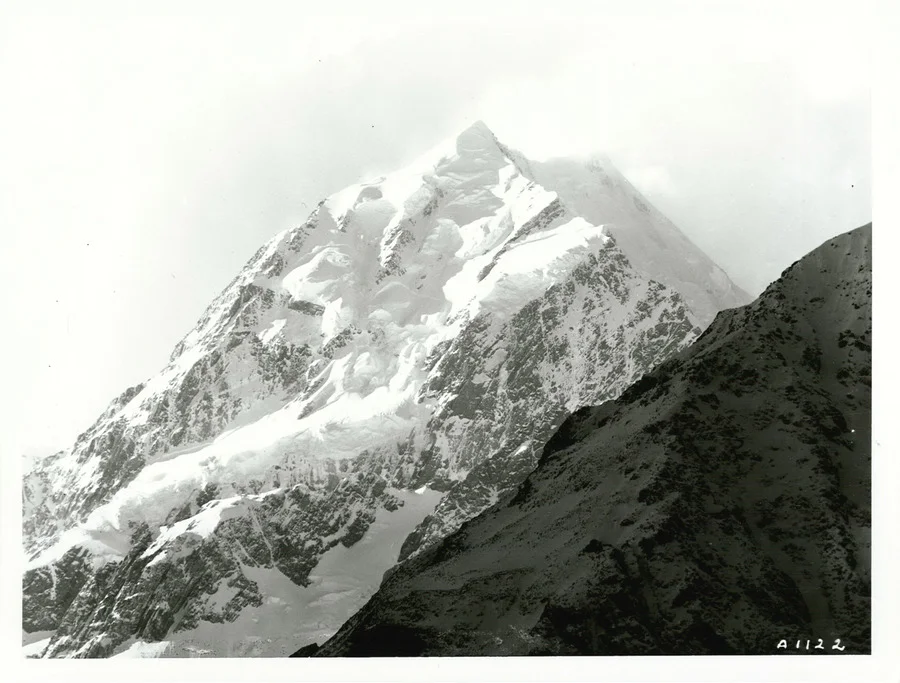
In the late Victorian summer of 1894, the glaciated spires of New Zealand’s Southern Alps—known to Māori as Kā Tiritiri o te Moana—stood untouched by human feet. Towering above the Tasman Glacier rose Aoraki, the great cloud piercer, soaring to 3,724 metres above the tempestuous waves of the South Pacific Ocean.
For years, colonial mountaineers had looked up at its sheer icefaces with awe and hesitation. Then, telegrams flashed across the South Island: Edward FitzGerald, a wealthy English gentleman of the Alpine Club in London, was sailing for New Zealand accompanied by Mattias Zurbriggen, one of the most famous professional mountain guides in Switzerland. FitzGerald’s openly declared goal was simple: to claim the maiden first ascent of New Zealand’s supreme peak for the British Empire and the Swiss guides.
To local high-country climbers, this news felt like an existential challenge. If Mount Cook was to be conquered, it had to be won by the young men who lived beneath its shadow.
“We felt that if any men had a right to Mount Cook, it was the lads of South Canterbury. We could not allow a foreign party to walk away with our greatest prize without striking a blow.” — Tom Fyfe, Personal Recollections, 1895
The Three Amateurs Assemble
Leading the resistance was Thomas Camden Fyfe, a 24-year-old plumber from Timaru with an instinctive genius for reading mountain topography. Fyfe was not a gentleman mountaineer of independent wealth; he worked with his hands and spent his weekends exploring the river gorges and scree slopes of Canterbury.
To mount a rapid assault before FitzGerald’s steamship docked, Fyfe recruited two companions: George Graham, a tough 27-year-old high-country bushman from the Rangitata district, and John Michael “Jack” Clarke, an extraordinarily agile 19-year-old youth from the West Coast who possessed unmatched natural balance on glaciers.
Their equipment was shockingly humble compared to the sophisticated gear of European alpinists. They had no 10-point crampons, no purpose-built down parkas, and no scientific barometers. Their footwear consisted of heavy leather work boots studded with hand-hammered iron hobs; their rope was standard hemp; their ice axes were heavy, custom-forged tools designed more like woodman’s implements than delicate Swiss picks.
Christmas Eve in the Hooker Valley
On December 24, 1894, Fyfe, Graham, and Clarke packed basic provisions of mutton, damper, and tea, trekking up the rugged Hooker Valley beneath threatening skies. As the sun set behind the Mount Cook Range, bathing the shattered ice cliffs of Mount Sefton in crimson light, the trio rolled themselves into wool blankets beneath an overhanging boulder.
At 4:00 AM on Christmas morning—December 25, 1894—the sky cleared into cold, crystalline blue. Roping up in the twilight, Fyfe surveyed the colossal western defenses of Mount Cook. Rather than attempting the avalanching ice gullies of the Linda Glacier, Fyfe chose a bold, entirely untested direct assault: scrambling up the rocky couloirs to the Green Saddle and ascending the razor-sharp North Ridge.
The Battle on the Ice Ridge
Reaching the Green Saddle, the three climbers confronted the true savagery of Southern Alps mountaineering. Above them, the North Ridge narrowed to a knife-edge crest of wind-glazed ice, flanked on one side by vertical drops of 1,200 metres into the Hooker Glacier and on the other by plunging precipices feeding the Grand Plateau.
Without crampons, walking on 50-degree ice was fatal. Every step had to be carved by hand. Fyfe took the lead, swinging his heavy axe rhythmically into the frozen wall. Chips of crystalline blue ice rained down on Graham and young Clarke, who anchored the rope from small notches cut into the ridge. Hour after hour, Fyfe hacked footholds, his hands numb with frost, his shoulders burning with fatigue.
When loose greywacke rock towers blocked the crest, Clarke and Graham provided a shoulder stand, boosting Fyfe up the shattered overhangs. The rock in the Southern Alps was notoriously fractured—“rotten rock” that came away in chunks at the slightest pull. Every handhold had to be tested with meticulous care.
Summit at Midday
By 1:30 PM, after nine and a half hours of continuous step-cutting and technical scrambling, the slope began to ease. Fyfe stepped up onto a gentle dome of wind-rippled snow.
Turning to his companions, Fyfe hauled in the hemp rope as Clarke and Graham pulled themselves onto the crest. They stood on the absolute highest point of New Zealand: the High Peak of Aoraki / Mount Cook.
To the west, the emerald rainforests of Westland stretched toward the sparkling expanse of the Tasman Sea. To the east, the vast braided rivers of the Canterbury Plains snaked toward the Pacific horizon. Above them was only the pristine blue sky of a southern Christmas Day.
They unfurled a small banner, shook hands in quiet triumph, and paused to breathe the thin, exhilarating air. There was no time for prolonged celebration: afternoon thermal convection was already boiling clouds up from the West Coast. Retracing their thousands of cut steps with painstaking precision, they guided each other down the North Ridge, arriving back at the Hooker bivouac after darkness fell.
When Edward FitzGerald and Mattias Zurbriggen finally reached Mount Cook in January 1895, they were met with the stunning news: the peak had already been climbed. A plumber, a bushman, and a teenager had conquered the greatest mountain in the South Pacific.
Key Statistics & Topographic Figures
- Category
- Australasian Pioneers
Archival Subject
- Reading Time
- 14 min read
Narrative Length
- Key Mountain
- aoraki-mount-cook
Objective
- Ascent Route
- mount-cook-grand-traverse
Topography
- Verification
- Editorially Verified
Archival Standard
Archival Primary Source Quotations
“In the mountains, truth is etched in ice and granite; every step requires unwavering respect for the heights.”
Defined Alpine Terminology & Concepts
- Summit Push
- The final continuous climbing effort from the highest established camp to the mountain apex and back.
- Death Zone Chronicle
- A verified, research-backed historical narrative documenting the human, technical, and environmental realities of an alpine expedition.
Frequently Asked Questions: Christmas on the Cloud Piercer: The 1894 First Ascent of Mount Cook
What is the core chronicle and subject of "Christmas on the Cloud Piercer: The 1894 First Ascent of Mount Cook"?
The race against European aristocrats to claim New Zealand's greatest glaciated crown on Christmas Day 1894.
Which mountain peaks and routes are featured in "Christmas on the Cloud Piercer: The 1894 First Ascent of Mount Cook"?
This narrative documents climbs on aoraki-mount-cook along the mount-cook-grand-traverse in New Zealand.
Which documented expedition is chronicled in this story?
This historical chronicle captures the events of the 1894-fyfe-graham-clarke-mount-cook-first-ascent, verified through contemporary journals and archival records.
Who authored and researched this archival chronicle?
Authored and researched by Mountainity Historical Research Desk, drawing on primary eyewitness testimonies, alpine club registries, and verified summit logs.
What makes this high-altitude chronicle historically significant?
Categorized under "Australasian Pioneers", this chronicle preserves critical lessons in alpine leadership, survival, tactical speed, and human endurance in the death zone.
Related Mountains

Aoraki / Mount Cook
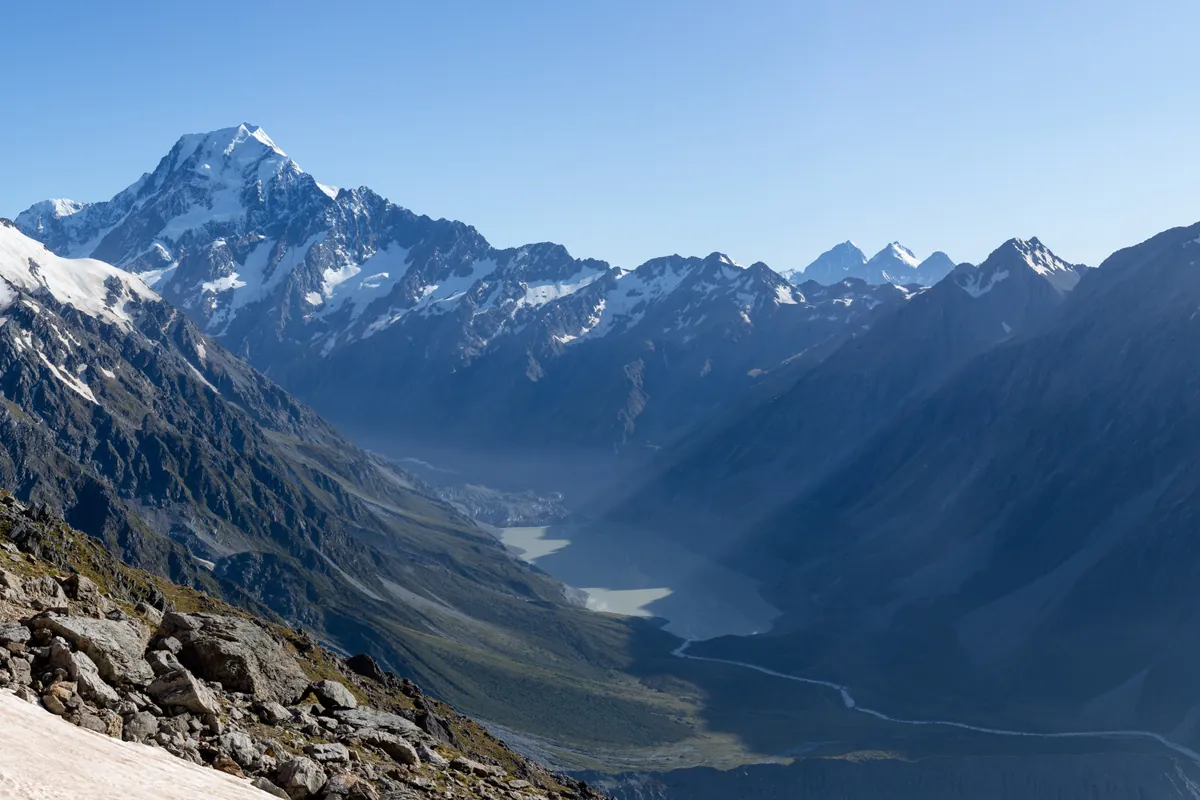
Aoraki / Mount Cook is the highest mountain in New Zealand at 3,724 meters (12,218 ft). Located in the Southern Alps, it is an ultra-prominent glaciated peak rising dramatically above the Tasman Glacier. It is sacred in Māori mythology as the ancestor Aoraki. The mountain is renowned as the formative training ground where Sir Edmund Hillary developed his high-altitude icecraft. On January 30, 1948, Hillary completed the historic first ascent of the technical South Ridge alongside Harry Ayres. Climbing Aoraki requires expert crampon technique, glacier navigation, and vigilance against severe maritime storms.
Documented Sources & Archival Citations
- The High Peaks of New Zealand(New Zealand Alpine Club)
Supporting claim: Primary historical narrative
Accessed/Documented: 2026 - Mr Fyfe's Ascent of Mount Cook(Otago Witness)
Supporting claim: Original newspaper chronicle
Accessed/Documented: 1895