Aoraki / Mount Cook
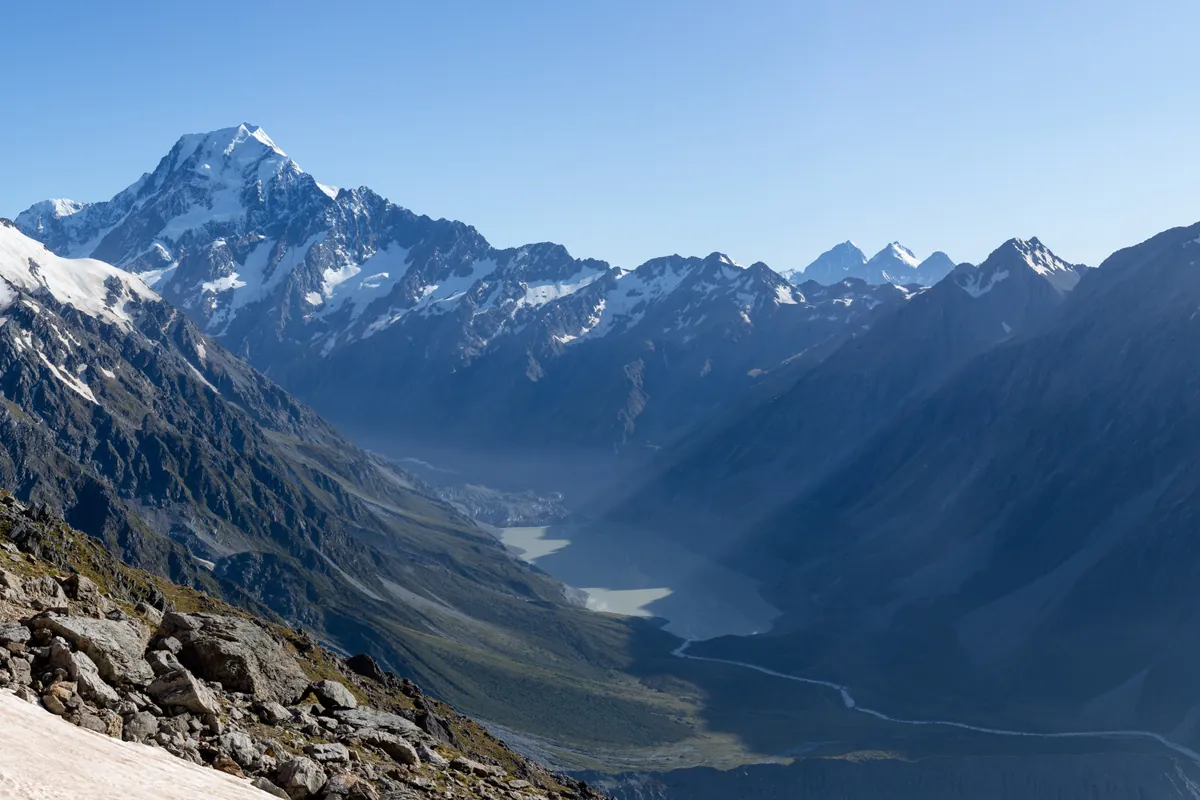
Aoraki / Mount Cook is the highest mountain in New Zealand at 3,724 meters (12,218 ft). Located in the Southern Alps, it is an ultra-prominent glaciated peak rising dramatically above the Tasman Glacier.
Mountain Safety & Conditions Disclaimer: High-altitude climbing, glacial travel, and technical ascents entail severe objective risks including avalanches, serac collapses, rapid weather collapse, and altitude illness. Historical route descriptions and summit claims on Mountanity reflect documented archival sources and must not be used as live operational safety assessments. Local regulations, permits, and physical glacial topography change continuously.
Peer Review: Senior Editorial Board & Historical Reviewers • Editorial Standards
Geographical Setting & Topography
Aoraki / Mount Cook National Park, Canterbury region, South Island, New Zealand.
Historic First Ascent
Date: December 25, 1894
Ascent Team: Tom Fyfe, Jack Clarke, and George Graham
Key Statistics & Topographic Figures
- Official Elevation
- 3,724 Meters
12,218 ft (Highest in NZ)
- Topographic Prominence
- 3,724 Meters
10th most prominent globally
- South Ridge First Ascent
- January 30, 1948
Hillary, Ayres & Sullivan
- Mountain Range
- Southern Alps
Kā Tiritiri o te Moana
- Technical Grade
- NZ Alpine Grade 3-4
50° ice, glaciated arêtes
- Māori Heritage
- Sacred Ancestor
Ngāi Tahu iwi ancestral peak
Archival Primary Source Quotations
“Mount Cook taught me the craft of ice climbing. Without the Southern Alps, Everest would have remained impossible.”
Defined Alpine Terminology & Concepts
- Southern Alps Icecraft
- The rugged, heavily crevassed alpine climbing school of New Zealand’s South Island, where climbers mastered step-cutting and glacier navigation on peaks like Mount Cook.
- Aoraki Heritage
- The Māori ancestral name for Mount Cook, representing the eldest son of Rakinui (the Sky Father) whose overturned canoe formed the South Island.
Aoraki / Mount Cook Mountain Weather Forecast
Detailed 14-Day Summit Window & Weather Timeline
Explore day-by-day summit push safety windows, wind shear analysis, and extended multi-day forecasts for Aoraki / Mount Cook.
Explore Aoraki / Mount Cook (3,724 m) in Interactive 3D
Inspect steep glacial walls, hanging seracs, ridge approaches, and elevation relief with 360° rotation and terrain tilt in WebGL.
Documented Climbing Routes (2)
Grand Traverse of Aoraki / Mount Cook
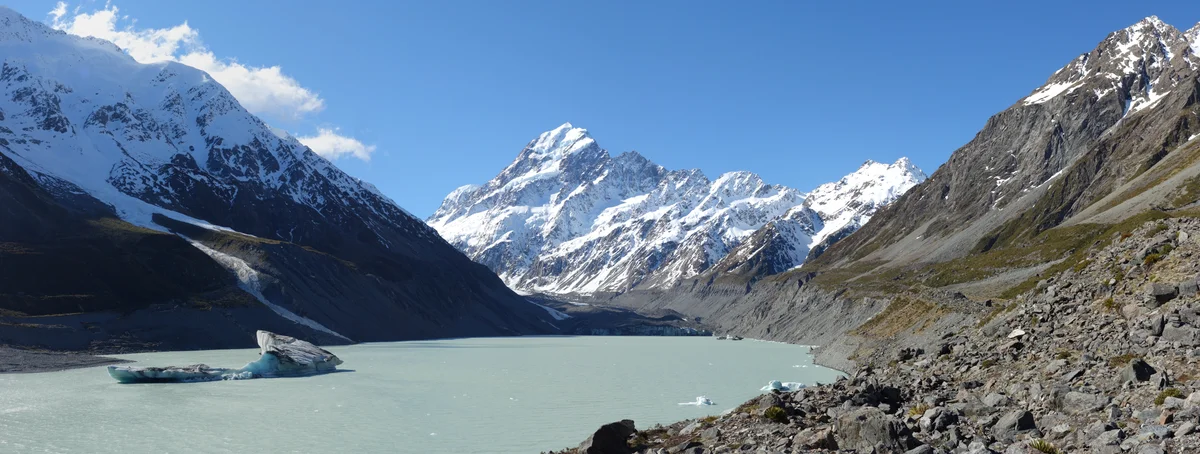
The Grand Traverse of Aoraki / Mount Cook is widely considered the supreme classic high alpine expedition in the Southern Alps. Spanning the entire triple-crowned crest of New Zealand's highest mountain—crossing the Low Peak (3,593 m), Middle Peak (3,717 m), and High Peak (3,724 m)—the route features kilometres of exposed corniced ice ridges, shattered greywacke pinnacles, and dizzying exposure above the Caroline Face and Linda Glacier. First completed on January 3, 1913, by Australian mountaineer Freda Du Faur with guides Peter Graham and David Thomson, it remains a benchmark test of high-altitude speed, crampon confidence, and ridge-walking balance.
South Ridge of Aoraki / Mount Cook
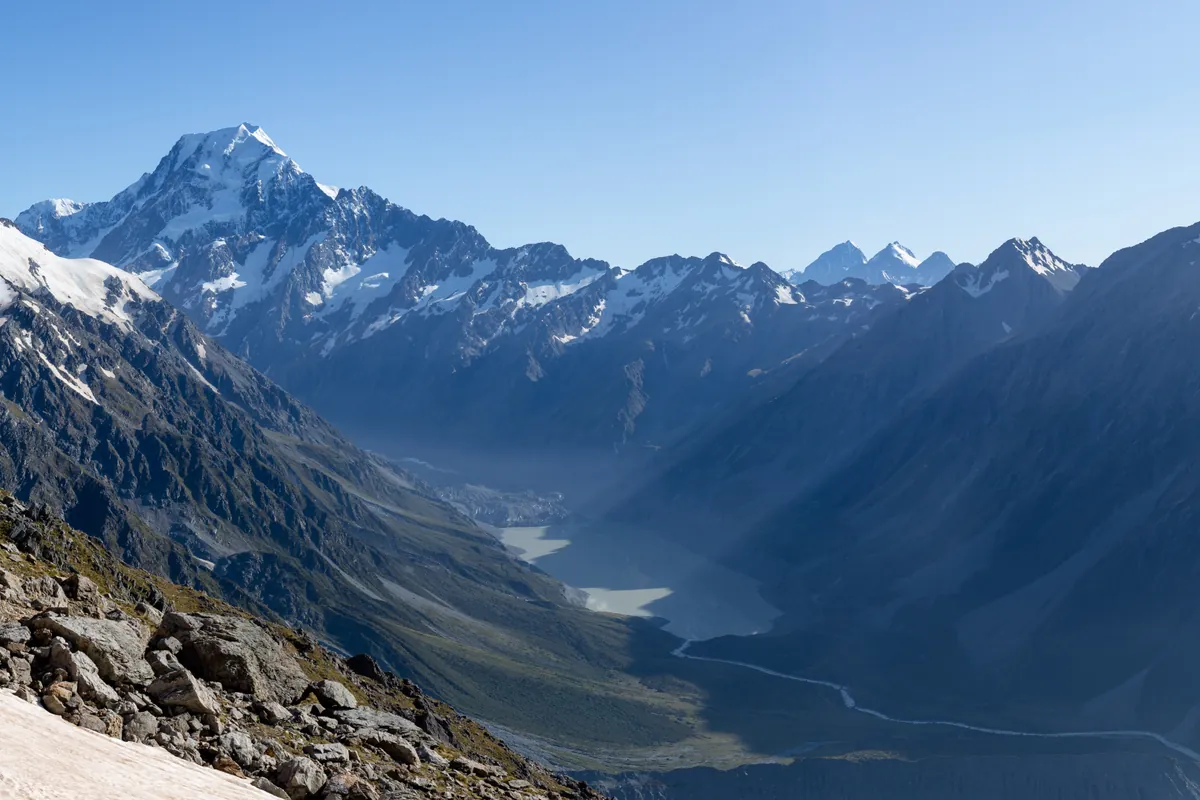
The South Ridge of Aoraki / Mount Cook is a celebrated technical alpine route on New Zealand's highest peak. First climbed on January 30, 1948, by Sir Edmund Hillary, Harry Ayres, and Mick Sullivan, the route established Hillary's reputation as a world-class ice climber. Starting from Gardiner Hut, climbers traverse the Noeline Glacier to access the knife-edge rock and ice crest. The route demands steep mixed rock climbing, delicate step-cutting on exposed ice slopes, and navigation across corniced arêtes to reach the Low Peak and High Peak (3,724m).
Historical Expeditions (4)
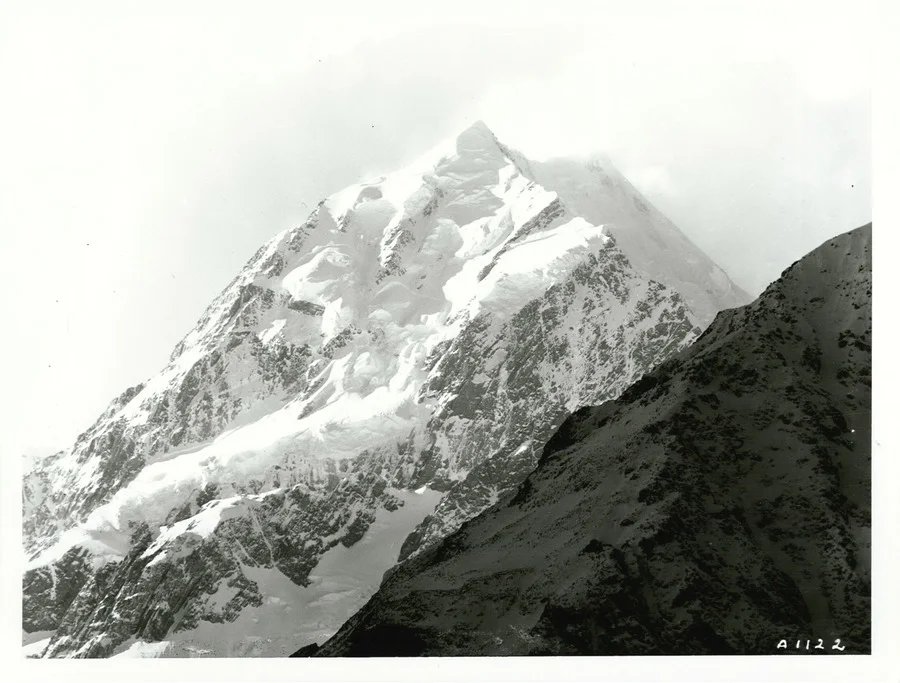
1894 Tom Fyfe, George Graham and Jack Clarke Historic First Ascent of Aoraki / Mount Cook
On Christmas Day, December 25, 1894, three amateur New Zealand climbers—Tom Fyfe, George Graham, and 19-year-old Jack Clarke—achieved the historic maiden first ascent of Aoraki / Mount Cook (3,724 m). Spurred by news that an English party with European guides was en route to claim the peak, the trio climbed without crampons up the unscaled North Ridge, cutting steps for hours to reach the summit and establish New Zealand's independent alpine tradition.
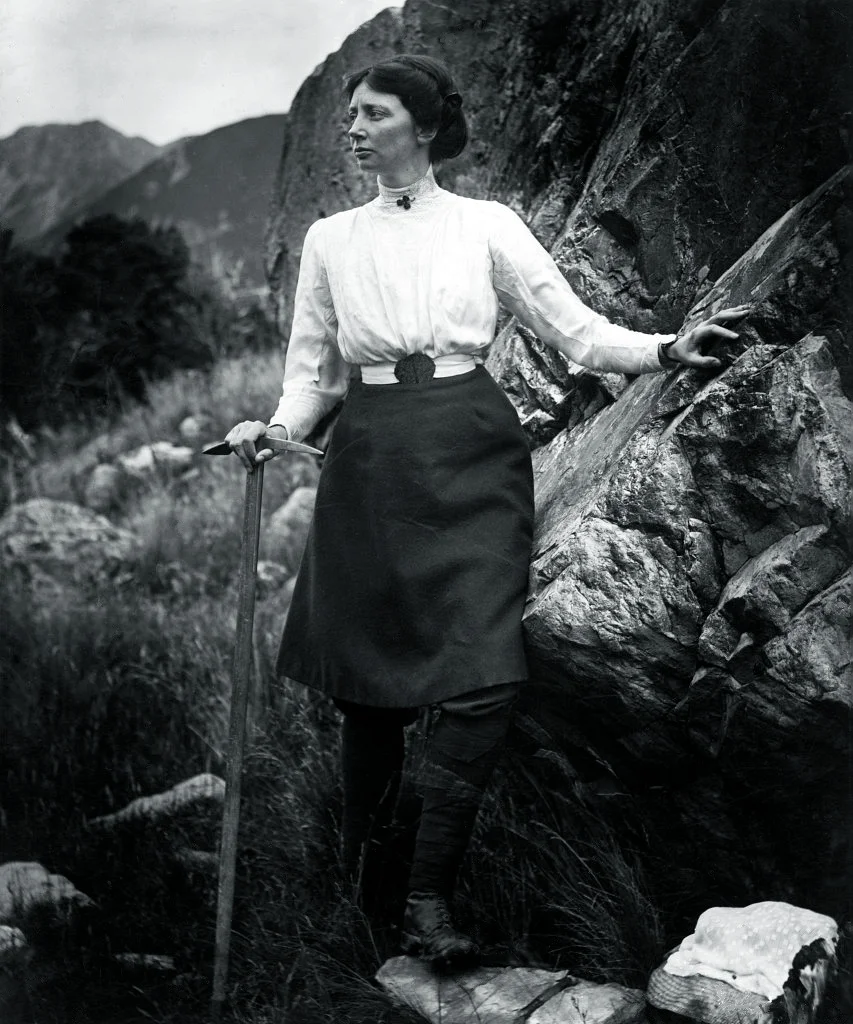
1910 Freda Du Faur Historic First Female Ascent of Aoraki / Mount Cook
On December 3, 1910, 28-year-old Australian climber Emmeline Freda Du Faur made history by becoming the first woman to reach the summit of Aoraki / Mount Cook (3,724 m). Guided by Peter and Alec Graham, Du Faur completed the round-trip climb from the Hermitage in a record-breaking fourteen hours, demonstrating peerless endurance and dismantling Victorian misconceptions about female athletic potential.
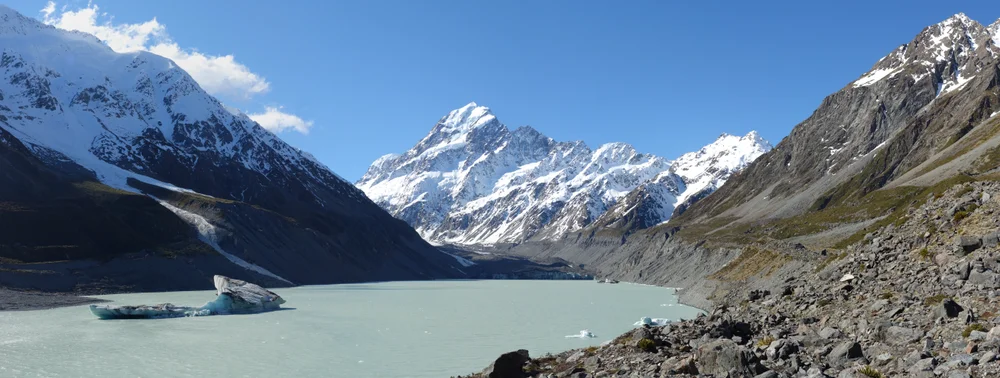
1913 Freda Du Faur and Peter Graham Historic Maiden Grand Traverse of Aoraki / Mount Cook
On January 3, 1913, Australian mountaineer Freda Du Faur and guides Peter Graham and David Thomson achieved the first complete Grand Traverse of Aoraki / Mount Cook (3,724 m). Traversed south to north across Low Peak, Middle Peak, and High Peak along razor-edge corniced ridges and vertical greywacke gendarmes, the 20-hour expedition stands as the greatest triumph of New Zealand's golden age of mountaineering.
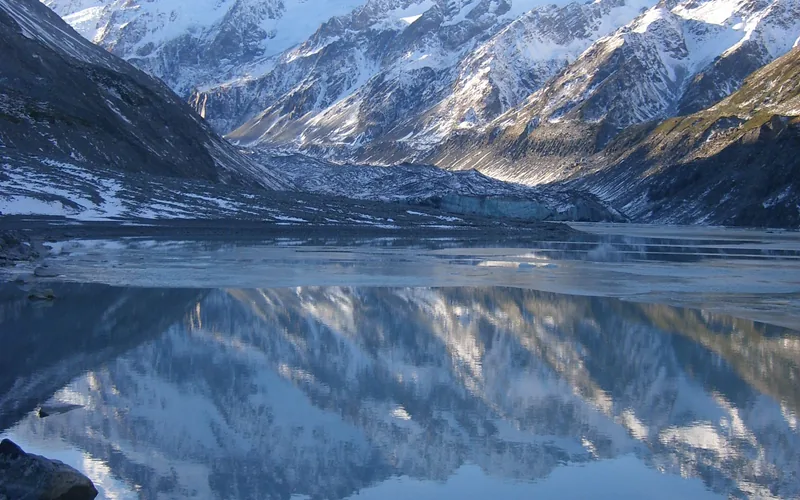
1948 Aoraki Mount Cook South Ridge Expedition
Sir Edmund Hillary and Harry Ayres achieved the first ascent of the demanding South Ridge of Aoraki / Mount Cook (3,724m) on January 30, 1948, establishing a landmark in New Zealand alpine climbing.
Summit Chronicles & Stories (4)
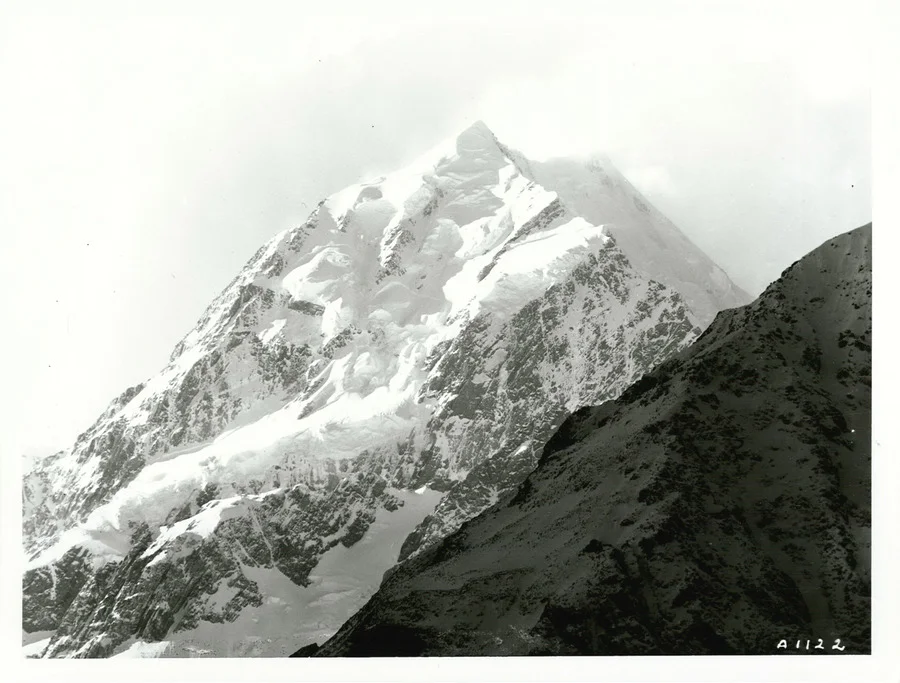
Christmas on the Cloud Piercer: The 1894 First Ascent of Mount Cook
The race against European aristocrats to claim New Zealand's greatest glaciated crown on Christmas Day 1894.
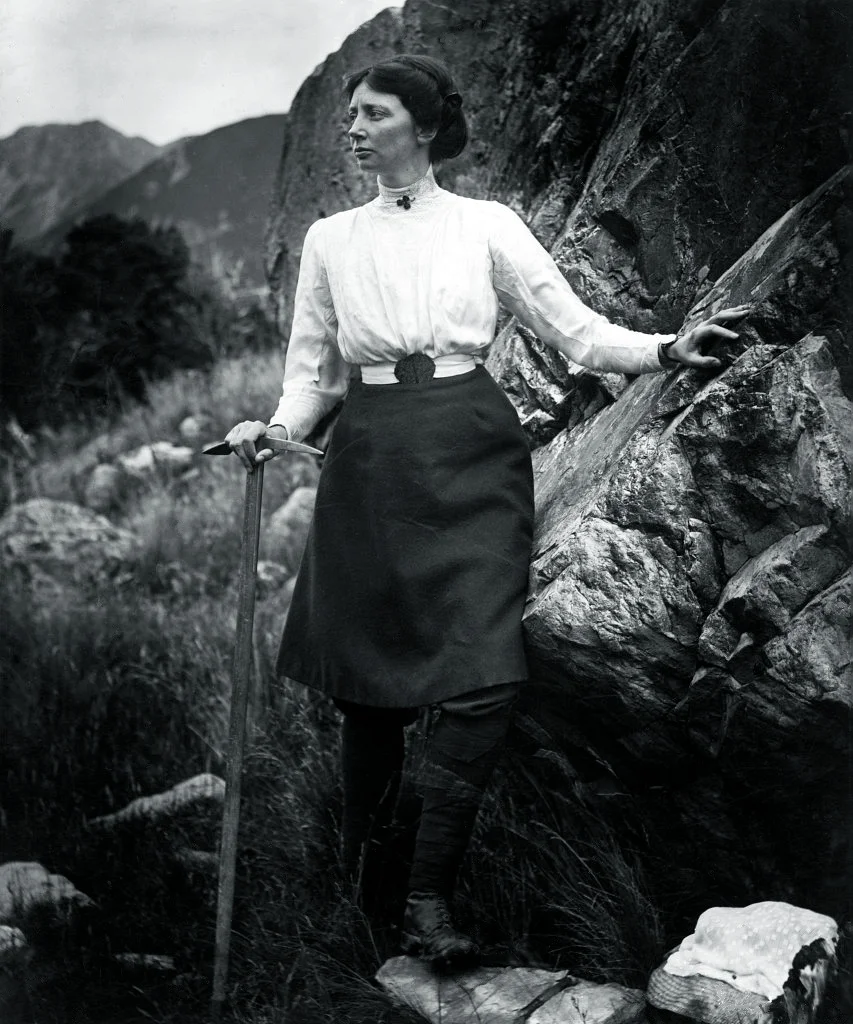
Skirts on the Summit: Freda Du Faur's 1910 Mount Cook Triumph
How an Australian woman broke Edwardian society's rules and conquered New Zealand's highest peak in record time.
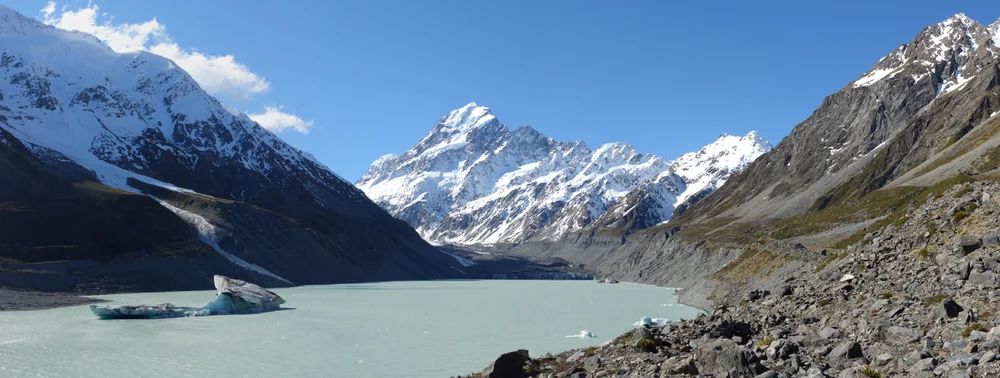
Across the Razor's Edge: The 1913 Mount Cook Grand Traverse
Twenty continuous hours on the knife-edge crest of New Zealand: Freda Du Faur and Peter Graham conquer the triple peaks of Aoraki.
1948 Mount Cook South Ridge: Hillary's Alpine Baptism
How Edmund Hillary and Harry Ayres conquered the unclimbed South Ridge of Aoraki / Mount Cook in 1948.
Frequently Asked Questions: Aoraki / Mount Cook
What is the official elevation and prominence of Aoraki / Mount Cook?
Aoraki / Mount Cook stands at an official elevation of 3,724 meters (12,218 ft). It has a topographic prominence of 3,724 meters, ranking as the 10th most prominent mountain on Earth and the highest peak in New Zealand.
When did Sir Edmund Hillary first climb the South Ridge of Mount Cook?
Edmund Hillary, Harry Ayres, and Mick Sullivan completed the historic first ascent of Mount Cook’s South Ridge on January 30, 1948. This challenging ice and rock climb established Hillary as New Zealand’s premier alpinist.
Who made the first confirmed ascent of Aoraki / Mount Cook?
New Zealand climbers Tom Fyfe, Jack Clarke, and George Graham completed the first confirmed ascent of Aoraki / Mount Cook on Christmas Day, December 25, 1894, climbing via the Hook Glacier and north ridge.
Documented Sources & Archival Citations
- Aoraki / Mount Cook: The High Peaks of New Zealand(New Zealand Alpine Club)
Supporting claim: Official topographical survey and first ascent archival chronology
Accessed/Documented: 2026 - Nothing Venture, Nothing Win(Edmund Hillary / Hodder & Stoughton)
Supporting claim: Personal narrative of pioneering the South Ridge of Mount Cook in 1948
Accessed/Documented: 1975